Extra in My Own Home
– Margaret, have you rearranged my things on the shelf again?
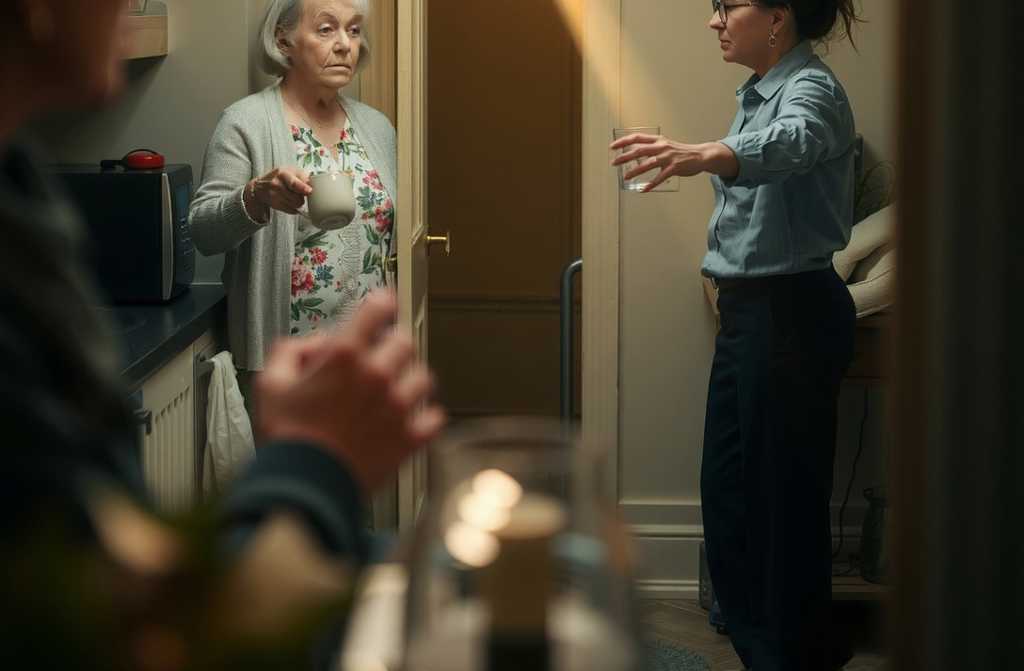
Sophie stood in the kitchen doorway, clutching a pile of papers, hair pulled back sloppily, dressing gown buttoned up wrong. Seven in the morning, Monday, and already this.
– I only dusted, – Margaret replied, not turning from the hob. – It was so dusty, I couldnt just leave it.
– I didnt ask you to dust. I asked you not to touch my stuff.
– Sophie, Ive lived in this house for forty years.
– And Ive lived here two. I have rights too.
Margaret placed the frying pan on the ring. Slowly, carefully, because she knew if she made a sudden move shed say something she couldnt take back. Shed learned that much over the last two years.
– I didnt mean to upset you.
– You never mean to. But you always do.
Sophie left, not slamming her bedroom door but enough to make it clear. Margaret stood watching the eggs just beginning to stick, thinking back to forty years ago when this flat had seemed so big. Three rooms, a kitchen with a window over the garden that used to have tall poplars. Now the trees had gone, the car park was where the garden had been, and the flat felt as small as a shoebox.
She didnt mention any of this to her son over breakfast. Tom was drinking tea, reading something on his phone, and Margaret just stared at that patch of sandy hair, remembering brushing it so many times when he was a child. Grown-up now, married, and she felt utterly in the way.
– Mum, youre quiet, – Tom said.
– Just thinking.
– About what?
– The trees that used to be outside.
He looked up at her, that mixture of pity and confusion she disliked the look people give when they want to comfort you, but have no idea how.
– Are you alright?
– Im fine, love. Eat up.
He went off to work at half eight. Sophie appeared at nine, silently pouring herself a coffee, grabbing her keys, not saying a word until she was at the door.
– Ill be late tonight, dont wait up.
– Alright, – Margaret said.
Door closed. Silence, so quiet you could hear the tap dripping in the bathroom. Margaret had asked Tom to fix it countless times. Every time he said, Yes Mum, Ill get on to it. Itd been dripping half a year now.
She cleared up the breakfast things, did the washing up, set them to dry. Then she grabbed a cloth and went to dust again. Not because she wanted to its just you need something to do with your hands when your minds all over the place.
Margaret Smith was sixty-two. Shed spent her whole life as an accountant for a building firm, retired three years back and lived alone in this flat until Tom brought Sophie home. Her husband, David, had passed away no, not passed, left this world eight years ago, and ever since Margaret had gotten used to her own routine, her own quiet, her own shelves.
Sophie was from Birmingham. Moved to London for uni, stayed on to work, met Tom at some work do. Married a year later. Margaret had smiled at the wedding, said all the right things, and truly hoped itd be fine. Sophie seemed lovely back then neat, soft-spoken, held herself well.
That was before they started living together.
Tom and Sophie didnt have their own place. Renting in London cost a fortune, they were saving for a mortgage. Margaret offered herself: live here for now, plenty of space. Three rooms, just the three of them. What could go wrong?
Turned out, it wasnt the rooms.
It was the way Sophie folded towels. Margaret hung them neatly in half over the bar; Sophie rolled them up and stacked them. A tiny thing, until one day Margaret re-folded the towels and Sophie snapped: please dont do that. Margaret was hurt. Sophie too. That was the start.
It was how Sophie made soup. No frying the veg first, no bay leaf, some herb from a packet instead. Margaret said once it tasted better with a proper base. Sophie replied, Fryings unhealthy. Margaret said, We always did, never hurt us. Sophie stopped offering her soup after that.
Sophie worked from home three days a week, shut in her room, chatting away on the phone, sometimes in English, sometimes not. Margaret had no clue what she did. Tom explained: marketing, Mum. Margaret nodded, though what a young woman did sitting home all day talking on the phone and called it work well, she just couldnt understand it. Never said it aloud. Just thought it.
By November, a year and a half after theyd moved in, there was a kind of truce in the flat. Not peace a truce. Both knew which subjects to dodge, whose shelves were which, when not to use the kitchen. Tom tiptoed about, pretending everything was fine, which often annoyed Margaret more than anything else.
– Tom, – she said one evening while Sophie was out. – Dont you think we ought to talk?
– About what?
– About how were living like this.
He paused. Poured himself more tea, even though his cup was still full.
– Mum, youre doing fine, arent you?
– Fine. Yes. Just that Sophie and I barely speak.
– You do speak.
– Tom, pass the salt doesnt count as conversation.
He stared into his cup. She watched him, and in moments like this he looked so much like David. David could never talk about complicated things either. Hed just clam up, hope itd all sort itself out.
– What do you want me to do?
– Talk to Sophie.
– About what?
– How we could live differently. You dont have to fight over every cupboard.
– Youre not fighting.
– Tom.
– Alright, – he sighed. – Ill talk to her.
Whether he ever did, Margaret never found out. Outside, nothing changed.
December arrived with biting wind and short days. Margaret did the shopping, cooked, watched telly in the evenings. Sometimes she phoned her friend Jean, an old workmate who also lived alone. Jeans daughter was up in Edinburgh, and she and Margaret understood each other without too many words.
– Hows your daughter-in-law? – Jean asked every time.
– Oh, you know.
– So, still at it?
– Not fighting. Just silence.
– Silence is worse than fighting, – Jean said. – At least fights finish.
Then, in January, something Margaret would later privately call The Freezing Day happened though outside, there was a thaw, and the roofs were dripping.
She came back from her walk early. Sophie was home, working. Margaret took her coat off in the hall, went to put the kettle on. The kitchen was divided by some invisible wall, and she felt it, but went anyway.
Sophie appeared twenty minutes after. Poured herself a glass of water, then turned.
– Margaret, can I say something?
– Go on.
– I know this must be hard for you. Its hard for me too. But I want you to understand one thing.
Margaret waited, mug held in both hands.
– Im not trying to push you out. Honestly. Its your flat, your life, your order. But I live here too. I need to feel like a person in my own home not just a guest, always getting things wrong.
Margaret was silent for three seconds. Then said:
– And you think its easy for me?
– I dont think its easy.
– Ive been in charge here my whole life. I know where everything is, how to cook, clean, tidy up, and now Im told everything I do is wrong. In my own home.
– Im not saying youre wrong, – Sophie said quietly but firmly. – I just do things differently. Thats not the same.
Margaret put her mug down, stood and went to the window. It was dull and wet outside, a pigeon perched on a neighbours sill staring at nothing.
– Sophie, – she said at last. – Honestly. Would you rather I lived elsewhere?
A long pause.
– I wish it was easier for us to be together, – Sophie replied. – But if Im honest I dont know how to make it easier. I truly dont know.
Margaret turned. Sophie stood by the table, glass in hand, not the confident young woman she usually appeared. She just looked tired.
– Im thirty, – Sophie said. – I moved from Birmingham at twenty-two. My parents are far away. Here, its just Tom and you. And I I wish you could be more than Toms mum to me. Not just my mother-in-law. Something real. But I dont know how. Ive no idea how you do it.
That took Margaret by surprise. Shed expected something about the shelves or towels. Instead, this.
– Me neither, – Margaret blurted out, astonishing herself.
They stood there, each on their side of the kitchen. Then Sophie set her glass down.
– Shall I make a proper coffee? Not instant?
– Id love that, – Margaret answered.
It wasnt exactly peace. But it was the start of something, whatever you might call it.
February. Margaret and Sophie had started having coffee together in the mornings for almost three weeks now. Not every morning, but often. They spoke about all sorts, gingerly as you do when testing the ice. Sophie described her job; Margaret began to grasp that marketing meant more than just phone calls. There was difficulty and exhaustion to it too.
One day, Sophie showed her something on her laptop.
– Look here. This project Ive been leading for months building a website for a company. All about attracting women over 55. Ive read so much articles, research but Ive no idea what actually matters to women your age. What worries them, what theyre looking for, what they think.
– You want me to tell you?
– If you dont mind.
Margaret thought. Then said:
– We worry that our kids grow up and drift away. That weve spent our whole lives doing for others, and now were not sure why we get up in the mornings. Health is slipping, needs constant watching. Sometimes its lonely, even with people around. And mostly, its the need to feel needed. Not a burden needed.
Sophie listened, not just nodding politely but truly listening.
– Thats spot on, – she said quietly.
– Its not spot on just the truth.
After that conversation, Sophie asked for her opinion again and again. Not as a daughter-in-law but as someone who genuinely valued what she knew. Sometimes it felt to Margaret that she was voicing things shed only ever thought in the quiet.
In March, Jean called.
– So, all friends now?
– We never really fell out.
– Dont be daft, Margaret.
– Jean, were just learning. Both of us.
– Learning what?
– How to live together. Turns out, it isnt easy.
– You thought itd be?
– I thought she was young and ought to adjust. And she probably thought I was old and ought to give way. Both fools.
Jean was silent for a while, then said:
– Im glad, really.
Late March, Tom came home early and caught the two of them in the kitchen, Sophie explaining something on her phone, Margaret frowning not cross, just concentrating.
– What are you two up to? – Tom asked from the hall.
– Sophies showing me how this app works recipes, you can search by ingredients.
– You wanted to learn, – said Sophie.
– So what? Its handy.
Tom put his bag down and stared at them.
– Are you both sure youre alright?
– Go on, love, get changed, – Margaret told him. – Teall be ready soon.
He wandered off. Sophie snorted a laugh.
– He thinks weve lost it.
– Let him think what he likes, – Margaret said, smiling cautiously.
April brought warmth and long evenings. Margaret took her walks later now, when the glare had faded. Sometimes, coming back, shed find Sophie out front too returning from a stroll or the shops.
One evening, they ended up going together. It just happened. They ambled to the park, sat on a bench, blossom everywhere, dogs and children about.
– Margaret, – Sophie said, – can I ask something personal?
– Try me.
– Do you miss your husband?
Margaret hadnt expected that. She paused.
– Every day, – she replied. – He died left us, eight years ago. I still sometimes think, oh, I must tell Dave this. Then I remember.
– How do you manage?
– You get used to it. Not the loss just knowing hes around, somehow. In your memories. In things. That dripping tap? He always said hed fix it. Never did. And every time it drips, I think of him.
Sophie watched the blossom.
– My parents split when I was twelve, – she said. – Ive never really seen couples last. Only how people part.
– Being together a long time isnt always good, – Margaret said. – Dave and I had our rows, our silences, our off weeks. But theres something that keeps you going not sure what to call it.
– What?
– Maybe the habit of needing each other. Its not romantic, but I think its the most real thing.
Sophie was quiet.
– Im afraid Tom and I cant do that.
– Why?
– Were both so separate. Were fine being near each other. But I dont know if we know how to need each other, deep down.
It was the first time Sophie had spoken about her marriage, her fear, something real. Margaret had no answer there wasnt one.
– You have to learn it, I suppose. Like everything else.
– And if you cant?
– Then at least you know you tried.
Sophie nodded. They sat for a bit, then headed home silently. It was a gentler silence not the cold one Margaret was used to.
May. Toms birthday thirty-four. Sophie took charge: friends, decorations, the lot. Margaret baked an apple pie with cinnamon, same as every year since Tom was little, sharp and sweet. The house was jammed, buzzing with people. Margaret stayed on the sidelines, watching Sophie fuss knowing where everything went, who to seat with whom, hosting with ease. A new side of her, strangely pleasing.
When the guests had gone and Tom was snoring in a chair, Sophie and Margaret washed up together.
– The pies gone, every last crumb, – Sophie noted.
– I saw.
– Tom said its the worlds best apple pie.
– He always says that.
– He really meant it this time, told his mate, not you. I overheard.
Margaret set the dishes to dry.
– Thanks for telling me, Sophie.
– Its true.
– I know. Still, thanks.
Sophie wiped down the table, glanced at the clock.
– Its getting on. Time for bed.
– Off you go, love. Ill finish here.
– Faster together.
And they finished up side by side. Completely ordinary. But Margaret remembered it.
June. A heatwave hit like always. Margaret slept badly, got up early, went to the kitchen for water. Once, at half five, she found Sophie there sat at the table, laptop open but gaze fixed out the window.
– Cant sleep? – Margaret asked.
– Just thinking.
– About?
Sophie hesitated, then:
– Tom and I had a long talk last night. What comes next the mortgage, the flat, all of it.
– So what did you decide?
– Nothing yet. Just talking was important. We hadnt like that for ages.
Margaret put the kettle on, quietly.
– Hes a good lad, – she said. – Tom. Just useless with the hard talks. Dave was just the same. Must be in their blood.
– I love him, – Sophie said simply. – Sometimes I think I dont show it enough, get too caught up in work, my own head.
– Thats not a flaw. Thats just life.
– You say everything can be explained by life.
– Not everything, – Margaret replied. – But some things you can understand. Thats not the same as excusing it.
Sophie shut her laptop.
– Margaret, theres something Ive meant to say. I struggled at first.
– Go on.
– I was unfair to you, early on. When we moved in. I saw you as a hurdle someone whod block our lives, take over, boss me about. I put up a wall before youd even done anything.
Margaret stayed quiet. The kettle boiled.
– I wasnt fair either, – she said. – I saw you as an outsider. A woman coming into my home, changing things. Never thought about you, how lonely London can be, how tough starting over must have been.
– We could both have thought about each other more.
– We could.
Margaret poured two mugs of tea.
– Im glad we talked that day, in January, on the kitchen.
– Me too, – Sophie replied. – Though it terrified me at the time.
– Terrified me too, answering you.
They sat, sipping tea at nearly six in the morning, city still half asleep, Tom still in bed, the flat not yet stifling. And Margaret thought, maybe this is why its worth getting up every day.
July. Sophie went to Birmingham for a week, to see her parents. First time in two years. She rung Margaret from there quite a surprise.
– How are things?
– Fine. Hot. The taps sorted at last.
– The dripping one?
– Tom fixed it. Without being asked.
– See, he can, when he wants.
– He can.
– I spoke with my mum. About us, how we get on.
– What did she say?
– She reckons shed struggle in my place. But says you must be good, or I wouldnt talk about you the way I do.
Margaret paused.
– Tell your mum youre fine.
– She asked if she could ring you. To say hello.
– Shes welcome to.
Sophies mum, Carol, rang next day. A low, even, slightly weary voice. They chatted twenty minutes about Sophie, Tom, London, Birmingham, the ache of having kids far off.
– Youve looked after her well, – Carol said. – Sophie didnt say straight off, but I could tell by how she talked about you.
– We both tried, – Margaret replied.
– Thats what matters.
They agreed if Carol came to London, shed pop in for tea. Just a polite thing, really, but saying it mattered.
August. Summer was ending, warmth with a hint of autumn. Margaret sat out on the balcony late, reading a novel Sophie brought her said shed love it, about a woman, written so sharply. Sophie was right.
Sophie appeared in the balcony doorway.
– Good book?
– You were right; its brilliant.
– Knew youd think so. – She lingered. – Margaret, mind if I sit with you?
– Course not.
She fetched a chair and sat down. They watched the street below: cars, trees, children on swings. Nothing out of the ordinary.
– Ive got some news, – Sophie said. – Today our mortgage was approved.
Margaret set her book down.
– Really?
– Yes. We put the application in two months back. We can buy a place.
– Thats wonderful news.
– Yes. – Sophie paused. – Well move, probably autumn, once everythings sorted.
– I see.
– I wanted to tell you myself, before Tom did.
– Why?
Sophie looked at the cars below.
– Because it matters that you know: Im not leaving you, just going to my own life. Theres a difference.
Margaret nodded. Inside was a jumble relief and a sadness that didnt argue, simply sat side by side, like emotions do when life refuses to be tidy.
– Sophie, Im really pleased for you. Truly.
– Well visit. Loads.
– Only visit if you want to.
– I will want to, – Sophie insisted. – I know you think I wont. But its true.
Margaret gazed at her this tired-voiced young woman she couldnt accept for two years, only to discover it was easier than shed thought. Just had to start seeing instead of looking.
– I do believe you, – Margaret said. – A little.
Sophie smiled.
– Its something.
September. They moved out first Saturday. Tom lugged boxes, Sophie managed the show. Margaret stood in the hallway, watching belongings vanish, the shelves emptying bit by bit.
The last box left near midday. Tom hugged her.
– Mum, its only ten minutes on the tube. Were not far.
She nodded, patted his back, let go.
Sophie lingered. Coat on, bag in hand, she turned.
– Margaret.
– Yes?
– Thank you. For everything. I know its not been easy for you. And I know Ive not been easy myself.
– Nor have I.
– Youve taught me something, you know that its not enough to just tolerate people, you need to try and understand them. Its hard, but different.
Margaret watched her.
– You taught me something too.
– What?
– That Im not always right. Even here, in my own home.
Sophie nodded. They hesitated, then Sophie stepped forward and hugged her awkward, brief, as people do when it isnt yet a habit. Margaret hugged back.
– Ring if you need anything, – Margaret said.
– You too not just if you need something. Just because.
The door shut. Margaret stood in the hall. She wandered to the kitchen, put the kettle on, looked at her shelves hers again. The window overlooking the estate, the now-silent tap.
It was quiet. But nothing like before not the sort of quiet that weighs heavy. Now, there was something else in it, as yet unnamed, but lighter.
The kettle boiled. She made herself a cuppa, sat at the table, opened the book Sophie had given her, picked up at yesterdays marker.
An hour later, the phone rang. Unknown number she answered.
– Margaret Smith? Its Carol Sophies mum. They moved today, she said. Just wanted to see how you are.
– Im fine, – Margaret said. – Thanks for calling.
– I thought of you all day. What its like when theyve gone.
– Im used to it.
– Still, the emptiness lingers at first.
– It does, – Margaret agreed. Pause. – Carol, if you do make it to London like you said, pop in. Ill bake an apple pie.
– Sophie mentioned your pie, – Carol repliedher voice softening. – Says its like nothing else.
– She exaggerates.
– Not about things she really loves. Id know.
Margaret leant on the table, head in hand.
– You’ve got a good daughter, – she said. – Really. We just both needed time to see it.
The phone was quiet for a beat. Then Carol said:
– Thank you. Meant a lot, that.
They chatted a bit more, said goodbye. Margaret set the phone down, peered out the window.
No more children on the swings dusk, street lamps beginning to glow. Somewhere, ten minutes down the tube, Tom was unpacking, Sophie arranging shelves just so. Her own way.
And that was right. Not because it should be. Just because it is.
Margaret finished her tea, washed up. She didnt turn the telly on, just sat a while, thinking: must ring Jean tomorrow and tell her how the day went.
The phone rang again. This time, it was Sophie.
– Margaret, were here! Just unpacking. This kitchens tiny, by the way way smaller than I thought.
– Youll get used to it.
– Suppose so. – Pause. – Howre you?
– Reading your book.
– Good. – Another pause. – I just well, nothing. Just wanted to check in.
– Sophie.
– Yes?
– Thank you for ringing.
– Thats alright, – said Sophie. There was something in her voice; no words needed.
– Right, then, – Margaret replied.
They said goodbye. She set the phone down. Dark now, the street below puddled in lamp-light, a car humming far off.
Margaret read until she was too tired. Then she turned out the light and lay in bed. The quiet was ordinary. Alive.