A Strangers Home Address
Are you even listening to a word Im saying? Or is it another important call, another it cant wait?
Helen, I hear you. Its just not the best moment.
When is it ever the best moment? When was the last time you were home before ten in the evening? When did we last have a proper dinner together?
Im working. Youre working. We both have difficult schedules.
Dont talk to me about schedules. Ive been working twenty years for the ambulance serviceI know what a tough schedule is. Thats not an excuse. Thats a cop-out.
That time, I didnt answer. I rinsed my mug in the sink, put on my blazer, and left. I closed the front door quietly, almost silently, as if I were afraid of waking someone who wasnt even there. Helen Mary Thompson stood in the centre of the kitchen for another three minutes staring at my half-finished coffee, before grabbing her bag and heading off for her night shift. It was Wednesday. Or maybe Tuesday. She couldnt really remember; these sorts of conversations happened so often, all blurring together: she spoke, I left, she went to work.
It had long been her habit. When something hurt or angered her inside, she headed off to work. The ambulance service doesnt care about your mood, doesnt pause for your family crisis, doesnt give space for processing feelings. There, they need your hands, your head, and your ability not to get distracted. Work was what kept her afloat. Always had.
Helen was fifty-two. She looked forty-five, though shed never say so herself, thinking those sorts of thoughts were pointless. Short, with cropped brunette hair, greying for about five years now. Her hands were lean and swift, her grey eyes, a bit tired, could stay calm even when she wasnt calm at all. Colleagues respected her. Not loudly, not with adulationbut they respected her, and that mattered more. Her partner these last three years, Frank, always used to say, With Thompson, you can take any call. She wont let you down.
I, her husband, Andrew David Thompson, worked in construction. What I actually did, Helen had long since stopped understanding, as I was always vague: projects, meetings, investors. Wed lived together for twenty-three years. Our son, James, lived in another city, worked in IT, rang most Sundays and asked, Everything alright, Mum? Helen always replied, All normal, and it was the truth if normal meant familiar. Familiar was often easy to call normal.
That shift, the one this storys about, was long and hard. Not because anything extraordinary happened, but because everything piled on at once and wouldnt let up. All morning she was on a call across town an elderly gentleman with terrible blood pressure who simply refused to go to hospital, his annoyed daughter shouting at him and Helen, as if Helen was to blame for his stubbornness. Then an eight-year-old boy with an allergic reaction; his young mother was just lost, and Helen patiently explained things three times because the mother was too distracted to take it in. Then an old lady with stomach pains who had to be handed personally into A&E, after queuing at reception for what felt like forever. And then, another blood pressure case, more reassurances, more paperwork.
By eight in the evening, Helen felt that peculiar exhaustion thats not quite tirednessmore like numb legs and heavy eyes. She sat in the ambulance with a cup of green tea from her thermos, just warm now. Frank, on the front seat, had the uncanny knack of nodding off for five minutes in any position and waking up refreshed. Helen quietly envied him for it.
The radio beeped.
Thompson, are you there?
Im here.
Got a call: 8 Glassford Drive, flat fourteen. Young woman, twenty-eight, complaints of rapid heartbeat, shortness of breath, numb hands. Never happened before, very anxious.
Copy.
Franks eyes opened the moment he heard the radio static. Professional reflex.
Where to?
Glassford Drive. Probably a panic attack.
Young one?
Twenty-eight.
He nodded, started the engine. Helen finished her tea and put the thermos away. Glassford Drive sat in the part of the city everyone called The Glass District: tower blocks with panoramic windows, underground parking, intercoms with cameras. Costly homes, hushed halls, that fresh new-lift scent. Helen had been here before on callsusually young women, stress-induced high blood pressure or panic. Richer lives, but the same old nerves.
Number eight was just as shed imagined: tall, pale-bricked, broad steps to the entrance. The intercom buzzed them in, a breathless female saying, Come up. The lift was mirror-bright, with a gentle glow. Frank carried the kit bag; Helen walked beside him, mind drifting to the fact shed need bread and probably cottage cheese on her way home.
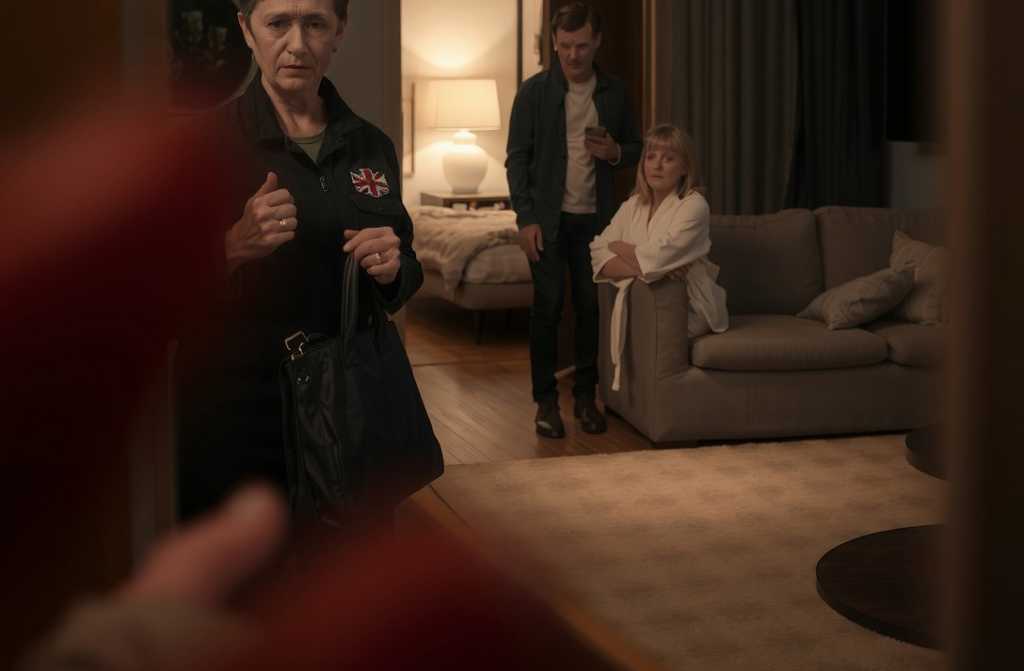
Flat fourteen was at the corridors end. The door opened before they could ring. On the threshold stood a girl in an ivory silk robe, frazzled blonde hair. She was beautiful, Helen noticed, just as a statement of fact, and visibly rattled. She hugged herself as if to keep warm.
Thank goodness youre here, she said. I thought you werent coming.
Were here, Frank replied. May we come in?
Yes, come in.
The flat was hugehigh ceilings, neutrals, expensive taste that didnt shout about itself. Pale walls, a broad dove-grey sofa, half-finished glass of water on a coffee table. Only a lamp glowed in the corner. Cosy, but somehow anxious.
Your name? Helen asked, unzipping her kit.
Sophie. Sophie.
Sophie, have a seat here on the sofa. How long has this been going on?
About forty minutes. I was reading, then suddenly my heart started racing and I couldnt breathe properly. I panickedI thought it was my heart.
Lets check. Any chest pain?
No. Just pounding.
Good. Let me see your hands.
Helen strapped the monitor to Sophies wrist, felt her pulsefast but steady. Checked her blood pressure. Frank was already laying out the ECG pads, quick and sure. Sophie kept glancing between them, that familiar look Helen knew so well: relief that someone had come and fear of what they might say.
Blood pressures 120 over 80, Helen said. Completely normal.
Really?
Completely. Pulse is elevated, but lets look more closely. Do you live alone?
It was a routine question, just to get a sense of the setting. Sometimes you needed to know if someone would be around if things got worse in the night.
No, Sophie said, faltering a moment. Im not alone.
Good. So, someone can call if you need it.
Frank fixed the ECG leads; Sophie adjusted her robe slightly, cooperative but tense. Helen jotted notes on her forms, glanced at her watchhalf past eight. She thought, briefly, that I was probably home by now or still at my meetings. Then she stopped herselfshe was here to help a patient, thats all.
Just then, footsteps from down the hallway, leading to what was probably a bedroom. Soft, like someone in socks on wooden floors. The door opened.
Helen didnt look up right away, still writing. Then she did.
It was me.
I stood there in a t-shirt and jeans, no blazer, hair mussed, phone in hand, the face of a man at home, in his element. For a split second, I didnt see her. When I did, I froze.
Helen looked at me for two seconds. She told me later shed replayed those seconds dozens of times but couldnt say exactly what she felt. Not nothingsomething very quiet. Like a little light switch flicked off in one corner but the rest stayed on.
I went pale. You could see it even in the soft lamplight.
Helen looked away, studied the ECG Frank handed her.
Let me see, she said.
Her voice was perfectly normal. She heard it herself and was surprised just how normal it sounded.
Frank gave her the ECG readout. She scrutinised it carefully. Sinus tachycardiasimply a fast heart rate, nothing dangerous, nothing requiring hospital. Exactly what she expected.
Sophie, she said, your heart is fine. This is called a panic attack. It feels frightening but its not life-threatening. Your heart is healthy.
Are you sure? Sophies eyes were locked somewhere behind Helen, toward where I was still hovering. Her voice stilted, almost off-mark.
Absolutely, Helen replied. Id recommend drinking some water now, slowing your breathingcount in for four, out for six. If it happens again, its unpleasant but not dangerous. See your GP or a counsellor if it keeps uppanic attacks are very treatable.
Her tone was measured, informativethe same as always after a call. Her hands began putting the kit away, strapping up the monitor, latching the bag. Everything running along its usual rails.
Thank you, Sophie said quietly.
No problem, Helen replied. Frank, are we good to go?
All set.
All the while, I stood in the doorway. Helen didnt look at me. Not because she couldntshe simply didnt. She slung the bag over her shoulder, grabbed her tablet of forms.
Well put everything in the notes, she told Sophieone of those standard phrases meaning the paperwork would be proper.
They left. Frank pressed the lift button. While they waited, he said nothingFrank knew how to keep silent, not fill space with babble. The lift arrived, they got in, doors shut.
You alright? Frank asked, eyes on his own reflection.
Fine, Helen replied.
Only, you seem a bit
Tired. Long shift.
He nodded, asked no more.
Outside it was chilly, though earlier it had been mild. April had been indecisive this yearwarm one moment, the next a biting wind from the river. They got into the van; Frank started on documents. Helen sat looking up at the bright flat windows: fourth floor, eighth flat from the corneror maybe ninthwhere the lights were still on.
She checked her phone. Five missed calls from me, all in the last ten minutes. She put the phone away.
Any more jobs tonight, Frank?
Checking. Not yet. But Linda says things usually pick up at ten.
Linda was the dispatcher, and right as rainat ten the calls ramped up: older people with anxious hypertension, youngsters with after-work dramas. The ambulance worked to its own rhythm, not caring what happened in strangers homes.
Lets go back to the station for some tea then, Helen said.
They set off.
Helen stared out at the night city. Lamplight, shop fronts, the few late-night walkers. Everything in its place. She thought about those twenty-three yearsnot just a number, but a lifetime. James, now twenty-seven, calling on Sundays. The cottage, three hours out, bought ten years ago, which I always called our project. Her knitted throw from her mother, draped over the sofa. Shared birthdays, shared sicknesses, the endless quiet evenings with the TV.
She saw all this in her mind, like looking at a familiar object under strange new lightseeing it differently because the angle had changed.
At the base, Frank made tea, both sitting in the small rest room together. He sipped in silence, she sipped too. Then he said:
Look, Ive known you a long while.
You have.
And I can see somethings up. You dont have to talk, but if you need a lift or anythingIm right here.
Helen looked at him. He was thirty-eight, with a wife, Annie, two school-age kids, and the same on-the-go life as Helen. A decent bloke. Reliable.
Thanks, Frank. Really. Im alright for now.
Good.
He turned away to the window and she was grateful for it.
Her phone vibrated again. Me, of course. She pressed decline. Then, with barely a pause, typed: Im on shift. Please dont call. Sent. Put the phone away. Both hands around her mug, she felt its warmthsolid and real.
She began to trace back the start of it all. Trying to recall when Id begun coming home not just late sometimes, but almost every night. When my explanations had turned vaguedetails replaced by just work stuff. When I stopped naming the people or telling the stories. Now, it was always the same: meetings, projects, and shed accepted it as normalexhaustion, men dont bring work home, all those things.
Men dont, do they? She caught herself thinking this, and mentally put it aside, like a letter unopened.
No new calls til eleven. Then it was an old chap with a sore kneeno urgent case at all, but dispatch said he had no one to take him and he was desperate. Helen examined his knee, told him he needed planned surgery, gave him the clinic number, explained how to book in. He thanked her over and over, embarrassed for bothering. She told him it was fine, hed done the right thing.
On the way back, Frank put the radio on lowa womans mournful voice singing. Helen listened, thinking about what shed say to me in the morning. What Id say. Maybe nothingmaybe shed talk herself into thinking it was all a misunderstanding. Maybe I was there for some good reason. Maybe it wasnt my flat, maybe it was sheer coincidence.
She was very good at coming up with explanations. Twenty-three years practice.
The shift ended half past midnight. Last call at eleven-thirtya young man with a raging fever; Helen sent him to Infectious Diseases, easy and quick. Then the paperwork, returning kit, a brief chat with the night team. Just another long shift, ending as usual.
Need a lift? Frank asked.
No thanks, Ive got my own car.
Are you sure?
Frank.
Alright, Ill drop it.
She drove home in twenty minutes. The city was quiet, roads emptyshe liked this time, thinking space with no distractions.
The flat lights were on. I wasnt asleep; she knew, even before she got to the door.
I came out to the hall as soon as I heard her key, standing there with the same apologetic, defensive look shed seen before.
Helen, I started.
Not now, she said.
I want to explain.
Andrew, Ive just finished a shift. Im exhausted. Not now.
Its not what you think.
She looked at me. For a long while. Then just passed by, went into the bathroom, washed, brushed her teeth. When she came out, I was still there.
Helen, talk to me.
Tomorrow, she said, heading for the bedroom.
She didnt sleep. Laying there, staring at the ceiling. Silence through the wall, then the couch creaked in the loungeso Id taken that for the night. Good. I hadnt come to the bedroom. That was a relief.
She lay there, thinking calmly, almost clinically, as if laying out her medical kit. The facts: Id been in that flat. Not as a guest just popping by. At homerelaxed, phone in handin a flat with a younger, beautiful woman. A woman whod said herself she wasnt living alone.
Other facts: Id started coming home late a year and a half ago. Not always, but more often than not. Trips for work, but she only knew the outlines. My phone, always guarded. All of it so ingrained, shed stopped noticing.
She thought how life stories in books or gossip always seem so simple from the outside. How could she not see? But from the inside, its easy not to see. You just live it, day by day; you get used to it. You dont want to know.
A marriage of many years isnt just a habitits a whole layer of life you dont push aside with a flick. Everythings tangledgood things once, bad things growing, the years, the routine, the child, the thousands of little details that make up a shared life.
Helen lay there, surprised she wasnt crying. Not that she thought she mustbut she expected sharp pain. Instead the ache was soft, heavy, more like fatigue than anything else.
She drifted off near dawn.
Woke up at nine. No sounds from the lounge. She washed, dressed in regular clothesjeans, a grey jumperand went to the kitchen.
I was at the table with coffee. I looked up as she entered.
Morning, Helen.
Morning. She poured herself a glass of water.
We need to talk.
Yes, we do.
She sat opposite, straightening her back, folding her hands.
Im listening.
I started talking, at length. I threw out everythingassurances nothing was as it seemed, it was no big deal, that Sophie was just a friend, I was helping with paperwork, sometimes the flat was a quiet place to work, that our home felt tense. I talked, looking at her, expecting somethingperhaps tears, perhaps her to raise her voice, perhaps questions which could lead to a drawn-out discussion.
She just sat, let me finish.
Anything else? she asked when I finished.
Helen, I hope you
Andrew, she cut me off evenly, Im not going to argue with you about what you were doing in that flat. It doesnt matter.
Doesnt matter? I hadnt expected this.
Not to me. I saw you there. You saw me. You didnt call, didnt text, said nothing. You came home and went to bed. Thats what matters. The restthe details, the explanationsIm not listening to those.
I was silent, disarmedshe was off script.
Im leaving, she said. Not now, but today. Ill take what I need and go. Later well sort everything, calmly, no fuss.
Helen, wait
No rush. She stood. I want you to understand: its not a rash move. I slept, got up, thought it over. This is my decision.
She went to the bedroom, pulled down her old travel bagthe one for conferencesdark blue, frayed handle. She began packing carefully: change of clothes, her paperwork, chargers, a handful of books, her mums throw. The rest could wait.
I hovered at the door.
You mean it?
Yes.
Twenty-three years, Helen. Youll just
Twenty-three years, she repeated, folding neatly. Thats why I dont want rows now, tears, blame. Im tired. Not just of you. Of everything. Thats also true.
I moved away. She heard me in the kitchen, the coffee machine, then quiet. She finished up, zipped the bag, double-checked her documents, ID, medical cardsdone.
At the door, she put on her coat.
Where will you go? I asked.
To Janes. Her friend Jane lived across the city, a teacher, always saying, Come whenever.
For long?
I dont know.
Helen and in my voice maybe regret, maybe fear. She only heard the voice, not the emotion.
Dont make this harder than it is, Andrew. Im not disappearing. Im going to a friend. Later, well talk about the flat, about everything. I dont want a fight.
She opened the door.
Waitare you are you alright?
She stopped, surprised by the question. She thought about it for a moment.
I dont know yet, she answered honestly. For now, Im alright.
And she left.
In the lift, she stood by herself, stared at her reflection in the mirrored walls. Her face was as usual, a little tired, nothing special. She brushed her hair back. The blue bag at her feet.
It was fresh outside, sunlit. April morningpale and honest. She walked to the car, tossed the bag in the back, got behind the wheel. Her phone sat on the passenger seat. She picked it up, texted Jane: Is it alright if I come round for a few days? Sent. Checked the mirrors. The street was empty.
Jane replied quickly: Of course. Im home. Come round.
Helen started the car.
She thought, as she drove, how we always talk of betrayal as something huge, dramaticthe moment, the realisation. In fact, things change quietly. The light flicks off in just one part; the rest keeps burning.
Stopped at the lights. A car beside her, little boy in the back peering out, deep in child-thought. Helen smiled, almost involuntarily. He smiled back, quite earnestly, as only children do.
The light changedshe moved on.
It was a half-hour drive to Janes. Helen drove slowly, no music. She thought shed ring James soonnot now, not today, but soon. To tell him what? She didnt have the words yet. No point hurrying to find them.
She thought about Sophie in her silk robe, and how a panic attack isnt anyones fault. Strange thought, but there it was. Panic attacks happen, and to all sorts. Shed done her job, checked Sophie properly, given the right advice. That matteredit showed she could do her job no matter what chaos swirled outside. That counted for something, even if she couldnt say exactly what.
Stories of womens stamina always start from a big moment and end in a moral. Shed made her choiceto leave. That was enough for today.
Janes place was a squat old council block sheltered by trees, still leafless but the first buds showing. Helen parked, hauled her weighted bag out. Heavy, but of course she was used to carrying heavy things.
Buzzer, steps. Janes door already open on the third floor, Jane in a dressing gown, cup of tea in hand. Jane Maree Andrews, fifty-four, literature teacherquiet when needed, like Frank.
Come in, she said simply.
Im here, Helen replied.
Bag down, shoes off. The place smelled of coffee, faintly of paper and books. A good, anchoring smell. She breathed in, felt her shoulders finally relax.
Hungry? Jane asked.
Not sure. Maybe later. Just sit with me for now.
Of course. Lets go to the kitchen.
They sat. Jane poured tea, plated sandwiches. She took her own mug. They were quiet for a few minutes, no rush.
You want to talk? Jane asked finally.
Later. For now, I just want to sit quietly.
Thats fine.
So they sat, watched occasional clouds float by the blue April sky. Helen gazed out and thought about all those books on family psychologyhow the words never quite match the experience. Divorce, betrayal, all have names, but what you really feel cant be labelled so easily. It all felt new, like a first time.
The word divorcelegal, clinicalbut just now it was a bag in the hall, a mug of tea, a spring tree turning green outside the window. Just now, it was thisshe was in one piece, she had work, a friend, a son to call on Sunday.
Jane, she said.
Yes?
Did you ever find the hardest part of a big decision wasnt making the decision, but what happens after? When youve acted, but your life hasnt caught up yet.
Jane paused.
I know. When I left Martin. Decided in February, didnt really feel it had changed until May. Three months out of step.
Exactly. Out of step.
Its normal. Thats what the gap is fortime to get used to whatevers ahead.
Helen nibbled a sandwichcheese and cress, and it was quite nice.
Thanks for welcoming me, she said.
Youd do the same for me.
Of course.
Outside, a branch shimmered in the weak sun, tiny new leaves catching light. Helen gazed at them, thinking how the phrase a womans lot sounds old-fashioned, but apt. Fate isnt something youre handed, but what you make of your circumstances, each day anew.
She didnt know what came next. Didnt know how the call with James would go, how theyd sort out the flat, where shed wind up living. Didnt know if the ache under her ribs would fade quickly. Didnt know what I was thinkingif anything other than my own situation.
But she knew one thing for sure: tomorrow she was back on shift for three oclock. She needed good sleep, proper food, to be ready. Ambulance service waits for no ones personal dramaand oddly, that was comforting. Not sad, not heavy, justgrounding. When youve got work youre good at, youre not lost. Youre something.
People talk about courage in grand terms. But maybe real strength is just this: sitting at your friends kitchen table, eating a cheese sandwich, looking at spring leaves, and quietly deciding: all right. Lets deal with it.
Her phone buzzed. This time, not meJames. He never called before Sunday evenings, but it was Saturday morning. Maybe a butt-dial, maybe instinct.
She took the call.
Hi, Mum. You okay?
She paused. Jane was tactfully watching the sky.
Hi, James. Im figuring things out, she replied. But Im all right. How are you?
Fine. Just wanted to hear your voice.
Im glad you called.
She raised a fingerhang onwent into the hall. Leaning on the wall, she talked, answered his questions warmly. Not everything, not yet, but honestly. Her voice was steady, a bit tired, but alive. He asked once more, Are you sure youre okay? and she said yes.
Finished, she stood a moment by the blue bag at the door. From the halls window, she could see the trees trembling with new green.
Returned to the kitchen.
Your boy? Jane asked.
My boy.
Hes a good lad.
He is.
They finished their tea. Jane said:
Stay as long as you like. The spare rooms yours. Ill get you a key.
Thanks.
Tell me your story when youre ready.
I will. Helen set down her mug. I must, really. Some stories need telling out loud if only to understand them yourself.
Jane nodded. Literature teachers know these things.
Whenever youre ready, she said. No rush.
As I look back now, writing this, I realise you can live twenty-three years in comfort and routine and still wake one day to find it all suddenly strange. Coming home late, little changessometimes the truth hides in such small details. Its easy to miss, until youre forced to look.
The hardest lessons come quietly; theyre about facing your own life without excuses or fear. I lost my way for a while, but Im learning that sometimes starting again is the bravest thingnot in the grand style of heroes, but in daily choices: making tea, opening up to friends, trusting that you can carry on.
The world keeps turning. New leaves appear. The ambulance will need me, whatever happensand thats a reassurance I hold onto now, more than ever.