Imaginary Illness
Caroline, are you even listening to me? Thats the third time Ive asked.
I am, David. I can hear you perfectly.
Then why arent you saying anything? Im telling you, we need to get up early tomorrow and make something proper for the kids breakfast. Bens got that maths competition, hell need a good meal.
Ill sort it.
Caroline, could you at least look at me when Im talking?
I turned to face him. David was still standing in the hallway, coat still on even though hed come home about five minutes ago. Id noticed it long ago how hed hover by the door as if leaving himself the option to walk straight back out again. As if this house wasnt his home, just a place he visited on business.
Im looking. Ben will be up at six; I told him yesterday.
Alright then.
David nodded, brushed past me into the kitchen, opened the fridge, stood for a moment, then closed it and disappeared upstairs. I could hear his footsteps on the wooden stairs steady, unhurried, the stride of a man with a claim to this space.
Caroline Evans, forty-four years old, living in a house in Willow Edge, about twenty miles outside Oxford. Three children. Eldest, Ben, fifteen. Middle child, Sophie, twelve. Youngest, Jamie, eight. Fifteen years in the countryside fifteen years of almost never going anywhere, no friends nearby, conversations limited to five polite minutes at the school gate or the doctors surgery.
I picked up the half-finished book from the table, set it down again. The November gloom pressed at the window: outside, the trees stood bare, sodden, surrendered to the season, as if they too had long since ceased to care.
I remembered how it had all begun. David had spoken such beautiful words back then. Said he wanted to spare me the hustle and bustle, shield me from empty people and office politics. He said I was far too good for all of that. That this house, the quiet, the children this was real life, not the gaudy nonsense his colleagues and their wives engaged in. I believed him. I was twenty-nine, and I wanted to believe.
For the first few years, nothing seemed amiss. Little details started to seep in later. First, a stray remark from his PA on the phone: Mr Evans, the office do is Friday evening Mirandas already confirmed shell be there. Then a business magazine Id picked up at the chemist David at some industry conference, a woman in a striking red dress at his side. The caption beneath the black-and-white photo read, sharp and understated: David Evans, Development Director, with his wife.
I stared at that caption for a long time. In the photo, the wife in the red dress smiled confidently, with the well-groomed poise of someone used to being photographed.
I said nothing. Later, I resolved to ask him. Then changed my mind. Ben was still small then. Sophie had just been born. The thought of an argument seemed impossible to bear, as if it would smash what little there was left. So I delayed. For a week, then a month, a year. Fifteen years.
David never admitted outright that hed built another life elsewhere but he didnt hide it, either. He simply said nothing. He came home late sometimes very late always with work as the excuse. He really did work hard. Rose to Deputy Managing Director at a major firm, earned more than enough the house in Willow Edge was roomy and comfortable, the children went to good schools, I had a car and a card with no spending limit for groceries and the home.
I heard about the illness story from our neighbour, Mrs Turner. Seventy, from next door. She stopped me one day on the lane, purely in passing:
Caroline, I wanted to ask people are saying youve been quite unwell, thats why youre never out and about. Is it true?
Whos saying?
Well, you know people. I think your husband mentioned it once. I dont remember exactly. I heard from Mrs Atkinson, she knows someone in his office.
I told her I was fine, just used to the quiet. She nodded and never mentioned it again. But I walked back to the house and sat for a long time at the kitchen table, staring at the wall.
So thats how he explained my absence an illness. Not a separation, not the plain fact I had no wish to be seen. No, an illness. Convenient. Illness breeds sympathy, closes off questions, lets him play the compassionate but unfortunate man burdened by family tragedy.
That was the first time it really struck me: I wasnt just being used. I was the basis of a whole narrative he spun for others. The story was about him, not me. I was there merely for effect.
After that, I started noticing more. Taking mental notes, though I never wrote anything down terrified the kids, or worse, David himself, might find it.
When Jamie was three, I caught a glimpse of a message on Davids phone. Hed left it on the table, and the screen flashed on. I hadnt meant to look, but I couldnt help catching the name: Miranda and after the dinner. I looked away and left the room.
Miranda. The woman in the red dress.
I didnt sleep that night. Not, surprisingly, from pain not the type Id expected. I didnt cry, didnt toss and turn. I simply lay there, thinking. Thinking that, on some level, I had long known, but never quite allowed myself to know for certain. The difference between suspecting and knowing turned out to be smaller than Id imagined.
Next morning I got up, woke the children, made breakfast, drove Ben to school. Life went on.
I stayed, for many reasons, and honesty demanded I face them all, even the shameful ones. The children, above all. How could I explain to Ben why his father no longer lived with us? What about Sophie, transitioning into her teens, already difficult? What would happen to Jamie, our youngest, infatuated with David, because David always paid a little more attention to him? The children, always the children.
Yet there was another reason, one I could barely admit to myself. Fear. Not of being alone or of poverty. Fear of starting over. Id spent fifteen years in this house. I could cook, drive, deal with teachers and doctors, mend things, get on with neighbours. But I didnt understand the world beyond Willow Edge. Id left that world too long ago.
There was one other thing, deeply personal. Sometimes, in the middle of the night, when all was silent, I remembered that I had once loved him. Genuinely. That David who brought me flowers and called me remarkable he was real. There was such a man, once. Where he had gone, I couldnt say. But hed existed. I think, now, it was this memory that held me, not reality.
So things rolled on.
That November was darker than most. Days grew short, Jamie came down with a cold and stayed home, Sophie was revising endlessly, Ben spent evenings at training. David, seldom home, sometimes didnt appear for days, claiming business trips. I didnt ask. Id stopped asking a long time ago.
That evening, I was tidying up in the bedroom not mine, the one David and I shared when he stayed. Hed rushed off in the morning, left things out, and I wanted to clear up. I picked up his phone charger, coiled the lead. Took a small notebook, placed it away. Thats when I noticed the packet of tablets. Small, white, with his name handwritten by the pharmacist. Arrhythmia medication. Id known about his condition for three years. Hed said the doctor had prescribed them, that he needed regular doses or hed struggle with stress.
I picked up the packet. Shook it almost full. Which meant he hadnt taken todays dose, or hed left the whole lot at home. If hed taken them, the packet should be with him. He was supposed to take two a day.
I rang his phone. No answer, or switched off. Tried again. Nothing. Sent a message undelivered.
I remembered hed mentioned some major event today, a big do for the firm at the North Star. Hotel-restaurant in the city centre, Id passed it before on the way to Jamies speech therapy. Glass-fronted, gold letters.
For a while I just stood, the medicine in my hand. Then set it down. Picked it up again.
Arrhythmia isnt a sniffle. Missing medication in his state could be dangerous his doctor had warned about parties, hustle, alcohol and the strain it placed on his heart.
I didnt take long to decide. Later, when it was all done, Id try to remember exactly what Id been thinking in those minutes. The truth was, I barely thought at all. I just put the tablets in my pocket, put on my coat and headed for the door.
Mum, where are you going? Jamie was half-way up the stairs in his pyjamas, cheeks pink, almost over his cold but not quite.
Into the city, love. Not for long. Is Ben in?
Bens in the shower. Mum, can I watch one episode of a cartoon?
Just one, then straight to bed.
Only one? Oh, Mum!
Jamie, youve been poorly. Sleeps important.
Oh, Mum.
One episode. Tell Ben Ive gone, Ill be back in a couple of hours.
Downstairs, shoes on, out to the garage. The car started on the first try. I set out on the road.
The night was wet, reflecting street lamps onto the tarmac. I drove the route Id taken thousands of times over the years: to the GP, to school, to Sainsburys. Usually it brought me home. Tonight, for the first time in years, it was taking me out.
All I could think not about David, not even the tablets was that I was on my way into Oxford at night for the first time in years. The last time had been when Ben broke his wrist at training I was too preoccupied to notice the city then. Now, I looked at the lights, the people, the glowing cafés. And inside me, something shifted quietly, unnamed.
The North Star was where I remembered. Glass front, gold letters. Cars outside. People milling around. I parked on a side street and went up to the door.
Two security men outside, matching dark blazers. One eyed me, blankly.
Evening. Closed event.
I know. Im Mrs Evans, wife of David Evans, deputy MD at Garroway Holdings. Hes forgotten his medication, he really does need it.
The man hesitated.
Wait a moment, Ill check.
He spoke quietly into his radio. Then gestured me inside.
The marble-floored lobby smelt of something expensive food, flowers. At the desk, a young woman in a smart suit.
Evening. Who are you here for?
David Evans. Ive brought his medicine.
One second.
She phoned somebody, then returned.
The events in the right-hand lounge, second floor. Stairs are over there.
Thank you.
I crossed the hall, heels clicking Id slipped into my best shoes from force of habit and watched every step, not thinking of how I looked, only of getting up the stairs.
Second floor. Broad corridor, laughter and the chink of glasses drifting from the far end. I walked towards it, the sounds growing sharper: chatter, laughter, a loud voice, appreciative replies.
The doors to the lounge were ajar. I stopped, just a second before entering.
Not out of fear. I just froze there, behind those doors, was the life David had built over fifteen years without me. Id walk in, with his tablets in my coat, and everything would change or nothing would I couldnt tell which.
I pushed the door.
Big room. At least twenty tables, people in evening wear, men in suits, women in dresses. A buzz of conversation and music piped from speakers overhead.
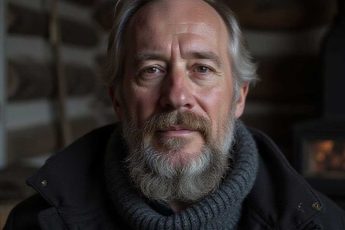
I didnt spot him straightaway. So many faces, all strangers. Then I found him standing at a table by the left wall, dark grey suit, glass in hand. Around him: an older man with a neat silver beard, clearly someone important, judging by how others deferred to him. Two other men. And her.
Miranda. Even though Id only seen her on that magazine page, I knew her at once. Taller in person, dark blue dress, hair perfectly styled. She stood a little too close to David, a little closer than mere colleagues.
I stepped forward. Then another.
People glanced round at the unfamiliar woman in a coat, not an evening dress. Then returned to their conversations.
Still a good seven yards away, I heard Davids voice, low and careful, the voice he used for his superiors I knew it by heart.
Yes, Alan, I dont mind saying. There are some personal circumstances. My wife… shes been ill. For some time. Quite serious. Which is why you usually see me on my own at these things or with Miranda, whos been wonderfully supportive. We do our best; its not easy.
I froze, listened.
The doctors advise against moving her. Shes out in the countryside, its quieter. Were used to it now. The children visit her. Shes very brave.
Alan shook his head, murmured something sympathetic. Miranda took Davids hand, easy and casual.
I walked the last few steps.
David noticed me only when I was almost upon them. For three seconds, he stared his face shifting, not fear, not anger, but some wordless mixture of the two.
Caroline, he whispered.
I didnt reply. I took the packet of tablets from my coat pocket and set it, slowly, on the table. They knocked gently against the white cloth.
All round the table stared. Alan with his beard; the two men; Miranda.
You forgot these, I said. My voice more even than Id predicted. I thought it was important to bring them.
Davids mouth opened. Closed again.
Thank you, he managed at last. I Caroline, I wasnt expecting
I can see that.
I looked at Alan. Alan looked back, sharply attentive, expression unreadable.
Alan, I said. Id only just caught the name, but it was enough. Pleased to meet you. Caroline Evans, Davids wife. Quite well, as you see. I live in the country, thats all.
Alan nodded. Still impassive, but very much aware.
I turned to face David. He was staring something in his eyes Id never noticed before, or never allowed myself to name.
David, I said steadily. Im calling a solicitor on Monday. Ill start divorce proceedings. The children stay with me.
I left before he could reply. Walked to the door.
The room had gone oddly quiet or, at least, at this end. In other corners, laughter and music resumed, but where Id stood, the silence felt almost tangible.
I walked to the stairs, not once looking back.
On the stairs, I paused, gripping the oak banister. Not because my legs had gone they were fine but just for a moment, I needed to stand still.
And in that second, a strange feeling. Not the bolt of pain or burst of rage Id expected. Not even confusion. No, what I felt was closer to relief the feeling when you step out from a stuffy room into fresh air. Not joy, but air.
Down, past reception, the young woman said something I didnt catch. I nodded, kept going. Out through the glass doors.
Outside, November met me with damp and cold. The street lamp shone yellow overhead. On the pavement, some people laughed amongst themselves, ignoring me. I reached the car.
I sat there for ten minutes before starting the engine. Just sat. Looking at the lights on the North Star, thinking nothing, thinking everything.
Solicitor that was first. I knew of someone, Judith, whod been on my journalism course; shed become a lawyer. We hadnt seen each other in twelve years, but I still had her number in my old diary battered, pages soft with age.
Children second. Ben would understand he was old enough, especially if I was honest. Sophie, much more complicated. Jamie I couldnt face thinking about Jamie without feeling something twist inside me.
House third. That was in Davids name. I didnt have any idea how property worked in divorce law. Id have to find out.
Work fourth. Fifteen years since my last job. In a publishing houses advertising department; it felt a lifetime ago.
I started the car. Drove homeward.
The road home in the November dark was the same road as always, but I saw it differently. I couldnt say exactly how. I was simply changed.
When I reached the drive, kitchen light was spilling out. Ben hadnt gone to bed; he was waiting.
I came in. Ben sat at the kitchen table, an open textbook in front of him, but from the way he looked up as I came in, he hadnt been reading just waiting.
Mum. You were ages.
Got a little held up. Why arent you in bed?
Didnt want to. He paused. Are you alright?
I hung my coat, sat opposite him.
Ben, I said. Do you remember when we talked, ages ago, about having to make hard decisions sometimes?
Ben put his book down.
I do. When I didnt want to quit football.
Then, yes. This time its something different. Ben, things are going to change for us big things. Ill tell you everything once I know more myself. But try not to worry. Alright?
He stared back. The same hazel eyes as David, slightly squinted. But the stubbornness mine. I could see it.
Are you splitting up?
I think so.
Think?
Yes. Definitely.
Ben was quiet.
I thought so, he said quietly at last, with a surprising lack of emotion. Ive thought so for a while.
I hadnt expected that or I had, but not quite in these words.
Youve thought so?
Mum. Im fifteen, not eight. I see how well, you hardly talk. And Dad turns up like hes checking into a hotel. Im not stupid.
Looking at my eldest son, I realised hed grown up while Id stared out the window, putting off every conversation. Grown up and worked it out for himself.
Im sorry, I said.
What for?
For being silent for so long. With you. I thought I was protecting you.
Dont, Mum. He shrugged awkwardly in that teenage way, when things get too heavy. Well be fine. Honestly.
I got up, walked around the table, hugged him from behind. He stiffened like a boy, then relaxed, his arms coming up to rest on mine.
Go to bed, I said. Big day tomorrow.
Sure. You should sleep too.
I will.
Of course, I didnt. Instead I sat at the kitchen table for ages, sipping tea long gone cold. My phone was on silent. David rang three times, then texted: Caroline, we need to talk. Its important. I ignored it.
We would talk. Just not tonight.
The next few days were subdued. David didnt come back. The children went on, Ben took second place at the maths competition, Sophie came home radiant after an excellent mark in maths, Jamie finally recovered from his cold and scampered about the house again. Life kept breathing.
I found Judiths number in that old, dog-eared address book. It still worked she picked up by the second ring.
Caroline? Is that really you? My word, its been years.
Quite a lot. Jude, I need help. Im planning to file for divorce.
Pause.
Come round, she said warmly. When suits you?
The day after tomorrow, if youve got time.
Ten, my office. Heres the address.
Two days later, I drove to her. For the first time in forever, I was in Oxford on business that was entirely my own doctors appointments, school meetings, shopping none of that. Just for me.
Judith was almost as I remembered: salt in her hair, tiredness round the eyes. She sat me down, brought coffee, I told it all to her. Or almost all. The essentials.
House is in his name? Judith, already scribbling notes.
Yes. But weve lived there fifteen years. Raised our children there.
Thats counted. Marital assets. Well demonstrate your contribution running the home, raising the kids, it all adds up. By law, everythings divided. She looked over her glasses at me. Do you want to stay or to sell?
I havent a clue, not yet. I need to know where I stand.
Sensible. Caroline, what about work experience?
Ages ago. Before marriage. Advertising department, publishing house.
Degree in?
Journalism. Oxford.
Judith nodded.
Thats better than you think. People come back into journalism. Slowly, perhaps, but they do. Just dont sit waiting for things to fall into place.
I know.
You know, but youve sat for fifteen years.
Yes. That too.
There was a pause. Judith finished her coffee.
Can I ask a personal question?
Go on.
Why now? Why not years ago?
I considered.
I kept thinking it wasnt the right time. The kids were too little. I hadnt the strength. Maybe later. And then, suddenly, later became now.
What changed?
I heard him, telling people about me. The imaginary illness, what a hard time hes had. To people he respects, serious people. And I realised hed long since invented another version of me, and thats the one he lived with. And I Id been assuming he at least knew the truth privately. Turns out, not even that.
Judith listened.
Or maybe he does, I added. And thats worse.
Yes, Judith said. It is.
We moved on to paperwork. Judith laid out what Id need. The conversation got businesslike, and oddly, I liked that. It was about me, but stripped of sentimental drama. Steps first, second, third.
When I left the office, dusk was falling. I walked through the city, passing women with shopping bags, an elderly couple with a Labrador, teenagers hanging about outside a café. Ordinary life, ordinary evening.
I went into the nearest café, hungry. Ordered soup and tea. Sat by the window, watching the world go about its business, and ate alone. Nothing remarkable, but to me, it was everything.
David came round on Saturday. I knew he would. The kids were home; Jamie played in his room, Sophie read, Ben worked at his desk. David rang at the gates, I let him in.
He went straight to the kitchen, sat in his regular spot. I put the kettle on. Neither of us spoke until the water boiled.
Caroline, he said. We need to have a proper talk.
Im listening.
Youve made a real mess. Do you realise that?
I poured tea, set a mug before him, leaned against the counter.
Tell me how, exactly.
Caroline. His tone hardened. Alan now wants an explanation. He values honesty in his staff, and well, you caused a scene where it wasnt called for.
I brought you your medicine.
You turned up somewhere you werent invited!
David, I said quietly. You told people I was terribly ill.
He fell silent.
For years. You made up that story to explain why I wasnt around. So you wouldn’t have to explain about Miranda.
Caroline.
I dont want a scandal. There won’t be one; you know me. I just want you to understand that I always knew. The whole time. I just kept quiet.
His eyes met mine.
How long?
A decade, maybe longer.
He rubbed his face a gesture of exhaustion Id seen years ago after hard days, but now it meant something else.
What do you want? he asked finally.
I told you, that night.
Divorce isnt just a word. There are the children. The house.
I know, David. Thats why I didnt say it for ten years. But the children are old enough now. Ben understands. Sophie will, too. Jamie’s little, but children cope if the adults are honest.
You think this is honesty? Breaking up a family?
I looked at him during a long silence.
David, there hasnt actually been a family for a long time. We both know it.
He didnt reply. Stared into his mug.
I want the children with me. And to keep the house, at least till theyre grown. Speak to your solicitor.
Youve already got one?
Yes.
Looking back at me, he seemed genuinely lost. Not angry just lost. As if he never believed I could have this conversation.
It stung, just a bit. Not pain just a small, sharp sadness. After all these years, he still didnt know who I was.
Though maybe, I had never given him the chance to find out. Maybe that was my fault, too. Maybe.
Fine, he said finally. Ill speak to someone.
Thank you.
He stood, took his coat from the back of the chair.
Do the children know?
Ben knows things will change. Not details. The others dont know yet.
He nodded.
Should I talk to them now?
Not tonight. Well do it together, properly.
Alright.
He walked towards the door. As ever, paused on the threshold.
Caroline. Wont you regret this?
I considered.
I dont know, I answered honestly. Perhaps Ill regret some things. But not what I did that night.
He left.
I stood in the kitchen. After a moment came footsteps upstairs, and then Jamie appeared at the top of the stairs in his ubiquitous aeroplane socks.
Mum, has Dad gone?
He has.
He didnt stay for lunch?
Not today.
Oh. He yawned, wide-mouthed and sleepy. Mum? Can I sleep in your bed tonight?
You may.
Yes!
He trundled off for his pillow. Watching him, I thought: this is real life. Not the moment in the marble-floored lounge, not the kitchen conversation with David. This, simple a boy in socks with planes, wanting Mum nearby for sleep.
I learned what happened at Garroway Holdings two weeks later, through Judiths network in the business world, not from David.
Alan, the Managing Director, really did demand answers. Judith said he was a man who drew a line at certain things, and duplicity at home especially so public and lasted so long was one of them. David was invited to resign by mutual agreement.
Did he? I asked.
So we hear.
I was silent for a while.
Miranda?
Not sure. Shes on a break, so the rumour goes. But thats not your concern anymore, you know.
I know.
I thought about it over the next few days. Not triumph, not sympathy. Just the realisation that hed built his own fragile edifice, and it hadnt crumbled because Id smashed something it simply had nothing inside. Elegant on the outside, empty within.
In December, when the first snow appeared and Jamie charged in shouting Mum, look, its white! I realised Id woken that morning without the heaviness Id carried for years. Just a morning. Just snow. Just a child at a window.
Not film-star happiness. Something quieter, steadier lightness in place of weight.
We filed the paperwork in January. David didnt contest custody. It took time to agree on the house, in the end we settled: Id keep it with the children and pay him his share over a few years. No scandals, nothing dramatic calm, careful negotiations.
David visited the children weekends. Jamie clung to him every Saturday morning for ten minutes. Sophie chatted, but kept her distance. Ben spoke like an adult calm, brief. During those visits I kept out of their way. That was for the best.
In February, I wrote to Emma a uni friend Id lost touch with years ago. She worked for a local online magazine, doing people stories. I wrote briefly: that I was back in Oxford, that Id like to meet, that I was thinking of returning to journalism.
She replied within half a day.
Caroline! Youre joking! So happy to hear from you! Come in Friday, were having an editorial meeting, Ill introduce you to the editor.
I dont know if Im work-ready yet.
Just come for a chat. See how you feel! No pressure.
Alright. See you Friday.
Editorial office: small, a few rooms in a nondescript block. People hunched over laptops, a coffee machine humming in the corner, a whiteboard with loose pages clipped up. The editor, Sam, a compact man of about forty, shook my hand and got straight to the point.
Emma says journalism degree. What can you do?
Writing. Interviews. Bit of editing. Its just been a while.
How long?
I havent worked in the business for fifteen years.
He was unfazed.
Youll soon get back in the swing. Send me a sample three pages: anything that matters to you.
Anything?
Anything that moves you. Thats more important than topic.
Driving home I mulled over what to write. Several themes floated by, disappeared. Then one stuck.
I wrote about women reconnecting with themselves after a long break. Not autobiography, just as a topic. What its like to have your path interrupted, to find yourself at the far end staring, not knowing where or how to begin again. But begin they do.
Sam replied in three days.
Good voice. Come in.
For?
For real. Contract, part-time to start: three articles a month, well see how it goes.
I read that twice.
Alright. Deal.
Emma rang me five minutes later.
Well? What did he say?
I got the job.
I told you so! Told you!
You did.
We laughed about nothing much, a normal chat between old friends. As we talked, I looked out at the snow in the garden and tried to remember the last time Id simply laughed on the phone with someone.
Spring came early. The snow melted quickly, ground revealed itself, buds crept onto the apple tree. Jamie checked for them daily after school, while Sophie announced she wanted to plant a vegetable patch and read up on seed trays. Ben revised for exams, but sometimes settled next to me to work through history questions I remembered better than I thought I would.
I filed my first real piece in March about elderly craftspeople teaching traditional skills. Interviewed three, wrote it up. Sam rang:
Reads nicely. Next, try something about libraries. Ideas?
I could talk to librarians. They know so much about readers, its a hidden story.
Good. Let me know how it goes.
Next week I was at the local library, listening to stories from the elderly head librarian about people, books, how sometimes a single book changes a life.
Have books helped you? I asked.
Always, she replied instantly. A books there so youre not alone, you see? Even if you think you are.
I thought on her words, driving home. Books had always been there for me, even in the emptiest years. Id never noticed before. Id never truly been alone.
May Sophie and I planted seedlings. She bossed me, I obeyed, both of us finding it funny and right. Jamie scampered and got underfoot, but neither of us minded.
Mum, Sophie said, washing up at the outside tap. Youve changed.
Changed?
You used to be absent. Now youre here. With us.
I dried my hands on a tea towel.
You notice a lot.
All kids notice what their parents do. Its normal.
I laughed. Sophie did too. Jamie, not understanding, joined in just for the company.
David called in May. Not about logistics or the kids. Just to call.
Caroline, how are you?
Well.
I heard youre working.
I am.
Good. You always had a talent for writing.
I didnt reply; not out of offence. I simply didnt know what to say. A strange compliment from someone who ensured, for years, that I couldnt write.
Did you want something, David?
Not really. Just wondering how you were.
Well, honestly.
Good.
Silence.
Ill come Sunday, if thats alright. To see the children.
Of course. Theyll look forward to it.
Did Jamie want anything?
If you can, bring a dinosaur book. Hes obsessed.
Done.
We said goodbye. I put the phone away, went out onto the porch. May was warm, the garden fragrant with earth and blossoms. A blackbird sang in the hedge.
I stood there, purposelessly, and simply breathed.
The life now building around me wasnt what Id ever pictured. I didnt know if things would be easy. I didnt know if my decision was right although, perhaps, thats the wrong question. Choices arent right or wrong, they simply are.
A few things, though, I knew for certain. Ben would finish school soon, his own life beginning. Sophie would grow into a good person, because she already was. Jamie, for maybe one more year, would love dinosaurs before moving on to something else. That I did enjoy the new editing job, and you can, after all, recover a knack. That Judith was a fine solicitor and a friend. That Emma, despite eight years no contact, was still herself.
And that Mrs Turner next door always asked if there was anything she could do, regularly delivered jars of jam which my children never ate, but which sat on the shelf and brought a small warmth to the kitchen.
Summer snuck in quietly. Simply arrived and then was.
My first piece went online in June, my name on the byline. Sophie found it and printed it out, pinning it to the fridge. At first, I thought to take it down; then left it up.
Ben studied the printout for ages.
Mum, youre really good.
You read it?
Yeah. It was interesting.
I looked at him. Fifteen, soon legally a grown-up.
Ben, do you have a dream? University, a plan?
I do, he replied, after a pause. Promise you wont laugh?
Never.
I want to teach. History. Not stupid, is it?
Not at all. Its important. Really important.
Thats what I think. People need someone to explain things, to see where weve come from.
Watching him, I thought: thats not something I taught him. He found it, by himself. Grew up into someone who thinks about things. Maybe my greatest gift was simply not getting in the way.
Its a good choice, I said.
You really think so?
I do. Now, get on with your studying.
He nodded, set off to his room. I listened to his steps and realised the most vital thing Id done as a mother wasnt after-school clubs, tutors, or nutrition. No, it was that, at the worst moment, Id moved forward. They saw it. All three.
Maybe, thats what remains.
August was hot. We drove out to a small lake, twenty minutes away. Jamie, determined but not graceful, splashed about. Sophie read on the bank. I lay in the grass and cloud-watched.
Mum! Jamie shouted from the shallows. Look, Im swimming on my back!
I can see, well done!
If you lie just right, you dont need to use your arms!
Wise words, Jamie.
Sophie glanced up.
Is that a metaphor?
What, love?
What Jamie just said. If you lie just right, you dont need to use your arms is that a metaphor for life?
I laughed.
No, sweetheart. Just swimming.
Shame. Wouldve been a good line for my essay.
Make up your own.
Trying.
Jamie tumbled out of the water, flicking droplets everywhere, then giggled.
Mum, whens Dad coming?
Sunday.
Will he bring my dinosaur?
He has already. Its waiting at home.
Which kind?!
Big, green Name escapes me.
Thatll be a stegosaurus! Or an ankylosaurus! Jamie grabbed a towel, wiping off with gusto. Mum, ankylosaurus had a club for a tail, did you know?
I didnt.
Now you do! Best defence in the dinosaur world!
The very best?
Absolutely none better!
Watching him eight, sticky summer, wet hair, dinosaurs I said:
Jamie.
What?
Youre a good person.
He looked at me, bewildered.
Mum, thats a strange thing to just say.
I know. I just mean it.
He shrugged, took his towel and headed for the waters edge. Sophie side-eyed me.
Are you alright, Mum?
Completely, love.
Just checking.
Back home, I set sweetcorn to boil Jamies pick from the market. Sophie retreated upstairs. Jamie sprawled on the sofa with a new dinosaur book hed unearthed.
I stood at the hob, steering the corn in the bubbling pan, as dusk pressed softly at the windows.
My phone chimed, an unknown number.
Mrs Evans? Unfamiliar, slightly formal womans voice.
Yes, speaking.
My names Rachel Hughes editor at ‘Our Corner. Emma gave me your number, said youre good and youve experience.
A little.
We all have a little at first. Her voice was warm, laced with humour. Weve an opening for a writer: women-targeted features, life stories. Emma says youre just the right sort. Are you willing to come in?
I stirred the corn.
I am.
Brilliant, when suits?
We fixed a day. I hung up.
Jamie yelled from the lounge:
Mum! Is the sweetcorn ready yet?
Nearly!
Im starving!
Five more minutes! Hold tight!
Im going to die!
Ankylosauruses knew how to wait!
Pause.
Thats not fair, Mum! But he laughed as he said it.
I smiled, turning back to the hob.
Outside, night was falling. Somewhere deeper in the house, Sophie put on her usual quiet, faintly sad pre-bedtime music. The corn boiled. Jamies slippers shuffled down the hall.
An ordinary evening. Completely, wonderfully, ordinary.
And yet.