Thirty years of marriage, and she only ever said four words to me
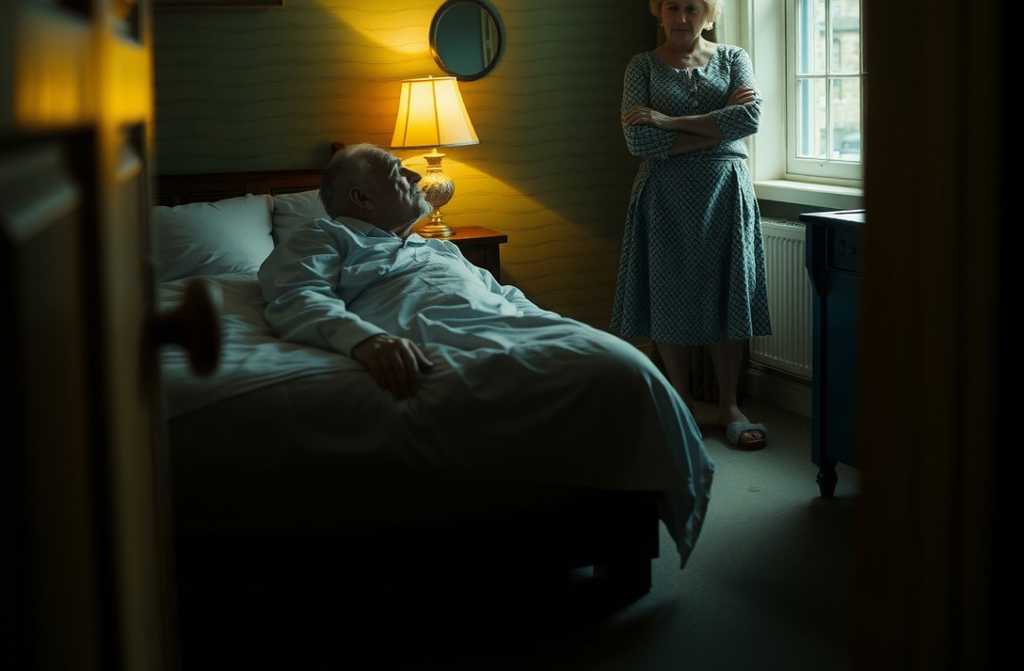
David, move over. Im changing the bed.
He shifted on the mattress with effort, every movement sending a surge of pain down his numb leg. Margaret gripped the sheet and yanked it sharply.
Its been half a year since youve been laid up in here, she muttered, not looking at him. And still no better
He stayed silent, used to her grumbling.
You know what I think sometimes? she snapped as she tugged the new sheet into place. I wish youd just die already. Youre stopping me from having a life.
The air froze in the room. David felt something rip apart inside him. She hadnt said it with anger, but instead with a cold, soul-freezing exhaustioncompletely honest.
What did you say? he whispered.
You heard me. Im tired, David. Tired of this house, all these pills, tired of you. Just die, will you? Let me finally live my own life.
She slipped out of the bedroom, her worn-out slippers shuffling across the old laminate hallway. David lay flat and stared at the yellowed ceiling, his eyes following the crack that spidered above the bed. That crack had appeared three years ago, after the upstairs neighbours bathroom flooded. Hed fixed it himself back then, up on the ladder with a spatula and pot of paint. Now the crack had spread, branching out like the wrinkles on his own face, and all he could do was stare at it, counting each uneven streak.
His wifes words hung in his throat like hed tried to swallow a dry crust. Wish youd just die. Four words that cancelled out thirty-two years of marriage, three children raised, a thousand evenings together, hundreds of fights and even more reconciliations. David tried to swallow but his mouth was dry as dust. The only hand he could still control shook as he reached for the glass of water by his bedside.
The stroke had hit in February, just after hed unloaded a delivery of timber at a building site. An odd pounding came over his head, like a weighty helmet full of wet sand. Then his left leg simply gave way, and he collapsed onto the frozen tarmac, bags of cement all around him. Steve, the site manager, called the ambulance. At the hospital, the doctora young woman with tired eyestold Margaret, Good thing you brought him in quickly. But his left side has been badly affected. Recovery will take time.
Six months had staggered by since then. Six months of emotional tension at home, which he hadnt really recognised at first. It started with flashes of irritation. Not that side, David, I told you! How many more times are you going to spill your tea? Stop shouting for me every five minutes, will you? The flashes dulled into a chill. Margaret stopped looking him in the eye, turned away as she helped him hobble down the hall. And then, today, shed snapped.
David closed his eyes and pictured himself as a thirty-year-old: broad-shouldered, tanned from all the job sites, strong arms that could hurl a bag of concrete like it weighed nothing. Back then, Margaret used to gaze at him with such pride. Hed built their house brick by brick. Shed bring him his sandwiches in a tea towel, and theyd sit on the half-finished porch, dreaming of days to come. Were going to have a big family, shed said, and youll build us a happy home.
And he had. Three bedrooms, a kitchen, a little sunroom. Theyd raised three kids. Their son James worked on the oil rigs up in Aberdeen now, the youngest, Grace, had gotten married and moved to Brighton. Only their eldest, Lucy, still lived close by in Birmingham, ringing once a week with a perfunctory, How are you, Dad?
David! Margarets voice rang out from the kitchen. Taken your pills yet?
Not yet, he replied.
Well get on with it! Or do you want me to come running again?
He reached for the pill organiser. Eight tablets a day blue for his blood pressure, white for his circulation, yellow for his heart. With a shaky hand, he dropped them into his palm and washed them down. Swallowing was hard; the left side of his mouth sagged, and water trickled out the corner. He wiped his chin and flopped back onto the pillow.
Wish youd just die. The words looped in his head like a broken record. Maybe she was right. Maybe he was stopping her from living. David couldnt recall the last time hed seen his wife smile. A month ago? Two? Half a year? Margaret moved around the house like a machine: cooking, cleaning, laundry, medication all by rote, her eyes as blank as fish on a slab at the market.
Last night, hed overheard her on the phone to her mate Linda.
As for me Margaret had said, sitting at the kitchen table. Its just work, the house, him Linda, Im so tired. Caring for someone sick isnt just hard, it drains your soul. Every single day is the same. I come home, my feet are throbbing after a twelve-hour hospital shift, and then I have to She trailed off. No, Im not moaning. Sometimes, I just wish it would end.
David had lain in his room, clutching the bedsheets. End. She meant if he died, itd be simpler for everyone.
The doorbell rang. Margaret went to answer. Steves voice filled the hallway.
Alright, Mags? Hows things here? Hows Dave?
The same, Steve. Come on in.
Steve poked his head around the bedroom door. Tall, bearded, with a battered leather jacket. He did long-haul lorry work, and only dropped in between runs.
How you holding up then, mate? he asked, taking a seat by the bed.
Alright, David tried a smile, but it came out lopsided. Getting by.
Physio going okay?
Trying, but progress is slow.
Steve looked awkward, studying his hands, and David could sense that pity, that wish to escape a room that smelled of medicine and hopelessness.
Listen, Dave, maybe youd do better at a rehab centre? Theyve got decent staff, physio, all that sort of thing
Cant afford it, David cut in.
What about the NHS?
Waiting lists over a year.
Margaret bustled in with some tea, setting the cups down.
Dont fill his head with false hope, Steve, she said sharply. What you see is what you get. Hes not going anywhere.
Steve looked at her, then at David. David saw understanding flicker in his friends eyes: Somethings not right here.
Alright, Steve said, downing his tea. Got to get back on the road. Might pop by next week.
After he left, Margaret came in.
Why do you have to moan to him?
I wasnt moaning.
Dont make me look bad in front of people.
I didnt say a word.
Exactly. You dont do anything at all. Just lie there.
She left. David turned to the window. Cars passed, people hurried by. Life bustled out there, beyond his reach. He was trapped in this room, this broken body, this daily punishment that came from words sharper than knives.
That evening, Margaret wordlessly put a dinner of sausages and mash by his side. He ate slowly, crumbs falling on the duvet. She stood at the door, an unreadable look on her face. Disgust? Exhaustion? Bitterness?
Margaret, he called quietly.
What?
What you said earlier do you actually mean it?
She hesitated, then sighed.
David, I honestly dont know. Im just tired.
Im trying not to cause trouble.
But you do. Your being here is trouble.
She took his plate and left. He was alone again. The marital cracks that had formed over years were now wide open. He remembered their old rowseven before the stroke. Too many nights at the pub, too many words said in anger. Hed storm out, shed weep, then thered be weeks of silence. But that was normal marriage bickering. This thoughthis was different. This was emotional cruelty.
In the dead of night, pain shot through his leg. The left one, nearly useless now, was seized by cramp. He groaned, tried to reach down, but couldnt. Margaret slept in the lounge now.
Margaret! he called. Margaret!
No answer. Louder, Margaret, pleaseit hurts!
He heard the sofa creak, her footsteps.
What now?
My leg. I canthelp me.
She came and kneaded his calf, her fingers cold and rough.
Better?
Yes, thanks.
Then go to sleep. Dont wake me again.
He lay awake, tears on his cheeks. He was fifty-nine and crying like a childfrom pain, from shame, from being so utterly unwanted.
The next morning, the council carer, Mrs. Smith, called round. She was in her sixties, with a kind, open face. Once a week, shed come to check on him, fill out forms.
How are you feeling, David? she asked cheerily.
Fine, he lied.
And your mood?
Alright.
She looked at him closely.
You look a bit glum. Maybe youd like to chat to someone? Weve a service nowfree counsellors, if youre interested.
Im fine, he said, eyes lowered.
Margaret hovered in the hall behind, forcing a smile. When Mrs. Smith left, she dropped the act.
Hope youre not telling her anything. Social wont be poking around here on my watch.
I wasnt.
Good.
Days blurred together. David withdrew further each weekdidnt watch telly or listen to the radio anymore. He just stared at the ceiling, replaying his own past: those early, hopeful years; a time when Margaret still loved him; the kidsJames, all muscle and jokes, helping him with the shed; Lucy, serious and bookish; giggly little Grace. He remembered carrying them piggyback, showing James how to hammer a nail, seeing Lucy off for her first day of school.
Now they had their own lives. James rang once a month and grunted something supportive. Grace sent twenty quid for his medicines and vanished. Only Lucy called for a real chat, asked about the doctors and how Margaret was coping.
If only she knew. If she knew that her mother killed him with words each day, that the ache of being unwanted was eating him alive. That at night he lay awake, thinking it might be kinder for everyone if he just stopped. There were so many pills. He could swallow them all, or just stop taking them, fade away without fuss.
One evening, Margaret came home late. He heard her in the hall, on the phone. Her voice was alive again, light and laughing.
No, Ill be there, promise! Saturday? I can make it. Hell be fine on his own, he wont die in a day.
David strained to listen. Who was she talking to? Where was she off to?
When she came in, he feigned sleep. Margaret lingered by the bed, then tiptoed out again. Through the thin walls, he heard her humming in the kitchen, dishes clinkinghe couldnt remember the last time shed sung.
On Saturday, she dressed upblue dress, makeup, a splash of perfume.
Im off to Lindas, she said. Its her birthday. Ill be late. Theres food in the fridge; you can heat it up.
Ill manage.
Dont burn the house down.
And she left. For the first time in six months, the flat was completely quiet. David heard every tick from the wall clock, every car on the High Street, every creak of the kitchen floorboard as he hobbled in on his stick.
He opened the fridge. Bare. A half tin of baked beans, a dried-up bit of cheese. No dinner. Shed liedjust gone and left him, not caring if he was hungry. Or maybe she just couldnt be bothered.
He made his way back and lay down. Stomach rumbling. He could have called Steve, asked for help. But the shame was too much. Shame that his own wife hadnt even worried.
Margaret rolled in close to midnight, loud and tipsy. He lay awake, listening to her rummaging for her keys.
You awake? she peered in.
Yes.
I had a good time at Lindas. Nice to feel alive again.
She cackled, hysteria bubbling in her voice.
David, you know what? Tonight I realised Im not old. I could have a life. A real life.
Im glad for you, he said, turning to the wall.
Dont sulk. Its not my fault youre ill. I deserve happiness too.
She left, stinking of cheap wine and faded perfume. David closed his eyes; the emptiness in his chest grew. All that stuff about helping families of the sick, you heard it on the telly, saw it on leafletsall rubbish. No one cared. No one would save him.
Another week went by. Margaret left more and more, stayed out with friends, delayed after work. He stopped asking questions. He just waiteddeath? A miracle? An end to something, at least?
Then one morning, Lucy rang.
Hi, Dad! How are you?
Keeping on, love.
Listen, Im coming tomorrow. Booked a week off to see you. You mind?
His heart lurched. Lucy shouldnt see this. Shouldnt know the truth.
No need, love, youve got enough onwork and all.
Oh, Dad, nonsense. I miss you. Does Mum know?
Not yet.
Ill give her a bell. See you soon!
Margaret was in a whirl the next day, cleaning, scrubbing, fussing with dinnerlike she was setting a stage. David just watched, silent.
David, when Lucys here, she said, avoiding his eyes, lets keep things as they are? No reason to upset her.
I dont plan to say anything.
Good. Were a normal family, arent we?
Lucy turned up at dusk. Tall, slim, dark hair in a ponytail. She hugged her dad, and a lump caught in his throat.
Dad, youve lost weight, she said, stepping back. You must eat better.
I just dont have an appetite, he replied.
You need strength.
At dinner, Margaret was talkative, smiling, cracking jokes. Lucy chatted about her job, her husband, summer plans. David nodded every now and then, but felt like a prop on the stage of their lives.
After dinner, Lucy helped clear up, then perched on the edge of his bed.
Fancy sitting out in the back garden, Dad? Fresh air will do us both good.
They sat wrapped in blankets on the old patio chairs. The evening was cool, the lilacs just starting to bloom.
Dad, Lucy began softly, tell me honestly. How are you?
Im fine, honestly.
No, youre not, Dad. Somethings wrong. You look like youve given up. Mum seems odd too. Has something happened?
David looked at her. His daughtersharp, honest, stubborn as ever. Staring at him with real concern. His own dam finally broke.
Love, he whispered, I think Im a burden. Your mum she says Im holding her back. That I ruin her life.
Lucy went still.
She said that to you?
He nodded. Lucy squeezed his hand.
Dad. Tell me, properly. Whats been going on?
And so he told her. Slowly, haltingly, with long gaps. He told her about those cold words, about the daily contempt, about being left alone and feeling a useless lump everyone wished would just disappear. Nights spent planning his own end, the shame, the sense of being an unwanted thing.
Lucys cheeks were wet with tears by the time he finished.
Dad, she choked out, why didnt you call me sooner?
I didnt want to bother you. Youve got your own life now.
She wiped her eyes, sitting up straight.
Enough. Tomorrow, Im talking to Mum. This cant go on. You dont deserve to live like this.
Dont, Lucy. Dont start a fight on my account.
Its not for you, its for both of you. Dad, what shes doing, its betrayal. I dont know how you bear it. But please, this isnt normal. Emotional abuse isn’t something you should just put up with.
She stared hard at him, and for the first time in months, David felt a flicker inside that aching emptiness. Not hope, perhaps, but a faint knowledge that he wasnt entirely alone. That someone still saw him as a person, not just some weight dragging everyone down.
I dont know what to do, love.
Well figure it out. Together. Now, please try to sleep. Ill sit here a while.
He limped back inside, she stayed under the stars. For the first time in months, hed let someone else see what he was carrying. Let someone see that underneath, he was scared and hurt.
What comes next? He had no idea. Talking to Margaret? Divorce? Some attempt at change? Maybe everything would just snap back to how it was, and Lucy would go, and hed be here againalone with that cracked ceiling and those four words echoing in his head.
That night, he barely slept. He heard Lucy pacing the house, voices from the kitchenhers and Margarets, quiet but tense. Then silence. In the morning, Margaret entered earlier than usual. She sat at the end of his bed, with red-rimmed eyes.
David, she started, her voice shaking, Lucy told me what you said. About those words.
He stared at the ceiling, silent.
I never meant to hurt you that way. I just I cant cope. Work, the house, youI feel like a hamster on a wheel, never stopping. And you just lie there
I do my best, he said quietly. Every day I do.
You dont even try to pour your own water. I have to do everything!
You really think I want this? That I chose to end up like this?
She wiped her eyes.
No. Of course not. I just Im so tired, David. Im burnt out. Theres nothing leftno love, nothing.
For the first time in months, he saw pain in her eyes, not scorn. She was suffering tooin her own way.
We need help, he said after a pause. Not just me. Both of us.
What kind of help? she scoffed. We cant pay for therapy.
There are free support groups. Mrs. Smith mentioned them.
Shes always on about stuff.
Margaret stood, paused in the doorway.
You know whats worst? she said quietly. Sometimes I really do catch myself wishing it would end. Thats the bit that kills me inside. I hate myself for even thinking it. But its there.
She left. He lay in the silence, realising they were trapped in a vicious spiral of guilt and anger. She blamed his helplessness; he blamed her for being cruel. But the truth was, they were both drowning, and nobody had thrown them a life belt.
Lucy stayed for three days. She took him to a different doctor, set up a NHS physio programme, and found details for a carers support group for Margaret. The evening before she left, she called them both into the kitchen.
Mum, Dadthis isnt working. Youre both miserable. It needs to change.
What can change? Margaret muttered. We cant magic away his illness.
But you can change how you deal with it. Mum, you need helpyou cant do everything. Ive spoken to James, hes sending money for a professional carer a few times a week, so you can get some time off.
“A carer? Margaret looked offended. A stranger in the house?
Better a stranger than what you two are becoming. Dad, youve got to do your therapy. Dont just lie here and lose yourself.
David nodded. I will.
And you both need to talk properly, not just argue. There are family counsellors who know how to help.
Well manage, Margaret huffed.
Youre not managingyoure hurting each other. Please. For your own sake. Try.
After Lucy left, the house was quieter. Margaret was less short-tempered, more lost in thought. Twice a week, Steve gave David lifts to physiotherapy. There he met othersa woman recovering from a heart attack; a young chap in a wheelchair. All of them fighting to recapture some meaning in their lives.
After a month, the carer arrived. Mrs. Taylor, gentle and efficient, came twice a week to help David with personal care and medication, and make lunch. Margaret would head out all day, coming home less frazzled. She even admitted once, Went to the hairdresser today. First time in months. Had a coffee in town. Felt like myself again.
Thats good, David replied.
They spoke little, gently, like strangers learning to trust. The harsh bitterness was mostly gone, replaced by a numbed emptiness.
One night, as Margaret helped him undress, David asked, Do you regret saying what you did?
She froze, then nodded slowly.
I do. But I meant it, at the time. Thats whats so awful. The words were there, bottled up, and they just poured out.
I get it.
Really?
Yes. I know Im a burden. Looking after me must be hell. Ive stolen your life.
She sank onto the edge of the bed.
You didnt steal it. The illness did. Im mad at fate, not you. Youre just the one here to take it out on.
So what now?
She shook her head.
I wish I knew. Maybe, with time we could find a new way.
And if we cant?
She looked at him for a long moment.
Then, maybe, well have to make a choice.
She left, leaving him with that idea. For the first time, he recognised he had a say in his own life. Not just waiting for death, or for Margaret to throw him out, but maybe asking Lucy for help, moving somewhere else, even a care homeanything where he had dignity.
Weeks passed. David noticed he was improving. His left hand was coming back; he could feed himself, dress himself. The leg was still weak, but the progress was clear. He started reading, watching the news, feeling reconnected. That sense of uselessness grew smaller, less all-encompassing.
Margaret joined a carers group. The first time she came home from a meeting, she looked exhausted, but not angryalmost cleansed.
There were women, just like me. All burnt out. We talked, and I realised Im not a monster for feeling like this.
Youre not a monster. Youre human, David said quietly.
They looked at each other, all the scars between them heavy in the air. But there was another truth, too: theyd spent over thirty years together, raised their family, built a homeand that couldnt simply disappear.
One evening, sitting in the backyard, Steve joined him for tea.
Youve changed, mate, he said.
How so?
Dont know. You look alive again. Before, you looked half dead.
David smiled. Maybe I am coming back to life.
Ever thought of leaving? You know, calling it?
I have.
And?
I realised running away isnt for me. I want to know if theres anything worth savingor at least end with some dignity.
Steve nodded. You stubborn old bugger.
Not stubbornjust dont want to go out with her last words ringing in my ears.
They sat in companionable silence, watching the sun set. For the first time in ages, David didnt think about dying. He thought about living. Not survivingliving; with all its pain and mess, but also with the right to choose.
Later, Margaret asked, What did you and Steve talk about?
Oh, just about life.
She hesitated. David, do you do you actually want to try again? To start over?
He looked at her; her eyes were tired but soft, as if hoping for something.
I dont know if its possible. But I want to try. I want to know we gave it an honest go.
And if we cant?
Then at least we tried.
She nodded, wiping her eyes. Alright then. Lets try.
David lay there that night, watching the lamp-lit crack on the ceiling. Maybe hed never fix it. Maybe he would. It wasnt so important now. What mattered was that he was here, still breathing, still feeling, still able to chooseeven if the world had tried to shrink his choices down to nothing.
The words Margaret had said would always be there, like a scar. But he learned to live with them. Not to forgive, maybe, but to forge ahead. And maybe thats what dignity truly is: choosing to carry on, even when all you want to do is surrender.
He shut his eyes. Tomorrow, hed get up, have breakfast, go to physio. Mrs. Taylor would call round. Margaret would come home, theyd share dinner. Maybe theyd talk, maybe just sit together. It would be life, in all its mess and painnot simply waiting for the end, but moving forward, however slowly.
And somewhere, quietly inside, another voice emerged. Not Margarets just die already. Not Lucys youre still my Dad. His own quiet voice, saying: Im still here. I still matter. I still have a choice.
It wasnt happiness, or a dramatic triumph. But it was enougha chance. And sometimes, a chance is all you really need to keep going.