Marriage Contract
I heard her footsteps echoing in the hallwaythose recognisably heavy, assured footfalls that never left you guessing. They didnt sound like someone coming for a polite visit, but rather a march of ownership, as though she were inspecting her own estate.
Jessica, said Mrs. Valerie Robinson, pushing open the door to mine and Simons bedroom without so much as a knock, Emilys moving in tonight. Youll need to set up the camp bed or you could bring the little sofa from the balcony.
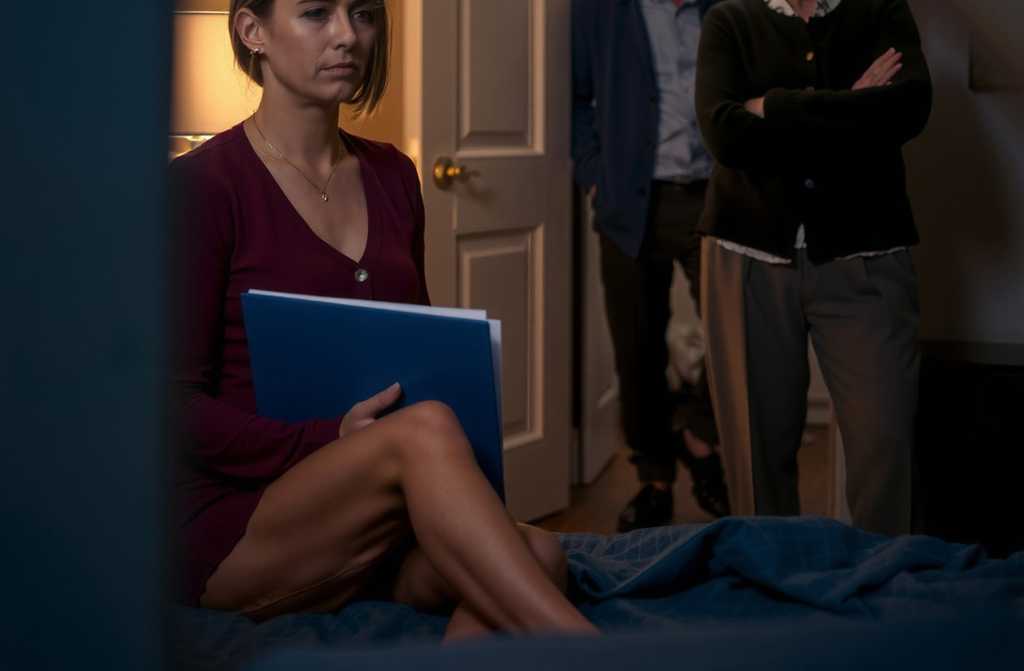
I was perched on the beds edge, painting my nails. The bottle of varnish hovered, suspended in the air.
Good evening, Mrs. Robinson, I answered evenly. Whats this about?
About Emily. Shes left Aaron. Nowhere to go, so shell stay here for a bit. Theres space, isnt there?
This is our bedroom.
Your point? Youre asleep anyway at night, she shrugged, as if shed pointed out something irresistibly logical. The sofas tinyit wont get in the way.
Simon stood in the doorway right behind her, looking off somewhereat the wall, the carpet. Not at me. I knew that look. It meant: Im not involved; you lot sort it, Im not even here really.
I replaced the varnish lid slowly, placed the bottle down. Then I looked properly at my mother-in-law.
Emily will not be living in our bedroom.
***
It was a Friday. April. Outside, the twilight settled, and the streetlamps pooled that peculiar watery gold you only get in spring, when its still cold but the frosts melted away. That evening stands out in my mind as if it happened only last night, though enough times passed for the squeezing feeling in my chest to have finally faded.
Weve lived in this flat twelve years. Three bedrooms, third floor, a suburb neither central nor lost in the wilds. When we bought it, it seemed gigantic. After years in a rented box room, these high ceilings, tall windows, and actual corridors felt like a miracle of abundance.
Id saved the deposit for three years. Every salary, no holidays, no new shoes, no going out for a coffee. Simon was saving too, though he never quite squirrelled away as muchhe was brilliant at spending in small, invisible ways, until suddenly the money had vanished. Not out of malice. It was just how he was shaped.
And still, it wasnt enough. Short by about a third. That was when my mum offered to sell her flat.
It was a squat one-bed in an old brick block, the window overlooking the communal garden. Mum had got it fair and square after years working in the biscuit factory, patiently stood on the council list for seven years. She used to say the flat was almost aliveit breathed with her, a safe place to shut the door on the world.
When she offered to sell, I didnt agree straight away. We talked, night after night. Mum said, look, when Im gone, itll be yours anyway, so why drag things out? Better now, while you need it. I said: mum, its yoursyoull have nothing left. She replied: with you, I have everything. Youre hardly going to chuck me out.
Of course I wouldnt. That didnt need saying. Mum moved in. She had the studythe sunniest room, with its south-facing window. Simon made faces at living like we were in some student house again. I just looked at him, silent. He knew what silence meant.
Mum lived with us eight years. She died two years ago. Now her room sits behind a closed door, mostly untouched. I keep putting off the decision about what to do with it.
Thats important context. Because when Mrs. Robinson started talking about Emily and the sofa, I thought immediately of Mum. Not deeds nor rights, but my mother, who gave up her only home so I could have this one.
***
Mrs. Robinson and I have never had an easy rapport. I wont pretend it was all her fault; admitting that would be dishonest. Were both our own women, with strong habits and clear ideas on how family is supposed to work.
But shes someone for whom the boundary between hers and others is thin, porous. Not in a cruel way, justshes always believed a family shares all. Everything is joint: money, stuff, decisions, flats. If someone in the family has something, then everyone does. And if someone needs something, everyone must chip in.
Its a generous philosophy. I see where it comes from. But it has this quirk: it mostly ever works one way. Ours is always what belongs to others. Her own things, she keeps close.
I made a real effort those early years. Remembered her birthday, bought thoughtful gifts, cooked when she visited, smiled when Id rather have snapped. Simon always said, well done, shes a tricky one, but shes my mum. I nodded. Good, if you say so.
She moved in with us five years back. Her own flata two-bed in a different suburbsits shuttered. She says its cold and awkward, too quiet, she feels poorly and needs a bit of care. Simon just accepted it. I said nothing. To be fair, at first, it was manageable.
She took the small roomwindow looking out over the communal garden. By then, my mother was gone, and the room was deserted. I thought, perhaps its for the best, at least its used.
First year was fine. Then things shifted.
Shed rearrange the kitchen. Not on purpose, just how she liked things. Shed open my wardrobe, rummage, take what she fancied. She tutted at my way of doing thingswhat I cooked, how much I spent, how I cleaned. Once, I found her pills in our bedside drawer. Shed slipped them there, as it was closer. I took them out to the hall, said nothing.
Simon said: dont mind her, she doesnt mean it. I said: I do mind, its my life. He winced. He said: you know, shes old. I said: she may be old, but I dont see why that means no one respects my space.
Those talks always ended the same. Simon called me fussy; I stopped talking. Then we both pretended everything was normal. Thats family life.
***
Emilymy sister-in-law, Simons little sisteris her own creature. Thirty-seven, married to Aaron for a decade, no children. They live in Aarons flat, mortgage long gone. Emily hasnt worked for four yearssays shes finding herself. Aarons got a decent job.
I dont dislike Emily. Shes not unkind. Shes merely used to lifes choices being made by othersfor her, by her mum, by Aaron, by whoever. Shes never fully learned to decide anything, let alone stick around for the outcome.
Their marriage had its turns; I stayed out of it. Heard through the kitchen door: rows, Emilys complaints to Mum, Aarons cold manner, that he didnt understand her. I only met him two or three timesa weary bloke, seemed all work, no time for chat.
What happened that Friday, I never quite found out. Mrs. Robinson simply said: Emilys left her husband. Full stop. As if that explained all, the rest irrelevant.
Maybe she truly left. Maybe it was a spat, the sort that boils over. Maybe more. I dont know. But I do know this: even if Emily had the soundest reason to leave Aaron, it didnt mean she could move right into my and Simons bedroom.
***
Emilys not staying in our bedroom, I repeated.
Mrs. Robinsons expression shifted, eyes narrowing, brow archinga look I knew well, one reserved for meeting unexpected resistance.
Jessica, shes my daughter.
I understand. But this is our room.
Whats the fuss? The sofas small. You and Simon will fit, shell fit. Bit tight, but at least she wont be sleeping on a park bench.
No ones suggesting the street. There are guesthouses, her friends. She even has her own place.
Aarons there, said Mrs. Robinson, as though that ended all debate.
Thats between her and Aaron, not me.
Simon coughed behind her. I didnt look. He coughs when he feels useless.
You dont understand what families do for each other, Mrs. Robinson said. Not angry, but weary, like she was explaining something blindingly obvious to someone deliberately dense.
Ive been part of this family for twelve years, I said. I understand a little.
Families help one another. Emilys in a bad way.
I sympathise. But help can take many forms. Moving her into our bed isnt one of them.
She was quiet. Then: Simon, tell her.
And then, suddenly, the air changed. This wasnt a squabble about beds and sofas. It was about whose word counted most in this home.
Simon coughed.
Mum, he said carefully, lets talk about it later. Jessicas rightits our room.
I barely believed it. Id learned to expect the opposite.
Mrs. Robinson gazed at her son, then at me. You do realise this flat was bought with our familys money?
A pause. Small, heavy.
With whose money? I asked.
With Simons. Our money.
With mine, I said. With the proceeds from selling my mums home. And the mortgage Ive paid every month.
You? she scoffed gently. You brought money into this family? Do you know what Simon
Mrs. Robinson, I cut inshocked at how steady my voice sounded, lets not start counting who put what in. Simple truth is this: in our bedroom, Simon and I sleep. No sofa. No Emily.
She looked at me, very long. Then said the words I remember, verbatim, even now.
Youre not from us. Youre just Simons wife, nothing more. They wrote you into the family, do you see? Just wrote you in.
***
I didnt reply straight away. I rarely do when something stings deep. For small slights, I can retort in a flash. But when words burrow into the sore bits, I shut up. People sometimes mistake that for agreement. It isnt.
Simon said something. I didnt catch it. Blood rushed in my ears, that hot, silent anger, not yelling but burning quietly.
I stood. Walked to the wardrobe. On the bottom shelf, behind a pile of jumpers, was a blue folder. Id put it there when we moved in, not expecting to need it, just wanting it handy. Mum always said: keep papers close. You never know.
It was a thick, plain folder, good cardboard, no label, just blue.
I took it out, turned, and laid it on the bed.
Whats that? asked Mrs. Robinson.
Documents. I said.
I opened the folder. Found the conveyancing contract. Handed it over.
Its here in black and white. The buyers namemine. Just mine. Not two names. One.
She looked at the paper. Her brows lifted again, in a different way now.
Hows that possible?
We made a marriage contract first. Copys in there. The flat is my sole property. I decide who stays, who sleeps where.
Simon stood by the wall. I didnt look at him. I watched Mrs. Robinson.
Heres the mortgage, too, I went on. Im the borrower. I pay it. Twelve years so far. Four to go.
Pause.
And so, Mrs. Robinson, when you tell me Im just someone written in, youre wrong. No one wrote me anywhere. I bought this home. With my mums money and a mortgage I pay myself. Its mine. And Emily wont be living in my bedroom.
The silence was long. Not awkward, just densethick with everything just said.
At last, Mrs. Robinson laid the purchase contract gently back on the bedalmost as if shed realised, at last, it wasnt just paper.
Simon, she called, still not looking at me.
Mum, Simon answered, his voice low but without that old blurred, evasive tonejust calm. Jessicas right. Its her flat. We cannot do this without her.
Another pause. Shorter.
I see, said Mrs. Robinson quietly. I see how it is.
She picked up her knitting bag from the armchair, straightened her jumper, held her chin level, that expression of wounded pride. I knew that lookdignity and offence, all at once.
Emilyll find somewhere else for tonight, she said and left.
I heard her steps echo away, the click of the lock on her own room. The house carries sound: nothing is ever secret here. Its awkward, but honestyou cant hide what happens between these walls.
I packed the files back in the folder. Left it on the bedside table, not the cupboard. For some reason, I felt no urge to put it away.
Simon came in, sunk wordlessly onto the bed beside me.
I didnt know about the contract, he said at last.
You did. You signed it.
I never truly understood what it meant.
You did. The solicitor explained. We both listened.
He was silent.
I never thought it would come to this.
To what, Simon? To needing to announce that I have a right to sleep, undisturbed, in my own bed?
He said nothing. Just nodded, slowly. I knew that nodguilty, conceding. He knew I was right, and he was embarrassed it took saying out loud.
You were brave, he said softly.
Im not brave, I replied. Im exhausted.
***
Emily didnt turn up that night. I didnt ask where she went. Later, I heard shed gone to stay with a friend, then back to Aaron, then out again, then something-or-other with their marriage, maybe sorted, maybe not. She was never close enough to me to tell me such things.
Mrs. Robinson stayed holed up all the next daya sign she was mortally offended. Usually then, Simon would go in to pacify her. I never did. Not to punish herjust that I cant make up easily with someone who calls me an outsider in my own home. Its not a grudge I can just pack away.
Second day, she came into the kitchen. We crossed paths at the cooker. She boiled her kettle for tea; I was chopping onions for soup. We said nothing. Not hostilejust the pause that comes when something irrevocable has shifted.
Do you want tea? she asked.
No, thank you.
She poured her own, stood quietly a moment.
Soup?
Yes.
What with?
Chicken and potatoes.
A pause.
Add some parsley, she advised. Itll taste better.
I said nothing. But I added the parsley. That means something, too.
***
The weeks that followed were strange, not bad, but as if something fundamental in the house had tipped, and we were all relearning the new shape of things.
Mrs. Robinson stopped entering our bedroom uninvited. After a while, I noticed: shed approach, pause, knockonce, short. I said come in. She opened, asked, did I know where her glasses were? I said, kitchen windowsill. She thanked me and left.
It was a little thing, perhaps nothing. But for me, it was huge.
I said nothing. Didnt praise, didnt make a fuss. Just accepted it. Because some things arent accomplishmentstheyre how things ought to be.
Simon changed a bit. Not drastically, but enough to notice. Hed tell his mum no, more often. Not rudely, justno, mum, well sort it ourselves. Or, mum, thats not yours to decide. Calm, untheatrical.
I dont know what went on inside him. We didnt dissect that night for ages. He doesnt like pulling the past apart, thread by thread. His way is: it happened, move on. Sometimes I envy that. Sometimes I think its just a way to avoid facing awkward truths.
About a month later, Emily started looking for a room to rent. I overheard Mrs. Robinson saying on the phone: yes, look, its not a big deal, youll find one. I stood in the hall, thinking: so this is how its sorted. Not with shouting. Not with slammed doors. With a blue folder on a bed.
Emily got a room in about six weeks. Not nearby. Ive no idea how shes managing. We dont keep in touch.
***
I often think about that eveningnot regretfully, but to understand how a person can keep silent for years, smiling while things pile up, until one night you find yourself placing a folder of documents onto the bed.
Im forty-eight. Im a financial analyst in a small firm. Ive been there years, the team know and respect me, which is a small certainty when everything at home sways and trembles. Im married for the second timefirst marriage young and brief, no property, no lasting costs, just two kids realising they were drifting apart. Seventeen years with Simon now.
Simon is a good man. I need to say that. Not cruel, not mean, not selfish. He does love me, I think, in his way, and I love him, in mine. But he shrinks from conflictespecially with his mother, whos always kept him close and called him her lifeline.
I get it. She brought up two children single-handed, the husband gone when Simon was twelve, Emily seven. She took double shifts, never complained. For her, Simon wasnt just a son, but a partner in survival. It marks you, both of you.
I understand. Understanding isnt the same as agreeing. You can see someone clearly, but disagree with their choices. Thats different.
***
I remember us buying the flat. It was March, bleak and chilly. We met with the solicitorme, Simon, the notary. Before that, a talk about prenuptial agreements. My legal adviser suggested it, since the deposit was mine, really Mums. Simon was upset, said, Dont you trust me? I said, I trust you completely, but those were Mums savingsI cant gamble with them. He mulled it over. Agreed, in the end.
At the signing, the solicitor explained: the deeds in my name, by prenup, the property is wholly mine; in any division, its not up for grabs. Simon listened, nodded, signed.
I never thought Id need those papers. Or rather, I thought maybe if we split, Id need them. Never that Id need them to tell my mother-in-law that thered be no infill sofa in my bedroom.
Its daft, in hindsight. But only now can I see it calmly.
***
There was an early incident in the kitchen. Back when Mrs. Robinson only visited, not lived with us. One weekend, she turned up, and the next morning I found every drawer reorganised. Cutlery gone, pans displaced, seasonings jumbled. I asked: did you move everything? She said, yes, its more sensible now. I replied: I had it how I liked. She looked puzzled: but why be cross? I only meant to help.
And there it was. Shed always meant to help. But better, for her, always meant easier for herself. Not us. Not me. Her. She couldnt see the distinction at all.
Simon once asked me not to be offended. Later, I just quietly put it all back. She noticed days later. She said nothing, just glanced.
***
Sometimes I think all family life is built on little silencesshifted spoons and spooned back. On talks held through actions, not words. On long pauses, holding more meaning than paragraphs ever could.
My oldest friend, Rachelwere colleagues, different departments, two decades of friendshipknows almost everything about my life. When I told her about the blue folder, she burst out laughingnot cruelly, just honestand said, Jess, youve got nerve. Most would have wept or stormed out, you brought out the paperwork!
I pondered that. Maybe shes right. But it wasnt about making a sceneits just that words alone werent enough. We could have argued all night and nothing would have shifted. But paperspapers are facts. You cant quarrel with facts.
Mum used to say, You always had a cool head. Not a compliment or a criticismjust how it was. I think she was right. A cool head doesnt mean it doesnt burn inside, just that you hold steady outside.
***
I think about Mum a lot. Especially in her still-closed room with the sun streaming in. Sometimes I step in for no reason, just pause. Theres still a faint scent of her perfume, even after two years. Maybe I imagine itmaybe its just the smell of time and memory, my mind filling in what I want to find.
Mum was a quiet person. Not weak, just quiet. She avoided rows, found ways to resolve without big speeches. When I was small, I thought this was weakness, but later I saw it for a kind of strength. It takes real backbone to keep your voice low when you ache to shout.
She never meddled in my life. Eight years she lived with usnever told me to do anything differently; never intruded on me and Simon, even when things were rough; never rearranged so much as a spoon.
When she died, Mrs. Robinson did come for the wake, though theyd hardly met. She sat quietly in her corner, eating the little pastries Id made. Then later, she approached me and said, Keep going. I nodded. That was everything between us that day.
Sometimes I wonder: had they known each other better, talked more, could they have found common ground? Two such opposites. One silent, one loud. One who guards boundaries, the other who doesnt recognise they exist. Maybe theyd have found something. But thats an unanswerable question.
***
After that evening, Simon and I didnt discuss the main event for weeks. We talked about everything elsework, dinners, weekendsand yet the night itself hung in the air, unfinished business.
Three weeks later, we talked. Sunday morning, Mrs. Robinson still asleep, kitchen bathed in stillness. Simon at the window with his coffee, me opposite with tea.
Jess, he said. Are you angry with me?
For what?
For for staying quiet when Mum spoke to you like that. For not stepping in sooner.
I reflected.
Im not angry, I told him. Just worn out. But not angry.
I should have actedsooner, years sooner.
Probably.
I see now how things were for you, all those years.
I said nothing. Not to woundsometimes silence is the truest reply.
Shes not a bad person, he said. She just cant do different.
I know shes not bad, I replied. But just because someone cant, doesnt mean they should. It explains, not excuses.
He studied his cup, then nodded.
Youre right.
Those two words. Youre right. Said easily, without resistance. It matteredperhaps more than anything hed said before.
We finished our tea and coffee. Rain spattered the windowcalm spring rain. Later he asked whether I fancied going to the garden centre; apparently some nice seedlings had come in. I said, lets go. We went.
Thats family life too: after all that, you can go buy tomato plants together. Maybe thats what normality is.
***
Mrs. Robinson and Iweve levelled out, not friends, not enemies, but stable now, everything where it belongs.
She remains in the small room. Sometimes I wonder if we should discuss the futureshes seventy-two, not in the best health. Simon needs her here, I can see. And, in truth, I dont want her to leave. Despite everything.
But that talk can wait.
Sometimes, she offers me her mothers old recipes. Try it like this, shell say. Sometimes its genuinely better, sometimes not. I tell her the truth, whichever way. She takes it well these daysor so it seems.
Yesterday, she needed help with her phonethe photos, apparently, had vanished. Turned out, theyd auto-moved to a new folder. We found them: snaps of Emily as a girlon the swings, with an ice cream, in a school pinafore on the first of September. Tiny, curly-haired, silly.
Mrs. Robinson stared at the screen in silence. Then: Those were the days. I didnt know what to say, so said nothing at all.
***
Emilys now been renting a room for months. I heard this from Mrs. Robinson, casually over breakfastEmilys sorted, got herself a place, started working again. I said, good. She nodded and hobbled back to her room, tea in hand.
Apparently, shes working in a shop, retail assistant or something. I dont know if shes happier; maybe yes, maybe no. Living alone takes separate muscles; not everyone manages in a hurry.
She and Aaron, I gather, are separated or divorcing. I havent asked. Its not my business in that way.
***
Theres something I cant help mulling over: that night, as I laid the folder down, I expected relief, triumph perhaps, maybe anger. Instead, I just felta tired, stubborn sadness. The sadness that it had come to this. Not because I doubted myself or pitied Mrs. Robinson, butwhat kind of family needs a contract to prove you belong, not just tolerated by someones say-so?
Ive not found an answer to that. Perhaps there isnt one. Or perhaps, there is, but each must decide for themself.
I dont hide the papers now. The blue folder sits openly on the shelf. Not a threat, just a reminder. Mostly for myself.
***
Rachel rang me a month ago. Evening, a work night. Listen, she said, chatting to a friend, shes got this mum-in-law/flat drama, and I told her about you and your blue folder. She asks does a prenup really matter, or is it just a piece of paper?
I laughed.
It matters, I said. If it says what you need, if you know what it means.
What if there isnt one?
Trickier. But if a property was bought with money from selling something owned before marriage, most times its still the owners. She should get a solicitor.
Rachel passed that on. Her friend went to see a lawyer. Good.
I suspect there are more stories like this than anyone admits. They play out behind doors, women keeping quiet lest they start a row, worried it breaks the family, used to thinking their place is to bear up and smooth things.
Im not saying battle is always necessary. I never battled. But knowing your rights, having the documents ready, remembering that yours is yoursthats not fighting. Thats just honesty. With yourself, and those around you.
***
Once, I overheard Mrs. Robinson on the phone, talking to someoneher friend, perhaps. I wasnt eavesdropping; just happened to pass her door.
She was saying: No, Simons all right. His wifes strict, bit controlling. She paused, then, softer: But she keeps a grip on that flat.
I dont know what she meant by thatmaybe criticism, maybe something else. Keeps a grip can be said many ways.
I went to put the kettle on, and thought: yes. Keeps a grip.
***
I love this flat. I know every floorboard creak, how the sunlight slices through at three in the afternoon, how the hall smells after rain. I know the radiator in our bedrooms cold at one end, and on icy nights I drape a blanket across my feet. From the kitchen window, if you lean a little, you glimpse the edge of the parka scrap of treetops, but in spring, dusted with blossom, its beautiful.
Twelve years. The core of my adult life. Mum lived here. We lived here. All of it happened here.
Sometimes, late at night, I pace the flat when all are asleep. Habit, maybe. Ill visit the kitchen, peer out to the black sky. Check the front doors locked. Pass Mums closed room.
Once, I opened her door in the small hours, just stood quietly. It was black in there, lit only by a streetlamp filtered through the thin curtain. Her desk, her still-made bedI havent cleared it. Her things, mostly untouched.
I stood and thought: what would you say, Mum? About the folder, about that night, about all of it.
Shed have smiled quietly. Thats right, shed have said.
And nothing more. Mum always said plenty with a single word.
***
Recently, Simon suggested we redecorate the bedroom. He said, Its time, the wallpaper looks tiredmaybe something new? I agreed. We went shopping togetherhe liked grey, I wanted warm beige. We quibbled a bit, settled on a soft, warmish grey. Both a little unsatisfied, both a little contentit was fair.
The work starts in May.
Mrs. Robinson asked if we needed help. Simon said, Weve got it, thanks. She nodded approval.
That means something, too.
Theres one last thing I want to say, because not to would be dishonest.
That night, when Mrs. Robinson called me an outsider, something stuckno longer pain, not quite; more a weary bitterness. Seventeen years. Seventeen years Ive been here. Im no perfect wife, no perfect daughter-in-lawI have edges and corners you can trip over. But I am real. I dont pretend. And after seventeen years, to be told: Youre only written in, youre not one of us,well, it hurts.
I dont believe shes right. I know shes not. But those words leave a mark.
You just learn to live with that.
***
We had dinner together last Saturdayjust us all. Simon was frying fish, I was tossing a salad, Mrs. Robinson perched at the table, half-listening to her little telly that she drags to the kitchen, volume down so as not to disturb.
Dinner talk was normal. Simon shared some office joke; we both laughed. Mrs. Robinson smiled, though shed missed the start.
She said, Lovely fish, Simon, well cooked. He replied, Thank the fish, not the cook. She smiled again.
I sat thinking: this is it, what family looks like, carrying on after everythings been said. Not perfect, not easy, but carrying on.
Afterwards, we cleared the platesI washed, Mrs. Robinson went to her room, Simon stayed to dry the crockery.
That was nice, he said.
Yes, I agreed.
He loaded the cupboard, then, as if on impulse: Jess. Do you ever wish things were different?
Different how?
Well, you know. How we ended up.
I turned off the tap. Dried my hands.
No, I answered. I dont.
He nodded. Hung up his tea towel.
Me neither, he said. And went back to the lounge.
I lingered in the kitchen a moment, looking out. The leaves on the park trees were newbornspring green, fresh and transparent as only May can be.
The blue folder rested on the bedroom shelf.
Mums room was closed.
Renovations would start in May.