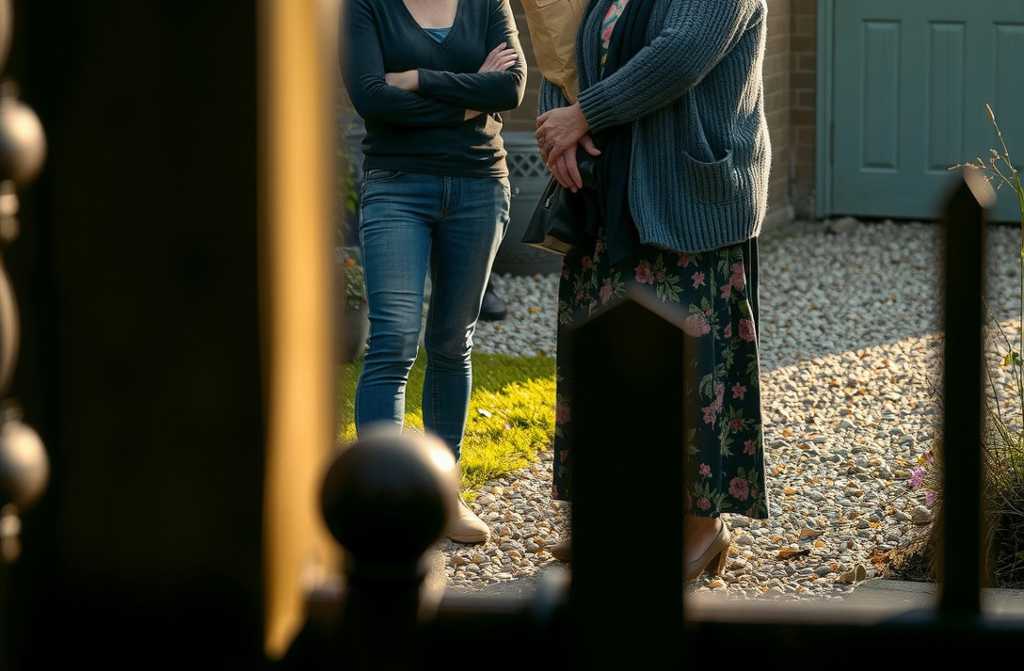
Did Not Let Her In
Eleanor heard the gatebell at exactly half-past ten in the morning. She was kneeling by her parsley bed, thinking she really ought to buy a new watering can since the old one had a crack in its spout.
The bell rang again.
Then againa long, insistent peal.
Eleanor got to her feet, brushed the earth from her jeans, and strolled cotton-soft towards the gate. September was far off, late Mays warmth drifting around her, the garden still clinging to its wet soil and something fragile blooming in the air. She wasnt expecting anyone.
At the gate stood Margaret, her mother-in-law.
Beside her, sprawled on the path, were two massive tartan bags, a bundle of wooden garden stakes tied with a bit of garden twine, and several trays of seedlings wrapped in the local newspaper.
Open up, said Margaret. I’m stood here like a stranger on my own property.
Eleanor eyed the bags. Then the stakes. Then Margaret.
Good morning, Margaret.
Good morning, yes, yes. Open up, my hands are full.
You didnt say you were coming.
Margaret balanced her hands on her hips as best she could, arms curving around her burdens. Why would I fuss with that? I’m not visiting, Ive come to stay. Till September. All this is mine, you know, since before Thatcher.
Eleanor didnt unlock the gate.
She just stood on the other side, silent, looking at Margaret. Inside her, something like silence settled. Not empty silence, but one denselike the earth after a big English rain. It surprised her, this quiet. Usually at moments like these, some invisible string would quiver in her throat.
Are you deaf? Margaret tried to edge closer to the mesh.
I can hear you, Eleanor said. But you cant come in.
The pause simmered, thick as fog over the moors.
What did you say?
I said you cant come in. Theres a new lock. You havent got the key. You werent expected.
Margaret stared as if the fence itself had sprouted a mouth and started speaking.
Then she said, Eleanor. Do you know who youre talking to?
Eleanor knew. Shed known for twenty-two years, as long as shed been married to David. As long as Margaret had been in her lifeappearing when she wished, leaving when she wishedmoving things in the kitchen so theyd be handier, swapping out the linen closet because its tidier here, appearing at eight in the morning on a Sunday since youre not sleeping anyway, telling Eleanor her stew was wrong, her tone with David was wrong, her child-raising impractical.
And it was always said in a soft, almost wounded way, as if daring Eleanor to argue back.
Then came David.
Ellie, dont be difficult with Mum.
She means well, love.
Come on, what harm does it do?
The cottage had come to Eleanor from her parentsa two-room place just outside Cambridge, the old porch with rails she meant to fix, and never did. The apple tree planted by her father. The beds worked by her mothers hands.
It was hers.
Not the familys, not sharednot for everyone. Hers.
Eleanor moved in with the warm May city air got too thick. She came back in September to dig potatoes and turn off the water, sometimes in June or July, simply to live quietlyno tele, no endless talk.
Margaret came too. No one had asked her. She simply appeared. Once, Eleanor arrived Friday evening to find her mother-in-law already thereflowerpots rearranged on the porch, half the vegetable patch turned wrong, her own things stacked away on shelves.
I always meant to tidy up, Margaret said. It was chaos in here.
It wasnt chaos. It was Eleanors own orderthe only one she understood, the only one she liked.
That year, three years ago, something shifted in Eleanor. Not sharply, but graduallylike an English morning that starts sunny, becomes crisp by noon and you wish youd brought a jumper.
She rang David.
David, your mums at the cottage.
I know.
You knew and didnt mention it?
She was only trying to help.
Shes moved my things.
Well, move them back.
Eleanor did. And the next time. Again and again. It became a silent game with Margaret keeping her mysterious tally.
There was a battle of the hammock. Eleanor bought one in early June, after poring over cataloguescotton, blue-and-white stripes. She strung it between her fathers apple tree and the old swing-pole.
Next visithammock gone.
It sat, wound up on the porch.
Margaret took it down, said David, as if it were the most ordinary thing. Says its ugly. Says the apples suffering from the rope.
The apple trees fine, Eleanor said.
Well, talk to her.
Eleanor did.
Margaret, Im putting the hammock back.
Thats your right, said Margaret with a tone that absolutely meant it was not her right. But dont blame me if the tree dies. Ive watched it twenty years.
My father planted it.
I remember. I was here then.
Eleanor hung up the hammock. Margaret came three days later and took it down again.
That was two summers past. The hammock sat coiled til it vanished. Eleanor didnt bother looking.
That year she closed the joint Bank accountDavid used to give his mother money from it, no word to Eleanor. It was their joint account. Both put their wages in, but Margaret used it whenever she wished. Eleanor opened a new one, in her own name.
David was upset.
Whyd you do that?
Because I work and want to know where my money goes.
Mums struggling.
I know. And I help. But I want to know when, beforehand.
Not a row, exactlya conversation. David wasnt a man for shouting. He pouted, closed up, looked wounded. That had its own sting, but Eleanor was used to it.
Then, March this year, she changed the gates lock.
Nothing secret. Justshe hadnt mentioned it. Sometimes things neednt be explained.
And now, Margaret stood at the gate with wooden stakes and seedlings.
Do you know who youre speaking to? she repeated.
Yes, said Eleanor. Youre Davids mother. I respect you. But you cant come in.
What! Margarets voice faltered, searching for a fit word, one she did not find. I came by two buses! Hauled these seedlings myself! Hefted these stakes aloneDavid was busy!
I didnt ask you to come.
No one asked you! I decided myself! Theres a garden hereyou have to work! You, youre just playing with soil!
Eleanor gazed at her hands, black from the earth. She had been planting parsley.
Margaret, she said serenely, you may leave the seedlings by the gate if you wish. Ill sort them. The stakes too. But you arent coming in.
What do you mean, I shant come in? Margarets voice went highone Eleanor recognised, not angry yet, but bruised, enough for the neighbours to hear. I used to come here with your parents! I know this place like the back of my hand! Where the well is, the drain, the lot!
That doesnt change things.
And swapping the lockis that fair? Is that decent? Im your husbands mother!
I know who you are.
Well? What does that mean to you?
Eleanor could have said many things. She knew what it meant. Margaret had helped with their son Michael, when he was ill. She brought jars of preserves. Once, fifteen years ago, she gave them money when David lost his job and things were bad.
All of that was true.
But thistwo bags, stakes, seedlings; an entire summerwas also true.
Margaret, youve arrived without warning. You said youll live here till September. No one asked my thoughts.
Why ask! Im not a stranger!
Youre not the owner. This cottage is mine. My parents left it to me.
Ah, your parents! Margaret threw up her hands. So that’s it. My parents, my cottage! And David, your husband, where does he stand?
Davids always welcome. Ill let you know when youre expected.
There was a hush.
A neighbour walked past with a ginger dog, looking at her phone. Margaret glanced over.
Fine, she said quietly, in a voice Eleanor knew too well. Ill call David.
Go ahead.
Margaret produced her mobile. Dialed, put it on speaker so Eleanor could hear.
David. Come here. Your wife wont let me in the cottage.
He must have been at work, for his voice was low, a little strained.
Mum, what do you mean she wont let you in?
Just that. Standing here, me with seedlings and stakes, everything dragging myself, and she stands there and wont open up. Says I wasnt expected.
Ellie, Davids voice wafted from the phone, uncertain. Ellie, please open up for Mum.
Eleanor stepped back so Margaret saw she hadnt gone.
David, she called, loud enough for his phone, your mother turned up unannounced, saying shell stay until September. I did not invite her. Did you?
A pause.
Wellwe spoke.
You spoke.
Mum, David tried. Did you tell her, Mum?
Whats there to tell, said Margaret, waving it off. I always come. Every year. Why ask?
David, Eleanor said. If your mother comes in today, you pack up and move in with her. Until September. As she stays, so do you. You be there, Ill be here.
The line went silent.
Margaret stared.
What are you on about? she asked, but there was no conviction there.
I mean what I say, Eleanor answered. David, do you understand?
Ellie, this is
Do you?
I do.
All right.
She stayed by the gate. Birds sang on the plot. The apple tree threw dappled shadows across the grass. It was warm and almost nice, and only Margaret and her bundle of stakes disturbed the border.
You know what youre doing, Margarets voice went weary, almost bitter. The next instrument in her set. Youre tearing the family apart.
Its not locks that tear families, Margaret. Its ignoring boundaries.
Boundaries! My word! Hear that, David? Boundaries, she says!
Mum, David through the phone, wait. Ellie, what if Mum sets her things down and goes today, and then you two talk after?
When we talk, Ill call. Todayno.
Ellie! Margaret pressed, urgently. Its disrespect!
Disrespect is coming uninvited to someone elses home and declaring you’ll stay for four months.
Someone else’s! Hands to the sky again. This placeyour dad and I came here when David was a boy!
I know. And still, its mine. My parents. Now mine.
Margaret pulled the phone away. Davids voice was still talking, but she ended the call. She looked at Eleanor for a long, entangled moment. Then down at the bags, the stakes.
Youre really serious, she said.
I am.
So youafter twenty-two yearsIve treated you like my own
Margaret, Eleanor cut her off, you did a lot for us. Thats true. But that doesnt mean you get to appear, uninvited, and move in for four months.
So I’m nothing now?
Youre not nothingyoure my husbands mum. Ill invite you when Im prepared.
When youre prepared, Margaret repeated incredulously, as if Eleanor had suggested making an appointment at the dentist.
Eleanor said nothing.
Margaret stood there, as if listening for fairness to come floating on the breeze. Then began packing up her bags, heaving and sighing with the injustice of it all.
Will you take the stakes? asked Eleanor.
I will, snapped Margaret.
She hefted up the bagsawkward, sticky, the stakes poking out sideways. The trays of seedlings stayed behind.
Youll not take your seedlings?
No. Do as you please.
She lumbered away down the path, slow and heavy. Eleanor watched, something turning inside her. Not exactly guilt. Not pity. Some other thingmaybe just tiredness that it all kept happening.
Eleanor went back inside the garden, paused under the apple tree.
The day rolled on. Birds. Far off, a strimmer at work in a neighbours patch.
She collected the seedlings and took them to her beds. They were tomatoesBeefheart. Not bad, if she was honest. Good earth, sturdy stems.
She planted them.
That evening, she returned to London. David was at home, sat at the kitchen table nursing a mug, gaze down.
Mums upset.
I know.
She rang three times.
I heard. I didnt pick up.
David was quiet.
Did you really have to be so harsh, Ellie?
Harsh?
Not to let her in.
She came, unannounced, with possessions for four months.
So what? Shes not a stranger.
Eleanor set her bag on the chair. Hung up her jacket. Washed her hands at the sink, not hurrying, because there was nothing to rush for.
Later, she sat opposite him.
David, did you give her permission to come?
He hesitated.
David.
Wellwed spoken, that she might, you know, over the summer
You gave her permission.
I didnt say she couldnt.
Its the same thing, Eleanor said. You knew she was coming, and you didnt tell me.
I thought you wouldnt mind.
Why?
He just shruggedhis favourite move when things grew stickyshrug and let it fizzle.
David, look at me.
He did.
Ill say it once. If your mum does this againcomes without me knowing, she gets you. Not me. Youll stay with her till she leaves. I mean it, Im not threatening. Thats just whatll happen.
He looked at her.
Youre serious.
Very.
David took his mug, set it down, took it again.
Mum reckons youre just trying to humiliate her.
Mums free to think what she likes, Eleanor said. I didnt humiliate her. I simply didnt let her into a place she hadnt been invited. Not the same thing.
She wept.
Eleanor didnt reply. She knew Margarets tearsthe precise, timely ones, part of the working toolkit. Loud wounded voice, soft weary voice, tears, always in order.
Im going to bed, she said. Tired.
She left. David stayed at the table.
It was Tuesday.
He was distant Wednesday. Softer Thursday. Friday he asked if they might drive out to the cottage together at the weekend. She agreed.
They arrived Saturday morning. While David took things from the car, Eleanor stood in the garden, gazing at her fathers apple. The spot where a hammock might hang.
Shed bought a new hammock back in April. It was still in its packet.
Help me hang it? she asked him.
The hammock?
Yes.
He wordlessly took the ropes, knotted themapple tree, then pole. Blue striped, cotton, a new one.
Is that all right? David asked.
Its right, said Eleanor.
She lay in the hammock. Sky above, the apple tree, gentle wind. David hovered, then went inside for coffee.
It felt good.
Not, perhaps, the simple good of when nothings ever been wrong, but the good of having done something right, even if it wasnt pleasant.
The days passed evenly.
Margaret didnt call Eleanor. She rang Davidhis short answers, his pacing outside with the phone gave it away. Eleanor didnt pry. His affair.
A fortnight later, Rosea pensioner from up the way, called over from behind the netting.
Eleanor, is it true? Your mother-in-laws not coming any more?
True, Eleanor replied.
Best, really, said Rose. She nearly drove me mad last year, talking about how I plant my radishes wrong. Ive been at it forty years.
Eleanor laughed, and it was her first real laugh in weeks.
What about your greenhouse? Rose asked.
Might put one up.
Need stakes?
Yes.
Ive got spare. Take them.
Just an ordinary chat. No drama.
One evening David said, Mums at Gillians now, her nieces. Minding their kids.
I see, Eleanor replied.
Are you pleased?
She considered.
No. Not pleased or upset. Only, its fine shes there.
David nodded. I know I was wrong. Not telling you.
Yes, Eleanor said.
Youll not say its all right?
I wont. It wasnt. But now its better.
He nodded. Simple talk, no tears, no hugs. Sometimes thats enough.
June came warm.
Eleanor went to the cottage alone, early that Saturday, while mist still curled in the dips. She opened the gate with her own key, set a kettle on.
Then walked into the garden.
The tomato seedlings Margaret had brought were blooming now. Beefheart. Sturdy, dependable.
Parsley too.
By the fencewhere thered always been a bare patchshe planted peonies. Three bushes, pink. Shed wanted them for years, always putting it off. This year, she planted them.
They didnt flowernot the first year, sometimes not even the second. But they were there: roots, a beginning.
She carried her mug to the hammock and lay down.
Apple tree leaves whispered above.
A starling popped into the garden, perched on a stick then darted off.
Eleanor lay, thinking of nothingor everything, but softly. That the terrace rails really did need fixing. That David would visit Sunday, probably grill. That she meant to buy raspberries last year and forgot. About Michael, who lived in Newcastle now and phoned once a week. About her mumhow shed sit here with a book, in this very corner.
None of it required action.
It simply was.
Next week, she came again. Brought two raspberry canes, planted them by the fence.
Rose, behind her mesh, watched.
Good raspberries?
Supposed to be autumn-fruiting.
Best kind, said Rose. Just keep them watered.
I will.
Quieter for you here now, said Rose, pausing.
Yes.
Quiets lovely. Me and my hubby lived quiet all our lives. Some call it dull. I liked it.
I like it too, said Eleanor.
Rose nodded and left.
Eleanor straightened, surveying her beds, her hammock, the green peonies by the fence. Only leaves yet, deep and thick.
Shed go inside, make a sandwich. Tidy the front path a bit, the sand had sunken. Perhaps later readshe had a book on the porch waiting.
Just an ordinary day.
Just what she needed.
Some three weeks later, Margaret finally phoned Eleanornot David, but her. Unexpected.
Eleanor stared at the screen, then answered.
Yes, Margaret?
Good day, said Margaret. Her voice was flatnot cold, not warm. I wondered. Did the seedlings take?
A quick pause.
They did. Good crop.
Thats all right, then.
Nothing more. She ended the call.
Eleanor looked at the phone.
The strangest, possibly most honest conversation in twenty-two years.
She slipped it away and went to water the tomatoes.
In late July, Michael came. He lives in Newcastle now, in some company Eleanor never quite follows. He brought a friend, Tomboth bronzed, a bit noisy, as young men can be.
That first evening, they grilled. David was there, too, having come down midday. They all sat on the porch. It had gone dark, lanterns glowedones Eleanor bought last year.
Mum, said Michael, its better here now.
How do you mean?
He hesitated. Calmer. Used to come here and always something was off. Now its fine.
Nothings changed, said Eleanor. Same rails, same beds.
No, somethings changed. You feel it.
David didnt join in. He sat, watching the coals.
Tom, Michaels mate, didnt know the family scripthe just ate and said he loved cottages and you dont get this up north.
Theres cottages there too, said Michael.
Not like this.
What do you mean, like this?
Juststill.
They chuckled, the talk floated elsewhere.
Eleanor listened. Michael was right. Something had shifted. Here, or in her, she couldnt detangle which.
Next morning, she and Michael went to the market, as always when he was younger, his hand in hers. Now, he strode besideshalf a head taller.
Mum, do you speak to Nan?
Sometimes.
She angry?
Probably. I dont ask.
He was quiet.
You did right, you know.
She was surprised.
You know?
Dad told me. Briefly. That Nan came and you didnt let her in.
And you?
Think it was right. She was always storming in and taking charge. You just put up with it.
I coped.
Mum. You didnt copeyou endured. Its not the same.
Eleanor looked at him.
You got clever.
I’ve been clever a while, he smiled.
They bought berries, bread, cheeseMichael’s choice, and it was good.
On the third day, they leftMichael, Tom, back to Newcastle. David went back to London for work. Eleanor remained.
She wandered in the garden.
The apple tree stood calm. The hammock swayed, the peonies by the fence still just green, but solid, confident, as if full of knowledge.
She knelt beside them, touched the leaves.
Youll flower next year, she said aloud.
It sounded silly, talking to peonies. But her mum did, and the apple tooshe said they listen.
Maybe they do.
Late August, David drove up to the cottage by himself. Eleanor was in the city. He rang her that evening.
I fixed the rails, he announced.
Really?
Well, a bit wonky, but they hold.
Good, she said.
They sat in that quiet only married people know.
Mums with Gillian. Shes happygrandkids adore her.
Glad.
Are you glad?
Truly.
A silence.
Ellie, I want you to know. I get that I picked wrongsaying dont be difficult with Mum instead of something else.
I know you know.
Its not an excuse. Just wanted you to know I see.
I know, David.
A quiet phone conversation, nothing stirring or grand. Eleanor sat at her London kitchen, rain at the window, soup on the hob not yet ready.
All right, said David. Ill come down tomorrow.
Bring bread.
Will do.
She set her phone down. Stirred the soup. Watched the rain bead the glass.
September crept closer. Time to dig potatoes. Turn off the water. Gather the last tomatoes.
She thought of the peonieshow they sat, unseen, under rain-soaked earth, roots only, a beginning.
The next morning, Margaret called unexpectedly.
Eleanor, got a moment?
Just. Go on.
I wanted A pause, long as church bells in autumn. To say, maybe I was wrong. With the cottage.
Eleanor waited.
Ive never been told no, Margaret continued. Arthur never did. David never does. You never used to.
I do now.
I hear you.
Silence.
Im not saying you did it righthow you did it Margaret caveated, as if she still needed the last word. But I get it. The cottage, its yours.
Yes, Eleanor said.
Can I come sometime? In autumn. I want to see the apples. Your fathers apples were always good.
You can, said Eleanor. Just call ahead.
I will.
Margaret spoke another few minutesabout Gillian, her grandchildren, some new raspberry variety. Bland chat, clutching for neutral ground. Eleanor listened.
They said goodbye.
Eleanor poured more tea, watched the sky. Rain had gone, but the sun was pale, autumnal, though true autumn was still days away.
That evening David arrived with bread.
Mum ring you? he asked.
She did.
And?
We had a chat.
He looked at her, waiting, as if for something more.
A proper chat, yes. She wants to see the apples. I said she could come in autumn, if she calls first.
David nodded, breathing out.
Good, he said.
Right. Leave the bread there, Ill wash up, then well eat.
She walked to the bathroom, the water running.
Through the walls she heard kettle, bread, crockerytwenty-two years of ordinary noises.
Nothing changed, and everything changed. Both things true, and neither interfered with the other.
First week of September she went aloneto dig potatoes, gather tomatoes, prepare for winter. She loved the clarity of autumn choresclear jobs, clear end.
The day was grey, quiet, smelling of earth and old leaves.
She worked, took a tea break, wandered to the hammock.
Lay down.
Above, the sky, thick with clouds. Apple tree, sturdy. Peonies at the fencestill leaf, now tinged faintly gold.
Next year, theyd flower.
She sipped lukewarm tea from the flask. Cool now, but shed brought a jacket.
Afternoon! came a voice beyond the fence.
Rose.
Afternoon, called Eleanor.
Your peonies are coming on well. Good variety?
Just standard. Pink ones.
Pinks a good choice. Theyll bloom next year.
They will, said Eleanor.
Rose commented on her own neighboursbuilding all summer and now finally done, such peace at last. Eleanor listened, watching the sky.
Tell me, asked Rose, your mother-in-laws with her niece now?
She is.
Well, it suits her Im sure, with grandkids and all.
Probably.
You more at peace here now?
Eleanor considered.
Yes, she said. At peace.
Good, said Rose. I had my own times with mother-in-lawwhile my husband lived well, long story. Its common, you know.
I know.
Dont lose yourself, love. Thats all that matters.
Rose trundled away. Her footsteps faded.
Eleanor lay in her hammock. Tea cold at last. Sky above, apple set with first flecks of yellow.
She closed her eyes.
Nothing to decide. Nothing to explain. No need to find the right face or words. Just lie, listen to the quiet garden, feel the autumn air, knowing this placeapple to peony, gate to rail (even if David fixed it wonky)was hers.
Not someone elses. Not by birthright or years. Hers.
Childrens laughter floated from beyond across two gardens, a thud, something rolling on decking. Cottage sounds.
Her phone buzzed in her pocket.
She opened her eyes. David.
Still there?
Im here.
Ill come down in the morning. Fix those rails for real. You said they were crooked.
You said so. I agreed.
Still. Ill fix them. And well gather the apples.
We will. See you in the morning.
Dont starve yourself, Ellie.
I wont.
You do.
No, honestly.
He chuckled.
All right. See you.
See you.
She put the phone away.
Above: sky again, apple, the subtle hush of the day.
Tomorrow David would be there, picking apples. Theyd prepare for winter, return in October when the house was locked up and the water off. The garden would drift under snow, the peonies sleeping, waiting with their roots for spring.
She crept from the hammock.
Time for the last row of potatoes. After, close up the greenhouse. Then, perhaps, a proper supper and an early night.
She grabbed the spade. Headed for the beds.
From Roses place came the trimmersuch an ordinary, restful sound.