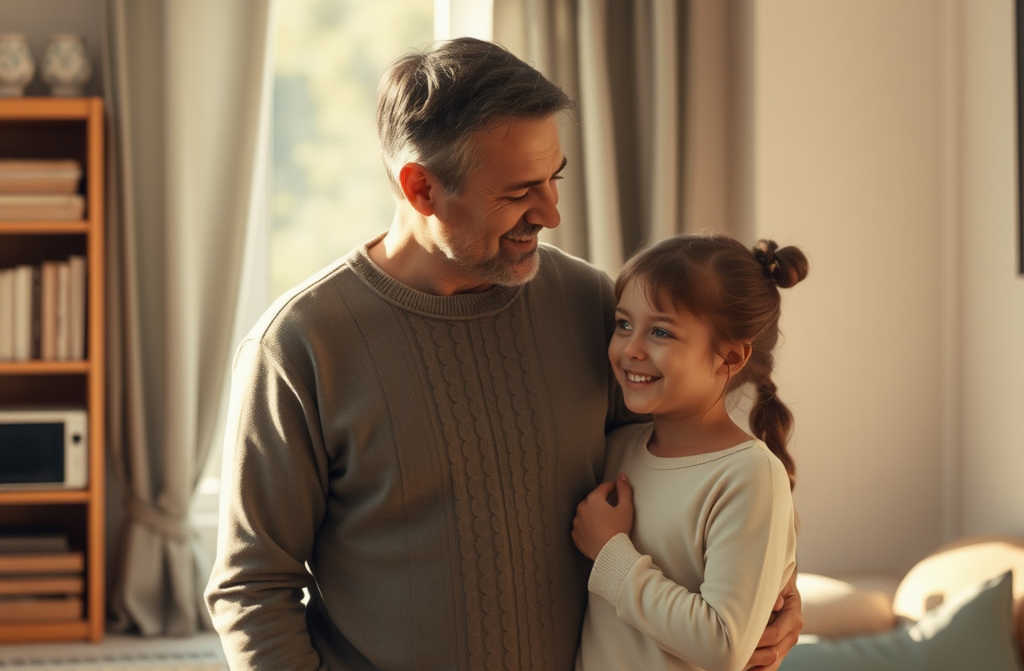
“She’ll sleep in the loft,” Emma announced, her voice flat as stone. “You have a daughter. She’s seven.”
David almost dropped his phone. Laura’s voiceafter eight silent yearscrackled through the speaker.
“Laura? Is that you?”
“Yes. We need to meet. It’s urgent.”
“But a daughter? What are you talking about?”
“Come to the café on Oxford Street. In an hour. I’ll explain everything.”
The ringtone blared. David stood in the middle of his open-plan office, feeling as if a bolt of lightning had struck him. A daughter? With Laura? They had split eight years ago!
He called home, saying hed be late at work. Emma, as always, muttered something dissatisfied about dinner. James, probably, was glued to his computer again. Fifteen and only interested in video games.
Laura sat by the window of the café, gaunt, dark circles under her eyes, a thin scarf wrapped around her head.
“Hi, David.”
“Hi. What what’s happened to you?”
“Cancer. Stage four. I have maybe two, perhaps three months left.”
David sank into the chair opposite hers, a lump forming in his throat.
“Oh God, Laura”
“Don’t feel sorry for me. I didn’t call you because of that. I have a daughter. Poppy. Your daughter.”
“How could she be mine? We were we were careful!”
“It doesnt always work out. I found out I was pregnant a month after we broke up. You’d already gone back to Emma.”
“Why didn’t you tell me?”
“Why? You chose your family, your son. I didnt want to ruin that.”
David fell silent, remembering that year. How tired he’d been of Emmas endless complaints, her demands for money, new things. How hed met Lauralighthearted, carefree, asking only for love.
Three months of happiness. Then Emma cornered him: either come back or never see his son again. James was seven then, crying, begging his father to return.
David went back. He never visited Laura again. He didnt even say a proper goodbyejust a text that it was over.
“Show me a picture.”
Laura tapped her phone. On the screen was a little girl with light hair and grey eyesDavids eyes.
“Oh God shes a miniature version of me at that age.”
“Exactly. Same stubborn streak, but a good heart.”
“Where is she now?”
“At home, with a neighbour. David, Im dying. I have no relatives. If you dont acknowledge paternity, theyll send Poppy to a childrens home.”
“Of course Ill acknowledge! A childrens home? Shes my child!”
“And your wife? Your son?”
“Ill sort that out.”
“Think carefully, David. This isnt a game. A child who will lose her mother, traumatised, scared. Your family might not accept her.”
“Shes my daughter. End of story.”
Lauras tears fell silent, soundless.
“Thank you. I was terrified youd refuse.”
“When can I see Poppy?”
“As soon as you like. But you need to prepare and warn your family.”
That evening David called a family meeting. Emma sat stonefaced. James stared at his phone.
“I have a daughter, from another woman. Shes seven.”
Silence. Then an explosion.
“What? You cheated on me!”
“Eight years ago, when we were about to split.”
“We werent about to split! You ran off to a bar!”
“Emma, calm down. Lauras dying. The child will be left alone.”
“So what? Thats our problem?”
“Its my daughter!”
“A fake daughter! I wont let her in my house!”
James looked up, confused.
“Dad, why do we need her?”
“Shes your sister.”
“She isnt my sister! Shes a stranger!”
David stared at his wife and son. When had they become strangers?
“Ill take Poppy, with or without your consent.”
“Then chooseus or her!”
“Emma, are you serious?”
“Absolutely. Its either the family or your bastard.”
“Dont you dare call my child that!”
“As I please! In my house!”
“This is my house too.”
“Not for long.”
A week later Laura was moved to a hospice. David arrived to collect Poppy.
The girl stood in the entry hall with a tiny suitcase, thin, pale, huge eyes.
“Good afternoon. Are you my dad?”
“Yes, sweetheart. Im your dad.”
“Mum said youd pick me up.”
“Ill. Youll live with me now.”
“And Mum? Will she get better?”
David sat on the edge of the sofa.
“Poppy, your mum is very ill. She might not recover.”
“Shell die?”
“Possibly.”
The girl nodded, not crying, as if she already understood.
“Ive packed a few things. Mum said youll buy new ones.”
“Ill buy anything you want.”
At home Emma met them in the hallway.
“Is this our waste?”
“Emma, look after the child!”
“Whats the difference? Let her know her place straightaway. Shell sleep in the loft.”
“In the loft? Have you lost your mind?”
“Where else? Theres no spare rooms.”
“In the guest room.”
“This is my study!”
“Now its the nursery.”
Poppy pressed against the wall, eyes wide with terror.
“Dad, maybe I should go to a childrens home?”
“No childrens homes! Youre mine, youll stay here.”
“Well see,” Emma hissed.
The first week was hell. Emma ignored Poppy. James teased her, calling her a leech. She ate after everyone else, slept on a pullout couch in the guest roomEmma refused to buy a proper bed.
“Why spend money? She might never settle.”
David tried to protect his daughter, but work consumed his days. At home it was a battlefield.
Laura died a month later. David took Poppy to the funeral. She stood by the grave, lips biting themselves, not crying.
“Dad, is Mum in heaven?”
“Yes, love.”
“Does she see me?”
“Of course.”
“Then Ill be good, so she wont be sad.”
Life at home grew worse. Emma openly bullied Poppy, denied her food when David wasnt around, made her clean the whole house. James hid her belongings, ruined her notebooks.
David intervened.
“Emma, stop! Shes a child!”
“Shes a stranger! She knows her place!”
“This is my child!”
“Your son, James, is the one who ruined everything!”
Three months later the breaking point came. David returned early from work. Screams echoed through the house.
He ran upstairs. In the bedroom, James was beating Poppy with a belt.
“Youll learn not to touch my things!”
“I didnt touch anything!” Poppy sobbed.
“Liar, you little”
David burst in, snatched the belt, shoved James aside.
“What the hell are you doing, you monster?!”
“It was my tablet!”
“It wasnt mine!” Poppy curled into a corner, bruises blooming across her skin.
“Even if you took itwhat right do you have to beat her?”
“Mum said you have to discipline!”
“Mum said what?”
David went downstairs. Emma was at the kitchen, sipping tea.
“Did you let James beat Poppy?”
“Discipline. Not taking what isnt yours.”
“Its a sevenyearold!”
“So what? Shell get used to it.”
“Enough. Im leaving. Im taking Poppy.”
“Please, just rememberJames stays with me.”
“Let him stay. If youve raised a sadist, I dont want that son.”
David packed in an hour. Poppy trembled on the bed.
“Are you doing this because of me?”
“No, because of them. Were leaving.”
“What about my brother?”
“Hes not your brother. He wont act like one.”
They rented a twobed flat on the outskirts. For the first time Poppy smiled when she saw her own room.
“Is it really mine?”
“Yes. Well set it up however you like.”
“Can we have pink walls?”
“You can have gold if you want.”
The divorce was messy. Emma demanded everything. They split the flat, sold the car, and David paid child support for Jamesabout a quarter of his wages.
But David never regretted it. He watched Poppy blossom, stop being afraid, start laughing again.
At school she was shy at first, but a kind teacher helped her settle.
“Dad, Ive got a friend!”
“Really? Whats her name?”
“Megan. She invited me to her birthday!”
“Great! Well get a present.”
A year later James called.
“Dad, can we meet?”
“Why?”
“I need to talk.”
They met in a park. James had grown, his eyes still haunted.
“Dad, Im sorry.”
“For what?”
“For Poppy. I was wrong.”
“I know.”
“Mum said she was a stranger, thats why you left us.”
“I didnt abandon you. I left the abuse.”
“I get it now. Mum found a new man. Hes also raising me. A stepdad.”
“So what?”
“I finally understand how Poppy felt. Can I see her?”
“Ill ask her.”
Poppy hesitated, fear still lingered, but David persuaded hermaybe her brother had changed.
They met at a café. James brought a massive plush bear.
“Poppy, Im sorry. I was a fool.”
“Its alright. We all make mistakes.”
“Are you really my sister?”
“Yes. By blood.”
“Can we meet sometimes?”
Poppy glanced at her dad, who nodded.
“Only if you stop hurting anyone.”
“Never again! I promise!”
Their meetings grew more frequent. James became protective, helping with homework, standing up for her.
When James turned eighteen, he moved in with his dad.
“Mum, Im leaving.”
“To the traitor?”
“To dad and my sister.”
“Shes not your sister!”
“She is. Youre just a cruel person.”
Emma was left alone. Her new boyfriend abandoned her for someone younger. James stopped calling. David stopped paying child supportJames was an adult now.
The modest flat on the edge was cramped but happy. Poppy excelled at school, James enrolled at university and worked parttime.
One evening the whole family gathered around the kitchen table, tea steaming, laughter bubbling.
“Dad,” Poppy said quietly, “thanks for taking me.”
“Its my thanks to you,” David replied.
“Why?”
“Because you existed. You showed me what truly matters.”
“Whats that?”
“Love. Not money, not status. Love.”
James nodded.
“Youre right, Dad. I learned that when mum chose a new man over us.”
“Poppy, why do you still defend her after everything?”
“Because anger destroys the one who feels it. Mum taught me that. She was a real mother, in her own way.”
David embraced his daughter.
“Your mum was wise.”
“She was. But I have you, and James. Thats family too.”
“Real family,” James added.
And that was the truth. Blood isnt everything; sometimes family is a choice, a decision to stay together despite everything.