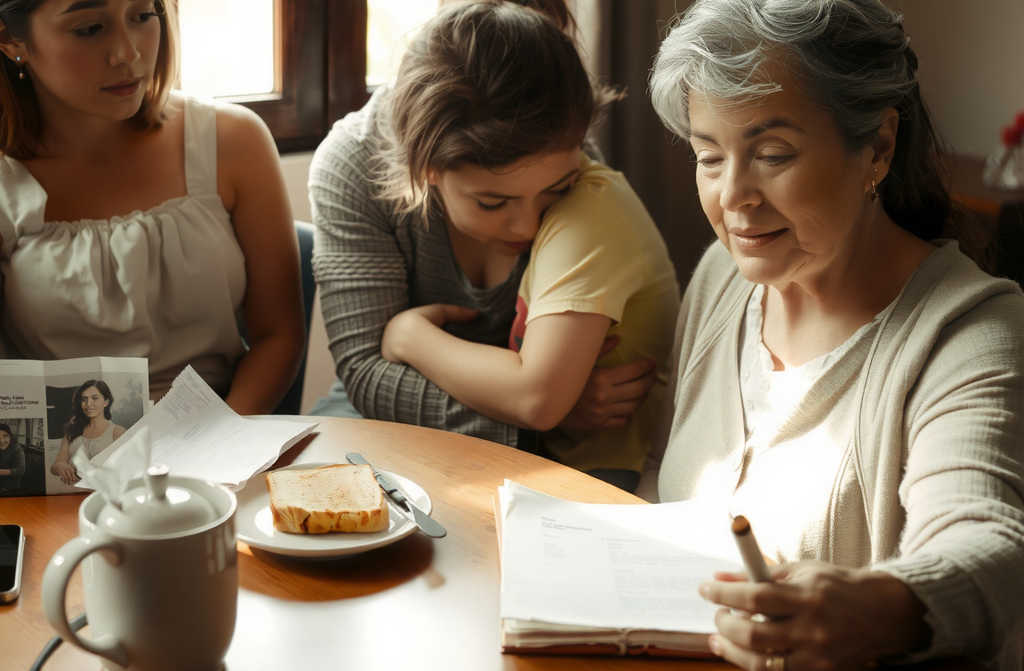
Clare had not set foot in her sons flat for a long while. She did not wish to, and she could not bring herself to. The tears had long since dried up; grief had settled into a dull, relentless ache that seemed to have no end.
James was twentyeight, never complained about his health. He had finished university, held a steady job, went to the gym, and was seeing a girl. Two months earlier he had gone to bed and never awoke.
Clares marriage had fallen apart when James was six and she was thirty. The reason was as plain as dayher husband had been unfaithful, more than once. He stopped paying maintenance and vanished. James grew up without a father; Clares own parents helped as best they could. Suitors drifted through her life, but she never mustered the courage to marry again.
Clare earned her own living. At first she rented a tiny stall in the towns market to run a little shop selling frames and spectacles. She was an ophthalmologist. After taking a loan, she bought her own premises and turned it into a respectable Optical. The practice included her consulting room, where she examined patients and fitted glasses.
The year before, they bought James a onebed flat on the same block as her own, giving it a modest refurbishment. It would have been a home, if only they could live in it.
Dust lay everywhere. Clare grabbed a cloth, pushed the sofa aside, and a phone slipped out from its depths. She could not find the rest of it, so she set the handset to charge.
Later, alone in her kitchen with tears in her eyes, she scrolled through the pictures on his phone: James at work, James on holiday with friends, James with his beloved. She opened WhatsApp and, at the top of the chat list, saw a message from an old university mate, Dennis. The photo attached showed a young woman with a little boy; the boy was the spitting image of her own James.
Remember when we were hanging out at Lucys for NewYears, back when we were still students? Lucy had a friend who was renting a flat opposite hers. I ran into that friend and her sonwhat a little lad! Sent you the picture as a reminder, the message read, dated a week before the tragedy. So James had known and said nothing. That thought rang in Clares mind like a cruel echo.
Clare knew where Dennis lived. The next day, after her shift, she drove to his house. The moment she saw the boy, she knew he was her bloodrelative; she could not mistake him. He was chasing another child on a bicycle, begging for a turn.
She crouched down and asked, Dont you have a bike of your own?
The boy shook his head. A young woman, perhaps just over twenty, stepped forward. Her makeup was gaudy, clashing with her pleasant face.
Who are you? she asked sharply.
Im his grandmother, Clare replied.
Im Maya, his mother, the woman said, extending a hand. Nice to meet you.
Clare took them to the local café. Tommy, as the boy was called, ordered an icecream; Clare sipped a cup of tea.
Maya explained that six years earlier she had left a small village, aged seventeen, to train as a seamstress in a city college. During the NewYear holidays her friend Lucy invited her over; Lucys parents were away visiting relatives. Lucy had become friendly with Dennis, who came to the celebration with his friend James. That night Maya and James had a brief liaison. James left his phone, promising to call, but never did.
When Maya discovered she was pregnant, she called James herself. He answered angry, berated her, and said that respectable women should handle birth control themselves. He gave her money for an abortion and begged her to disappear from his life forever. She never saw him again.
Maya never finished her course; she was asked to leave the dormitory with the baby in tow. Returning to her village was impossibleher mother had long since passed, and her father and brother were heavy drinkers.
Now she rented a small room from an elderly spinster. The old lady looked after the child while Maya worked. Almost every penny Maya earned went to the landlord; she could not afford a place in a proper nursery. She worked in a private dumpling shop, the pay modest but enough to keep them afloat.
The following day Clare helped move Maya and Tommy into Jamess empty flat. From that moment her life took a different turn.
Tommy was placed in a decent private nursery. Clare found herself buying new clothes for both Maya and the boy, spending weeks choosing outfits and enjoying the task. He resembled James in every wayhis gaze, his gestures, even his stubborn streak.
Clare took Maya under her wing. She taught her how to apply makeup modestly, dress well, keep herself tidy, cook simple meals, and maintain a orderly home. In short, she taught her everything a grown woman ought to know.
One evening they were watching television together; Tommy clung to Clare, his head against her shoulder, and whispered, Youre my favourite, Grandma.
In that instant Clare realised that the void that had haunted her for years had finally begun to fill. The weight of grief no longer pressed down like a stone. She understood that she had slipped back into a life where joy could still find a place, all thanks to that little lad, her grandson.
Two years later Clare and Maya walked Tommy to his first day of school. Maya now worked as Clares righthand assistant in the optical practice, becoming indispensable. Maya had found a steady boyfriend, intent on a serious relationship, and Clare had no objections; life went on, as it always does.
It seemed that Clare herself might soon become a married woman again. A longstanding, trusted friend was urging her toward that step. Why not? At fiftyfour she was still attractive, independent, with a graceful figure and a gentle disposition.
And so the story, remembered now in the quiet of her kitchen, tells of loss turned into unexpected love, of a woman who, after years of wandering through sorrow, found a new purpose in the laughter of a child who was, in every way, her own.