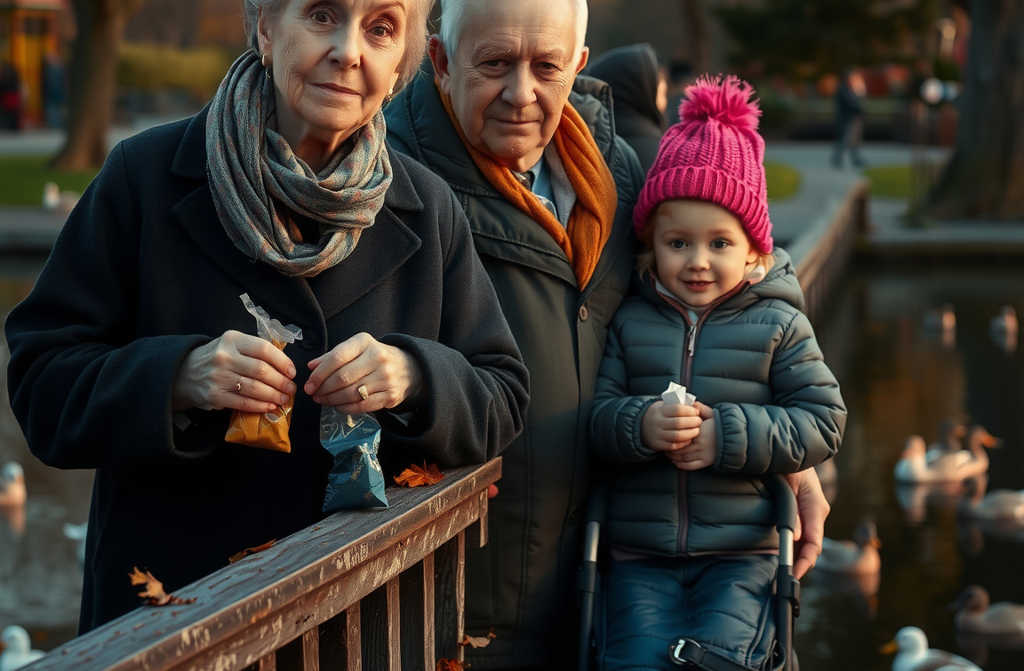
On a walk with my granddaughter, Milly, I heard someone call my name. Not the polite excuse me, maam or pardon me, but the old, sharp Ann! that rattles the muscles before the mind can catch up. I turned reflexively; the stale bread Id been holding for the ducks slipped from my fingers and burst upon the path like confetti.
Milly tugged at my sleeve. Gran, whos that? she asked. In an instant I recognised a face from fortyodd years ago, etched in my memory with such precision that a single second was enough to align its contours with the present.
He stood a few metres away, leaning against the railing of the footbridge, just as he had when we said goodbye on the platform before the train to York the one I was supposed to catch but never did. Silverthreaded hair, new lines around his eyes, the same uneven dimple on his cheek when he smiled. For a moment the world fell silent; even the children on the playground seemed to lower their voices while arguing over the swing.
Mark, I said before I could consider whether it was proper.
Ann, he answered, as if the years had not altered his diction at all. I knew it was you by the way you tie your scarf. Always the same.
Milly peered up from under her pompom hat. Do we know you? she asked, matteroffact.
Long ago, I replied. Say hello to him, dear.
Good day, sir, many years ago, Milly announced, standing on tiptoe to glimpse the pond.
Do you live here? Mark asked, eyeing the stroller with its doll and the bag of breadcrumbs as if cataloguing the details of my now.
Always have. And you?
Im visiting my son. He runs a firm here. I sometimes take this same route, just to see whether anything has endured. He gave a brief smile. Apparently, it has.
We settled on a bench. Milly busied herself feeding the ducks, counting their numbers in a singsong voice. I counted in my head the moments when I could have said stay, yet I uttered sense instead.
I was nineteen then; he was twentyone. We had tickets, a knapsack, half a citys worth of change in my pocket, and parents who sat opposite us and calmly explained there were important things and even more important things. That day I never made it to the station. That day I stopped being Ann and became Ann, the one who doesnt gamble.
I thought youd be late, he said now. I waited at the door until the last minute. Every step echoed yours.
I couldnt, I whispered. You know how it was Mum, Dad, those words about stability. And then it was over.
Then came work, a husband, a child, renovations, he listed. Life.
He spoke evenly, without accusation. His voice carried not resignation but the softness of someone who has stopped wrestling with what cannot be reclaimed. Yet when he looked at me, the same old question flickered: What if?
Gran, the ducks prefer bigger pieces! Milly thrust a scrap of bread into my hand. You toss yours too.
I threw. The crumbs spun on the water, disappearing into beaks as if even memory could be fed to satisfaction.
Granddaughter, Mark repeated, tasting the word. Its hard to fit you into my thoughts. In my mind you still have your hair tied with a ribbon and a notebook full of sketches.
My notebook now holds shopping lists and doctors numbers, I replied, trying for humour. Priorities have shifted.
And yet he shifted his gaze to my hand. You still wear that little ring on a chain, just as you did.
The wedding band tightens my finger, I said too quickly.
The truth was that at home my husband waited a good man with whom Id weathered my fatherinlaws illness, a business collapse, a mortgage, a winterlong silence, and reconciliations over cherry compote. Lately we exchanged more messages than glances. On paper we were we, in my thoughts he was him when I walked alone through the park.
I thought of you when I crossed the bridge, Mark said. Silly, reallybridges dont change, people do. Yet one shout of Ann! was enough to tear my calendar wide open.
It reminded me of the funny hat I lost on the bridge, I tried lightly.
It reminded me that very few things in a mans life truly belong to him, he murmured after a pause. And that were here by chance. I because of my son. You because of your granddaughter. Or perhaps it isnt chance at all.
The air smelled of damp leaves and tea from the nearby kiosk. I thought how rarely fate offers such clearcut scenes: main characters, props, a simple stage. Yet the moral never comes easy.
Shall we have a cup of tea? he asked. No big conversations. Just tea.
I must take Milly home, I answered. Its storytime.
You cant win with stories, he smiled. How about tomorrow?
Tomorrow Ill make pasties for the whole family.
The day after?
I have an appointment.
Ann he hesitated. I dont want to disrupt your life. I just want to see if it still belongs to you.
Those words struck deeper than any I missed you. It wasnt about grand declarations or cinematic gestures; it was a simple query: Is my life still mine? And whether I had the courage to admit that sometimes Id given the reins of reality away without a fight.
Come on, Milly, lets go, I said. Give him a goodbye.
Goodbye, sir, many years ago! Milly called cheerfully.
Mark produced a bakery receipt from his coat pocket. I dont have a business card, he muttered, but I can write down a number. No pressurejust in case you ever want a plain cup of tea. He scribbled, Mark tel: and added a small note, Footbridge, 11:00.
I slipped the receipt into my coat pocket, alongside a tissue and Millys hair tie. On the way home I could hear it rustle, as if reminding me it existed.
At home the scent of soup filled the kitchen. My husband dozed in his armchair, a newspaper folded over his chest. I slipped off my shoes, set my scarf aside, hung my coat. The receipt fell onto the floor, landing by the table leg. I picked it up, read the numbers againnothing that meant anything until I chose to act on them.
In the evening Milly pieced together a puzzle while I rehearsed tomorrows possibilities. In one version I called, Alright, tea, footbridge, 11:00. In another I stuck the receipt to the fridge magnet and copied the number into the notebook where the shopping list lives beneath tomatoes and rice.
In a third scenario I washed the coat and, by accident, left the slip of paper in the pocket. In a fourth I told my husband about the man who had appeared on my path today, waiting to see whether his eyes would show anger, relief, or, perhaps for the first time in ages, curiosity.
Night fell quickly. While everyone slept, I pulled the receipt into the lamplight. The bakerys stamp was visiblethe same place where, as youths, wed pilfered warm rolls meant for the birds, because we were hungry for everything.
I took my phone, typed the number without dialing. I wrote, Thanks for today. Tea? Deleted it. Then, Cant. Sorry. Deleted again. Finally, Maybe someday. I left it as a draft.
Morning brought a note on the kitchen counter from my husband: Left you the paper you like; back laterclient meeting. Soup is brilliant. P.S. Fancy a walk in the woods on Sunday? I stared at the P.S. and thought how our lives now consist mostly of asides, not chapters.
I tucked the receipt into the teabox, the place for not for now things. The box closed with a soft click. Milly and I set off for another stroll. The ducks were still hungry. The world looked ordinary againand entirely different.
Will I call? I dont know. Should I? Im even less sure. I do know that after forty years someone shouted my name in a way that reminded me who I was before I let other peoples calendars dictate my days. Now I must answer myself which matters more: to keep playing safe or to risk the things that have long ceased to ask for my opinion.
The receipt in the teabox feels as light as a feather, yet its weight sits in my coat pocket, empty as it may be. Perhaps its only an illusion, or perhaps a sign that some stories return to test uswhether we can still choose. Which direction? That, I hope to ask tomorrow at eleven, to myself, to him, and perhaps to you, should you ever cross a footbridge and hear someone call your name.