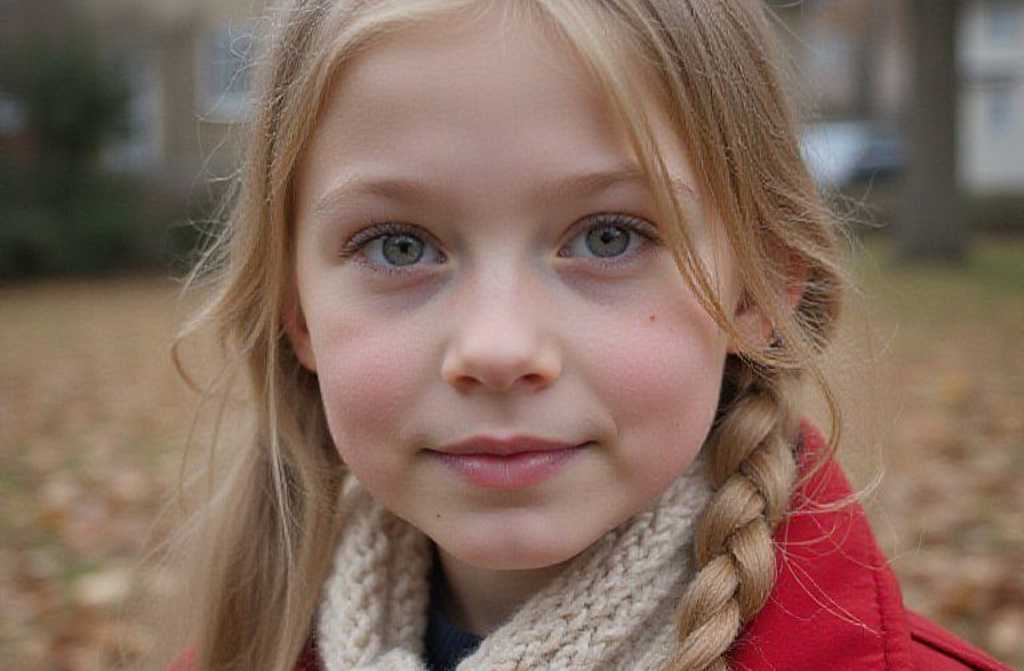
Hunden fruktades och undveks. Tills en flicka kom fram till den.

Ibland händer det saker i livet som man efteråt tänker – det kan inte vara sant att allt var precis så. Men det var precis så.

På gården till ett höghus på Storgatan dök en hund upp. Stor, rödbrun med svarta tecken. Ett öra var rivet, bakbenet släpade efter.

Folk blev genast rädda. Det var klart – en jättelik hund, och dessutom skadad. Och skadade djur är som bekant de farligaste. Det tyckte de boende.

– Vi måste ringa till kommunen, sa tant Siv på bottenvåningen och putsade glasögonen. – Annars bits det någon.

– Precis, instämde farbror Ulf från fjärde våningen. – Det finns massor av barn på gården.

Och alla började gå runt hunden. Som om den inte låg stilla vid entrén, utan morrade och anföll. Men den låg bara där. Och darrade. Även i oktoberhust sken.

Maja märkte hunden första dagen. Flickan såg överhuvudtaget det som vuxna gick förbi utan att titta. Kanske för att hon själv ofta kände sig osynlig. Efter pappa Svens död hade världen blivit annorlunda. Grå, på något sätt.

– Mamma, vad är det med hunden? frågade hon när hon och Ingrid kom tillbaka från affären.

– Vilken hund? Ingrid tittade inte ens mot entrén.

– Den där. Har den ont i tassen?

Mamman såg den till slut. Och tog genast dottern hårdare i handen.

– Gå inte nära henne, Maja. Hon kan vara sjuk. Eller arg.

– Men hon är inte arg, sa flickan tyst. – Hon är ledsen.

Vuxna kan tydligen inte skilja mellan ledsenhet och ilska. Särskilt hos djur. Det hade Maja märkt för länge sedan.

Dagarna gick. Hunden störde ingen. Den låg där vid väggen, försökte ibland resa sig – haltade till sopcontainrarna, sökte något. Hittade inget, vände tillbaka. Och lade sig igen.

Men de boende pratade och pratade.

– Snart blir det kallt, och hon ligger här.

– I går sprang barnen förbi, och hon lyfte på huvudet. De blev ju skrämda.

– Vad då lyfte på huvudet – hon är ju enorm!

Maja tittade varje dag ut genom fönstret. Tredje våningen – man såg allt.

– Mamma, varför hjälper ingen henne?

– För att det inte är vår sak, min dotter.

Men Maja tyckte att problem var när man inte hade pengar till nya stövlar eller när man hade ont i tanden. Men här höll någon på att dö inför allas ögon. Och alla låtsades att de inte såg.

På lördagsmorgonen vaknade flickan tidigt. Tittade ut – hunden låg där, men på ett konstigt sätt. På sidan. Och rörde sig inte alls.

– Mamma! Maja sprang till köket. – Hunden där ute, hon…

– Vad då, hon?

– Det verkar som hon mår jättedåligt.

Ingrid gick till fönstret. Tittade. Det stämde – något var fel.

– Hon är nog sjuk, suckade mamman. – Stackars djur.

– Då kan vi hjälpa henne!

– Maja, vi kan inte.

– Varför kan vi inte?

Ja, varför? Ingrid visste inte. Bara för att man inte kan – det var så. De hade nog med sina egna bekymmer.

Men vid lunchtid försökte hunden resa sig. Och ramlade. Ramlade bara på sidan. Blev liggande. Bara andades tungt – man såg hur sidorna gick i vågor.

Maja såg det.

Hon tog på sig jackan. Tog korv ur kylskåpet. Mamma stod i duschen.

På gården låg hunden med slutna ögon. På nära håll var den ännu större. Och inte alls läskig. Bara dödstrött.

– Hej, sa Maja tyst. – Hur mår du?

Hunden öppnade ögonen. Tittade på flickan. Och i den blicken fanns så mycket förvåning – som om den trodde att människor hade glömt hur man pratar med djur.

– Jag har med mig korv. Vill du ha?

Maja sträckte fram handen med maten. Hunden nosade, men åt inte. Den slickade bara flickan på fingrarna. Tungan var het.

– Du är sjuk, eller hur? Maja klappade försiktigt det rödbruna huvudet. – Alla är rädda för dig. De tror att du är arg. Men du är inte arg.

Och då gjorde hunden en otrolig sak. Den lade huvudet i Majas knä. Ett tungt, stort huvud. Och slöt ögonen.

– Maja! Maja, gå därifrån genast!

Mamman sprang över gården och viftade med armarna. Vått hår, morgonrocken öppen – hon hade tydligen rusat ut direkt från duschen.

– Är du från vettet? Hon kan bita dig!

– Mamma, hon bits inte. Titta – hon är sjuk.

Ingrid stannade tre steg därifrån. Såg på dottern som satt bredvid den jättelika hunden och klappade den på huvudet. Och hunden låg alldeles stilla.

– Mamma, kommer du ihåg när du berättade om pappa? Att han som liten släpade hem alla herrelösa katter?

Ingrid mindes. Svärmor hade berättat – Sven var sådan. Hjärtats godhet utan gräns.

– Och du sa att det värsta är att gå förbi någon annans smärta.

När hade hon sagt det? Jo, efter begravningen. När Maja frågade varför pappa gick till sjukhuset och läste för främmande gubbar.

– Mamma, kan vi inte gå förbi den här gången?

Ingrid tittade på dottern. Och plötsligt såg hon Sven i henne. Den där pojken som släpade hem katter. Som aldrig kunde gå förbi en olycka.

– Res dig långsamt, sa hon. – Men försiktigt.

Men hunden verkade förstå. Den lyfte själv på huvudet, släppte flickan. Tittade på Ingrid med en blick… som om den sa: ”Jag gör henne inget ont. Ärligt.”

– Hon äter inte, sa Maja. – Hon är nog väldigt sjuk.

Ingrid gick närmare. Satte sig på huk bredvid. Hunden morrade inte, visade inte tänderna. Den bara tittade. Med kloka, sorgsna ögon.

– Har du ont i tassen? frågade Ingrid, och blev själv förvånad över att hon pratade med hunden som med ett barn.

Hunden nickade nästan.

– Okej, suckade mamman. – Vi ringer.

Doktor Berg kom efter en halvtimme.

– Benbrott. Gammalt, felaktigt läkt. Men det går att åtgärda, sa han när han undersökte tassen. – Hunden är renrasig. Schäfer. Troligen bortsprungen.

– Vad händer med henne? frågade Maja.

– Om ingen tar henne…

– Vi tar henne.

Ingrid såg på dottern. På hunden. På den röda halsduken runt tassen.

När hade hennes lilla flicka blivit så vuxen?

En månad senare.

Stina (så hade Maja döpt henne) sov på mattan bredvid Majas säng. Tassen hade läkt. Pälsen glänste.

– Mamma, sa flickan före läggdags. – Varför var alla rädda för henne? Hon är ju snäll.

Ingrid strök dottern över håret.

– Vet du. Ibland är människor rädda för att visa godhet. Tänk om ingen förstår? Tänk om någon dömer?

– Dumt.

– Ja. Dumt.

Efter middagen stod Ingrid och tittade ut genom fönstret.

På gården lekte Maja med Stina. Hunden brottades försiktigt, ömt med flickan. Och hon skrattade.

Den dagen lärde dottern henne att inte vara rädd.

Inte rädd för godhet.

Inte rädd för att sträcka ut handen till någon som behöver den.

Och på gården hördes skratt.

Och skall från en stor, snäll hund som äntligen hade hittat ett hem.

Rate article
Add a comment

;-) :| :x :twisted: :smile: :shock: :sad: :roll: :razz: :oops: :o :mrgreen: :lol: :idea: :grin: :evil: :cry: :cool: :arrow: :???: :?: :!:

Hunden fruktades och undveks. Tills en flicka kom fram till den.
The Cost of Every Step He needed to finish his report by six, but for the past fifteen minutes, he’d been staring at an envelope marked “Personal.” The white paper, with no return address, lay between his keyboard and a mug of cold coffee, and Peter kept putting it off. Finish the spreadsheet first. Send the reply to his manager. Check online banking. As if, by changing the time when he opened the letter, he could alter what was inside. His workday unspooled from one “first” to the next. Peter was forty, a senior logistics specialist at a small British wholesale firm. Not a manager, but no novice either. Colleagues sought his advice, but decisions were made above his head. The salary was stable; bonuses, occasional. He knew what would hit the account at the end of the month—and roughly what it would cover: the mortgage, credit card, his son’s sports fees, medication for his mother-in-law, rare family trips to a café. He clicked a cell in the spreadsheet, entered a number, reread the manager’s email, and nodded numbly at the screen. This evening, there was a promised call with clients he’d never met—just a month’s worth of emails. Nothing new. Nothing scary. Nothing especially joyful either. His phone vibrated. His wife had sent a photo: twelve-year-old Alexei in basketball kit before training, hair sticking up, pulling a face. Underneath: “Forgot his trainers again. Had to go back. Did you talk to the coach about camp?” Peter typed: “No, I’ll ring later.” Then deleted it and wrote: “Will call after work, swamped right now.” Sent it without a second glance. He’d begun to notice how often he used “swamped” these days. Sometimes it was the truth. Sometimes, just a handy excuse. Not just for his wife—but for himself. The envelope sat among his papers like something foreign. Scrawled on it was his name—no middle name—neat but oddly familiar. At last Peter picked it up, turned it over, fingers finding the thick crease. Sunlight from the window lit up a date in one corner: “To be opened 12.04.2035.” He froze, rereading. The calendar on his monitor said: “12.04.2025.” He smirked—irritated. Some colleague’s idea of a joke. Or had his son conspired with someone? A flicker of unease, tamped down by habit—it’s nothing. He’d open it and find an invite to a team-building escape room or an ad. Tearing open the edge, he pulled out a handful of folded sheets, the faint scent of printing ink and old office dust rising off them. On the first page: “12 April 2035.” Underneath, “Hi Peter. If you’re reading this on time, you’re forty. I’m fifty. I am you.” He fell back in his chair. His heart banged. The handwriting was his. That rightward slant, the little hook he always put on ‘g’. He scanned the line again. Explanations crowded in: someone had found a sample of his writing, played a prank, started some odd viral challenge. But there were more lines below. “You’re sitting in the office, third floor, next to the window because since last winter the air con chills you. Mug on your desk bears a client logo you meant to bin last year but never did. Three unread messages on your phone: from your wife, from Alexei, one from Steve in accounts about figures. You think you need to finish the report by six, or you’ll have explaining to do. Again.” Peter glanced at his phone. Three unread. One from his wife, one from Alexei: “Dad, coach says I can go to camp, please?” and one from Steve about the report sign-off. He looked at the mug. The faded client logo—they’d almost lost that contract two years back—still staring up at him. He went cold. He looked back at the page. “This isn’t about miracles or fate; it’s about the price you’ll pay for every silent compromise. I don’t know if you can still change anything. But I know you still have a choice. I’ll write out a few moments from the next years. They won’t be dramatic. Just decisions you’ll make, because they’re easier, quieter. And then what they’ll cost me.” He set the page aside, eyes drawn to the list on the next. “1. July 2025. The NorthTrans Offer. 2. October 2026. The Second Credit Card. 3. January 2028. The Pain in Your Side. 4. May 2029. The Kitchen Conversation. 5. November 2030. Alexei’s Camp. 6. February 2032. The Trip to Newcastle. 7. August 2033. The Test Results. 8. January 2034. The Move.” Peter swallowed. Each title dry, almost mundane. No disasters, no lottery wins. Just life, split into markers. “Peter, that report—are you done?” Anna, folder in hand, popped her head over the partition. He jumped, covering the pages with his palm. “Nearly finished,” he said, voice as steady as he could manage. “Don’t leave it too long.” Anna vanished, nothing amiss. Peter checked the time. Twenty to four. Still two hours till the end of the day, but already he felt as though he could hardly breathe. He stacked the sheets, tucked them into the envelope, and slipped it into his jacket. Closed his laptop, rose, and made for his manager’s office. “Need to step out for an hour. Doctor,” he said, saying the first thing that came to mind. “Now?” his manager frowned. “That ‘Vector’ report—” “I’ll have it in this evening,” Peter replied, almost believing the certainty in his voice. His boss winced, but waved him off. In the lift, Peter watched his damp palms against mirrored steel. He had no idea where he was going. He just knew he had to get out. Outside, the London afternoon was bright. Cars trundled by, crowds moved through their business. The city was unchanged—but something within had shifted. He paced a few streets, found a quiet square, and sat on a bench. Pulled out the envelope. Opened the first heading. “1. July 2025. The NorthTrans Offer. In three months, a uni mate—now deputy at a logistics firm—will call. They’re expanding, need someone to lead. Pay’s better, perks too. But you’ll need to learn new things, take charge, step out of your comfort zone. You’ll say you’ll think about it and then decline. You’ll tell yourself it’s about the mortgage, Alexei, the need for stability. Really, you’ll be afraid. You’ll say that forty-one is too old for a fresh start. I turned it down. A year later, NorthTrans took off, my mate became Commercial Director. I stayed put—with the same salary, the same fears, the same excuses.” Peter remembered his classmate. They’d chatted a few years back; new job came up in passing. He tried to picture the call: “I’ll think about it.” Another week of worry, then picking the safe route. Uncomfortably familiar. He turned to the next. “2. October 2026. The Second Credit Card. By this point, you and your wife are fighting about money more often. Alexei wants to go on a sports trip. You feel guilty you can’t give more. The bank offers a new credit card. You say it’s just for now, you’ll pay it off fast. Really, you just hate saying no to your son—and fighting at home. You sign. Soon, the interest is a monthly expense, and you feel like you work for the banks alone.” Peter’s fist tightened on the letter. They’d done that once already. The first time, it seemed there was no other way. Second time, he’d say the same. He could already hear his future self’s excuses: “What else could I do?” Then came the entry about health. “3. January 2028. The Pain in Your Side. You’ll notice it in autumn, blame your chair. By January, it gets worse. You wake at night. Your wife nags you to see a doctor. You brush it off. You go only when it’s bad. The diagnosis isn’t fatal, just… grim. You need surgery, then rehab. If you’d gone sooner, it would’ve been easier, gentler on your wallet and your health.” He rubbed his side. Nothing hurt now, but he remembered his back twinging the other week—and how he’d brushed it off. Now it didn’t seem such a simple call. He surrendered at the entry about the “Kitchen Conversation” and “Alexei’s Camp”—not ready to know more but also scared to leave it unread. As though, if he didn’t know, the future might change. His phone buzzed again. “You’ve disappeared—need to talk about camp. Alexei’s waiting.” The letter mentioned November 2030 for “Alexei’s Camp.” But it was only April 2025, and they were already debating the next training trip. He returned to the office near five. Finished the report on autopilot. Checked numbers, sent it off. Colleagues gathered, grumbling about traffic, TV, shopping. Peter stayed quiet. The envelope, in his bag, weighed like a brick. At home, the evening was lively. Alexei was stripping off muddy trainers, chattering about basketball. His wife was chopping salad, a saucepan bubbling away. “Where’d you go?” she asked, not turning. “Work’s mental,” he heard himself say, and caught the old excuse even as he used it. “You promised to call the coach,” she said. “Camp is in two weeks. We need to decide if he’s going.” Alexei poked his head round the door, still in his kit, ball under his arm. “Dad, tell her I can go—all my mates are.” Peter hung his coat, washed his hands in the kitchen. “How much is it?” he asked, voice calm. “I sent you it,” his wife said, turning. “Accommodation, travel, fees. It’s not cheap. But it’s important. The coach says he should go.” He knew how much was on the card. He knew the mortgage payment was due in three days. He knew that in a year and a half, according to the letter, he’d say yes to a second credit card, just to avoid saying no. “Let’s do the maths,” he said. “Maybe we can manage without more debt.” His wife looked surprised. “How?” she asked. “You said bonuses are iffy.” “We’ll cut corners, save somewhere,” he answered. “I don’t want another loan.” Alexei stood in the doorway, clutching his ball. “So I’m not going?” “I didn’t say that,” Peter replied, looking at his son. “I said we’ll try to make it work—just not by borrowing. Let’s sit down this evening and work it out.” His wife’s face showed hope and weariness in equal measure. “Alright,” she said, sitting down. After dinner, when Alexei had retreated to do his homework, Peter took out the envelope and set it on the table. “What’s that?” she asked. He hesitated. Saying he’d got a letter from himself, ten years into the future, sounded like rubbish. But pretending seemed worse. “Strangest thing,” he said. “A letter—as if from the future.” She snorted. “Really? Who put you up to this—some joke?” “I’m not sure,” he admitted. “But there are details. Way too specific.” He opened the first page and let her read. She frowned. “That’s your handwriting,” she said. “But anyone can fake that. What’s it say—about us?” “Supposed decisions I’ll make,” he replied. “Work, debts, health. Us.” She flicked to the “Kitchen Conversation,” skimmed a few lines, and turned pale. “Someone knows too much,” she whispered. “I don’t like it.” “Me neither,” he said. They sat in silence, the sheets spread between them like a third place at table. In the kitchen, the clock ticked. Beyond the wall, Alexei laughed at something on his phone. “What are you going to do?” his wife asked. He glanced at the “NorthTrans Offer” entry. Felt panic swirl low in his gut. “I don’t know,” he said honestly. “But I don’t think I can keep pretending my choices don’t matter anymore.” That night, he tossed and turned. The letter lived in his bedside drawer, but his mind returned to it again and again—imagining the phone call, the loan, the pain. Remembering, too, how he’d settled for quiet over truth, routine over risk, painkillers over the doctor. Next morning, on the way to the office, he pulled up his old classmate’s number, thumb hovering above call. In the letter, the man called him in three months—if he phoned first, would it break the script or just hurry the inevitable? Nothing had changed at work. The same faces, the same stale coffee. His manager called a meeting—announced budget cuts; bonuses were on hold. “But don’t worry,” his manager said, forcing a cheerful grimace. Colleagues muttered. Anna cursed under her breath. That familiar wave rose in Peter—resentment, shot through with resignation. He knew what he’d say at home: these are hard times, we must be grateful, every job’s the same. Over lunch, he opened the letter again—skimmed the “Trip to Newcastle” and “The Move.” In seven years, the company would ask him to relocate; the family would say no, and two years after, his department would shrink, his pay fall, and the debts remain. “I’m not saying you had to say yes,” the older Peter wrote. “I’m saying you didn’t even let yourself consider it. You just decided it was impossible—because it was easier.” Peter set the letter aside. Maybe the future wasn’t a prophecy—just a map of his usual choices. He remembered a school psychologist once wrote on his report: “Prone to avoiding conflict.” It had seemed funny then. Not so funny now. That evening, laptop open, Alexei joined him on the sofa. “Dad, if I don’t make the camp, will I still get to play?” he asked, eyes on the screen. “Of course,” Peter said. “But it’ll be harder to make the squad.” “That’s what coach said.” Alexei sighed. “I don’t want you to go into debt because of me.” It stung sharper than any credit charge. “Tell you what,” Peter closed the laptop. “We’ll cut back. I’ll try to take on extra work. I want you to go—not for coach, but because you want to. We’ll do it without another loan if we can. If not—we’ll decide together.” Alexei nodded, still not looking up, just the faintest curl at his lips. That night, Peter finished the letter at last. The details—missing a school concert in 2029 because extra work ran late; not seeing Alexei’s big match in 2030 because of a “crucial report,” and his son just shrugged, “It’s alright, I’m used to it.” Sitting in the hospital in 2033, waiting for test results, wishing he’d started running sooner. No advice in the conclusion. Just: “If you do the same, some of this will happen. If you do otherwise, something different will come. I don’t know what’s best. I just know pretending your choices don’t matter is the dearest price of all.” He sat with the papers folded in his hands. At last, he wrote on a clean sheet: “Hi. I’m forty. I don’t know who you are or how this works. But I’ll try to change a few things. Not everything. I’m no hero. But something.” He crossed it out, crumpled it, and threw it away. The next morning, he booked a GP appointment. Two weeks’ wait; he accepted it, instead of postponing for “another time.” The day after that, he finally called his classmate. “Actually,” his friend said, “we might have a job coming up in summer. Management role—a slog, and, honestly, your age…” He hesitated. “Let’s talk when it’s real,” Peter found himself saying. “No promises. But I won’t say no without thinking.” His friend laughed. “That’s a change! Alright, I’ll be in touch.” Peter put the phone down and stared at his bedroom. Wardrobe, books, the old lamp—nothing new. But now, the possibility of something else. He told his wife. She paused, then asked: “Are you really thinking of moving?” “I’m thinking of not ruling it out,” he replied. “I don’t know if it’ll happen, or if you’d want to. But I’m tired of deciding for everyone that nothing can change.” She looked at him for a long time. “I don’t want to move for nothing,” she said. “But I want even less to live with someone who always chooses fear.” It hurt. But in a familiar place. “Same here,” he said. “Let’s agree—if an offer comes, we talk honestly. Not a ready-made no.” She finally nodded. A week later, the bank offered them a new credit line—“the tool for your dreams.” He deleted the message. Then logged in anyway, found “Decline,” and clicked it. His heart raced like he was signing a verdict. But when the offer vanished, he felt lighter. He kept the letter in his desk. Sometimes, he reread parts, measuring life against those pages. Some details matched, uncannily—his boss’s words at a meeting, the date the printer broke, even things Alexei said. Others had started to shift. He’d already refused one card, planned to close another—by October next year, per the letter, he was meant to get a second loan. At times it felt like the letter was a calculated push. Maybe someone who knew him decided to shake his world. Sometimes he imagined he’d written it himself and forgotten. In sleepless hours, he half-believed it really came from the future, from a tired, scared version of himself. He stopped looking for an answer. Instead, he made another list: what he was willing to accept, and what he wasn’t—anymore. “Acceptable: working in a field I don’t love, as long as I’m trying to find something better. Acceptable: sometimes sacrificing my wants for my family. Acceptable: not moving if it breaks up Alexei’s life. Not acceptable: taking new loans to pay old ones. Not acceptable: missing Alexei’s moments for the sake of work. Not acceptable: putting off my health until it’s dire. Not acceptable: always ruling out change.” He looked at his list, added at the end: “Not acceptable: living as though my choices don’t matter.” He tucked the notebook next to the letter. Two versions of the same story—one written already, one just beginning. Late, with the house quiet, Peter stepped onto the balcony. Down on the street, a taxi arrived; a woman got out, met by someone at the door, a hug, muted voices. Everyday scenes, multiplied across the city. Peter thought how life was built on choices: take the call or not, sign a paper, speak up, or say nothing. The letter in his desk didn’t guarantee anything. It didn’t promise that a “right” choice would make things easy. It only showed one set of costs. The rest was up to him. He looked in on Alexei, half-asleep, earbuds in. “Getting late, son.” “One more minute, Dad.” “Training’s early. I’ll drive you.” Alexei looked up. “Thought you had a big meeting.” “I’ll move it. Just this once.” Alexei tried not to grin. Back in his own room, Peter turned off the light. Sleep came slowly, but the familiar dread no longer pressed like before. The letter was still a mystery. But alongside it, another kind of story had begun—made of small, but this time, truly his own steps. He didn’t know what each new choice would cost. But for once, as sleep came, he sensed he was ready to find out, rather than keep pretending it was all out of his hands. The Cost of Every Step




