**Tuesday, 14th March**
Katie looked up from the register and stared at the woman standing at the counter. In three years at Paws Shelter, she’d heard all sorts of requests. People asked for small dogs, for affectionate ones, for breeds that didn’t shed or got on with kids. One man demanded a dog with “sad eyes – for a photo shoot.” But this – this was a first.
“I need a very old dog,” the woman said.
“How old exactly?” Katie asked cautiously.
“The oldest you have. Ten, twelve years. The older the better.”
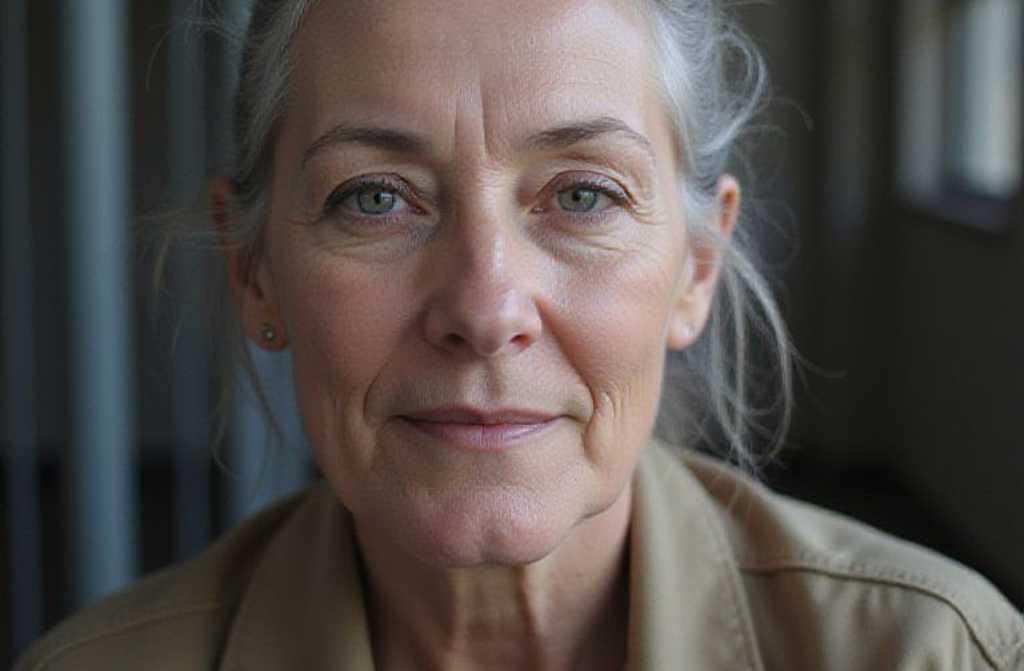
The woman stood by the desk holding a cloth bag. She was short, slender, in her early sixties. Her hair was pulled back in a tight bun, with one stray strand escaping. On her feet were worn trainers with ingrained dirt; on her shoulders a khaki jacket, faded at the seams. Her face was calm – no smile, no tension. Just the face of someone who knew exactly why she’d come.
“Hang on a moment, I’ll check with Marina,” Katie said, and went to the back room.
Marina, the shelter director, was cutting bread for the evening feed. The knife struck the chopping board with a steady rhythm, like a metronome. On the table stood a pot of cold porridge and a stack of aluminium bowls.
“There’s a woman outside. She’s asking for the oldest dog.”
Marina stopped the knife.
“The oldest?”
“Yes. She said the older the better.”
“Odd. Show her in.”
* * *
The woman’s name was Lucy Carter. She sat down on a chair in Marina’s office, placed her bag on her lap, and clasped her fingers. Her hands were dry, sinewy, with short nails and fine cracks over the knuckles – the hands of someone who worked hard: washing, scrubbing, digging, healing.
“Mrs Carter, are you aware that old dogs need special care?” Marina spoke softly but with a note of caution in her voice. “Vet bills, special food, often chronic conditions. Joints, kidneys, heart. It’s not easy and it’s not cheap.”
“I understand.”
“Have you owned animals before?”
“Yes.”
“Could you tell me about it, if you don’t mind?”
Lucy paused. She looked out the window at the row of kennels and a patch of fence with peeling green paint. Somewhere beyond the kennels, the main road hummed.
“I’ve got Duke at home now. He’s fourteen. A Labrador cross with something shaggy. I took him from a shelter in Bath two years ago. They were going to put him down because of arthritis in his back legs – nobody wanted him. Before Duke there was Titch – a cross, blind in both eyes. Advanced cataracts. I took him when he was eleven. He lived with me eighteen months. Before Titch there was Nelly – an old shepherd with hip dysplasia. She was with me eight months.”
She listed them calmly, without emotion, as if reading a shopping list. But each name she spoke a little slower than the rest – as if giving each one another second of presence.
Marina put down her pen and took off her glasses.
“So you deliberately take on elderly dogs?”
“Yes.”
“Can I ask why?”
Lucy looked her straight in the eye. Her eyes were grey, calm, without challenge or explanation.
“Because nobody else will. Everyone wants puppies, or dogs up to three years old. But an old dog sits in its kennel and waits. And it doesn’t understand why. It spent its whole life loving someone, sleeping at their feet, greeting them at the door. Then it ended up here. The owner died, or moved, or just decided enough was enough. And it’s got maybe a year, maybe two left. I don’t want that year spent on concrete.”
The room fell silent. From behind the wall came the bark of one of the dogs – deep, rhythmic, without anger. Just loneliness.
“Come with me,” Marina said, standing. “I’ll show you someone.”
* * *
The kennels stood in two rows under corrugated roofs. The air smelled of dog, of feed, of bleach used to mop the floors each morning. Puddles squelched underfoot – it had rained in the night, and water collected in the tracks of the barrow used for hauling food.
The dogs reacted differently. Young ones hurled themselves at the mesh, whining, jumping, pushing their noses through the gaps. One lean male with a docked tail stood silently and beat his front paw against the metal – steady, insistent, as if knocking on a closed door.
Lucy walked and watched. She didn’t linger on the young ones. She didn’t even slow down.
Marina stopped at the second‑last kennel.
“This is Dolly. She’s thirteen. Brought in a month ago. Her owner died; the daughter said ‘we don’t want her, my child has allergies.’ Left her in the shelter corridor in a cardboard box from a TV.”
Dolly lay in the far corner on a piece of cardboard. Large, reddish‑brown, with drooping jowls and cloudy eyes. Her ears hung low with rusty patches. Her muzzle was grey – all of it, from nose to forehead, as if dusted with flour. Her back legs were stretched awkwardly at an angle, and it was clear that getting up took effort. Beside her stood a bowl of untouched water.
Lucy approached the mesh and crouched.
“Dolly.”
The dog lifted her head. She didn’t get up – just lifted it and looked. Her eyes were moist, tired, with red‑tinged whites. Her tail moved once – heavily, with effort – then stilled.
“She has kidney problems,” Marina said quietly. “And her heart – cardiomyopathy. The vet says a year, maybe eighteen months. And that’s with good care and regular medication.”
Lucy didn’t turn. She kept looking at Dolly, and Dolly looked at her. Then the dog slowly, with visible strain, rose onto her front legs, dragged her back ones forward, and took three steps to the mesh. She pressed her nose against the bars. It was warm and dry.
Lucy slipped her fingers through the mesh and stroked Dolly’s muzzle – from nose to forehead, slowly, as if stroking a sleeping child. The dog closed her eyes.
“I’m taking her,” Lucy said.
* * *
The paperwork took half an hour. Katie filled in the forms, stamped them, and kept glancing out the window at Lucy, who sat on a bench in the yard holding Dolly on a lead. The dog pressed against her leg and didn’t move. Only her nose worked – sniffing the knee, the jacket edge, the trainer laces, the fingers resting on her back.
“Marina,” Katie whispered. “Is she all right? I mean – this woman?”
Marina came to the window and looked out.
“She’s fine, Katie. More than fine.”
“But why old dogs? They’re … well, they die soon. It always hurts. You get attached, then – it’s over.”
Marina was silent for a moment. She crossed her arms. Then she said, still watching the yard:
“You know, I’ve worked at this shelter twenty years. I’ve seen hundreds of people. They come, they choose, they take. Half ring up a month later: ‘Come take it back, it chews furniture.’ Or ‘We’re moving, can’t take it.’ Or they just stop answering calls. But this woman – she doesn’t choose. She takes the ones everyone’s already abandoned. The ones nobody even looks at. That, Katie, is something else.”
Katie looked down and said nothing. She signed the last page, dated it, and went out.
“Mrs Carter, everything’s ready. Here’s a note on Dolly’s medication. The vet wrote a schedule. Kidney tablets morning and evening with food. Heart medicine once a day on an empty stomach. And a follow‑up in two weeks – with our vet or your own.”
Lucy took the papers, folded them neatly into quarters, and put them in her bag. She pulled out an old collar – wide, soft, made of worn canvas with a heavy buckle. She changed Dolly’s lead.
“This’ll be more comfortable for her. Doesn’t press on the neck. I buy these for all my dogs.”
Katie watched them leave. Lucy walked slowly, adjusting her pace to the dog’s short, shuffling steps. Dolly hobbled beside her, favouring her left hind leg. At the gate Lucy stopped, bent down, and adjusted the collar. Then she said something to Dolly – very quietly, just with her lips, so Katie couldn’t hear. Dolly lifted her grey face and licked her hand.
They went through the gate and turned right, towards the bus stop.
* * *
A month later, Marina got a message. A photograph: Dolly lying on a thick checked blanket, legs stretched out. Beside her a bowl of water and an old stuffed duck with one eye missing. Her muzzle was still grey, but her eyes looked clearer – brighter, without the cloudiness from the kennel. In the photo, her tail was blurred – wagging, obviously.
Underneath the picture was a text: “Dolly has settled in. First week she was scared, kept to the wall. Then she climbed onto my bed in the middle of the night, and she’s slept there ever since – even though I put a bed for her downstairs. She likes being scratched behind her right ear. She won’t let me near the left – must be sore. Kidneys are stable, vet is pleased. Duke has got used to her; no jealousy. They lie together on the balcony when the sun’s out. Thank you.”
Marina read it. Then she read it again. She put her phone away, leaned back in her chair, and stared at the ceiling – at the old water stain spreading across it.
On her desk lay a list of dogs to be moved to another block. Twenty‑three names. Ages from two to five. Young, strong, good chances. Each with its own story, its own hope.
And at the very bottom, written by hand in pencil, was Baron. Fourteen years old, male, cross‑breed, brought in from a flat after his owner died. Deaf in his left ear. He walked slowly. Ate little. In the column for “visitor interest” – a dash.
Marina picked up her phone and typed: “Mrs Carter, we’ve got a dog called Baron. 14 years old. Quiet, calm. If you’re ready, let me know.”
The reply came four minutes later – not an hour, not a day. Four minutes: “I’ll be there Saturday. I’ll prepare a space.”
Marina smiled. She put the phone in the pocket of her coat.
Behind the wall, Baron barked dully – not at anyone. Just into emptiness, as old dogs bark when they dream of something. Something from the past, from the time when home was still home, not a memory.
* * *
Lucy arrived on Saturday, as promised. She walked into the shelter at exactly ten o’clock, in the same trainers, with the same bag. On her face, the same calm expression.
Katie met her at the entrance. She wanted to say something, but instead she just nodded and led the way to the third kennel.
On the way, she couldn’t hold it in.
“Mrs Carter, can I ask something?”
“Go ahead.”
“Isn’t it hard for you? When they … go?”
Lucy kept walking. Her trainers squelched through the familiar puddles.
“Yes, it’s hard.”
“And you still take new ones?”
“Yes, I do.”
Katie paused. Then quietly: “Why?”
Lucy stopped. She turned to Katie and looked at her calmly – without resentment, without drama.
“When Nelly was dying, she lay on my lap, on a clean sheet, and I stroked her head. All night. She could have died here, in a kennel, on cardboard. Alone. It was hard for me afterwards. It’s still hard when I remember. But for her – it wasn’t. She was at peace. I saw it – in her eyes, in her breathing, in how she relaxed her paws. It’s not about me, Katie. It’s about them.”
Katie turned away and quickly wiped her eyes with the back of her hand. Then she said, in her normal working voice: “Come on. Baron’s waiting.”
Baron lay in the corner of the kennel – dark, heavy, with a sagging belly and a grey beard on his lower jaw. When he saw people, he didn’t get up. He lifted one ear – the good right one – and looked. With that look that old dogs get when they no longer expect anything, but haven’t stopped noticing.
Lucy crouched at the mesh. She pulled a piece of chicken from her bag, wrapped in a napkin. She offered it through the bars.
Baron sniffed. He took it carefully, with soft lips, as if taking something fragile. He chewed slowly.
Lucy stroked his forehead. Rough fur, warm skin, the old growths above his eyebrows.
“There,” Lucy said quietly. “Let’s go home.”
* * *
*What I learned from this is simple: the measure of a person isn’t how long they hold on, but what they give to those who have nothing left to give back.*Years passed, but the rhythm never changed. Each Saturday morning, if the bus was on time and the weather held, a woman in worn trainers would walk through the gates of Paws Shelter. Sometimes she came alone; sometimes a grey-muzzled shadow hobbled beside her, keeping pace with a shuffling step that matched her own.
Marina grew older at her desk, the water stain on the ceiling widening like a silent clock. Katie left and came back, left and came back, each time a little quieter. The kennels filled and emptied, filled and emptied. The young dogs found homes. The old ones waited.
And Lucy Carter kept coming.
She took Baron, who lived eighteen months and died in his sleep on a blanket that still smelled of her. She took a blind spaniel called Pebbles, who spent his last year following the sound of her voice. She took a toothless terrier named Scrap, who had been returned three times—and who, for eight months, slept curled in the crook of her arm, grinding his gums in contentment.
Each time, she walked in the same way: calm, unhurried, her bag over her shoulder. Each time, she crouched at the mesh and spoke the same quiet words. “Let’s go home.”
And each time, after the dog was gone, she came back.
* * *
On a Tuesday in late autumn, Katie stood at the front desk, staring at a form. The ink was smudged. She had pressed too hard.
Lucy Carter had not come in three months.
Marina found her in the office, staring at the phone. “She’s not answering.”
“Maybe she’s away.”
“She never goes away.”
They drove to the address on file—a small house on a quiet street, with a rusted gate and a garden overgrown with weeds. The front door was unlocked.
Inside, the air was still. A checked blanket lay folded on a chair. Beside it, a bowl of water, clean. A stuffed duck with one eye missing sat on the windowsill.
Lucy was in the back room, lying on a narrow bed, dressed in her khaki jacket. Her hands were folded over her chest, the fingers still and pale. On the bedside table, a photograph: Dolly, Baron, Pebbles, Scrap, and others—a row of grey faces, all looking at the camera with the same calm, trusting eyes.
And on the pillow beside her, pressed against her cheek, lay a single grey hair—the last trace of a dog that had been gone for years.
Marina stood in the doorway. Katie pressed a hand to her mouth.
On the kitchen table, they found a letter, weighted down by a worn canvas collar. The handwriting was steady, the lines straight.
> *They come to me at the end, and I hold them. At the end, someone held me too. That is enough.*
Katie picked up the collar. The buckle was warm.
Outside, the sky was the colour of old concrete. The main road hummed. Somewhere behind the house, a dog barked once—deep, rhythmic, without anger.
Just loneliness.
But not for long.