Dear Diary,
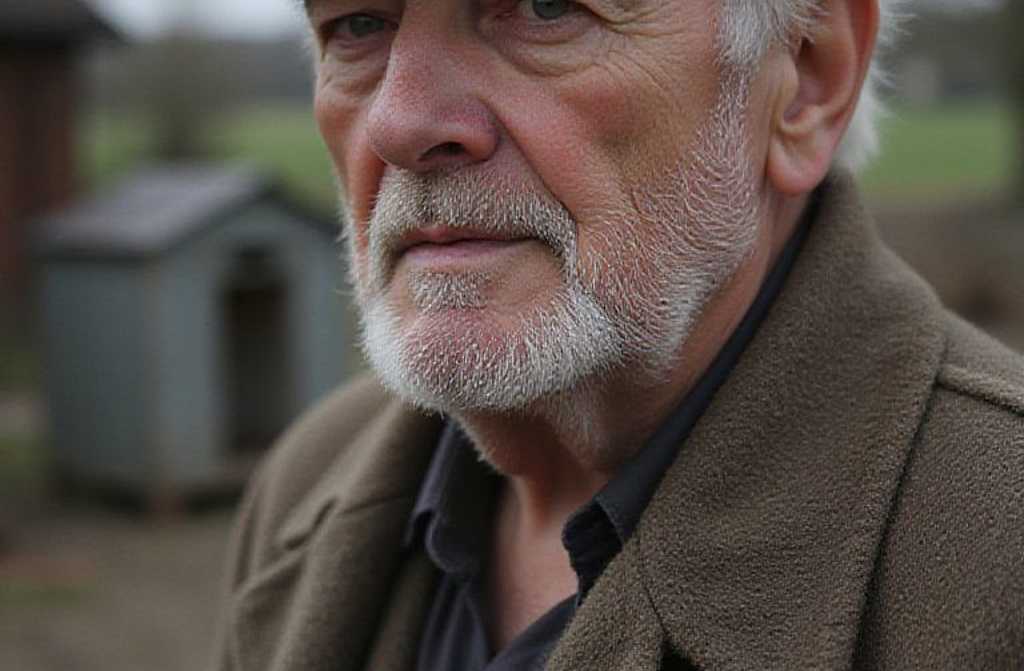
Stephen Hartley was found this morning. His dog had been howling since the evening before. Margaret heard it through two fences, but she didn’t go out, because Bruno had howled often before and she had long since stopped getting up for it. The sound was low and stretched out, with no pauses, and by midnight it had become part of the night, like the wind or water knocking in the pipes.
The constable came at midday, sealed the house, and left. He wrote his report on the car bonnet, smoked, and looked at the dog without going near it. Over the fence he told Margaret the body had been taken to the county town and relatives would have to be found. Then he drove off down the lane, leaving two deep ruts in the mud. The dog stayed. He sat at the full stretch of his chain, muzzle pointed at the sky, and the sound that came from him was steady and hollow, like a pipe someone had forgotten to close. Not a bark, not a whimper. A howl. The kind that makes something ache under your ribs if you listen too long.
Margaret stood at her own gate and looked across the road at Stephen’s yard. The rain from last night had left the mud bright in the wheel ruts, and the earth smelled heavy and wet, like a freshly turned bed. The fence leaned; three palings lay in the nettles. But the gate was shut with wire, twisted neatly four turns. The old man never mended the fence, but he locked the gate every evening. Margaret knew because she had watched from her kitchen window while he came out at dusk and turned the wire with dry fingers.
She crossed the road, unwound the wire, and went in. The yard smelled of wet ground, dog, and something sour, standing water in the rain butt by the shed.
Bruno stopped howling and turned his head. He was a big red dog with a black saddle along his back, like a German shepherd crossed with a farm dog. His muzzle was grey, and his eyes were yellow and cloudy, the way old dogs’ eyes get when they have seen too much.
The chain ran from a post to his collar. Thick, heavy links, fifteen feet long. Margaret had known that chain for seven years. Every summer she watched Bruno walk the same arc, wearing a groove into the earth. The groove was deep now, ankle-deep, with rain standing in it. In winter the chain froze and the links chimed in the wind. But that morning Margaret noticed something new. On one side, where the chain was pulled hardest, the metal was worn smooth and shiny, polished like a door handle that gets touched every day. The dog had always pulled in one direction. Not running in circles. One direction.
By the post stood a bowl. Aluminium, dented, with the remains of porridge stuck to the sides and a skin of fat over the top. Beside it, a bowl of water with a leaf floating in it. Stephen had fed the dog on the morning he died, or the evening before. Margaret looked at the bowl and straightened her headscarf, because her hands needed something familiar to do. For seven years she had told the neighbours the old man was cruel to his dog. She told Doris at the shop, she told Pat the postwoman, she told her daughter over the phone. A chain, a kennel, scraps, no walks. A living thing tied to a post. And every time she said it, she felt the warm glow of being right, a heat that needed no proof. The dog was on a chain and the owner said nothing. Surely that was guilt enough.
Pat came by an hour later, bringing bread and milk, because she had been used to bringing them to Stephen and didn’t know what else to do with them. She said she had seen him on Saturday, when he collected his pension and bought a bag of porridge oats. For himself and for the dog. Margaret asked if Stephen had family.
Pat thought, holding her postbag to her side, and remembered a daughter. Valerie. Lives in Little Wrenfield, over the bypass, eight miles away. She hadn’t visited in a long time. Pat added quietly, “She offered to take the dog. He wouldn’t hear of it. I have her number written down at the post office.”
Margaret said nothing. She thought: mean old thing, wouldn’t even give up the dog. Then she went to the post.
The clip on the collar had rusted, and her fingers slipped on the wet metal. She rubbed it, turned it, pressed the catch with her thumb. Rust worked under her nails, and her palms smelled of iron, cold and sharp. Bruno stood still. He didn’t whine or pull. He waited, as if he knew what was about to happen and had been patient for seven years to hear one click. The clip gave. The collar slipped off, and underneath was a band of flat, pale fur, almost white, like the mark left by a wedding ring.
The dog shook himself, head to tail. Then he looked at Margaret. He stood for a second. Then he ran.
Not at her, not at his bowl, not at the house. At the fence. He squeezed between the palings, burst onto the lane, and was gone. Margaret saw the red shape flicker behind the elder bushes and disappear.
She went to the post office to see Pat, so Stephen’s daughter could be told.
Bruno had already crossed the bypass. At the bend where traffic slowed for the bridge over the drain, he waited for a gap and crossed. Then he took the field track to Little Wrenfield.
Little Wrenfield began with three poplars and a bus stop without a shelter. Bruno turned up the second lane, went past the pump, past a front garden full of dahlias, and stopped at a house with a green roof. The porch was low, two steps, boards darkened with damp. The door was covered in leatherette, and in one corner the covering had peeled away and hung in a triangle. Bruno sat down and whined. His tail beat against the step, and that thump was the only cheerful sound all day.
The door opened. A thin woman with dark hair in a bun stood there, flour on her hands. The smell of fresh bread and vanilla came out past her, warm, and mixed with the wet earth. She looked at the dog. Then she crouched, took his muzzle in her hands, and the flour from her fingers speckled his red fur white. Bruno pressed his nose to her wrist and closed his eyes.
Margaret phoned at that moment. She told her Stephen was dead, and the dog had slipped his chain and run off.
“He’s here,” the woman said. “My name is Valerie.”
Margaret caught her breath. Eight miles, all that way along the main road.
And Valerie told the tale.
Bruno had been a puppy when Valerie still lived with her father. She had brought him from the town, a month old, red, one ear up. She fed him with an eyedropper and slept on the floor with him for the first week because he cried alone. Then she married and moved to Little Wrenfield. Bruno stayed with Stephen.
The dog ran to her. Across the field, across the bypass, eight miles each way. He would come at dusk, lie on the porch, and wait. Valerie fed him, fussed over him, let him sleep inside. In the morning Bruno ran home. Another eight miles. The first time he was hit was six months later. A wing mirror clipped him and dragged him along the road. Stephen found him on the verge and carried him home, two and a half miles. Valerie came on a lift from a neighbour, and together they took the dog to the vet in the county town. The scar stayed on his left side, long, from ribs to leg.
Bruno healed, and a month later he ran off again. Same stretch, same bend. This time a cracked pelvis and three months without moving. Stephen changed his bedding twice a day and carried the dog out into the yard in his arms so he could see the sky.
After that, Stephen bought the chain. Valerie begged him to let her take the dog. Stephen refused. He said one thing: “He’ll come back. He always comes back. He won’t survive that road a third time.”
Valerie argued. She stayed away for six months. Then she came back, but not as often. Then she stopped.
Bruno spent seven years on that chain. Stephen cooked him porridge morning and evening, with scraps of meat bought at half price from Doris’s shop. He checked the collar and greased the clip so it would never rust shut. He sat on a stump and said nothing. Bruno put his head on the old man’s knee, and they stayed that way until dark, two old souls, one on a stump, one on a chain. Margaret had seen it from her kitchen window every evening and never understood what she was looking at.
Bruno stayed with Valerie. He was where he had been trying to get to for seven years.
Margaret went back to Stephen’s yard and stopped by the post. The chain lay in the mud, coiled in a ring. She picked it up. The links were heavy and cold, and one side was worn bright, polished smooth as old silver. She hung the chain on the nail in the post. Then she twisted the wire on the gate four turns, the way Stephen had done. She stood a moment, looking at the empty yard, at the deep groove cut in the earth, at the stump by the post. Then she crossed the road and shut her own door.
She washed the dog’s bowl and put it on her own doorstep. Just in case. If Bruno ever came back.
I have not stopped thinking about it since. What we called cruelty looked like kindness from the wrong side of the road. A chain can be the last way a man has of keeping the thing he loves from killing itself. We never know what a silent person is holding on to. If a dog runs eight miles to one door and eight miles back to another, he is not trapped. He is loved from both ends. The real lesson is not about the dog at all. It is about how quick I am to judge the man who ties him up, when I have never once asked what it cost to let him go.