Mother by Calculation
Ready, Charlie? asked Philip, his voice soft as spun wool, his smile bending like the windows of an old vicarage.
Charlies face shone as if hed just been told all the worlds secrets. He didnt speak, just nodded furiously, eyes gleaming with a wild, childlike anticipation. In his dreams, hed already set foot in Hyde Park, immersed in its colourful amusements and bustling crowds, his hand safely tucked in his father’s.
Then off we go! Say goodbye to your motherwere expected! A magical day at the funfair awaits us! Philips voice caught some of Charlies eagerness like ivy catching light. And lunchwell, were dining somewhere positively enchanting!
Charlie let out a peal of laughterlouder than a ring of church bellsand waved at Eva with such unrestrained joy, limbs flailing, that it was almost comical. He dashed off, skipping steps as though gravity meant nothing, his chuckles sending ripples through the tidy Chelsea townhouse, filling it with the weightless delight only children could conjure.
Philips grin didnt falter as he hurried after his boy, stride light as a dandelion seed on a May breeze. He hardly noticed Evaat that moment, his entire world pivoted on Charlie and the adventure they were about to chase.
As soon as the front door closed with a decisive thunk, Evas face stilled, the smile withering away as if erased by a cold wind from the Thames. That old, aching heaviness plucked at her heart againuninvited but relentless, like fog rolling back into the city each night.
She stood facing the door, rigid, her mind endlessly circling the same question: Why? Why could Philip never ask her, just once, how she felt? Whyafter eighteen months of shared evenings and spoon-clinking supperscould he summon so little concern for her sorrows? Their shared past seemed to flutter and vanish, leaving behind only wide, hollow rooms echoing with absence.
Charlie, Charlie, always Charlie, she thought bitterly. Every word from Philip’s lips, every snippet of conversation, hung only around the boy. He plotted their outings with the excitement of a holidaymaker clutching train schedules, gazed at his son as if beholding a saint. More and more, Eva found herself relegated to the edge of this domestic fresco, washed-out and silentan unwanted daub of paint. It gnawed at her with slow, methodical venom.
Worse still: sometimesshe hardly dared admit it, even to herselfthe thought darted in, that life might be easier if Charlie simply didn’t exist. The very notion turned her stomach sour with shame. How could she think such a thing? Yet if things were different, perhaps she and Philip might still be them. Too eager shed been, too ready to believe a child might tie up loose ends that didnt want tying.
Shed been jubilant, giddy even, when those two blue stripes appeareda secret sign of hope after months spent treading shallow water. Their relationship had been tense of late, and she knew it was her own doing, but shed dreaded the idea of the end.
One evening, the air in their lounge was thick as clotted cream. Philip slumped in his armchair, city suit crumpled from a day spent wrestling with numbers in the City. He wasnt after a confrontationjust quietbut Eva, sitting opposite, picked up her old tune, like a broken music box. She grumbled, she fretted, she demanded: why so little attention? Did he not see her dwindling, suffering with neglect?
Philip listened, jaw tight, the evening gathering irritation within him like a kettle threatening to boil. He was tiredtired of explanations, tired of the daily grind of guilt.
Enough, he snapped, suddenly upright, voice as sharp as broken crockery. Youre never satisfied! If Im workingbad; Im never home. If Im here, you moan about the money. Make up your mind. Is it care you want, or cash?
Eva startedhis tone sent a chill along her armsbut she quickly slipped on her mask: downcast eyes, trembling smile, the posture of injured innocence.
Some men manage both, she retorted, schooling her voice to calm, hiding the barbs beneath a layer of reason. Why must it be either or? Why not find a golden mean?
Oh, you want the restaurants, the flowers, and trips to the seaside, is that it? Philips eyes fixed on her, watching for each nod in answer to his suggestions. Then accept that work comes firsta few more months of these hours, then well be steady.
Youve said all this before! Evas voice frayed on the edges. Empty promises, the days rolling on, both of them stuck in the same rut.
Philip felt exasperation boiling in his gut. Hands clenched, words broke loose before he could snatch them back.
Maybe youd be happier with someone else, then! he said, voice clattering through the silence, sounding more like a dare than advice. He was battered, worn thin.
Eva froze, blue eyes wide, as if caught by the sudden dark in a thunderstorm. For several heartbeats, the room was still, the only sound the clocks loud, mocking tick.
I didnt mean that, she stammered, voice shivering. She was frightened, suddenly, that words spoken in anger might upend her world. I love you. I miss you our evenings together never seem enough. But Ill waitfor as long as I have to
Philips own face twisted, a question throbbing through his mind: how far would she go to keep him? He saw what friends and co-workers could see plainly: their relationship was buckling at the seams, clearly broken. His colleagues exchanged glances when home was mentioned; friends danced gingerly around questions about the two of them.
Not that work was the whole story, as people believed. Philip knew he could work less, take some tasks home, even pause for a sabbaticalwithout endangering the mortgage or the Waitrose budget. He simply no longer wanted to come home. He was tired: tired of the familiar litany, the strained evenings, the forced normality.
He no longer loved her, and it hadnt happened overnight. The old excitement at the thought of her was the first to leave, then faded the impulse to share lifes milestones, and finally, affection itself felt like a burden. But there was no lover, no secret liaisononly emptiness, only habit and a sense of obligation.
He didnt want to stay out of pity, yet neither could he utter the words that would wound her so. She was decentkind, orderly, able to conjure comfort out of clutter. He twisted, trying to find a clean way out, but fate did its own work.
One afternoon, running late because an investor meeting had been cancelled, Philip let himself into the house. He stopped, surprised by the transformationEva stood in the middle of the room, cheeks flushed, the glow of happiness playing on her features, something he hadnt seen in ages. She clutched a small white box, tied with a ribbon, hands almost trembling with excitement.
Philip felt a chill curling round his spine. He searched for some memory, some moment when he had been careless. All he could think of was his firms anniversary partya boozy night, a shuffle home, no recollection.
Is it what I think it is? He tried to sound even, but frustration crept into his words.
Yes! Eva beamed, pushing the box toward him. A baby, Philipa baby for us! Arent you happy?
A wave of shame swept over him, gone in an instant; reality returned, cold as the loam at the gardens edge. It was silly. Hed never claimed to want childrenon the contrary, his avoidance of any talk about the future, the way babies at coffee shops made him uncomfortable, should have served as warning enough. Eva had known it from the start. Theyd discussed it before moving in together: he wasnt ready, not yet, perhaps never.
Im not happy, he managed, with all the effort of threading a camel through a keyhole. His words fell like pebbles in a well. Why should I be? I never wanted this. Im not ready. And you know it.
But Philip a baby means happiness. Well be brilliant parents Evas voice faltered, hope draining away as she searched his face for some sign of warmth.
Something broke. Had her plan failed? Minutes ago, shed dreamed the news would solder their cracksPhilip would swoop her up, pride would dance behind his glasses, they’d begin weaving fantasies together. Insteada flat Im not happy.
Eva wavered. She wasnt naive. Shed sensed Philip drawing away, noticed his bland responses when she spoke about colleagues or her job, clocked his increasing hours at the office, the effort it took for him even to meet her gaze. Still, she clung to hope. Marrying Philip was her talismanic goalnothing less. He was her anchor, the only thing that made life solid and sensible.
She needed him. Without Philip, her world curdledlonely nights, pointless afternoons, the dread of drifting alone. That fear had pushed her into this gamble. Philip wasnt heartless; he wouldnt abandon his own child. So, maybe, through the child, she could keep a tether to him. Perhaps fatherhood would rouse something new in Philiprekindled feeling, or at least renewed closeness.
All for nothing.
A few weeks later, Eva sat alone in the scraped-empty flat. She and Philip were over. Hed packed up and rented a place in Clapham, leaving her to reckon with the consequences alone.
She drifted from room to room, her fingertips tracing souvenirs of their joined lives. Anxieties chattered in her mind. How would she survive? What now?
But gradually, fear ebbed, replaced by something like resolve. Eva sat on the sofa, inhaling deeply, mapping out what remained. She never considered not having the childnot out of principle, but from the staunch awareness that someone as well-mannered as Philip would not abandon his son. That would always be a reason to stay in touch.
Let it be passing meetings at the playground. Let it be curt phone calls about colds or report cards. Let it be impersonal greetings at Christmas. Eva was prepared to settle for anything but losing her hold on Philip entirely.
A new ambition took root. She would be a dedicated, caring mother. Shed give the child everything for his well-being. And later, as he grew, she would teach him to ask his father to come home. Perhaps, one day, Philips heart would thaw. Perhaps he would see how badly they needed him.
She straightened, gazing out the window at the dying sun, telling herself, Ill manage. Well be all right. In her eyes glimmered a sliver of hopenot dazzling, but bright enough to keep her moving forward.
***
Time passed, as it must, and Philipwhod once recoiled at the thought of fatherhoodgrew to adore his son. Charlie was irresistible: wide-eyed, with a smile capable of dispelling any grey London drizzle, and a boundless curiosity for the world. How not to melt when Charlie first grabbed Philips finger with his tiny hand? How not to be warmed by the boys laughter or his earnest attempts to mimic his fathers every word?
The first time Philip took Charlie out, the boy was four months old. Until then, Eva always hovered, hypervigilant, offering running commentary on baby business as if auditioning for a part in his life rather than living it. Her desperation for attention was obviousbut by then, Philips affections had settled elsewhere. He was quietly seeing another woman, Katherine, and was planningseriously, for the first time in yearsto marry again. He made polite small talk with Eva, but his attention was fixed on Charlie: how the boy gurgled, how he reached to be held.
As Charlie grew, Philip started bringing him home for weekends: trips to Kew Gardens, cartoons on the telly, egg-and-soldiers at breakfast. Then entire weeks; Charlie adjusted quickly, treating Philips house as his own. Before long, they fell into a routinetwo weeks with Mum, two with Dad. This rhythm suited everyone. Philip managed his consultancy work and new family, Eva had space and time, and Charlie quickly adapted to the ebb and flow, seeing it all as a grand adventure from one home to another.
If truth be told, Eva never felt a deep connection to her son. He was less a source of joy than a meansa cord to tie Philip down. Philip, for her, had long become an obsession. She replayed dreams of domestic bliss, insisting to herself that one day hed realise his need for her. Charlie was, honestly, just the tool shed hoped to use for her return.
So it hurt all the more watching Philip beam at the boyreal warmth, real love, the things Eva herself had not received. His patience, his laughter, the effortless way they bondedit stung, left Eva hollow.
Hearing Philips gentle words meant for Charlie”How was your day, mate?”, “Youre doing grand”, “Ready to try the slide?”was pure torment. Eva got only formalities, stiff text messages: “Hows Charlie?”, “Everything sorted for half-term?”, “Whens he coming over?” Nothing more, just the businesslike undertones of the necessary. Each smile Philip aimed at Charlie was another wound, opened anew.
The final straw came, unexpectedly, from Charlie himself. One afternoon, bursting with the excitement of unshared news, he blurted, Dad says me and my new brother or sister can share a room! Katherines having a baby! His pride was obvious, the tone innocent. But to Eva, it was an axemans blow.
She froze. Philips new wife Katherine was expecting. The past, her hope of Philips returnshattered, irretrievable. She had quietly clung to dreams that hed change his mind, that nostalgia or regret would bring him back. But now, clearly, the spell was broken.
Evas decision came like lightningshe must move. Far away. Away from Philip, away from all that lingered, even away from Charlie. The idea was sharp and shocking, but she quickly justified it. Charlie had failed to become the glue that would repair things. Now, with Philip expecting another child, her son was, for her, superfluous. A painful truth, but one she forced herself to accept.
***
She waited until Philip arrived for his fortnightly pickup. She had told him nothing, wanting to finish it with a clean break. He entered the hallwayshe didnt offer tea or take off her coat. She stood, arms folded, her face set in stone.
Philip, she said, her voice flat, Ive decided. Charlie stays with you. Permanently.
What do you mean? Philip asked, mouth tight, waiting for some hint of humour. But Evas eyes held nothing but chilly resolve.
Exactly what I said. I dont want to parent him anymore. Not my energy, not my time. Hes your son. You raise him.
Philip glanced through to the back room, where Charlie played with his die-cast cars, humming some nonsense tune, his cheery exclamations slicing the silence. Somehow, home felt brittle, as if things might collapse with a single touch.
Butyoure his mother. You cant just walk away.
I can, she replied, calm as air. Ive realised Im not built for it. I dont feel that bond. So I wont pretend.
Philip clenched his fists, anger squeezing his chest. He was aghast, indignantnot for himself, but for his son, who had no inkling what this meant.
You can’t just hand off a child like youre passing along an unwanted Christmas jumper.
I can, Eva repeated, and this time her words were like iron, cold and sure. If you wont take him, there are always childrens homes. I dont care.
Philips shock turned to fury and heartbreak. He hardly recognised the woman in front of himso composed, so cold, a stranger in Evas own skin.
Youre serious? he whispered, desperate for a sign that it was all a nasty trick. Youd give your own son away?
Why not? She smirked, without warmth or humour. You used to say I was always dissatisfied. Well, now its motherhood Im dissatisfied with. Take care of himyou two get on so well.
Thats not normal, Eva. You cant just Theres no going back.
She didnt look at him. Instead, she opened the wardrobe, packed Charlies bits and bobs into a small suitcaseby rote, neatly, as if she were packing for a weekend away.
Already done, she said coolly. Heres his things. Youll have to figure out the rest.
Philip felt as though a steel band had tightened round his chest. He tried one last time, his hand on her sleeve, voice low and pleading, Wait, just talk to me. Hes our boy
Eva pulled away sharply, as though his touch had burnt her.
No need. My minds made up. If Charlies too much for youwell, you know where the social services are. Ive got another life to start. A child has no place in it.
Her tone soared above him, as detached and frigid as a bank statement. She dropped the suitcase at the threshold and gestured toward Charlies room.
Take him. Dont come back. Im moving on.
She didnt wait for his answercrossed the landing, closed her bedroom door behind her, the click of the lock final and resolute.
Philip stood alone in the hallway, clutching Charlies suitcase, feeling the weave of fabric bite into his palm. Eva had always been impulsive, sometimes reckless. But this? He would never have believed it. The image of her walking away, leaving their child, was utterly surreala dream gone sour.
Charlies laughter tingled through the closed doorsomething about his car racing across the floor. His joy, as yet untouched, seemed to ring false now, fragile as glass. For him, everything was still the same: Dad was here, toys remained, tomorrow was a blank canvas waiting for more adventures.
Philip breathed in, summoning what strength he had. He needed clarity, not emotion. Setting the case down, he went to the nursery. Charlie, spotting him, flashed a wide, expectant smile.
Dad! Look how fast it goes! He held up his little car, prideful.
Philip knelt, took the car, and smiled, though his heart lay heavy as winter fog.
Yes, lightning quick, he said, voice steady. Shall we go home, then, Charlie?
Charlie nodded, bright as everoblivious that home meant something entirely new now, and that Mum, whod given him toast just this morning, was already packing to vanish from his days.
***
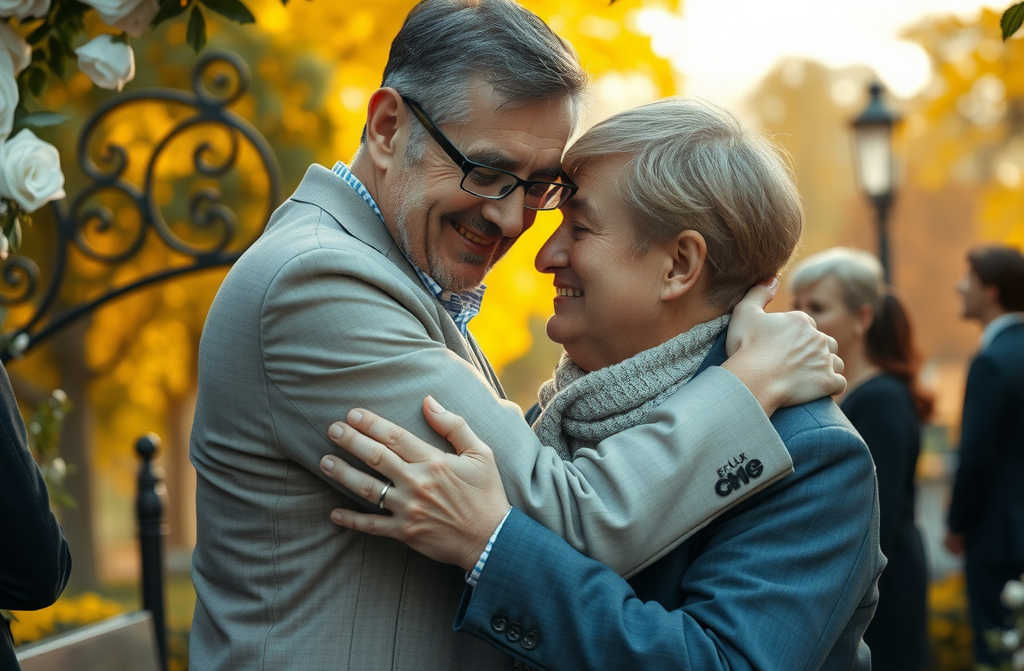
Twenty years swept past. The park exhaled a golden sighautumn in England, everything burnished and solemn, as if the trees themselves were awaiting some mute ceremony. The breeze fretted the maples, and the leaves, all chestnut and cider, drifted delicately onto the garden paths. Bunting with lamplight swung from iron gates, tables sheltered under arbors near the fountain riffled with flowersan English feast of smoked salmon, pears, Battenberg, and eclairs. In the centre, a wedding arch lashed with white roses and trailing lace beckoned all attention. Today, Charlieno longer the wild little boy, but a striking, self-possessed manwas getting married.
He stood by the arch, toying with his lapels, an odd flicker betraying the nerves under his composure. He scanned the crowd: school friends, colleagues, family from across the home counties. And, of course, his father. Philip, in navy, watched his son with eyes misted by pride.
Music rosean arrangement of Greensleeves, perhaps, or something John Rutter might have composed. The guests turned in unison. Along the aisle walked the bride, light as blossom, her white dress shimmering in the pale autumn sun, bouquet a tight cluster of English bloomslily-of-the-valley, garden roses, a pinch of blue delphinium. Her smile sent Charlies thoughts spinning. He stepped forward, took her hand, and the rest of the world drifted away into a blur of colour and music and that moment, eternal.
As the hours ticked by, the party deepened: a jazz quartet unfurled classic songs, cousins waltzed, and even grannies jived among the dahlias. There were toasts, hugs, the smell of coffee and apple tart rising with the wind, and a scatter of laughter that felt as tangible as rain on glass. Photographs were snapped in front of a backdrop of autumn leaves, the warmth of the gathering lasting longer than any English summer.
A figure waited by the park gates, hidden in shadows beneath plane trees, watching from the corner of her eye. Eva. Her hair now streaked with grey at the temples, her eyes dull with fatigue, her posture stooped with the sorrows the years had pressed into her skin. She had comeat lastto glimpse him, several times circling houses in Kingston or Ealing, always retreating at the last. Now, in some moment of courage or desperation, she crossed the grass.
She waited until Charlie ambled away from the bustle, toward the fountainperhaps needing calm after the cascade of congratulations. Eva watched, heartbeat roaring in her ears, then at last, compelled by something she couldnt name, walked up behind him.
Charlie Her voice broke, the syllable barely crossing the space.
He turned. For a momentjust a flickersomething half-familiar surfaced in his eyes, some trace of recognition trapped under years. But as quickly, his features closed, distant, as though shed spoken to him through glass.
Who are you? he asked, not cruel, just supremely uninterested.
I Im your mother. She tried a smile that failed, trembling at the edges. I came to wish you happiness. Youyoure radiant today. You and your wifeyou make such a lovely pair. She glanced, briefly, at the happy circle nearby.
Charlies arms folded over his chesta fortress, unassailable.
My mother is the woman who loved me, who was there. You he said, calm as marble, are nothing to me. I have no idea who you are.
The words struck her like hail. Eva opened her moutha plea, an excuse, the hope for a minute, any minutebut nothing came. In her mind: Hes right.
Charlie turned before she could gather herself, heading back to his peopleto his true family, the world that had held him for these years. He walked away, tall and composed, disappearing back into the warmth of the crowd.
Eva stood, clutching her useless giftsperfumes and small tokens, chosen in agony, hoping to tip the balance, to prompt a real conversation. The wind lifted leaves around her feet, swirling them like the ghosts of long-gone opportunities. She watched the leaves spiral, then looked up.
Before her, life unfolded: bride and groom beaming, Philip welcoming Charlie in a proud embrace, guests dancing, children laughing. All of it vibrant, immediate, so near and yet forever out of reach.
That was when she knew it: she was too late. The clock had ticked past, the doors were closed. All that remained was to face what she herself had wrought. It wasnt fate, nor crueltyit was the choices shed made, the borders shed drawn, the route shed selected, all converging on this cold spot.
Eva turned and walked away, every step uncertain, the ground feeling insubstantial beneath her. The park, the wedding, Charlies laughterall faded behind her, leaving quiet and a bitter recognition: it was her own hand that had written her out of his story.
She walked on, not noticing the tears streaming into the autumn mist, that same road aheadthe one she had chosen, years and years agoA pair of children darted past, ribbons trailing, laughter ringing out in pure, untroubled notes. Eva paused, blinking at the now-distant carousel of joy. The ache inside her was sharp and unfamiliarnot the old hunger for Philip, but something closer to regret, a realization settling deep in her bones. She had gambled for love and lost not once, but twicefirst the man, then the boy.
She drew her coat tighter, each step away from the celebration a lesson in letting go. Decades of longing, calculations, the hope that a child might tether a drifting worldall dissolved, leaving only her solitary reflection rippling in the ponds cold glimmer. She had always imagined herself as the storys centre, but here, in the golden dusk, Eva found she was only a shadow at its edge.
Still, as she left the park, she let her hand rest for a moment on the iron gate, feeling its cool curve beneath her palm. Through the laughter behind her and the leaf-tossed wind ahead, Eva did what she had not done for years: she let herself grieve. Not for Philip, nor for Charlie, nor even for the lost yearsbut for the woman she had never quite managed to become.
With shoulders hunched but steps steadier, Eva walked on, into the lengthening eveningempty, yes, but at last honest in her solitude. Somewhere behind her, the music of a new family rosea melody she could never join. Ahead, the world unspooled, unfamiliar and unpromised. Eva inhaled and took her first uncertain stride into the unknown, carrying nothing but the faint hope that it was not too late, after all, to learn how to livea mother, perhaps, by calculation, but, at last, simply herself.