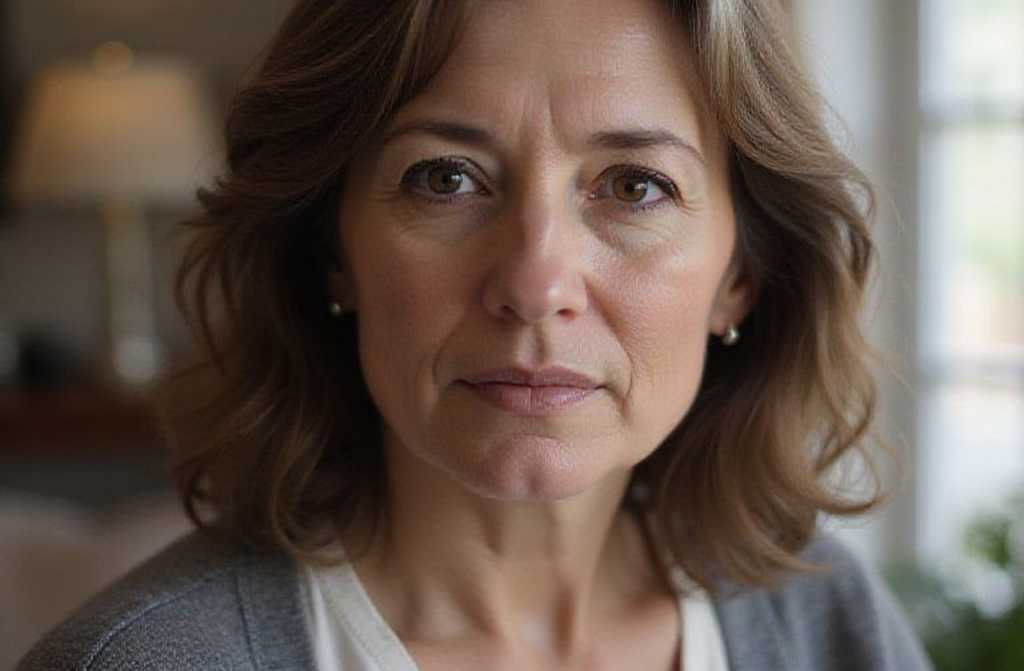
Friday was winding down, the clock creeping towards eleven. It had been an exhausting week, so I was practically ready to turn in. The flat was wrapped in that cosy, half-asleep silence that only exists in the home of a single woman – where every object lies in its preordained place. I’d just switched off the bedroom light when a sharp, unexpected ring from my mobile shattered the peace.
I jumped. The screen showed a jumble of digits – an unknown number. Let’s face it, these days people barely call each other without warning. Everyone’s used to dashing off short messages, sending emojis or voice notes. A late Friday night call is either a wrong number or bad news. Curiosity got the better of me, and after only a second’s hesitation, I pressed the green button.
‘Eleanor, is that you?’ A dry, detached, almost irritated female voice came down the line.
‘Yes, it’s me. Good evening,’ I replied, trying to place the tone.
‘It’s Harriet – your ex-husband’s wife,’ she announced without any preamble or greeting. ‘I’ve got two bits of news. First – George is gone. Second – come and pick up his mother. Because I don’t want her here.’
I froze. The words sounded like they came from some other dimension. I couldn’t even process what she was saying, or why this woman was calling me.
George and I had been married for only one year. It was a short, unhappy experience that left nothing but bitterness. Then we divorced, and our paths diverged completely. We hadn’t seen each other, messaged, or had any contact for fifteen years. Fifteen years – a huge chunk of life. In that time, I’d built a successful career, bought my own two-bedroom flat, furnished it exactly how I liked, and learned to live alone quite happily. Everything was fine – stable and peaceful. But deep down, after that old marriage, I’d decided: my heart was forever closed to men.
I got married quite late by the standards of the time – I was already thirty. George was five years older. Before we met, he’d never been married either; he lived with his mum. Back then, fifteen years ago, I genuinely believed he was that mature, grown-up person beside whom I’d finally feel as safe as houses. A family seemed like a safe harbour.
But reality turned out differently. Over time, unpleasant details surfaced, and eventually I discovered his plain, systematic cheating. My heart was shattered, but I didn’t put up with it – I packed my bags and left. The marriage ended in a quick divorce. No children together, so there was nothing linking us.
Now I’m forty-five. I’d grown used to my solitary but orderly life. And then – this bizarre, wild phone call in the middle of the night.
What did I feel about my former mother-in-law, Edith? Probably nothing particularly deep. During that single year of marriage, we hadn’t had time to become truly close. She was a very refined, quiet, almost invisible woman. Small and modest, she never interfered in George’s and my arguments, always keeping to herself and trying not to be a bother. I held no grudge against her and couldn’t say a bad word about her.
After that soul-wrenching phone conversation, I couldn’t sleep. I tossed and turned until dawn. Harriet, brisk and cold, simply dictated an address, threw out a bone of a phrase – ‘You know the place, come in the morning’ – and hung up. While I lay there, one question kept replaying in my mind: what had been happening all these years, and what was going on now? Why was the leftover life of an elderly woman – dumped on no one in particular – suddenly in my hands?
Saturday morning greeted me with a grey, chilly fog. Without even having coffee, I called a taxi and went to the address.
It was indeed our old flat – that same concrete-block building on the outskirts of town where George and I had once tried to build a nest. Climbing the familiar stairs, I felt my heart thumping faster.
Harriet opened the door. She was in a bathrobe, with a blank, tired, and at the same time superior expression on her face. She didn’t even invite me in properly. As I later pieced together from her terse remarks, while George was still alive, she’d talked or manipulated him into transferring the entire flat to her name. How exactly it had all happened, what illness had taken him – I didn’t ask. It didn’t matter anymore.
‘She’s in there,’ Harriet said, nodding vaguely towards the smallest room at the end of the hall.
I walked in and the sight took my breath away.
The room was tiny, half-dark, and stacked almost to the ceiling with old boxes, bundles of rags, dusty belongings and junk. It looked more like a storage cupboard for rubbish than a living space for an elderly person. The air was heavy with a stale smell of dryness, medicine, and neglect.
On a narrow, sagging sofa lay my former mother-in-law. She was so thin that under the blanket her body seemed tiny, like a child’s – a frail, helpless old woman who appeared to have lost all hope.
But what struck me most was something else. Right on the old lady’s chest, curled tightly into a ball, lay a large fluffy ginger cat. He pressed his whole body against her, trying to warm her with his own heat. Probably from exhaustion and hunger, the old woman was so cold that even this animal sensed her pain better than her legal next of kin. When I came in, the cat only lifted his head, looked at me with big amber eyes, and stayed still, as if guarding his mistress.
Everything inside me turned over. A terrible wave of pity, anger and outrage rose in my throat.
‘Take her,’ Harriet said indifferently, standing in the doorway without even looking at Edith. ‘I don’t want her here. If you don’t take her now, I’ll call social services and put her in a home. I’m not keeping her.’
I looked at this woman and realised that talking to her, shaming her or arguing was a complete waste of time. This person had a lump of ice where her heart should be.
‘She’s coming with me,’ I replied calmly and firmly. ‘And the cat too.’
I went into the hall and called another taxi, explaining to the dispatcher that I needed help moving someone with limited mobility.
Fifteen minutes later, the car was outside the building. The driver – a stocky man around forty, with grey at his temples – came up to the flat with me. When he walked into the room and saw the appalling, helpless state of the old woman, his face flinched. He didn’t say a single swear word, but everything was clear without words.
The man silently left the room, fetched a blanket from his car, carefully wrapped Edith in it, gently lifted her in his arms as if she were a porcelain vase, and carried her down the stairs all the way to the taxi.
I followed, holding the ginger cat, who didn’t struggle but only dug his claws into my jacket. I was so moved by the genuine, selfless act of this unknown taxi driver that I could barely hold back tears the whole drive home.
But as it turned out, this was only the beginning of my new story.
Once I got the old lady to my place, I first settled her into my own clean, cosy corner, covered her with a warm blanket, and immediately called the local GP.
The doctor, an experienced and compassionate woman, arrived fairly quickly. She examined Edith thoroughly – took her blood pressure, listened to her heart, checked her responses. My mother-in-law lay silently, eyes closed, barely reacting to the world. She was simply utterly exhausted – physically and mentally.
After finishing the examination, the GP wrote out a list of necessary vitamins and medications, then smiled at me, warmly placed a hand on my shoulder, and said quietly, ‘Don’t worry, Eleanor. There are no incurable conditions here – it’s plain undernourishment, dehydration, and deep stress. We’ve pulled people back from worse. And we’ll pull her back too. The main thing now is care, attention, and good food.’
From that day, my usual, orderly life changed completely. I started tirelessly looking after Edith. Every day I made light, nourishing chicken broths, puréed vegetable soups, bought necessary medicines, changed her linen. At the same time, I fed the ginger cat, whom we named Ginger. He, by the way, turned out to be wonderfully loyal: for the first few days, he wouldn’t leave the old lady’s bed, slept at her feet, and constantly purred softly, giving her his warmth.
And you know, the miracle wasn’t long in coming. Both of them began to perk up rapidly.
Within a few days, Edith started eating more, colour returned to her cheeks, and the terrible, fading despair disappeared from her eyes. She began to sit up a little in bed. Ginger also stopped hiding under the furniture at every sound; he started roaming the flat boldly and rubbing against my legs, thanking me for the rescue.
Then, after a while, something I never expected began to happen. Our little private story unexpectedly touched the hearts of many people around.
In our building, one floor below, lived a neighbour named Simon. He was a tall, quiet man about my age. For all these years, we’d barely spoken – just nodded or exchanged a brief hello, and even that wasn’t every time.
One evening, we happened to be in the lift together. He had a large, heavy bag filled with juicy red apples.
Simon looked at me and held out the bag.
‘Please, take them.’
I felt embarrassed and started waving my hands. ‘Oh no, really, I can’t – thank you! Why?’
Simon smiled – softly and very sincerely. ‘Take them. They’re not for you. They’re for that old lady who’s living with you now. I saw you bring her in.’
At that moment, my heart felt so warm and cosy, as if the sun had suddenly come out on a gloomy day. I realised: people who owed me nothing, who were complete strangers by blood, had voluntarily decided to support and help.
And such people multiplied each day.
A neighbour from the ground floor, having heard about my situation from someone, knocked on my door one day and brought a jar of fresh homemade cottage cheese and some cream. Another resident silently left bags of fresh berries and fruit by my door.
Even our boss at work – whom the whole team considered extraordinarily strict, principled, and dry – surprised me to the core. When rumours about my family situation reached him, he called me into his office.
I went in with trembling knees, thinking I was about to get a reprimand for missed hours or a request not to get distracted from work.
But the boss looked at me over his glasses, sighed, and said, ‘Eleanor, I’ve heard about your situation. Work from home for now – remotely. Send your tasks by email. You need to be with that person right now. Family and humanity come first.’
I walked out of his office with tears in my eyes and couldn’t believe this was really happening to me.
Weeks passed. Edith gradually grew stronger but remained very quiet. She hardly spoke, never complained, never asked for anything. But I often noticed her, thinking no one was watching, turning to the wall and silently crying.
And then it hit me – a crucial realisation.
She didn’t just need good medicine, proper care, and tasty food. What she lacked most of all was ordinary human warmth, the feeling of being needed, and basic attention – all of which she’d been denied in her own home. She felt like a burden, a stranger taken in out of pity.
One quiet evening, when an autumn chill swirled outside the window, I brewed some fragrant mint tea, poured it into pretty cups, went into her room, and said with a warm smile, ‘Mum, let’s have some tea. I baked your favourite cake.’
She flinched at the word. Slowly, as if not believing her ears, she raised her faded eyes, full of surprise.
‘You… you called me Mum?’ Her voice trembled.
‘What else would I call you?’ I smiled genuinely, walking over and hugging her frail shoulders. ‘You are Mum. My mum.’
After that moment, the old lady seemed to come fully back to life, throwing off the weight of years of pain.
She began to smile much more. A desire to live and talk awakened in her. She started telling me long, fascinating stories from her youth – how she’d worked as a literature teacher, what books she loved. Every day, she eagerly awaited evening, when we would all sit around the big table for dinner, chat, and share the day’s events.
And our neighbour Simon came over more and more often. At first, his visits were purely practical – he’d bring apples or pears from his garden, or help fix something in the flat. Later, he took the initiative to offer to help take Edith out for walks in a wheelchair so she could get fresh air.
That’s how we began to talk more and grow closer. Simon turned out to be an extraordinarily sensitive, deep, and kind man. Eventually, in casual conversations, I learned that he, like me, had had a difficult life, had devoted himself entirely to work, and had never been married before.
His care for Edith, his attention to me, his lack of pretence and sincerity gradually melted the ice that had encased my heart for fifteen years. I allowed myself to trust a man again.
One warm summer evening, as we were returning from another long walk in the park, Simon stopped me near the building entrance. He took a small box out of his pocket, looked me straight in the eye, and made a genuine proposal to become his wife.
I agreed without a moment’s hesitation.
I know there will be plenty of sceptics who’ll say: at forty-six, it’s too late to start all over, too late to build a new family and believe in fairy tales. But life has shown me the opposite.
It was precisely when my heart fully opened to love and compassion that God gave me another, the greatest miracle of my life.
At forty-six, I discovered I was pregnant. The labour went smoothly, and I gave birth to my first, longed-for, happiest child – a healthy, beautiful daughter.
Today, I am happier than I ever dared to dream in my youngest years.
Happy is our little girl, growing up in an atmosphere of love and comfort.
Happy is my husband Simon, who has found a real family.
And infinitely happy is our mother, Edith – who, in that dark, junk-filled room, thought her life was over and she was utterly alone in the world. She has become the most caring grandmother in the world, spending hours singing lullabies to her granddaughter.
Sometimes, when my daughter falls asleep and we’re all having tea together in the living room, I remember that late Friday night phone call.
I don’t know if I acted entirely correctly from a purely pragmatic or self-preservation standpoint. Many people in my shoes would have simply hung up and refused to get involved with someone else’s problems. But at that moment, I couldn’t walk past another person’s trouble. I couldn’t leave a defenceless human being to the mercy of fate.
And now I know one truth, one hundred per cent: humanity always breeds a new, powerful wave of kindness. All you have to do is push aside your doubts and reach out a hand to just one person – and life will inevitably repay you a hundredfold, bringing happiness from where you least expect it.