The Hidden Asset
“Are you wearing that jumper again?” Margaret’s voice cut through the kitchen air, sounding less like she was talking about a piece of clothing and more like she’d discovered something unsavoury under the sofa. “Evelyn, honestly. The Blakes are coming round tonight. You do realise what that means?”
Evelyn stood by the hob, stirring soup. The spoon moved in smooth, steady circles. Still, that tone knotted something inside her as it had before and, she knew now, would again.
“I understand, Margaret,” Evelyn replied, not turning round.
“You dont, though. The Blakes are business partners of George. Proper people. And you look like” There was just a flickering pause, “like youre about to go dig potatoes up in the garden.”
Evelyn set the spoon down. She turned. Her mother-in-law stood at the doorway in a silk dressing gown, coffee cradled delicately, regarding her with that look Evelyn had learned to decipher: not malice. Something closer to disappointment. As if every time, Margaret was confirming her own son had chosen badly.
“Ill change for dinner,” said Evelyn, keeping her voice level.
“Lets hope so.” Margaret turned and walked off, her verdict delivered.
Evelyn picked up the spoon again. The soup bubbled gently; the scent of bay leaf and carrots drifted upwards. Beyond the kitchen window, the clipped lawns rolled away perfectly even, watered every morning by the automatic sprinklers. She watched them, thinking, Tonight, I need to finish that appeal for my client in Stockton. The deadlines looming.
Not one person in this house knew about the appeal.
Not one person knew about her client in Stockton.
In fact, no one here knew anything real about her at all.
Her name was Evelyn Sutton now Evelyn Stratton, by marriage. Twenty-five. From a small town in Norfolk Beckford, near the River Stour, four hours drive from London. Her dad, a retired physics teacher; mum, a bookkeeper at the local surgery. One-bed flat, an allotment her parents doted over, and a ginger tomcat called Toby. Her parents uncompromising belief: “If youre clever, you ought to make the most of it.”
Evelyn had done just that. Straight As at school; a First in Law at East Anglia University; then two years teaching herself the ins and outs of financial law, an internship with Browning & Partners, and, eventually, her own private clients. One, then several, then so many shed given up counting.
By twenty-four, she earned enough to help her mum and dad out, and saved a little too. Remote work only Evelyn never set foot in an office. No plaque on the door. Just her laptop, a well-worn phone, a sharp mind, and tight lips.
Shed met Adam Stratton by chance at a mutual friends birthday party. He was four years older, disarmingly handsome the sort of good looks that made it awkward to hold his gaze but easy to chat to, no trace of snobbery, none of that big-city squint. He told stories about hiking, cycling, laughed without effort. She hadnt known then whose son he was. Shed found out soon enough, when it was too late to pretend it didnt matter.
The Strattons meant “Stratton Tech Park”: a web of industrial sites across three counties, the haulage firm StrattonLine, and various other businesses. At the centre of it all was George Stratton, a man with huge hands and a habit of sizing people up as if weighing them on invisible scales. Margaret, his wife, played hostess and ran the charity fundraising, but in reality kept the family legend on course. That image demanded certain standards.
Evelyn didnt fit those.
Adam proposed nine months after they met, in March, while the air still carried a river chill. She said yes, because she loved him his openness, the way he listened, his comfortable silences. As for his family she thought, Ill manage. Shed always managed.
They married in June not a huge do by Stratton measures, only 120 guests. Evelyns parents came down from Beckford, slightly awed in their best clothes. Her mum handled it, her dad drank little and smiled politely as if on best behaviour. Margaret greeted them once at the beginning and didnt approach again.
After the wedding, Evelyn moved into the Strattons house on Greenleigh Lane. Adam said it was only sensible while they found their own place: it was spacious, there was staff, nothing domestic to worry about. Evelyn agreed, thinking it would be temporary.
Eight months passed. Their own place hadnt come up, not even in conversation.
The house was huge, with columns at the entrance and sweeping staircases that felt faintly theatrical. Downstairs: lounges, dining room, Georges study. Upstairs: bedrooms. Adam and Evelyn had their own wing, but the walls in a house like this always made her feel a guest especially with Margaret watching, coffee in hand, in her silk dressing gown.
Adam wasnt the only Stratton child. There was Michael, the eldest thirty, working for the family firm, living nearby with his wife and child; Sunday visitor. Then Sophie, twenty-two, the youngest, student, lived at home and eyed Evelyn with the same frank disapproval as her mother, only less artfully concealed.
“She dresses like that on purpose,” Sophie had once pronounced at Sunday dinner, wrongly assuming Evelyn was out of earshot. “To look all humble. Small-town tactics.”
Evelyn, tray in hand out in the hall, heard every word.
She stepped into the dining room, placed the tray, took her seat. Adam spooned up soup, eyes fixed on the table.
So it went, day by day. Remarks about clothes, speech, even how she held her fork. Once Margaret had observed, in front of company, “Adams always had the kindest heart even brought home a country girl.” Shed said it without malice, almost fondly, and that, somehow, was the bitterest part.
Adam said nothing.
Evelyn had wondered, maybe he hadnt heard. Shed come to understand, he had just didnt know what to say. Or didnt care to try.
Adam was kind. Really kind, never putting it on. But his kindness stretched out like a picnic blanket spread wide, but never shielding anyone, not even her. When she tried to talk about how his family treated her, he always listened, nodded, then said, “Thats Mum for you, she doesnt mean to be harsh. You just dont know her yet.” And, truthfully, Margaret wasnt cruel. She was a woman whod constructed her world over decades, and Evelyns entry into it was a splinter small but stubborn.
Evelyn could see all that, but it didnt make the splinter hurt less.
She hid her work with care. Not out of fear out of calculation. If they knew she earned good money as a solicitor, questions would follow. Questions would become conversations. Conversations would change how they saw her. She needed to know what they were really like, thinking of her only as a quiet, unambitious girl from the countryside.
Every morning, while the family breakfasted and busied themselves, Evelyn disappeared to the little room she claimed as her dressing room off-limits to others opened her laptop and worked. Three, sometimes four hours a day. Her clients ranged from Stockton to Redmoor, all over the country. Financial disputes, tax wrangles, arbitration. She was good. People recommended her, came back to her.
Her pay went into an account opened years ago, in her name, at a small local bank. Adam knew she had an account, but not the sums nor the source.
In November, eight months after moving in, everything changed for the Strattons.
It was a Thursday, early. Evelyn hadnt even powered up her laptop when a noise drifted up from below not the usual morning bustle, but something harsh, unfamiliar, with upset voices. She found Margaret on the landing, in her nightdress, arms pressed to her chest, staring down the stairs with wide eyes.
“Whats happened?” Evelyn asked.
Margaret didnt reply as if she hadnt heard.
Down in the hall, several plainclothes men spoke with George. He stood tall, but he wasnt quite himself, his hands clutching a document, reading slowly as if the words didnt belong together.
Adam emerged, swept past Evelyn and hurried downstairs. She heard his quick, whispered questions. George answered shortly. Then one of the men in plainclothes said something, and George, right there in the hall, began to get dressed, not bothering to head back upstairs for privacy.
Evelyn followed. She took the document from one of the men didnt ask, just took it with the confidence of someone who knows they have a right and before hed even figured out what happened, shed finished the first page.
Warrant for arrest. Fraud on a considerable scale, tax evasion. Signed by the Deputy Prosecutor for Burnham District. Yesterdays date.
“Give that back,” said the officer, and took it from her.
Evelyn nodded, stepped away.
They took George Stratton at 7:40. By ten, word had spread the StrattonLine accounts were frozen by court order. By noon, Michael phoned his voice, loud enough in Margarets hand to fill the lounge, was frantic as he shouted about setups, dirty tricks, the need for a lawyer.
“We need a lawyer,” Margaret echoed, gazing at the walls for answers.
Evelyn sat by the window. Sophie wept on the settee. Adam stood in the centre of the room, phone in hand, scrolling through contacts, seemingly paralysed.
“You need more than a lawyer,” Evelyn said.
Everyone looked round. Even Sophie stopped sniffling.
“Pardon?” Margaret said.
“You need someone who understands both criminal law and financial structures. Normal criminal solicitors wont follow the books. An accountant couldnt handle the investigation. You need someone who does both.”
“Well find someone,” Adam said. “We will.”
“Or,” Evelyn replied, “I can help.”
A long silence.
“You? Youre a housewife,” Sophie scoffed.
Evelyn met her gaze calmly.
“Im a solicitor. Corporate and financial law. Ive been working remotely for three years. Ive handled cases like this.”
The silence changed no longer shocked, but something recalculating. Adam stared at her, a question on his face he couldnt shape into words.
“Why have you never” he began.
“Told you?” Evelyn shrugged. “No one asked.”
That wasnt the whole truth, but this wasnt the time for it.
Margaret set her coffee cup down so hard it was practically a verdict.
“Fine,” she said sharply. “What do you need?”
Evelyn stood.
“I need access to your financial records for the last three years all contracts, bank statements, tax documents. Ill need to speak to the company accountant, today.”
“Those are serious papers,” Margaret replied, her hesitance habitual, not suspicious.
“Exactly,” said Evelyn. “Thats why Im asking.”
Adam looked between them.
“Mum give her what she wants.”
Margaret studied her son, then Evelyn, as though seeing her for the first time, still hesitant to decide if she liked the new picture.
“Very well,” she said.
The StrattonLine accountant, Mrs Clarke, arrived by two, eyes red with exhaustion despite her make-up. She and Evelyn settled into Georges study with piles of papers and spent four hours at it. No one disturbed them a first, given Evelyn had never been deferred to, not even over dinner arrangements.
At first, Mrs Clarke was wary. But Evelyns clear, pointed questions soon put her at ease. Professionals always know when theyre talking to one of their own.
“Here” Mrs Clarke stabbed the JulyAugust transactions. “These, I never understood them. George said they were routine transfers between sister companies. I put them through like usual.”
“And who authorised them?” Evelyn asked.
“His signature. Well” Mrs Clarke hesitated, “Looks like his. I didnt check thoroughly. Why would you doubt the directors signature?”
“No reason. The question is whether it’s genuinely his.”
Mrs Clarke looked at her, a realisation flickering.
“You think”
“I think nothing yet. Im gathering facts.”
By evening, Evelyn had a rough picture. Not full, but enough something was off with the records. Transferring huge sums, via a shell company: “TechVector Trading”, set up in April, run by one Samuel Jennings. Jennings didnt appear anywhere else, but Evelyn recognised the arrangement a “one-day company” for washing money through. Someone had set it up, funnelled the cash, then closed it all registered as Georges orders.
The question: who?
At dinner that night, everyone sat in silence. Evelyn summarised what shed found.
“George almost certainly didnt sign those transfers himself, or not knowingly. Well need a handwriting expert, and to identify whos actually behind TechVector.”
“How do we prove it?” Michael asked back at the table for the first time since morning, sitting at his fathers spot, tense with worry barely kept under control.
“Track the shell companys tax filings, follow the money to Jennings accounts, and check digital logs for who accessed Georges signature.”
“The digital signature?” Michael asked, frowning.
“Yes. If it was sent online, therell be a log. We’ll need the IT manager.”
“Thats Palmer,” said Adam.
“Arrange to meet him. Tomorrow morning.”
Adam nodded. Then he looked at her in a way she struggled to pin down not apologetic, not admiring, but something like recognising a truth that had been staring him in the face.
Margaret said nothing else that dinner. Once, as Evelyn stood for water, she murmured, “Shes clever, isnt she?” Not quite praise just a bitter reassessment.
For two weeks, Evelyn worked in silence, as she always had: morning calls, afternoons poring over documents, evenings analysing. She reached out to two colleagues: Mark Dickson, tax specialist from Redmoor, and Katherine Pratt, barrister with arbitration experience, her old training mate. She filled them in without going into family detail. Both agreed to assist.
“Youre serious?” Katherine said on the phone. “THE Strattons? StrattonLine?”
“Yes.”
“And you live with them?”
“I do.”
“Evelyn. Will you tell me the whole story, one day?”
“In time,” she promised.
Palmer, the young IT bloke, brought her a printout of the digital signature logs. She and Mark spent two hours combing through them by video link. The twist made sudden sense: on the days the dodgy transactions were actioned, Georges diary showed meetings in another city. The orders were sent from his computer when he was nowhere near the office.
“So, someone used his credentials without his knowledge,” Mark said.
“Yes. And whoever it was had physical access to his office.”
“Who?”
“Thats the next thing to check: secretary, deputy, maybe someone from IT.”
Palmer, whod been hovering anxiously, piped up: “I can check the key card logs for his room that day.”
“Please,” Evelyn said.
The entry records showed two people. The cleaner at 8am. Then David Rudge, the deputy finance director, at 11:40 there twenty minutes. The suspicious authorisations were sent at 11:48.
A pause.
“Rudge,” Evelyn said.
Palmer nodded, as though realising what had been at the edge of his mind.
“Hes been with us five years. George trusted him completely.”
“I understand,” Evelyn replied.
The next steps had to be careful. You couldnt just turn up at the investigators office and announce the culprit. They needed evidence even a barrister couldnt sidestep. Mark filed a request through official channels to the tax office to unpick TechVectors records. Meanwhile, Katherine filed an application for an independent handwriting analysis.
The results arrived in a week: two out of four critical documents had signatures that experts considered “likely forgeries” less than forty per cent probability of being real.
“Thats something,” Katherine noted. “But the policell want to know: how? We need a witness to Rudge, or a digital trace.”
“The money went to Jennings. But who is he?” Evelyn pressed.
“We cant identify him by the book,” Mark said. “It needs a legal request.”
“Well get one.”
While the professionals dug, the house lapsed into uneasy routine. George was released to house arrest after five days, thanks to bail by Michael. He spent his days fenced in by work in the study. Margaret patrolled the halls, lips tight. Sophie stopped going to university altogether, claiming focus was out the window.
Evelyn and Adam barely spoke not from anger, just the heaviness between them. Distance hadnt grown; something less visible had crowded in.
Once Adam came late to her dressing room, sat slumped in the chair.
“All this time, you worked?” he asked. No accusation more a belated dawning.
“Yes,” she said.
“For three years?”
“Three years.”
He fell quiet.
“I had no idea.”
“I never said.”
“Why?”
She snapped the laptop shut, looked at him.
“Adam, do you remember what your mum told the Blakes in September?”
The look on his face told her he absolutely did.
“I couldnt” he began.
“You couldve,” she said quietly. “You just didnt want to. Thats not the same.”
He was silent, stayed a little, and left.
On the fourteenth day, Marks lawyer contacted her Jennings, the TechVector frontman, was Rudges cousin. Theyd never worked together formally, but their phone records listed multiple calls that summer all before the transfers.
“Theres your connection,” Katherine said.
“Not conclusive yet,” said Evelyn. “We need proof Rudge got the cash.”
“Jennings used part of the money to buy a flat in November, three months after the transfers.”
“His own, not Rudges.”
“Yes, but Rudge opened a new Meridian Bank account in October. Three personal payments in about a third of the laundered total. Details withheld for privacy.”
“Can the lawyer file for access?”
“Already done. Just waiting for a judge.”
Four days later, approval came. The mystery sender depositing funds to Rudge? Jennings.
The scheme was complete. Rudge had set up fake orders using Georges login. Money left for Jennings. Jennings paid a chunk back to Rudge. George had signed nothing, or at least, not knowingly. It was almost certain hed known nothing at all.
Evelyn drafted a 23-page report diagrams, references, the lot and passed it to Katherine, who in turn gave it to Georges solicitor, Mr Cornish, an aging but formidable man.
He called Evelyn Sunday morning.
“This is a remarkable piece of analysis,” he said finally. “I hadnt expected such depth.”
“Thank you,” Evelyn replied.
“Did you have outside help?”
“Mark Dickson of Redmoor, and Katherine Pratt.”
“I know Pratt. Good woman. We submit this on Monday.”
That Monday, Cornish filed for a review of Georges house arrest, and for criminal proceedings against Rudge. By Wednesday, Rudge was summoned for questioning. By Friday, he was arrested.
Two weeks later, Georges house arrest was revoked. The charges, for the time being, reconsidered. Account freezes partly lifted. The case wasn’t closed, no such things move slow and uneven but the worst seemed to be behind.
That evening, the Strattons dined together for the first time in weeks. George, thinner, older round the mouth, but composed, sat at the head. Margaret opened a bottle of the special wine she kept back for occasions. Michael offered a stunted toast “to family.” Sophie sipped silently.
George looked at Evelyn.
“Youve done something extraordinary,” he said.
“Just the possible,” Evelyn replied. “It takes time and understanding of the patterns.”
“I had no idea you” He faltered.
“Solicitor,” she offered.
“Yes, a solicitor.”
Margaret raised her glass, watching her daughter-in-law. Something new had entered her eyes not warmth, but a kind of measured recognition, the reluctant tribute we owe those weve underestimated.
“Were in your debt,” said Margaret.
Evelyn nodded, sipped her wine it was decent.
But that night, lying next to Adam, listening to him breathing, it wasnt the past she dwelled on, but the present. Something had shifted, just not how shed hoped. They looked at her differently now but as a useful asset, not as someone deserving genuine dignity or common courtesy these past eight months.
She remembered her mother once saying, “Evelyn, its good to be capable on your own. Just dont forget, youre allowed to let others do something for you too.”
Her mother had meant something else, but it now took a new meaning.
The next morning, with George and Michael out early and Adam off to work, Margaret came to Evelyns dressing room. For the first time in eight months.
“May I?” she asked.
“Of course,” Evelyn replied.
Her mother-in-law sat where Adam had, glancing at shelves of legal volumes, bundles of notes, highlighters.
“You always worked in here,” she said. Not a question.
“Yes.”
“And I called it a dressing room.”
“You didnt know.”
There was a long pause.
“Evelyn,” Margaret began, “what you did for our family”
“Margaret” Evelyn interrupted gently, “may I say something?”
She nodded, wary.
“Im glad I could help. Not out of debt, just because injustice rubs me wrong. But I need you to understand it doesnt wipe away what came before.”
“What do you mean?”
“The things said in front of guests. Being called the country girl. What Sophie said in the dining room with everyone listening. None of that was trivial. Thats eight months.”
Margaret didnt look away, and that, in itself, earned a sliver of Evelyns respect.
“I see what you mean,” her mother-in-law said quietly.
“Good.”
“I hadnt realised it was so painful. I thought about Adams future, the familys standing, reputation.”
“I know,” said Evelyn. “Which is why I kept work to myself. I wanted to see how youd treat someone you assumed knew nothing. Now I do.”
Margaret stood. Waited a moment at the door.
“Youre leaving,” she said, not as a question.
“Im thinking about it,” Evelyn answered honestly.
Her mother-in-law left. Evelyn turned to the window. The lawn outside was neat, freshly watered, sprinklers catching the light in shining arcs.
Shed been thinking of leaving for days and nights, between phone calls, folding Adams shirts a habit neither owed nor required, but one she’d formed anyway. She didnt worry about money or where to go those questions had answers already. She wondered about something else.
She loved Adam. The feeling hadnt gone. But the older she got, the more she understood: love alone wasnt enough next to someone who never found a word when words mattered. Not a bad man, just one for whom family always trumped his wife. Nothing had changed, not even now.
She thought of a line from her old law professor, Dr. Varlam: “The trickiest contract isnt the weirdest worded. Its when one side never intended to uphold their end at all.” He meant business, but Evelyn knew better now: he might as well have been talking about people.
Marriage had silent contracts too with one party assuming everything was fair, and the other carrying the weight in silence, because thats what theyd always done.
The conversation with Adam happened Friday evening not by appointment, just inevitability. He came in from work early, stepped into her ‘dressing room’, unannounced for the first time.
“Mum said you might go,” he said from the doorway.
Evelyn set her pencil down.
“I think so, yes.”
Adam shut the door, came over.
“Because of me?” he asked.
“Because of us. Theres a difference.”
“Can you explain?”
She waited, forming the words for the first time, now, in this moment.
“Adam, when your mum called me ‘the country girl’ to your guests, did you say anything?”
“No,” he said quietly.
“When Sophie accused me of dressing down for country effect did you respond?”
“No.”
“And when I wasn’t invited to the table when family business was discussed, though I was right there did you notice?”
He swallowed.
“I did.”
“Then you know why I dont need to explain more.”
He perched on the ledge, staring out at the garden lights beyond dusk.
“I didnt want to upset them,” he mumbled finally.
“I know.”
“Mums always”
“Adam,” she cut in, “I’ve no anger left. What I know now is this: if you always have to choose between not upsetting them and standing up for me, youll choose them. Thats not blame. Its just who you are.”
“I can change.”
“Perhaps. But Im done waiting. Im not at that stage in life, or in spirit.”
He turned to her.
“Where will you go?”
“Ill rent a place. Keep on working. Its hardly dramatic.”
“On your own?”
“On my own,” she said.
Something flickered in his eyes pity, or something deeper. She didnt care to break it down. Not anymore.
“Divorce?” he asked.
“Ill file in a month. No rush.”
He nodded, then, very quietly, “I love you.”
She watched him.
“I know, Adam.”
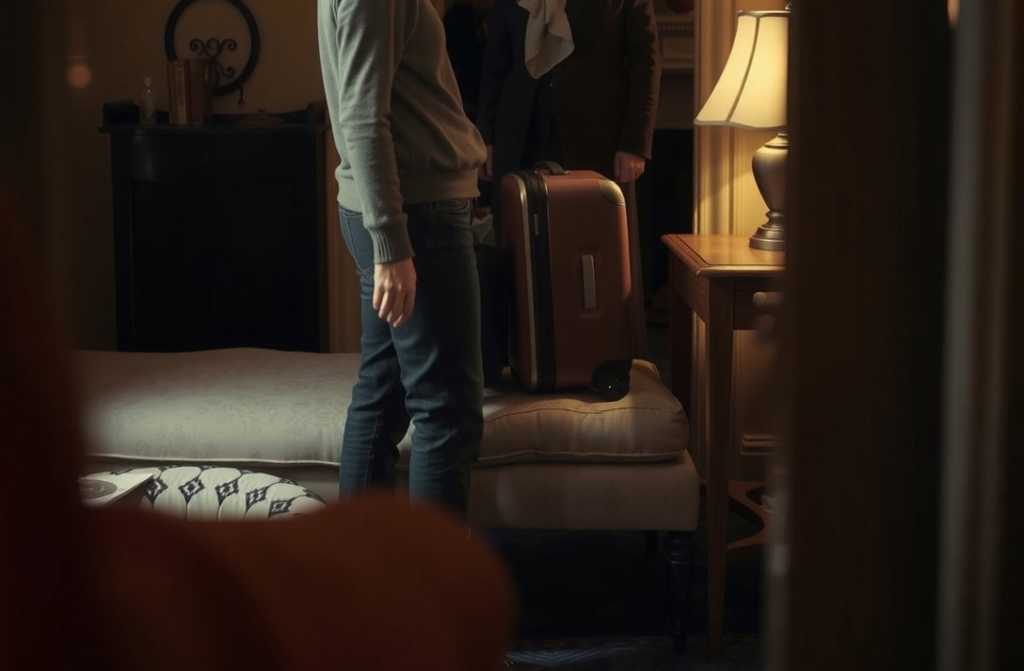
By Saturday morning, shed packed two suitcases. Her belongings: clothes, books, her laptop, a few bits from the kitchen the old polka-dot mug shed brought from Beckford. Everything else belonged to this house, this life and she didnt want it.
Downstairs, Margaret waited, alone. The others somewhere in the house, unseen or, she thought, avoiding the moment.
Margaret eyed the cases, then Evelyn.
“Youre sure?” she asked.
“Yes.”
Margaret gave a slow nod.
“I wont tell you we appreciated you. Youre right we didnt. I” she hesitated, searching for words unpractised, “Im used to a certain order to things. A place for everyone.”
“I understand,” Evelyn said.
“You didn’t fit my ideas.”
“I know.”
“And you turned out to be better than anything Id pictured.”
A long pause. Not awkward just real, present.
“Margaret,” Evelyn said at last, “Im not leaving out of anger. Im leaving because I want to live where I dont have to be in crisis before Im noticed. Its not a criticism, just what I need to admit to myself.”
Her mother-in-law gave her a true, lingering look.
“Good luck, Evelyn,” she said at last.
“And to you,” Evelyn replied.
She lifted her suitcases and stepped outside. The taxi waited at the gate. The autumn air was damp and earthy, carrying hints of home of Beckford, of the allotment, her dads muddy wellies.
She loaded up the boot, opened the back door, and glanced over. The house stood in the morning light, stone and ironwork, that same ever-watered lawn. Impressive. Not hers.
She got in.
“Where to?” asked the driver.
“Number seven, Shipwright Crescent,” she replied. The flat shed found two days ago: a small place, fourth floor, windows overlooking a yard, a creaking wooden stair on the third step. The first time shed seen it, shed thought: this feels like mine.
The car drove off.
Past the house on Greenleigh Lane, the gates, tree-shaded roads, then the long straight of the main road.
Her phone vibrated. Mark, her colleague: “Stratton case. Officers opened a file on Rudge. Well done.” She put the phone away.
Well done a simple thing, that. Nothing grand.
Evelyn gazed out, not anxious, not triumphant just curious, as the road went on and the future began: bare walls, no curtains yet, and only one mug. Shed taken her polka-dot one, but in truth fancied treating herself to a new, green cup.
Odd, how content it felt to think about mugs, after eight months that overturned everything. But perhaps this was what it meant to make the right choice. Not emptiness; not fanfare. Only: a next step. A mug. Some curtains. A desk in the window.
Shed already opened her emails. A client from Cornwall needed tax advice. Mark had flagged a new case. Katherine hinted at joining forces, nothing formal, just to see. Life, in short, continued.
The driver turned up the radio a tired-sounding woman was singing something plaintive in the background.
Her phone buzzed again. Adam.
She paused. Picked up.
“Yes?”
“Are you far?” he asked.
“On the main road.”
“I just wanted to say you were right. About everything. I know its late.”
“It is late,” she replied, no anger merely stating fact.
“You wont come back?”
She studied the long, autumnal stretch of road.
“No, Adam.”
“All right,” he said softly. “Take care.”
“And you.”
She ended the call, phone resting on her knee. The driver said nothing, radio humming, trees blurring by outside.
Evelyn found herself thinking that in Beckford, autumn would be smelling much the same earth and leaves. She ought to call her mum. Say shes fine. That the flat is sorted. Works steady. Life goes on.
Mum would ask about Adam. Mum always did.
What would she say?