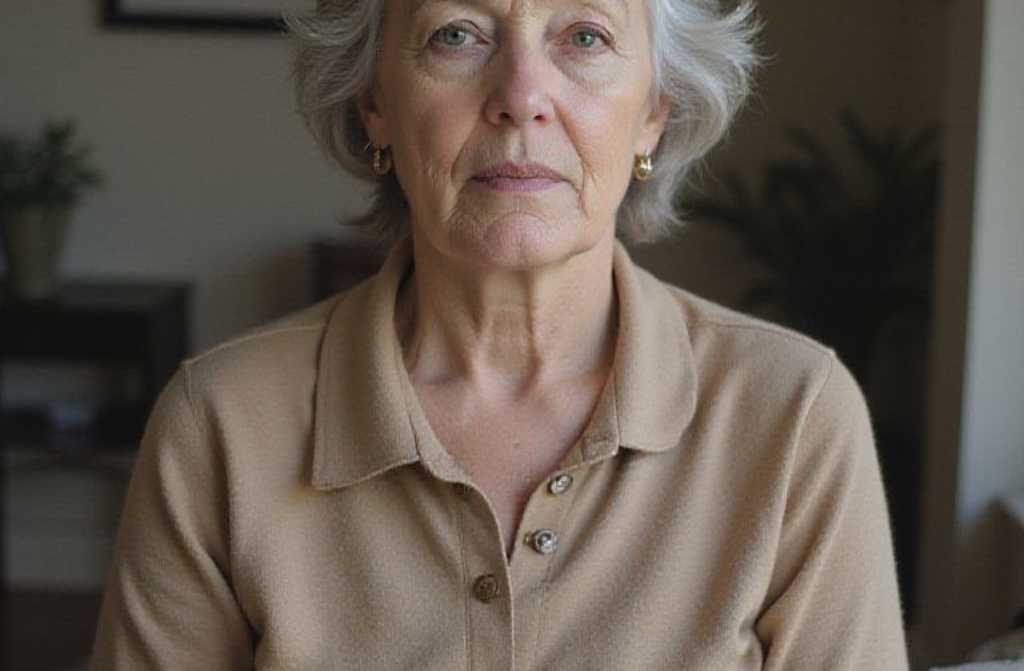
Edith wasn’t living. She was merely waiting out the end.
Seventy-two years, a one-bedroom flat on the edge of Birmingham, a pension that by the twentieth of the month left only a few copper coins. And silence.
Half a year ago, George had left. Not for another woman—just left. Quietly, in his sleep, without even a rattle. Edith woke in the morning and found him cold. His hand lay on the edge of the bed as if he’d been trying to reach for her and hadn’t made it in time.
Their daughter Nancy rushed down from London for the funeral, stayed three days, left blood-pressure pills on the fridge, and dashed off with a final: “Mum, call if anything happens.” Edith didn’t call. Nancy did. Once every two weeks, like clockwork.
“Mum, how are you?”
“Fine.”
“Well, that’s good. Love you.”
That was the whole conversation. The whole connection. The whole point.
Edith went to the shops. To the chemist. Occasionally to the GP surgery, where they’d take her blood pressure and say, “Try not to get stressed.” She wasn’t stressed. She didn’t feel anything at all. Like a piece of furniture. Like that old wardrobe in the hallway that George had always meant to throw out but never did.
That day, an ordinary November day with a low grey sky and a fine drizzle, Edith was walking back from the surgery. Her blood pressure had spiked again. The doctor shook her head and scribbled another prescription. Edith shoved it into her coat pocket without even glancing at it.
By the dustbins, something stirred.
A cat. Scrawny, tortoiseshell, with a torn ear. It sat right on the wet asphalt and stared at Edith. Not pitifully, no. Not pleadingly. But… appraisingly. As if it were weighing her up: *Is she the one, or isn’t she?*
Edith walked past.
The cat got up and followed. Silently. It didn’t meow, didn’t run ahead—just trotted three paces behind, like a shadow.
Edith turned at the entrance to her block.
“Leave me alone.”
The cat sat down. Blinked. And stayed put.
Edith climbed to the third floor, locked the door, and put the kettle on. She stood at the window—down below, on the bench by the door, sat that same cat.
*Mad cat.*
The next morning, Edith opened the door and nearly tripped. On the doormat, curled into a tight ball, slept that very cat. How it got up three flights of stairs was anyone’s guess. But it lay there as if that was exactly where it belonged.
“And what am I supposed to do with you?” Edith asked.
The cat opened one eye. Then closed it again.
As if the answer was obvious.
Edith didn’t let it in. Well, that’s what she told herself.
But she put out a saucer of milk. She left the door ajar because the flat was stuffy—November, but the radiators were blasting like mad. And the cat simply walked in.
Edith stood in the hallway, watching this scrawny, cheeky creature sniff the corner. Then the kitchen. Then the living room. And suddenly it froze.
George’s armchair. Old, saggy, with worn armrests. The one he’d sat in every evening, clicking the remote and saying, “Edith, come see what they’re up to.” For six months, Edith had walked in a wide arc around that chair. She couldn’t sit in it, couldn’t throw it out. It stood like a monument. Like a hole in the room.
The cat jumped up. It turned around twice in the dent and lay down. Curled into a ball, tucked its nose under its tail.
And started purring.
Edith’s lips trembled. She wanted to shout, “Get off!” but her throat clenched, and instead of a yell came something hoarse and muddled. She sat on the sofa and watched the cat sleep in her husband’s chair for a long time.
“One night,” Edith said hoarsely. “Tomorrow I’m kicking you out.”
Tomorrow didn’t happen. Nor the day after. The cat stayed.
She named it Tilly.
“Tilly, come eat,” Edith would say, putting a saucer on the floor.
Tilly would eat. And then look up at Edith with that same gaze. Appraising. Calm. The look of someone who knows something you haven’t yet understood.
After a week, Edith bought cat food. The cheapest, in a yellow packet, on offer. She stood in the pet shop feeling like an idiot. The shop assistant, a girl of about twenty with pink nails, asked:
“What breed?”
“Moggie. She adopted *me*,” Edith muttered, and walked out without saying goodbye.
Then she bought a litter tray. Then a proper bowl—ceramic, because Tilly always spilled from the saucer. Then a scratching post for a quid ninety-nine, because the cat had started shredding the corner of the sofa, and the sofa was the only decent thing Edith owned.
*Temporary,* she kept telling herself. *All of this is temporary.*
But life was already changing. Imperceptibly, sneakily, like water wearing down stone.
Before, Edith would wake at nine and lie there staring at the ceiling. Now—at half past seven, Tilly would sit beside the pillow, stare at her face, and wait. Not meowing. Just sitting. And that silent waiting made it impossible not to get up.
Edith would get up. Go to the kitchen. Fill the food bowl. Put the kettle on. And suddenly realise she’d been standing at the window for ten minutes, gazing at the courtyard. For no reason. Not thinking about her blood pressure, not thinking about her pension, not thinking about George.
Evenings became stranger. Before, Edith would switch on the telly—not to watch, but to avoid the dead silence. Voices from the screen filled the emptiness, making it feel as if she weren’t alone. Now, Tilly would lie beside her on the sofa, pressed against her thigh, and purr. Quietly, steadily, like a tiny engine. And for the first time in six months, Edith turned the telly off.
The silence wasn’t frightening. Silence with purring—that was a different kind of silence.
She caught herself talking to the cat. Not baby-talk—Edith had never been able to coo, not even with Nancy as a child. Just talking, as if to a person.
“Pressure’s one-sixty again. That doctor, Mrs. Patterson, looks at me like I’m already a corpse. But maybe I’ll stick around a while longer. Out of spite.”
Tilly blinked.
“Nancy rang. Same old: ‘Mum, how are you?’ How am I? I’m nothing. Though… before I was nothing. Now… I don’t know.”
The cat rubbed her head against Edith’s hand. And Edith fell silent, because her throat went tight again.
The neighbour, Peggy from downstairs, popped in for a cuppa, saw Tilly, and threw up her hands.
“Edith! You said—never, ever!”
“I’m still saying it’s temporary.”
“Right, temporary,” Peggy snorted, watching the cat weave around Edith’s ankles. “You’ve got food in three places, a ceramic bowl, and a scratching post. Very temporary.”
Edith turned to the window so Peggy wouldn’t see her smile. The first smile in six months.
Then Nancy called. Edith didn’t quite know why she mentioned the cat. It just slipped out. Maybe she wanted to share—for the first time in ages, she had something to share.
“You took in a stray?” Nancy echoed. “Well, at least it’s something to do, Mum.”
*Something to do.*
Edith put the phone down and felt anger. Real, hot, alive anger. Not hurt—hurt was familiar, cottony, shapeless. This was anger. The kind that makes you want to slam your fist on the table and say, “Don’t you understand?!”
In December, everything fell apart.
Tilly began eating less. At first, Edith didn’t notice—well, she left some, it happens. Then she didn’t touch her food at all. The bowl sat full from morning till night, the kibble drying into a brown crust. Tilly lay in George’s armchair and barely moved. Just breathed—fast, shallow, as if there wasn’t enough air.
“Hey,” Edith crouched down and looked the cat in the eyes. “What’s the matter?”
Tilly blinked. Then turned her head to the wall.
Something snapped inside Edith.
She’d never been to a vet. George had had a dog as a kid, but Edith—never, not once. She used to say, “People can’t even afford their own treatment.” She’d said that not so long ago.
Now she stood in the hallway holding a carrier. She’d bought it yesterday. Four quid, a plastic crate with a cheap grille. She shoved Tilly inside, and the cat didn’t resist. That was the worst part. Before, she’d have clawed and twisted and hissed; now she lay like a rag and stared.
The vet clinic was called “Paws & Claws” on the high street. Small, cramped, smelling of antiseptic and damp fur. Edith sat on a plastic chair, clutching the carrier to her knees, feeling entirely out of place. Around her were young owners with pedigree dogs, fluffy cats in expensive bags. And there she was—a pensioner in a worn coat, with a cheap carrier holding a mangy tortoiseshell with a torn ear.
The vet was young. Barely a man, maybe thirty, in glasses and a blue coat. He introduced himself as Dr. Thomas, but said, “Just Tom.” He examined Tilly, felt her belly, and fell silent. His face changed.
“What?” Edith asked.
“We need an ultrasound.”
He did it. He ran the probe over Tilly’s belly for a long time, clicked the mouse, frowned. Then he turned to Edith and spoke carefully, the way you speak to someone you feel sorry for.
“She has a growth. In her abdomen. She needs surgery. Without it, two, three months—maybe a little more.”
“How much will it cost?” Edith asked.
“About three hundred and fifty pounds. Including anaesthesia and aftercare.”
Edith nodded, took the carrier, and walked out.
Three hundred and fifty pounds. Her entire monthly pension. Every penny.
She sat on a bench outside the clinic. December, freezing cold, her fingers numb. Tilly in the carrier—quiet, still, only her eyes glinting through the grille. Staring. Not begging, not complaining—just staring.
Edith pulled out her phone and called Nancy. One ring, two, three.
“Mum, I’m at work, can we make it quick?”
“Nancy, I need help. The cat needs surgery. Three hundred and fifty pounds.”
Silence. Then a sigh. Then a voice that made Edith feel colder than the December wind:
“Mum, are you serious right now? Three hundred and fifty quid on a stray cat?”
“She’s not stray. She’s mine.”
“Mum. She’s a cat. Just a cat. If she dies, get another one. There’s loads in the street.”
Edith closed her eyes. She suddenly saw it clearly, like a photograph: George in his armchair, clicking channels and saying, “Edith, you’re the most stubborn person on earth. Once you decide something, you’ll move mountains.” He’d said it so often she used to get cross. Now she’d give anything to hear it again.
“Mum? Are you there?”
“I’m here,” said Edith. “Thank you, Nancy.”
And she hung up.
Three days she thought. Three days is a long time when someone next to you is dying.
Tilly lay in the armchair and melted. Like a candle. She ate a teaspoonful. Drank almost nothing. Stopped purring. Edith sat beside her on the floor, on an old blanket, stroking the cat’s head—lightly, with her fingertips.
“I said you were mine. And you are.”
On the fourth day, Edith got up at six. Dressed. Went to the post office. Queued for her pension—three old women ahead of her, all with their forms, all slow, all eternal.
The notes sat in her coat pocket, and Edith walked down the street, pressing her hand to her side as if carrying something fragile. In a way, she was.
At the vet’s, she put the money on the counter. Her hands shook—from cold or fear, she couldn’t tell.
“I’ve brought the cat for surgery.”
Tom looked at the money, then at Edith, then back at the money. He nodded. Didn’t say anything unnecessary. Just: “Prognosis is good. If she handles the anaesthetic, she’ll be fine.”
*If.*
Edith sat in the corridor. Plastic chair, white wall, smell of disinfectant.
She tried to remember the last time she’d waited like this. She remembered. Twenty years ago, in the maternity ward. Nancy was giving birth. Edith sat in the corridor—exactly like this, on a chair, clutching a bag to her chest, waiting. Back then, everything turned out fine. A baby cried, and the world changed.
The door opened. A nurse came out—young, in green scrubs, with tired eyes.
“Are you the owner of the tortoiseshell?”
“Yes,” said Edith, standing up. Her legs had gone stiff, her knees cracked.
“Everything went well. The surgery’s done. Your cat’s a fighter.”
Edith nodded. She couldn’t speak—her throat was too tight. She just nodded and nodded, and the nurse touched her arm.
“Hey, are you all right?”
“Yes. Yes. I’m fine.”
They brought Tilly out—wrapped in towels, drowsy, with a shaved belly and a thin stitch. Edith took the carrier in both hands, hugged it to her chest, and walked to the exit.
At home, for the first time, she laid the cat on her own bed. On the side where George used to sleep. Tilly lay on her side, breathing evenly, the pink line of the stitch thin and neat. Edith lay down beside her, placed a hand on the warm feline flank, and whispered:
“You’re mine.”
Tilly recovered slowly. The first day she lay still, ate in drops, stared with cloudy eyes. Then she began lifting her head. A week later, she walked to the bowl herself and ate everything. Edith stood in the kitchen doorway, watching the cat lick the ceramic bottom clean, and thought: *This is happiness. Stupid, cheap, four-legged happiness.*
By February, Tilly was herself again. Raced around the flat like a maniac, knocked the salt cellar off the table, sharpened her claws on the scratching post—and then on the sofa, just for spite. Edith scolded her, waved a tea towel, shouted, “What a little beast!”
Edith herself lived mostly on porridge and potatoes. Peggy brought her a tub of soup or a bag of apples every other day—“I’ve got too many, you take them.” Edith knew there was nothing “too many” about it. That Peggy counted every penny herself. But she took them. Because pride was fine, but you had to eat.
At the end of February, Nancy called.
“Mum, check your account. I’ve transferred you some money. Three hundred and fifty pounds.”
Edith paused. Then: “Why?”
“Because.” A long, heavy silence. “You spent your entire pension on the cat. And you didn’t tell me. Peggy rang.”
“Peggy…” Edith closed her eyes.
“Mum, I shouldn’t have to hear that from a neighbour.”
Edith said nothing. Not because she was offended—because she couldn’t pick the right word out of a thousand. So she chose the simplest:
“Come visit, Nancy. Just because. Just come.”
Silence. One second, two.
“I will, Mum. This Saturday.”
Edith put the phone down. She stood for a moment. Then she lowered herself into George’s armchair—for the first time in all those months. She just sat. And nothing happened. Except the dent in the cushion was a little too big for her.
Tilly jumped onto her lap, burrowed her forehead into Edith’s palm, and purred—loudly, so the vibration seemed to echo somewhere inside.
Outside, snow was falling. Edith sat and watched it. Not because she’d never seen snow before. But because before, she’d never noticed it.





