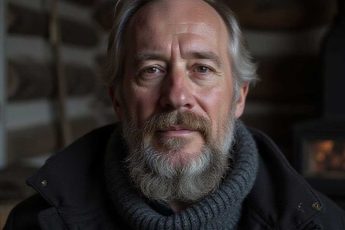
My husband came back not quite the same.
Did you buy bread? I asked.
He looked at me as if Id just spoken Spanish, or Greek, or something hed never heard before. Not confused, just there was a pause. A long, awkward pause that didnt fit with the life weve always had.
What bread? he said eventually, just flatlyno hint of a question in his voice.
The usual. Brown bloomer from Sayers, you always get it there.
He set his bag down on the floor and glanced around the kitchen, almost as if it was the first time hed stepped into it.
I didnt go to the shop.
I nodded and turned back to the hob. Nothing special, I told myself. Hes tired. Hed been away for a week, a work conference in Leeds, stale hotel room, strange food, odd air. Of course he was tired.
But he always bought bread. For seventeen years, every time he came back from a trip, even if it was only for a couple of days, hed drop in at Sayers on the corner of Maple Road and come home with a loaf under his arm. It wasnt something wed agreed upon or a habit born of pure needit was just part of how hes made. Part of his coming home.
I stirred the soup and decided to leave it.
His names Edward. Or Ed. Im MargaretMaggie, really. Im fifty-eight, hes sixty-one. We live in Manchester, in a two-bedroom flat on the fourth floor. We bought it in 99, when our Alice was still little. Shes grown up now, settled in London, calls on Sundays. I work as the school librarian. Ed retired three years ago, and now does a bit of lecturing on building regs at the local college. Our life is quiet, measured. Little to argue about. Thats important. There was nothing youd point tonothing to explain what started after Ed came home.
We ate in silence that first evening. He ate carefully, eyes on his food. Usually, at the first meal after a trip, he tells me something: stories about his colleagues, the dodgy lift at the hotel, how he missed decent home-cooked food. Theres always something to chat about.
How was Leeds? I tried.
Fine.
The seminar went well?
Yeah.
I set my spoon down.
Ed, are you alright?
He looked at me. His eyes were the same as always, grey, just a bit tired.
Im fine. Just knackered.
I cleared away. He went into the living room with his phone. As if everything was normal. As if nothing was out of place. But there was no bread. And no conversation. And something else, something I cant name.
I put the first couple of nights down to fatigue. The third night, on Friday, I first noticed something genuinely strange.
I was drinking coffee by the window, watching the estate outside. He came out of the bathroom, went into the kitchen, poured a glass of water. Then he took the jar of lentils from the cupboard, opened it, took a sniff and put it back. I didnt say anything. But Ed never ate lentils. Never has. When we first met, hed laughed and said lentils were for people who didnt know how to cook proper food. We always had a giggle about it. I made him rice, barley, couscous, anything elsebut not lentils.
And now he opened the jar as if he was considering them.
Fancy some lentils? I asked, keeping my tone innocent.
No, he answered, and wandered back to the living room.
I kept staring at the jar anyway.
On Saturday, Alice phoned.
Dad back yet? she asked straight away.
Back since Wednesday.
And how is he?
I hesitateda fraction of a second.
Bit tired after all that travel. Hes fine.
Okay. Mum, Im coming up in October, alright? Sasha and I are both on leave.
Thats lovely. Looking forward to it.
I didnt mention anything. What was I supposed to say? Dad didnt bring bread and he sniffed lentils? It doesnt sound like anything. It sounds like nothing.
But I knew something was off. Not in my head, not logicallysomething lower down, a sort of gut feeling.
On Sunday, I suggested a walk. We sometimes strolled to Platt Fields on Sundaysnow and then, not every week. He always liked that particular bench by the pond, would buy us cups of ginger beer if the kiosk was open, grumble about his bad back, Id tell him to start stretching, hed brush it off, and wed laugh. A little ritualone of many, nothing big.
Shall we go to the park? I asked.
He looked up from his phone.
What park?
Platt Fields. Its decent weather.
He considered it. Which was odd. Usually it was yeah, alright or let me get my coat. There was nothing to ponder.
Sure, he said at last.
We walked mostly in silence. I didnt force conversation; I just watched. He looked around, neither interested nor relaxedlike someone trying to remember a new route.
By the gates was an old man with a dog, a golden, hefty spaniel.
Look, Poppy, I said. Wed taken to calling all chubby spaniels Poppy after our neighbour, Mrs Evans, had had one by that name about eight years ago. Our little in-joke.
He looked at the dog. No reaction.
Poppy, I tried again, softer.
Nice dog, he said politely. Neutral.
I stopped a bit later, pretending to admire some rosehips. My heart was pounding harder than sensible for a Sunday walk.
Hed forgotten Poppy. Or he was pretending but why?
By the pond, the drinks kiosk was shut for the season. Ed sat quietly on the bench, watching the water.
Its nice here, he said.
We come here all the time.
Do we?
I turned towards him.
Weve been coming here for at least ten years.
He nodded, composed as ever.
Yes. Im just saying, its nice.
Something in me tightened then and didnt let go. It took until the night to put my finger on it. He didnt say I remember or of course. He just said yeswith the sort of tone you use to agree with a strangers observation.
I lay awake that night pondering what you call it, when the person you love isnt quite there. I read somewhere that loved ones can change after traumaso much so that it feels like youve swapped them for someone else. Its got a clinical name, Im sure, but this wasnt traumathat I knew of. It wasnt as if Leeds is harrowing. A week away for a seminarnot exactly life-altering.
I got up at 3am, got a glass of water, stared out at the car parkall empty, the streetlight on the blink. I watched it, thinking, Right. Ill wait. Maybe he had a row, maybe hes under the weather, maybe lifes just got on top of him for a bit. Happens to people, especially past sixty. Lifes taken its toll, and theres still more to come.
I went back to bed. He was turned towards the wall, breathing quietly. I touched his back, as gently as I always used to. He didnt move.
Next morning, I called my oldest friend, Susan. Weve known each other since uni daysshe lives across town, works as a receptionist at the GP surgery. Susans direct, never minces her words, and I appreciate that.
Sue, can I pop round later?
Whats happened?
Im not really sure. Might be nothing. Just need to talk.
Come at five, Ill be in.
Sues place is always warm, always smells of baking, even when shes not made anything. We sat in her kitchen. I told her everythingabout the bread, the lentil jar, the dog, his yes at the pond.
She listened patiently.
Maggie, it could just be a bit of depression. Early memory trouble, maybe. Youre both getting on a bit.
Hes only sixty-one.
So? Old Jim upstairs started it at sixty-two, didnt he.
Hes never been forgetful. If anything, his memory was better than mine! Birthdays, names, all sorts.
Things change.
I stared at my teacup.
Its not just forgetfulness, Sue. Its the way he looks at me sometimes Its like hes looking at a stranger hes trying to be polite to.
She broke a piece of scone.
You sleeping?
Not really.
There you go. Youre overthinking. Hes tired. Maybe somethings up with workmen never say whats really on their mind. Give him a week. If he doesnt come right, take him to the GP.
I nodded. Maybe she was right. Probably she was.
But walking home, I kept seeing him opening the lentil jarthat tiny, insignificant gesture that felt so off it stuck with me.
He was home, working through some papers at the kitchen table. I put the kettle on, unpacked the shopping. He didnt look up.
I went to see Sue.
Mmmm.
Brought home some scone.
He looked at the plate.
Whats in it?
Cabbage. Your favourite.
I dont like cabbage much.
I stoppedslowly, very slowly.
Ed.
What?
Youve loved cabbage pasties since you were a kid. You always told me so. Your mum always made them for you.
He looked at me steadily.
Mum used to make apple ones.
His motherEvelyndied twelve years ago. I knew her well. Id watched her make pasties a hundred times in her little kitchen with its floral tablecloth. Always cabbage and egg. She was proud of it.
Ed, Evelyn made cabbage pasties, I said as gently as I could. I remember.
He shrugged. Maybe. Long time ago, and went back to his papers.
I left the room and stood at the window. Ordinary street below, people and cars going by, the same as always.
I called Eds sister, Ann, in Liverpool. Theyre not close, but we get on. I asked, Ann, what did your mum used to put in her pasties?
There was a beat, then: Oh, always cabbage and egg, why?
No reason, just after the recipe, thanks.
I hung up. My legs felt like jelly. Stupid thing to fall apart overa cabbage pasty. But I couldnt move.
Something with memory, I told myself. Could be age, neurology, anything. He needs the doctor. We need to talk about itout in the open.
At dinner I asked, Ed, any headaches lately?
No.
Sleeping alright?
Yeah.
Would you mind a check-up with the GP? Just in case.
He put his fork down.
Why?
Just to check your blood pressure. Its been a while.
I take it at home. Its fine.
I worry, thats all.
He watched melong and steady, almost searching.
You think theres something wrong?
Im just worried.
Im alright. Let it go.
And the subject shut, with one sentence. Thats always been Ed: closing a conversation firmly, no need to raise his voice, just a clear boundary.
But now, as I watched him eat, I was analysing himhow he sat, how he held his fork. Had his posture changed? He used to sit straighter, I think. Fork in his right hand, like always, right-handed. Yes, right-handed.
I did the washing up and went to the bathroom. Caught a glimpse of myself in the mirrora tired woman with short grey hair, lined around the eyes, what Ed once called her laugh lines, because thats where they first appeared. I told myself, Youre imagining things. People change, thats all. Especially after something you didnt see coming.
I washed up and went to bed.
I woke in the night, not because of a noise but because it was too silent. I reached outcold sheets. He wasnt there.
I found him in the kitchen, light on, writing in a notebook. By handwhich was odd in itself, since Ed never handwrites anymore, except maybe for birthday cards.
Ed?
He looked up, calm, as if hed been expecting me.
Couldnt sleep, he said.
What are you writing?
Just thoughts.
Can I see?
Pause.
Its private.
He held my gaze without flinching.
Hes never said its private to me beforenot like that. Not with that tone.
Alright, I said, and went back to bed.
He wrote a while longer, then switched off the kitchen light, and came back to bed. Lay awake for a whileI could feel it.
In the morning, the notebook wasnt on the table.
I looked for it. Couldnt help myself. Checked around the kitchennothing. Even opened his bedside drawer. Ive never done that before, ever. It was mostly empty. Old glasses, a loose coin, a few scrap numbers. No notebook.
He must have taken it with him.
I went to work. Being in the library always soothes meall that order, that smell of books, a bit of dust and quiet. I shelved the returns, helped our new assistant Lizzie with the records. Just an ordinary day.
At lunch I sat in the staff room, thinking about what it means for someone to changenot in the little ways or with age, but deep down. How do you know, after seventeen years, someones really changed? You know their laugh, their habits, their fearshow can you suddenly feel like you dont know who youre living with?
I remembered the term: psychological substitution. Read it somewhere. When a loved one changes so much that youd swear theyve been replaced. Could be a health thing, could be life itself. Relationships after fifty, after sixty, often get like this. The kids go, you retire, and suddenly you wake up and realise youre with a stranger.
But I knew Ed, I told myself. I did.
That evening, he beat me homestood in the kitchen, just looking out the window.
What are you doing, Ed?
Just looking.
At what?
Just looking.
Strange, for anyone, but for Ed especially. He was a doer, not a dreamerif he stood around, it was because he was mumbling through an idea or sketching something on paper, never just idle.
How was your day? I tried.
The usual. Lectures.
Howre the students?
Theyre all the same.
I got on with making tea.
Ed, tell me about Leeds, I asked, my back to him.
What do you want to know?
Anything. Where you stayed, what you saw. You were gone a week.
Hotel was standard. Seminar was at the university. We went to see a new housing development as an example. Thats it.
Any familiar faces? Colleagues?
Yes, a few.
Who?
He paused. I turned to look at him. He wasnt looking at me.
A couple from work. Some from other towns.
What about Michael Johnson? He usually goes to these things.
Michael is his mate at the collegethey go fishing together sometimes. Ed talks about him a fair bit.
Johnson? No, he wasnt there.
But he goes every time.
Not this time.
Alright, I thought, maybe he didnt go.
That night, after Ed was asleep, I texted Michaels wife, Helen. Were not close, but have each others numbers.
Hi Helen, hope youre well. Just wanted to askwas Michael back from Leeds ok?
She replied, Michael wasnt in Leedsdidnt get selected this time, here all week. Why, is something up?
I replied, Just mixed things upno worries.
I put my phone away and stared into the dark.
Ed didnt know whether Johnson was at the seminar. The man he works with, went fishing with, didnt know or didnt care?
Or hes lying to me. But why?
Next day, Wednesday, I found an excuse. Said we needed new curtains in the bedroom and suggested a trip to Dunelm, that big store on Withington Road. Ed always hated itwould shuffle about, say buy what you want, Ive no idea, and wed grab pasties at the café next door after. Another small ritual.
Shall we go today?
Where to?
Dunelm. For curtains.
Are these that bad?
Theyre getting musty.
He shrugged. Alright.
We went. I dragged it out, wandering up and down the fabrics aisle, asking his opinion; he answered distractedly. Then: Shall we grab a pasty after?
From where?
The little café next door. We always do.
He looked at me.
I dont know any café.
I smileddeliberatelyso I wouldnt look worried.
Youve just forgotten. Ill show you.
We turned the corner. There it was, same as for the past twenty yearsyellow sign, always warm, always smells of fresh bread.
Here. See?
He took it in.
Ah, he said. Never noticed it.
We ordered pasties. He ate as usual, glanced at the people passing by, asked if I was coldcompletely normal. Just, once, he looked intensely at the cafés sign, as if trying to memorise it.
Ed, I said softly. Do you remember me?
He turned to me, surprised.
What do you mean? Youre Margaretmy wife.
I know. I mean, do you remember usall our stories, our rituals?
Whats happened, Maggie?
Nothing. You just youve changed, lately.
Everyone changes.
Thats oddyou always said, people dont change.
He chewed in silence.
Maybe I change too, he said at last.
On the way home, I looked out at the rain-streaked window and thoughtthis fear, of not recognising your loved one, is real. Not paranoia, not drama. It happens. And theres usually a reason someones not telling.
Thursday morning, after he left, I went into his little studythe spare room, really, but we call it a study. There, in his top drawer, was the notebook.
I opened itblank at the start, then halfway through, neat tiny writing. And not Eds writinghis was always big, a bit scrawly, like a doctors. This was careful and neat, almost like copybook.
There were lists. Margaret. Wife. 58. Works at a library. Daughter, Alice, London. No sugar with coffee. Wants new curtains. Friend Susan, GP surgery receptionist. Then: Cabbage pastysupposedly likes. Platt Fields on Sundays. Spaniel called Poppyinside joke. And, Mum: Evelyn. Cabbage or apple, needs checking.
I could hardly breathe.
It was as if someone was collecting information on us, notes for future reference.
I closed the notebook and put it back. Stood there, shaking, by the cupboard. Drank a glass of water. Then another.
One step at a time.
Amnesia maybe. Some weird neurological thing, or stress-induced dissociative state, perhaps. Could have happened in Leedsor somewhere else. Maybe he lost a chunk of memory, is quietly patching it together, ashamed or scared to tell me.
That could explain everything.
Almost everything except the writing. That neat, unfamiliar writing.
People do change their handwriting, I told myself. After a stroke, for instance. But that would show in other ways as well.
I came up blank.
He came home at seven. I had dinner made, table set, hair done. No idea whyI just had to do something.
Tired? he asked, seeing me. You didnt go to work.
Headache. Better now.
He nodded. Usual evening.
At dinner, I watched him. Thought: what does it mean, for someone to disappear from inside while their bodys still there? Its harder than losing someoneyou grieve in silence.
Ed, I said.
Hmm?
Tell me about us. How did we meet?
He looked up slowly.
Why?
I just want to hear you say it. How you remember it.
He set his fork down, thought for a moment.
We met through friends. At a birthday party. You wore a blue dress.
I waited. That was trueblue dress, my friend Sarah Rileys birthday, 23rd September 1997. So far, so good.
We bumped into each other a couple more times, then started seeing each other.
Pause.
Thats about it.
I stared at him.
What happened next?
We got married. Alice was born. We bought this flat.
Ed. When you proposedwhere did we go?
Maggie…
Just say it.
He hesitated for ages.
I dont remember every little detail. Its been a long time.
You told everyone you remembered it in perfect detail, at our silver anniversary.
Silence.
Ed. Where did you propose to me?
He looked at me for a while. No irritation, not even embarrassment. Something elsefatigue, calculation.
Maggie, he said quietly. Why does it matter now?
Because I need to know if you remember.
Im tired. It was ages ago. People arent required to remember everything.
But its not a small thing.
It is to me.
I stood up and began clearing plates, though we werent finished. He said nothing.
We went to the Peak District for a weekend. Ed proposed on the bank of a little riverhe carried me across a muddy patch because I had heels on, and thats where he asked me. We laughed about it for years. He used to tell that story. He loved it.
The man at my table didnt know that story.
That night, I messaged Susan a long oneabout the notebook, the writing, the river.
She answered at 1am: Mags, you both need to see a doctor. Seriously. Call me tomorrow.
I put my phone down. He was sleeping beside me, steady, regular. I stared at the ceiling, thinkingsometimes people dont leave, they just vanish while sitting right next to you. And its harder than any leaving.
Friday morning, Id had enough. Id tell him everything: I found the notebook, called Ann, messaged Helen, know Michael wasnt in Leeds. I need answers.
He was already up making tea.
Ed, I said.
Yes?
I need to talk to you.
He turned, considered me for a long time.
I know, he said.
I froze.
You know what?
That you know something. I saw you were in the study.
Silence. I didnt apologise. Just waited.
Sit down, he said.
We sat, both holding mugs.
Its complicated, he began.
Try.
What youre thinkingmemory loss, probably. And youre right. Partly.
Partly?
I dont remember everything. Not the way you think. There are gaps. Big ones.
The river, I said.
He looked up.
What?
We were at the river when you proposed. Do you remember?
Something flickered in his face.
No. Quietly.
Poppy the dog?
He shook his head.
Your mum, Evelyn?
I remember her face. Her voice. Details no.
I stared at him. He stared at his mug.
When did this start?
I dont know. Slowly.
And you said nothing.
I didnt know how.
Youre keeping notes to remember things.
He nodded.
Your writings different.
A long pause. He set down the mug.
I know.
How do you explain that?
He said nothing. Sat there. Waiting.
Are you Ed? I asked quietly. My Ed?
And for the first time, I saw something real in his eyespain, maybe confusion. Or something I cant name.
Maggie, he said, I dont know how to answer that.
I looked at his hands, at the familiar line by his mouth, the grey in his hair.
Is that the truth?
Its the only honest answer I have.
Outside, autumn drizzle pattered against the windows. Such an ordinary sound.
What do I do with this? I askedno one in particular.
I dont know, he replied. And I think that was true.
I poured myself coffee, stood by the window.
Behind me, he stood too, came to stand a pace away.
Maggie.
Yes?
I remember your voice. All the time. The way you speak, your tone. ThatI remember.
I didnt turn.
Its not enough.
I know.
The rain kept on. Somewhere downstairs, a car horn beeped, then faded away.
I need time, I finally said.
Alright.
Im not saying I know what happens next.
I understand.
I turned and looked at him. He looked back, like he wanted to say more but didnt quite know how. Or did, but couldnt.
Tell me one thing, I said.
Yes?
Do you want to be here?
He paused, the silence broken only by the rain.
Yes. I do want to be here.
I looked at himthis man in my flat, who knows my name, writes down my quirks, doesnt remember our river, whose writing is different, and yet holds a mug just the way Ed always did.
Then pop down for some bread, I said. Brown bloomer, from Sayerscorner of Maple Road.
He nodded, put on his jacket, went to the door. Paused on the threshold.
Maggie?
Yes?
Will you tell me about the river one day?
I looked at him for a long time.
Well see, I said.
He closed the door gently. I stood with my coffee, listening to his footsteps down the stairsfourth floor, sixteen steps. I always count.
Sixteen.
I watched him cross the car park from the window. Up went the collar against the rain, down to the corner.
I didnt know what to thinkwhat to feel. All I was left with was a hush, not peace, not relief, just silence after a long noise. Questions still there, but no need to pretend otherwise.
My phone buzzed. Susan.
How are you holding up? she asked right away.
No idea.
Did you talk to him?
Yeah.
And?
I looked out the window. Hed rounded the corner.
Sue, could you live with someone who doesnt know who they are?
She hesitated.
He said that?
Pretty much.
Maggie, you both need a doctor. Properly. Its not a kitchen-table sort of thing.
I know.
Whatll you do?
I set the mug on the sill.
No idea. Hes gone out for some bread.
What bread?
Brown. Sayers loaf.
Sue paused.
Maggie, youre scaring me.
Its alright. Ill call later.
I pocketed my phone, drank my coffeealready cooling, but still good.
Sixteen steps. I always count.
About twenty minutes later, I heard the front door bang, steps up the stairssixteen of them.
I didnt move.
The key in the lock. The door opened.
Here you are, he called from the hall. Brownlast one.
I turned. He stood in the kitchen doorway, damp from the rain, hair stuck to his forehead.
Put it on the table, I said.
He did.
We looked at each other.
Tea? I asked.
Please.
I put the kettle on. He took off his jacket and hung it up, sat at the table. I stood with my back to him, hearing how he was quietnot in a heavy way, just quiet.
Maggie, he said softly. Tell me about the river.
The kettle began to hum. Quiet at first, getting louder.
I stood there for a moment.
Not now, I said finally. Maybe later.
Alright, he said.
The kettle boiled.