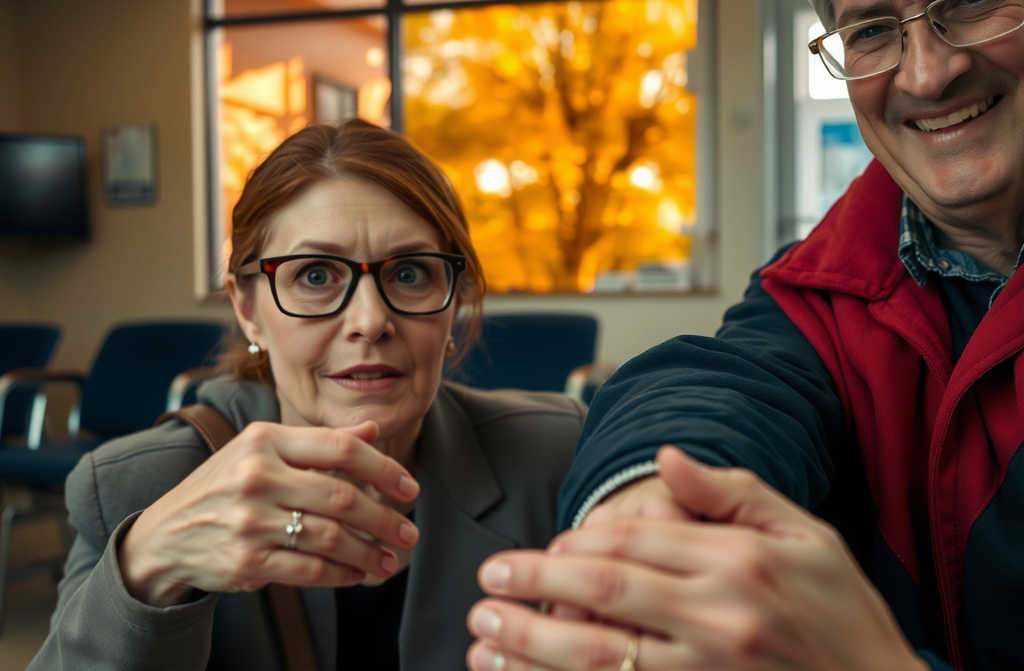
**15October2026** Cardiology waiting room, Leeds General Hospital
A stranger slipped into the seat beside me. Instead of the usual Good morning, he leaned in just enough to ask, Did you ever go to the climbing camp up in the Lake District? I noticed the small scar above your right eyebrow I remember it.
My throat tightened. That faint line I hardly ever see in the mirror suddenly felt as raw as a fresh wound. The antiseptic smell, the soft hum of the water dispenser, the coughs and wheezes around usall faded. Only his voice and the August sun of a longago summer remained.
Climbing camp, 1984? he offered, as if fitting together a jigsaw piece. I nodded. The scar was a reminder of a tumble on a rock near Aira Force waterfall; the cut was tiny, but the blood ran fast, and a boy in a bright red windbreaker stuck a plaster on it and drew a smiling face.
I have always told my children that it was a kind gesture from a stranger. I never mentioned that I spent the rest of that week scanning the room for that red windbreaker.
Mark he introduced himself now, as if finishing a sentence that began forty years ago. He carried the same crooked grin and shy humor that the boy had possessed.
The lines around his eyes only deepened the sense that the incident left not a bitter mark but a warm one. He moved a little closer, eyeing my handbag. I saw the scar when you lifted your glasses. I thought, if that wasnt you, fate really loves a good joke.
I inhaled sharply and said, The plaster with the smile. He laughed, the kind of laugh we used to share around a campfire while belting out songs that half the country knew. Through the waitingroom window the park was visible, with its swaying chestnut trees and the October wind rustling the leaves.
The nurse, her hair tied back under a mask, called out names, a pen clicking against the list. Everything moved at its usual pace, yet I felt as though the world had taken a sudden turn, looping back to a crossroads we once missed.
We spoke in whispers, as if we didnt want to wake the memories too harshly. He mentioned that after the camp he left the next day with his parents for another town, never saying goodbye. He wrote a letter but could never find an address.
I told him that Id spent ages lingering by the notice board at the centre, even though I had no reason to. Then university, work, marriage, children came, and I turned life into a series of tasks. The red windbreaker was gone; only the scar remained.
Someones left a test result packet at reception! a voice shouted from the doorway, and the usual chorus of chairs being pushed, paper cups rattling, hurried footsteps returned. I noticed Mark holding a referral for an echocardiogram.
Arrhythmia, he murmured halfjokingly. Maybe its the Lake District, maybe the autumn, or maybe because after forty years were finally sitting side by side. A smile tugged at the corners of my mouth without my consent.
He asked if I still liked walking, whether I had favourite trails, if I still preferred tea with a slice of lemonas I did back then. I answered carefully, trying not to reveal too much while drinking in his presence like warmth from a hand on a chilly day.
We recalled tents, damp sleeping bags, a geography teacher who mixed up east and west, and that group photo where I was winking. I hadnt remembered that hed been standing next to me then; he remembered.
Suddenly I asked, Why didnt you come over one evening back at the camp? He shrugged. I was scared youd forget my name. It sounds foolish now, but for an eighteenyearold it felt like the end of the world.
I wanted to say I remembered not just his name but the scent of his jacket and the way he counted to three before a candle in a jar went out. I kept those words to myself, letting them stay in that August.
The nurse called his surname. He stood, and before leaving turned back and asked, If it isnt too silly shall we have tea sometime? Lemon and honey, like after we came down from Scafell? He pointed toward the pile of leaflets, as if between cholesterol advice and a reminder to stay active lay a place for a phone number.
A thin, simple wedding band glinted on his finger. I glanced at my own; the metal caught the fluorescent light, cool and distant. He furrowed his brow. Did I ask too much? he added quickly. Im not sure whats allowed and what isnt.
Its allowed to remember, I replied quietly. And then well see what happens.
He slipped through the white doors of the consulting room, leaving me with the ticking clock and the soft shuffle of rubber soles. I took one of the leaflets and wrote my number on the back. Before I could tuck it into my bag, they called my name.
The doctors tone was cheerful, his hands cool as he listened, took notes, and nodded. Your heart beats regularly for your age, very good, he said after withdrawing the stethoscope. I thought how capricious hearts are: healthy yet sometimes caught off guard.
I was the first to leave. The waiting area was almost empty; the ECG lights blinked like tiny stars. I sat again on the same chair, my handbag still there, as if the motion could pull the minutes backwards and draw the future nearer.
I stared at the consultingroom door, feeling a strange mix of calm and anticipation. Could a single conversation in a waiting room rewrite a story I thought was closed?
My phone buzzed with an unknown number, then fell silent before I could answer. I slipped it back into my pocket, folded the leaflet into a tiny paper crane that would never fly. A television above the reception flickered with a weather report: a cold front, rain over the hills. I smiled at the word hills, as if it were a secret message.
Mark emerged a moment later, clutching a folder of results and a smile that was more than polite. I stepped two paces forward, stopped. In my fingers lay the folded note. Our eyes met, just as they had over that plaster decades ago.
In an instant everything rushed back: the children I taught not to long for the unattainable; my wife, who had been sleeping on the left side of the bed for years; a world that dislikes sudden youthfulness, even though age is as stubborn as a calendar. And the thought I never speak aloud: sometimes chance is the key that opens doors we never intended to knock on.
I reached out. He did the same. The note slipped between our fingers and fell onto the seat beside us, hanging there like a pendulum. Light reflected off our rings for a heartbeat. Neither of us leaned forward.
I have to go, he said.
I too, I replied. We nodded, like old acquaintances who understand that some words are lighter than silence and heavier than promises.
I turned away first; he followed suit. After three steps I looked back, but he was already heading toward registration. The note remained on the chair, a white blot on the navy upholstery, just like a plaster once on my forehead.
Back home, I ran my fingertip over the scar in the mirror. Its just a thin line, yet in an instant it can transport me back to that August four decades ago. That evening I brewed tea with lemon and honey, steam curling up as if reminding me of things that love to return. My phone lay facedown on the kitchen table; I didnt check whether anyone had called.
Im not sure what truly happened today: a random encounter or a rehearsal for something that might start if we were a decade younger or a little braver.
In the side pocket of my bag I found the crumpled leaflet with a hearthealth diagram and a faint ink trace where a pen had pierced the paper. All that was missing was one more gesture. Perhaps it is that single extraor missinggesture that shapes the whole of our lives.
*Lesson learned: the smallest moments can unlock doors we never knew were closed; we just have to be willing to turn the handle.*I slipped the folded paper into my pocket, feeling its edges press against my thigh like the faint thrum of a pulse Id forgotten. When I finally set the kettle on, the kitchen filled with the sharp scent of lemon, and I heard the soft click of my phone vibrating again. This time the screen displayed a name I hadnt seen in fortyseven years: MarkHawthorne.
I stared at it, halflaughing, halfshivering, and then I pressed answer.
Hello? my voice sounded smaller than I felt.
A pause, then his familiar crooked grin traveled through the line. I thought Id leave the note for a reason. If youre willing, meet me tomorrow at the old camp sitejust for a cup of tea, and maybe to see whether a scar can ever truly be healed.
The words settled over me like a warm blanket, and I realized the gesture Id been waiting for wasnt the one Id expected. It was the simple act of picking up the phone, of saying yes to the echo of a childhood promise.
Ill be there, I said, and the honesty in my voice surprised even me.
The next afternoon, the sky over the Lake District was a brilliant, lowhanging blue, the hills rolling like the pages of an old diary. I walked the narrow path that had once been my playground, each step stirring dust and memory. When I reached the clearing by the waterfall, Mark was already there, a thermos in hand, his red windbreaker draped over a rock like a relic.
We sat on the damp grass, steam rising from our cups, and the world fell away to the rhythm of the water and the quiet that only two people who have spent a lifetime apart can share. He lifted his cup, eyes sparkling with the same shy humor that had drawn me in all those years ago, and said, I never stopped wondering what would have happened if Id stayed a little longer.
I smiled, feeling the scar above my eyebrow pulse faintly, not with pain but with recognition. Maybe well never know, I replied, but we do have this moment, right now, and its enough.
We talked until the sun dipped behind the peaks, swapping stories of children we never knew, of jobs that had both lifted and weighed us down, of the small joys that kept us moving forward. When the last light faded, we stood, shoulders brushing, and I felt a gentle tug at the back of my minda reminder that life is a series of chances, some taken, some let go.
As we part ways, Mark handed me a thin card, its surface stamped with the faint imprint of a heartbeat line. For when the next rhythm catches you off guard, he said, his voice soft but steady.
I tucked the card into my coat pocket, feeling the papers texture like a promise. The walk back to the car was quiet, the hills echoing the soft hum of the wind. When I reached the edge of the forest, I turned once more, watching the waterfall glitter in the fading light, and whispered a quiet thankyou to the boy in the red windbreaker who had once plastered a smile on my forehead.
At home, I placed the card beside the kettle, next to the tea Id brewed again that evening. The scar above my eye caught the glow of the kitchen lamp, a thin line that now seemed less a wound and more a maptracing the route from a boys kindness to a mans willingness to reach out across decades.
Later, as I lay down to sleep, the phone buzzed one final time. A message appeared, simple and unadorned: Tomorrow, same place, same tea. I smiled, feeling the steady beat of my heart, and understood that the missing gesture had finally arrivednot as a grand declaration, but as a shared cup, a lingering look, and the quiet certainty that some doors, once opened, never truly close.






