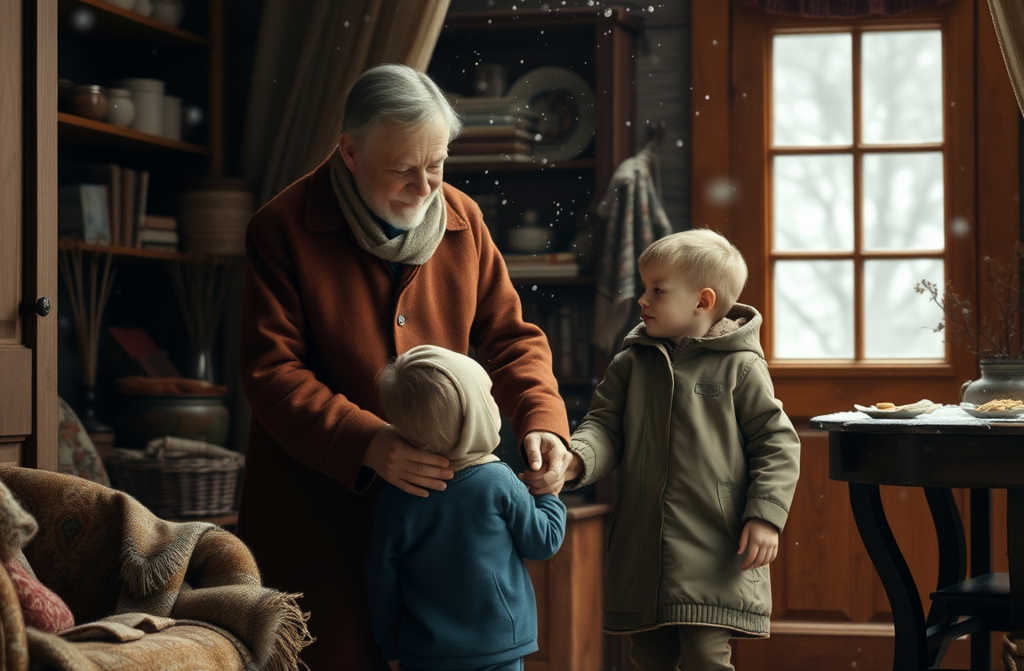
Mary was about to turn in for the night when someone knocked on the door. She threw on her dressing gown and went to see who it was. Her husband, Stephen, followed after her. At the doorstep stood next-doors boy, Nicholas.
Uncle Stephen, could you come over? Mum wants to talk to you, Nicholas said quietly.
Stephen pulled on his coat and headed to Nicholass mother. What could Margaret want with me at this hour? he grumbled on the way.
He entered their cottage, took a chair, and sat by her bedside. Margaret looked so frail against the stacked pillows.
Not much time left for me, Stephen, Margaret whispered. Ill be gone soon… I must tell you a secret. Stephen just stared, lost for words.
Stephen had always been a well-liked lad from his youth, but his heart belonged to only one womanhis wife Mary. Hed loved her since school, for as long as he could remember.
They lived happily, raising three children: Michael, Ivan, and their youngest, Sophie.
Stephen was a kind soul with gifted handsno carpenter in the county could match him. He worked long days to provide for his large family, making sure the boys were well turned out and Mary was treated from time to time.
Whenever the shops stocked something new, a smart scarf or a dress, Stephen would buy it for Mary. Sometimes hed bring home a bottle of perfume from the city.
Before bed, Mary would sit before the mirror in her white nightshirt, brushing her hair and plaiting it. Stephen never tired of watching her, lying on the bed, hands behind his head, admiring her beauty under the lamps glow, feeling a quiet joy.
How did she manage it all? The house was always tidy, every meal readybreakfast, lunch, dinnerand the vegetable patch was in perfect order.
Well, the heavier work outside was his, though the boys helped with anything their father said needed doing.
Stephen adored his children. He didnt spoil them but taught them respect, especially toward their mother.
Sophie was only three, blue-eyed like her mother. Stephen couldnt help but spoil her; shed sit on his shoulders wherever they went, and at home, nobody dared upset her.
The happiness of their home almost embarrassed them. Other houses endured arguments and complaints, but theirs ran smoothly.
Only recently did the peace falteryoung Ivan had a fierce quarrel with Nicholas, the neighbours sturdy son. It was a proper row.
Mary wept and fussed over Ivans bruises.
Stephen wandered into the neighbours garden. Nicholas, chastised by his mother, sat hunched on the step, looking miserable. Seeing Stephen, Nicholas turned away.
A pang of compassion struck Stephens heart, mingled with the sting over his own son.
Ivan had a father to protect him; Nicholas had none. His mother raised him alone. Stephen sat beside Nicholas.
Dont look like that. You know you were in the wrong? The boy stayed silent. I can see you know. That means youll have to answer for it.
A quiet fell. Stephens heart softened again.
Just dont touch my boys, Nicholas. Understood? Nicholas nodded, and Stephen patted his shoulder before leaving.
He caught sight of Margaret watching from behind the net curtains but didnt linger. Instead, his legs carried him toward the woods, swept by old memories…
Theyd all been eighteen, nearly grownhim, Margaret, and Mary. Leaving school, theyd had a joint party at the village hall for two nearby schools, handed out certificates, drunk lemonade, danced to music.
Everyone looked smart, but Mary was the brightestwhite dress with lace, sandals with heels, her long braid down her back and rosy cheeks.
That night, Stephen meant to confess he’d been in love since their fifth year. Hed soon be called up to serve and feared losing the chance.
But it wasnt to be. No one had noticed the headmasters son, William, fancied Mary for some time, sticking by her side all evening. She laughed and danced the waltz with himStephen never could dance.
He stood apart, brooding, when Margaret came over and took his hand, inviting him onto the dance floor.
He pulled his hand away and stepped outside instead. Margaret followed him, and they wandered till dawnsat by the river, by the bank. She drew close, but Stephen was distant, his mind only on Mary.
That autumn, just before he was called up, rumour spread: Mary was marrying William.
Stephen wept bitterly. Mary didnt even come to see him off. The farewell was a big affair for anyone who wished to attend.
But Margaret sat beside him, not Mary.
Late into the night, while the whole village sang and danced, Margaret drew him away, tipsy and happy. Stephen couldnt quite recall the details of that evening.
He stumbled home near dawn to his parents worried looks and fell asleep straightaway.
During service, his letters were rare, and only for his parents. Through them, he heard Mary had married, and Margaret had moved to the city for studies.
Youth ended therea chapter closed for good.
When he returned, grown and with a cropped head, Mary already had Michael and another child on the way. He found her heavy with child and sad.
How are you, Mary? he asked, voice trembling.
Im all right. No complaints.
His parents told him William wasted away, jobless and argued with his wife. The headmaster had lost his position and now just taughtlife was hard for them.
Then, when Ivan was born, disaster struck.
Marys husband died suddenly while out by the river. He was never saved.
She mourned, and after some time, Stephen proposed and married her, taking her and the children in.
Hed just finished building his own house then, with help from his parentsland and timber provided.
Stephens hands were made for building.
He brought Mary and the children into their new home, smelling of fresh shavings, and they settled in. She told him Margaret had married in the city and had a son, sometimes visiting her parents.
It seemed prophetic. Within a month, Margaret moved back to the village for goodher son was a bit older than Michaeland divorced, struggling to get along with her husband.
At first, she strode around like a peacock. Soon, her health waned. She shrank before their eyes, not hiding her envy of Mary, whod won the man shed loved all those years.
Stephen had turned her away, married Mary with two children, and now they even had a child of their own.
Soon the boys were growing up and, like all children, sometimes fell out. Yet Margaret never spoke to Stephen, always holding a grudge, never stopping to talk, just silent and bitter.
Winter arrived with cold and snowdrifts. The boys stopped fighting but avoided each other. Nicholas, Margarets son, grew withdrawn and worried.
Then came the news: Margaret was bedridden.
One late evening, when Mary was getting ready for bed, the garden gate squeaked and someone knocked at the door.
Mary hurried, pulling her dressing gown round her, and was surprised to see Nicholas at the threshold.
Uncle Stephen, Mum wants to see you, Nicholas said, looking sad.
Mary invited him in. Stephen dressed and walked over to Margarets house.
What does she want with me? he muttered.
He found Margaret upright among high pillows, gazing at him, wasted away. He took a seat and watched her.
Not long left for me now, Stephen, Margaret said eventually. Ill soon be gone… I have a secret to tell you.
Stephen stared, uncomprehending.
I must ask you this, Margaret went on. Dont abandon Nicholas. Do you remember the night after your farewell party? That night… Hes your son. My husband knewhe took me for his wife already expecting. Thats why it never worked out between us…
Tears rolled silently down her cheeks.
Stephen walked home, shaken, burdened with sorrowthe foggy memory of one night, and Margarets life undone.
Not long after, the whole village mourned Margarets passing. After the funeral, Stephen took Nicholas by the hand and led him home.
Nicholas will live with us now, he announced. Mary sat down on the stool, arms folded.
He didnt explain. Only said Margaret had beg him not to send Nicholas to a homehed be lost there. Well raise him with kindness.
They sorted everything properly, and lived as one big family.
Sophie had three brothers to look after her, Stephen worked, Mary kept house, and after school, the boys did all their chores.
Stephen accepted the truthNicholas his son, and saw the likeness more and more.
Back then, no one went through official checks and procedures. Stephen wouldnt have needed themnothing would have made him leave the boy, whether his own or anyone elses.
In the end, he understood: family isnt simply about blood. Its built on love, kindness, and the willingness to do whats righteven when life doesnt go as we planned. What matters most is giving children a safe place, and showing them compassion. Thats a true legacy.