Twelfth Night Reflections
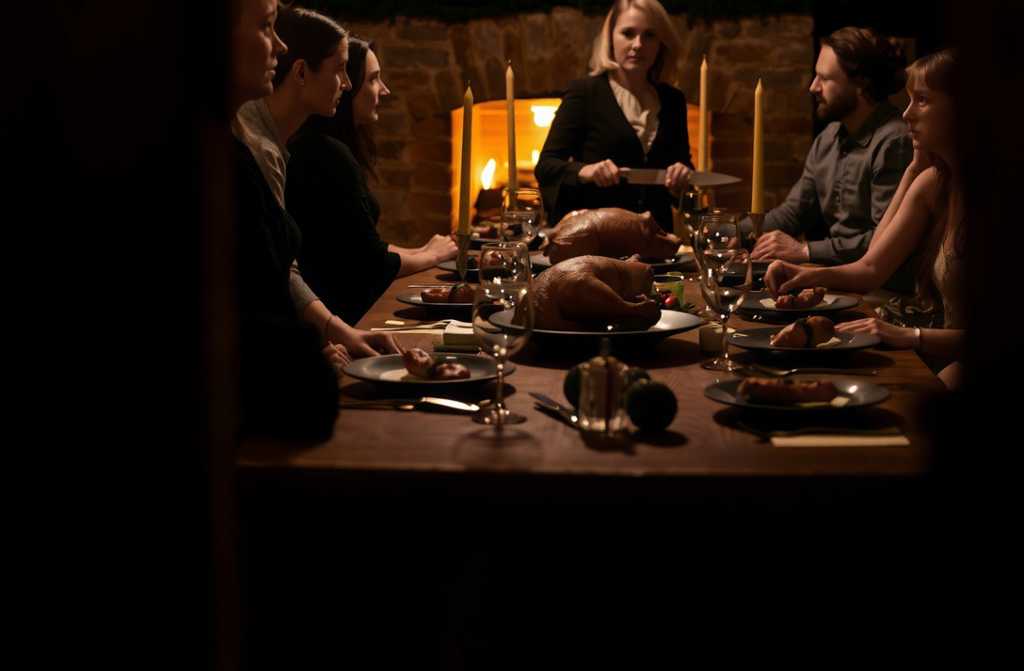
The day was nearing its enda day made all the more delightful by the gentle, joyous spirit that seems to settle over England during the Twelve Days of Christmas. Dusk fell early, and the village was hushed; even the local dogs, still sluggish from leftovers after days of feasting, had gone quiet, indifferent to their usual pastimes of barking at passersby or exchanging banter across the garden fences. Anyone travelling through would surely be surprised by the abundance of darkened windows, for this was meant to be a time of collective respite, and yet, in our sleepy Hampshire hamlet, there were scarcely any strangers to witness such things. The few villagers out on the road were hurrying toward cottages haloed in warm, golden lamplightproof enough that here, the age-old English custom of gathering for a Twelfth Night supper, with its roaring fire, abundance of roast meats, pickles and trifles, held strong.
At the spacious cottage belonging to the Beckett family, the last flurry of preparations bustled to a close. The table was laid, the quinces stewed, the paper crowns set aside for later, and now guests assembled around the table, drawn together by anticipationthey waited for the moment when the lady of the house would pass around the leaflets containing the old English carol. Among these churchgoing folk, the tradition was cherished: no celebration felt truly complete without the whole company raising their voices in an ancient hymn, their hearts lifted with a wonder that even the oldest among us never outgrows at Christmastide.
Felicity Beckett, petite and brisk, hovered at the edge of the table, her nerves apparent as she addressed her cousin, the choir leader at St. Michaels:
Go on, Simon, you start us off!
Her husband, Richard, gave Simon a gentle nudge and an encouraging nod.
Simoneyes always sparkling with a touch of mischiefcoughed into his fist and announced in his smooth baritone, No, Felicity, not me. It should be Richard. Hes head of this house, after allhe leads.
Why ever so? asked one of the guests. Youre the choirmaster!
Simon was quick to reply, That may be, but Im not ordained. The master of the house is the one to begin. Its tradition.
Richard uttered a brief prayer, and the company burst forthat first uncertain, but growing in confidence as Simon led the way, the voices joining in bright harmony.
Watching all of this was Matthew, a tall, likeable man of twenty-nine, recently baptised and still new to all this church tradition, but taking pleasure in the feeling that even his voice, humming along, fit with the whole. Matthew, unlike his wifeIsabelle, a slender blonde of twenty-onewas a stranger here, more observer than participant, and watched the rest with the curious eye of an amateur painter.
Next to them sat another young couple: ginger-haired Daniel, who Matthew guessed from the talk was a PE teacher at the local secondary, and his wife Emily, with her hair tied neatly back beneath a headscarf. Lively as ever, Richard Beckett kept the whole table entertained, joined by Felicitys childhood friend Helen, her husband Nigel, and Peter, the short and wiry parish sexton whose wife Alice mostly listened, her eyes darting between speakers with keen interest.
Awaiting the arrival of the second course, guests nibbled at sharp cheddar, salami, home-baked bread, and winter pickles, until a brief hush fell. That was when Simons wife, Claraa striking, brown-eyed woman of about thirtyspoke, her words heavy with the effort of overcoming shyness:
I always find Twelfth Night a little mysterious. Theres something in the airwhen the snow falls and the night is still, it feels… uncanny, somehow.
Oh thats just all those old Christmas tales and ghost stories you watched as a child, said Charlotte, Felicitys cousin from the next village over, with the detached smile she wore for almost every conversation. Charlotte rarely roused much discussionpeople tended to agree politely with her pronouncements and let them pass, perhaps feeling uneasy about her cool tone.
Well, perhaps. Or maybe its because at uni, my friends and I used to… Clara glanced down, slightly embarrassed, try out fortune-telling for laughs. I know it was childish and wrong, but it was only ever a bit of fun.
Goodness, Clara! Fancy that! exclaimed Felicity, who was always lively in church matters.
Dont scold, Felicity, Richard whispered fondly, and his wife fell silent, though the look on her face said she had more to say.
At that moment, little Felicity, the Becketts daughter, so like her mother in spirit and looks, placed a golden roast piglet at the centre of the table.
So, Clara? asked Helen, once the gleeful gasps had subsided.
I just meant that at this time of year, I love stories. All those ghostly and kindhearted talestheres something enchanting and warm about them, replied Clara. A bit of magic, but real at the same time.
Yes, I feel the same! laughed Isabelle. Last year I read a brilliant Christmas storytheres one about a hand on the door, the suspense is gripping! I cant recall the title, but I had tears in my eyes by the end.
Felicity paused, knife hovering over the crackling.
Harrietyoure quiet as a mouse! she called out.
Everyone glanced at the modest young woman sitting beside Matthew, a Londoner and only rarely in Hampshire.
Harriets a solicitor now, but originally,Felicity pulled a comic faceshe started as a literature scholar!
Helen piped up, My daughter-in-law finished university with top marks.
Harriet, her expression calm as ever, turned toward everyone and said in a measured tone, Oh, that story? I believe you mean The Hand of Christmas. But I was recently rereading anothera short story by Edward Benson called The Wonderful Doctor. Some call it the most humane tale Benson ever wrote.
How so? asked Simon, raising a fork. What about The Enchanted Traveller? Isnt that a classic?
Youre thinking of someone elsethis is Benson, Harriet corrected gently. Anyway, the heart of it is simple. Two boys gaze with longing at houses bright for New Year. Its Edwardian London, everything festive, but they must return to a freezing basement flat, their baby brother crying with hunger, the mother too ill to nurse, food all gone. Their sister is feverish; another child had passed the week before. All their troubles began after their father fell illwhat savings they had went on medicine, and then he lost his job. Out of desperation he tried everythingeven begged, even searched the streets for dropped coins. He returns, shivers by the fire, but the cold and despair drive him out again. In the park, nearly mad with hopelessness, a stranger approachesan old man, bearing gifts for someone elseand when the father pours out his pain, the old man listens, comes home with him, and helps. He turns out to be a doctor. He gives advice, medicine, cashenough for food and coaland leaves extra banknotes behind. The father doesnt even catch his name. Later, they learn, its the famous Professor Parry. A true miracle, Benson insists.
The room was still as Harriet sipped her juice. Noting the attentive faces, she smiled, And, as with any fine story, it ends well. The father finds work, the mother recovers, the children grow up healthy, and years later, they see their rescuer onceat his funeral.
Richard raised his hands, perplexed. Strong talebut wheres the miracle? Lucky things turned out, but still…
Harriet shook her head kindly. No, Richard. Imagine: in the very moment hope fails and despair is deepest, youre suddenly, personally seen and helped. Thats miracle enough for meand any believer. To be heard, not lost in the crowdand by whom? By the Maker Himself, just when you are most alone. That, surely, is a true miracle, whether others see it or not.
A quiet awe settled on the table, even the usually unflappable Peter, the old sexton, was moved. Sensing the depth in Harriets manner, Father Michaeljust arrived and seated at the headsmiled and put in with his soft, persuasive voice:
I often reflect on this: every ordinary day is already a marvel. Yet we, foolish as we are, demand grander prooflike Thomas, who wanted to touch the wounds. But the extraordinary is all around us; each living thing, each simple gift, is a wonder.
His words, delivered in a tone shaped by years as a teacher before he found his calling, drifted around the fire-lit room. Hed always had a way with stories and sermonsthe sort that made even the fidgety children pause.
Nigel, Helen’s husband, added, Its true. If only we could see the world with a childs wide eyes again! I remember the first time I ever saw a bluebell woodI thought I’d slipped into a fairy tale.
The room warmed with laughter, as talk drifted on to Christmases past, and stories of the inexplicableicons that sometimes smelled of roses, old village folk with second sight, miracles or mere accident all debated good-naturedly.
Later, as Father Michael shared the tale of an old church that, despite all odds, survived the closures and troubles of the last centurynever barred, its bell still rung on Easter Mondaythere was a hush of reverence. The true wonder, he said, is not always thunderous. Sometimes its simply endurance, love, the unseen yet steadfast action of grace woven through ordinary lives.
As the candles flickered low, and the embers in the grate gave off their last cheer, I felt that familiar, inexpressible sense of closenessthat, in these winter days, something extraordinary brushes near. And as I write this in my diary, I know I shall look back at this Twelfth Night in Hampshire and remember, not just the carols and the laughter, but that quiet miracle, too: hearts joined in simplicity, and the warmth of being noticed, known, and cherished.