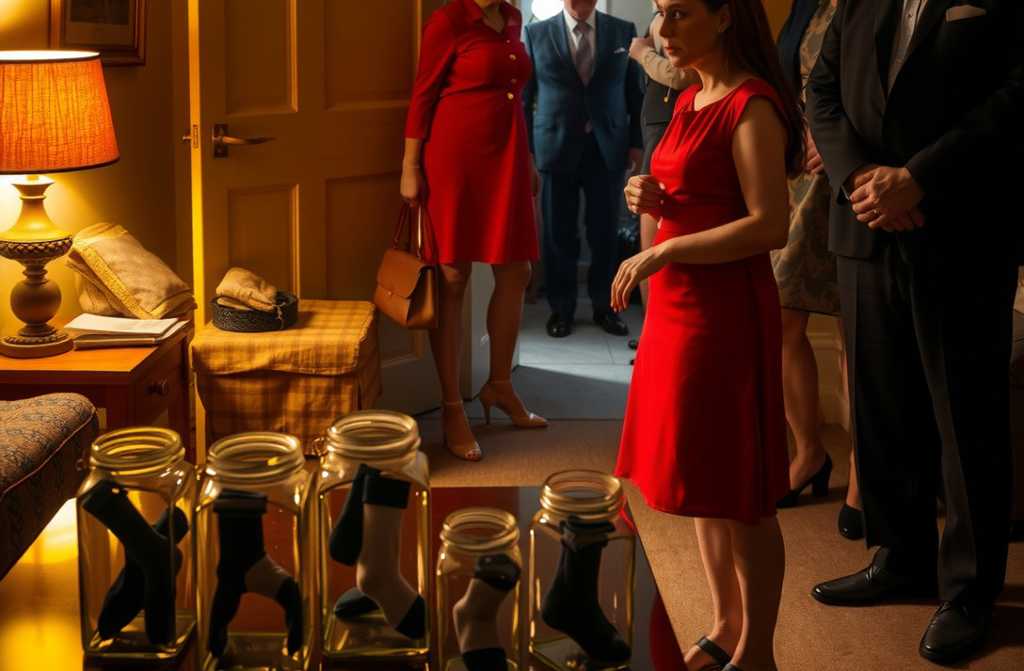
Seventeen Socks
Helen gazed at her husband over a bowl of stew, knowing exactly what he was about to say. After living with Richard for twenty-three years, she’d learned to read his face as easily as the label on a tin of beans.
“Too much salt again,” he said, eyes glued to his phone. “How many times?”
“I havent put too much salt.”
“Im telling you, its oversalted, so it is.”
Helen laid her spoon gently on the tablenot dropped, but set down, precisely so it wouldnt clatter. If it did, hed call her hysterical. He always did. Any movement sharper than he preferred became an outburst.
“Richard, Ive been using this recipe for twenty years.”
“Precisely. Twenty years of the same. Maybe its time to change.”
He pushed his plate away and went to the sink, leaving it there, half-finished and not rinsed. Helen watched his broad, familiar backthe back of a man who never asked how her day had gone.
It was a typical Tuesday evening in their flat on the third floor of a block in Manchester. Spacious, three bedrooms, well-furnished. Richard liked to tell guests hed decorated it himself. Helen stayed quiet on those occasions, knowing better than to correct himotherwise, shed pay for it later.
She was fifty-two; Richard, fifty-six. Theyd met at a factory in the early nineties, when both worked there. He seemed different thenor so she thought. He paid compliments, carried her bags, laughed at her jokes. Perhaps it was all just to impress her, and once hed done that, hed stopped trying. Helen had stopped wondering long ago.
Now, Richard was commercial director at a mid-sized construction firm, CastleBuild. He made good money. Helen worked as an accountant at the local health centre. She earned a steady, if modest, salary. Her income didnt affect their life togetherhers went on groceries, bills, odds and ends for the home. His pay, as he sometimes said, was the “real” money.
He didnt say it often, but he did say it.
“Your wage is hardly worth more than a loaf of bread,” hed remark, as though stating a fact, not giving offence.
Helen never replied. What could she say? She knew he earned more; she just didnt see the need to rub it in.
They had no children. That was another well-worn topic, one Helen no longer let herself revisit. Too painful. Too many things had been said over the years, and not all forgotten.
Richard’s mother, Margaret, lived in a nearby neighbourhood, ten minutes away by tram. She came round unannounced, letting herself in with a key Richard had given her fifteen years ago and never reclaimedbecause Helen asked softly, and Margaret objected loudly. Margaret would scour the flat, always finding fault.
“Helen love, look at the dust on that shelf,” shed say, as if using Helens name was a favour.
“I dusted only yesterday, Margaret.”
“Well, how did you dust it, then? Watch.”
Shed run her finger over a shelf and show Helen the evidence, as if she were blind.
Richard would sit in his armchair, eyes on the telly, or pretending they were. He never told his mother to calm down. He was always on her sidenot because he thought she was right, but because it made life easier. Mum went home pleased, his wife stayed silent, and his peace remained undisturbed.
Helen used to call it his weakness. Now it had no name. It was simply how things were: him, her, and Margaretthe ever-present third.
Richards socks were everywhere. Theyd become so much a part of Helen’s routine she often caught herself noticing them the way she noticed the skirting boards. Socks just existed. Beside the settee, under the coffee table; once, she found one on the kitchen windowsill and didnt even ask. She simply put it in the wash.
She did most things wordlesslyclearing up, laundry, cooking, ironing, lugging heavy bags from the supermarket after work because Richard thought that a wifes job. Hed help, if it was something like moving furniture onto the balconybut shopping bags? “Not a mans job,” he said.
“Youre passing the shop anyway,” hed tell her.
And she was. That much was true.
One day at work, Helen took part in a staff quiz to celebrate the health centres anniversary. She wona small prize, a thirty-pound voucher for the local spa, Rose & Ivy. Helen brought it home with a quiet satisfaction. For the first time in ages, it felt good to have something to give.
Richard examined the voucher. “Mum was just saying her backs giving her grief. She could do with a massage.”
“Richard, its my prize,” she protested.
“So what? You havent got time for it. Mum would get more use.”
He called Margaret there and then. The next day she arrived and took the voucher, thanking her son but not Helen.
Helen sat in the kitchen a long while staring out at the nearly bare trees. She wondered why she hadnt cried. Perhaps because by now, hurt had become as familiar as the sound of the telly next door.
Then there was the sock day.
She was tidying the sitting room, shifting the settee to hoover underneath, and found a grey, cotton sock. Just the one. She held it and lookednot with disgust, just contemplation.
Something shifted inside her then. Like a rusty lock finally giving way.
She didnt put the sock in the wash.
Helen fetched an old shoebox from the cupboard, put the sock inside, closed the lid.
That day, Richard was watching football. She brought him tea. He didnt say thank you. She went to the kitchen and started thinking.
She thought on and on, long after Richard had fallen asleep. Late at night, she sat at the kitchen table with a mug of cold tea, pondering the dinner party lined up in three and a half weeksan occasion Richard had been fretting about for a fortnight. Hed invited his new boss, Jonathan Morrison, the newly appointed managing director of CastleBuild, and his wife for dinner. Richard hoped for a long-promised promotion.
“You know what an opportunity this is,” he told Helen earnestlyhis ‘career’ voice on. “Morrisons a shrewd bloke. He pays attention to the whole picturefamily, home, wife. All counts.”
“I see,” Helen replied.
“Make yourself presentableproper hair, decent dress. But no butting into conversation. Just see to the food and dont interrupt.”
“All right.”
“Im inviting Mum too. She knows how to behave.”
Helen nodded. She was good at nodding.
Now, awake in the dark kitchen with the shoebox in the cupboard, Helen planned. Calmly, measuring each idea. She had three and a half weeks.
Next day after work, Helen went to a hardware shop, buying several small glass jars with lidsthe kind used for homemade jam, but smaller. Then she picked up a basic voice recorder in another shop, and some dark green velvet.
She hid it all away in the cupboard. Richard never noticed what she brought home from the shopsunless it was food, it didnt matter to him.
Helen started keeping the recorder close bya small thing, it fit in her apron pocket. Shed switch it on when Richard started in. Not always. Only when something inside her said, “Record this.” That inner voice never failed her.
The first recording was three days later.
They sat down to dinnerHelen had cooked chicken and veg. Richard ate in silence before saying, “Youve dried it out.”
“I made it the usual way,” Helen replied.
“Exactly, the usual way. Maybe it’s time to change.”
“What do you want to change?”
“I want a decent meal after workis that too much to ask?”
“The chicken is tender, Richard.”
“I say its dry. I know what I taste.”
Helen had started the recorder early enough to catch the bit about “I know what I taste.” She tucked it away and brought out the fruit juice.
Socks continued to appear, regular as clockwork. Every two or three days, shed find one somewhere oddunder the bed, by the TV, once directly on a kitchen chair. Each went into its own glass jar, tightly lidded.
At first, she did it methodically: find, jar, close. But after a week, Helen realised each sock should have its own labela story to go with it. She bought tiny price tags and began to write the date and the phrase Richard had said that very day.
This was easy enoughshe had a knack for remembering words, especially his. Some phrases spun in her mind for many nights, searching for what was wrong with her. Now, she just copied them onto tags.
“Love, what are you moaning for? A woman should be grateful to have a home and husband.”
That was Thursday, when Helen had mentioned a headache after work.
“My mum always said youre useless. I didnt believe her, but now I see she was right.”
That was Saturday, after Margaret and Richard weighed in on her homemade cake, pronouncing the base too thick.
Helen went to the bathroom, stared at her reflection for a few minutes, splashed cold water on her face, and returned to clear the table and wash up.
At night, once Richard was asleep, Helen would lay out her materialsjars lined up on the kitchen table, labels prepared, then put everything away again by morning.
She even learned online how to make small velvet-covered stands for the jarsscissors, glue, patiencecreating mini pedestals for each one.
She picked up little clip-on lamps at a car boot sale for almost nothing. Meant for photography, the seller said. They gave her exactly the warm, spotlighted effect she needed.
It didnt feel like a grand planjust like keeping books balanced as an accountant. Careful, methodical, emotionless: documenting, collecting, organising.
Richard noticed nothing. He rarely did, unless it concerned food or cleanliness; those, she kept up.
One morning he asked why she looked tired.
“Im not sleeping well,” she replied.
“Again?” He didnt look up from his paper. “Maybe take some tablets?”
“Dont know.”
“See the doctor. Though you do work at the health centreno need to bother.”
And that was that. He turned the page.
At work, her colleague Sarah asked if something was on her mind.
“You seem different,” Sarah observed between patients.
“Different how?”
“Just, I dunno, more focused. Like youre solving something in your head.”
“I am,” said Helen.
“Big stuff?”
“Not really. Just bits and pieces.”
Sarah gave her a thoughtful look but left it at that. Theyd worked together eight yearsgood colleagues, not quite friends, but if Helen needed someone in a crisis, shed call Sarah. She knew she could trust her.
Then there was Janean old university friend, now divorced and living alone in Brighton. They spoke every week, sometimes more. Jane always said it was better to be alone than with the wrong person.
Helen called Jane late one evening, once Richard was in the bedroom with the news.
“Jane, I need help.”
“Whats happened?”
“Nothings happened. I need you to come hereon the eighteenth, if you can.”
“Three weeks from now?”
“Yes, or a little sooner. Im moving out.”
Janes pause was brief.
“Where?”
“Ive rented a small flata one-bedroom, on Elm Street. First months paid already.”
“Helen. Is this for real?”
“Absolutely.”
“When did you decide?”
“Not long agobut Im sure.”
Jane was quiet again, then said, “Ill come on the fifteenth. I have a mate there, Ill stay with her. Tell me what to bring.”
“Just yourself.”
“And my head?”
“And your head,” Helen replied, almost smiling.
Arrangements made, Helen counted the jars in the box: nine.
She found a solicitor herselfCaroline Bennett, a woman in her mid-forties. Helen met her one lunch hour and laid things out concisely, as ever. Caroline took notes, never interrupting.
“Joint assets?”
“The flatpurchased while married, mostly on his money.”
“Still counts as joint. What are your intentions?”
“Im not asking for it. I have my own savingsIll rent.”
“Youre certain?”
“Yes.”
Caroline nodded; shed surely seen plenty of women leave with nothing but the hope of peace.
“Well file on your behalf. Is the fifteenth all right?”
“Yes.”
Helen left the solicitors and noticed how mild it was for September. Sun on her face, feeling only a dry mouth and the practical thought: buy a bottle of water.
At home, she cooked dinner. Richard was late, ate quietly, then commented that the fish was “all right.” Not “good,” not “thank you.” Just “all right.” High praise, by his scale.
“Remember the dinners on the eighteenth,” he said, not asking but confirming, like a delivery slot.
“I remember.”
“Morrison likes home-cooked food; I found out from his secretary. Make something fancy. Duck, maybe. Or beef.”
“Ill cook duck.”
“And a proper tableget out the Irish linen. That table cloth we bought years ago.”
“Fine.”
“And wear something decentnot that blue dress. Too frumpy, makes you look broad.”
Helen fixed her gaze on him. “All right,” she said.
He went to bed. She did the washing up, then messaged Jane: “Eighteenth, evening. Bags will be ready.”
The following days were busyquarterly reports at work, prepping for the dinner, and her collection growing. Thirteen jars by now, the labels neatly printed and trimmed.
Her recorder caught several conversationsnot all sharp, some cold and soft.
“Ever thought about trying harder?” he asked, when she returned his ironed shirt.
“In what way?”
“Any. This shirttheres a crease on the collar.”
She lookedit was smooth.
“I dont see a crease.”
“Then youre not looking properly. I’ll take it to a laundry next time.”
He left with his shirt. Helen stood, studying her handshands that had ironed thousands of shirts over twenty-three years. She switched off the iron, put away the board, made tea.
One recording happened by accidentRichard on the phone, not realising Helen was in the hallway after shopping.
“Dont fret, mate. All wives are the same. Mine sulks at times, but what can you do? Put up with it. Still, house is clean, and there’s always a stew on the hob.”
A laugh.
“No, I wont divorce. Mum would never allow itwhod do the cooking, then?”
Helen stood a moment, quietly setting the shopping down before moving to the kitchen.
She played that part of the recording several times, thinking about the word hed chosen: “put up with.” He knew what was happening; he just didnt mind.
That thought was the most difficultthat he knew and chose to carry on.
Jane arrived on the fifteenth, ringing the bell when Richard was out. Helen let her in. Jane took in the flat with a low whistle.
“Nice place,” she saidnot with envy, simply stating a fact.
“Three bedrooms. I lived here twenty-three years.”
“And now youre leaving.”
Helen nodded.
Jane looked at her long and hard. She was tall, bold, with a bob haircut and a way of meeting your eyes directly.
“Youre sure?”
“Jane.”
“Say no more.”
Packing took two hoursHelen didnt own much. Clothes, a handful of books, photographs (only those with her or Jane), a small box of jewellery, a few pots and pans shed bought herself, and her folder of documents. All loaded into Janes friends estate car, off to Elm Street.
The new flat was small but bright, with a large bedroom window overlooking a pocket park. Helen dropped off her luggage, then returned home. Richard wouldnt notice for a few days.
Her things vanished with little efforther wardrobe section had always been half-empty.
That very day, after Jane left, Helen visited Caroline Bennett and signed the divorce application.
By six, she was back home. Richard, as ever, didnt look up from the news.
“Where have you been?”
“Busy at work.”
“Is dinner ready?”
“Ill do it now.”
Three more days.
She prepared for the dinner meticulously: purchased a duck, marinated it overnight, found a new recipe for cranberry sauce. She mapped out the menu: starters, main, desserteverything pencilled in her recipe notebook.
And in parallel, she built her installation. Come the evening of the eighteenth, she had seventeen jars of socks. Seventeen tags with dates and phrasesand three enlarged quotes:
First: “Love, what are you moaning for? A woman should be grateful to have a home and husband.”
Second: “My mum always said youre useless. I didnt believe her, but now I see she was right.”
Third: “Put up with it. Still, house is clean, stew on the hob.”
The spa voucher she framed, labelling it underneath: “A gift deemed wasted on me by my mother-in-law.”
She set up the lamps in the lounge while Richard was out, checked the lightingthe jars glowed on velvet pedestals, cards crisp and stark. She draped a throw over everything, waiting for evening.
On the morning of the eighteenth, Richard was in high spirits. Drank his coffee, asked about the menu.
“Duck, cranberry sauce, roasted vegetables,” Helen said. “Starters: smoked salmon, olives, cheese canapés. Dessert, Tiramisu.”
“You can make Tiramisu?”
“I can.”
“Well, dont let me down. Morrisons a man of high standardsfamily matters to him. Wife included. The type.”
“Understood,” said Helen.
“Mum will be here at sixshell help lay the table.”
“No need.”
“She wants to help.”
“Fine.”
He left. Helen spent the day preparing.
By two, the duck was roasting. Tiramisu chilled overnight. By five, shed set the table: pale linen, crystal glasses, even candles from a forgotten drawer.
She showered at four, blow-dried her hair, styled it, pulled out a red dress shed bought three months ago but never worna simple, flattering knee-length number Richard hadnt seen.
She looked at her reflection. Thoughtful. Then put on more makeup than usual, chose small silver earrings from her college days.
At five forty-five, Jane called.
“How are you?”
“Fine. Ducks ready.”
“Helen”
“What?”
“Nothingjust remember, Im two streets away.”
“I know. Thank you.”
Helen put down the phone, checked the duckgolden skin, clear juice. She left it to rest.
Margaret arrived at six sharp, as ever with her own key.
“Ooh, look at you in your red dress,” she said, archly.
“Evening, Margaret.”
“Hmm.” She peered into the oven. “Duck?”
“Yes.”
“You know Richard likes meat dry.”
“Richard likes it juicy, actually. I knowIve been cooking for him for twenty-three years.”
Margaret stared, surprised. Helen smiled and walked to greet her husband as he opened the door.
Richard wore a new suit. He stopped short seeing Helen.
“Whats this dress?”
“New.”
“Red.”
“I see its red,” he said, tone unreadable. He went into the lounge, saying no more.
The Morrisons arrived at precisely seven-thirty.
Jonathan Morrison was a tall, broad man with cropped, silver haircarries himself like a soldier. He shook Helens hand.
“Pleased to meet you. Jonathan.”
“Helen.”
“Thats a lovely dress,” he said.
His wife, Susan, was petite, dark-haired, quietly spoken and observant. She brought flowers.
“Thank you for inviting us.”
“Please, come in.”
Richard turned on the charmchatty, clever, pouring wine. Margaret sat docile, smiling. Helen served starters and smiled too.
Table talk was easy: Jonathan discussed current projects, Richard listened keenly. Susan asked Helen about her work.
“Im an accountant at the health centre.”
“Thats real worka lot of paperwork, I imagine?”
“Plenty. But Im used to it.”
“Must be hard with home life too?”
“I manage.”
Susan held her gaze longer than necessaryas if reading something in the lines of Helen’s face; maybe she was simply admiring the dress.
After the duck and second round of wine, with conversation flowing, Helen stood.
“Excuse me,” she said. “Id like to show you something. A small exhibition Ive prepared for tonight.”
Richard shot her a look of irritation and confusion. He had no ideaHelen could see that.
“An exhibition?” Jonathan echoed, interested. “Thats a surprise.”
“I like surprises,” Helen answered. “This way, please.”
She led them in. Whipped away the throw.
Warm, focused light fell on seventeen glass jars lined up on the green velvet. Each enclosed a mans sock. Each boasted a handwritten tag. Along one wall, enlarged quotes on cards; in the corner, the voucher sat framed.
Susan entered first and stopped, reading a card, then the next.
Margaret came in last, and demanded, “Whats all this?”
“Exhibits,” Helen said, calm. “A collection spanning three and a half weeks.”
Richard paused in the doorway, expression tense.
Helen pulled a remote from her dress pocket and pressed the button. The speaker on the bookshelf filled the room with Richards voice.
“Love, what are you moaning for? A woman should be grateful to have a home and husband.”
Then
“Too dry. Too salty. As usual. Maybe its time to change?”
Then
“Put up with it. Still, house is clean, stew on the hob. Mum wouldnt allow divorcewhod cook?”
And finally
“My mum always said youre useless. I didnt believe her, but now I see she was right.”
The recording stopped.
There was silencea silence you cant undo.
Susan lingered over the voucher, reading its label, then turned from Richard. Jonathan straightened, seemed even taller.
After a pause, he looked at Richard, voice measured.
“Ive heard youre up for the deputy position,” he said.
Richard opened his mouth.
“I trust people based on how they behave at home,” Jonathan continued, cutting him off. “Thats my principle, no exceptions. I wont be working with someone who speaks to his wife like that.”
He turned to Helen.
“Thank you for dinner, Helen. The duck was superb.”
“Youre welcome,” Helen replied.
Susan squeezed her hand, briefly and firmly, before she and her husband left via the corridor. Richard remained, frozen in the door.
The door closed behind the Morrisons.
Margaret, whod stood stiffly all this time, suddenly coughed, then caught her sons eye, about to launch into a rebuke about family shame.
But Helens exhibit had one more audio clip queued upa phone call Richard thought shed never catch fully. Only after listening to the whole recording had she realised the part shed missed.
Richards voice:
“You reckon Im not sick of mum? Always interfering. Id’ve sorted some peace ages ago, but then who’d cook? Neither wife nor mother can cook anything decent.”
Margaret heard it all. She looked at Richard, mouth hesitated, then resolved.
“Richard,” she whispered, voice hollow, then firmer: “So, thats how it is.”
She picked up her handbag, headed for the lane, and quietly set her key down on the sideboard. She said nothing more. The door shut softlyfar heavier than any slam.
Helen entered the lounge, switched off the speaker, and lingered by the jars, picking one up, peering past the glass, before returning it.
Richard now came in, face flushednot from shame, Helen thought; perhaps from a rage he didnt dare loose.
“What on earth do you think youre playing at?” he declareda statement, not a question.
“An exhibition,” said Helen.
“You made a spectacle in front of my boss. Do you realise what youve done?”
“I do.”
“This is betrayal. Madness.”
“These are your socks, Richard. And your words. I made nothing up.”
“You recorded me secretly! Thats illegal!”
“I recorded conversations in my own home. Ask your solicitor, if you like.”
He advanced.
“Explain why you did this.”
Helen looked at him, recalling twenty-three years: a man she remembered as different, young, laughing, in that daft checked scarf he used to wear in winter. She remembered how once hed waited for her three hours outside the library before mobiles existed. That was decades agoa different man, or so she thought.
“I filed for divorce three days ago,” she said.
Richard fell silent.
“My things are already gone. The only key to this flat is on the sideboardMargaret left hers, I never had my own. You never gave me onenot that it matters.”
She stepped past him into the hall, picked up the small suitcase she’d left out that morning, opened the door.
“Ive taken the duck from the oven. Help yourself. The roasting tins dirtyI’m not washing up. Thats not my job anymore.”
And she left.
The corridor outside the flat was bathed in dull lamplight. She pressed for the lift, listening as it trundled up from below. Behind the door, all was quiet. There was a sudden thudmaybe Richard knocking something overthen silence again.
The lift arrived. Helen stepped in, pressed ‘Ground.’ The doors slid shut.
It was evening outside. Mid-September, cool but not cold. Helen walked to the pavement and paused, breathing in.
The air smelled of autumndamp leaves, faint traffic fumes, the distant scent of someone baking apple pie. An ordinary city scent.
She walked along the street in her red dress, small bag in hand. Her heels clicked on the tarmac. People hurried past, someone walked a dog, someone else chatted on the phone. Nobody paid her much attention. The world carried about its business, unaware that something spanning twenty-three years had just ended on a third-floor flat.
She thought how different things would be: the new place was small; thered be no familiar breathing at night, no one to tell dinner was ready, nothing stopping her from changing a bulb or deciding on Sunday breakfast.
She didnt know if shed regret this night, or feel lonely, or what people at work might whisper. She didnt know if Margaret would ever call, or what shed say if she did.
She knew very little.
Her phone buzzedJane.
“How are you?”
“Walking.”
“Where to?”
“Straight ahead. Ill figure out the rest as I go.”
Jane paused, then: “Ill get wine. Meet you at your place?”
“Yes. The new one.”
“I knowElm Street. See you in twenty.”
Helen put her phone away. Walked a bit more, stopped for the crossing. A man with a big bag waited beside her, glanced at her dress, then away. The light turned green. She crossed.
Somewhere back in that flat, a man stood surrounded by seventeen glass jars and a greasy roasting tin.
Helen strode along, and the air felt different. Not better or worsejust hers. It no longer carried anybody elses stamp. It belonged to her, for as long as she let herself breathe it.
She didnt know what shed write on the blank page life offered nowonly that shed hold the pen at last.
“Jane,” Helen said quietlythough Jane wasnt near, just speaking into the cool autumn night, to the city lights, into the unfamiliar street upon which, for the first time, she walked alone.
In answer, her heels rang out, decisive: click. Click.
A life that truly belonged to her began that waynot with a fanfare, not with applause, but with the scent of borrowed pie floating from a window and twenty minutes to a friend whod remembered to bring the wine.
Sometimes, its when we quietly close old doors that the world really opens up. And the first step through is always ours to take.