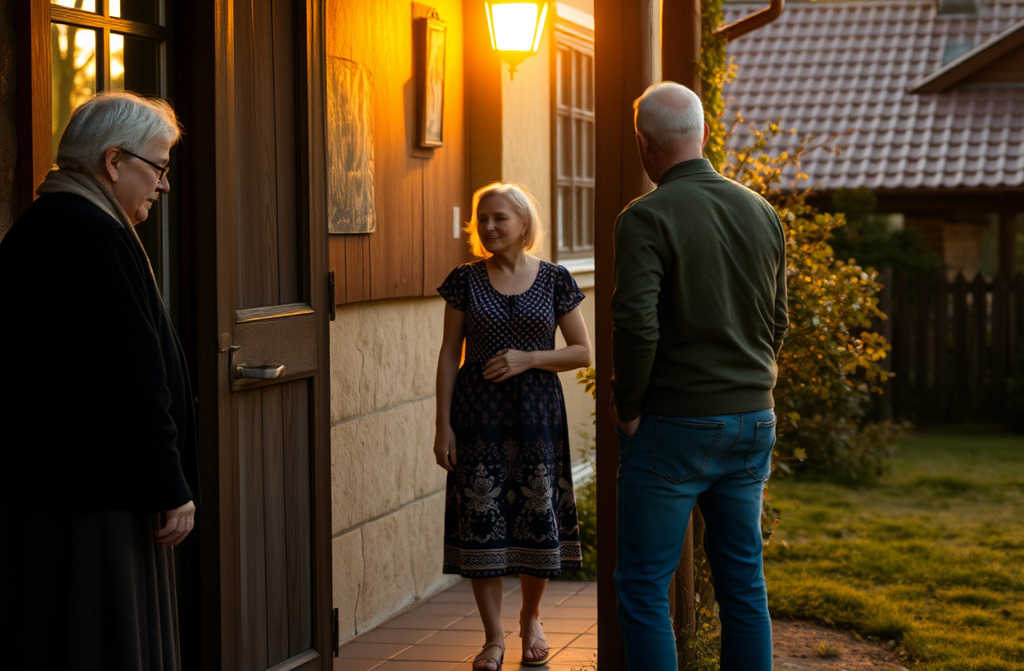
The Last Summer at Home Vladimir arrived on a Wednesday, as the sun hovered near midday and had baked the roof until the tiles crackled. The garden gate had fallen off its hinges years ago; he stepped over it and paused by the porch. Three steps, the lowest rotted through. He tested his weight on the second and went inside. Inside, the air smelled stale, tinged with the scent of mice. Dust lay thick on the windowsills, a cobweb stretched between the old beam and the sideboard. Vladimir muscled open the window, letting in the smell of hot nettles and dry grass from the garden. He walked through all four rooms, making a mental list: wash the floors, check the stove, fix the plumbing in the summer kitchen, throw out everything that had rotted. Then call Andrew, Mum, the nephews. Say: come for August, let’s spend a month here, as we used to. As before—meaning twenty-five years ago, when Dad was alive and every summer the family gathered here. Vladimir remembered making jam in a copper pot, the brothers hauling water from the well, Mum reading aloud on the porch in the evenings. Then Dad died, Mum moved to the city with the youngest son, the house was boarded up. Vladimir still came once a year, checking to see if anything had been stolen, and then left. But this spring something clicked: he needed to try to bring back those days. Just once. He worked alone for the first week, cleaning the chimney, replacing two of the porch boards, washing the windows. He drove into town for paint and cement and arranged with an electrician to fix the wiring. The parish council chairman met him at the shop and shook his head: “Why put money into this old place, Vlad? You’ll sell up anyway.” “I won’t, not before autumn,” Vladimir replied and moved on. Andrew and his family arrived first, on Saturday evening with his wife and their two children. He stepped out, looked around the garden, and grimaced. “Seriously, a whole month here?” “Three weeks,” corrected Vladimir. “Fresh air for the kids, and you could use it too.” “There isn’t even a shower.” “There’s the old bath house. I’ll light it tonight.” The children, an eleven-year-old boy and an eight-year-old girl, wandered out to the swings Vladimir had hung from the old oak tree the day before. Andrew’s wife, Svetlana, silently hauled the groceries into the house. Vladimir helped unload the car. His brother still scowled but said nothing. Mum arrived Monday, brought by a neighbour. She walked inside and paused in the lounge, sighing. “Everything’s so small,” she murmured. “I remembered it bigger.” “You haven’t been here in thirty years, Mum.” “Thirty-two.” She went to the kitchen, running her hand over the counter. “It was always cold here. Dad promised to put in heating but never got round to it.” Vladimir heard not nostalgia in her voice, but weariness. He poured her some tea and settled her on the porch. She gazed out at the garden and talked about hauling water, the aching back after laundry days, the chatter of the neighbours. Vladimir listened and understood that, for her, this house wasn’t a nest but an old wound. That evening after his mum went to bed, he and Andrew sat round the fire in the garden. The children were asleep; Svetlana read by candlelight—the electricity only worked in half the house. “Why are you doing this?” Andrew asked, watching the flames. “I wanted to get us all together.” “We see each other at the holidays.” “It’s not the same.” Andrew smirked. “Vlad, you’re a romantic. You think three weeks here will make us closer?” “I don’t know,” Vladimir admitted. “I just wanted to try.” His brother was quiet, then said, gentler, “I’m glad you did this, honestly. But don’t expect miracles.” Vladimir didn’t. But he hoped. For the next days, they kept busy. Vladimir repaired the fence, Andrew helped patch the shed roof. The boy, Artem, bored at first, found old fishing rods in the shed and started vanishing off to the river. The girl, Sonia, helped Grandma weed the vegetable patch Vladimir had hurriedly made by the southern wall. One day, while everyone painted the porch together, Svetlana laughed. “We’re like a commune, aren’t we?” “Communes at least had a plan,” Andrew grumbled, but grinned. Vladimir noticed the tension fading bit by bit. Every evening they ate round the long table on the porch. Mum made vegetable soup, Svetlana baked pies from cottage cheese bought in the village. Their chats were about small things: mosquito nets, whether to cut the grass under the windows, if the pump was working yet. But one night, with the children asleep, Mum said quietly, “Your father wanted to sell this house. A year before he died.” Vladimir froze mid-sip. Andrew frowned. “Why?” “He was tired. Said the house was an anchor. He wanted to move to the city, get a flat near the hospital. I refused. I thought this was ours, family land. We argued. He didn’t sell, but then he died.” Vladimir put his mug down. “Do you blame yourself?” “I don’t know. I’m just… tired of this place. It reminds me I insisted, and he never got to relax.” Andrew leaned back. “You never told us this, Mum.” “No one asked.” Vladimir looked at his mother—stooped, hands worn from work—and realised: the house wasn’t treasure for her, but a burden. “Maybe you should’ve sold it,” he said quietly. “Maybe,” she agreed. “But you grew up here. That has to mean something.” “Mean what?” She met his eyes. “That you remember who you were, before life scattered you.” It wasn’t until the next day, when he, Andrew, and Artem went to the river and the boy caught his first perch, that Vladimir saw his brother put an arm round his son and laugh—lightly, openly. That evening, when Mum told Sonia how she’d taught her father to read on that very porch, Vladimir heard not pain, but something else in her voice. Maybe forgiveness. Departure was set for Sunday. The night before, Vladimir fired up the old bath house, they all soaked together, then drank tea on the porch. Artem asked if they’d come next year. Andrew looked at Vladimir but said nothing. Morning, Vladimir helped load the car. Mum hugged him at the gate. “Thank you for inviting us.” “I hoped it would be better.” “It was good, in its own way.” Andrew clapped his shoulder. “Sell if you want, I don’t mind.” “We’ll see.” The car left, the dust settled on the lane. Vladimir turned back to the house, tidied dishes, took out the rubbish, shut the windows, locked the doors. He pulled out the old heavy padlock from his pocket and fastened it onto the garden gate. It was rusty, but strong. He stood at the driveway, looking at the house. Straight roof, solid porch, gleaming windows. It looked alive. But Vladimir knew it was a trick. The house lives when there are people inside it. For three weeks, it was alive. Maybe that was enough. He got in his car and drove away. In the rear-view mirror, the roof glinted, then the trees hid it from view. Vladimir drove slowly down the rough old lane, thinking that come autumn, he’d call an estate agent. But for now—for now, he’d remember them all at the table, Mum laughing at Andrew’s jokes, Artem showing off his catch. The house had done its job. It had brought them together. And maybe that was enough to let it go, without pain.

The Last Summer at Home

Michael arrived on Wednesday, just as the afternoon sun began to settle and heated the roof until the tiles crackled. The gate had fallen off its hinges years ago; he stepped over it and paused before the porch. Three steps led upthe bottom one was rotten right through. He tested his weight on the second, gave a gentle push, and went inside.

The air inside was stale, carrying a faint scent of mice. Dust blanketed the windowsills, and a web stretched from the rafter to the old sideboard. Michael pried open a window; the frame gave way with a tussle, letting in the warm aroma of nettles and dry grass from the garden. He walked through all four rooms, composing a mental list: mop the floors, check the fireplace, fix the plumbing in the summer kitchen, toss anything that had rotted. Then call Andrew, Mum, the nieces and nephews. Tell them: Come in August, lets spend a month here like we used to.

Used to was a quarter-century ago, when Dad was still alive and every summer the whole family gathered in this house. Michael remembered making jam in the copper pan, the brothers fetching buckets of water from the well, and Mum reading aloud on the verandah in the evenings. Then Dad died, Mum moved to town with the youngest son, and the house was boarded up. Michael came once a year, checked no one had stolen anything, and left again. But this spring, something had shifted inside him. It felt important to try and bring everyone back. Just once.

The first week he worked alone. He cleaned out the chimney, replaced two porch boards, scrubbed the windows. He drove into Halifax for paint and cement, and arranged for an electrician to look at the wiring. The village council chairman eyed him outside the shop.

Why pour effort into this old pile, Mike? Youll sell it anyway.

Im not selling until autumn, Michael replied, and walked on.

Andrew was first to arrive, Saturday evening, with his wife and two kids. He climbed from his car, gave the garden a once-over, and frowned.

You honestly think we can do a month here?

Three weeks, Michael corrected him. The kids need the fresh air. You do, too.

Theres not even a shower.

Theres a bathhouse. Ill fire it up tonight.

The childrenan eleven-year-old boy and an eight-year-old girlambled towards the swing set that Michael had hung from the old oak yesterday. Andrews wife, Jane, went quietly into the house with her bags. Michael helped unload their things. His brother still looked grumpy but said nothing.

Mum arrived on Monday, brought by a neighbour in his car. She came inside, paused in the sitting room, and sighed.

Everything seems so small, she said quietly. I remembered it as bigger.

You havent been here in thirty years, Mum.

Thirty-two.

She wandered into the kitchen, ran her hand along the countertop.

It was always cold in here. Dad promised to put in central heating, but never got round to it.

Michael heard exhaustion rather than nostalgia in her voice. He poured her tea and settled her on the verandah. She sat gazing into the garden, talking about how hard it was to carry water, how her back ached after laundry, how the neighbours gossiped. Listening, Michael realised this house was less a nest to her, more an old wound.

That evening, after Mum went to bed, Michael and Andrew sat by the fire in the garden. The kids were asleep, Jane read by candlelightelectricity was still only in half the house.

Why are you doing all this? Andrew asked, staring into the flames.

I wanted us all together.

We see each other on holidays.

Its not the same.

Andrew smirked. Mike, youre a dreamer. You reckon if we stick it out here three weeks, well grow closer?

I dont know, Michael admitted. I just wanted to try.

His brother was quiet, then said more gently:

Im glad you started this, honestly. Just dont expect miracles.

Michael didnt. But he couldnt help hoping.

The following days were busy. Michael mended the fence, Andrew helped repair the old sheds roof. The boyBenwas bored at first, but then found some old rods in the shed and spent hours at the river. The girlEmilyhelped her grandmother weed the makeshift garden Michael had scraped out near the southern wall.

One afternoon, while painting the verandah together, Jane suddenly laughed.

Were like a bunch of commune-dwellers!

At least communes had a plan, Andrew grumbled, but he smiled.

Michael noticed the tension slowly melting away. Evenings found them dining at the long verandah table: Mum made soup, Jane baked pies from hand-churned cottage cheese bought from a neighbour. Conversation turned to little things: where to get mosquito netting, whether the grass should be mowed by the window, had anyone fixed the water pump.

But one night, after the children had gone to bed, Mum said, Your father wanted to sell this house. The year before he died.

Michaels hand paused on his mug. Andrew frowned.

Why?

He was tired. Said the house was an anchor. Wanted to move to town, buy a flat near the hospital. I wouldnt have it. I thought this was our legacy, this house. We argued. He never sold, then he died the next year.

Michael set down his mug.

Do you blame yourself?

Im not sure. I just…I got so worn out by the place. Its a constant reminder I insisted, and he never got the rest he wanted.

Andrew leaned back in his chair.

Mum, youve never told us this.

You never asked.

Michael looked at his mother thenstooped, hands gnarled by workand realised the house meant burden, not treasure, to her.

Maybe we shouldve sold it, he said quietly.

Maybe, Mum agreed. But you all grew up here. That means something.

What does it mean?

She met his gaze.

It means you remember what life felt like before everything scattered us.

Michael didnt believe those words right away. But the next day, when he, Andrew, and Ben went to the river and Ben landed his first perch, Michael watched his brother throw an arm around his son and laughgenuinely, unguarded. That evening, listening to his mother tell Emily how, on this very verandah, shed taught their father to read, Michael heard acceptance in her voice, not pain. Maybe, finally, some peace.

Theyd decided to leave on Sunday. The night before, Michael heated up the bathhouse, and everyone piled in for a steam, then tea on the verandah. Ben asked if theyd come back next year. Andrew glanced at Michael but didnt reply.

In the morning, Michael helped load the car. Mum hugged him before they left.

Thank you for inviting me.

I hoped it would be better.

It was. In its own way.

Andrew clapped Michael on the shoulder.

Sell if you want. Im fine with that.

Well see.

The car rattled away and the dust settled on the lane. Michael went back inside. He made a sweep of the rooms, packed up the leftover crockery, took out the rubbish. Then he closed the windows and locked the doors. He dug from his pocket an old iron lock hed found in the shed, and fastened it to the gate. It was heavy and rusty, but strong.

Standing by the fence, Michael looked over the house. The roof straight, the porch sturdy, clean windows. It looked alivebut he knew better. A house only lives when it holds people. For three weeks, it had. Maybe that was enough.

He drove away slowly, watching the roof flash in the rearview mirror until the trees hid it. As he rattled up the potholed road, he thought about calling the estate agent come autumn. For now, thoughhed remember those evenings around the table, Mum laughing at Andrews joke, Ben showing off his catch.

The house had done its job. It brought them together. And that, I suppose, is enough to let go without regret.


Rate article
Add a comment

;-) :| :x :twisted: :smile: :shock: :sad: :roll: :razz: :oops: :o :mrgreen: :lol: :idea: :grin: :evil: :cry: :cool: :arrow: :???: :?: :!:

The Last Summer at Home Vladimir arrived on a Wednesday, as the sun hovered near midday and had baked the roof until the tiles crackled. The garden gate had fallen off its hinges years ago; he stepped over it and paused by the porch. Three steps, the lowest rotted through. He tested his weight on the second and went inside. Inside, the air smelled stale, tinged with the scent of mice. Dust lay thick on the windowsills, a cobweb stretched between the old beam and the sideboard. Vladimir muscled open the window, letting in the smell of hot nettles and dry grass from the garden. He walked through all four rooms, making a mental list: wash the floors, check the stove, fix the plumbing in the summer kitchen, throw out everything that had rotted. Then call Andrew, Mum, the nephews. Say: come for August, let’s spend a month here, as we used to. As before—meaning twenty-five years ago, when Dad was alive and every summer the family gathered here. Vladimir remembered making jam in a copper pot, the brothers hauling water from the well, Mum reading aloud on the porch in the evenings. Then Dad died, Mum moved to the city with the youngest son, the house was boarded up. Vladimir still came once a year, checking to see if anything had been stolen, and then left. But this spring something clicked: he needed to try to bring back those days. Just once. He worked alone for the first week, cleaning the chimney, replacing two of the porch boards, washing the windows. He drove into town for paint and cement and arranged with an electrician to fix the wiring. The parish council chairman met him at the shop and shook his head: “Why put money into this old place, Vlad? You’ll sell up anyway.” “I won’t, not before autumn,” Vladimir replied and moved on. Andrew and his family arrived first, on Saturday evening with his wife and their two children. He stepped out, looked around the garden, and grimaced. “Seriously, a whole month here?” “Three weeks,” corrected Vladimir. “Fresh air for the kids, and you could use it too.” “There isn’t even a shower.” “There’s the old bath house. I’ll light it tonight.” The children, an eleven-year-old boy and an eight-year-old girl, wandered out to the swings Vladimir had hung from the old oak tree the day before. Andrew’s wife, Svetlana, silently hauled the groceries into the house. Vladimir helped unload the car. His brother still scowled but said nothing. Mum arrived Monday, brought by a neighbour. She walked inside and paused in the lounge, sighing. “Everything’s so small,” she murmured. “I remembered it bigger.” “You haven’t been here in thirty years, Mum.” “Thirty-two.” She went to the kitchen, running her hand over the counter. “It was always cold here. Dad promised to put in heating but never got round to it.” Vladimir heard not nostalgia in her voice, but weariness. He poured her some tea and settled her on the porch. She gazed out at the garden and talked about hauling water, the aching back after laundry days, the chatter of the neighbours. Vladimir listened and understood that, for her, this house wasn’t a nest but an old wound. That evening after his mum went to bed, he and Andrew sat round the fire in the garden. The children were asleep; Svetlana read by candlelight—the electricity only worked in half the house. “Why are you doing this?” Andrew asked, watching the flames. “I wanted to get us all together.” “We see each other at the holidays.” “It’s not the same.” Andrew smirked. “Vlad, you’re a romantic. You think three weeks here will make us closer?” “I don’t know,” Vladimir admitted. “I just wanted to try.” His brother was quiet, then said, gentler, “I’m glad you did this, honestly. But don’t expect miracles.” Vladimir didn’t. But he hoped. For the next days, they kept busy. Vladimir repaired the fence, Andrew helped patch the shed roof. The boy, Artem, bored at first, found old fishing rods in the shed and started vanishing off to the river. The girl, Sonia, helped Grandma weed the vegetable patch Vladimir had hurriedly made by the southern wall. One day, while everyone painted the porch together, Svetlana laughed. “We’re like a commune, aren’t we?” “Communes at least had a plan,” Andrew grumbled, but grinned. Vladimir noticed the tension fading bit by bit. Every evening they ate round the long table on the porch. Mum made vegetable soup, Svetlana baked pies from cottage cheese bought in the village. Their chats were about small things: mosquito nets, whether to cut the grass under the windows, if the pump was working yet. But one night, with the children asleep, Mum said quietly, “Your father wanted to sell this house. A year before he died.” Vladimir froze mid-sip. Andrew frowned. “Why?” “He was tired. Said the house was an anchor. He wanted to move to the city, get a flat near the hospital. I refused. I thought this was ours, family land. We argued. He didn’t sell, but then he died.” Vladimir put his mug down. “Do you blame yourself?” “I don’t know. I’m just… tired of this place. It reminds me I insisted, and he never got to relax.” Andrew leaned back. “You never told us this, Mum.” “No one asked.” Vladimir looked at his mother—stooped, hands worn from work—and realised: the house wasn’t treasure for her, but a burden. “Maybe you should’ve sold it,” he said quietly. “Maybe,” she agreed. “But you grew up here. That has to mean something.” “Mean what?” She met his eyes. “That you remember who you were, before life scattered you.” It wasn’t until the next day, when he, Andrew, and Artem went to the river and the boy caught his first perch, that Vladimir saw his brother put an arm round his son and laugh—lightly, openly. That evening, when Mum told Sonia how she’d taught her father to read on that very porch, Vladimir heard not pain, but something else in her voice. Maybe forgiveness. Departure was set for Sunday. The night before, Vladimir fired up the old bath house, they all soaked together, then drank tea on the porch. Artem asked if they’d come next year. Andrew looked at Vladimir but said nothing. Morning, Vladimir helped load the car. Mum hugged him at the gate. “Thank you for inviting us.” “I hoped it would be better.” “It was good, in its own way.” Andrew clapped his shoulder. “Sell if you want, I don’t mind.” “We’ll see.” The car left, the dust settled on the lane. Vladimir turned back to the house, tidied dishes, took out the rubbish, shut the windows, locked the doors. He pulled out the old heavy padlock from his pocket and fastened it onto the garden gate. It was rusty, but strong. He stood at the driveway, looking at the house. Straight roof, solid porch, gleaming windows. It looked alive. But Vladimir knew it was a trick. The house lives when there are people inside it. For three weeks, it was alive. Maybe that was enough. He got in his car and drove away. In the rear-view mirror, the roof glinted, then the trees hid it from view. Vladimir drove slowly down the rough old lane, thinking that come autumn, he’d call an estate agent. But for now—for now, he’d remember them all at the table, Mum laughing at Andrew’s jokes, Artem showing off his catch. The house had done its job. It had brought them together. And maybe that was enough to let it go, without pain.
Signatures on the Landing Sergei paused by the row of postboxes in his block of flats, drawn not by the usual notices about water meter checks or missing cats, but by a new sheet of paper, pinned haphazardly as if in a hurry. Across the top, bold print read: “Petition. Action Needed.” Below, the surname from Flat 18, fifth floor, and a bulleted list of complaints: loud noises at night, banging, shouting, “breach of the peace,” “threat to safety.” A row of signatures was already taking shape at the bottom, some careful, others sprawling. He read it twice, though the message was clear on the first go. His hand automatically reached for a pen in his jacket, but Sergei paused. Not from disagreement, but because he hated being prodded. He’d lived in this block for twelve years and learned to stay out of these communal squabbles, like avoiding a draft. He had his own worries: long shifts at the garage, his mum after a stroke in another part of town, a teenage son who either sulked in silence for weeks or exploded over nothing. The stairwell was still, only the lift thudded somewhere above. Sergei walked up to the fourth floor, fished out his keys, but before unlocking his own door, glanced up the stairs. There, on the fifth, lived Mrs Valentine, mid-fifties by the look of her—sturdy, terse, always with a severe haircut and a heavy stare. She rarely said hello and answered as if you’d inconvenienced her. Mostly, Sergei saw her with shopping bags from Tesco Express, or an old mop as she scrubbed the landing by her door. Sometimes, true, odd noises came at night from her flat—a crash, a short scream, dragging across the floor. He checked the residents’ WhatsApp group only when necessary. Mostly, it was bickering about parking or rubbish chutes. But lately, there was only one topic. “Another racket at 2am! My lad was terrified!” “I’ve got a 6am start, I feel like a zombie. Enough’s enough.” “It’s not just banging—she’s shifting furniture, I heard her.” “Get the police in. The law’s the law.” Sergei just scrolled, never joined in. He wasn’t a saint. When a crash woke him at 3am, he lay there too, with annoyance rising in his chest. He wished someone else would deal with it, so next morning all he needed to read was: “Sorted.” That evening, he finally texted the chat: “Who’s collecting signatures? Where’s the form?” The reply came from Nina, chair of the residents’ association, first floor. “Pinned to the board downstairs. Meeting at mine, 7pm tomorrow—this has to stop before it gets worse.” Sergei put down his phone. Inside, an uncomfortable feeling stirred—reminiscent of those old parent-teacher evenings, when the decision was made before you arrived, and they just needed you for the tick-box. The next day, he met Mrs Valentine on the stairs. She was lugging two heavy bags, breathing in short bursts but stubbornly refusing to ask for help. Sergei took one anyway. “Don’t,” she snapped. “I’ll just carry it up,” he replied. She stayed silent right up to her door, then yanked the bag from his hand. “Ta,” she said—it sounded less like thanks, more like a note in a register. Sergei was about to leave, but heard, behind her door, a different kind of sound: laboured, human breathing, a moan. Mrs Valentine froze, key in the lock trembling. “You… all right?” Sergei asked, not sure why. “It’s fine,” she said, sharply, and closed up. He went back down, but that heavy, haunted noise lingered in his mind. Not music, not banging, but something wordless and real. A few days later, a note appeared taped to Mrs Valentine’s door. Sergei saw it on his way out with the rubbish: “STOP THE NOISE AT NIGHT. WE’RE NOT OBLIGED TO SUFFER.” The marker letters were thick with pressure. He stood there, looking at the note, its tape glinting like a raw wound. He remembered his own childhood, when the neighbours would scrawl on their door because Dad was drunk and yelling. Back then, Sergei hated not his dad, but the neighbours—who pretended nothing was happening, until whispers began. He climbed up to the fifth, pressed his ear to her door. Nothing. He didn’t ring. Carefully, he took down the note, folded it, and put it in his pocket. He binned it outside, not in the flat’s entrance, so no one else would see. Meanwhile, the WhatsApp group grew harsher. “She doesn’t care about anyone.” “People like her should be moved on. Let her live in a house on her own!” “Police said it takes a group complaint.” Sergei saw how quickly “noise” and “disturbance” turned into “people like her.” It wasn’t about a single night anymore. It was about someone cast as a problem. Saturday, he got home late from work. The lift stank of air freshener and cigarettes. On the fourth floor, he heard a dull thump from upstairs. Then another. Not DIY, but a fall. Then a woman’s strained voice: “Hold on… just a sec…” He climbed to the fifth. Under Mrs Valentine’s door a line of light burned. Sergei knocked. “Who is it?” The voice was taut. “Sergei, fourth floor. Everything—” The door opened on the chain. Mrs Valentine was in a dressing gown, red patch on her face from a damp hand. “It’s nothing. Go,” she said. A rasping groan came from inside. “Need a hand?” She looked at him as if he’d offered charity. “I’m fine. It’s under control.” “But—someone…” “My brother. Bedbound.” She said it all in a rush, cutting off follow-ups. “Go.” The door closed. Sergei stood on the landing, torn: one part of him wanted to leave, because she’d asked. The other wanted to stay—he already knew too much to pretend otherwise. He went home but couldn’t sleep. The word “bedbound” circled his mind. He pictured someone falling, being lifted, ambulances in the small hours, buckets of water, beds dragged. And neighbours below, listening, furious. He went to the meeting at Nina’s not out of nosiness, but shame—if he didn’t go, he’d regret it. By 7pm, a crowd mingled at her door: slippers, coats, all hushed, tension in the air. Nina arranged them in her small kitchen. The petition sat on the table, print-out of “quiet hours” by it, police numbers scribbled next to the kettle. “Here’s the thing,” Nina began, “we can’t go on like this. We have kids, jobs. I check my blood pressure every morning because I can’t sleep. We’re not against anyone, but there are rules.” Sergei noticed how neatly she said “not against anyone”—and how it relieved some faces. “I was up at two,” said a young mum from the sixth. “My baby had just gone down—then a crash, like a wardrobe toppling. I rocked him till dawn.” “I’ve got a father fresh out of hospital,” said a man in a tracksuit. “He can’t take stress. Every time he hears it, he thinks it’s a fire.” “We should call the police every time,” someone muttered. “Let them record it.” Sergei listened. It was all true. These weren’t made up. Their exhaustion was real. There was power in that. “So who’s actually talked to her?” Sergei asked. “I did,” said Nina. “She’s rude. Told me, ‘If you don’t like it, move.’ Slammed the door.” “She’s always like it,” the mum agreed. “As if we owe her something.” Sergei wanted to mention the brother, but hesitated. Was it his place to share? But silence was a choice too. “Maybe she’s got her own…” he began. “We all do,” Nina cut in. “Doesn’t mean we keep everyone up.” Just then, the doorbell went. Nina went to answer. Mrs Valentine stepped into the kitchen, in a dark jacket, hair brushed, holding a folder and her phone. Her face tense, but not afraid. “I assume I’m the topic,” she said. The room tightened, awkward as a packed lift. “We’re discussing the problem you’re causing,” Nina said. “I’m the problem,” Mrs Valentine echoed. “Fine. Let’s be clear.” She opened the folder, produced papers, a doctor’s note, receipts, her phone. “My brother. Disabled. First degree. Stroke. Can’t walk, can’t sit. Night-time incidents—he suffocates, falls out of bed, I have to lift him, or he’ll get sores. This isn’t ‘moving furniture.’ It’s me lifting a grown man heavier than I am.” Her voice was flat, iron in exhaustion. Sergei saw her hands—bruised, like someone used to heavy work. “Ambulance three times in a month. Here—see the calls, GP note. I don’t have to show you, but you’re acting as if I’m running all-night parties.” Someone coughed. The mum from the sixth looked away. “We didn’t know,” she said softly. “You didn’t ask,” Mrs Valentine shot back. “You wrote on my door, slagged me off in chat, wanted ‘action.’ What—want me to leave him on the stairs so it’s quieter for you?” “No one said that,” Nina flared. “But there are rules. No noise after eleven.” “Rules,” Mrs Valentine gave a tired half-smile. “All right. Want rules? Fine. I’ll call ambulance and police every time I lift him, and you can all witness it, sign.” “So we just put up with it?” asked the tracksuit man, voice cracking. Sergei saw he, too, was at the end of his rope. “I told you, my dad’s ill. I can’t listen to this every night.” “Think I can?” Mrs Valentine met his eye. “You think I like this? I want to sleep too.” A silence fell. Sergei felt the urge to say something, defuse—except there was no easy answer. Nina sighed, gentler now. “Mrs Valentine, you must see everyone’s struggling. If you’d warned us…” “Warned you? What—that my brother might die in the night?” Folder shut. “I don’t know how to ask for help. Never had anyone I could ask.” Sergei realised it was true. They lived near each other, yet never “near” each other. Just doors. “Let’s not shout,” Sergei said finally. His voice was rough. “We’ll tear ourselves apart, or try to manage, however badly.” All eyes turned to him. Sergei hated being centre stage, but it was too late to duck out. “I didn’t sign and won’t. It doesn’t fix things, it just creates enemies. But we can’t ignore the noise. People are genuinely suffering.” Nina pursed her lips. “So what do you suggest?” Sergei recalled standing on the landing at night, listening to that groan. “First, communication,” he said. “Mrs Valentine, if something urgent happens at night, could you post in the chat: ‘Ambulance’ or ‘Incident’? Not as an excuse, just so people know it’s not music or DIY.” “I shouldn’t have to,” she snapped, but then met his eyes. “All right. If I can.” “Second,” Sergei turned to the rest. “If you hear a crash, instead of texting ‘call the police,’ try her buzzer or knock. No accusations, just check. If no answer, then decide.” “What if she’s rude again?” the mum asked. “Then you know you did the decent thing,” Sergei said. “Important—for us, not for her.” Nina huffed, but didn’t object. “And also,” Sergei addressed Mrs Valentine, “maybe mats, rubber feet for furniture—move the bed from the wall? I could help, if you wanted.” She was silent, then: “Bed can’t move. Makeshift hoist’s fixed to the frame. But mats—maybe. Also… if anyone can sit with him an hour sometimes, so I can run to the chemist…” She trailed off. Someone shuffled. “I can do Wednesday,” the young mum said, blushing as if embarrassed to offer. “Mum can mind the baby, I’ll drop in.” “Me too,” the man muttered. “Not at night, but during the day, fine.” Sergei felt some of the tension ease, if only a bit. It changed shape, but didn’t go. Nina gathered the petition. “What about this?” Sergei eyed the familiar signatures, his own neighbour among them. “My view? Take it down. If anyone wants to complain, let them write individually, with dates. No more ‘action needed’ blanks.” “So you’re against order?” Nina’s stare was pointed. “I’m for order. But order shouldn’t be a club.” Mrs Valentine looked up. “Take it down. I don’t want to see my name signed against every time I come down.” Nina folded the paper slowly and put it away. Sergei wasn’t sure whether it was out of respect, or because public mood had shifted. People left quietly. On the stairs, someone tried joking, but it died in the air. Sergei and Mrs Valentine shared the landing. “You shouldn’t have got involved,” she muttered. “Maybe not,” Sergei said. “But I didn’t want this to turn into police and scandal.” “It’ll get there anyway—when he gets worse.” Sergei wanted to ask her brother’s name, but didn’t dare. Instead, “If it gets really bad at night and you need help lifting—knock. I’m here.” She nodded without looking. Next morning, the form was gone from the board. But a new message appeared in the chat: “Agreed: in urgent cases, Mrs Valentine will notify; please, no row at night. Help in daytime, schedule to follow. If you can volunteer, message me.” Sergei raised an eyebrow at “schedule.” Seemed a bit formal for their chaotic block. But soon messages came: people offering Monday, Friday, odd hours. Some stayed silent. The first night after, there was another bang. Sergei woke, chest tight. 02:17. Then a short WhatsApp—“Incident. Paramedic called.” No frills, no requests. He lay listening to doors opening upstairs, footsteps on the stairs. Imagined Mrs Valentine holding her brother, fighting to keep him alive. Annoyance was still there, but also something heavier, quieter. He ran into Nina in the lift the next morning. She looked crumpled. “So, another racket.” “Ambulance was round,” Sergei replied. “I saw. I didn’t know how bad she’s got it. But still—Sergei, I really can’t sleep. My heart.” He nodded. He couldn’t cure her heart. “Earplugs, maybe?” He knew how feeble that sounded. “Earplugs—what have we come to?” A week later, Sergei knocked on Mrs Valentine’s by day. He had a bag of rubber feet and a heavy mat he’d bought for the cause. She answered at once, as if expecting him. Inside, the flat smelled of bleach and something sour, hospital-like. In the bedroom, a thin man lay rigid on the bed, eyes open, face empty. Next to him, an improvised hoist built from belts and conduit. Sergei understood why the bed couldn’t move. He explained about the mats, tucked them carefully, hands tense from awkward lifting. Mrs Valentine watched closely, making sure he didn’t upset the hoist. “Thanks,” she said—this time, somehow differently. Sergei nodded. About to go, he heard a phone ring in the hall. Mrs Valentine answered, face hardening. “No, not now… Yes. No.” She hung up. “Social services. Two hours’ home help a week. And there’s a queue. I need every day.” He couldn’t answer—their “rota” was a patch, not a solution. That evening, someone posted in the chat: “Why should we help? It’s her family, her job. Paperwork and services exist.” Replies followed, some rude, some sympathetic. Sergei didn’t reply—tiredness rose inside, not at Mrs Valentine, but at how every human act quickly turned into an argument about fairness. A few days later, a new paper appeared downstairs: not ‘action’, but a neat table—days, times, volunteers. Mrs Valentine’s number at the bottom, with: “If urgent at night, will post in chat. If you can help lift or meet ambulance, let me know.” It hung straight. Sergei realised he disliked seeing this latest schedule as much as he had the petition, though for a different reason. The block had accepted: behind a door could be illness—or worse—but now it was spread-sheeted. One night the crash felt bigger. He went up. Mrs Valentine, not bothering with the chain, opened at once: “Help,” she said, briefly. Sergei stepped in, took off his shoes to not get in the way. Her brother lay gasping on the floor; together, they hauled him up, careful and slow, counting. Sergei’s hands trembled from the strain. Mrs Valentine didn’t cry, didn’t thank, just straightened his pillow and checked his air. Back on the landing, he heard a door below open—someone peered out, quietly, then retreated. No one else came, no comments. The block held its breath. In the morning, Sergei met Victor, the neighbour whose signature was first. “Look,” Victor said, not meeting his eye, “I signed, but, well—if I’d known…I wouldn’t have…” “I get it,” Sergei said. “Doesn’t matter now—what matters is what next.” Victor nodded, stubborn pride lingering. The compromise worked. Not perfectly, but it worked. Short nighttime alerts. Less venom at 2am, more at 10am when tempers cooled. Volunteers really did come, some only once. Nina managed her table, but occasionally left blank slots. Sergei noticed fewer random chats in the halls. More guarded hellos, everyone aware a single word could start trouble. No more paper threats, but lightness was gone too. Even moaning about the hallway bulb, people had a wary “let’s not go there” tone. One evening, Sergei came home and found Mrs Valentine by the lift, clutching a pharmacy bag and a flask. Her face was grey. “How’s he doing?” Sergei asked. “Still here,” she said. “Quiet today.” They rode up together. On the fourth, Sergei paused. “If you need anything, just bang on the door.” She nodded, then, quietly: “At the meeting—I didn’t mean…” She trailed off, waving a hand. “I know,” Sergei replied. The lift shut behind her. Sergei stood in the corridor, let himself in, took off his jacket, lined up his shoes. The flat was silent; his son on headphones, his mum on the phone asking when he was coming over. Sergei checked his phone, then the door to the stairwell. He thought about the papers we use to change people: one with angry signatures, one with names of those willing to help for an hour. The gap between them is less than the gap between neighbours living through a wall. That night, someone posted in the chat: “Thanks to everyone who helped today. Please—no public rows. DM if questions.” The message soon disappeared under the usual bin and lift talk. Sergei switched his phone off, put the kettle on. He knew another night might bring another crash. Now it wouldn’t just be his own sleep on his mind. It didn’t make him better. It just made him a participant.



