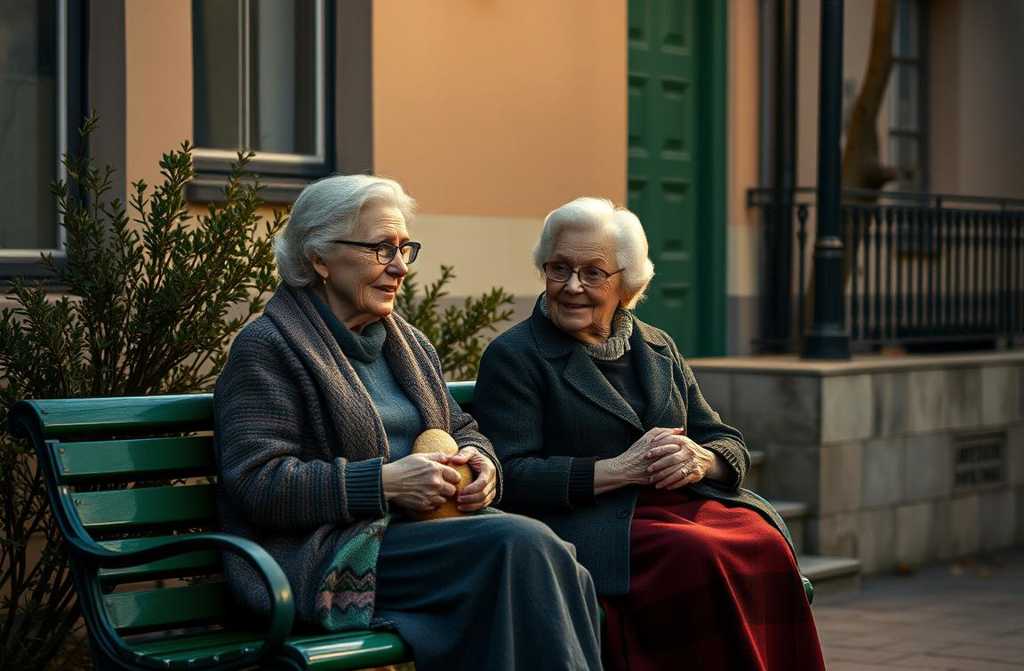
Evelyn Harper could not bear the word vagrant. It sounded harsh and faceless, as though it stripped a person of dignity. She was not a vagrant; she was a woman who had lost her address, a soul wiped from the towns register the way a careless hand rubs away a stray pencil line.
Her former life now seemed alien. She recalled the orphanage in a grey, cabbagesmelling block on the outskirts of Sheffield. From there she went straight to the steelworks, first as a trainee, then as a conveyorline operator. The clatter of machines, the steady hum of the shop floor, the grease that clung to her hands like stubborn inknothing could wash it out. Her first love, Tom, was killed on the same line, crushed beneath a forklift. His funeral in a bleak November left the world drained of colour.
For years she lived alone in a dormitory attached to the plant. Then Arthur entered her life. He was not young, but steady, with calloused hands and tired, kind eyes. He arrived like a longawaited calm after a storm, two solitary islands finding a quiet harbour in each other.
He never suggested a wedding. Why bother with a licence, love? he would say over evening tea. Were already a family, stronger than any seal. Evelyn, craving simple human warmth, believed every word. She came to think the stamp in her passport was merely a formality.
They settled in a modest cottage on the edge of town, beside the railway tracks. The air was thick with smoke, wormwood and a hint of freedom. Together they patched the roof, painted the walls, planted lilacs by the kitchen window and kept a tidy garden. Their days began before dawn and ended after dark, but the house always smelled of cabbage soup and fresh bread. It became her fortress, her hardwon universe.
Then a dark shadow fell over Arthur. Over six months he withered before her eyes, growing quieter, staring at a single point. Doctors were helpless. She tended him, fetched water, boiled broths he could no longer eat. And then he simply ceased to be. Only the lingering scent of medicine, an empty house and a deafening silence remainedno clatter of passing trains could fill it.
In that heavy silence a knock sounded at the door, sharp against peeling paint. On the threshold stood his nephew, a young man in a new jacket, and his wife, her hair tight in curls, eyes cold. They smelled of the citypolished, unfamiliar.
At first they behaved politely, helping with the funeral and bringing provisions. Evelyn, stunned by grief, accepted their aid as a final tribute to Arthur.
A week later they returned with a paper. A printed sheet, its signature shaky and unfamiliar, lay on the table. A will, the nephew said without meeting her gaze. Uncle rewrote everything in our favour. He knew you werent family.
She stayed silent. Words lodged deep in her chest. She turned to a photograph on the dressera shared portrait of her and Arthur smiling amidst the lilacs. The nephews wife sneered, A photo isnt a legal document. By law youre nobody here. A stranger in a strangers house.
They gave her three days. For three days Evelyn drifted in a halfasleep state, an automaton. She did not weep; the orphanage had taught her that tears were useless. She packed a battered travel trunk with the essentials: papers, that very photograph in a frame, a warm woollen scarf Arthur had given her for her birthday, and his favourite chipped mug bearing a faded bear, from which he drank his strong tea each morning. Everything elsefurniture, dishes, curtains she had sewnno longer belonged to her. The house had become a haunt of ghosts.
On the third day the nephew arrived in a car, thrust the trunk onto the porch, avoided her eyes, and stared at his mobile. You understand, Auntie he mumbled. We need a place to live too. His wife cut in, sharp and precise: Keys, please. From every door.
Evelyn placed the bundle on the step, took her trunk, and walked away without looking back. She heard the lock click behind herno slam, just the cold metallic snap that severed her from everything she had known.
She was not taken to the edge of town, nor did anyone bring her a carriage. She walked the familiar road, painfilled and unblinking, toward the railway stationthe only place that came to mind. It was not a stroll but a slow, heavy exile, each step widening the gulf between her and the life she once called hers.
She trudged beside the tracks on a gloomy autumn day, rain stinging her cheeks. She stopped at a fence and watched an electric train streak toward the city. Bright windows revealed silhouettesreaders, sleepers, laugherseach person headed to a home with an address. In her hands only the trunk thumped softly, the mug clinking against its sides.
A woman without an address, a lone figure by the railway.
The station greeted her with roaring echoes, the smell of tobacco, dust and steel. Lights blazed, voices roared, and the hurried crowds with suitcases seemed part of a relentless ritual that left no room for her.
She clutched the trunk close and slipped into the shadow of a massive column. The first night she spent halfseated on a hard bench, her head on the woollen scarf. She slept in fragments, jolted awake by every loud clang or the approach of a police patrol. Her heart thumped, but nothing touched herjust an old woman among dozens.
The second night she found a quieter nook at the far end of the waiting hall, behind broken plastic chairs. She unfolded the scarf, draped it over her shoulders, and fell into a heavy, uneasy drowse. Thoughts tangled: Arthurs face, the locks click, the cold gleam of the rails. She found herself instinctively searching pockets for house keys that no longer existed.
By the third morning survival instinct, honed in the orphanage, spurred her onward. She thought of the old dormitory by the plant where she had lived before Arthura familiar wall, a fragment of normalcy. It was not hope, merely a direction to keep from falling completely.
The walk took hours. The neighbourhood had changed, but the grey, multistorey block still stood. At the entrance, as it had thirty years before, a gatekeeper sat, now a young woman with false lashes and a phone glued to her hand.
Good morning I used to live here. I worked at the steelworks, Evelyn began, voice trembling. May I stay just a couple of nights? Find a place?
The gatekeeper glanced up, surveyed Evelyns threadbare coat, battered trunk, weary face. You fell from the moon, love? she said coolly. Rooms are only for plant workers with passes. Who are you? A pensioner? Go to social services, maybe theyll sort something out.
Evelyn tried to explain, but the words stuck. Ive spent my whole life here, she whispered, but the young woman saw only a faded coat and an old bag.
She turned and stepped outside. Opposite the dormitory stood the same weathered wooden bench, once painted green, where young couples had sat in evenings of her youth. She eased onto it, the trunk beside her, the pale autumn sun striking her face.
She leaned back, closed her eyes. The streets clamor, the rumble of cars, laughter from an open windowall faded into background noise. No darkness fell, only redorange patches of sun. Inside, a deeper silence pressed louder than the stations din. No thoughts of tomorrow, no fearonly the present: the hard boards beneath her and the stark realization that there was nowhere to go.
Hours slipped by. The sun crawled, shadows lengthened, cold crept in. Hunger, long suppressed, began to gnaw. In her old leather purse lay a few hundred poundsher last pension payment before Arthurs death. She left it untouched, as if it were a thread tying her to a vanished life, but her body now demanded sustenance.
She rose, the stiffness in her limbs a reminder of age. She took the trunkafraid to abandon itand shuffled toward a familiar corner shop. Yorkshire Produce still hung above the door, the sign brighter than ever. Inside the smell of fresh bread, vanilla biscuits and sliced ham greeted her. She lingered at the pastry counter, clutching the crumpled note, and bought the simplest loaf and a small bottle of mineral water. She kept the few shillings of change carefully in her purse.
With the loaf wrapped in thin paper, she returned to the bench, as if it were her rightful seat. She broke a piece, the crusts warm scent filling her nose, and chewed slowly, savoring the modest pleasure. A sip of cold water followed.
Night fell, streetlights flickered on, windows in nearby houses glowed. The chill grew. Evelyn wrapped the woollen scarf over her head, curled into the benchs corner, and resolved to wait out the night. Her thoughts stalled, looping: What now? The station? The heating works? She recalled whispers among plant workers about vagrants sleeping in warm boiler tunnels.
From the darkness beyond a park, a slow, shuffling tread approached. An elderly woman in a heavy coat and woollen scarf, pushing a wheeled shopping bag, ambled toward the bench. She paused, glanced at Evelyn, then turned back, only to halt a few steps later, squinting as twilight deepened.
Evelyn? By the heavens, Evelyn Harper? the woman called, voice hoarse with age but unmistakably familiar.
Evelyn lifted her head. In the glow of a streetlamp she saw a face lined with years, cheeks still warm, hair silvered and tucked under a scarf. It was Martha, the mate from the conveyor line, the one who had shared sandwiches and gossip for twenty years, retired early on health grounds. They had last met a decade ago in a clinic by chance.
Evelyn could not find words; she merely nodded, clutching the remaining piece of bread. A tear, unexpected and unbidden, welled in her eyes.
Martha did not ask anything at first. She lowered herself onto the bench, pushing her bag aside. Her warm shoulder brushed Evelyns chilled one.
Luvie how did you end up here? she asked gently, the nickname carrying a weary affection.
Evelyn stayed silent, fighting a tremor that threatened to give way to sobs. She feared that speaking would unleash the flood she had held back for years.
Martha needed no explanation. She glanced at the battered trunk, the loaf, the hollow stare, and recognised the story all too well. They were peers, forged in the same factory furnace, now both standing at a broken branch.
Enough of this whimpering, Martha declared with a firmness born of countless shift changes. Youre freezing. You havent eaten properly. Come with me. Lets have a proper cup of tea.
Evelyn its a bother, Evelyn whispered.
Whats a bother? Martha snapped. We spent half our lives side by side on the line, sharing grief and joy. Now you think youre a burden? Come on, love, Im alone in a tworoom flat, my son lives in Manchester and visits rarely. Youll keep me company.
She lifted Evelyns trunk onto her own cart without a word, as if it were the most natural thingjust as workers pass tools to one another after a shift.
They walked silently through familiar backstreets to the modest fivestorey building where Martha lived on the ground floor. The hallway smelled of cabbage soup and bay leaves, just as it had in Marthas own home years before. Without fuss, Martha helped Evelyn shed her coat, hung it to dry on the radiator, and fetched a pair of warm slippers.
Here, warm your feet. Theninto the kitchen. You look like you could die of hunger, she said, handing a bowl of thick, hearty stew and a slice of black bread, while the kettle sang.
Evelyn ate in silence, then managed a faint nod when Martha asked, Your Arthur he passed?
A simple Yes escaped her, followed by a strained, And his house his relatives
Martha waved her hand, dismissing it as if swatting away a fly. Fine, fine. No point in dwelling on it. Lets get you some rest. My sofas old but not broken. You can sleep here.
Thus, without grand gestures but with steadfast reliability, Martha opened her roof to Evelyn. The small, warm flat, filled with the scent of stew, a crackling radio, and a tidy bed, became the first solid harbour after the wreck. It was a haven named Martha.
A week passed. Evelyn still rose at seven, as habit dictated, and lay awake listening to Martha bustling in the kitchen. The smell of instant coffee filled the airsimple, hot, comforting. Warmth seeped not only from the radiators but from a kind Good morning, from a bowl of porridge set before her, from Marthas mutterings about rising shop prices.
Martha never pried, yet she did not pretend everything was fine. She acted like a seasoned mechanic: seeing a broken gear, she didnt dwell on why it snapped; she looked for the pieces that still worked and fitted them back together.
Your documents, she said over breakfast, sliding a folder of neatly copied papers onto the table. Well apply for temporary registration and transfer your pension to this address.
Evelyn nodded wordlessly. Her world, once narrowed to a bench by the tracks, now expanded inch by inchfrom Marthas sofa to the kitchen, to the hallway, and eventually to the shop, where she left with a list of groceries and returned with a quiet pride in having completed the task.
One evening, watching Martha knit before the television, Evelyn whispered, I thought it was over. That I was just an empty shell, ready to be thrown away.
Martha did not look up from her needles. Empty shells, she scoffed, were the broken parts we wrote off on the factory floor. Youre not a part, love. Youre a person. You can crack, yes, but you can also be repaired. It just takes hands that know how to solder, not robots.
Those simple words held the whole truth. The state, the laws, the paperworkvast, often cold machinescan cast a person overboard if he lacks the proper tag. Yet there is another side: millions of folk like Martha, who understand that former never truly exists. For them, colleague, neighbor, friend are not empty labels but obligations, born of silent, deeprooted compassion: today you are me, tomorrow perhaps I shall be you.
Evelyn saw that Martha had not rescued her out of pity; she had returned her. She gave her back to the world that had erased her, restored her right to a pension, a corner, a cup of tea at a shared table.
She did not act as a hero, but simply as a person carrying out an unspoken, unwritten dutyto keep the human thread alive when the official ropes have snapped.
The road to a normal life was still long, but the first, most vital step had been takennot in a bureaucrats office, but on an old bench outside a dormitory, when one elder recognised another not as a problem, but as a fellow Luvie, and said, Come on.