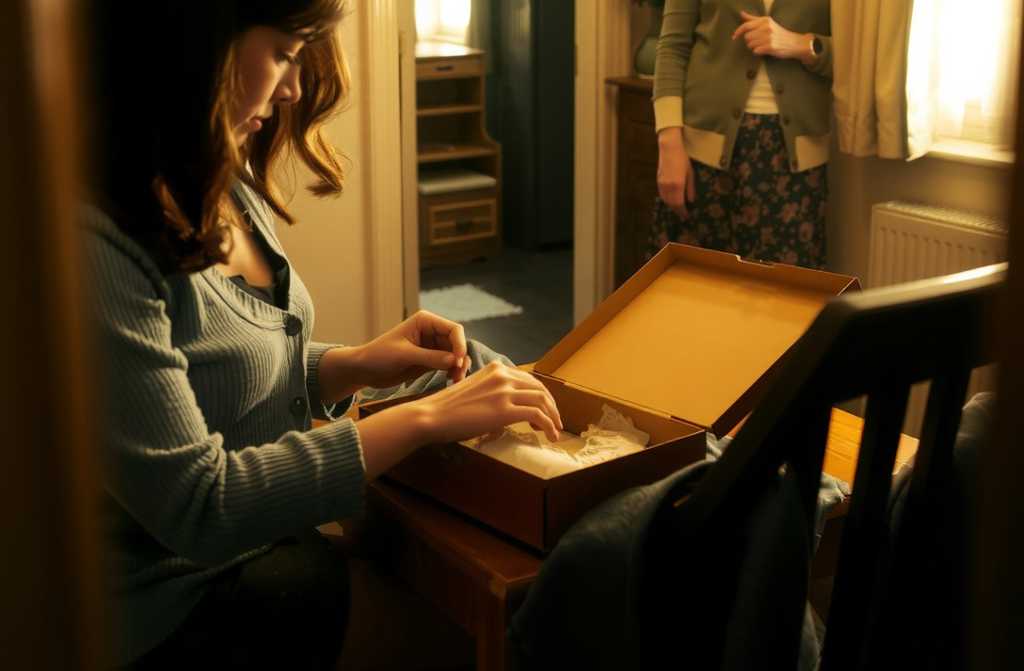
Double-Lined Lingerie
Ellie, just look at this, isnt it lovely? Ive been saving it specially, said Margaret with pride.
Eleanor peered into the box, trying to work out what exactly was supposed to be so delightful. Underwear. Well-worn. The lace fringing the bra was stretched, the elastic in the knickers a little wavy here and there. Creamy whiteprobably once beautiful. Now just someone elses.
Thank you, Mrs. Martin, Eleanor said quietly.
Her voice came out calm, which surprised even her.
Its Italian, you know. I bought it for myself back when I was active in the union. Got it at an exhibition. Very expensive. I always treasured it, only wore it on special occasions. But youre young, youll get use out of it.
Mrs. Martin clasped her hands on her knees, looking at Eleanor as if she were passing down the family heirloom. Eleanor closed the box. Her husband, Thomas, sat next to her, carefully considering the tablecloth.
Tom, at least tell your wife this isnt just any old thing. I looked after it.
Yes, Mum, of course, Thomas replied.
And that was the last of his contributions.
Afterwards, there was cake, then tea, then Mrs. Martin recounted, in excruciating detail, how her neighbour Mrs. Higgins let out her flat to the wrong people and couldnt get rid of them. The tale meandered on, with side notes about the letting agent and the local police officer. Eleanor nodded along. The box sat on the little hallway table, faintly glowing in the dark like something best not dwelt upon.
That evening, when Mrs. Martin left, Eleanor took the box and shoved it as far back as she could on the top shelf, behind all the winter jumpers. Far, so she wouldnt have to see it.
Ellie, Thomas called from the kitchen, do you want some tea?
Yes, please, she answered.
She sat at the kitchen table, thinking she probably should have said something, not rudely, but something. But what, and howit escaped her, and the not knowing was like that wavy elastic: it held her together, but only just.
Mum meant well, Thomas said, still staring into his mug.
I know, said Eleanor.
Thats just her way. Giving something personal means respect to her.
I do get that, Tom.
He looked up. She gave him a crooked smile, and it was enough.
Back then, they still shared the house with his parents. Mr. Martin was a quiet soulworked at the plant, kept out of family affairs, spent evenings with the news or tinkering in the kitchen. Mrs. Martin filled every corner with noise, movement, opinions. She knew the right way to make a stew, how washing should go on the line, how to handle receptionists at the GP, and why the younger generation cant manage their money. Eleanor had lived there for over a year and a half and learned plenty. For example, never leave a cup in the sink for more than twenty minutes. And that no sounded like cheek in that house.
She worked at an architectural firm, mostly drawing up small residential builds, sometimes staying till seven. Thomas worked for a construction company, often off-site. Margaret had retired and ran their home with the vigour of someone who saw it as her main calling.
A week after Eleanors birthday, she came home to find their bedroom furniture rearranged. The armchair sat by the window, the bedside table on the opposite side.
Mrs. Martin, have you moved our things?
Well, theres better light by the window. Saw you reading there.
I do read there, yes. ButId like it if we discussed things before moving them.
Oh, Ellie love, its better this way. Try it for a bit, youll thank me later.
Eleanor silently moved the chair and table back. It took ten minutes. No victory, though, because Mrs. Martin sighed in such a way you knew shed just wait her out.
She told Thomas. He listened.
Mum, really, dont rearrange their room.
I was only trying to help.
Theyll sort themselves out, Mum.
I meant well.
Mum.
Alright, alright. Ill stop.
But she never did. The sighs became even louder than words.
After such exchanges, Eleanor found it harder being in shared spaces. She cooked quickly, lingered nowhere in the hallway, only entered the lounge when called. Small shifts in routine, which formed a habita bad habit. She tightened up, bit by bit, like a jumper washed too warm.
In March, Mrs. Martin entered their room without knocking. Eleanor was sat on the bed shuffling work papers. Her mother-in-law opened the wardrobe, looking for an old cardigan shed accidentally put there once. She found the cardiganand the box.
Oh, see youve put it right out the way. Didnt like it much?
Eleanor searched for words.
I just put it away.
It is Italian, Ellie. Cant get that anymore, not really.
Mrs. Martin, can I please decide what goes where in my wardrobe?
She said it softlyno raised voice, but something was different. Mrs. Martin stared at her for a moment, grabbed her cardigan and left.
At lunch, the conversation was about the weather, the forecast for rain, and how potatoes had gone up again in Tesco. Eleanor ate her soup, musing that personal boundaries in families arent brick walls or moatstheyre matters you must explain, over and over, because some people simply dont see them. Not through malice, but because, to them, those boundaries dont exist.
That evening, their neighbour Mrs. Lloyd came by. In her sixties, she lived opposite, sometimes borrowing salt or an egg before payday. Eleanor opened the door and found her holding a jar of homemade jam.
Ellie love, made far too much plum jam. Fancy some?
Thank you, please do come in.
Mrs. Lloyd came in, set the jar in the kitchen, had a look round. You seem a bit flat today.
Just tired.
Hmm.
They chatted in the kitchen. Margaret had gone to the shops. Mr. Martin dozed in the lounge. Eleanor poured tea and, unexpectedly, told Mrs. Lloyd the whole story: about the gift, the wardrobe, the rearranged chair, how it was hard to say anything when the answer was always I only meant well.
Mrs. Lloyd listened quietly, stirred her tea though she hadnt added sugar.
You know, love, picking a row with folk like that is a waste. They never hear an argument. What they hear is when something becomes a fact. Not a conversationa fact.
How do you mean?
You dont explain with words when it upsets you. You do something they have to notice, but without drama or nastiness. Let her work it out herself.
Eleanor stared at the jama rich, nearly black, purple. Beautiful in its way.
You mean
I mean, clever responses rarely sound like speeches. Thats all Im saying.
Mrs. Lloyd left. Eleanor sat alone in the kitchen for a while. Then she fetched the box from the high shelf and set it before her on the table.
She opened the lid, really looking at the contents for the first time. Three itemsbra, two knickers. The lace had once been fineshe could tell by its weight and the way the threads lay. But still, old, worn, someone elses.
Eleanor considered a long time. Then she dug a length of linen fabric from the cupboard, found thread, needle, and a little bag of lavender meant for wardrobes. She returned to the kitchen and got to work.
She unpicked one of the bras, laid out the lace. From it, she made a small sachetsturdy, neat. Inside, she tucked lavender and some dried mint from the kitchen. Then, with thicker thread, she embroidered three small letters on the sidenot a word, just M.J.her mother-in-laws initials. It took forty minutes and the letters wobbled a bit, but it was homely, real.
One pair of knickers was in better nick. She decided to give those to the local shelter around the corner. They took donations there.
The last set she folded neatly and placed it back in the box.
She opened her laptop and began a letter. Not by emailby hand, with printer paper and a biro. Multiple drafts went to the bin before she landed on the right words. No blame, no complaintsjust honesty.
Mrs. Martin, Ive thought a lot about your gift. I can see you invested something personal in it. But, truthfully, I cant wear someone elses underwear. Not because I dont appreciate the gesture, just because thats my way. I turned some of the lace into a lavender sachet, which now makes my wardrobe smell lovely. Ill pass some along to people who need it. The rest Im returning. I just want things between us to be honestnot to argue, just so we can understand one another. Eleanor.
She slipped in a photo shed once found in an old albuma snapshot of a young Margaret in a summer dress, stood by some fence, staring off with a lightness rarely seen these days.
The next day, Eleanor popped into the little lingerie shop she knew. The selection was simple but good quality. She chose a practical, comfortable setsoft grey cotton with just a hint of stretch. She knew the size from the old underwear. She asked them to wrap it nicely.
She put the gift bag, the letter, and the box together. The sachet got its own little paper envelope.
On the 8th of March, the family gathered. Mr. Martin made cold soup, though it was still chilly outside, because thats all he knew besides fried eggs. Thomas brought daffodilsthree stemsthen squirmed a bit when his mother joked that daffs are for funerals (though shed never said so before, just a flat joke). Eleanor got a honey cake from the bakery near work.
After lunch, dishes cleared, Eleanor stood.
Mrs. Martin, I have something for you.
She brought out the bag, the kraft envelope, and the boxall together.
Whats this? asked Mrs. Martin.
My answer, and a letter, replied Eleanor.
Thomas watched as if unsure whether to leave or stay. He stayed.
Mrs. Martin smoothed the letter on the table and read, carefully. Eleanor watched, bracing for hurt, or shrillness, or that deep sigh that makes the whole room ache.
But Margaret finished, went quiet, then picked up the photograph. She stared at it a while.
Oh, I remember this, she murmured, not really asking. Remembering.
I found it in the album, Eleanor said. Youre beautiful in it.
I was twenty-four. Me and George, out at his parents country cottagethats their garden fence.
Pause. Mr. Martin looked, nodded, went back to his tea.
Eleanor, Mrs. Martin finally said. Her name sounded gentler than usual. I didnt mean to offend you.
I know.
I kept that set for years, because it was beautiful. Thought youd be pleased.
I do understand. But its just difficult for me to wear other peoples thingseven lovely ones. Its not about disrespect, its just who I am.
Mrs. Martin picked up the sachet and gave it a snifflavender and mint; the initials stitched in wobbly thread.
You did these?
Yes.
A bit wonky.
Im no expert, smiled Eleanor.
Margaret attempted a similar gestureclose to a smile.
Whats in the bag, then? she indicated the wrapped gift.
Its for you. New. I chose something that seemed comfortable.
Very deliberately, Mrs. Martin unwrapped the new setsoft, pale grey cotton.
Feels lovely, she said, fingering the fabric. Expensive?
Not really. Just decent.
You know, Ellie, in my youth I loved nice lingerie too. Just for myself. Not to show anyone, just so I knew it was there.
Eleanor was surprised by the confidence and honesty of itno shell or bravado, just real feeling.
I think that matters, Eleanor said. To have something just for you.
Yes. Then, you stop noticing. Kids, housework.
But you can always start again, Eleanor replied, softly.
Margaret studied her for a moment, then tucked the set back in the bag with care.
Thank you, love.
It didnt sound like a thanks for cakeit meant something else. Eleanor left it at that. Some things are better unsaid.
The week before, shed dropped the donated knickers at the shelterjust a little ribbon-wrapped bag in a collection bin. No fuss.
Later she visited again and got chatting with one of the women there.
You left some underwear last time, she said. It was gone almost instantly.
Really?
A woman said it was just her size. Funny how that happens.
Eleanor walked home, realising that possessions have lives of their ownwhats surplus to one finds a use for another. Not wisdom, just the way of things.
After the 8th March, something began to shift. Quietly, subtly. Like the change of light with the seasonstheres no clear day it happened, only that it was different now than yesterday.
Sometimes Margaret knocked before entering their room. Not always, but she never used to. Now, she sometimes remembered.
Once, she even called before coming into the kitchen where Eleanor was lost in paperwork.
Ellie, are you in there?
Yes.
Im just popping in for the salt.
It was oddly funnyliving in the same house. But Eleanor said, Come in, and felt a small but real relieflike a bubble surfacing.
Thomas noticed the change. One evening, as they lay in bed and the house was quiet, he said,
You did something, didnt you?
What?
Dont know. Mums different. Calmer.
Shes just tired. Marchs been hard.
No, he said. Its something else.
Eleanor turned away. Rain was pattering at the windowso faint you might almost count the drops.
In April, Margaret offered to hand over the spare keys. Everyone had a set, but now shed decided they should keep themin case.
You take them, she said, placing them in the hall. You need them more.
Eleanor took them in silence. Sometimes you have to accept a gesture quietly, so as not to break it.
In May, Thomas brought big news from worktheyd been offered a flat in the next neighbourhood. One bedroom, but their own. For a year, possibly longer.
Mum, we think well move, he said over dinner.
Margaret was silent, then replied,
Thats how it should be. Best for young ones to live on their own.
Mr. Martin noddedhis usual contribution to decisions outside his sphere.
You wont be upset? Eleanor asked.
Only if you dont visit, said Margaret.
We will, said Eleanor. And for once, it felt genuine.
They moved in June. The flat was small, with low ceilings and a view of a courtyard where an ancient acacia grew. Mornings, the window let in a scent that made Eleanor want to stand and just breathe. She bought floral curtains. Thomas brought the little side table from his parents, and they set it up by the window.
Nice, Thomas said, surveying their new home.
Yes, it is, agreed Eleanor.
Not ecstatic, but rightlike stepping into shoes that finally fit.
In August, Eleanor discovered she was expecting a baby. She sat in the bathroom with the test for ages, then came out and told Tom. He asked her to repeat, then hugged her with a choked Alright then. Eleanor understood everything was fine.
They told Mrs. Martin a week later, when she visited their flat for the first time. She rang ahead, brought pickled onions and a cabbage pie.
Mrs. Martin, we wanted to tell you Eleanor began.
Oh, I guessed, said Margaret. Your face looks different.
How?
Calm. This kind of calm.
She gestured vaguely, but Eleanor understood.
Im glad, Margaret said, simply. No fanfare.
That was the word that mattered. Not overjoyed, not finally, just glad.
In September, Margaret phoned Eleanor herselfunusual, as Mr. Martin normally made calls in an emergency.
Ellie, somethings wrong with me.
What is it?
My head. And like a band around here.
Im coming.
Eleanor got there in twenty minutes. Margaret lay under a blanket, pale and a little lost. Eleanor took her blood pressure, handed over a tablet from the family first-aid tin, called 111 to be safe. While they waited for paramedics, Eleanor talked gentlyabout trees outside, a new cake at the local bakery, how Tom had finally fixed the leaky tap.
The paramedics came, reassured her, said to relax and watch the salt.
Less salt, Margaret muttered, as if theyd asked her to give up the house.
Yes, less salt, Eleanor agreed.
Once the medical team had left, Margaret asked for help getting comfy. Eleanor bent closer and saw, beneath the nightie, the gentle grey cottonher gift, now worn close.
She straightened up, said nothing, and tucked the blanket in. Margaret closed her eyes.
Have a restshout if you need me, said Eleanor.
She went to the kitchen. Here, a lime tree stood outside the window. Its yellowing leaves were a soft sign of September. Eleanor gazed out, feeling something peaceful and smallnot a triumph, not joy. Just peace.
Mr. Martin came out, nodded his thanks, and returned to his room. No more needed.
In October, Margaret visited again, this time with jars of jam and three neat cardboard boxes, each labelled in her tidy hand: Pasta & Rice, Spices, Teas.
Thought these might help keep your kitchen tidy, she said.
Eleanor picked up the rice box.
Thank you. I had meant to sort that myself.
Well, now its done, replied Margaret, almost content.
Just ring ahead next time, said Eleanor, so Ill be in.
But I did phone, said Margaret, surprised.
You did, Eleanor agreed. Thank you.
They drank tea together. Margaret tried the honey cakepronounced it too sweet, then helped herself to seconds. She took out her mobile and showed Eleanor a photo of a dress from a catalogue.
Reckon this would suit me?
It would, yes. That colours perfect.
You think so?
I really do.
They talked a while longerabout pickling, vitamins for mums-to-be, how Mr. Martin wanted a new TV. Eleanor listened, replied, and it felt easyjust everyday conversation about family life.
On leaving, Margaret paused in the doorway.
Ellie, Ive been thinking. When the baby comes, I could help out, if you want.
Ill need it, said Eleanor.
Well then. Ill call first.
Do.
The door shut. Thomas came in from the bedroom, where hed been reading.
Long visit?
About an hour and a half.
All fine?
All fine, Eleanor replied.
Really? Or just saying?
She looked at him. He waited with that careful hope of someone too used to tension to believe its gone.
Really, Tom.
He noddedtrusting her, knowing the difference.
By New Year, their separate home was official. The work flat was renewed, but theyd started hunting for something larger. The child was due in Februarytime for a proper place.
In December, they found a two-bedroom in the next blockbright, newly done up, with a storage room. Thomas visited several times, measuring and negotiating. Eleanor came once, saw the window and said, Well take it.
Sure?
The lights good, the ceilings are high enough.
They moved in January. It was bitterly cold, boxes hauled while bundled in coats. Margaret came to help with the kitchen: unpacking dishes, asking where things went, and cruciallynot rearranging without permission. Progress, albeit small.
Cups here, said Eleanor.
Bit low.
Works for me.
Well, youd know best, Margaret conceded and put the cups where Eleanor told her.
On February 8th, their daughter was born after a long labour. Thomas waited, nervous, in the corridorsaid later it was the hardest day of his life, though hed only paced. Eleanor, clutching the midwifes hand, had fleeting thoughts about buying nursery curtains, which somehow anchored her through it.
They named the little girl Alice.
Alice was tiny, red, loud. Eleanor stared at her, knowing little yet, as it takes time to understand. At first, you just watch. You hold.
Margaret visited the next day, bringing broth in a flask and a soft blanket, gazing at Alice through the nursery window.
She looks like Tom, she remarked.
Thats what everyone says, replied Eleanor.
Well, quite right. Let her take after her dad.
She touched the glass gently, as if Alice might feel it.
Beautiful, she saidquietly, matter-of-fact.
At home, Eleanor found a letter in a plain envelope marked simply Ellie. Margarets writing, clear and firm.
Eleanor opened it, unfolded the sheet:
Ellie, I wanted to write this, because it’s easier than saying, and maybe Ill forget later. Ive thought about it a lot. You joined our family and I wasnt always fair to you. I did what I knew, not always right. You never shouted or said anything sharp. You did things differently. I didnt get it at first, but I do now. I want you to know: youre not my daughter. I have a daughtershe lives elsewhere, and youve not met. You, Ellie, are you. Thats more than enough. Margaret.
Eleanor read it twice.
Thomas came in holding a cup of tea.
Whats that?
Something from your mum.
Is everything alright?
Yes. All good.
She tucked the letter away with important papersnot out for all to see, just safe.
Next Mothers Day, Margaret arrived with a small envelope. Inside: two tickets for a local art exhibition. Not a show or moviepaintings by a local watercolourist.
These for us? asked Eleanor.
For the two of us, said Margaret. Tom wont go, not his thing. We can, though.
We can.
Theres a note too, she said, avoiding Eleanors gaze.
Eleanor took the slip of paper. Brief, without ceremony: If youd like to talk, we can. If not, we can just walk round quietly. Either suits me.
Eleanor looked up.
Alice slept in her cot, Thomas was in the kitchen rattling mugs. Outside, Marchs snow melted as it does in England: too quick and awkward, never sure of itself.
Either suits me too, said Eleanor.
Margaret nodded. She stood when the baby woke and was first to the nursery doorpausing, turning back.
May I?
Of course, said Eleanor.
Another quiet victorysmall, nearly invisible, but real. One only you and the person who loves you need to know about. No need for celebration or toasts, just knowledgeand thats enough.