My House Isnt Mine
Helen set the carrier bags down by the front door, leaving her shoes on, and walked into the lounge. Something felt off. She sensed it instantly, the way you feel a draught before knowing which window is open.
The blue vase wasnt in its place.
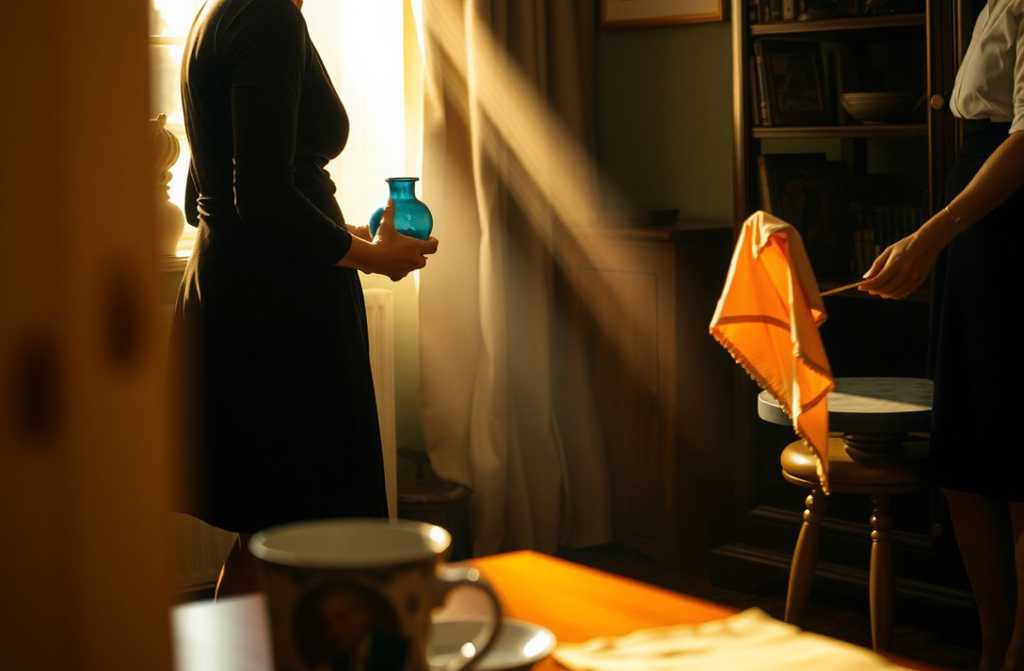
Small, with white blossoms painted on the sides, bought at a market in Bath seven years agoit had always lived on the right-hand edge of the living room window sill. Always. Helen put it there so shed see it from her reading chair in the evenings, the blue always calmed her. But now the vase was in the middle, slightly turned, and beside it, between the vase and the wall, was a damp cleaning cloth.
She stood frozen, kettle in hand, staring at the windowsill. Her throat tightened with dryness.
Tom, she called quietly.
Her husband came out from the kitchen, tea towel over his shoulder, munching on something.
Whats up?
The vase is out of place.
Tom looked at the windowsill, then at her, then back.
Its just the vase. Whats the problem?
It always goes on the right. I put it there. Tom, whos been in the house?
Mum popped round, he said, meaning Aunt Hilda. Hed called her Mum since hed moved in with her at fifteen, after his parents died. She watered the plants. You asked her to keep an eye while youre at work.
I asked her to check on the cat. Not rearrange my things.
Helen, she just wiped down the windowsill. Its not a big deal.
Its nothing, Helen replied, and went to move the vase back.
Tom lingered in the doorway, then went back to the kitchen. Soon, the smell of fried potatoes and the sizzle of the pan drifted through. Helen set the vase firmly back on the right, straightened it, checked it. Then she picked up the damp cloth between two fingers and took it to the bathroom.
Nothing serious. She wiped the windowsill. It happens.
Except Helen had never asked Hilda to check on the cat. After all, they didnt have one.
***
Aunt Hilda hadnt suddenly entered their lives. Helen had known her ever since she met Tom at a mutual friends office party twenty-six years ago. Helen was twenty-six, Tom twenty-eight, and hed spoken of Aunt Hilda with a warmth that made Helen think she must be a saint.
Then shed met her.
She was a small, precise woman with permed hair and a gaze that managed to smile and weigh you up simultaneously. She welcomed Helen into her flat, offered tea and jam, said a few kind things about Helens blouse and hair, and then, when Tom stepped onto the balcony for a call, asked in a level tone: So, dear, how long have you been working? Accounting, you say? Thats good, dependable. Not as good as university, not engineering, of course
Helen put it down to the awkwardness some older people have. Just small talk.
Tom explained later that Aunt Hilda was just a little blunt, but very kind. Sweet, really. Helen believed him because she loved Tom and wanted to believe.
They married within a year. Bought a house in a new part of town, near the factory where Tom worked. Aunt Hilda lived in a much older neighbourhood, forty minutes on the bus. The distance seemed enough. Helen thought things would be fine.
The spare key appeared in their third year together. Tom came home and set it down on the hallway table.
Why? Helen asked.
Mum worries. In case something happens when were both out
What could happen, Tom?
Shes getting on, you know. It makes her feel calmer if she has a key. You understand.
Helen did understand. She came from a little town where everyone trusted everyone, spare keys hung by the door for neighbours. The reasoning made sense. She just didnt see, then, that the key and the reasoning rarely have much to do with each other.
More than twenty years passed and they found their rhythm. Aunt Hilda came round every Sunday, sometimes on Wednesdays, cooked up a stew or baked pies, and during those hours, Helen made herself busy. Shed read in the bedroom. Do work reports. Or simply avoided the kitchen; there was always a sense of being crowded with Aunt Hilda there, even if it was just the two of them.
But in the past six months, something shifted. At first, Helen couldnt quite place it. Just something wasnt right.
***
The earrings went missing in early October.
Small, silver, with amber drops. Her mum had given them to Helen for her thirtieth, three years before passing away. Helen always kept them in a blue trinket box on her dressing table. Not out of fear of losing themjust habit.
She opened the box one Friday night, and they werent there.
She checked everywhere. The drawers, under the dressing table, her dressing-gown pockets, the tin of spare buttons. Nothing.
Tom, have you seen my earrings? The amber ones Mum gave me?
Tom glanced up from the telly.
No. Where did you leave them?
In the box. As always.
Maybe you put them somewhere else?
For twenty years Ive kept them here. Where would I put them?
He got up, went into the bedroom; together, they checked again. Nothing.
Perhaps you lost them out? Did you wear them lately?
Last week, to the theatre. You remember, we went together.
Maybe you dropped them there.
Id have noticed.
He shruggednot unkindly, or annoyedjust the way you do when you have no answer and dont think much about the question. Helen lingered in the bedroom a bit longer, then went to the kitchen to put the kettle on.
Aunt Hilda came that Sunday, brought apple tart, spoke a lot about a neighbours sons awful marriage, shop prices, her blood pressure. Helen listened, nodded, her eyes drifting now and then to Hildas large, brown leather handbag. It could fit almost anything.
She felt ashamed for thinking it and got up to slice the pie.
The earrings turned up three weeks later. Helen found them tidily wrapped in a scrap of old pillowcase fabric, tucked in the pocket of her winter coat, which shed just fetched down from the loft.
She stared at them for a long time. Then put them on and made dinner.
Shed never, in her life, put earrings into her coat pocket.
***
In November, a photograph disappeared.
Not gone entirely. Just moved somewhere. It was a small black-and-white photo in a frame: Helens mum, looking twenty-five, taken outdoors somewhere. She was laughing, squinting at the sun. Helen adored this photo above all the others. It stood on the bookshelf, between a slim volume of John Betjeman and a small wooden elephant.
One evening, Helen came home and saw the photo was missing. The elephant was shifted, the Betjeman too; now there was just a gap.
She searched the shelf, then the whole bookcase, then the room.
Tom, did you take mums photo?
He looked baffled.
Which photo?
The black-and-white one. In the frame. It was on the shelf.
I didnt take it. Why would I?
Its gone.
He stood, checked the shelf. Scratched his head.
Maybe you put it somewhere and forgot?
Tom, I havent moved that photo in twenty years.
Maybe you knocked it off cleaning and it slipped behind the furniture
They moved the furniture, checked under the bed, behind the wardrobe and sofa. Nothing.
Helen wanted to ring her mum. Only, her mumd been gone for years. She knew it. Sometimes, in panic, your mind turns towards the safest place.
She found the photo herself a week later. It was in the box of Christmas decorations in the loft, frame side down, covered by a sheet of newspaper.
Helen pulled it out, cleaned the glass, and set it back between the Betjeman and the elephant. Then she sat a long while in her chair, gazing at her mums face, laughing and squinting in the sun.
Her throat felt tight. Not from tears; from something else.
***
The conversation happened at the end of November. Helen had planned it for ages, rehearsing phrases in her mind as you move furniture around for guests.
They sat after dinner. Outside, it was snowing for the first time this year. Tom flicked through the paper, Helen wrapped both hands round her mug.
Tom, I need to talk.
Mmm? he said, not looking up.
Tom, this is serious. Please put the paper down.
He did. Looked at her closely. Maybe saw something in her face, because his expression changedhe was more attentive now.
Whats happened?
Aunt Hilda comes here when were out.
Weve been through this.
She moves my things, puts them away. The earrings ended up in a coat I havent worn in years. Mums photograph ended up in a decorations box. The vase
Helen, he started, with that soft, steady tone shed begun to recogniseand dislikeMum just wants to help. Tidying, rearranging, she thinks its better that way
Does she think its better to hide my mums photo in the loft?
Perhaps it fell and she stowed it away safe
Tom.
What?
Helen set her mug down slowly, precisely.
Im losing my mind. Do you understand? I search for things I put somewhere, and theyre suddenly elsewhere. I remember putting the photograph on the shelf, and you say maybe I moved it myself. I dont do that. Im very careful with my things, and you know it.
No ones saying Sometimes by the end of a tough work week, youre tired, maybe move something and forget.
Helen went to the kitchen to wash up. She scrubbed her cup far longer than necessary.
Snow fell outside.
***
The talk with Aunt Hilda took place the next Sunday. Helen stayed in the bedroom with a book, catching the sound of voices from the kitchenToms, calm and low, then Hildas, at first level, then rising, finally tearful.
Then silence.
Then footsteps; Tom appeared in the bedroom doorway.
Could you come out?
Helen went.
Hilda sat at the kitchen table, as if shed just survived a catastrophe. Her eyes were wet, handkerchief bunched in her hands.
Helen dear, she said, voice trembling, I do worry so. I only ever meant well. I just wanted to give a tidy and a dust while youre out, help you. I never thought it would upset you. Youre like a daughter
Helen met her gaze. The misty eyes, the handkerchief, the hands.
Aunt Hilda, she said evenly, Id be upset if anyone moved my things without asking. Its not personal.
Of course, of course, my dear, Hilda nodded. Youre right. Im old, set in my ways, forgive me. I wont do it again.
She stood, kissed Helens cheek. Smelled of lavender water and something medicinal.
Dont be angry with an old fool. I really did mean well.
Helen managed a smile, just muscle memory.
After Hilda left, Tom hugged Helen from behind, face in her hair.
See, its all OK. She just didnt think.
Yes, Helen agreed.
She believed it about as much as she believed, in childhood, the stories about foxes just wanting to help the hens.
***
The brooch disappeared in December.
By then, Helen kept a kind of mental inventory. Not on paper; just in her head. Vase. Earrings. Photograph. And now brooch: small, enamelled, a green branch with gold-tipped leaves. Her mums, picked up decades ago in Brighton.
It lived in the same blue trinket box as the earrings. Helen had seen it there the previous Tuesday; by Friday, it was gone.
This time, she didnt tell Tom straight away. She just methodically searched bedroom, house, as you do when something precious goes missing. It was nowhere.
She wrote in her notepad: Mums brooch. Had on Tuesday, 5 December. Gone by Friday, 8th.
Then sat on the bed, staring at the wall.
Hilda had visited on the Wednesday, Tom mentioned, brought pickled onions and put them in the fridge.
Helen ate them on Thursday. They tasted fine.
***
The idea came to her at three a.m.
She couldnt sleep. Watched the ceiling, listened to Toms regular breathing beside her. She thoughtnot about being wronged, or about fairness. Just: how can I know for sure?
A small camera.
Shed seen ads onlinetiny things, barely larger than a thumb tip. Hide them anywhere, recording onto memory cards.
Helen rolled over. Tom mumbled in his sleep, tugging the duvet.
She thought, maybe she did sometimes move things and forget. Maybe she was tired from work. Maybe Hilda was simply a clumsy old woman meaning well. That emotional abuse often starts with tiny doubts planted about your own mind.
But she also thought about her mums brooch. The enamel, the gold edge, Brighton, decades ago.
At six, she got up, turned on the computer, and ordered a tiny camera for next-day delivery.
***
The camera arrived the following afternoon, in a small brown parcel. Even smaller than she expected: black, with a pinprick lens. She charged it, put in a memory card, considered where to hide it.
She settled on the bedroom shelf, inside a small basket of yarn balls. Pointed it at the dressing table and wardrobe. Switched it on.
She said nothing to Tom.
Not out of deceit. She knew that if she said anything, Tom would tell Hilda. Not out of malicehe just wasnt built for secrets from those he loved.
Nothing happened for three days. Then, one lunchtime, Tom texted: Mum popped in, took my jacket to the dry cleanerbless her.
Helen put her phone in her desk drawer, opened the budget spreadsheet, and stared at it until five oclock, not thinking about anything else. Thats called work.
That evening, after Tom had fallen asleep, she took the camera from the basket, slotted the card into her laptop.
There were a handful of clips, triggered by motion.
The first three: the neighbours cat, somehow on their outside window ledge. Helen almost smiled.
The fourth: Aunt Hilda.
She came into the bedroom around half past eleven. Unhurried, like she belonged. Paused in the centre, surveyed the room. Then she went to the dressing table, opened the trinket box, sifted through it, took some things, moved some, opened the top and bottom drawers of the chest, methodically began flicking through folded jumpers, looking behind the stacks.
Then, going out, she stopped by the bookshelf. Picked up the wooden elephant, examined it, put it down three centimetres to the left. Then she left the bedroom.
Helen stared at the laptop screen.
She felt no triumph or relief. Only a quiet, stubborn kind of sadness. As if a thing you didnt want to believe had just been made real.
There was a fifth clip.
This time, Hilda entered the kitchenthe camera didnt reach there, but the sound of cupboard doors opening came through. Then footsteps. Then she reappeared in the bedroom, holding a mug. Helen recognised it at once: big, with a painted cat in a top hat, bought last year on a whim in Whitby. Helen used it for her morning coffee.
Hilda looked at the mug, snorted, and said distinctly to herself, though the house was empty, Old crockery belongs in the bin.
She went to the kitchen. A moment later, the unmistakable clank of the bin lid.
Helen closed the laptop and sat in the dark. Then she quietly lay next to Tom, careful not to touch, and stared at the ceiling until half past four.
***
In the morning, she made coffee and drank it from a different mug. The one with the cat had vanished. No surprise.
Tom drank tea, scrolling through his phone, while Helen watched him: his face, heavier now with the years, still as familiar as ever. He looked up, met her gaze.
Whats wrong?
Nothing. Eat your breakfast.
She waited until the evening. Tom came back from the factory just after seven, a bit tired but in a good mood. They had dinner together, talked about maybe going to the Saturday market for Christmas tree ornaments. Helen made soup, he complimented her. Everything seemed normal, except that something inside Helen sat quietly and waited.
After dinner, she brought out her laptop.
Tom, I want to show you something.
He looked at her carefully.
Is it important?
Yes.
She opened the files. For a moment, she thought about explaining, but decided not to. She just pressed play.
Tom watched.
At first, calmly, searching for an explanation, brows slightly furrowed. But as the video progressed, especially the bit with the drawers, Tom leaned in. Then, the mug and the words about the bin, he straightened up, eyes darting away.
A long silence.
You set up a camera, he said.
Yes.
You didnt tell me.
No.
Why?
Helen hesitated.
Because youd tell her. Not as a betrayal. You just wouldyou two are close.
He didnt argue. That, itself, was an answer.
They sat in silence. Then Tom stood, paced the kitchen, stopped by the window. December outside, dark and snowy. Streetlights glowing amber.
So, the earrings he started.
Were in my coat pocket.
And the photo
In the box with the decorations.
He pressed his hands to his face for a long moment. Then rubbed them down, looked at her.
Helen, I
Dont, she said quietly. Just speak to her.
***
Tom spoke to Hilda the next day. Helen was home, but stayed in the bedroom, door ajar.
Hilda arrived with a pie, as though nothing had happened. She was loud and cheery in the hallway, talking about the weather, neighbours, her blood pressure. Tom said something in a low voice, and she stopped.
The conversation moved to the kitchen.
Helen caught snatches: Hildas voice first shocked, nearly indignant: What camera? Then something lower, indistinct, probably Tom explaining. Then Hilda again: I only I didnt mean I thought
A long pause.
Then Hildas voice, suddenly tearful, or nearly:
You dont love me. Twenty years Ive acted as your mother, and nowsetting cameras on me? Shes always disliked me, shes set you against me
Mum, Tom saidhis voice now soft but resolute, a tone Helen rarely heard. I saw the video. You threw away Helens mug.
It was old, I thought
Mum. The keys.
Silence.
What do you mean, keys?
I need you to give them back.
Longer silence. Helen sat perfectly still.
Youre casting me out, said Hilda, her tone turned cold and strange. Turning your own mother out.
Youre my aunt, Tom said softly.
Im your mother!
Mum, pleasethe keys.
Another pause. Bags rustling.
Then the scrape of a chair, footsteps, and an odd sound. Helen didnt realise straight away what it was. Then: Hilda collapsing onto a chair. Or the floor.
My heart, Hilda said weakly. Tom my heart I dont feel right
Helen came out of the bedroom.
In the kitchen, Tom stood over Hilda, who was clutching her chest, looking greyor so it seemed.
Ambulance? Helen asked.
Yes, Tom replied.
They called. It came in twenty minutes. The paramedic, a tired-eyed young woman, checked Hilda over, gave her an injection. Said her blood pressure was up, she should go into hospital for checks. Tom went with her.
Helen stayed. Washed mugs, wiped the table. Then she sat for a long time in her armchair, staring at the bookshelf where the wooden elephant stood.
It was out of place. Three centimetres to the left.
Helen got up and moved it back. And for some reason, that small gesture made her throat ache fiercely.
***
In hospital, Hilda was put in the general ward. Her condition wasnt serious: blood pressure, mild arrhythmia, nothing alarming, said the duty doctor over the phone. Shed be kept for a few days.
Tom visited every day. Came home quiet, reflective. Ate what Helen cooked, thanked her, almost never mentioned Hilda. Helen didnt ask.
On the third evening, he sat beside Helen on the sofa and took her hand.
Helen. I want you to know. I believe you. I should have believed you before.
She didnt reply. Not out of anger. Sometimes words need time.
I dont want her coming here anymorewithout us, I mean. Ive got her keys.
Helen looked at him.
How are you? she asked. You?
He paused.
Rotten, he admitted. I love her. She brought me up. But that doesnt mean doesnt mean its right. I know that, in my head. In my heart, its messy.
I know, Helen said.
They sat together, quietly. The TV murmured in the background. Helen felt his hand on hers.
Mums brooch is definitely gone, she said after a while. Ive looked everywhere.
Maybe itll turn up, Tom saidnot convincingly, just as people do when nothing else can be said.
Maybe.
The fourth day, Tom stayed longer at the hospital. Helen made dinner and waited. He phoned at seven: Ill be late, be home soon. Something odd in his voice. She asked, Everything alright? He said, Yes. Ill explain later.
He got in at eight. Took off his coat and shoes, came and sat in the kitchen. Helen served him dinner.
He didnt eat, just stared at his plate.
Tom?
He looked up, met her gaze for a moment and, in a low, tired voice, said:
I overheard her talking. By accident. She was on the phone to her friend, Dorothy. I walked in, she didnt see, the ward door was open
Helen froze.
He paused, as if checking the words.
She said: I made up this hospital stay. Let him stew, the ungrateful whelp. Hell give my keys back, be as good as gold.
The quiet in the kitchen grew heavy.
Word for word? Helen asked.
Word for word.
Helen put down her knife, washed her hands thoroughly, dried them, hung the towel back up. Everything deliberate, precise.
And what did you do?
Nothing. Waited a minute. Then turned round and left. She didnt notice me.
They sat a long while. The dinner cooled.
Im sorry, Helen said finally. Not about herself, the earrings, not about the mug. About him. Because it hurts, when someone you love turns out to be not quite what you thought.
Tom nodded. Finally picked up his fork. Ate, slowly, tasting nothing, she guessed.
***
The next day he went again, then came home two hours later and asked for tea.
I picked up her things.
How is she?
Fine. Blood pressures normal. She can go home tomorrow. Dorothy will collect her.
Helen made tea, set out a mug for him.
Did she say anything?
Plenty. He cupped his hands round the mug. She cried. Said I was a stranger now, that my wifes turned me against her. That shes done so much for me and Im ungrateful.
And?
I listened. Then told her I love her. That Ill always help with money, whatever she needs, and she can always call. But she cant come to our house anymore. And she wont have keys.
He stopped. Stared into his tea.
She said Id betrayed her. Chosen a stranger over family.
Helen didnt answer. Some things need no reply.
Ive transferred her some money, he added. Should last months. Ill do it again.
Youre a good man, Helen said.
I dont know if its goodness. I just cant help it. After all, its been twenty years.
They sat in silencea different kind now. Not the tension Helen had lived with for months. More like the hush after a storm, air still tinged by rain but the sky brightening.
***
Helen accepted that Mums brooch was gone. It stung. The green enamel, the gold trim, Brighton, years ago. A piece of her mums youth that only lived on in a black-and-white photo.
She phoned Dorothy. It was awkward, nearly unbearable. But she called.
Dorothy was nervous and apologeticsaid she knew nothing about any brooch, would mention it to Hilda, hoped it might turn up.
A week later, Hilda rang Tom, clipped and frosty, swore shed never taken the brooch. That Helen only wanted to blame her.
Helen wrote in her notebook, with the list of missing things: Will not be returned.
She drew a line.
Some things arent returned. It doesnt mean you have to forget themthey just stay, back where theyre gone. In Brighton, in a past youth.
***
In January, Tom suggested seeing a counsellor. Helen was surprised. It wasnt his way; he was more of a just get on with it type.
Are you serious? she asked.
Yes. I spoke to my mate Nick from work, his wife went. He said it helped. Just to talk to someone, get an outside perspective.
Did you want to go together? Or by yourself?
Together, if you dont mind.
Helen didnt mind. The word counsellor seemed modern, not quite them. But why not? What did they have to lose?
They found someone by recommendationa short, calm woman in her mid-forties called Jane Chapman, office in a block of flats, nothing intimidating. Booked them in for a Thursday.
The first session was strange. Helen didnt know how to begin. Jane never rushed them, just looked on quietly as if she had all the time in the world.
Soon they found themselves talking.
They went four times over two monthsnot weekly, just as needed. Jane mostly asked questions, not giving much advice. Once she asked Helen, And what do you need from your husband, right now? And, surprising herself, Helen said, Just to be believed without needing proof from a camera.
Tom sat beside her saying nothing. Then, at last: I understand.
That chat shifted something between them. Small, invisible to anyone else, but important for them.
***
Very slowly, life in the house changed.
Helen noticed one day in February, coming home from work, kicking off her boots and sensing that the air in the house felt like hers. Just hers. No unease, no underlying dread. It was just home.
She hung up her coat, walked in. The blue vase stood at the right edge of the sill, the wooden elephant back at its post, the black-and-white photo beside the Betjeman and the dictionaryher mum still laughing in the sunshine.
Tom still seemed pensive sometimes. Sometimes hed say Hilda had rung, his voice a little sad. Helen didnt rush him to move on. She was simply there. Thats probably all you can do in such moments.
Gaslighting in families, Jane once said, is when someone continually makes another doubt their reality. Its not always done with malice. Sometimes people dont even realise it. But it does damage, regardless. Helen listened and thought: yes. Thats it.
She stopped doubting herself when she put things away. That small inside voiceyoure just tired, you forget, youre overreactingwas now mostly quiet. Not gone. But quiet.
Tom started saying no more easilyeven to people other than Hilda. Not always easy for him. But he made an effort.
One Saturday in March, a neighbour rang, asking if theyd take in a parcel. Tom said: Sorry, not today. He put down the phone and looked at Helen, surprised at himself.
Helen laughed.
Whats funny? he asked.
Nothing. Youre doing well.
He blushed. But she could tell he was pleased.
***
In early March, Helen was clearing old boxes from the loft. Shed meant to for ages. She sorted through one after another, tossing some junk and keeping what mattered.
In the very last box, under old cards and paperwork, she found a tiny wrapped bundlethe same pillowcase scrap shed found the earrings in before.
Inside was the brooch.
Green enamel, gold edges, leafy branch.
Helen sat on the hall floor, holding it up to the light. The enamel was a little worn on one side, as before. She remembered.
She sat there for ages, then got up, walked to the bedroom, opened the trinket box, placed the brooch alongside the amber earrings, and shut the lid.
She stood a second more.
Then she opened it, fixed the brooch to her jumper; just because. Right now.
She looked at herself in the mirror on the dressing table: an older woman, fifty-two, tired-eyed, wearing her mums brooch. Living in a county town. Working in accounts. Valuing comfort and order.
Shed managed.
***
Saturday morning came quiet and grey, that special March light when the snows still there yet hints at springclose but unhurried.
Helen woke first. She put the kettle on. Took out two mugs. Not the cat oneof course not. But another shed come to love: dark blue spotted with white, bought at the same time.
Tom appeared in his dressing gown, hair sticking up, peered through the window.
Is that snow?
It is, Helen said.
Its melting, he replied, with a kind of hopefulness, sitting down.
Not as quickly as Id like.
He picked up his mug. Sipped. Grimaced.
Too hot.
Youre too hasty.
Im an optimist.
Helen smiled. She poured herself tea, slightly cooled, just how she liked.
They sat, quiet in that easy way couples manage.
So, Tom said, nudging his cup forward, what are we doing this weekend?
I dont know. What do you fancy?
Well the markets on. Tomato plants are out, or so Ive heard. You wanted to grow something on the balcony, didnt you?
Tomatoes, yes.
Shall we go, then?
We shall.
He looked at herat her brooch.
You found it? he asked softly.
In the loft. Same fabric as last time.
He nodded. Said nothing else. Sometimes, words arent needed.
Its lovely, he said after a pause.
Its Mums, said Helen.
They sat quietly.
You know, Tom said, looking out the window, I was thinking Maybe we could get away in the summer? Not to see family, just a trip. Seaside, or the Lakes?
The Lakes? You always say you hate hills.
Then the seaside. Or Bath. Remember, the vase?
Helen looked at the windowsill. The blue vase with white flowers sat on the right side, sunshine not yet in the window but already brightening the colours.
I remember, she said. That was a good trip.
Lets do it again?
Lets.
Tom topped up his mug, grimaced as it burned his lip again. Helen shook her head.
Youll never learn.
Oh, dont start, he said, half joking.
Out the window, March carried on in its quiet way. The snow lingered, but already with that subtler, truer feelinga hint. Not spring yet, but no longer true winter.
The kitchen smelled of tea and morning, and something elsesomething homely, impossible to name but which everyone knows. The scent of belonging. Of your own place. A home where no outsider walks without being asked.
Helen curled her hands round her mug. White spots on blue, calm and steady.
Everything was a bit messier than shed have liked. It all took more strength than shed planned. And some things were still gone, in that place where lost things belong: her mums youth, trust rebuilt piece by piece, those months when she doubted her mind.
But: this morning, this tea, this man learning to listenthis was enough.
For now, it was enough. Maybe thats how it ought to be. Not perfect, not forgottenbut vivid. Truly alive.
You know, said Tom suddenly, grinning,
What?
That little camera of yourswhere is it now?
Helen looked at him.
In the drawer. Put away.
Well we could put it out on the balcony. Keep an eye on the tomatoes.
Subscribe to our newsletter,
so you dont miss the next story.