The Forbidden Age
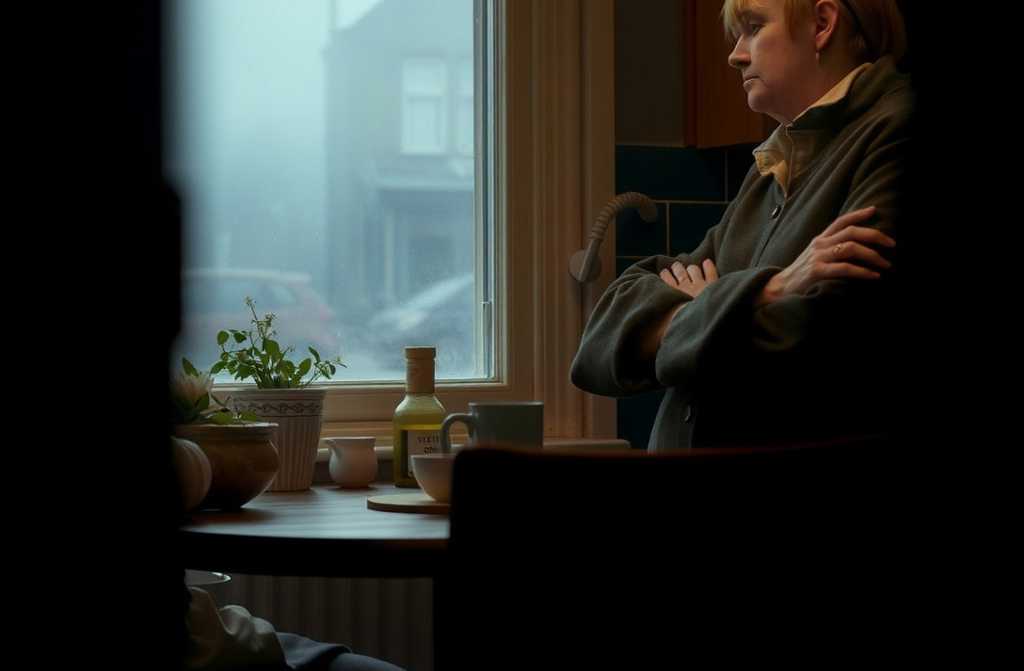
Mum, do you understand how it looks from the outside? Katherine spoke softly, which made her words sting more than any shout could. She sat in the kitchen across from Margaret Allen, both hands cupping her mug and her gaze fixed on her mother with that peculiar expression reserved for those who have done something shameful without realising it. People at the café saw you. Rebecca Turner called to ask if you were quite all right in the head.
I assure you, my mind is as sound as ever, Margaret replied, setting her delicate cup onto its saucer. The porcelain made a faint ringing sound.
Hes thirty, Mum. Thirty. Do you honestly believe he wants you for anything other than the flower shop, the flat in Islington, and the freedom a widow can offer?
Katherine
No, listen. I dont want to see you taken advantage of. Youre good, youre trustingand youve been alone for a long time. It makes you vulnerable.
Margaret turned to the window. London in November was swallowed up in a murky grey fog, the lamps along the Thames embankment glowing dim and tired, as if the city itself was weary of its grandeur, its bridges and Georgian facades, the sort of majesty one cant escape. She thought how Alexander, had he been there, would have made a comment about the light, as he always did.
Hes not a fortune-hunter, she said, barely above a whisper.
You think that because youre infatuated. Love clouds the mind at any age.
The at any age fell softly, almost kindly, yet Margaret felt its sharp edge. It was as if Katherine would have liked to add, especially at yours.
She did not answer. Instead, she sipped her lukewarm coffee and stared into the fog.
Theyd first met at the start of November, one of those days when London seemed most itselfnot the postcard London of Buckingham Palace and Tower Bridge, but the authentic one, a bit damp, a bit bedraggled, smelling of wet leaves and rain-soaked tarmac, with a sky like tarnished pewter. Margaret had opened her flower shop at eight as usual, flicked the lights on, made her rounds between the shelves, fingered the frosted chrysanthemums, straightened the bucket holding hawthorn branches. The shop was called The First LeafAlexander had christened it seven years earlier, when they embarked on it together. Hed passed three years ago, but Margaret kept the name, though on occasion she wondered if she ought to have changed it.
Edward arrived near noon. Tall, dressed in a dark charcoal coat, carrying an artists portfolio slung over one shoulder and a roll of blueprints under his arm. He looked around the shop the way people do when, to their surprise, theyve ended up somewhere better than expected.
Good afternoon, he said. I need a bouquet, but Im not sure what sort. For a townhouse on the Thames. Were restoring it, and Friday is the first viewing for an investor. I want something living for the entrance. Something real. Not the usual stuffy arrangement.
Stuffy arrangements are white lilies in plastic wrap, Margaret offered.
Exactly.
What kind of townhouse?
Nineteenth-century. Bit of Italian influence, lots of stucco. Weve been bringing the tiles and cornices back to life for six months. The space is warm and ochre, built for things that last and dont demand much fuss.
Margaret listened, thinking how he spoke of spaces as if they were alive. She wandered between shelves, gathering sprigs of eucalyptus, then hovered over a bucket of proteas, finally selecting a few burgundy and yellow amaranth stems.
This will do, she said. And some lavender. It lasts and has a scent that fits those walls.
He watched her assemble the bouquetnot as one observes a florist, but as though the process itself was interesting.
Do you know architecture? he asked.
No, but my husband was a builder. Some of it stuck.
She hadnt meant to mention Alexander. It just slipped out.
I see, was all he said, not probing where her husband was now, which Margaret found a relief.
He paid, thanked her, and left. She watched him through the window before returning to her work. Her assistant, Sarah, had some question about next weeks tulip delivery, and life carried on in its steady, measured way.
He was back the next day.
The investor said the flowers were the best thing about the whole presentation, he reported with a straight face, though there was a glint of humour in his eyes.
Good architecture and lavendera convincing combination.
Id like another arrangement. For the meeting room. Its got a different mood, brighter, more austere.
Again, they discussed space and colour. He left with white lisianthus and cotton branches. He was back two days later. Then again. Each time, a new reason emerged.
On the fifth day, he asked, Is there a good café nearby? She recommended one on Great Portland Streetexcellent coffee, never more than a few patrons. He wondered, with a smile, if she might join him. Margaret hesitated, then agreedSarah could hold the fort for half an hour.
The café was warm, heavy with cardamom in the air. They sat by the window as the first, hesitant flakes of November snow drifted past. Edward told her about the search for an artisan who could restore Victorian tiles, about the painstaking work involved. Margaret shared stories of the shop: the way South African proteas thrived in Londons chill, the peculiar requests of regulars. They discovered a shared fondness for the poetry of Philip Larkin, agreeing the best verses were those read aloud. The half-hour became two before Margaret returned to her shop, aware of Sarahs knowing glance as she took off her coat. She caught herself smiling, embarrassed as if caught doing something indulgent.
She was fifty-five. She dyed her hair a rich chestnut, but let the silver show at her temples. Her hands showed the story of her workcracked, often scratched, always just a little dirty no matter how hard she scrubbedand she had stopped worrying about her nails or the way the years shaped her face. She no longer searched the mirror for herself; she glanced merely to check all was in order before getting on with her day.
Her love for Alexander had been a quiet, steady thing, the kind that grows with years of shared routines and silent understanding. He was good to her. When she lost him, Margaret mourned honestly and for a long time. Then she grew used to the silencewhich, she realised, wasnt as terrible as shed feared. It was simply silence: long evenings with a book, unhurried Sundays in the shop, lost in the ritual of rearranging flowers.
And then this snow, the warmth of the café, and this young man with the attentive way of listening that no one had shown her in years.
She didnt dare think of it as anything more than a pleasant conversation, told herself: just interesting company, just Novembers longing for warmth, just that.
Edward. Thirty-one. An architect, he specialised in restoring old buildings. Born in York, hed come to London straight from university and never left. Londons the only city, he said, where I feel Im unravelling mysteries set out by someone a hundred years before my time. He lived alone in a rented flat in Bloomsbury, the ceilings high, the lift always broken. He shared little about his private life, and she never pried.
He dropped by her shop almost every day. Sometimes he bought flowers; sometimes, he simply lingered for a chat. Sarah looked on knowingly, but Margaret pretended not to notice.
Mid-November, Edward invited her to an exhibition. A young London architect was showcasing bold new visions for industrial spaces. Edward spoke quietly beside her, pointing out what was inspired, what was merely self-important. He had the directness of someone who knew his craft but had long ago lost the fear of being mistaken.
Afterwards, they strolled along the Thames, the evening bitter and cold. Margaret buttoned her coat to her throat; Edward walked beside her, occasionally brushing her elbow as he pointed out architectural details across the river. Those fleeting touches left a small warmth inside her.
Arent you bored in my company? she blurted without meaning to.
He stopped, looked at her squarely.
No. Are you?
No, she said honestly.
He nodded, as if that answered something far more important than the words themselves, and they continued along the bank. The river was calm and dark, city lights shivering across its surface. The air smelled of wet stone and distant snow.
Margaret returned to her Islington flat at eleven, greeted by silence and the scent of old wood. She stood at the kitchen window, water in hand, surveying the empty street below. Inside, something unfamiliar stirrednot anxiety, nor joy, but somewhere in between. As if a summer draught, gentle and warm, had swept through the rooms, though winter raged outside.
She chided herself. He was thirty-one. She was fifty-five. Two decades and morea whole generation between them. Such things simply didnt happen.
Yet something was happening, and she couldnt, in honesty, deny it.
At the end of November, Edward told her how he feltsimply, plainly: I think of you, and it makes me happy. Margaret was silent for a long time; they were back at their café, proper snow on the pavements now, bright and pristine.
Edward, she began.
I know what youre about to say.
Tell me, then.
That its impossible. That Im too young. What people will say. That youre afraid.
Im not afraid, she saidand was startled to find it true.
Then what is it?
She studied him: his face free of lines, hands smooth, an effortless way of being. His youth was not a boast, just a factlike his height or the colour of his eyes. He wasnt offering it as a gift.
I dont know, she admitted honestly.
So they started seeing each other. Quietly, without announcements. Outings to the cinema, to little bistros in Islington, walks in the winter dusk. He told her about his projects; she told him about customerslike the old man who, every Friday, picked out a white rose, never explaining for whom. They found the same things funny. Most precious of all, he could share a comfortable silence.
She felt alive in a way she hadnt in years. Not because of sudden events, but as if something long stuck inside her had finally stirred.
She didnt mention it to Katherine. At first, because she hoped it would fade; later, because she knew her daughter wouldnt understand. In the end, it became impossible to hide.
Rebecca Turner had spotted them at a café on the Strand. They sat at the window, talking and laughing as Edward showed her something on his phone, a photo or a drawing, nothing remarkablejust two people.
Rebecca rang Katherine that evening.
Mum, do you know how this appears to everyone else?
That kitchen confrontation wasnt the first. There was another, harsher, a week later. Katherine argued that men Edwards age only turned to older women out of weakness or calculation, and before long hed want someone youngerchildren, a family. That Margaret would be left with nothing but pain and humiliation.
I dont want you hurt, Katherine confessed, genuine worry in her voice. Youve already suffered enough.
Katie, Margaret replied quietly, for the first time in three years, Im not suffering.
Itll pass.
Perhaps.
But her daughters doubts persisted like a splinternot quite truth, but difficult to ignore. Margaret noticed herself watching Edward differently, searching for signs, proof one way or the other. It weighed on her and altered something between them.
She also started seeing herself anewher crows feet, her hands, her neck. Her sleep grew fractured as she wondered whether Katie might be right. Not from mistrust of Edward, but simply arithmetic. In ten years, shed be sixty-five, he forty-one. In twenty, shed be seventy-five, and he only reaching middle age. Not injusticemerely inescapable fact.
The fear of growing old lives in a woman as a feeling, not a thoughtas a chill from a closed window, which, however tightly shut, still lets in the cold.
She ended it in December. Called him in the evening, said succinctly: Ive thought about it, and I think we should stop.
He was silent for several seconds, then asked, Why?
Its for the best.
Best for whom?
She couldnt reply. He continued softly:
Margaret, please dont do this. Not for my sake. But because it isnt true. You dont believe what youre saying.
Edward
All right. I hear you.
He did not call or return to the shop. Each morning, Margaret listened for the jingle of the bell over her door. Sarah said nothing, but chrysanthemums filled the buckets as November gave way to December, and then to January.
A London January is a chapter in itselfdark, cold, endless grey. Night claimed the city by four, and dawn delayed until ten; in between, only a few hours of dim twilight. Margaret worked, read, talked business and flowers with Sarah. On Sundays, she visited Katherine, played with the catPercydrank tea, and listened to her son-in-law Jamess work stories. Life moved along, tidy and proper.
Yet she arranged her flowers differently now, though it took Sarah to notice:
Margaret, lately your bouquets seem restrained. Customers buy them, but they feel as though somethings missing.
Margaret looked at the arrangement in her hands: white lisianthus and green foliageelegant, correct, and yet yes, she saw what Sarah meant.
She thought of Edwardnot incessantly, but often. She remembered how he spoke of rooms and spaces, how attentively he listened to her trivial tales as though they were important. How he had brushed her arm on the embankment that gusty, cold night. Such small things, such perfect, imperceptible moments.
One January evening, Katherine asked, How are you?
Im fine.
You havent seen that man again?
No.
Katherine nodded, visibly relieved. Margaret regarded her daughter: beautiful, clever, and kindtruly wishing her mother happiness, though her vision of that happiness couldnt quite match her mothers.
February crept by. Margaret reread Jane Eyre for no particular reason, just took it from the shelf one evening. She finished it, and sat for a long time unmoving, thinking not of Jane, but of the moments when one picks correctness over authenticity.
Late February, Sarah rang, her voice excited:
Margaret, someone left a parcel at the door while you were out. A large one.
Margaret hurried to the shop. On the steps sat a long, narrow wooden crate packed in shavings, containing branches of white forsythiawinter-grown, from a hothouse, yet to bud. Inside was a small, unsigned card: It blossoms before the leaves. Without waiting for permission.
Sarah stood by, watching Margaret so intently that she snapped, Dont look at me like that.
Im not saying anything, Sarah replied.
Margaret arranged the forsythia in a tall vase by the entrance. Three days later, the branches burst into tiny yellow flowers. The shop seemed transformed. Customers paused to admire them, asking what they were and whether they were for sale.
March. The snow was slow to leave, clinging on like someone reluctant to depart. Margaret thought about the forsythia, the unknown message, the man who designed spaces and understood how rooms speak to those within.
She did not call him, but she thought of him.
Her birthday was the eighth of March. It always felt awkward, her private celebration lost amid the tide of daffodils and cards. She turned fifty-six. Katherine and James arrived with cake and champagne. They talked; Percy stared at them all from the sill. Katherine seemed quietly contrite all evening; James recounting his latest mishaps at work; Percy lost in his feline thoughts.
Margaret surveyed the table, the pink-iced cake, flutes of British sparkling wine. This is life, she thought. Good, kind, orderly. Daughter by my side, a pleasant son-in-law, a warm flat, the shop busy. What more could I want?
She was well aware what was missing. She just couldnt speak it aloud.
After everyone left, she sat alone with her half-finished glass as early dark settled. March in Londondaytime teases with a whiff of spring, only for cold to return at sundown. The street below was empty, a restless wind rattling the windows. She thought of the forsythia, of tomorrows tulip delivery, of being fifty-six and alone on her birthday thinking of a man not yet thirty-two.
Then the doorbell rang.
She answered, expecting perhaps a neighbour or an absent-minded Katherine.
Edward stood on the step, still in his dark overcoat, blueprints tucked beneath his arm. No flowers. He simply stood there.
Happy birthday, he said.
How did you know?
Sarah told me.
Sarah, she repeated, her tone unreadable.
I called her. I asked. May I come in?
She stood aside. He removed his coat, stepped into the sitting room, and placed the roll of papers on the table.
Whats this? she asked.
Plans. A house in Surrey. I bought the plot in Octoberwork began in November.
Margaret stared.
Since November?
Since November. Theres an extension, here He unrolled the drawinga conservatory. South-facing, all glass, automatic watering, ideal for flowers. Your flowers.
Margaret gazed at the plans, her hands oddly cold.
Edward
I know what youll say. But let me speak first.
He folded the drawings, sat on the sofanot as a guest, but as someone resigned to a long talk.
Margaret, Ive been building that house every day we havent spoken. While you weighed up what is or isnt proper, I was at work in Surrey. Not out of spite, or desperation, but certainty. I havent come to plead or explain. Only to say one thing. Marry me.
The room was hushed. A car started somewhere down the street.
Do you realise what youre asking? she managed.
I do.
Im fifty-six. Youre thirty-one.
I can count.
We may never have children.
He looked back, undisturbed.
If not, well adopt. Ive thought about it. I dont need a child from you to prove love. I need you. And I will not lose a day to numbers written on a birth certificate.
Margaret felt her breath catchnot with sadness, but its opposite, as if, after struggling into a headwind, shed at last turned to let it carry her.
And Katherine? she asked quietly.
Katherine is your daughter. Not your mother.
It wasnt harsh. Just precise.
She studied the plans, the new conservatory, the sun wall. She thought of the forsythia, that brave little flower blooming without permission, of how fear of gossip is not caution, but just fear. And she was tired of being afraid.
Yes, she said at last.
Edward didnt rush to embrace her, didnt seize her hands. He just exhaled, quietly, as if setting down a burden hed carried too long.
Yes, he repeated.
Katherine heard the news a week later. Margaret went herself, not phoning. She sat in the living room, cat in lap, waited for James to tactfully slip away, and told her daughter:
Katherine, Im marrying Edward.
Katherine was silent for a long time. Percy purred. Rain laced the April window.
Mum
Yes.
Youre sure?
I am.
You know I cant approve?
I understand. Im not asking you to approvejust not to walk away.
Katherine rose, stood with her back to the room, eyes fixed outside. When she turned, her eyes were red.
Are you happy with him?
Yes, said Margaret.
Truly?
Truly.
Another long silence.
I dont understand it, Katherine said finally. But all right. All right, Mum.
It was not consent. It was an armistice. Margaret accepted it as such.
They married in May, without fuss. A quick ceremony at Marylebone registry, a modest meal at home. Katherine attended, a little tense, though present. James made a toast, careful to keep his eyes forward. Sarah brought a bouquet of forsythia and white peonies. Edward held Margarets hand, sometimes looking at her so openly that she would glance awaynot from shame, but something she couldnt yet name.
The Surrey house was ready by July: two storeys, pale brick, wide windows, a luminous conservatory. Margaret stepped into it midsummer, sunlight filtering through the glass. Earth and timber scented the air. Here, she thought, this is the place he built for me.
She moved in cuttingsmonsteras, a fiddle-leaf fig, orchids from the old flattried her hand at growing lavender from seed. She and Edward spent weekends there: he worked upstairs, she pottered in the conservatory; they met over lunch and dinner. It was simply, improbably good. Not magicaljust right.
They found the little girl after a year and a half. Her name was Daisyeighteen months old, ginger curls, solemn brown eyes, the habit of frowning when thinking. She studied Margaret gravely at the orphanage before reaching out to grip her finger. Margaret felt something then she never could speak of without her voice wavering.
Katherine met Daisy that very weekend, coming to Surrey unannounced. She watched Daisy for a long while, then scooped her up. Daisy accepted being held, eyed Katherines earrings, and, inexplicably, smiled. Katherine laughedshort, bewildered, but she laughed.
Something shifted that day. Not everythingKatherine didnt suddenly embrace the whole arrangementbut the tension faded, as if Daisys mere presence had dispelled it: small, ginger, and unselfconsciously serious.
Time passed. Daisy grew used to the house, the conservatory, the scent of soil. Edward read to her in the evenings, half playful, half solemn. Margaret watched, thinking that life brings the unforeseen, the unplannable, the unshielded. Your only choice is to embrace or resist. She embraced.
The First Leaf on Islington High Street thrived. Sarah ran things mid-week, Margaret stopped in two or three times weekly. She launched a new line of seasonal bouquets, calling it Just Becausebecause the best flowers came without a reason.
That October was unseasonably mild. Leaves lingered on the oaks, the Surrey conservatory bathed in autumns gentle gold. Not fierce like summer, but soft as worn velvet, making every object straightforward and true.
One Saturday, Katherine arrived unexpectedlysomething shed never done before. She rang the bell at the gate. Margaret let her in, surprised. Katherine found Daisy in the conservatory, earnestly digging at a pot.
What are you planting, Daisy? Katherine asked, crouching beside her.
Lavender, Daisy responded, very seriously.
Why?
So it smells nice.
Katherine laughed. Edward appeared, bearing a tray of tea; he greeted Katherine, who answered as simply, a world away from her previous coldness.
Margaret lingered at the potting shelf, listening to Daisy explain that lavender must be near the window because it loves the sun. Where had she learned that? Perhaps she simply absorbed it.
Edward came to stand silently next to Margaret. They watched the clouds outside the glass, smelt the earth and lavender and the faint tang of fresh wood.
Will she be warm enough out here? Katherine asked, gesturing to Daisy.
Yes, said Margaret. Its warm in here.
I can see that, Katherine said quietly. She paused. Mum, I wanted to say
Dont, Margaret interrupted gently.
No, I have to. I was wrongnot in everythingbut I was afraid for you, truly. But I was looking at the wrong thing.
Katherine
Let me finish. I looked at your age. What I should have looked at was you.
Margaret regarded her daughter. Katherine had that same face she wore as a child when she wanted forgiveness but didnt know how to ask.
Youre looking now?
I am.
And what do you see?
Katherine considered. Daisy was murmuring to herself over the earth, the last golden leaves shivering on the apple tree just beyond the glass.
I see that youre happy, Katherine said. Thats all.
Daisy glanced up, brown eyes earnest. Auntie Katherine, she said, do you want to plant something too?
Id like that. Will you show me how?
I will, Daisy replied with utmost seriousness.
Edward laughed in a low voice. Margaret felt his hand brush herslight and gentle, just as that old touch along the riverbank had been. She did not pull away.
Above the conservatory, the October sky was high, peaceful, and without end.