I should have a young, slim woman by my side, my husband announces before his milestone birthday
Today
Nigel has been trying on his new suit for the past twenty minutes.
He stands sideways. Turns around. Straightens a lapel. Faces the mirror sideways again. The bedroom mirror is large and elegant a bespoke piece from a London craftsman, framed in walnut, bought in the days when Nigel travelled for work and used to bring back different things. The mirror maintains its patient reflection of a sixty-year-old man with a belly that no jacket can conceal.
Margaret sits on the edge of the bed, watching.
You should pick out something decent as well, Nigel says without turning.
Ive got my blue dress.
Blue he says it like hes talking about milk or the gas bill. Everyones seen it a hundred times.
Margaret stays silent.
Therell be lots of people, Nigel goes on, tugging his lapel. Important people. Work associates. Theyll all be watching.
Margaret nods. She gets it. Shes heard this for thirty-five years. First just colleagues, then business partners, then high-profile guests, then VIPs. The social ladder only went up. The suits changed.
I should have a young, slim woman by my side, says Nigel.
A pause.
It takes Margaret a moment to realise hes talking about her. She thinks he must be joking. Nigel would occasionally try to make a joke. Rarely, but sometimes.
At the very least get yourself a proper dress, he adds, without looking away from the mirror.
Margaret looks at his reflection.
She always has.
All right, she says quietly, standing up.
Nigel doesnt turn around.
Margaret buys a dress beige, with a belt. It takes her two hours at the shopping centre, she tries on seven different ones, stands in front of the changing room mirror looking at herself as though shes facing something inevitable.
At home, she hangs the dress on the wardrobe door and goes to make soup.
On Saturday, her friend Barbara calls.
Well, how are you doing?
Margaret waits a beat. Exactly one beat. Then says:
Im fine. Bought the dress.
Beige, I suppose?
Beige.
Didnt expect anything else, Barbara sighs with that special tone that comes from forty years of friendshipbetter than any words. Come round. Lets talk.
Margaret goes after lunch. Barbara lives in the next neighbourhood, a fifteen-minute bus ride away a different world, if you want it to be. Barbara puts the kettle on, slices cake, and asks, without any preamble:
He really said that? Young and slim?
Just like that.
And what did you do?
Nothing.
Barbara looks at Margaret for a long time. The way youd look at something familiar that suddenly seems unrecognisable. Then she asks,
Mags, when was the last time you did something for yourself?
Margaret opens her mouth. The question surprises her not because its complicated, but because she doesnt have an answer. Not straight away. Then Margaret starts to think.
Well, she bought a dress.
For her husbands party.
Does that count as doing something for herself?
Barbara pours the tea, and Margaret tries to remember, but her mind draws a blank. Memories surface from long ago: the French classes she dropped after three months the children were small. A swimming pool membership that expired unused. The friend from university she stopped seeing never enough time, and then too embarrassed to call. It was all so long ago that Margaret isnt even sad about it, she simply doesnt remember.
I cant remember, she says.
Barbara nods, as though thats precisely what she expected to hear.
Listen, Barbara says, Do you remember how you wanted to visit Cornwall? You said, ten years ago, once the kids move out, you and Nigel would go to Cornwall.
Margaret remembers.
So?
So, nothing, Margaret says. The kids moved out. We never went to Cornwall.
Why not?
Nigel was busy. Then I was busy. And thenwe just forgot.
Barbaras quiet. Outside, its raining a cold, November rain, completely pointless. It drums against the windowsill, achieving nothing.
Mags, Barbara says gently. He doesnt even see you.
Margaret says nothing.
Im not saying leave him or stay. Im just saying: he doesnt see you. And youre just waiting, hoping hell notice.
Im not waiting for anything.
Exactly.
Margaret heads home at dusk. The bus is practically empty. Sitting by the window, she watches damp tarmac, shop lights, people with umbrellas. Nothing out of the ordinary, nothing with a name.
For days, Nigel is busy. He spends evenings on the phone, talking, laughing in his study. Once, when Margaret walks in, he flashes a look, quickly covers his computer screen. Then relaxes:
Oh, its you. Work thing.
Next evening over dinner, Nigel says, almost as an afterthought, buttering some bread,
Jessica from Development is coming to the party. You know her, dont you?
No, you havent mentioned her.
Well, yes. Smart, energetic. Shes thirty-seven. Or maybe thirty-eight, I forget.
Margaret puts her fork down. Picks it up again. Eats a piece of chicken breast. Says nothing.
Nigel polishes off his bread, pours himself water, gazes out the window. Chews. Adds,
She does yoga, by the way. Swears by it for her back.
Margaret clears the plates. Washes up. Sets things to dry.
Goodnight, she says, heading for the bedroom.
She lies down, staring at the ceiling. Thinking.
Yoga. Development department. Interesting woman.
Through the wall, she hears Nigel pacing about, presumably on the phone again.
Margaret closes her eyes.
She doesnt feel hurt.
In the morning, Margaret is up by six. Puts the kettle on. Slices bread. Lays everything out in its usual place. Nigel comes in, grabs his cup, opens his phone, doesnt look at her.
He finishes reading something on his phone and chuckles quietly. Smiles at the screen. Puts it away. Finishes his tea. Gets up.
Ill be late today.
Alright, Margaret says.
The door closes. Silence.
Margaret finishes her tea. Looks at the beige dress hanging on the wardrobe.
It needs ironing. Only five days to go until the party.
She gets up, fetches the iron.
And, in that moment, it suddenly becomes clearno words, just a factthat this is the first and last time she is ironing this dress.
On the day of the party, Margaret is up by seven.
By nine, Barbara has already called.
Well?
Im not sure yet, Margaret says.
You are, says Barbara. You already know.
And its true.
Margaret goes to the bedroom. The beige dress hangs, ironed and neat, with its belt. A nice dress. She looks at it for a good three minutes. Then she takes it off the hanger, folds it carefully and lays it on the bed.
She opens the wardrobe and takes out her jeans. Dark blue and straight, almost never worn bought two years ago just because she liked them, and theyve hung there quietly ever since. Around those, she selects a white blouse. Dresses. Looks in that old bespoke mirror with its walnut frame.
Nothing special. Just a woman. Fifty-eight. No waist.
Then Margaret sits at her desk and writes a letter.
She writes for nearly forty minutes. Rips up drafts, writes again. The first version is long: she includes the first flat they rented damp and a bit mouldy above the bath, how she spent nights helping with his reports when he was behind, how she once sold her mums earrings to cover his business debt in 98, and all the school plays she went to alone, because Nigel always had negotiationsand a lot more. She reads it over. Crosses everything out.
None of it is necessary.
She ends up with something very short. Barely anything.
But just right.
She folds the paper, puts it in an envelope. Addresses it.
Packs her bag and leaves.
By two oclock, The Ruby the restaurant Nigel spent three months choosing, calling over about the live music and guest parking is beginning to fill. Important people. Partners. The children Tom arrives from Manchester, Emily comes with her husband. Colleagues with polite faces, the kind you avoid outside work. Some bring flowers. Others bring cards.
Nigel stands by the entrance in his new suit. He shakes hands, smiles, says, Lovely to see you. Everything is how it should be. Live music. White flowers on the tables. Waiters gliding around with trays.
No one stands beside him.
At first, he thinks Margaret is simply running late. She was often late. Then he keeps glancing at the door, expecting her any moment. People come. The door swings open. But no Margaret.
At half-past two, Emily approaches:
Dad, wheres Mum?
Shell be here soon, says Nigel.
Emily looks a little more closely at him, says nothing, moves away.
At three, a waiter approaches with an envelope.
This was left for you, sir, he says, before disappearing.
Nigel takes the envelope. He stands with it by the window, away from the guests and music and all of it.
He opens it.
Inside are just two lines:
For thirty-five years, I stood beside youwhen there was no money, no certainty, nothing but me at your side. If you want someone young and slim now, go find her. Without me.
Thats all. Nothing else.
Nigel reads it once. Reads it again. The handwriting is neat, careful Margaret always wrote neatly, with accountants precision, not a single correction.
He slips the letter into his jacket pocket, next to his phone.
Returns to the party, makes his speech about sixty years, about the journey, about the people without whom none of it wouldve been possible. The speech is good. The guests clap. The live band picks up with something cheerful.
He does step outside once, pretending to take a call. He stands at the restaurant entrance in the November air, jacket open. He tries her number. Long tones. Then silence.
He pockets his phone. Stands for a while. Looks at the wet street, the lamplight, the parked cars. Her car should be somewhere nearby. The light grey Toyota she bought herself, seven years ago, without mentioning it to him, just turned up in it one day.
Bought it, shed said.
By yourself? hed asked.
By myself.
Hed said something in reply, cant remember what. Probably something about how she shouldve consulted him. Or that hed have chosen a different model.
Her car isnt there.
Nigel returns to the room. Picks up a glass. Someones making a toast.
Tom comes over in the interval:
Mums not coming?
No, says Nigel.
What happened?
Everythings fine. Eat, drink.
Tom wants to ask more, but doesnt. He knows that tone. Thats how his father closed off everything awkward bills, questions, people. Closed. Tom heads over to Emily, says something quietly. She glances at her father.
At the next table, Jessica from Development is laughing loud, head thrown back. Nigel glances at her for a moment, then looks away.
Hes aware of the letter in his pocket.
While glasses clink at The Ruby and someone is waxing lyrical about wisdom that comes with age, Margaret sits at Barbaras kitchen table.
Drinking tea. The poppy seed cakes already polished off they finished it yesterday. Barbaras made some buckwheat, puts butter and bread on the table.
Eat, Barbara says.
Margarets phone buzzes. Screen down, but she sees from the name Nigel.
She holds the phone a moment. Puts it back.
Not going to answer? Barbara asks.
Not now.
The phone stops buzzing. Then beeps a text. Margaret doesnt read it.
She finishes her tea. Puts down the cup.
For the first time in forever, she has nowhere to rush. Nothing to cook, iron, or pick out. No need to stand by and wait to be noticed.
She just sits.
Nigel turns up two weeks later.
He calls first Margaret answers. Asks: Can I come over?
And so she opens the door. He stands on the step in a jacket, no tie almost unheard of for Nigel.
Come in, Margaret says.
He does. Sits in the kitchen. Nigels silent for a while, staring at the table. Then finally says,
I was frightened then. Of getting old. Of myself. I said the stupidest thing Ive ever said.
Margaret doesnt respond.
I never thought youd walk away, he continues.
I know, says Margaret.
Will you come back?
Margaret sits, looking at him at the new wrinkle between his eyebrows that turned up ten years ago and never left.
I dont know, she says. Not yet.
Nigel nods. Doesnt try to argue, and thats something new.
You havent noticed me in a long time.
I know. Im sorry, he says quietly.
Nigel finishes his tea. Stands. Puts on his jacket.
Ill call, he says.
Call, says Margaret.
He goes. She doesnt walk him to the door. Stays at the window, watching him cross the courtyard and get into his car.
He sits there for a bit. Then drives away.
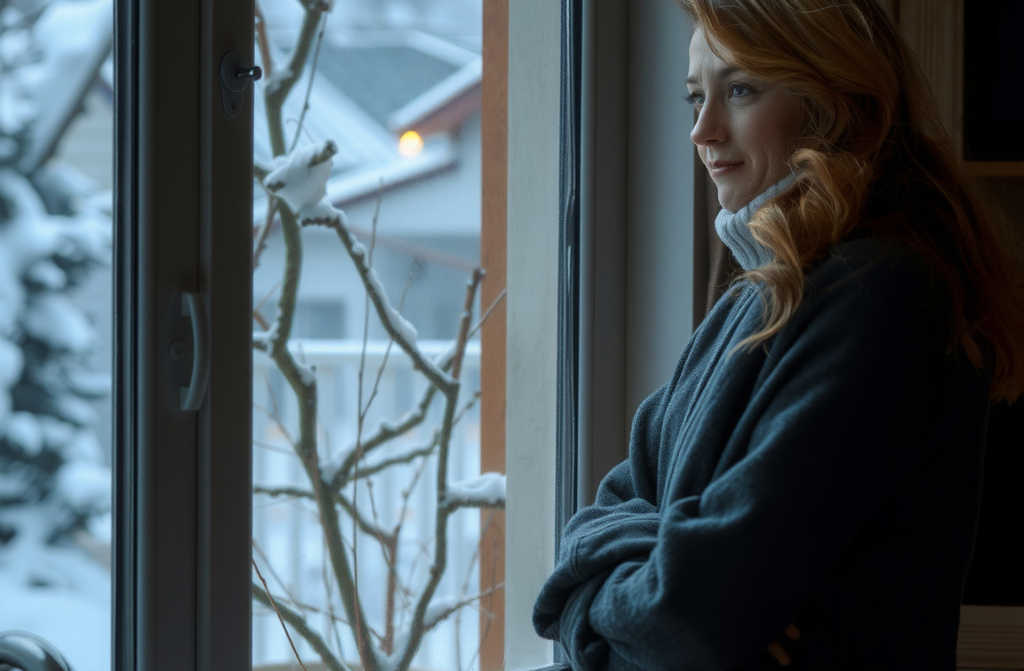
Margaret stands by the window, watching the snow fall. And, for once, she isnt rushing anywhere.