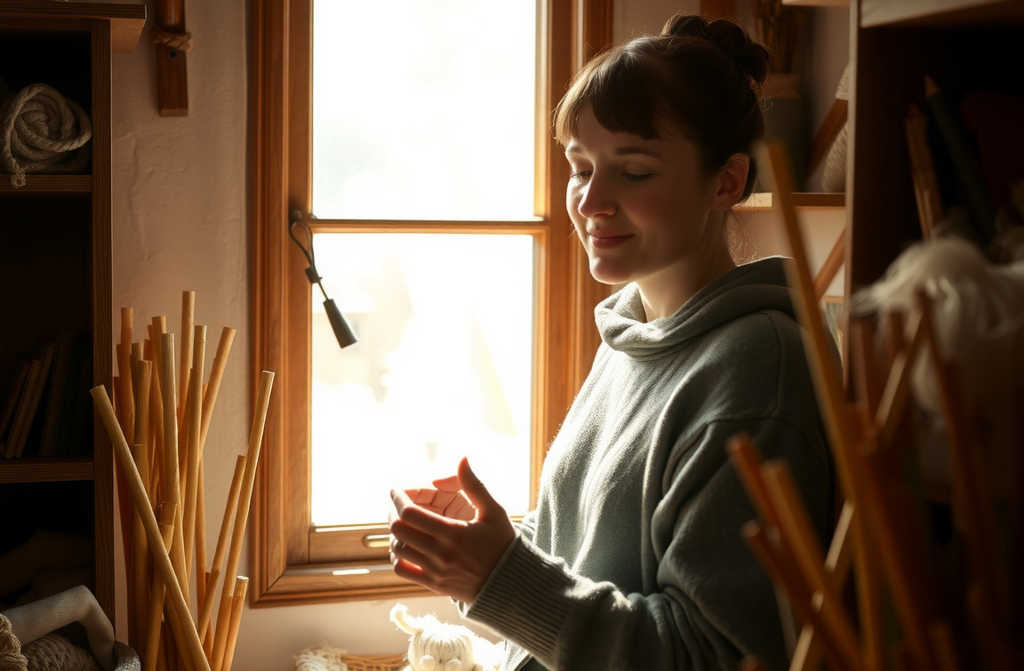
What I Saw from the Kitchen Window
James, have you packed your clean shirts yet? I noticed there are still two in the pile after ironing.
Lila, Ill sort it out myself, dont worry so much.
Im not worried. Just asking. When are you leaving?
After lunch. Around three, I think.
I stood at the hob, stirring porridge. I hadnt actually wanted any for days. My hands just did what they always did in the morning, while my mind wandered elsewhere. The kitchen window was open a crack, letting in the raw, damp April air; somewhere in the courtyard below, water dripped steadily from a gutter, drip-drip-drip. Strangely, today that sound was more irritating than usual.
How many days are you going for?
The usual. Four or five. Maybe a bit longer if the meetings drag on.
Alright.
I ladled the porridge into bowls. Set Jamess favourite big mug before him, poured the coffee, added milk without askingafter seven years, I already knew. Two sugars, plenty of milk. He liked it nearly beige.
James was staring at his phone at the breakfast table, as he nearly always did these days. There was a time when Id try to start a conversation, even take offence, but I stopped bothering. Some rituals just settle in, like morning coffee with the phone, and theres no sense in fighting them.
Listen, James, I said, sliding into my seat across from him. Youre off again soon. I wanted to talk to you about something.
Oh? He looked up, but didnt put the phone away.
Ive made an appointment, with Dr. Martinyou know, my gynaecologist. I want to discuss it again. About having a baby.
James set his phone down, screen facing the table. A bad signwhen he was uncomfortable, he always did that.
Lila. Weve talked about this so many times.
I know. But I want to talk again.
Again? You know your age. I dont mean anything by it, you look wonderful, but
Im fifty-two. Thats not a sentence.
Lila. He said my name the way people do with children, when they want to gently but firmly shut down a conversation.
Alright, I said. Alright.
I began eating my porridge. It was already warm, no longer hot, and tasted like nothing, but I ate anyway. Outside the window, the dripping continued. James picked up his phone once more.
Afterward, he finished breakfast, thanked me, and went off to get ready. I washed up, and my mind drifted to the fact that this baby conversation had happened, what, twenty times in seven years? Every time, the answer was the same, just phrased differently: Once things are steadier, Not the right time, works hectic, Youre not so young, think of your health. Seven years. When we married at forty-five, I thought there was still time, that it would all work out. Jameskind, steady, reliable Jameswould want it, I just needed to wait a little longer.
I dried my hands on the tea towel with cockerels embroidered on it, one that had hung from the oven handle for three years now, and thought: I should buy a new one, this ones terribly faded.
James appeared in the hall with his small travel bag.
Right, Im almost off. Have you seen my grey jumper?
In the wardrobe, second shelf on the right.
Ah, yes. The wardrobe door clattered. Got it!
He put on his coat. I helped smooth the collar as I always do. He pecked my cheek.
See you. Ill ring this evening.
Alright. Travel safe.
Always.
The door closed. I stood alone in the hall, heard the lift groan, the front door snap belowthen quiet.
I topped up my coffee and stood at the kitchen window. This side faced a narrow residential street, parked cars along the pavement: the neighbours grey BMW from the third floor, someones battered old Ford, and a couple of others. April was dull, the sky blanketed and pale, and the light was all flat, no shadows.
Jamess grey car was parked by the next-door house.
I blinked. Stared harder. No, I wasnt wrong. It was his carrecognisable, I knew the number plate by heart. But hed just left, going away for workwhat was he doing outside the next house?
Maybe saying goodbye to someone? But we hardly knew any neighbours, just said hello in the lift.
I set my mug down and kept watching.
Ten minutes passed. The car stayed.
A woman came out the front door. Young, about thirty-five, not a day more. Blue coat, dark ponytail. She carried a small child, barely three, maybe a bit older, dressed in a red snowsuit, bobble hat. She spoke to the child, hugging him; he reached for her face.
I watched, not yet understanding, just watching.
Then the drivers door of Jamess car opened. James stepped out.
He walked up to the woman. Took the child and lifted him high; the little one laughed, though I couldnt hear it through the glass, but saw his head thrown back. James held him close, rubbed his cheek against the childs hat with the pompom. Then set him down, said something to the woman. She replied. He took her hand and kissed it.
He kissed her hand.
I stood at the window and felt something inside me slowly, very slowly, begin to fall. Not break, not collapsejust gently slip, like a shelf in my chest letting go of everything it carried, all items sliding quietly down.
I didnt leave the window. Watched as James hugged the child once again, watched the woman adjust the little ones hat. Watched them say goodbye, watched him get in his car and drive off.
The woman stood there a moment more, watching after the car. Then the child tugged her hand, and she walked away with him, holding tight.
I finally moved from the window to a stool. Looked at my hands in my lapordinary hands, a bit tired, with my wedding ring on the third finger.
The coffee in my mug had gone cold.
I poured the coffee away in the sink and switched on the hot tap.
I needed to think. But before that, something had to be done about the feeling of that sliding shelf inside me. Because I knew: if I let myself go, sat and cried, or shouted, or rang James there and then, it would be wrong. Not because tears arent allowed, but because I didnt yet know the whole story. Id seen something, but I didnt yet know everything.
Although, if I was honest, I already knew. I knew it all now.
I put on my blue mac from the hook in the hallway, grabbed my keys and bag, and stepped out for air. I just needed to goanywhere, just walk, just keep walking.
The street was damp, the pavement shimmering from recent rain, puddles reflecting the pale sky. I walked along, not caring where, just forward. Past the corner shop with its bright sign, the hairdressers, the chemist. Outside the chemist, an old lady was feeding a small dog morsels from her hand. The dog took each one so gently, almost delicately.
Seven years.
Thats what I thought about as I walked. Seven years with someone and I hadnt known. Or maybe I hadnt wanted to know? I asked myself honestly: were there signs? Did I notice things and just wave them away?
The business tripsnearly every month. Id always assumed he really was busy. Jamess work was like that, all supply management and meetings and travel. It never occurred to me to doubt him. Not once.
The phone he always kept closejust a habit, I thought.
And the baby conversations, forever gently, politely, immovably shut down. Id chalked it up to our ages, being tired, not wanting to take on more. Id tried to be understanding, to wait.
But all this time, he had a child already.
A little one, about three. So it started, what, four years ago? Wed already been married three years then.
I stopped at a bench in a small park, among young lime trees with barely-burst buds. I sat, dug out my phone, just held it, then put it back away.
What would I do when he returned? Come back in four or five days, as usual, with a small gift, a standard story about meetings, a tired look. Settle on the sofa, switch on the telly. Say, So how are things here?
How things are. Indeed.
I sat and watched the bare branches. The buds already seemed tight with life, ready to burst. Another week of warmth, everything would turn green.
Oddly, I wasnt thinking now about Jamess betrayal, or the other woman, or the child and his red snowsuit; I was thinking about myself. About the Lila whod waited so patiently for seven years, always believing she was doing the right thing, believing that real love is patient, that one shouldnt pressjust wait.
So she waited.
It was getting cold. I gathered my mac and went home.
The flat always felt quieter when James was away, though he was always soft-voiced, not one for stomping around. But his presence made a sort of background hum, a warmth. Now it was missing.
I walked into the living room, stood there. The shelf of booksmostly mine, a few of his. His slippers by the chair. His navy-and-green checked throw draped over the armrest. I picked it up, held it for a moment. It was soft, fine wool, a birthday present from me.
I put it back.
Then I went to the cupboard. Upstairs on the top shelf, boxes left unpacked since wed moved in, three years ago when we merged our lives. I fetched the step-stool and climbed up for the first boxmy old things: books, files, a box of photos.
I sat right there on the floor, cross-legged, sifting photos. Me at thirty, thin, laughing off-camera, surrounded by now-forgotten friends. Mum and Dad on a seaside trip, young, happy, the sea behind them. Me and my old friend Grace, arms linked in the park; she was forty then, me a bit younger. Both laughing. Grace is fifty-six now.
Grace. I should give her a ring. Laternot now.
I packed the photos away and returned the box. Washed my face in the basin, caught my tired eyes in the mirror. Good skinthey always said that; first lines around my eyes and mouth, dark hair with the odd grey streak, shoulder length. Just a woman of fifty-two.
Betrayal doesnt show at once. At first, you just stare at yourself, thinking: So, thats you. The wife fooled for seven years. The woman waiting for a baby, all while her husband already had one with another.
I turned off the tap and went to fix lunch. I had to do something.
The next four days, everything was odd, split in two. On the outside, I did the usual: cooked, tidied, shopped, called Mum. James rang in the evenings, as hed promised: calm, chatty about meetings, asked after me. I answered, Fine, all good, weathers turned, bought a new kitchen towel. He laughed. I laughed, tooand that was the scariest part, how easy that laugh sounded.
But inside, another life entirely.
I thought. Slowly, systematically, as perhaps Id never thought before. I rearranged memories, connected dots. The slightly different James who returned from tripssofter, maybe, or distracted. Id thought: tired. Now I knew: coming back from them.
I thought of the other woman: dark-haired, thirty-five at most. Pretty? Likely. I didnt see her long, but her assured figure, confident way moving. A woman who knew her place. Next to my husband.
And the childboy or girl? I couldnt tell. Small, in a red onesie, James held him high, the child laughed.
James had never picked up children like that with me. Had never shown much interest at all. Im not great with little ones, hed always said. Id believed him.
On the third day, I rang Grace.
Grace, could you pop round?
Of course. Whats up? You sound a bit off
Come on over. Ill make coffee.
Grace arrived an hour latershe lived just a couple of streets away, we always used the same shop. Wed kept up for twenty-odd years, since working together at the local authority. Life diverged, Grace got married, moved, I did too, but we stayed in touch, the odd coffee, calls.
Grace took off her coat in the hallway, looked at me.
Lila. Whats happened?
Lets sit down first.
I told her everything, straight, no embellishments. Grace listened, never interrupting, just squeezed my hand once. When I finished, she stared at the table for a while.
Goodness me, she said at last. Goodness.
Yes.
Youre absolutely sure? It was him?
Grace. I know that car, I know him. Im sure.
What will you do?
Im thinking.
Maybe talk to him, directly?
I will. When hes back.
Lila, youre being brave. But dont bottle it all up alone…
Grace, I cut in. Ill cope. I dont want your pity. I just want you here. Youre here. Thank you.
She said nothing, then hugged me hard, as only old friends can, when words arent needed.
Im here, she said. Whatever, whenever, day or night. Promise me?
Promise.
Grace left as it was growing dark. I washed up the mugs, switched the kitchen light off, and lay on top of the bedspread, not undressing, staring at the ceiling.
Seven years building something Id thought was realnot perfect, I was never that naivebut earnest. Households shared, rituals adopted, quiet mornings with coffee and porridge. Id believed that this was the foundation: not passion, which fades, but the calm, lasting togetherness.
But all the while, while I built this together, he was building another somewhere else. Five minutes walk away.
Five minutes.
I closed my eyes. The rain sounded beyond the window: gentle, spring rain. Not sorrowful.
He came home on the fifth day, late afternoon. Knocked, though he had his own key. I let him in.
Back again, he said, smiling, tired in the familiar way. Set down his bag and leaned in.
Wait a minute, I said.
Something in my voice made him stop.
What?
Come into the living room, please. I need to speak to you.
We sat. Him on the sofa, me facing in the armchair. The coffee table between us held a small jar of paper tulips Id made ages ago, just one long evening for something to do.
James, I said. The day you left, I saw you from the window. You were outside the next house. There was a woman with a child. You had him in your arms.
He looked at me and said nothing. It wasnt a defensive silencenot the sort that gears up to explain. Something else.
James.
Lila, he said.
Im not here for a row, I cut in, unfazed, even though something inside me buzzed like an electric cable. No shouting, no tears. I need a single answer. Is that your child?
A long pause.
Yes, he said.
I nodded. That was all. Id already knownbut now, I knew for certain.
How old is he?
Three.
Have you been together long?
Lila, dont
Im asking.
He dropped his head.
Five years.
Five years. So, two before the child. When wed only been married two years. Still just begun.
Right, I said. I see.
Lila, I didnt mean to hurt you. I never planned this, it just happened…
It just happened, I echoed. Calmly, not mocking. Five years, so it happened again and again.
I know what you must be thinking now.
Hardly.
Lila, I
James, I stood up. Dont. Truly. No need to explain. I saw enough. I saw you with the child. Saw how you looked at her.
Strangely, I didnt cry. Didnt even want to. Inside I felt heavy and clear, like air after a storm.
Ill pack a few things, I said. The basics. Ill come for the rest later when we arrange it.
Where will you go?
To Mums. Ill manage from there.
Lila, wait. We could talk. I can explain everything.
You just did.
I went to the bedroom. Pulled out the small suitcase, packed: clothes, documents, essentials. Underwear, socks, a warm jumper just in case. My bedside book. The photo of Mum and Dad in a wooden frame. My favourite perfume. Phone charger.
He stood in the doorway, watching.
Lila, just talk to me. Not like this.
Not like what?
Leaving silently, just packing and going.
How should it be?
He had no answer.
I zipped the suitcase. Walked past him to the hallway. Put on my blue mac, my comfortable boots. Picked up my bag.
I returned for a moment to the sitting room, put my wedding ring down on the table beside the vase of paper tulipscarefully, not thrown.
Back in the hall, I separated my key from the set and left it on the cabinet.
Lila, he tried.
James, I said. I wish you well, honestly.
And I left.
In the lift, I stared at my blurred reflection in the brushed steel doors. The lift rumbled down. Ground floor. The doors slid open.
It was cool outside. I stepped onto the pavement, standing for a moment to get my bearings. Then walked towards the bus stop. Mum lived forty minutes away by bus, in another part of town.
No row. No screaming. I didnt know, then, that many months later this would stick in my memory with quiet significance: the fact I left quietly. Not because I gave in, or forgave, but because leaving was my own choicenot a reaction, not revenge, just my decision. My dignity, kept for me.
A gust tugged at the bus stop. I did up my mac to the collar.
A year passed.
The town hadnt changed at all. Same lime trees along the high street, now heavy with leaves. Same shops, same chemist on the corner. The old woman with her dog still sometimes out walking. Life in small towns runs slow, and this, Id come to see, wasnt a bad thing after all.
I rented a tiny flat on the far side of town, third floor, windows over a garden. The owner, an older lady below, tended strawberries and phlox out there; I often opened the windows to let the scent drift in on summer mornings.
I started a little business: a craft shop. Not instantlynot in those first months: at first, it was confusion, long talks with Mum, calls with Grace, meetings with the solicitor about the divorce. But by autumn, when it was all legally settled and I was finally quieter inside, I remembered those paper tulips.
Id always done things by handknitting, sewing, pottery, once even willow weaving. Silly hobbies, Id thought. But now, in October, I wondered: why shouldnt it be serious?
I called Grace.
Grace, I want to start a workshop.
What kind?
Crafts. Home décor, little things. I can do loadsyou know that. Ill get a room somewhere, just start small, just me.
Lila, you do know thatll take money? Rent, supplies?
I know. But Ive some savings. And I can keep it tiny. Just one room, nothing fancy, no staff, just me.
Are you serious?
I am.
Grace paused.
You know, she said at last, Im not even surprised.
I found the spot soon enougha small ground-floor room in an old building in town; the landlord let it cheaply, just glad to see it used. I painted it white, put up shelves, got a big table, good lamps. I called it simply Lilas Workshop.
At first, only friends and neighbours came; Mums friends, too. They bought wreaths, wall hangings, home-poured candles, crocheted pot holders. Word spread on the local Facebook group, then Instagram. Orders trickled innot a flood, but steady. Enough to pay rent, enough for me not to worry over bills.
What mattered more was something different.
Every morning, I woke with the knowledge that the day belonged to me. Only me. I decided what Id do, when to open up, whom to talk with, what to make. That feelingso simple and so enormousI could never explain to those whod not felt it. My own morning. My own coffee. My own timetable.
Sometimes James came to minda cut of a mans coat in a shop, the scent of tobacco he once used. I let such moments come and pass. There was no anger, almost no bitterness. Just a muted sorrow for what hadnt happenedfor the child I never had, for those years Id spent waiting.
But it was a quiet sorrow I could live with.
One late April evening, almost a year on, I was walking home from the workshop. It was dusk, air gentle, scented with limes and recent rain. In my carrier bag were supplies for a new ordera young woman wanted a mobile for her baby’s nursery. Wood and woolly pompoms, shed said. I already saw it in my mind: white wood, soft pastels, gentle shapes moving in a draft above a cot.
Outside a café I always passed, a man stood, a little older than me, good coat, greying at the temples. He looked at me.
Lila? Is it really you?
I stopped, peered closer.
Victor?
It is! he broke into a laugh. Twenty years, must be? At least?
Victor Thomas. Wed worked together once, in a life that felt eons ago. Hed been fun, quick to laugh, always with a new idea. Then our paths split.
Yes, about that, I said. How are you?
Im here againfor three years now. Big city wore me out. Are you back for good too?
I never left town.
Of course, youre a local girl. Say, do you fancy a quick coffee? he gestured to the café. Its decent hereI go sometimes for a break.
I hesitated; my bag of supplies weighed down my arm, work waited at home, and Mrs. Fletcher below would be tending her phlox by now.
Why not? I said.
We sat by the window. I had a cappuccino, he ordered his black. Victor told his story; years in London, a marriage that failed, a second that hadnt worked out either. He laughed about itno bitterness left.
You? You were married, if I remember?
I was, I said. We split up.
Long ago?
Just a year.
Was it hard?
I held my warm cappuccino, traced the leafy pattern with my finger.
Yes, I said, honestly. But there are things, hard as they are, that leave you understanding its for the best. Not because the past was badjust because now, its right.
Did you change?
I thought for a moment.
No, not really. More myself, I think. No longer in wait for someone elses life to start.
Victor nodded, watched me with genuine interest.
What are you up to now?
Ive a craft shophome décor, handmade bits and bobs. My own small venture.
Really? He seemed genuinely impressed. I seem to remember you always doing thingsdidnt you have those odd vases at work?
Yes! I laughed. Once I used an empty perfume bottle, painted it with stained glass paints. Everyone asked where it was from.
We shared a companionable silence.
Are you happy? Victor asked, unexpectedly.
I glanced out. The evening was kind; street lamps glowed softly, people wandered pastsome with children, some arm in arm, some alone.
Happy doesnt quite fit, I said. Thats for little thingslike good soup or comfy shoes. What I have is… something else.
Try me.
I paused.
Every morning, I walk into my workshop. Some days I fill orders, some days I just make something for myself. And there, at my table, something forms under my fingers. From nothing, something. Its mine. Nobody gave it to me, nobody can take it away. That feeling… I dont know if it has a name. Maybe thats living.
Victor smiled.
Yes, he said. Maybe thats it.
The cafés old playlist played quietly. Only a little coffee left in my cup, already going cold.
I should get going, Victor, I said. Early start tomorrow.
Of course. He stood, handed me my bag. Glad we ran into each other.
Me too.
Whats your workshop called?
Just Lilas Workshop.
Unfussy, he chuckled.
As am I.
Dont be so sure.
We parted by the door. I walked off without looking back.
At home it was quiet. Mrs. Fletchers phlox had closed for the night, scent already faded, but I cracked the window anyway. April air, cool and damp, swept in.
I filled the kettle, laid out my new supplies: blush-pink, beige, and mint-green wool, slender wooden sticks. I pictured making soft pom-poms to dangle in a gentle breeze above a babys cot.
The kettle whistled.
I made tea, took a mug to the window, and looked out at the night, at the shadowy trees, at one lit window in a flat across the way. Somewhere far off, a car rolled by.
Life after a divorce, as it turned out for me, was neither ruin nor defeat. I thought of this without drama, just as fact. Fifty-two, beginning again past fiftymy own modest business, my own flat, my own little town I know and love. Perhaps it seemed small to some. Insufficient. Not enough.
But it was mine.
Every morning coffee was mine. Each days choice, whom to see, what to do, who to speak withor not. Every new pom-pom from mint-green wool.
The street trees rustled gently outside. A distant rain began.
I held my warm mug in both hands, gazing into the dark, and thought that tomorrow I must buy more beige wool. I was running out, and orders kept coming.
More beige wool, and perhaps a new tea towel for the kitchen. The old one was truly faded now.