A Ring on Someone Else’s Hand
The phone started ringing just as Lydia pressed the button on the parking meter. She pulled her mobile from her bag, saw the name Edward flashing on the screen, and for some reason, hesitated before picking up. She stared for a second at the blinking numbers on the meters display, then finally answered.
Lyd, hello. Listen, Ill be late tonight. The meeting dragged on, and Ive got negotiations after, you know how it is. Ill stay here and be back tomorrow evening.
In Manchester?
Yes, in Manchester. You know how these things go.
She did know. After thirty years of marriage, Lydia noticed everything: the way he drew out his vowels when he was tired; the little pause before you know how it is when he wanted to finish the call; the half-irritated yes, of course if she ever questioned him.
But today, something was off.
Lydia dropped the phone in her bag, turned, and there it washis car. The dark saloon she knew by heart, with the small dent in the rear bumper Edward had meant to fix for two years now, parked in the far corner of the supermarket car park. Right here, in their town. Nowhere near Manchester.
She didnt run. No extra calls. She just stood for another minute, gazing at that car, then slowly walked back to her own, started the engine, and drove home.
At home, Lydia boiled the kettle, sliced bread, spread butter. She sat at the kitchen table and ate, even though she wasnt hungry. The rain pattered against the metal window frame outside, gentle and persistenta sound in tune with what she felt.
Or perhaps, with what she no longer felt. That was the point.
Shed expected panic, tears, fury. Instead, inside it was quiet, coldlike a room left unheated all winter.
The next day she rang her sister.
Anna didnt answer. Odd, because Anna always picked upalways, even at the most inconvenient times, chirping her quick, breathless, Hello? Lydia dialed again and again. After the third attempt, a text arrived: Lyd, Im a bit busy. Will call you later.
Later stretched into three days.
She and Anna had never gone so long without speaking, even after the rare arguments theyd had in forty years. Anna was ten years younger and always showed it; always so impulsive, a little reckless, ringing Lydia at 7am with stories that couldnt possibly wait. Lydia had come to rely on iton Annas sudden visits, Annas noise, her warmth.
But now, three days of nothing.
Lydia didnt wait. She remembered, about a month back, dropping off baby things for their friend Tamsins daughter-in-law at the local hospital on High Street. Shed noted the little park next to the hospital, yellow leaves glowing in the late sun, thinking how pretty it looked.
Why that sprung to mind, she couldn’t have said, but something inside her quietly slotted together, as hunches sometimes do before they become thoughts.
She drove there on Wednesday, around midday.
She parked on the same side of the street, just shy of the entrance. She stood a while beneath the near-bare trees, the lingering few yellow leaves hanging on. It was chilly; she buttoned her coat tight.
Edward emerged from the side door. He was carrying flowersa small bouquet, pink and white, wrapped in cellophanehurrying, hunched, as hed begun to walk in recent years. From her place under the trees, Lydia watched, thinking any moment hed glance over and see her, and something would change. But he didnt. He returned inside through the door.
She waited another twenty minutes. Then she saw Anna.
Her sister exited through the main entrance, accompanied by a young nurse pushing a pram. Anna walked, one hand on the pram, an expression on her face Lydia couldnt quite name: not joy, but something more complicated, tinged with tiredness and tenderness. The way people look at things that are deeply, truly theirs.
Lydia stepped forward.
Anna raised her head and stopped. They stood across the path, a few paces apart, Octobers wind tugging at Annas hair. The nurse discreetly wheeled the pram aside, turning her gaze away.
Lyd, said Anna, her voice steady, but Lydia saw the tension in the fingers pressed to the pram.
Hello, Anne.
They both stood in silence for a handful of seconds. Then Anna suggested, Lets go inside. Its freezing.
In the small visitors room, the air was almost stifling with the radiators turned too high. Lydia took off her coat and draped it over the chair before sitting. Anna stayed standing. The nurse had slipped away with the pram.
Did you know Id come? Lydia asked.
No. But I guessed, sooner or later…
Anna trailed off. She pinched the bridge of her nose, then with sudden sharpness, said, Lyd, its not what you think. Its surrogacy. For you. We meant it as a surprise, you see? You always wanted a child, and with your health…
With my health, Lydia repeated quietly.
Yes, after the doctors That you couldnt… Well, Edward and I decidedwe wanted to give you a gift. Id carry a child for you, so
Anne. Lydia lifted a hand to stop her. Anna fell silent. I see Mums ring.
Annas eyes dropped to her left hand. On her finger, the ring with a small, deep red stone and delicate engravingtheir mothers ring. Theyd once agreed to take turns wearing it, a year at a time. Lydia had given it to Anna three years back; Anna was supposed to return it last year.
But she hadnt; shed said shed lost it. Lydia had been upset, but hadnt argued.
Yet here it was, on Annas left hand. Worn as a wedding ring.
Anna, Lydia said quietly, Give me the documents Edward left on the side table in the corridor. I saw the folder.
Anna didnt move. She stared at the ring as if noticing it for the first time.
Lydia stood, left the room, and retrieved the folder from the glass table. Back inside, she opened it. Medical records, test results. All in the name Lydia Grace Hawkins. They stated Lydia had primary infertility, impossible to conceive, certificate issued six months ago from a private clinic.
Lydia had never set foot in that clinic. She hadn’t even seen a gynaecologist in two yearsshed been too busy, always putting it off. Edward knew this.
She stared at the papers for a long time.
Theyre forged, she finally said.
Anna didnt reply.
Anne. Look at me.
Her sister finally met her gaze. Her eyes were dry, but something inside was fractured.
How long has this been going on?
Anna hesitated. Then, Seven years.
Lydia nodded. Seven years. When Anna was thirty-eight, Lydia forty-eight. After twenty-three years of marriage, Edward had begun something with her own sister.
She said nothing more. She pulled on her coat, picked up her bag. Paused at the door. Mums ringreturn it this week. Or Ill report the theft.
Then she left.
She didnt cry on the way home. Instead, she put on the radio, listened to something indistinguishable, kept her eyes on the road. At a red light, a car pulled up beside her, music blaring. Lydia thought about buying potatoes; they were out at home.
So, this was how it happens, she reflectedseven years.
Edward returned that evening. He looked prepared for an unpleasant conversation, which meant Anna had phoned him. He dropped his bag in the hallway, took off his coat, and went straight to the kitchen. Lydia was sipping tea at the table, looking out at the dark garden.
Lyd, he began.
Sit down, she said.
He sat opposite, silent, fidgeting with the tablecloth edgea habit when he was nervous.
Its true, seven years, he finally admitted. I never planned for it to happen. It just
Dont give me it just happened, please.
He fell silent again. Then: The child his voice trembled, its ours. I mean, Ill be the father. We want to be together.
Lydia lifted her mug for a sip. The tea was cold. She placed it down.
The childis it yours? she asked.
Something in her tone, or the question itself, caused Edward to stumblejust for a heartbeat, a flicker of hesitation.
Of course, he said, a shade too quickly.
Lydia nodded.
Later, once Edward had gone to sleep in the lounge and Lydia was lying awake in the bedroom, she thought about that pause. About Anna, whom shed known forty-five years. About how Anna, two years earlier, had been madly in love with some Tom from a construction firm, who moved away and stopped calling. Anna had been crushed. Lydia remembered the endless phone calls, her sisters tears, her confusion.
Anna eventually got over it, Lydia thought, and was glad for her.
She reflected and realised something, though the insight hadnt yet found words. By morning, it had.
She rang her friend Gill, who worked in the area Tom had lived, casually asking if she had Toms number for an old business query. Gill provided it.
Lydia never rang Tom, but when Anna came over the following day to return their mums ring, and they sat once again in Lydias kitchen, Lydia asked directly, Is the child Toms?
Anna set her cup down so forcefully that tea splashed.
How do you
Anne. Is the baby Toms?
Her sister turned to the window, silent. Outside, someone walked a large white spaniel past the house.
I didnt know hed leave, Anna said eventually, voice flat. I already knew I was expecting. Then he just left and didnt answer my calls.
And Edward?
Edward he loves me. He wants to raise the child as his own. He says it doesnt matter.
Lydia watched her. Saw the familiar profile, the dark curls, the ring now lying on the table. There were so many things she wanted to say: that Edward wasnt much of a hero if he simply used another mans child as an excuse to leave; that seven years of lies cant be cleaned up with one tidy explanation.
But she just stood, cleared the mugs, took the ring and put it into her dressing gown pocket.
Go, Anna, she said.
Anna left, not immediately, pausing as if hoping Lydia would change her mind. Then she put on her jacket, said, Lyd, I love you, and left.
Lydia heard the door close. She took the ring from her pocket, rested it in her hand. Mums ringreally, their grans, passed down to their mother. Lydia slid it onto her middle fingernot the wedding fingerand rang her father.
Peter John picked up straight away.
Lydie, what is it? You sound funny.
Dad, I need to talk to you. May I come over?
Of course you can. You dont need to ask. Come now.
Her father still lived in the old house on Park Lane, where she and Anna had grown up. Lydia arrived within half an hour. Peter John opened the door and set the kettle boiling without a word.
They sat in his kitchenlittle had changed: the same curtains, jars of herbs on the shelves, only the table was newer. Lydia talked, calmly, nearly without tears. Her father just listened. When she described the forged medical report, he sighed so deeply she paused.
Go on, he said.
She said everything. About the car, the hospital, the ring, Edwards stammer, Tom, the likely paternity, the seven years.
Peter John sat in silence for a long time. He sipped his tea, looked out the window. Then he said, You know, Edward works for my firm. Eighteen months now.
Lydia knew. Edward was finance director at her fathers construction company. Shed thought it a good thing at the time.
Ill let him go, Peter John said simply, not unlike mentioning hed move a chair.
Dad
No argument. Ill do it by the book, quietly. There are groundsmy solicitor will check if anythings amiss. If so, itll be dealt with.
Lydia looked at her fatherseventy-five now, his hair completely white, his hands big and battered from a lifetimes work. Hed built his business from scratch, seen the hard times through. He didnt waste words. His anger, when it came, was always quiet, which made it all the more unsettling.
I dont want you to go to trouble for my sake
Its not for you, her father replied. Its for him. His choice.
A pause, then softly: About Anna, Im not sure what to say. Shes my daughter; I love her. But what shes done Ill be a while coming to terms with it.
Im not asking you to cut her off, Dad.
He shook his head. Thats not your concern, Lydie. Thats between her and me. You just look after yourself.
Looking after herself was a new kind of work. Lydia had always looked after othersher husband, house, friends, Anna. She worked as an accountant in a small company, routine and reliable, the sort of job she went to each morning and came home from each evening, comforted by its order. She never complained, not because life was perfect, but because it simply was as it waslife had fallen that way.
Now, she had to shape it differently.
The divorce was finalised four months later. Edward only protested over property briefly; by then, Peter John had a good solicitor, and the matter was quickly settled. Lydia kept the flather father had paid the original deposit, and the proof was there.
Edward moved out in November, packing his things quietly over two evenings. Lydia stayed at Tamsins both nights, not wanting to watch him redistribute thirty years of shared space. When she returned, she saw the gaps: the empty shelf where his books had been, a memory-shaped hole. She put her ficus there. It looked better.
In December, after the first snow, Lydia finally went for a full check-up at a reputable clinicnot the fictional one of the forged documents. She booked everything, completed the tests, and awaited results.
The doctor, a young woman with kind if tired eyes, reviewed everything and smiled. All normal. For your age, your results are excellent. No infertilitynever was. Youre healthy.
Lydia sat in silence.
Do you understand? the doctor asked.
I do. Thank you.
She stepped outside, snow angling sideways in the wind. She paused on the steps, watching the world: people hurrying by, a woman with a pram, an old man walking a dachshund through the drifts.
All this time shed been healthy. No one had ever said otherwise. It had simply been a story, spun as part of some plan, or justification, or lie Edward needed, for himself perhaps.
She didnt know exactly what to feelrelief, anger, bitterness at the thirty years spent with someone capable of such deception. Perhaps all of it at once, an awkward blend.
Walking to her car, Lydia thought of bakeries.
It had been a childhood dreamso ancient shed half-forgotten: to open a small, warm bakery, the air smelling of bread and cinnamon, baking what she loved, making people happy as they came and went. Life, and Edward, and work had pushed it aside. But now, with nothing else anchoring her, the dream resurfaced.
In January, she researched. Read articles, watched videos, talked to people. Through a friend, she met Sylvia, who ran a nearby patisserie. They hit it off straight away. Over coffee and cherry tart, Sylvia briskly ran through what she knew: the challenges of rent, equipment, licences, the rough first six months, but insisted it picked up after.
The main thing is not to be afraid, Sylvia told her. Everyones scared. If you arent, youre probably being daft.
For the first time in ages, Lydia found herself genuinely interested.
When she told her father, he was silent, then asked, Need a loan?
Ive got some savings, Dad.
Im not offering a loan, I just want to help.
Thank you, but Ill manage.
He smiled and dropped it.
By April, Lydia found a place: a small shopfront in a residential block, once a chemists, windows overlooking a quiet street lined with ancient lime trees. The landlord was a bit pedantic, but the rent was fair and she secured a long lease.
Renovation took two months. Lydia visited daily, watching the place change: professional ovens, fridges, sturdy worktops, warm buttery paint on the walls, shelves of pale wood. Tamsin helped with curtains, the two of them bickering cheerfully over fabrics.
The name came easily: Lydias Bread. Simple and right.
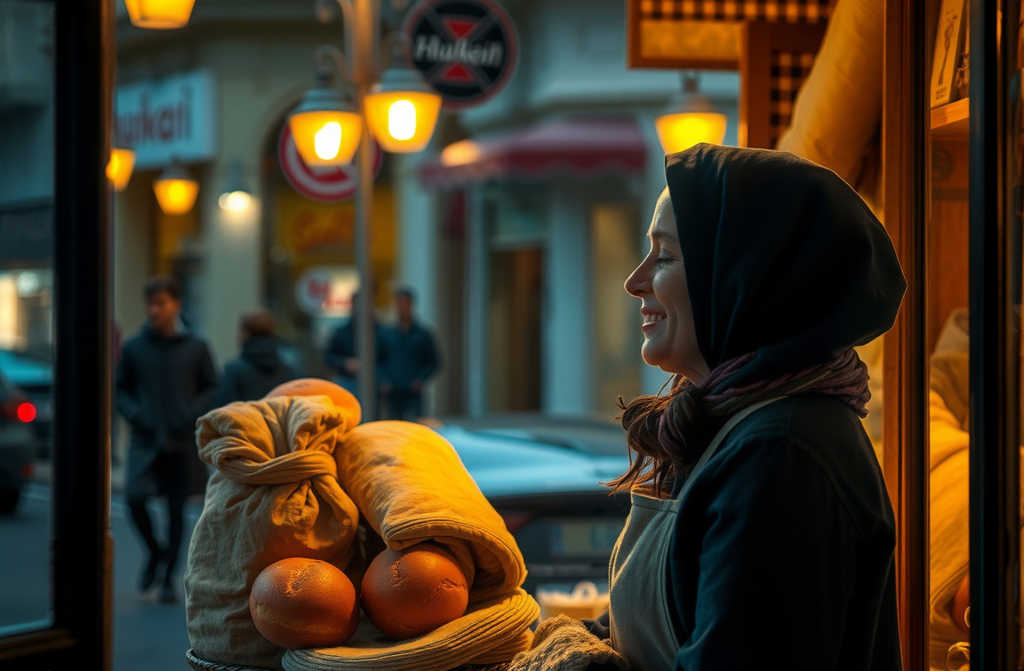
They opened in June. Lydia barely slept the night before: lists running through her mind. She rose at five, arrived in darkness, switched on the lights, and baked the first batch. When the scent of bread filled the air, she sat for a minute in the corner, letting herself exhale.
The day was lively and exhausting. Neighbours came, Tamsin and a friend dropped in, the old man with the dachshund stopped by. By 2pm, almost everything was gonejust a couple of loaves and an apple pie left.
That night, carrying bread and flour and cinnamon home on her skin, Lydia felt something like happinessnot cinematic or grand, but deep and quietly solid.
She and Anna didnt speak again. Sometimes, in the quiet of an early morning, Lydia would think of her, feel something between anger and sorrow, a dull ache. After forty-five years so close, it was an absence that had no easy fixsome things cant be mended without the cracks showing.
She knew her father still visited Anna. One day he phoned, saying, I saw her. The boys healthy.
Thats good, Lydia replied.
She cries.
I know, Dad.
They left it there. Peter John never pressed for reconciliation or forced a breachhe just remained, dropping by for a croissant and coffee, reading the paper at the window. It was enough.
As for Edward, Lydia rarely thought of him. Occasionally, a memory would surfacean old dinner, a trip to the Lake District, a suitcase lost at Gatwick. She let the memories come and go.
Of the business with her father, she never asked details. One afternoon, he simply remarked, We found some things. Not dreadful, but not pleasant. Sorted quietly. She nodded. Quiet it was.
What stung, even more than the betrayal, was realising that shed spent thirty years never knowing that she could have children, never really discussing it with Edward, whod found it easier to pin the fault on her and get on with his own life. It hurt in a way she couldnt easily describe: a deep, old pain.
But Lydia had learned to live with pain without letting it consume her. The grief, the loss of what might have been, the thirty years lived one way when they could have gone differently.
And yet, there was the scent of bread each June morning. The old man with his dachshund buying rye and a cabbage pasty, without fail. Tamsin popping by every Friday, chattering by the counter like they were girls again. Her father, with his coffee by the window. There was something alive, real, her own.
That September, three months after opening, Lydia felt at home in her bakery. One evening after a hectic daysuppliers, a broken oven, a rush for croissantsshe stepped outside in her apron, just for a breath of air.
He was there, across the street.
She barely recognised Edward at firsthe seemed older, slighter, hunched in a new coat, pushing a pram from which a baby wailed at full volume, rubbing his forehead as he walked, face pale with exhaustion.
Their eyes met.
A second, maybe two. The baby cried on, the wind sent leaves swirling across the pavement, somewhere a car horn sounded.
Lydia didnt look away. She watched him, then smilednot to him, not for him, just a small smile as she felt something settle clear inside her.
She turned back into her shop.
Inside, the air was warm with bread, cinnamon, and coffee. Behind the counter, Mary, the young assistant Lydia had hired in August, was wrapping up leftovers.
All right? Mary asked.
All fine, said Lydia. How are the leftovers?
Almost all gone. The eclairs went first, then the buns. Only two apple pies left.
Save one for Mr John. He said hed pop by tomorrow.
Lydia went into the kitchen, removed her apron, hung it up. She looked around at the tidy counters, the cooling oven, the tidy shelves of spices. Mums ring caught the light, glowing a deep, dark red.
She turned out the light and went to help Mary close up.
The rain had returned outside, just a thin gleam on the tarmac, windows glowing across the street.
She was fifty-five. She had a bakery that smelled of cinnamon, a father who drank coffee at her window, a friend who visited every Friday, and her mother’s ring on her hand.
And she was beginning, slowly, to rebuild something inside herself. Not happiness defined by the absence of pain, but a full, real lifeher own, the one she was finally entering as if stepping in from the cold to a warm, bright room.
The bitterness lingered; thirty years could not be erased, and the pain of what might have beenchildren, another lifewould stay with her. So, too, the grief over Anna, the knowledge that some things crack and can’t be glued seamlessly.
But life was there, all the same.
Lydia turned up her collar, stepped into the rain, and made her way to her car, unhurried, at peace. The leaves were soft below her feet, the rain whispered on her shoulders. Tomorrow, shed try a new recipehoney bread with carawaysomething shed meant to do for ages. And tomorrow, she would.
Sometimes, the ground beneath your feet cracks open and you discover, in making your own way across, that there is still so much life waiting on the other side.