Slippers in the Teeth
Bring me my slippers, Tom said, without looking up from his mobile.
I stood by the cooker, stirring a saucepan of soup. Just ordinary vegetable soup, the way Tom liked it since childhood. The bread was sliced, the bowls were ready, and Id already got the butter out of the fridge.
They’re by the door, I replied, keeping my voice steady. You walked right past them.
I said: bring them, he repeated, finally looking up from his screen. There was something new in his eyes. Not angersomething colder, more distant. Bring them in your teeth.
I thought I hadnt heard him right. Or maybe it was another one of his recent, increasingly bizarre jokes.
Sorry, what? I turned from the stove, wooden spoon still in my hand.
You heard me. Bring me my slippers in your teeth. Like a dog would. So I know you respect me.
I set the spoon down. Slowly. Something tightened in my chest, but it wasnt hurt, and it wasnt fear. It was something heavier and, strangely enough, calmer.
Tomare you being serious?
Absolutely.
Weve been married three years. Youve eaten my food, slept in my bed, lived in my flat. And youre sitting there demanding I bring you slippers in my teeth.
Its a test. Mum says a real wife
Stop. I raised my hand. Dont tell me what your mother says. I can guess.
Tom narrowed his eyes. See? Even this, you cant do. The simplest thing. Mums right: you dont respect me. Its always you whos in charge. Im nothing to you.
Youre my husband. You were my husband. I put the butter back in the fridge. Soups on the hob. Help yourself.
I left the kitchen, and Tom stared after me as though Id done something unforgivable.
Perhaps I had. But really, the unforgivable bit had already happened. Just not tonight.
My name is Emma Stanleynée Adamsand I married Tom Stanley at twenty-five, after knowing him for three years. We met at a friends birthday party, exchanged messages for months, dated, and eventually he proposed. It felt right: steady, conventional, a welcome relief after the messy relationships Id had at uni. I wanted a reliable, predictable person.
Tom seemed reliable. Soft-spoken, a bit introverted, mad about football, always the first to volunteer for a Sunday roast. He worked as a mechanic, not much money in itbut he always said, with a sheepish grin, Itll get better, Ill set up on my own soon. Just wait. And I did believe him. Back then, I believed a lot.
The flat came from my grandmother, whod died a year before the wedding. Two-bedroom place in a seventies block in Reading. Nothing flash, but it had great windows and the neighbours were friendly. Granny Ada kept it immaculate, and Id put a bit of my savings into itrepainted, new sofa, a telly for the sitting room. Tom had helped lug things about, put up shelves. Back then, it felt like we were building something together.
Toms mother, Margaret, didnt come barging in at first. She waited, hovering on the fringes. Shed show up every few weeks with a homemade pie or a jar of pickled onions, smiling at me with careful courtesy. My pal Rachel was green with envyher mother-in-law had moved in after the wedding and never gone home.
But it couldnt last. It never does. At first Margaret would call Tom once a day, maybe twice. But gradually her calls multiplied until she rang him at breakfast (Are you warm enough, son?), lunch (Did Emma cook, or did she just buy ready meals?), and dinner (Is she feeding you properly, or does she only think about herself?).
To begin with, I didnt interfere. A mother missing her sonfair enough. Hes her only child. But after each chat with his mum, Tom would come into the kitchen a little altered. Pricklier, more critical. Mum says soup shouldnt have tinned tomatoes, only fresh. Or Mum reckons you spend too much on cosmetics. Or Housework should be done every day, not every other day, Mum says.
Tom, I asked him once, what do you actually think? Or is that not allowed?
He sulked. Said I didnt respect his mum. I apologised. That was a mistakeone of many. But once you start backing down with Margaret, you never stop.
Margaret was sixty-two, with a helmet of permed hair and a talent for giving orders. Shed managed the local council housing department for two decades; her word was law, and retirement hadnt changed her. Her husband had died when Tom was seven, and since then, Margaret had made Tom her entire purpose.
That hed married at all was an insult. She hid it well at first, but it soon slipped: this was a woman whod lost a war and was planning her guerrilla campaign.
She started arriving at the flat unannounced, hauling bags of groceries and eyeing the interiors as though she was the hygiene inspector. Bit dusty there on the bookshelves, Emma. Do you ever clean them?
Hello, Margaret, Id say. You couldve told us you were coming.
What for? This is my sons homethey dont owe you an explanation.
Tom just stood there. Sometimes with a flicker of guilt, but never a word of support. That silenceit was the worst part. If hed even attempted a feeble Mum, maybe ring first? it would have been something. But the only message in his silence was: Im not really with you.
I tried to talk to him, many times. After Margaret left in the evenings, Id sit with him and quietly say that we needed boundariesthat I deserved dignity in my own home.
You just dont like her, Tom always insisted.
I dont have to like herI do need to respect her. But respect goes both ways.
Shes old.
Shes sixty-two, Tom. Shes fine.
Shes my mother.
And Im your wife. Or am I?
The conversation always hit a brick wall after that. Hed light a cigarette on the balcony, or scroll on his phone, or just mutter, You make everything complicated, and turn in for the night. Id be left in the kitchen, lukewarm tea in hand, feeling like Id been speaking to a wall.
I confided in Rachel. Typical, she said. A Mummys Boythey never change. But I didnt want to believe that about Tom. He wasnt a bad man. Honestly, he could be kindalways quick to fix a leaky tap for the neighbour, always patient with my mum and her rubbish phone. He wasnt a drinker or a cheat. He was just passive. The word came to me later: led. Like a little boat with no paddle, drifting wherever the current took it.
Except Margaret was always the current.
By our third year, things were at their worst. Margaret was round so often she almost kept a spare key. She brought casserolesnot to help, but to show my cooking wasnt up to snuff. Shed rearrange the furniture, critique the curtains, and once even reorganised our wardrobe properly. I came out the shower to find her folding my jumpers.
Margaret, please dont touch our things, I told her, quietly but firmly.
I was only helping, she huffed.
Its not help if I dont want it.
Later Id overhear her in the kitchen telling Tom, Your wife is rude. Shes got you under the thumb and shes kicking me out of the family. Cant you see it?
And Tom would stay silent, but look at me differently. Evaluating me through the things his mother fed him over hours at the kitchen table.
Thats when all these arguments about respect, who was in charge, wives knowing their place started. I could hear Margaret behind his words, see her in his new, lordly posture at the dinner table. He was trying on her rules for himself, though they didnt fit in the least.
The slippers thingthat was pure Margaret. Cooked up over tea, or maybe copied from some TV drama, Ill never know. But it had her fingerprints all over it.
After that evening, a silence settled over the flat. Tom wouldnt answer my questions, barely ate what I cooked, subsisted on Margarets endless Tupperwares. He walked past me like I was invisible.
For the first few days, I felt like Id been batteredexcept it wasnt fists. It was coldness. Indifference. Like I was there, but not really. I tried to talk, to reach through, to get him to just say what he wanted. Tom either wouldnt answer or snapped, You know what you did. Once, when I broke down in tears, the look he gave me dried them instantly. There was no pityonly something like satisfaction.
Right. Something inside me closed, quietly. Not brokejust closed.
Meanwhile, Margaret was in every morning, drinking tea at the kitchen table as I grabbed my bag for work. I was a travel agent for Sunbeam Holidays in the town centre, catching the train at half-eight. Before I left, Margaret always found a moment to slip in a dig. Calmly, almost sweetly.
That jumper makes you look a bit plump, Emma.
Did you buy instant coffee? Tom shouldnt have thathes got a delicate heart.
You look tired lately. Not getting enough sleep?
It was a quiet, strategic campaign, and I saw it for what it was.
One evening, after Tom had gone for a shower, Margaret leaned close to me, confidential and conspiratorial.
Emma, lovejust do as he asks. Fetch his slippers. Hell be content, and we can all have some peace.
I looked her straight in the eyes. For a moment, neither of us looked away.
Margaret, do you realise what youre suggesting?
A bit of give and take never hurt. For family harmony.
No. Youre asking me to degrade myself so your son feels superior. Thats not harmony. Thats surrender.
She pressed her lips together and got up, saying, Well, well see how your pride keeps you warm at night.
After she left, I sat for a long time in the kitchen. The lights in the flats opposite glinted, a dog barked outside, the muffled rush of cars hummed distantly. Another ordinary autumn night in Reading. I thought about how, three years ago, Id moved in here full of hopeful energy, and now I sat feeling like a stranger in my own homethe home that was, after all, mine.
Eventually I stood up, feeling different. Not angryclear-headed. Like a fog had finally lifted.
I found my phone and sent a messagenot to Rachel or Mum, but to Auntie Maureen, Toms dads older sister. In the Stanley family, Aunt Maureen commanded respect, even made Margaret a bit nervous.
Aunt Maureen was sixty-eight, a big, forthright woman who lived in the next block. Our relationship had always been good, no nonsense. I remembered her saying, after two glasses of wine at a family dinner, Emma, youre a good sort. But Margaret wont leave you be, mark my words. Shes ruined Tom, and shell try and ruin you too, for the company.
Back then, Id dismissed it. Now, it rang true.
I typed: Aunt Maureen, can I call you tomorrow? I need your advice.
Minutes later, the reply: Ring anytime, love. Ill be in.
We spoke nearly an hour next morning. I told her everything: the slippers, the silent treatment, the daily invasions, the persistent undermining. Maureen listened quietly, then said,
Margarets always been this way. She used to do the exact same to Tom as a boypunish him with silence if he so much as rolled his eyes. Hed cry, beg her to speak. She taught him that love must be earned back by grovelling. Its not maliceits all he knows.
That explains it, I said slowly. But its no excuse.
Exactly. And fighting with her while shes still aroundyoull never win, love. Shes a professional at this.
Aunt Maureen, Id like to ask a favour. I need your help.
I told her my plan. She chuckleda hearty, approving sound. Thats the spirit. Just say the word, Ill be there.
It took me a few days to get everything sorted. All that time, I stayed calm, said little, just got on with things. Tom took my quiet for surrender. He thawed a little, even started to speak to me again, almost polite. Once, he said thank you for dinner.
Shell come round, Margaret announced one afternoon, once Id left the room. You just have to wait. Women always give in, eventually.
I overheard her and bit the inside of my cheek before returning with a neutral face.
Margaret, I said, I have a suggestion.
She tensed, braced for drama. But I surprised her.
I think, I continued steadily, we should settle this as a family, once and for all. Lets have a proper sit-down dinner. Get everything out in the open, honestly.
She glanced at Tom with thinly disguised glee. Shes caving in, her eyes seemed to say.
Well invite Aunt Maureen, I added. The oldestshe should be there as a witness.
That gave Margaret pause. Shed never been able to handle Maureen, who cut through nonsense with a single sharp-voiced word. But to object would look guilty, and admitting anything was not Margarets style.
Fine, she agreed after a beat. Let her come.
Tom eyed me with hope. Shes giving up, Mum! Shell apologise! he was plainly thinking. He even flashed a half-smile. I smiled back, quietly.
Family Meeting Day was set for the following Saturday. I spent the week not fussing about the food, but about my wordsrehearsing things aloud in the bathroom mirror.
I didnt want pity or a fight. I just wanted clarity.
Somewhere in all this, I gathered documents: the deed to the flat, always kept in the top drawer, and quietly rang the work solicitor for advice on divorce when the property is inherited. No prenuptial, he explained, so matrimonial assets might be shared, but the inherited flat was mine alone. That was a relief.
The night before, I phoned my mother, Sharon Adamswho only knew what I told her, which wasnt much. This time I told her almost everything. She was quiet for a long time.
Emma, are you sure?
Yes.
You know Ill stand by whatever you decide.
I know. Thanks, Mum.
Then do it, love. Im proud of you.
Saturday morning, I stood by the window with a cup of tea, watching the caretaker sweep autumn leaves from the path. It was mid-October, the trees coppery, the sky low and greyjust another overcast Reading day.
I wore a neat navy dress. Not flashy, not sombre, just comfortable. Hair twisted up, a little lipstick. When I looked in the mirror, I saw someone steady. It was the truth.
At two, I laid out the lunchsimple, but neatly done. Nothing extravagant.
At quarter past two, Aunt Maureen arrived. She gave me a real bear hug and whispered, Hold firm, girl. Then went to the living room and satdeliberatelyat the head of the table. It mattered.
At half two, Tom and Margaret turned upTom in a crisply ironed shirt, Margaret in her best jumper, hair freshly set at the salon. She came in like she owned the place, nodded faintly at Maureen, whose brief, cool response threw her a little off-balance.
Everyone settled. I dished up soup; Margaret pursed her lips, ready to criticise, but I beat her to it.
Hold the food a moment, please, I said. Theres something important I want to say, and it’s why were all here.
Tom tensed, sensing danger. Margaret made to interject, but Maureen put a hand on her wrist, steady as a bouncer.
I stood updidnt mean to, it just happened. I wanted to say this on my feet. I glanced around at my husband, mother-in-law, and Aunt Maureen.
A few weeks ago, Tom asked me to bring him his slippers in my teeth, I said, clear and firm. He meant it. It was a test of respect.
Maureens eyebrows shot up. Margaret gripped her spoon.
I refused. Since then, Tom hasnt spoken to me, barely eats my food. Hes been ignoring me for nearly a month. I paused. Margaret has been coming here every day, pointing out my faults, telling Tom Im rude for asking her not to move our things, criticising how I dress, how I clean.
Emma, lets not exaggerate Tom started.
Not now, Tom, Maureen cut in, with quiet steel. He shut up.
I have some things to make clear, I went on. First: this flat is mine by inheritance from my gran. Ive put my own savings, time, and effort into it. Over three years, Toms never once paid all the bills. I buy most of the food and all the appliances weve bought in that time have been from my account.
Tom flushed. He opened his mouth.
You dont earn consistently, I added, not unkindlyjust stating fact. Sometimes busy, sometimes not. I never complained about it. But Im saying this so were all on the same pagenot Margarets version for her friends, the real one.
Margaret took a deep breath to object, but Maureens hand kept her still.
Second: Margaret, youve spent three years sabotaging our marriage. I wont speculate about your reasons, just the consequences: youve convinced your son that a wife who thinks for herself and wont be humiliated is a bad wife. Youve raised a man who cant protect his loved ones or make decisions. Thats your doing. I have no idea whether youre proud of it.
The silence was such I could hear the tram go by outside.
FinallyTom, Im filing for divorce. The decision is final. Im asking you to pack your things within two weeks. You can stay here during the paperwork if you keep the peace.
I turned to Margaret. Please never visit this flat again. Ever.
Margaret snapped. She jumped upher chair screeching. How dare you? Youre breaking up this family! You
Margaret, Maureen said. Not loudbut with enough command to halt an army. You heard Emma. And I agree with every word.
Maureen, you cant
Be quiet and listen, Maureen ordered, and there was such resolve in her that Margaret fell silent. Ive known you forty years, Margaret. Youre a sharp woman, but youve made a cripple of your son. Not in bodybut here. She tapped her chest. You raised a man more afraid of you than anything. Hes never learned to love a woman properlybecause you filled the space. Thats not love, Margaret. Thats control.
Tom stared at the tabletop, ashen-faced.
Emma, Maureen said, turning to me, good on you. Go live your life.
She took her bag, nodded goodbye, and left.
Margaret stood stunned. Then she grabbed her coat, muttered something, and followed.
Tom looked at me, his eyes filled with something I couldnt quite nameloss, confusion, maybe even relief.
Emmapleasewe can talk
I talked to you for three years, I replied. Thats enough.
I cleared the table. The soup was left untouched. So be it.
The divorce took two months. It was civil enough, no fighting, as there wasnt much to divideno car, no children. Tom collected his things in two tripsclothes, tools, some furniture that Margaret had supplied in year one. I helped load it, no tears, no bitter words. When he looked back from the door, I nodded. He did the same.
The first days alone, I walked the flat and listened to the silence. It was a different silenceno longer heavy with rejection. Just quiet. A space waiting to be filled.
I moved the furniturenot because it was necessary, but because I could. Sofas by the window, new ochre curtains I’d wanted for ages (Margaret wouldve called them cheap). They were precisely right: warm, autumnal.
I rang Rachel: Rach, Ive had the decree absolute.
I know, loveyou told me.
No, I mean its done. Official. Yesterday I got the certificate.
So? How does it feel?
It feels right. Weird, but right.
We met that evening at a café, feasting on cake and tea. She talked, I listened. For once, I wasnt in a rush to get home, wasnt anxious about Tom pouting or Margaret barging in. I was just there in the moment.
You look lighter, Rachel said, studying my face. Not thinner. Justlighter.
I think I know what you mean.
It was hard at first. Not because I missed Tom, really. Justthree years. There are routines, spots on the wall that hold memories. Some mornings I woke and spent a few seconds adjusting to the space next to me being mine alone. Sometimes I felt a pangnot for the man he was, but for the idea Id carried: shared evenings, joint plans. That was never real. But Id still mourned it.
But mornings and coffee and purpose washed it all away eventually.
I signed up for a knitting classsomething Id fancied since uni, always putting it off. The instructor, Mrs Thompson, was a lively older lady, full of warmth, and the group was a mixyoung, old, and one septuagenarian who simply said, I want to make my grandkids decent socks for once. I fit right in. We knitted, chatted, and outside, snow began to fall.
Work changed, too. Or rather, I did. I began to speak up in meetings; my manager, Helen, caught me in the corridor and said, Emma, you seem differentmore confident. I reflected a moment. I think I am.
I started saving for a car. Booked driving lessonsat last. My instructor, Mr Davis, was patient, if a bit grumpy. After a couple of months, I felt comfortable behind the wheel.
Tom went back to live with Margaret. I heard about it from Aunt Maureen, who checked in occasionally. Margaret devoted herself to him again: she now inspected his pockets, fussed over laundry, kept tabs on his social life. He told his cousin, Its worse than National Service.
I actually feel sorry for him, I told Maureen, honestly.
Its his own job to feel sorry for himself, she said. Dont linger on pityget on with your life.
I thought about that often. I really did feel for Tom, not as an ex-husband, but as someone who was never given the tools to build his own life. But pity isnt the same as a second chance. Its the freedom to let go.
In December, Tom rang to collect a couple more boxes. Come over then, I said.
He arrived Sunday morning, looking dreadfuldrawn, tired. I pointed him to where the boxes were stacked.
Emma
I cut him off gently. Lets keep it quick, Tom.
I know. I just wanted to say. I was wrong. About everything.
I know, I said.
He hesitated. Can I have another chance? Ive taken a bedsit
No, I replied. Calm, definite. No. Thats all done.
He looked at me a long while, then nodded, accepting. Want a hand carrying these down?
Go on then.
We lugged the boxes together; his cousin waited in the battered old car outside. We loaded his things. That was that.
Just as Tom was climbing into the car, Margaret hove into view, striding up the pavement in her wool coat and warlike grimness.
Wait! she cried. Im coming too!
She glared at me. Youve ruined his life, you know that? Ill see you in court! Social services will be hearing about youI’ll write to the paper, you think
Margaret, I said quietly, social serviceswhat for? There arent any children.
Ill find something, you watch! You think youre clever?
“No. But perhaps you dont recall the scene two Christmases ago? When you showed up demanding money you said Tom owed you? That day there were plenty of witnesses. Including Mrs Cartwright, on the next floor. All reported at the time.
That was half-true and half-bluff. There really had been shouting and witnesses, but not as many as Margaret might think.
Besides, I went on, Aunt Maureens told me about your council contracts. How certain arrangements seemed unusual. I dont know all the details, but she might.
This was a wild shotbut I saw instantly Margaret couldnt tell if it was true.
She wouldnt Margaret almost whispered, drained of colour.
She hasnt, not yet. But if you want a fight, so do I. Sound fair?
We stared at each other for a moment.
One more thing, I added. I bumped into Mrs Wheeler, your neighbour, who says youre not the same. Said at Mrs Nashs birthday you upset everyone, and nobody invites you anymore.
That part was absolutely trueMrs Wheeler told me so at Sainsburys the week before.
Margaret was at a loss for wordsa rarity.
All this while, Tom stood beside the car, watching. He looked between his pale, furious mother and mecalm, coat zipped, hands in pockets. Something in his face settled at last.
Mum, he said, lets go.
She wheeled on him. Youre on her side? Against me?
Im not against you. I just want to go home. My own home. Ant, give us a minute, he called to his cousin.
Ant nodded.
Tom came close to me, searching my face.
Im sorry. For the slippers. For everything.
I already forgave you, I said. A long time ago.
He dipped his head, then turned to Margaret, steering her to the car.
Mum, Im sorting my own place. No more living with you or Emma. Time to do things myself.
Tom, dont be daft, where
Im thirty-two. Enough, he told her firmly.
She argued quietly, already unsure.
They drove off. I watched them turn the corner, then went inside.
Five flights up, door open, shoes offthe kitchen warm and bright. Kettle on, midday, lightly falling snow. I sat alone, listening to the water boil.
A little sadthat honest sort of sadness. Three years of life, and some of it was goodfunny, warm, real. Still, it was over.
I made my tea, picked up my knitting. Started a second sock, thinking about buying warm mittens for a trip, as Rachel and I were going to York for the weekend in February. Her idea: Lets try some Yorkshire food, see the Minster. Why not?
A text: new number. Then the name: Jack, my allotment neighbour. Wed met over the summer when I went to water my grans berry busheshed helped fix a leaky tap, calm and kind. Hed lost his wife three years ago, with grown-up children who lived away.
Hi Emma, he wrote. I sometimes check the allotments in winterwould you mind if I checked your greenhouse? The plastic might not take the snow.
I smiled, replying, Thatd be lovely, thank you.
He messaged again, Will you be coming down? Good snow, not too chilly.
Maybe next weekend, I replied.
Alright. If you do, Ill be around on Saturday.
I set my phone aside, picked up my needles. The sock grew, stitch by stitch. Outside, the snow whirled.
I thought of Jack: his warm hands, the patient way he explained plumbing. He was a widower, I heard from other neighbours. No expectationsjust a decent man who cared if my greenhouse roof was holding.
That was enougha simple connection. For now, more than enough.
On Saturday, I did go to the allotments. Thick coat, hat, flask of tea. The train rolled through snowy fields and sparse trees.
Looking out the window, I remembered my journey three years earlieralready uneasy back then, telling myself things would get better if I just tried harder. Now, there was no need to persuade myself of anything.
Stepping off at the station, I made my way to the plot. Jack was out stacking logs by his shed.
Afternoon, he said, lowering his axe.
Afternoon, I replied, smile warming my face.
He was hatless, his cheeks pink with cold, but he smiledslowly, honestly.
You made it, then.
I did.
Any tea?
Plenty.
He cleared a spot for us on the little benchthreadbare blanket over the seat. We sipped from my flask, gazing over my grandmothers neat but snowbound beds, the yellowed weathervane spinning lazily in the wind.
You been here long? he asked.
Not really. Had the allotment for ages, but Ive only started coming regularly this year.
Nice here in winter, he said.
It is. Quiet.
We sat in companionable silencea silence that felt good.
Everything alright with you? he asked.
I thought about itreally thought.
Yes, I said. I think so.
Good, he said, simple and sincere. Nothing more needed to be said.
The weathervane spun, its yellow paint chipped but steadfast. I glanced over at Jack, hands resting on his sturdy knees. A neighbour, nothing moreyet. But enough.
Elsewhere in Reading, Margaret went home alone to her empty flat. Tom trawled rental websites, finally facing the mess that thirty-two years of denial had built. Theyd manage.
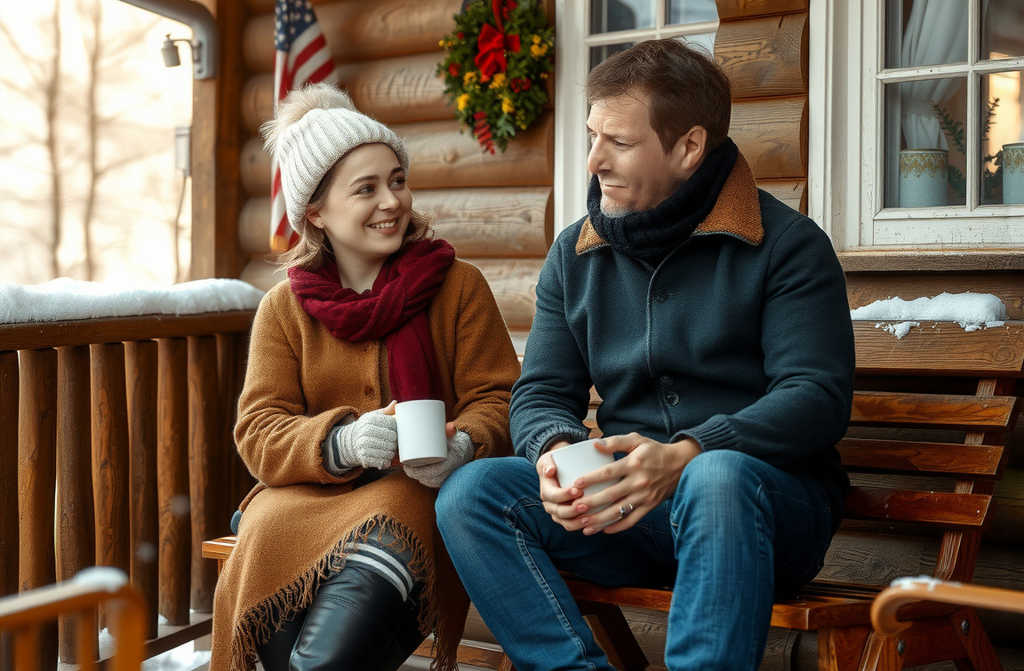
I drank my tea on that snowy bench, felt the peace of the cold air, warm handsmine, hisnearby. The futureunwritten and, at last, all my own.





