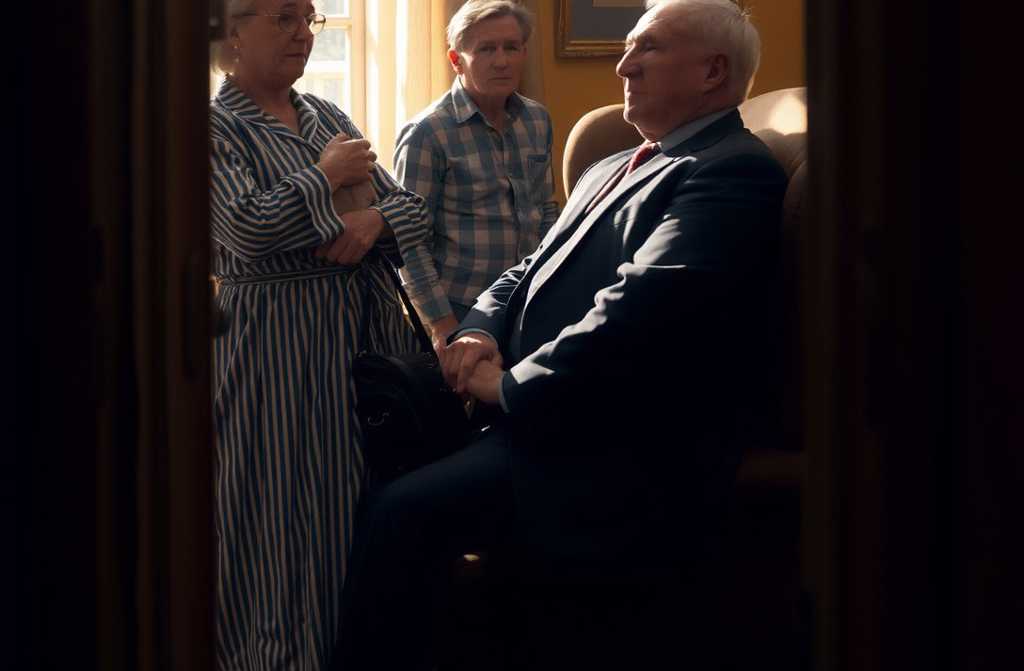
At fifty-five, to start anew
It must be half past nine, years past, and I can still hear my telephone ringing, shrill and insistent just as I sipped my tea, and long before the screen glowed, I knew it was Vera. Shed always phoned at the least convenient hour, not out of spite, but because, in her world, her timetable seemed the only one existing.
Nina, did you jot down the shopping list? Veras voice rang out, abrupt as a stationmasters tannoy, skipping pleasantries altogether.
Good morning, Vera. I set my teacup on the sill and watched the garden take on gold and copperSeptember in London wrapping the world in autumn.
Yes, yes. Did you get it?
I remember. Linen napkins, candles for tall holders, pitted olives, and bits and bobs.
Not bits and bobs. Essentials. The olives must be Greek, large, in a glass jarnever a tin. Tins taste of metal. And not white candles; ivory, cream. White looks cheap against a dark tablecloth.
I sighed quietly and turned to the window. Outside, September splashed yellows and russets about the garden. Sparrows flitted at puddles left by last nights rain. Three old lime trees grew by the fence. I loved them like a city-dweller rarely loves treesalmost as kin.
All right. Cream candles.
And Nina, I want you here for two oclock. Not three, like you said. I need help setting the tableWilliams useless, he never aligns the plates.
I have a client till just after one, Vera.
Who has clients on a Saturday?
Im a massage therapist. Saturdays are working daysyou know that, Vera. Youve known twenty years.
Her pause was the kind Vera did best. A pause that brimmed with everything unspoken: Of course, youd find a reason.
Fine. Two-thirty. Not later. Guests at six.
Two-thirty, Vera. I promise.
And dont wear those shapeless linen shifts.
Vera
What?
I love you too, I replied, in all seriousness, free of irony.
A soft silence, then, oddly tender, Do try to be early.
When I hung up, I finished my now-cold tea. The kitchen was heavy with fresh, sweet airId baked cinnamon buns earlier, for no other reason than it pleased me. My flat was always full of scentspies, coffee, dried herbs I hung in bunches. My neighbour once said my place felt so like a proper old English cottageId never taken offence; it felt more compliment than anything.
I left for Veras at half past one, timing it for the Saturday traffic, but there were no jams, and the bus moved swiftly. By three, I was standing before her familiar door on the fifth floor of an old mansion block in Marylebone. One of those grand postwar buildings for the respectable and well-situatedhigh ceilings, broad staircases, a porter downstairs. Vera loved to say This building has character. I thought its character a touch grim, but never let on.
I rang. No answer. Again. Nothing. I waited, fished out the emergency key Vera had given meJust in casethinking perhaps she was in the bath or had headphones on.
The door opened silentlyVera kept everything oiled. Inside, the hall was half-dark, the thick curtains drawn tight in the lounge. I hung up my jacket and wandered down the wide walnut hallway.
Nearly at the sitting room, I heard laughtera bubbling, raspy, unfamiliar peal. Of course, I knew Veras voice, but this wasnt how she laughed. Vera laughed with restraint, hand to mouth, as Mum had taught. But someone here was laughing head thrown back; I could hear it, sense it in the sound.
I took one step more, standing in the lounges doorway.
On the pale, expensive rug, two figures sat on the floor: Verawrapped in her faded blue-striped dressing gown, the very one I was sure shed binned years ago, hair knotted carelessly, stray wisps on her cheek, not a lick of makeupand beside her, a man in his mid-fifties, jeans, checked shirt, grey at the temples. Between them, parchment paper sprawled, two foil-wrapped kebabs dribbling sauce and herb, two tumblers of fizzing dark cola, heaps of crumpled napkins.
Theyd clearly just been laughing, and now, stunned, they both stared at me.
For a moment, we were all silent.
Then I caught his profilehigh-bridged nose, deep-set eyes, a small scar on his chin. And in a rush, I remembered an old story Vera had told: childhood accident, a bicycle. Gregory.
I had not seen Gregory in over thirty years, yet some people are always unmistakably themselves, even when lined and grey.
Nina, Vera finally said, her tone unafraid, not guilty. Just the startled honesty of someone caught at something real.
I knocked, I replied. No answer. Used my key.
We didnt hear you, said Gregory.
I see.
Pause. I surveyed Vera, Vera peered back, Gregorys gaze settled elsewherepolite, aware this moment belonged to the sisters, not him.
Come in, then, Vera said, half-laughing, as if relieved. Want a kebab?
No, thank you. I entered, awkward just hovering in the doorway.
The lounge had always been immaculate. Pale walls, dark wood, paintings in heavy frames, not a speck of dust. All as usual, except amid the splendor sat two grown folk cross-legged, eating takeaway, laughing like studentshappier, it struck me, than anyone I’d seen in a long while.
Gregory? I asked, more to test the name.
The very same, he smiled, lopsided grin, dimple showingjust like the old photos in Veras album.
We only met again by chance, Vera ventured.
Last year, Gregory confirmed.
Last year, Vera nodded, caught Ninas eye again, I know how this must look.
You dont know, I replied. You werent standing in the doorway.
Vera burst out laughing, that new, light, unfamiliar laugh. Sit down, at least. Dont just loom there.
I perched on the Italian leather sofaVera always said it cost as much as a second-hand car. Careful as ever, I worried about creasing the hide, then caught myself and chuckled quietly.
The conversation flowedVera and Gregory chattering, me mostly listening. Theyd bumped into each other at an art exhibition for a painter they both adored in their youth. Gregory lived in the countryside now, running a smallholding, growing his own veg. Hed been married, now divorced. No children. At this, Vera gazed to the window.
I listened, trying to reconcile this Veraa woman cross-legged on her own rug, fingers sticky from sauce, looking at Gregory with gravity and hopewith the neat sister who never would have sat on the carpet, and always insisted takeaways were beneath her.
I felt, suddenly, like someone whod picked up a familiar book only to find a very different story written inside.
Just then, a key rattled in the lock.
All three of us heard. Vera straightened. Gregory set down his drink. I gripped a cushion.
William, Vera breathednot as a question, but as a fact. Of course it was.
Things blurred for a mad half-minute. Vera sprang up, grabbed Gregorys hand, nudging him swiftly towards the corridor, whispering desperately. I caught the word loo and realised she was shoving him into the guest toilet at the far end.
Tools! Some pliersanything, he needs to look like he’s fixing something! Vera hissed, wild-eyed.
What?
I scanned the room, grabbed an old wooden box off the shelf and rummaged for something that could plausibly be a tool. I found an adjustable wrench, tossed it at Nina. Vera squashed the foil kebabs under the sofa, hurried the tumblers behind the pot plant.
It took all of half a minute.
William stepped in, calm as ever, unhurried. He hung up his coat, set down his briefcase. Always meticulous.
Vera? he called.
In here, Vera repliedher voice perfectly level. I marvelled at her composure.
William entered. Sixtyish, solidly built, silver hair, well-cut suit. His face unreadable as alwaysa trait I both respected and feared.
Nina, he nodded, youre early.
No traffic.
Vera, why are you in your dressing gown? he observed, frowning.
I was just changing when Nina arrived, Vera said smoothly, barely a stumble. William, why are you home? You said not till six.
Meeting was moved, he replied, surveying the room.
My eyes avoided the plant, the drinks hidden behind it.
Whos that? William asked, noticing the wrench in my lap.
The plumber, Vera said instantly. The bathroom taps dripping. I called someone out.
Whys Nina holding his wrench?
He needed to free up his hands, I chimed in, surprised at my own calm.
William scrutinised me, then shrugged, heading for his favourite armchair.
And where is this plumber?
In the bathroom, Vera replied.
Call him, will you?
Silence. Vera didnt move.
Vera, I said call him. I want to ask about a full replacement.
Hes busy just now, William.
Ill wait.
His tone was measured, but there was an ice to it that made my stomach twist. Williams silences could be worse than shouting.
A minute ticked by. Another.
What’s he doing, building a boat in there? William said at last, dryly.
I glanced at Vera. Shoulders low, head bowed, she looked like someone whod finally given up an unbearable load.
Vera. Williams voice, now steelier. Whos in our home?
Gregory, she replied quietly. His name is Gregory.
A beat.
Gregory who?
My old schoolmate. An old friend.
And youre hiding him because?
She turned to face him fully. Her face betrayed nothing familiarno shame, no fear, just a new resolve, like someone facing what cant be postponed longer.
Because youd ask questions.
Well, I’m asking now.
WilliamNina, could you step outside, please?
Nina will stay, William replied, levelly.
Ninaplease, Vera insisted.
I left, standing in the corridor, fingers pressed to the bouncy parquet. The bathroom door stayed closedpoor Gregory, I thought, listening to it all in utter silence.
From the lounge, Williams voice, flat: I want this man out of my home.
Ours, Vera corrected.
Ours then.
Ill explain, William.
Go on.
Vera paced; I could tell by the uneven steps that she was anxious, just as shed always done since childhood.
We met again last year. By chance. We hadnt seen each other since 1987. Hed moved away, lived abroad, came back years later.
Im not interested in the mans CV, William cut in.
But I am, Veras voice grew firmer. Because I never forgot him. Not one day in twenty-eight years of marriage.
A long silence.
I leaned back, closing my eyes, a wave of tiredness washing over me.
Were you unfaithful?
No.
Then whats going on?
Nothing, she whispered. Thats the trouble, William. Nothings happened for a very long time.
I cant understand.
I know you cant.
Williams voice dropped: Hes your lover?
No.
Then why is he here?
He came over. We talked. We ate and laughed. I cant remember when I last laughed like that, William. Its scary not to remember.
So you laugh. Thats what youre missing. Not laughing?
I smile. I know how to smile. At office dinners, at celebrations, for the family photo. But when did I last laugh because I wanted to, not because I should? I cant recall.
Vera.
Our house is beautiful. I know, I made it so. I chose every plate, every curtain. I know what the rug cost! But sitting there today, eating a kebab on the floor, I didnt care if I ruined it.
You ate a kebab. On the floor.
I did. And it was the best thing Id done in years.
Vera, listen to yourself.
I am. For the first time in ages. The house is like a museum, Williamplease do not touch. Weve lived like that for so long: pretty, correct, dead.
I heard William stand, picturing his heavy, satisfyingly slow paces.
What do you want?
I want to take all this off, Vera replied, a thin tremor before tears. I spent twenty-eight years building what should have made me happy, by the rules. But inside, it just kept getting quieter. Like a museum, William.
You want to leave, he saidnot a question, just sure.
Yes, came her soft answer. I felt something tightly twist within me.
For him?
For myself. He just reminded me I exist.
I didnt wait to hear more. I tapped quietly at the bathroom door. Gregory emerged, clutching the wooden box.
We faced each other beneath the dull corridor light.
You heard all that, I said.
Yes, he replied simply.
What will you do?
He took a breath. I expected nothing. I came because she rang. I never imagined it like this.
This?
That shed choose.
I really looked at him thenold, lined, workmans hands, not the sort youd think could topple a lifebut there was something honest and true in him, like a weathered bench youd prefer beneath an oak to a velvet armchair.
Do you love her? I asked.
I always have, he said quietly. Even out of sight. Odd, perhaps.
Not odd, I answered.
Vera stepped outthe colour gone from her face, but calm in the way people are after storms, when there’s nothing left to fear.
She looked to me. Im going.
I heard.
Now. Right now.
Verado you have anything with you?
My documents are in the bedroom drawer. Some money. She hesitated, glancing back at the lounge where William remained. Clothes Ill sort later. I cant, for now.
Nina, Williams muffled voice floated out, tell her shes being a fool.
I was silent a heartbeat.
I wont say that, William.
Vera left for the bedroom, emerged with a small bag, slung her coat over her dressing gown, glanced at the mirror but turned awaywho needs mirrors now?
Nina?
Yes?
Dont judge me. Not today. Judge later, if you must.
Im not judging, Vera.
She nodded, pulled the door open, and was gone. Gregory followed. The door closed quietly.
I stayed, listening to silence.
Eventually, I slipped in to say goodbye to William. He sat, unmoved, gazing out the window. The scent in the room was aftershaveand, curiously, kebab, only now apparent when all was finished.
She needs time, I offered, because I had to say something.
She needed a different kind of husband, William replied, not turning. No bitterness, no tearsjust exhaustion.
I took my coat, quietly said farewell, and went. The street outside was heavy with dusk, September evenings short and cold. As I walked to the bus stop, thoughts jostledabout Vera, William, about Gregory, whod spent twenty silent minutes in someone elses loo with remarkable dignity. About the old dressing gown, the real laughter, the tumblers of cola hidden behind a plant.
I didnt know if Vera was right. I wasnt sure there was any right here at all. All I knew: something had shifted, something irreversibly and forever, like the ground quaking beneath your feet.
The months after unfolded in a strange, suspended time. I heard from both. William called once or twicebrief, careful, asking mostly about Veras well-being. My answers were careful too. Vera rang more often; her voice new, softer. She moved in with Gregorya small house in the Kent countryside hed been slowly restoring. Three hours on the coach, nearly at the edge of a little village, fields and allotments all around. Vera told me about the goat Gregory kept. How shed learnt to light the range. How her hands ached from the cold.
I tried not to imagine Verathe former manicure devoteestruggling with mud outside a market town. Instead, I pictured the faded dressing gown and that laughter Id heard in the lounge.
Veras daughter, Alice, lived in Manchester, raising her young son, rarely visiting. When she learned what happened, she was silent on the phone, then said she couldnt and wouldnt understand her mother. Vera mentioned it with studied calm, but I sensed this wound hurt deeper than she let on.
A year on, when the three lime trees turned yellow again in my garden, I found courage to visit. The villageRedmeresounded almost comical, and very English. The coach rumbled through one hamlet after another, clutching market bags, crates of eggs, sacks of potatoes.
Gregorys house stood on the edge: timbered, scruffy, bright Michaelmas daisies crowding the garden. The beds were dug for winter, smoke trailing from the chimney, though it was not cold.
I pushed through the gate.
Vera was coming up from the veg patch, wearing wellies, a quilted jacket, bucket swinging at her side, hair in a plait. Her face had changedmore lines, weathered. Shed aged more in that year than the five before. Her hands, when we hugged, were rough, nails short.
Nina! she exclaimed, pure warmth in her voice, and we hugged right there amidst the damp grass.
Youve aged, I teased.
I know, she laughedthat laugh again from the lounge floor. The real one. Suits me, doesnt it?
Dont fish.
Im not, I grinned.
Inside, the cottage was homely, higgledy-piggledy, with the scent of baking and wood. A crocheted cloth on the table, geraniums on the sill. In the corner, a great white range, tiles gone grey with age.
Does it actually work? I nodded at the stove.
I light it myself now. Gregory taught me. Just dont forget the flue or youll be out cold!
I poked about. Nothing resembling the old London flatsimple chairs, a jumble of old and new, curtains in neat checks, a shelf of books and family photographs. On one, I spotted the two of us, laughing in a field, decades ago.
You kept this?
Gregory printed it off from one I scanned. Drink?
We sat in the kitchen, sipping tea, talking about goats, carrots, cabbages, making do. Gregory popped in from outsidequiet, plain-speaking, no fuss, like he belonged here all along. He laid the table with Vera in silent entente. It was the teamwork of people who’d truly settled into one anothers company, even if only for a year.
Over lunch, we chatted about the weather, the next harvest, Gregorys hope for a greenhouse next spring. I shared stories about my massage practice, my patients, and my cata gray tabby Id adopted last autumn, with white paws.
What do you call him? Gregory asked.
Edward.
Solid name for a cat.
Later, Vera showed me her goatBarbara, a regal creature with a perpetual look of judgement.
She stares at me like shes Queen Victoria, I said.
Thats just her way. At least shes generous with milk. We make our own cheesesimple, but satisfying.
I watched Vera feed Barbarawellies squelching, laughter rising to the low grey Kent sky. I couldnt imagine this scene only a year before.
Just as we headed in, a car rumbled on the lane. Strange for a village roadthen I saw the dark, sleek car pull up, out of place as a swan among ducklings. William stepped out.
The air changed. Vera didnt move. He entered the gate, carrying two large plastic bags.
Vera.
William.
Nina. Hello.
He surveyed the garden with the careful gaze of someone visiting a foreign land.
I brought some things, he set the bags on the bench near the door, Warm boots, proper woollies, some groceries.
Vera eyed them.
Why?
Because herewell, I thought youd need them.
Theres enough here.
Vera, you live in a cottage, light your own fires, milk a goat. Thats not you.
Im getting used to it.
Thats not living.
Whose life, William? Yours or mine?
Youve let yourself downcant you see?
Ive lifted myself up. Vera said this calmly, without malice. You see old boots, a battered house, a market coat, and all you see is failure. I see being able to leave the mask off at last.
I never made you wear one.
You just made the sort of life where not wearing it was impossible.
William pocketed his hands, looking back at the house, the garden, Vera.
Ive changed. If you came back, things would be different.
William, Veras voice was gentle but steady, you are good, you always were. You never hit me, never strayed, never drank. You provided, bought the flat, gave Alice her education. You did everything right.
Then whats wrong?
Right and happy arent always the same. She hesitated. You did nothing cruel, but I was suffocating. Not your fault. Just the way it turned out.
William stared at her, glanced at the bags, then back to her.
Alice wont forgive.
I know.
She thinks you betrayed the family.
Perhaps I did. Vera pressed her lips together, first fissure in her composure. I hope one day shell understandnot forgive, just understand. Thats different.
I dont understand, William admitted, and in three small words, something real reached his voice for the first time.
I know, Vera answered softly. Forgive me
He paused, then turned and walked to the car. Keep the things, either way.
All right.
He left; the dust hung after him a long time.
Vera and I stood there in the silence of a village dusk, the smell of earth and woodsmoke thick in the air.
Hell come again, I said.
Until it sinks in. It might take time.
And you? Is it hard?
Hard enough, she said. Come on, help me with these.
Evening fell quickly, the kind you only see in October out here. Gregory fired the range, a warm halo spreading throughout. We drank tea with cherry conserve gifted by a neighbour. And when Gregory made himself scarce in the next room, Vera and I sat at the kitchen table, two sisters across from each other like in our childhood.
Are you angry with me? she asked suddenly.
I didnt answer right away, choosing to be honest with her and with myself.
I dont know, Vera. A year ago, I thought youd gone mad. That you were wrecking everything. That at fifty-five, you couldnt possibly start again.
And now?
Now I look at you and wonder who decided there was a cant, or a rule that if youve been married long enough, you must stay even when youre hollowed out inside?
You wouldnt have said that before.
Maybe not. But I hadnt seen your face the way it was thenon the lounge rug. You know what struck me most? Not seeing a man. Not the kebab on the floor. You were laughingreally laughing. Id never seen that in you.
Vera smiled, almost shy. Id almost forgotten I could do it.
That was the frightening part. Id always thought youd won at lifehusband, home, money, order. I was the also-ran with my small job, modest flat, second-hand bits and pieces. I used to think, well, Nina, you just didnt do it right. And on that day, in that dressing gown, I didnt feel anger. Something else. Relief, maybe. That perhaps were all pretending, and right doesnt mean much.
The wind rattled the window. The fire murmured; the room was a little sanctuary of light and warmth.
Ive lost Alice, Vera whispered. This was hardesther true grief. Maybe not forever, but now she wants nothing to do with me. When I call, short answers: Fine, Mum. Alls well. Goodbye. That hurts most.
Shes young still.
Shes thirty-one.
Young at thirty-one. Shell understand, someday.
Do you think so?
I think so. Maybe at forty. At fifty. She will.
Vera covered my hand with hersher palm rough, warm.
You say running away, catastrophe, Vera said. William says let yourself down. Alice says betrayal. What do you say, Nina?
I looked long at the window, into the blackness where only our reflections flickered.
I think, I answered, piece by piece, weighing my words, you did what most people only dare dream. Not because its the right thing, but because its terrifying. Terrifying at fifty-five to realise youve not lived your life; more terrifying to lose everything comfortable; most terrifying when those you love most dont understand. Most people would stay put. Would see it through. Tell themselves thats how its meant to be.
And you dont know whos right?
I dont. Maybe thats not even the question.
She nodded, slowly.
I dont know either, Vera said. Some nights, lying awake, I wonder. Alice, William, all Ive lost. Was it just weakness? Should I have stayed?
And your answer?
I still dont know. But morning comes and its quietjust quiet and good. No shoulds or musts. Theres the range, the goat, Gregory, a plot to clear before frost, and you here. Thats enough.
I studied my sister. The greying hair, now streaked and naturalunexpectedly becoming. Her weathered hands. Her steady eyes.
I thought of happiness: that well-worn concept everyone claims, so often said, hardly ever felt. But sometimes you visit a country house, see your sister in old boots with a bucket, and understandworn words can be true.
Country life was no dreamVeras calluses proved it. Cold floors, cranky animals, a distant daughter, a husband driving down with food parcels because he knows nothing else, all real, unvarnished.
But also the room between us, the glow of fire and jam and trustthat was real too. And I could not have said which kind of real life was the righter one. Perhaps that question itself was wrong.
Nina, Vera broke into my thoughts.
Yes?
Im glad you came.
Me too.
Come for Christmassnows good out here. Gregory will manage a proper English country bath.
Ill think, I laughed.
That means yes.
It means Ill think.
Vera laughed thenher own true laugh, the one Id first heard that day on the expensive rug, no longer a strangers. Just Veras laugh, finally herself.
Outside, the autumn night pressed inblack earth, woodsmoke, the distant echo of a dog calling in the lane, a London flat with polished floors and silent windows waiting far away, Alice tucking in her little boy, andmaybesometimes thinking of her mother with fury or sadness, or a tangle of both.
Inside, the fire crackled, the jam jar glowed, and two sisters drank tea, silent as only those whove shared a lifetime can be. Perhaps both wondering: what is true happiness? Does it have an address? How much does truth cost, and who pays in the end? Right and alivetwo very different words, and the hardest thing of all is choosing between them.
The fire muttered softly. The wind tapped at the glass. Barbara the goat, no doubt, chewed on, dignified and unconcerned.
Life went on: varied, difficult, real.