Wednesdays Secret
Do you know what Ive found? Jon said, soft-voiced and almost affectionatea tone Id come to recognise as the calm before something dreadful. Like the hush before a thunderstorm, that weight in the air. Ive found something rather interesting, Claire.
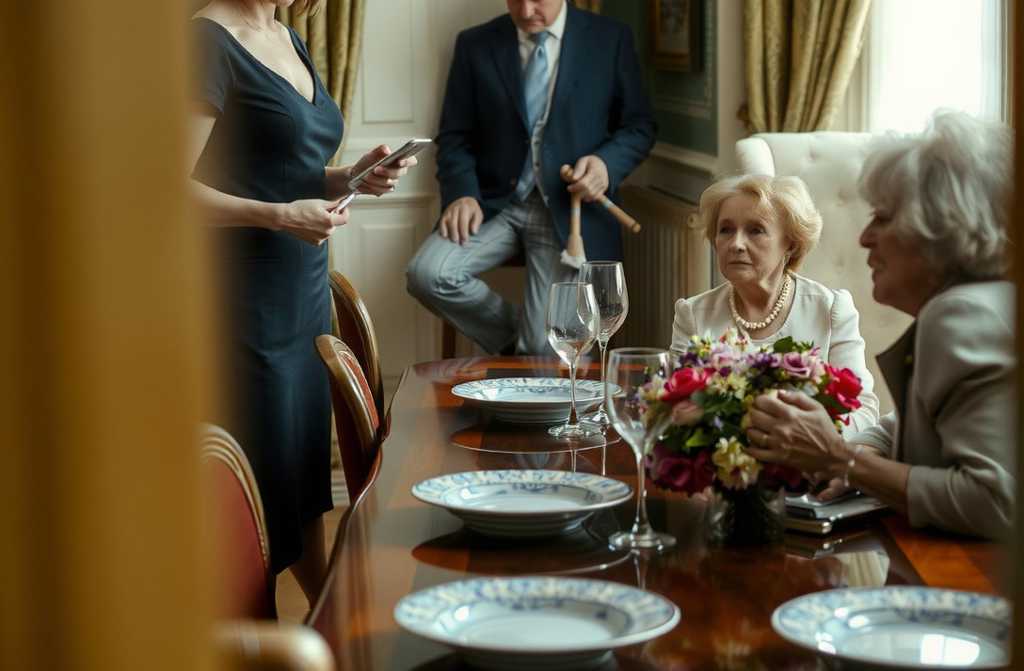
I sat across from my husband at the long dining table, helping my mother with the salad. The silver server chimed softly against the delicate blue-rimmed porcelain, a dinner set older than my memory, from another lifewhen gifts meant love and not the need to impress guests.
What exactly have you found? I asked, keeping my eyes on the food.
My voice was calm. My hands steady. That in itself was a feat, because I already knew. Id known since the moment, three months ago, when Jon began checking my phone with an almost comic regularity. Yet the precise thing hed dug upor said hed dug upremained unknown.
Lovely salad, darling, said Mum, Diana Louise Fletcher. Seventy-eight, hair set immaculate and hands marked with blue veins. She looked down at her plate, as she always did when she sensed tension. After years of Sunday roasts, shed learned when to quietly retreat.
Jon took his time, lifting a glass of sparkling water, sipping, setting it carefully back downa sound sharp enough in the stillness to echo like a starting pistol.
Photographs, he finally revealed. Youve been meeting with a man. Regularly. Always the same corner café on Northgate. Every Wednesday.
Mum didnt look up, her fork frozen mid-air.
I always go to the gallery on Wednesdays, I replied. You know that.
I know. But you didnt quite get there. Or not straight away.
He drew his phone from the inside pocket of his blazer, set it screen-downa move choreographed for effect. Jon loved a performance. Jon Edward Mason, joint chairman of Kings Build, local dignitary, familiar face at charity balls. A master at drawing out a silence. A master at the toast, at the look that made me visibly shrink, yet no one ever noticed.
Jon, I said, my voice even, if you have something to say, please say it.
He turned his phone over.
The screen showed a handful of photographs. I picked up the phone, flicked through them. Good resolution, snapped from outside with a long lens. Each shot of me at a café table across from a manmaybe forty, grey overcoat, briefcase, discussing something seriously. Passing papers. Looking in tandem at a laptop.
Is this what you call cheating? I returned his phone.
No. This is what I call explanation, he replied, the velvet in his voice gone now, replaced by steel.
No need, I said.
A first in seven years: plain, short, unvarnished. No Youre mistaken, no Let me explain. Just: no need.
Jon looked at me as if Id spoken an alien tongue.
What do you mean, no need?
Exactly that.
At last, Mum looked up. In her gaze, a mix of fear and something else, something she didnt have the words for.
Jon pushed away his platea clear signal: dinner was over. The real show was about to begin.
If an observer had frozen that moment, theyd have seen a classic picture: a lofty dining room in a Victorian terrace on Hanover Square, ceilings four metres high, ornate mouldings crumbling but still grand. Heavy moss-green velvet curtains, which even at midday dimmed the room like a stage waiting for act two. The over-large round table, set for three, porcelain imported from Germany twenty years ago, crystal, silver cutlery. Landscape oil painting, sea-mist and ships, eighteenth-century, over the fireplace. In the corner: a grandfather clock. Every quarter-hour, its chimes tolled like a metronomean unsparing reminder that time moves on whether youre ready or not.
Everything here looked beautiful. Everything, in truth, pressed down.
I thought of it as the set. Thats how it began, seven years ago when IClaire Elizabeth Brooks, then forty-eight, a widow with a modest art studio and a smattering of small exhibitionsmet Jon Mason at a company dinner to which a friend had dragged me. Jon made an impression; fifty-two, confident, well-dressed, articulate. He listened. He spoke. He made you feel like the only one in the room.
Later, I realisedit had all been a script.
The director in him emerged right after the wedding. First it was little edits to my look: Thats not quite right, wear the blue one. Then my friends: Your friend Jo is a bit much for me. Then my art: These paintings never sellwaste of your time. Then my daily routine, the menu, the tone I answered the phone with.
The insidious thing about family pressureit builds so slowly you cant trace the moment of surrender. One day, you discover yourself playing a role: a silent, lovely, ever-gracious prop. An artist who no longer paints because Turpentine stinks, as Jon said once, so I put it all in the studioand later, closed the studio entirely.
That was five years ago.
A year ago, Id asked for the keys back.
Jon had no inkling.
Do you understand what comes next? he said, velvet-smooth and as menacing as a shout. Ill give all of this to my solicitorsas evidence of your conduct.
What conduct, precisely? I sipped my water. I met someone for coffee. Thats not criminal.
Claire Mum ventured gentlyperhaps we might
Were being perfectly civil, Diana, Jon cut in, his use of her name dripping with polite disdain. I only want my wife to explain herself. Thats not unreasonable?
It is, I said.
I stood up.
That, too, was new. Id always remainedlistened, explained, sometimes crept off to decompress behind a closed door, but I never left the table before he was done.
I went to the window. It was any Sunday, really. March. Not quite spring, but no longer winter. Gritty snow on the sill. Naked trees outside in the square. A woman bending to adjust her babys hat.
I fetched my phone.
What are you doing? Jon asked.
Calling.
Who?
Already dialling.
Alexander David West, I said. Youve met him, in passing. The man in your photos.
Perfect pauselike someone had pressed hold on the scene. The grandfather clock ticked on, unflappable as ever.
Hello Alex, I said cheerfully into the phone. Yes, its me. You and the movers, could you come up?
Jon stood, disbelief on his face.
Whats going on?
It means, I pocketed my phone, that in a few minutes movers will come for my things. Ive packed all I need. The rest can stay.
Mums mouth opened. Closed. Opened again.
Claire, darling…
Mum, Im fine, truly.
There was such ease in my voice, Mum looked more frightened than if Id screamed.
Jon didnt move. He stared as though seeing me for the first time. Or perhaps seeing something he didnt expect. The director always imagines a scene: expose, wait for explanation or tears, savour victory, then be magnanimousor not. Humiliation. Repentance. He could orchestrate that.
Instead, he got a wife ringing for help and saying, You can come up.
Explain yourself, he demanded now.
Alexander David West, solicitor. He specialises in divorce. Very good at his job. Highly recommend him.
A seconds silence.
You… youre divorcing me?
Not yet. The paperworks ready. We’ve spent eight months on it.
Eight months. Jon Mason, always in control, always in the know, now gazed at me, clearly trying and failing to fit those eight months into any narrative. For eight months Id smiled at this table, set Sunday lunch, attended galas on cue, worn whatever he ordered. Yet all along
The doorbell rang.
I went to answer.
Jon stayed in the dining room, Mum unmoving, something transforming in her gazelike sunlight when the clouds shift.
Mens voices in the hallway. Calm, businesslike. Here? Good. Which room? I replied as though adjusting furniture.
Jon came out.
There were four menthree burly movers in blue jackets, and a fourth, slim, fortysomething, grey overcoat. Alex West, my solicitor. He nodded at Jon with bland professionalism.
Mr Mason, he said. Alexander West. Pleased to meet you in person.
Whats going on here, Jon intonedno longer a question, but fact.
Your wife is collecting her personal belongings. All within the law. If you have procedural objections, do say, but everythings in order.
The movers disappeared into the bedroom.
Claire Jon turned to me, voice almost unrecognisablestripped of its usual grip, replaced by something for which he had no words.
I met his eyesno anger, no triumph, just calm.
I know this is a shock, I said. But we both know its the right thing. You know it better than I do.
You cant just
I can. And I am.
I went to the dining room, sat next to Mum.
She was utterly stilldifferent now, not paralysed by fear but by realisation.
You planned this for a while, she saidnot a question.
I did.
And didnt tell me.
I didnt want you to worry.
I worried anyway, just not about the right thing.
Practical sounds drifted from the bedroommoving, lifting. Jon hovered in the doorway, visibly lost, like staring at a crack in a wall where the plasters just fallen.
Do you realise what this means for you? he bit out, familiar threat creeping in.
I do, I said.
Ill leave you with nothing. Did you even work? Savings? Property? All you have is this flat. Which is mine.
Jon.
What?
Please, sit down.
He didnt. But he fell silent.
I stood, walked to the sideboard, opened the bottom drawer and took out a blue cardboard folderordinary, tied with ribbon.
Laid it before him.
These are copies, I said. The originals are with Alex.
He didnt touch it.
What is it?
Statements from three bank accounts opened in other peoples names. Contracts with shell companies funnelling Kings Builds money for four years. Emails with your associate, Mr David Grantthe man described in these papers as your partner in a scheme the tax office may call something else. And photographs. Not the ones you showed me.
The silence changed.
In these photographs, I went on, youre with a woman. Not me. Several locations. The most recents three weeks old. I dont intend to use them unless you oblige me.
Jon Mason, whose world usually revolved around his words, who could spin any situation, now stood mutely in his own dining room.
One of the movers returned.
Excuse me, Miss, he asked politelywhere would you like the large suitcase?
Ill show you, I answered, stepping out.
Jon and Mum remained. She fixed him with the gaze shed reserved for Sunday lunchesassessing, seeing for the first time not just a provider, but the rest.
Jon, she said. Please leave the room.
He gawkedcaught off-guard.
Diana…
Please. This is my daughters home. For now, at least.
A pause. Then he took his phone and jacket, left the roomnot slamming the door; that wasnt his style. He left as actors do, certain the play will resume after their scene.
Mum was alone. The tick of the grandfather clock filled the hush. The silver and porcelain lay untouched. The flat echoed with the shuffling of removers.
She got up, opened the sideboard, took the blue folder, sat, read in silence a long time. Then closed it, put it back, and waited.
When I returned, she was sat upright, hands folded: her serious thinking pose from my childhood.
Mum, I began.
You did the right thing, she said.
I paused.
Not straightaway, maybe not perfectlybut right.
You looked in the folder.
I did.
And?
And I realised Id spent seven years worrying about the wrong things.
She hesitated.
I thought you were unhappy, but decided that was normal. He wasnt bad, just I told myself it was nothing. I thought it simple. It wasnt.
Mum, thats not the big thing.
No. I know what matters. Where will you live?
Ive let a flat. In Islington.
How long?
Three months ago.
She nodded, slowly tallying the details.
So he kept you here thinking you had nowhere, while you already had a key.
Yes.
Good girl, Mum said, without drama, as if commending a task well done.
Alex appeared in the doorway.
Mrs Brooks, almost donethe last box. And a reminder: our appointment at the notary tomorrow at eleven.
I remember.
He nodded at Mum.
Sorry for the intrusion.
Nonsense, she replied.
When he left, Mum studied me.
Is this solicitor a good man?
Very good. Professional. Recommended by Anna Wright, remember her?
The one who worked with Greg?
Thats her.
I see. Does he know youre an artist?
A strange question, but Mum was asking about something more.
He does. I told him.
Will you paint again?
Mum, I already do. For three months Ive been back at it. I made the second bedroom a studio.
Mum closed her eyes briefly, then opened them.
Good, she murmured. Thats very good.
Movers shuffled down the hall. The flat sounded emptier, ringing differently. Thats how rooms sound, I realised, when things finally leave.
I looked around the dining roomheavy velvet, blue porcelain, the ticking clock. All of it had felt foreign from the start. And Id adapted so well Id stopped noticing it wasnt mine.
Years before, aged twenty-three, I had my first art studio in a leaky Southwark basement, the air thick with linseed and turpsa smell of life. I married again, to gentle Paul Brooks, an engineer, and we shared eighteen years before he died of a heart attack at work, at just forty-four. Then, the world ended, but the studio remained. I painted, exhibitedjust enough. Critics in modest journals wrote kind things.
Then came Jon.
Then the set.
Then five years without a brush.
I turned fifty-five in March. Jon gave me an expensive bracelet Ive never worn. He didnt ask why. Probably assumed I feared losing it.
But the truth was it didnt suit me. It only suited the set. Not the person I am.
Claire.
He stood in the doorway.
It sounded quiet in the hallwaysolicitor and movers gone. Just us three.
We need to talk.
Im listening.
Not herehe darted a glance at Mum.
Here, said Diana, serene. Im not leaving.
He considered.
Fine. He took position by the window. I want to understand.
Nothing unexpected, I said.
Unexpected to me.
Not my concern.
Claire. He paused. I know weve had… issues. I know I… But we could have talked.
We did.
When?
Four years ago, when I told you I needed to work. You said it was just a hobby, not worth arguing over. Three years ago, I asked you to stop talking over me at dinner. You said I was too sensitive. Two years ago, I wrote you a letter. You read it and said: Are you serious? And that was that.
Silence.
We did talk, Jon. You just didnt listen.
I did.
No; you heard the noise, not the words. Theres a difference.
It wasnt accusationjust a statement. Id thought about how to say it, and finally got it right.
That folder, he said. Where did you get it?
Jon, do you really think I spent seven years looking at my food as blindly as you imagined?
He didnt answer.
Im an artist, I said. I observe. Its what I do.
Pause. The clock chimed the quarterfour soft tones. Gentle. Unstoppable.
You wont use it, he said. Not a questiona negotiation.
Not if things go smoothly.
If they dont?
Well see.
He looked between me and Mum. Her gaze was steady, like someone finally seeing the true shape of something shed feared.
All right, he said at last. Even. Too evena disguise.
He picked up his keys. His keys; looked at them a moment.
This is still my flat.
This is still my decision, I replied.
He left. This time the door did bang. Not too loudly, but enough.
Silence returnedchanged, somehow.
Mum got up, came close, took my face in both hands. As shed done in my childhood when I had a fever and shed check, Youre not burning.
Youre not burning, she said.
I laughedfor the first time that Sunday.
No, Mum. Im not.
Good. She let go. So, shall we see this new place in Islington? Show me your flat.
You want to go now?
Better than sitting repressed by these curtains, yes?
I looked at the velvet, at the porcelain, at the clock.
No, I said. Definitely better.
I called Alex, who was waiting outside. Said wed be down. Grabbed my small overnight bagjust the essentials: laptop, paperwork, notebook, a few changes of clothes. Everything else had trickled out over three weeks to Islington.
Three weeks Id lived in this flat as someone whod already bought a ticketjust waiting to board. Ate, slept, answered Jons questions over breakfast, but my mind was elsewhere. On the smell of paint in the new place, on evenings with orange light spilling through big west windows, on the studio and my canvas under its cloth. I did a little work. Not much. But enough.
Id been afraid Id cave in. That Id be too scared. After seven years, habit seeps inchange is terrifying.
But I wasnt afraid.
I felt something elsea rightness I remembered describing years ago, when asked about the act of painting: When its right, my hand just moves. Its not easy, but its right.
Thats how Id felt these three months. Just movingright.
Alex was waiting outside, the van loaded. All I needed could fit in one vanan observation in itself.
All OK? he asked.
Fine.
He take it well?
As well as he could. I glanced up. The curtains were drawn.
And if he tries to retaliate?
Hell stew for a week or two. Maybe compromise, maybe lawyer up. But with that folderhe has little ground. Especially with the taxman looming.
I see.
Dont worry. This is business, not war. Well handle it gently.
You convinced me of that eight months ago, I smiled.
Mum was already working herself carefully into my Uber, stately as ever.
I joined her.
We set off.
I didnt look back; it was a principle, not pride. No need. I looked forward, at the city in Marchgrey snow, wet roads, leafless trees already hinting at movement to come.
Tell me about your flat, Mum requested.
Fourth floor. Tiny lift. Two rooms, one a studio. Window over the park, a glimpse of water.
Big kitchen?
Averagebut with a window.
Thats something. Always need a window in the kitchen.
A companionable pause.
Mum, are you angry I didnt mention any of this before?
I am.
I knew.
But I understand. Id have tried to talk you out of it.
Exactly.
She looked out of the window.
I always sensed he was something else. I thought: picky, controllingmen get like that. But I never found words for what it really was.
Its emotional control, I said. Calmly. Not a misfortune, just a fact.
Yes. I suppose. In my day, we didnt say that. We said character. Or Just rub along. Or Put up with it. I told you that once.
Mum…
Nolisten. I told you put up with it because I didnt know another way. And I thought: maybe youre being dramatic. People do that, so they dont have to act.
There was nothing else you could have done.
I could have. I could have said directly: somethings wrong. Could have asked. Could have stopped pretending our Sunday dinners were normal.
The car stopped at the lightsdog-walker, students, man with a folded Guardian crossed in front.
Mum, I said. This isnt on you.
No. But it was my blindnessand thats different.
The light changed; we moved on.
We were quiet, but it was a good quietnot the kind where youre stuck for words, but where everythings been said and you can just sit together.
Islington: a 1960s brick block, smartened with just enough new paint. Tiny lift, groaning under the effort. Fourth floor. Door with a new Yale lockonly I had the key.
I opened up.
The scent of fresh paint mingled with a hint of linseed oilthe unmistakeable air of a studio, although I hadnt really noticed it until now.
Ooh, Mum said as she stepped in.
What?
It smells wonderful.
She wandered through the rooms, peered into the studiocanvas on the easel, moody dark lines raked by rusty light. She stood a long time, saying nothing.
What is it? she asked at last.
No idea. Im just painting. Thats allowedsometimes those turn out best.
Looks like dawn, she said.
Or sunset.
Maybe both. Mum stepped back. Show me the kitchen, go on.
The kitchen was brightone big window, deep ledge with a fake geranium from the former tenants. I kept it, for now.
Sit, I told her. Ill put the kettle on.
While it boiled, I checked my phone.
Jon had messaged, of course. Twenty minutes ago, as wed been driving.
A single line, no punctuation: we need to talk dont do anything yet
I closed the chat, opened his contact, hovered, then pressed Block. Confirmed.
Put the phone away.
Went back to Mum.
Shed hunted out the sugar and was frowning at the plastic geranium.
Buy a real one, she advised. Something alive. Breathing is important.
I will.
And buy something else you want. Anything. Yours. No one else need approve.
I set out teacups.
Mum. Do you realise this is just the start? The legal process. Itll be tough.
I know.
He wont make it easy. Hell manoeuvre.
I know.
Are you scared?
She thoughtreally thought, as she always did.
No, she said. Id be scared if you were different. Or if you didnt have that folder. People with secrets don’t enjoy court.
I laughed.
Where did you learn about courts, Mum?
I watch telly. And Im not daft, whatever my age.
Best head I know, I said.
She raised her cup.
Good tea, she announced.
Thats the one you brought me last week.
I remember. I always remember. You said yourselfmy minds sharp.
We smiled, a kind of laughter Id not heard for years in Jons flat. There, laughter was orchestrated, proper, timed to Jons stories. It never truly reached me.
This did.
I gazed out the window. The day had dimmed, as March days do, the sky a milder grey than at noon. But the light wasnt oppressivejust winters, and giving in.
Somewhere near Islington, I recalled, theres a little inletcycle paths in summer, a walk by the water in winter. Id not explored it yet. Soon, perhaps.
So much lay ahead.
My phone ranga number I didnt know.
Hello.
Mrs Brooks? A womans efficient voice. This is Lauren Whitby, from Echo Gallery. We found your old email on your website. Were curating our autumn exhibitions and would love you to take part. Are you still working?
A slight pause.
I am, I said.
Wonderful. Shall we meet next week?
Wednesday okay?
Perfect, well send the address.
We hung up.
Mum was watching me.
What?
Gallery. Autumn show.
She didnt replyjust wrapped her hands round her mug, holding onto the warmth.
Then said: You see?
She meant nothing, meant everything. I closed my eyes for a moment, feeling something finally release, slowly, like a fist unclenching after too long.
Will you stay for supper? I asked.
If youll pour another tea.
Of course.
The city outside bustled on. Somewhere, in a flat shrouded in velvet, time kept on chiming. Somewhere, Jon Edward Mason sat staring at a grey ticked message, undelivered.
Where do seven years go? Not a question for todayor even tonight. Its one for the dark, eyes-open hours when you try to work out how you got here. Not a lament; a calculation. Where did the path bend? Was there another route?
Perhaps. Likely more than one. Irrelevant, now.
What matters is what you make of the time you carriednot as a burden, but as knowledge. Painful, awkward knowledge, but, nonetheless, it teaches: to tell respect from use. To trust yourself. To act quietly, because quiet can be firmer than thunder.
For eight months, Id orchestrated my exit, silently. Wednesdays with the solicitor. Not for closeness, but for strategy. Packing things, letting the new flat become a home. Finding my way back to a studio.
And all the while, I sat at Sunday roasts, handed over pretty dishes, answered calmly, heard the clock.
That takes strengthnot strength to endure, but the strength of knowing: This isnt forever. I know where Im going.
Claire, called Mum. Is there anything for supper? Or should we order?
Theres food, I brought groceries. Ill make soup.
Ill help.
You relax.
No way, Ive made soup eighty years, Im not about to stop now.
I smiled.
Mum.
Yes?
Thank you.
For what?
For today. For telling him to leave.
She straightened her skirt, giving me a look that said: Of course.
Im your mum. Thats the job. Not heroicsjust duty.
And off she went to rummage in the fridge, seeking onions for soup.
I lingered by the window. Cloudy skies, snow drip-tapping on the roof. Where the sun reached, it started to melt.
I caught my notebook from my bag, opened to a blank page.
Wrote: Dawn or dusk? Must decide.
It was about the canvas.
But it wasnt, really.
I closed it.
The fridge door thumped, Mum declared, Ah, weve onions, the rest is easy, and the kitchen filled with running water and life; and somewhere in a small flat at the top of the stairs, a new chapter gently startednot liberation, not transformation, because I never liked such grand terms for simple things.
Just life: soup on the stove, my mother in the kitchen, canvas waiting next door.
My phone, like Jon, was blocked. Somewhere he still rang, still plotted, still expected a new act.
But here, he was absent.
Here, all was quiet. The air rich with onions and boiling water. The sky, above Islington, pale in the falling Thursday light.
Claire Elizabeth Brooks, artist, fifty-five, stood a moment longer at the window, then headed in.
Do you prefer your carrots grated or chopped? Mum asked.
Grated, I replied.
Quite right, nodded Mum.





