Mother Chose the Wrong One
The solicitor cleared his throat into his hand and adjusted his spectacles, although they were perfectly straight. It was a nervous habit, and Edith noticed it straight away; shed always had an eye for these thingssmall, almost invisible signals that people gave out, unwittingly. Outside, a storm was brewing: the sky above Oxford had darkened so swiftly it felt as if someone had drawn the heaviest drapes at precisely the wrong moment.
So, began Mr. George Faraday, spreading the papers before him with such care that it gave the impression a misaligned page might bring down the structure of the world, we are here to apprise you of the last will and testament of Mr. Albert Charles Wilton. I must ask you to take the proceedings with all due seriousness.
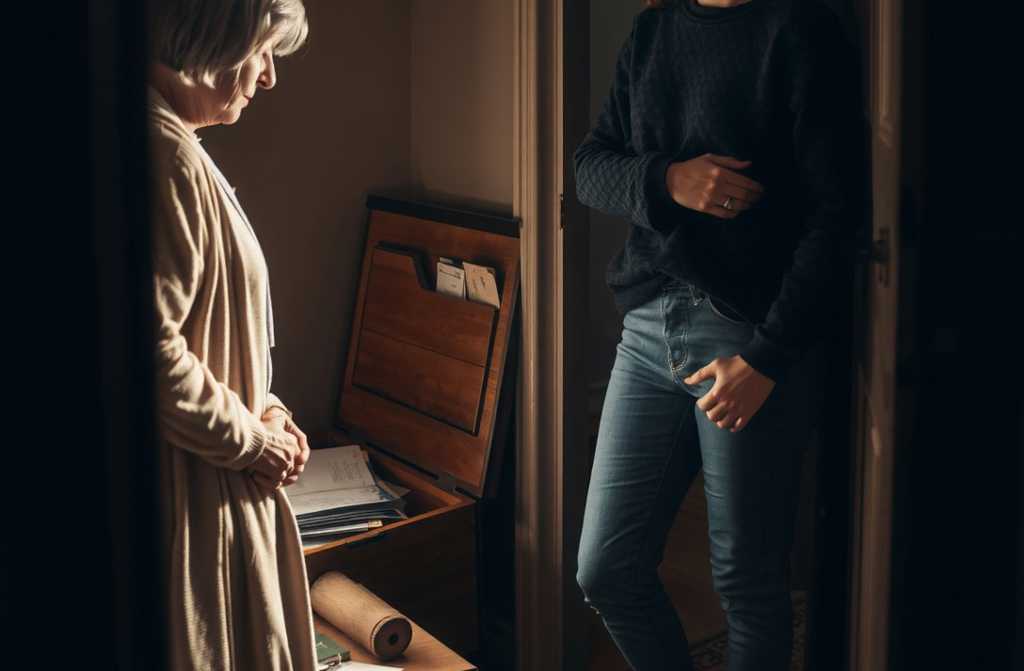
Edith sat between her son and her daughter, and the mere act of being quite literally situated between two worlds took a toll on her. On her leftEdward. Forty-two years old, dressed in a pale grey suit obviously tailored for him, shoes likely worth more than her monthly pension. He rested his hands on the table before him, perfectly still, as if hed long trained himself not to betray a thing. On her rightMargaret. Thirty-eight, in a simple linen dress of dusty rose, her hair hurriedly gathered up, yet still strikingly beautiful in that effortless way that required no cultivation. Margaret gazed out the window at the brooding sky, and Edith couldnt guess what occupied her thoughts.
Edith was thinking about Albert. How, in those last months, he sat at his writing desk doingwell, she never quite knew. Shed ask, and hed reply tersely, Just sorting papers, Edie. Dont fuss. So she didnt fuss. Shed spent her whole life trying not to fuss: not with her husband, nor her children, nor with lifes circumstances. That was her grand, hard-earned strategythough shed never have called it that. Shed have called it love.
Mum, said Edward softly, not turning his head, are you all right?
His tone was just so; his question, his manner, even the tilt of his head were as they ought to be. But Edith knew her son. Shed sensed it since the night, long ago, when at age three hed smashed Alberts favourite vase, then toddled over and said, Mum, Meg broke it. Meg had been fast asleep at the time. Hed gazed at her with the same careful, steady eyes he wore just now. Edith had said nothing thensimply fetched the broom and swept up the pieces herself. Why had she done that? She could not answer, even now.
Im fine, she answered aloud.
Margaret turned to her with a glimmer of warmth in her eyes, as though to say, Mum, Im here. But she didnt say it out loud. A wall had grown between them years ago, not of cold brick, but of what went unsaid: conversations perpetually postponed and never had.
Mr. Faraday began to read aloud, his voice measured and colourless, as if specifically trained for moments when people sat awkwardly in straight-backed chairs and listened as legal language sorted the chaos of once-living, breathing, tangled families. Edith listened and yet did not. She was thinking how Albert never liked storms. He often said they gave him a headache. She, on the other hand, had always loved themthe tingle in the air, the sense of nature speaking out in full voice, unconcerned by propriety.
Thunder crashed outside.
the flat on Ashbury Road, three rooms, is to pass to Edward Albert Wilton
She saw Edward nod, almost imperceptibly. Not surprised. Of course, he wasnt.
seventy percent share in Wilton & Partners Limited, to Edward Albert Wilton
Margaret kept her gaze trained on the rain-dark window, but her fingers tightened on the strap of her bag just a fraction.
the cottage at Woodbrook, along with the property, is to pass to Margaret Wilton
Edith felt Edward relax the tiniest bit beside hera fleeting moment, yet perceptible, because she sat so close, because she had known this boy from his very first breath.
Mr. Faraday finished, folding his hands on the table. Are there any questions?
Yes, Edward replied at once. There are some matters to address. Regarding my mothers welfare.
The solicitor looked up.
In the will, regarding Mrs. Edith Wilton
I understand whats in the will, Edward interrupted gently, almost fondly. But the will only covers possessions. Im talking about a person. Weve discussed it; Mums agreed to move in with me. Therell be some official paperwork to arrange.
Edith felt Margarets eyes on her.
Mum? Margaret asked softly.
Weve settled it, Edith answered before Margaret could, and her voice came out a touch firmer than shed meant. For she wasnt certain at all that it was settled. Edward had spoken to her a few days ago in the kitchen, over tea, presenting everything so smoothly, so logically, shed nodded alongeven as something within her whisperedwait, Edith, just wait.
But she hadnt.
Mum, said Margaret quietly, pain tightly contained in her calmness, are you sure?
Lets not make a scene, Edward cooed, nearly tender. Mums made her decision. Respect that.
Im speaking to Mum, not you.
And shes answered.
Thunder clattered again, nearer this time. Edith surveyed her children, one to each side, and wondered at what point on the journey shed erredor failed to act? Perhaps her mistake had been to spend a whole life not wanting to get in anyones way.
There were more papers. Rain slapped the windows of the solicitors office while Edith signed where she was told. All the while, she thought of Albert, of how he seemed to know the genuine from the falsebut did he, or did he only seem to?
Later, outside in the rain beneath umbrellas, Margaret paused by her old car before leaving for the cottage.
Mum, you can come with me. Now. I wont let you be left behind.
Oh Meg, dont start, said Edith, though her throat tightened. Youre heading to Woodbrook, and what for? Theres nothing out there.
Theres a roof and walls. Ill manage the rest.
Youve never fixed up a house, darling.
I can do more than you think, Mum.
Edward stood aside, pretending to fiddle with his phone, but Edith knew he heard every word.
Off you go, Meg, Edith said gently. Itll be all right.
Margaret gave her a long searching look, so prolonged Edith felt a prick of somethingnot quite guilt, but something deeper, beyond words.
All right, Mum.
She trudged to her ordinary, aged car; rain sheeted her shoulders, but she never looked back. Edith watched her go and thought how children, once grown, leave, not foreverbut each time, a little further away. Each time, it stings anew.
Edward offered her his arm. Lets go, Mum. The rains getting heavier.
And so she went with him.
Woodbrook stood about forty miles from Oxford, down winding lanes through woods that, as children, Margaret had called the scary woodsfor the close-packed trees blotted out the sky. By late May, when she arrived, the forest was less menacing; everything bristled so greenly that even the sternest old pines looked almost friendly.
The Wiltons cottagenow hers, though the title still felt foreignhad been built by Alberts grandfather in the 1960s. Good, honest timber; but time had left the planks darkened, warped, mossed along the north wall. The veranda creaked. The shutters hung askew. The back garden was a jungle; the beds, choked with nettle and thistle, barely hinted at the old kitchen plot.
Margaret stood before the cottage with her single bag and a key, reckoning many in her place might weep. She didnt. Shed never cried where people could see, and rarely even when she was alone. Not out of pride. It was a habitformed as a child when she learnt that her tears moved no one, only created awkwardness.
She worked the lock into yielding; the door opened with the unmatchable groan of an old door, the sound seeming almost alive.
Inside, it smelled of aged wood, a little damp, something elsesomething Margaret found oddly comforting: the scent of an uninhabited but not neglected house. The smell of rooms that remembered people.
She roamed the three small rooms, the mean kitchen with its old iron range (long cold), the veranda with its round table under a plastic cloth of faded flowers. A ceramic owl-shaped ashtray sat there. Margaret held it in her hands for a long spell before putting it back.
The largest room boasted a sturdy walnut sideboard of the sort built to last in the 1970s, strong-legged and with carved handles. Beside it, a bed with a striped ticking cover looked onto the garden, the glass blurred with age, the view outside as soft and dulled as watercolour.
Margaret yanked open the window. She inhaled pine and rich earth; a cuckoo called beyond the treessteady and persistent.
All right then, she murmured to the empty room. It was as good a start as any.
For two weeks she did little but cart out rubbish, wash windows, mend leaks. There was no money for proper repairs. Back at the solicitor’s in Oxford, Edward had seen to it that not only did the lions share of the inheritance pass to him, but also the vital connections. Margaret worked as an art restorer, specialising in 19th-century pieceswork requiring both skill and references. Edward, ever adept with the right word to the right person, made a few phone calls, and suddenly two commissions Margaret was counting on evaporated. There was no explanationjust apologies.
She understood at once, but spoke of it to no one, not even herself. She needed her strength for other things.
She found work at a little workshop in the nearby town, some twelve miles from Woodbrook. Old Frame, it was called, run by Peter Evansa man of seventy with hands like knotted roots. He took on any odd job in restoration, paid little, but paid reliably.
Margaret cycled there on an old bike found in the shed, repaired and pumped up. The ride through the pines lasted forty minutes; those solitary rides in the woods were the best part of her week. The forest required nothing of her, only existed.
She thought of her mother every day.
Edith had moved into Edwards grand new house on Maple Lanea three-storey affair with a garage and a games room. Edwards wife, Caroline, was as precise and chilly as the best-kept display at Harrods. Caroline greeted her mother-in-law properly: gave her a room, fitted it out well, even bought new curtains. But the room was in a little annexe, with its own entranceapart from the rest of the house. Edith saw all this at once and, as ever, said nothing.
At first, Edward visited nightly, bringing the paper or tea, asking after her needs. Then every other night. Then weekly. Caroline visited seldom. The childrenhis son, twelve, and daughter, ninedropped in, but only briefly: there were no electronics with Gran, just elderly books and albums.
Edith sat, day after day, thinking.
She thought shed erred but wasnt sure how. She thought of Alberthow hed detest what hed see now. Albert could see through people, could name things as they were, and Edward hadnt much liked that, even if hed never admit it. Albert had known that, too. And still spoke the truth.
Edith never did. She tried to keep the peace, believing that mattered more than truth. Now, shut away in her annexe, she realisedit may have been a mistake.
Margaret rang three weeks after moving.
Mum, how are you?
Im fine, love. All is well.
Do you go outside?
I do. I walk in the garden.
Carolines garden?
A pause.
Well, the shared garden.
Mum, Margarets tone was even but Edith knew there was more beneath. If things get bad, tell me.
Im all right.
I know. But if you need me
All right, Meg.
I found something odd in the cottage. Ill tell you, in time.
What is it?
Later, Mum. I need to be sure first.
She hung up. Edith stared at her phone for a long time afterward, reading Margarets name and the call duration: 4 minutes 17 seconds.
Whatever could she have found in that ramshackle place?
Margaret discovered it by chance, doing what art restorers do best: examining old timber. Restorers see layers, stories, history, and the marks of hands and time. Wandering the large room with her torch (the far corner still lacked power), she spotted a floorboard along the north wall with a different kind of stainunlike water damage.
She tapped it. The sound was hollow.
Lifting it up, she found a small hiding space, lined with an old scrap of felt. There were two objects.
The first was a modest canvas wrapped tight in waxed paper. She unwrapped it instinctively, as a restorer woulda swift, expert action. The picture, done in oils, showed a plain landscape: a field, distant wood, sunset with a single cloud. Yet there was something about it that quite took her breath awaysomething so right it felt as if the painter had caught not just the field, but the very idea of field.
In the bottom corner: a signature. Margaret leaned in with the torch and read it. She straightened, took a long breath.
It was Victor Apperleya minor English landscape artist, most work lost in the blitz. A handful of paintings survived, mainly in Europe; one, she remembered, still hung in a tiny museum in Bath. The rest had vanished. Margaret knew of Apperleyshed written about mid-19th-century English realism in university. She knew every documented piece. This wasnt among them.
The second item in the hiding place was a thick envelope, sealed, marked in Alberts large, impatient script: To Margaret.
She didnt open it at once. She sat there on the floor, keeping the letter in her lap, breathing slowly. Evening was closing in; birds clamoured beyond the garden.
Eventually, she broke the seal.
Meg, Albert had written in his unmistakable handletters slanting, commas wanderingIf youre reading this, then things have happened as I guessed. I wont say too much. Youre clever, and you understand better than I do. Just the essentials.
I bought the painting years ago from a chap down on his luck. He didnt know what he had, but I did. I wondered for years what to do with it. I leave it to you because youre the only one in this family who can spot whats real. Thats not flattery. Its the plain truth.
Aside from the painting, theres one more thing. At Thames and Merchants BankZurich branchtheres an account in your name. The documents and card are with Mr. Faraday at the solicitors, in a separate envelope, which he is to give you in private, outside the context of the main will. If he hasnt, ask him directly. Mention: Albert sends regards to Valerie. Hell understand.
As for Edward. Meg, I know my son. Im aware of his actions now and what hell choose in future. Im not angry. I want you to know I saw everything. I saw what you endured over the yearsand what youve become, despite it all. Perhaps thats what matters.
Look after your mum. Shell pretend all is well for far too long. You know her better than she realises.
Forgive me for never saying any of this aloud. I loved you dearly. Dad.
Margaret read it through, set it on her lap. Picked it up, read again. Folded it neatly back. Only then did she allow herself to crya quiet, measured grief, like someone well practised in mourning.
The next day, she travelled not to her workshop, but into Oxford. She found Mr. Faraday, repeated the phrase about regards to Valerie. He examined her closely, then rose, unlocked his safe, and handed her an envelope.
Mr. Wilton instructed me to give you this alone, he said stiffly.
Why not sooner?
He wished for time to settle matters first.
Inside were papers and a bank card. The sum in the account made Margaret gasp for the second time in as many days.
Did you know? she asked.
I knew of the envelope, not the contents.
I see, Margaret stood up. Thank you.
Your father thought ahead with great care, Miss Wilton, Faraday called as she left.
She nodded and departed.
In her car outside, Margaret stared for a long while, then phoned an old colleague in Zuricha private collections expert she trusted. The conversation was brisk.
Apperley? he repeated, excitement in his tone barely contained. Are you sure?
Im a restorer of fifteen years, Charles. Im certain.
A pause.
I must see it.
Ill bring it.
Driving home to Woodbrook, Margaret marvelled at lifes surprises. Sometimes it takes everything awayleaving you an empty cottage in the woods; and yet that cottage might hold everything.
First, though, there was a neighbour.
His name was Philip Graham, and his house lay two doors downa small, immaculate place, every feature exactly where it ought to be, betraying the touch of someone who understood space. Even the trees had been left as nature intended.
Margaret met him her very first week as he paused by her gate regarding the cottage.
Good day, she venturedit wouldnt do to be impolite.
And to you. New here?
Yes.
Fine cottage, he said simplyno lamenting years of neglect.
Do you think so?
I do. Beams are right. Good bones. Foundations sound. Only needs a bit of freshening. Houses live, you know.
Are you in the building trade?
Im an architect.
So began their acquaintancea brief, to-the-point exchange; Philip spoke little, but every word felt considered. Margaret was used to people who rattled away out of fear of silence, or who said nothing for want of substance. His silences felt full, as if he had plenty to say but was waiting for the right moment.
He helped with repairsshowed how to replace rotten wood, mend shutters, offered a can of timber treatment, then left, expecting no thanks.
That summer, when the sitting room stood half-restored, Margaret invited him in for tea. Not a romantic date, not an eventsimply two tired souls sitting quietly at a round table, at ease in each others company.
How long have you lived here? she asked.
Three years. Moved after closing my firm in Oxford.
Why close it?
A short, truthful pause.
My partner and I… had differences. About what architecture ought to be. I believe good buildings ought to serve people, not impress them. He disagreed.
And so you left?
I did.
Regrets?
He considerednot merely acting.
No. Though the first year was rough.
Margaret thought it a rare, honest answermost people would have replied instantly, or said sometimes for effect. He paused first; it meant something.
And you? he asked. You havent been here long.
Since May.
Ive seen the car. You restore art, dont you?
Yes. How?
Peter Evans said so. Speaks highly of your work.
Margaret smiledpraise from Peter Evans meant more than a diploma.
You know him?
We restored an old manor together, years ago. Fine project.
They talked long into dusk, the sort of conversation one remembers less for the topics than for the sense of goodness.
Autumn in Woodbrook was so beautiful that Margaret often found herself distracted from her work, forever gazing out as the woods glowed gold and orange, the pines a steady green among the blazea scene so assured it could have come from a masters brush.
It was then she first thought about a gallery.
The idea arrived by chance. She was in the now-refurbished large room, with clean, white-washed walls, thinking about the Apperley paintingcertified at last by the Zurich expertand her newfound savings. She had hands, knowledge. What was lackingspace where all of this could exist.
She called Philip.
I need your help. As an architect, not a neighbour.
All right, he said simply. When?
Tomorrow?
Tomorrow.
They discussed her vision for three hoursshe talked, he listened, asking only what was needed. When she finished, out came a little notebook, and he began to sketch. His drafting was swift, precise, his drawings uncannily akin to her thoughts.
Is this what you meant? he asked.
Nearly. She amended the sketch. He nodded. Much better.
Margaret realised, quietly, that something was happening between them. Not drama, not fireworks, but quietlylike a lock settling into place. It wasnt love at first sight, or even secondbut at the moment someone understands what youre trying to say, taking up your pencil as if theyd always known how.
Meanwhile, in Oxford, Edwards fortunes soared then crashed, just as swiftly. Albert had built his business slowly, avoiding risky loans, never investing in what he didnt grasp. Edward was different. Eager for scale, for speed, seeing his fathers caution as old-fashioned cowardice.
The moment he had full control, he made decisions: first, an expansion into a new sector; second, an investment promising reckless returns. Edward already felt like a winnerwinners dont second-guess.
The third decision proved catastrophic. Eight months later, his main contractor collapsed financially, the high-yield investment turned out precisely as one should expect.
Edward showed none of this at home. Hed inherited his mothers gift for keeping up appearances but Edith, who saw him daily, noticed the subtletiesthe shorter visits, the clipped phone calls with a shadow on his face. Soon, Caroline vanishedgone to her mothers, first for a fortnight, then a month.
From her annexe, Edith gazed on the old apple treethe last relic from previous ownerswhich bore fruit every year despite the odds. Edith saw Margaret in that tree: unassuming, but defiantly alive.
Margaret phoned weekly, sometimes more, describing Woodbrook, her work, the turning of the seasons. Once she mentioned Philip; briefly, yet Edith heard the significance in her tone. Edith was good at hearing what was meant between the lines.
Hes an architect? she asked.
Yes, Mum.
Is he a good man?
A pause.
Yes, Mum.
Thats good, Edith said simply. She did not probe: to ask too much risked Margaret becoming closed.
Winter arrived in Woodbrook early and earnest, with snow and frost by November. By then, Margaret and Philip had sealed the draughts, fixed the stovePhilip, it turned out, knew more about stoves than most. The house held heat wellAlberts grandfather had built solidly.
That winter, Margaret devoted herself to the paintingnot to restoration (it was in fine condition for its years), but to assembling a paper trail: provenance, letters, endless patient correspondence with those across Europe seeking lost British art.
One snow-blown evening, fire purring, Margaret confessed to Philip everything: the will, her brother, the letter, the painting, the Zurich account. She didnt know whymaybe storms felt safe; maybe, because he listened as if holding every word carefully.
He listened in silence. Then: Your father loved you.
I know now, she replied.
Did you know before?
I suspected. But with him, it was hard to tell.
He nodded, as if recognising himself in her words. But she didnt pry.
Whatll you do with the money? he asked.
Open a gallery. Here in town. Small, with a workshop. So people can bring in something old and learn its storya painting, a chair, what have you. I want old things to have a home.
He appraised her for a long moment.
Good idea, he said. Ill help with the planning.
I know, she replied. Thats why I told you.
They laughed together, the rare laughter of those who understand one another deeply.
Edward came to Woodbrook in February.
Margaret recognised the black Range Rover from her windowthe one, her mother told her, now under lien to the bank. She simply watched, then went to the door.
Edward lingered by the gate in an expensive overcoat unsuited to the weather. His expression was painful, not for any malice or self-pity, but because it was so tiredthat exhaustion born of a long mismatch between ambition and reality.
Meg, he said.
Ed, she replied.
He entered at her gesture; not for politeness, but because it was winter and they were, after all, siblings. She poured tea on the veranda at the old table now draped in linen.
I hear youve done all right, he began.
I have work, she said.
I meant otherwise.
I know what you mean, Ed.
He stared at his tea. Meg, things are hard.
I know.
I always thought, Dad hinted there was… something here. Thought you might have found it.
Margaret observed her brother: the clever, fast sibling shed known for forty years, who always found ways to get his way. And now he sat, cupping his mug.
I did, she said.
He looked up, quick as a flash.
A letter from Dad. He told me he loved me. And that he saw it all. Everything.
He looked down again.
Thats it? he whispered.
Thats everything, Ed.
He squeezed his mug tighter. Meg, Im in a bindjust need to cover one payment, then
No, she said, quietly.
He blinked. What?
No, Ed. I wont give you money.
He stared at herhurt, bewildered, as if the world had shifted beneath him.
You do realise, Im your brother?
I do.
You cant just
Ed, she interrupted, voice steady, do you recall what you said at the solicitors, in May? That I was impractical. Unfit to handle money or property. That the cottage was all Id manage.
He fell silent.
You were right in one way: Im different from you. I cant do what you do. But I do other things. And what I do gives me the right to decide how I use what I have. Dad thought so. So do I.
Meg
Im not angry with you, really Im not. But I cant help you. Not because I dont want to. Because it wouldnt help. Youre cleveryou must know that.
He was quiet a long time. Outside, snow drifted across the field, pines swayed at the edge of the woods.
Does Mum know? he asked finally.
About?
The letter. What you have.
No. Thats mine.
Youll tell her?
When theres reason.
He rose. Set his mug down painstakingly, as if the movement had import. Buttoned his coat.
Youve changed, he said at the door. Not an accusationsimply observed.
Perhaps, Margaret said. Or maybe Ive settled into myself.
He left. Margaret watched the car drive away, feeling neither triumph nor vengeance. Only weariness and something elsesympathy, perhaps, for what might have been.
She retrieved her mother in March.
Not on impulse; it was a decision ripened by time. Margaret drove into Oxford on a Friday, phoned her mother: Mum, Im coming.
Whatever for, Meg? All is well.
I know. But Im coming.
Edward was out. Caroline opened the door, eyes flickering with relief.
Shes in the annexe. Has her own key.
Margaret knocked. Edith opened straight offdressed, hair neat, her room in perfect, chilly order.
Meg, she said, smiling the faintly apologetic smile Margaret had always known.
Come on, Mum. Youre coming with me.
Dont be daft
Mum. Margaret took her hands, ice cold despite the warmth. Listenyoure here alone. Edwards busy. Carolines busy. The children are busy. You sit here looking at the apple tree. But you deserve more than an apple tree through the glass.
Edith was silent, her eyes dry but deep.
Its warm at mine, Margaret went on. Theres a hearth, a garden, pines. Its good there. Honestly.
And Ed?
Hes grown. He has his own family. Hell be fine.
Hell be angry.
Perhapsa mans right. Your right is to live where youre happy.
Edith considered her a long while, then: Its a small house.
Theres space, Mum. Youll have your own room. The big one with the garden view.
Dads room?
Yes.
Edith moved to the chest, began packing.
Ill help, Margaret said.
They packed for an hourclothes, a few books, her shawl, a small jewellery box of letters and trinkets. Not too little, not too muchjust what really mattered.
Edward rang as they left the city.
Mum says shes going with you.
Yes.
Meg, this
Ed, she is. If you want to visit, you know where to find us.
Pause.
Youre not
Goodbye, Ed.
Margaret ended the call. Glancing at Edith beside her, watching the city recede.
Meg, Edith said quietly, Is there a man?
Not a questiona statement.
Yes, Mum.
A decent chap?
Margaret thought of Philiphis way with old houses, the listening, the exact moment hed picked up her pencil.
He is, Mum.
Thats good, Edith nodded, and asked no more.
They drove into Woodbrook at dusk, snow glowing faintly as the light faded, sky stained violet. Edith surveyed the pines, the roofs chimney, the neat fence.
Good house, she said suddenly.
Margaret smiled. Someone told me the same.
Smart man.
The cleverest.
Philip greeted them by the gate; he simply waited there, because Margaret had told him. He did not bring flowers, didnt make a fusshe was just present. That was enough.
Good evening, Mrs. Wilton, he said. Glad youve come.
Edith inspected himsearching, maternal.
Evening. Youre the architect?
Yes.
Margaret mentioned.
I know, he smiled. Did she speak well of me?
She did. Do you deserve it?
I hope so.
Edith nodded, resolved.
Good. Help with the cases, will you?
He lifted her suitcase. Margaret watched them both, feeling something warm and simple, as real as anything unnamed ever is.
A year passed.
It passed as time does when one lives fullyquick, dense with days well spent. They opened the gallery in October: just two rooms in an old townhouse in Oxford, with a small workshop tucked behind. The sign, wooden with burnt letters, hung outside: Living Things. It was Edith who’d named it, commenting at the round table, Meg, old things really are alivethey remember the folk who made them. Margaret smiled, Mum, youve named the gallery.
The opening night was crowded. In a smaller city, a galleryif it’s earnestis news. The centrepiece was the Apperley, now authenticated and catalogued, its story published: a missing English canvas, a familys tale, history alive in paint. Journalists covered it, some well. Margaret didnt read the reviews; it was enough to see people standing, quietly looking.
Edward rang that night. Margaret answered in the back room.
Congratulations, he said.
His voice was steady, tireda man whod learned much but wasnt yet ready to say it.
Thank you, Ed.
Mums there?
Here. Making herself useful with guests.
Short pause.
How is she?
Better than shes been in years.
He paused. Carolines left me.
I heard.
Im working now, in a firm. Different city. Accounts.
Margaret said nothing. Auditor in a small city was a long fall from owner and director. She understood it cost him dearly.
Its honest work. People need auditors.
Yes. They do.
Another pause.
Meg, I Ive thought a lot about things. About the past.
I know, Ed.
Are you angry?
No. I gave that up long ago.
He was quiet for a time.
Dad was rightabout you. About seeing whats real.
Margaret leaned against the window, watching October leaves slip down the glass.
You see it too, Ed. You just didnt want to, for a while.
Perhaps.
When you want to visit, do. Mum will be glad.
Beat.
And you?
She thought sincerely.
So will I, I suppose.
It was not a full reconciliation, nor a break. It was possibilitya small, open gap where something new might one day bloom.
Margaret returned to the gallery, where Edith was chatting animatedly to an elderly lady about the walnut sideboard now installed for all to see. Her cheeks were flushed; she was, unmistakably, herself.
Philip stood by the far wall, heads together with a guest. When Margaret entered, he caught her eye: Are you all right? She nodded slightly: As ever. His mouth trembled into a knowing half-smile, then he turned back to his conversation.
Rain began to fall outsidea gentle, lingering October rain, the sort that chats on and on, unrushed. Margaret moved to the window, watching people hurry under umbrellas, yellow leaves pressed to shining pavement, lamps glowing though it was yet day.
Edith came and stood beside her.
Its raining, Edith observed.
Yes.
Your father never liked rain, she murmured.
I remember, said Margaret. Said it gave him headaches.
Ive always loved it, Edith admitted. Always. Just never said so before.
Margaret studied her mothers silver hair, her face at once familiar and, after all these years, subtly strangewhen you really look.
Mum, why didnt you say so?
Edith hesitated.
Didnt want to be a bother.
Margaret took her hand. Now, it was warm, not cold.
No more of that, Mum.
Edith squeezed her daughters hand, not hardjust enough.
I know, she said.





