Not Giving Up My Son
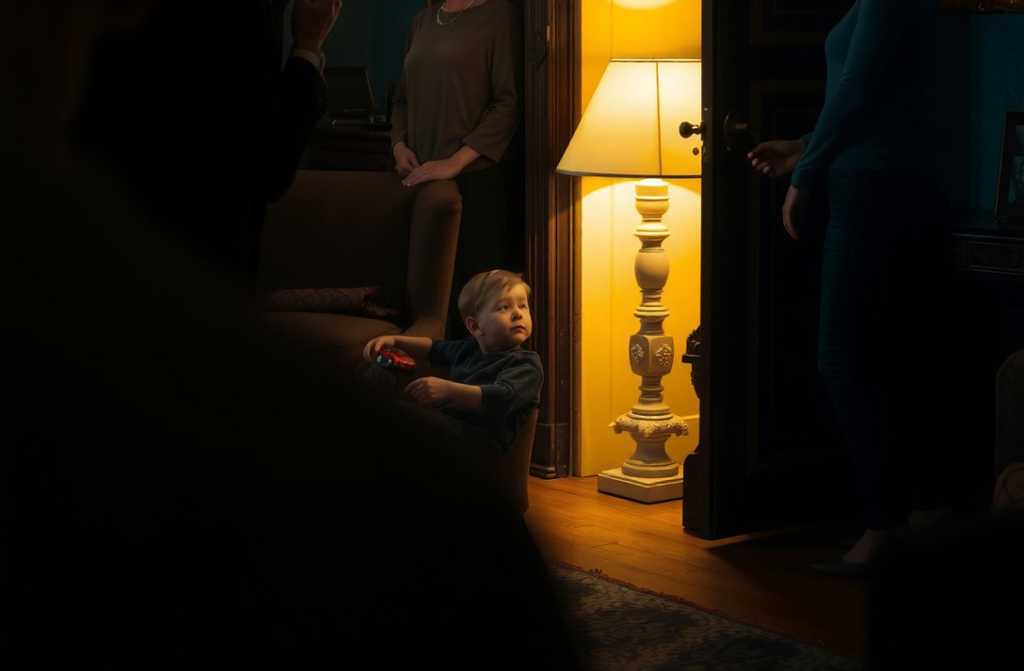
You dont understand, Emily, Margaret Henderson said, standing in the centre of her sitting room, solid and immovable as an old oaken armoire. Her arms were crossed beneath her pearl necklace, her heavy diamond ring catching the lamplight. A child needs a proper life, not your painted pictures.
Emily stood by the door, ready to collect her son. The agreement was eight oclock; now it was nearly ten, but Margaret ignored any hint of promise.
Its my life, Margaret. And his too.
Jack, just six, sat quietly in the armchair behind his grandmother, twisting a shiny red toy car. He averted his gaze, not daring to look at either woman.
Margarets mouth set in a hard line. Jacks stopping here tonight. Ill take him to school in the morning. Ive arranged my driver.
I can take my own son, Emily replied. I drive him myself.
On what? The bus?
A familiar exhaustion squeezed Emilys chest, not quite anger, not quite disappointmenta deep tiredness that had built, drip by drip, over years. She called quietly, Jack, get your things. Were going home.
Jack glanced at his mother, then his grandmother. Margaret only shook her head. That was all it took.
Mum, I want to stay and play a bit more, Jack mumbled, eyes on his car.
There you have it, said Margaret, her voice smooth with victory. The child says it himself.
At that moment, a voice emerged from the hallway. It was her husband, Andrewa tall man in a pale shirt, phone in his hand as always, as though he could hide behind its glowing screen.
Emily, dont do this. Mum just wants time with Jack.
Its two hours past what we agreed, Andrew.
Oh, agreementsthis is family, Em.
Exactly, Margaret said, making her point with a step forward. Family. And you, Emily, always seem to be against family.
Emily met her husbands eyes, but he remained fixed on his phone.
She remembered, years back, a small coffee shop before their marriage. He told her she was unlike anyone hed ever met, that he loved her drawings, her quiet world. Emily had thought he saw her, truly saw her.
But after, she realised he saw what was convenient. Something quiet, undemanding. Something that wouldnt question his mother.
Emily took Jacks hand.
Come on.
Emily! Margarets tone sharpened. Youre hurting him.
Shes right, Andrew said without looking up, Dont make this a scene.
A scene? Emily asked, her voice taut as a violin string. Andrew, your mother refuses to give me my own son. This isnt a scene. This is happening.
Youre making more of it than it is.
Im making more of it, she echoed, holding his glance. He never looked up.
Fine, she whispered at last, turning and walking out.
Down the long hall of the grand English house she passed oil paintings in gold frames, a tall mirror, flourishing potted plants that looked lively but never bloomed. Everything in Margarets house was expensive and cold, as if the place was always half-ready for a magazine shoot, not real life.
It was a wet October night. In the drive, Emily climbed into her old car, the scrape still there on one wing, and sat for a minute before starting the engine and leaving.
Their own, modest three-bedroom flatpurchased with Andrews mothers help five years ago, a fact never left unmentionedwas silent. Emily headed straight to her little studio, turned on the lamp, and stared at her unfinished illustration for a childrens book: a girl on a swing in a golden autumn garden, leaves flying, her wide eyes not quite happy, not quite sad. Something truthful.
She sat for ages, just looking.
Emily grew up in Southamptonan ordinary family. Mum, a teacher; Dad, a mechanic. A flat with bright curtains and a tabby cat named Smokey. She had drawn since she could rememberon textbooks, on walls, scraps of newspaper. Her mum never scolded, simply said, Let her draw. She just sees the world differently.
Emily went to art college, then to university in London, where she met Andrewbright, confident, generous, studying law. He took her to restaurants, bought flowers. She fell hard, headlong.
Her mother-in-law appeared right after the wedding. Before that, Emily had met her only twiceat the engagement and at the weddingpolite, cool, establishing boundaries with a smile.
Once Jack was born, the politeness evaporated.
Margaret, long widowed, had inherited the country house in Surrey, a London flat, and enough money to never worry. Andrew, her only son, was everything. With Jack, she found a new purpose.
Shed show up unannounced, bring things Emily never asked for, complain about cheap baby grows or wrong feeding habits, say Emily coddled her child too much or not enough, always changing complaints but never her tone.
Andrew would retreat to the kitchen, make a call, or just stare at his phone while his mother told his wife how to raise their son.
One day, Emily asked, Why dont you ever speak up?
What should I say? She means well.
She said Im a bad mother.
She just said youre a bit anxious. Different.
No, it isnt.
To him, she seemed to be making a fuss over nothing.
Emily, dont get upset with an old woman. Shes worried.
Emily held her tongue. That was how she survived those yearssilence and art. Sketching in the quiet after Jack slept, she began selling small illustrations online. Then publishers noticed her. Real commissions, real pay.
Margaret soon found new fault.
You sit over your pictures, ignoring the boy.
Hes at school. I work while hes out.
Thats not work. Its a hobby. Proper jobs pay pounds, not pennies.
I manage.
Manage! Thats a laugh, Margaret scoffed.
Emily sat in her studio late that night, replaying the eveningthe way Jack looked between her and his grandmother, how Andrew kept his head down.
At half eleven Andrew came home. He sat on the lounge sofa. Emily stepped from her small studio.
Did you bring Jack?
Hes fine at Mums.
Did you tell her its wrong?
Emily, not this again.
Yes, this. Because you never start it, Andrew. You always watch your phone while your mother chooses where our son sleeps.
Shes his grandmother.
Im his mother.
You made a scene in front of Jack. Mums rightyou need to calm down.
Emily stopped, halfway into the room. She staredat the familiar, slouched figure, now so strange. She realised how shed waited for him to grow up, to stand next to her, to choose them, not his mothers mansion and ring.
She didnt wait anymore.
Andrew, she said quietly, Go. Take what you need and go to your mother tonight.
He blinked. Are you serious?
I am.
He looked at her for a long moment, half-smirking as if waiting for her to back down. But she didnt.
Fine, he said, Youll call when youve cooled off. He left the keys on the table, picked up a bag, and left.
Emily listened to the rain through the window. Jack would need collecting from school. She didnt know what tomorrow would bringexcept that, in the morning, shed go for her son. Alone.
She didnt sleep. She sat up in her studio, not drawing, just remembering Jacks laughterthe way he scrunched his nose, that funny noise he made that words couldnt reach. Remembered him wielding a brush for the first time, so solemn, drawing a red line across the page as if signing a treaty. Remembered Sundays, Jack on a stool helping her make pancakes, batter dotting the hob and both of them laughing.
Those things were real. No amount of shiny toys could match them.
At dawn, Emily dressed simplyjeans, jumper, coatno make-up. She wasnt going to war; she was collecting her child.
Margarets house stood grand behind iron gates, intercom buzzing. The housekeepers voice: Who is it?
Emily Henderson. Jacks mother.
A pause. Then the gates swung wide.
Margaret awaited her in the hall, smart, composed in a crisp blouse and cardigan, ready for anything.
Youre early.
Ive come for Jack.
Hes having breakfast.
Ill wait.
In the grand lounge, Margaret sat opposite, fixing her gaze just off Emilys face.
Ill be frank, Emily. Ive done my research. Your income is unreliablework one week, nothing the next. Thats not a foundation for a childs life.
I cope well enough.
For now. But what if you dont? Jack needs stabilitygood schooling, clubs, trips. These cost money you dont have.
I have what my son needs.
Pictures? Margaret said, so softly it was nearly kind, yet crueler than any shout.
Yes. Pictures as well, Emily answered.
Margarets eyebrow rose. Dont be foolish, Emily. Andrews ready to return. Make up, and all will be as before. Jack will have a proper life.
He has a proper life.
He has a poor life.
Thats not the same.
Margaret rose, pacingthe old trick, imposing by movement. I could go to court. I have means. I could show you cant providethe small flat, the work, the hours
Emily said quietly, Try.
Margaret stopped, studying her, as if seeing her for the first time.
She called, Jack!
The boy appeared in pyjamas, toast in hand. He paused at the sight of his mother.
Mum?
Hello, love. Emily squatted down, smiling. Finish your breakfast. Well get things ready.
Jack, said Margaret, You wanted to watch that new cartoon? I promised Id find it for you.
Jack looked at her, then at Emily. She leaned to his level. Remember those pancakes? Were making them this weekend. And you started drawing a dragonit was missing a tail, wasnt it?
He brightened a little, The tail, yes! It didnt have one.
Exactly. A dragon without a tail cant be right.
He smiled, his dark eyes so like Andrews, yet with something gently searching in them.
I can watch the cartoon next time. Granny, today Ill go with Mum.
Margarets face was utterly stilllike carved stone.
Fine, she said at last, Get dressed, then.
While Jack ran upstairs, the two women stood in silence. Emily looked at the rain-smeared windows and bare October trees.
Margaret said, You think youve won.
No, Emily replied. Im just going home with my son.
Jack bounced down, backpack ready. Emily took his hand and they left.
Jack was quiet at first, staring out at the wet autumn leaves as Emily drove.
Mum? Is Dad at home?
No, darling.
With Granny?
Yes.
Will he come back?
I dont know.
Jack thought a moment. Alright, he said softly. In that single word was something tiny, something grown-up. Emily gripped the wheel tighter.
Those first weeks stretched long. Andrew rang, said she was wrong, that Jack missed him, that Margaret had done much for them. Emily listened but didnt argue. He wasnt cruelhe simply couldnt choose, support, or stand beside her.
Emily filed for divorce in November. Margaret hired a lawyer, claimed Emilys life wasnt suitable for Jack. The court case lurched on for months.
During that time, Emily took on every art job she could, however small. Her illustrations were noticed. One editor even wrote, Your work breathes. She clung to that.
She didnt lose in court. Her solicitor wasnt famous, but he was thorough and honest. Her income grew. The flatleft by an auntwas her own. Jack was settled, did well at school, and clung to his mother.
The judge granted regular visits for Margaret. She protested, but the law was the law.
Andrew, struggling, accepted the divorce in the endwith calls late into the night, appeals for forgiveness. Emily listened, distantno longer angry; it was simply far away now, behind glass.
Jack visited Andrew on Sundayscinema, parks, sometimes seeing Margaret. Hed come home quiet, and Emily would just offer supper, then draw beside him until he was himself again.
One day, after a visit, Jack said, Granny says you and Dad were both wrong.
Emily poured tea. Is it possible everyones wrong?
She says yes.
Maybe sometimes, Emily replied.
What do you think?
She consideredseven years old, looking like he needed the truth.
I think what matters isnt whos right, but how we live after.
He pondered. Thats clever.
Or maybe evasive.
What does evasive mean?
Its when you dont answer directly.
He nodded, Alright then, he said, and went back to drawing.
Two years passed since that autumn night Emily had come home alone. They werent easy years: many weary evenings, nights when she fell asleep over her sketchbook, and weeks when money was tight and soup became a culinary experimentso Jack wouldnt worry. Sometimes there was silence, long and uncertain.
But there was more.
Sunday mornings with pancakes on the windowsill, Jack laughing, face tipped back and hands sticky with sugar. There were nights she sat by his bed through a fever, reading aloud, his small hand holding hers even in sleep. There were proud afternoons when he dashed home with a new drawing for her, more exciting than any court win.
Margaret visited on schedule. At first, shed reprimand, reciting rules and needs. Emily was always civilnever rude, never drawn in. Eventually, Margaret tired of it. The routine visits continued, but the speeches faded away.
Andrew moved to another part of London. There were rumours of a new girlfriend. Emily didnt dwell on itshe simply tucked the knowledge away with yesterdays paper.
Emilys work thrived. Two more publishers signed her for book projects. Parents groups began mentioning her nameEmily Hendersonalongside discussions of the best childrens books. Someone online wrote her illustrations felt alive, not staged; children understood them. She read it again and again.
Alive. Not staged.
Perhaps, she thought, thats all it wasdrawing what was real. A boy with pancakes, a mother reading, a cat at the window. Nothing invented, just what was close.
One November evening, two years after that night, Jack brought a piece of paper home. He handed it over with great care.
Mum, I drew something for you.
They sat in the kitchen, milk warming on the hob, darkness heavy outside.
The drawing showed a small house with two yellow-lit windows. Two figures stood togetherone tall, one smallhand in hand. Stars sparkled above, a bit wonky but earnest. In one corner, in careful block letters, hed written: US.
Emily looked at the picture. The house was plain, the people drawn as children dowith hope, not expertise; the stars uneven. Yet everything was exactly as it should be.
Thats us? she asked.
Jack nodded. Me and you. And our house.
Its wonderful.
Ive figured out how to draw dragon tails too. Want to see?
Id love to.
He dashed away. Emily propped the picture against her mug and smiled at it.
Soon, the milk threatened to bubble over, so she poured two mugs for them both.
Mum! Jack shouted from his room. Can a dragon have two tails?
He canif he wants to.
Brilliant!
Outside, the first snow began to fallgentle and soft, melting even as it landed. The kitchen glowed warm, steam rising from their cups, and Jacks picture with US in the corner declared, crooked but proud, all that really mattered.
Jack reappeared, paper in hand, drank his milk, and spread the drawing out.
Look, Mum: one tails spiky, ones smooth.
She smiled: One for fighting, one for style.
Exactly! You always get it, he beamed.
She gazed at his delighted face, his two-tailed dragon, the quiet world just outside.
Mum, pancakes tomorrow?
Its Sunday?
Yep!
Then pancakes it is.
With jam?
With jam.
He nodded seriously, picked up his pencil, and set to work.
Emily sipped her drink, watching Jack draw, the world outside so distant, other lives separate, her old mother-in-law in her grand house, Andrew in a new neighbourhood. It all existedjust not in their kitchen, where the mugs steamed and the drawings crept proudly across the fridge.
She picked up Jacks picture. Where shall we put it?
Jack chewed his pencil, thinking. The fridge?
Good choicethe fridge is for the best art.
He nodded. She stuck it there, stepped back, and surveyed their little kingdom.
Is it straight? Jack asked, never looking up from his dragon.
Yes, sweetheart, Emily said. Just right.
And in that kitchenin the small house with lights aglowthey knew: the most important victories werent about winning arguments or being right, but about holding close what matters, and never letting the real, warm things slip away.