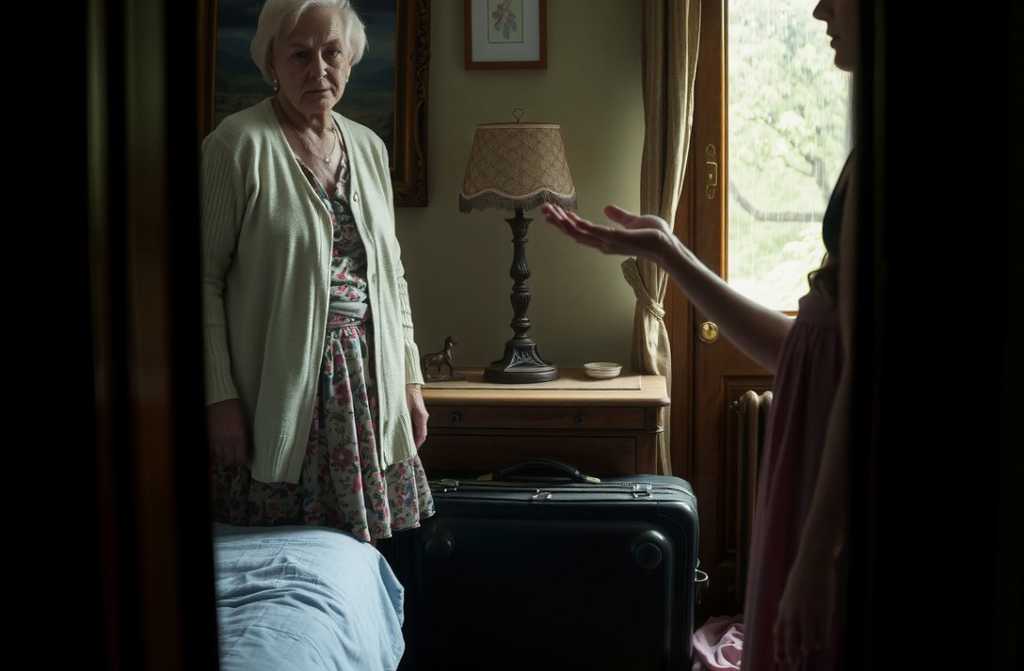
The solicitor cleared his throat discreetly into his fist and adjusted his glasses, though they already sat perfectly straight. Vera noticed the nervous habit instantly shed always had a gift for catching barely-there signals, those quiet flickers people gave off without meaning to. Outside, a storm was brewing: heavy black clouds gathered so quickly over Oxford that it felt as if someone had yanked down velvet curtains across the sky at precisely the wrong moment.
So then, began Mr. Geoffrey Matthews, carefully arranging papers on the polished mahogany table as if the precise placement of each sheet determined the course of destiny, we are gathered here to address the last will and testament of the late Charles Whitmore. I must ask you all to regard the proceedings with due seriousness.
Vera sat between her son and her daughter, physically caught as always between two worlds. To her left: Michael, forty-two, his pale blue suit clearly bespoke, shoes that doubtless cost more than her monthly pension. His hands lay folded, composed and still the hands of a man long-practiced in revealing nothing. To her right: Emily. Thirty-eight, in a simple linen dress the colour of faded English rose, hair bundled up in that effortless way women only achieve by never trying. Emily gazed at the darkening heavens beyond the window, her thoughts as ever a mystery.
Veras mind drifted back to Charles, the way hed spent his final months perched at his old oak writing desk, pen scratching across endless sheets. Every time she asked, hed reply tersely: Im sorting paperwork, Vera. Best not to disturb me. And she didnt disturb him. Shed built her life upon that: not disturbing her husband, her children, circumstances. It was her great, silent strategy though shed never thought of it as a strategy. She called it love.
Mum, murmured Michael, not turning his head. Are you alright?
The question was carefully measured, the tone correct, and he tilted his chin with perfect gravity. But Vera knew her son. Knew him since that night at three years old, when hed shattered Charless favourite vase and, blinking up at her, said solemnly, Emily did it, Mum. Emily had been asleep. Michael had regarded her with those same calm, cool eyes he wore now. And Vera had simply swept up the pieces herself, saying nothing. Why? She still had no answer.
Im fine, she said softly.
Emily glanced over; in her eyes flickered a gentle warmth, something like Mum, Im right here. But she said nothing. Too much had gone unsaid for too long, too many conversations packed away for later that never came.
Geoffrey Matthews began to read. His drone was flat, bureaucratic, honed for moments like these moments when family members squirm in unfamiliar chairs, listening to the cold division of what was once a warm, tangled life. Vera heard the words but hardly listened. She thought, instead, about Charles and thunder. Hed always claimed storms gave him headaches. Vera loved them; she loved the charged scent of ozone, the way nature raged without apology.
A rumble split the afternoon sky.
the flat on Rose Lane, three bedrooms, to be transferred to Michael Charles Whitmore, read the solicitor.
Michael gave a near-imperceptible nod. Unmoved, unshocked. Of course.
seventy per cent share of Whitmore & Partners Ltd to Michael Charles Whitmore
Emily remained fixed on the window, but Vera saw her daughters fingers tighten on her handbag just once, almost invisibly.
the cottage at Hawthorn Edge, along with the lands, to be transferred to Emily Charles Whitmore
Vera sensed Michael relax beside her, only for a fleeting heartbeat, but she knew it well. Shed known it since he first breathed.
The solicitor finished reading, folding his hands.
Are there any questions?
Yes, Michael said straightaway, his voice composed. There are several points to discuss relating to my mothers arrangements.
Geoffrey Matthews looked up.
The will contains provisions relating to Mrs. Vera Whitmore
I understand the terms, Michael interrupted with gentle exactness, but a will concerns property. Im talking about my mother. She and I have already discussed her moving in with me. There are just a few forms to formalise.
Vera felt Emilys gaze upon her then.
Mum? Emilys voice was soft.
Weve already decided, Vera answered for herself, voice harder than she wished. The agreement had never truly settled in her; Michael had made it sound so reasonable and inevitable, tea on the kitchen table, words flowing so smoothly and persuasively she had nodded along, even as something deep inside her pressed: wait, Vera, wait.
But she hadnt waited.
Mum, Emily spoke calmly, pain trembling just beneath the surface, are you sure?
Please, dont make a scene, Michael said, with the same practiced, near-tender tone. Mums settled. Show some respect.
Im asking Mum, not you.
And youve had your answer.
Thunder cracked again, nearer this time. Vera looked from son to daughter, sure that somewhere along the way shed misstepped. Or failed to step. Maybe that was the mistake always trying not to disturb anyone.
Then came the mountain of paperwork. And rain heavy, lashing spitefully at the glass as the family signed everything put before them. Vera signed and thought of Charles how hed always claimed to see through the false to the real. Had he truly? Or had they both been fooling themselves?
Later, beneath umbrellas, Emily paused at her car.
Mum, come with me. Her voice was urgent, trembling with love and resolve. You dont have to stay. I wont leave you behind.
Oh, Emily, dont be daft, Vera tried to sound light, though her throat was tight. Youre off to that cottage whats out there for you?
Theres shelter. There are walls. Ill make do.
Youve never fixed anything in your life.
I can do more than you think, Mum. Youve just never seen it.
Michael hovered, feigning distraction with his phone, but Vera knew he heard every word. He always did.
Go on home, Emily, Vera said gently. Ill be fine.
Emilys look lingered on her, so long that Vera felt a wicked pang not quite guilt, but something deeper, for which she had no name.
Alright, Mum.
Emily drove off in her battered old car, shoulders hunched as the rain battered her, never looking back. Vera watched her leave, thinking: children never truly leave forever, but every time, theyre a little further gone. And every time, it hurts anew.
Michael took her arm.
Lets get you home, Mum. Its coming down hard now.
And Vera let him lead her away.
Hawthorn Edge stood some forty miles from town, the road winding through ancient woods Emily had called the haunted forest as a child, for how the trees blocked out the sky. When she arrived at the end of May, the forest was lush and green, the gloom now inviting rather than frightening.
The Whitmore cottage now Emilys, at least on paper had been built by Charless grandfather in the 60s, sturdy and honest, yet time had settled in: beams were stained, some had drooped, moss grew thick on the northern wall. The veranda groaned, two window shutters hung drunkenly askew, and the garden out back had become a wild tangle; only the traces of old vegetable beds stood as witness to former order.
Emily stood, a single suitcase and a key in hand, thinking how others in her position might cry. She didnt. Shed never been given to tears, not in public; rarely even in private. It wasnt pride, merely habit. Shed learned young that her tears never moved anyone they only made things awkward.
She shoved the key into the lock. It resisted, then yielded. The door swung with that distinctive music old wooden doors make, something alive in it.
Inside, the air was thick with must and wood, a hint of damp, and something else: a not-unpleasant, nearly comforting smell not of abandonment, but of pauses, of memory. Rooms: three, a tiny kitchen with an ancient black range never recently used, a round table dressed in an oilcloth of faded daisies. An owl-shaped ashtray rested atop it. Emily lifted it, inexplicably, then set it back.
Against the lounge wall, a heavy walnut cabinet the sort built solid, for generations. A brass bed in the corner, a mattress striped in ticking. The garden barely visible through filmy glass, rendered an impressionist dream.
She opened a window. Pine and wet earth drifted in. Somewhere far off, a cuckoo called methodically, endlessly.
Right then, she said aloud, not to anyone, just because beginnings needed words.
For two weeks, she did nothing but clean, heave rubbish out, patch mends. She could not afford a real renovation. Michael, during those solicitors days, had engineered things so that not just property, but all family connections and introductions in the city, fell into his lap. Emily, a paintings conservator, depended on reputation and recommendation. A couple of well-placed phone calls, a gentle but calculated word from Michael, and Emily had suddenly lost two key commissions. No reasons given. Just apologies.
She understood at once, but didnt say it aloud, not even to herself. Words wasted strength she needed elsewhere.
She found a job at a tiny workshop in the next village Old Frames and Things, run by Peter Collins, a seventy-year-old with hands like oak roots, whod take any job and pay modestly but honestly.
Emily pedalled there each day on a refitted bicycle discovered in the shed. Forty minutes through the pines. Those rides, she discovered, were the best part of her new life: the woods, after all, asked nothing of her.
She thought of her mother every day.
Vera now lived in Michaels new house on Elm Lane a grand, three-storey affair, with a double garage and a tidy garden. Michaels wife, Angela, cool as a well-run high street display, received her with politeness: a guest room out in the annexe, respectable furnishings, fresh curtains. Vera understood the setup the moment she saw it. She kept silent.
At first, Michael visited each evening inquiring, bringing newspapers, sometimes tea. Then every other day. By and by, only occasionally. Angela appeared rarely. The grandchildren William, twelve, and Lucy, nine would stop in a while, bored; there was no computer, no tablet, only old books and albums.
So Vera sat in her little annexe and thought.
She thought shed made a mistake but couldnt name it. She thought of Charles and how hed hate the arrangement. Charles had always been blunt with truth, never sparing Michael, whod never forgiven his father for it. Vera had never told the truth. Shed shielded peace, believing it more important than honesty. Maybe that was the folly.
Emily rang three weeks after the move.
Mum, how are you?
Im fine, Emily. Everythings fine.
Are you going outside?
I am. I walk in the garden.
Angelas garden?
A pause.
Well the garden for everyone.
Mum. Emilys voice was controlled, but Vera heard the care behind it. If things get bad, youll tell me?
I will.
Promise?
I promise.
I found something interesting in the cottage, by the way. Ill tell you soon.
What was it?
Later. Let me figure it out first.
Vera ended the call, cradling the handset for a long moment, staring at her daughters name blinking on the screen: Emily. Call duration: 4min17s.
What could Emily possibly discover in that old house?
Emily had stumbled upon it quite by chance. She was doing what she did best: scrutinising old timber. Conservators see what others cannot the layers of history, the fingerprints of time. In the shadowy living room, torch in hand, she noticed one board by the north wall was stained differently not with damp, but something else.
She tapped it. The sound was hollow.
She levered up the board. Beneath, in a felt-lined hollow, were two objects.
The first: a small canvas on a timber stretcher, carefully wrapped in waxed paper. Emily unwrapped it with instinctive delicacy. The oil painting depicted a simple English landscape: meadow, distant copse, evening clouds. Yet in its honest capturing of a field, there was something profound the very idea of field, the heart of the word.
She bent down for the signature, reading it by torchlight: Walter Chaplin. A British painter of the nineteenth century, his work virtually lost to time; a few catalogued in private collections, one in a little museum in York. She knew his style from university, from her thesis on British realism. This painting wasnt known; it was a lost work.
The second find: an envelope, thick, sealed, with For Emily in Charless unmistakable hand.
She didnt open it at once. Instead, sat breathing in the soft dusk as birds called outside then, at last, drew out the letter.
Emily,
If youre reading this, everything has happened as I expected. I wont waste words. Youre clever, youll grasp the essentials.
I bought this painting many years ago from someone desperate he never knew its value, but I did. Ive often thought what to do with it. It belongs with you, the only one in this family who truly sees the genuine things. Thats not just flattery, its fact.
Theres more. At Quiet Harbour Bank, branch in Zurich, theres an account in your name. Documents and a debit card are held by Geoffrey Matthews, solicitor. If he hasnt handed them over, just say: Charles sends his best to Valerie. Hell understand.
As for Michael. I know my son. I know what he is doing and what he will do. Im not angry. I want you to know: I saw it all. I saw you, all these years, and what you endured and what you became, perhaps because of it.
Please, Emily, look after your mother. She will pretend shes fine for far too long. You know her better than she suspects.
Forgive me, for never saying these things aloud. I loved you deeply. Your father.
Emily read the letter twice. Smoothed it, tucked it away. And then finally allowed herself to cry, briefly, quietly, a few measured tears.
The next day, Emily drove to town. She found Geoffreys office and recited the coded phrase. He studied her keenly over his spectacles, then unlocked a strong-box and handed her a sealed packet.
Mr. Whitmore insisted this pass only to you, and not in front of your family.
Why not straight away?
His instructions were explicit time must pass. For things to settle.
Inside: documents and a credit card. She scanned the contents with efficient, practised eyes the sum in pounds so large it almost stole her breath.
You knew about this? she asked.
I knew there was a packet, he answered carefully. Not the content.
I see. Thank you.
Your father thought very carefully about tomorrow, he added as she left. Emily nodded.
Later, alone in her car, she rang a London contact an expert on private art collections.
Its a Chaplin, she explained. The signatures correct, Id bet my credentials.
He paused, excitement taut in his voice.
Ill need to see it.
Ill bring it to you.
As she drove back, Emily marvelled at the ways life could sometimes leave you with nothing but an empty, unfamiliar cottage and then, out of nowhere, shift the foundations of everything.
But that wasnt the only surprise. There was the neighbour.
His name was Paul Graham, and he lived two plots over in a cottage that was all clean lines and quiet order. He passed by as she worked outside early one week, stopped, and looked at the house as if it too had a life.
Good afternoon, Emily called to ignore him would be unspeakably rude.
Afternoon, he nodded. You the new owner?
Yes.
Fine house, this, he said simply. And that struck Emily others had muttered, Its rundown or Best knock it down. But he said only, Fine house.
Do you really think so?
Absolutely. Beams are sound, frames true, foundations honest. It just needs a bit of care the house wants to live.
Are you a builder?
Architect, he replied.
So their acquaintance began, concise as a preface. Paul was a man of few, meaningful words, so unlike the chatterers Emily had always known. Hed help now and then without fuss: showing her how to drive out the rot, hang the shutters, treat wood. Once, he left a tin of anti-fungal oil at her door. No expectations, just help.
By summer, when the main room was half-finished, they finally sat together at the round table on the veranda for a cup of tea. Not romance, not a date just two tired people grateful for a companionable silence.
You been here long? Emily asked.
Three years. Moved after closing my practice in London.
Why did you close it?
A small, genuine pause.
Parted ways with my partner. We disagreed on what architecture should mean. I say it ought to serve people; he thought it should impress.
And so you left?
I did.
Do you regret it?
He thought earnestly before answering, No. But it was tough at first.
Emily saw the honesty of that; most people would claim No regrets, or would feign profound melancholy. Pauls answer had real thought.
Youre a conservator? he asked.
Yes. Peter Collins mentioned it?
He did. Spoke very highly of you said youve got proper hands.
Emily smiled. Praise from Peter meant more than any credential.
You know him?
Ages. We restored an old hall together, fifteen years ago.
They spoke until dusk set crickets singing. She remembered none of the words, only the feeling of rightness.
Autumn came a breathtaking English autumn and Emily spent her breaks gazing at the golden woods. It was then, with the cottage nearly restored, that the dream of the gallery first took shape.
She called Paul. I need your help not as my neighbour, but as an architect.
Of course. When?
Tomorrow?
Tomorrow it is.
They talked for hours. She described her vision, he listened, only questioning, not interrupting. Then he sketched, swiftly, and held the page up. It was almost perfect.
This was in your head?
Nearly except here
She corrected, he nodded.
Yes, thats better.
Emily understood then: with this man, something real might begin, not dramatically, but with a gentle, certain click like a well-made lock closing.
Meanwhile, in town, Michaels fortunes rose swiftly then collapsed even faster. Where Charles had moved methodically, Michael had seen caution as cowardice. When the company was his, Michael charged ahead: first, expanding into new sectors, then leaping into riskier investments. The reckoning came within months: the major contractor failed, the speculative deal was a disaster.
Michael brought none of it home. Hed mastered the serene mask from Vera. But she noticed changes: fewer visits, more phone calls always rushed. Angela slipped away to her mothers, first for a fortnight, then for longer.
Vera watched it all from her little room. Her window faced an ancient apple tree. Year after year it bore fruit, despite neglect. In her mind, it mirrored Emily quietly stubborn, staunch.
Emily phoned every week, sometimes more. She recounted her progress on the house, the workshop, autumns glory. Once, she mentioned Paul in passing. Vera heard the quiet significance in that single mention.
Hes an architect?
Yes, Mum.
Good man?
A brief pause.
Good man.
Thats good, Vera said simply, understanding much but pressing no further.
Winter arrived early, biting and bright. Emily, with Pauls practical wisdom, managed to weather-proof the cottage. The old building held warmth well Charless grandfather had known his craft.
That winter, Emily focused on the painting, not restoring it (Chaplins work needed little), but authenticating provenance, networking across Europe, piecing together the story of its journey. Countless emails and phone calls built the bridge between lost art and its rediscovered place.
One stormy evening, Paul at her side, she told him everything the will, Michael, her fathers letter, the secret account, the painting, Zurich. She could not explain why the words tumbled out that night, only that the blizzard made the world feel small and safe and honest, and Pauls attentive listening drew them forth.
He let the silence linger, then finally said, Your father loved you.
I know now, she replied.
Did you know before?
I hoped. But he made it hard to tell silence from love.
Paul nodded he too, she realised, had a story about silence in place of affection.
What will you do with the money? he asked.
Open a gallery. Here, in the county. Just a humble place a studio where people might bring old things and learn their stories. A home for old things.
Paul studied her, then smiled. A fine idea. Ill help you draw up plans.
She laughed, relief and gratitude mingling.
Michael drove out to Hawthorn Edge in February.
His big black 4×4 pulled into the lane, and for a moment Emily just stared. Then she stepped out to meet him.
Michael stood at the gate, advertisement-sharp in his city coat, looking at the repaired house, the gleaming shutters, the stacked wood, the cheerful smoke from the chimney. He looked, above all, weighed down by a lifetime of expectations unmet.
Emily, he greeted her.
Michael, she returned.
She let him inside, because snow was falling and he was her brother still. She made tea; he clutched his mug as if it was warmth itself.
I hear youre making a success out here, he started.
I work, she replied.
I meant something else.
I know what you meant, Michael.
He frowned into his tea.
Emily things are dire for me at the moment.
I know.
I always thought Dad hinted there was something hidden in the house. Did you come across anything at all?
Emily looked at him, realising the man across from her once had been the cleverest, fastest, surest of them all. Now he sat hunched, desperate, asking if shed found treasure.
Yes, she replied.
His head jerked up, hope barely masked.
I found a letter from Dad. He said he loved me. That he saw everything saw my whole life.
He stared harder at his mug.
Thats all?
Thats everything, Michael.
I see. His grip tightened again. Emily, do you realise Im in a tough place?
I do.
I need help. Just a short-term loan
No, Michael. Her voice was quiet but unwavering.
He paused, incredulous.
What?
No, Michael. I wont give you anything.
His look twisted through shock, hurt, confusion something shed never seen before.
Im still your brother.
I know.
Cant you
She interrupted him with a clear, steady voice: Michael, do you remember what you told the solicitor last spring? That I was impractical. That all I deserved was a cottage, as Id never amount to more.
He said nothing.
You were right, I am different. I cant do what you do but what I can do gives me the right to decide for myself. Our father thought so. I think so too.
Emily
Im not angry with you, Michael. Im just tired. And this wont help you. You should know that.
He was silent a long while. The wind sent snow across the empty plot outside.
Does Mum know? he asked quietly.
About what?
About your letter. What you have.
No. Thats for me.
Will you tell her?
When the time comes.
He stood, placed his mug with meticulous care, buttoned his coat.
Youve changed, he said at the door, not as an accusation, merely a fact.
Perhaps. Or perhaps this is me, at last.
He left. Watching him drive off, Emily felt no triumph, no vengeance only exhaustion and a tangle of sadness for what might have been.
She brought her mother home in March.
It wasnt the result of any argument, more the fruit of slow, careful thought. Emily arrived early Friday.
Mum, Im coming to collect you.
No need, Emily. Alls well here.
I know. But Ill come anyway.
Angela opened the door with a look that was both relieved and ashamed as if grateful Emily was doing what she herself should have. Shes in the annexe, shes got the key.
Emily rapped on the door; Vera opened instantly as if expecting her. Dressed, tidy, the annexe was neat in that naked, untouched way that suggested it was kept clean for want of anything else to do.
Emily, Vera smiled that familiar, slightly apologetic, slightly defensive smile.
Mum, pack your things. Youre coming with me.
Dont fuss, Emily
But Emily took her hands cold hands, despite the annexes warmth.
Mum, youre alone here. Michael, Angela, the kids theyre all busy. You sit and watch that old apple tree. You deserve more than a tree outside the window.
Vera didnt argue, though her eyes looked parched too dry for all the water behind them.
Its warm at the cottage. Theres a stove. Theres a garden and woods. Its good there, Mum.
And Michael?
Hell manage. Hes a grown man. He has a family. Its your right to live where youre happiest.
For a long time, Vera appraised her daughter, then turned to pack. She took little photographs, a few books, a shawl shed knitted decades ago, a box of letters and trinkets. Emily felt how a life, when swiftly gathered, was neither too much nor too little only exactly what was real.
Michael called as they drove out of Oxford.
Mum says shes off to you.
Thats right.
Emily, you
Michael. Shes with me now. If you need to visit, you know the address.
A pause.
Youre being un
Goodbye, Michael.
She ended the call and glanced at her mother, gazing out at the receding city.
Emily, Vera said quietly, is there a man in your life?
This wasnt a query, but an observation.
There is, Mum.
Hes a good one?
Emily thought of Paul. The way he looked at old houses. The way he listened, and once, took her pencil and understood what she meant.
He is.
Thats good, Vera said echoing her autumn answer. And asked nothing further.
They arrived at Hawthorn Edge as dusk set the snow aglow. Vera took in the pines, the chimney smoke, the mended gate.
A fine house, she said abruptly.
Emily smiled. Someone told me that recently.
Wise man.
Very.
Paul met them at the gate, simply standing there not bearing flowers or pomp, just present, as shed said. That was enough.
Good evening, Mrs. Whitmore, he said. Glad to have you.
Vera regarded him, the measured stare of a mother judging her daughters man.
Evening. Are you the architect?
Yes.
Emily mentioned it.
I know. Did she say anything good or bad?
Good. Do you deserve it?
I try.
Vera nodded, satisfied. Good. Give me a hand with the bag, please.
He took her suitcase. Emily watched them, feeling something quietly contented, something utterly real.
A year passed as it does when life is lived honestly, full and quick, with every day ending in a pleasant fatigue. The gallery opened in October. Modest, two rooms of a handsome old house in the centre of Oxford, a restoration workshop behind, and a simple sign: Living Things. Vera had named it. One evening, shed watched Emily polish an old frame and mused, These antiques they really are alive, arent they? Emily had smiled and said, Mum, youve just given us our name.
Vera was bashful but proud.
People came, more than they expected. In a small city, a real gallery is an event. Chaplins painting was the centrepiece, authenticated and catalogued; its story how English painting endures moved even the press. Emily ignored reviews; she saw all she needed in the faces before the canvas.
That day, Michael rang. When his name appeared on her screen, she took the call in a back room.
Congratulations, he said, levelly a touch tired but open.
Thank you, Michael.
Is Mum there?
She is. Playing hostess.
A silence.
She well?
Better than before.
And again, I hear Angelas left.
Id heard, Emily murmured.
Ive got work different city, accounting firm.
She said nothing. He must have fallen far, and at considerable cost.
Its honest work, she offered, finally. Accountants are needed.
Yes. Needed.
A pause.
Emily, I I think a lot about the past.
I know you do, Michael.
Are you angry?
No. Not anymore.
Another extended silence.
Dad was right, he said, barely audible. About you you do see whats real.
Emily leaned against the window, gazing out on golden October trees.
You can too, Michael. You just never wanted to.
Maybe. If I come down, will Mum see me?
Shed like that. So would I I think.
That was not quite forgiveness, but it was possibility; space for something new to grow.
She returned to the bustling gallery, where Vera was extolling the virtues of the walnut cabinet now on show. Paul, busy with a guest, looked over, and with a simple glance she let him know: everythings alright. He nodded, quietly, then turned back.
Outside, gentle rain was falling. Not a storm, just steady autumn rain the sort that lasts for hours, patient, like a meaningful conversation. Emily stood by the window, watching umbrellas bob along, yellow leaves pressed flat to the pavement, lamps glowing though it was still daylight.
Vera came to stand beside her.
Rain, she commented.
Yes.
Your father never liked rain, she said softly.
I remember. Said it gave him headaches.
I adore it, Vera admitted. Always did. I just never said.
Emily looked at her, at that familiar face rendered unfamiliar by the depth of love behind it.
Mum, why didnt you say?
She paused.
I didnt want to get in the way.
Emily took her hand now warm, not cold as in March.
You dont have to do that anymore, Mum.
Vera squeezed her daughters hand in reply, soft and sure.
I know, was all she said.






