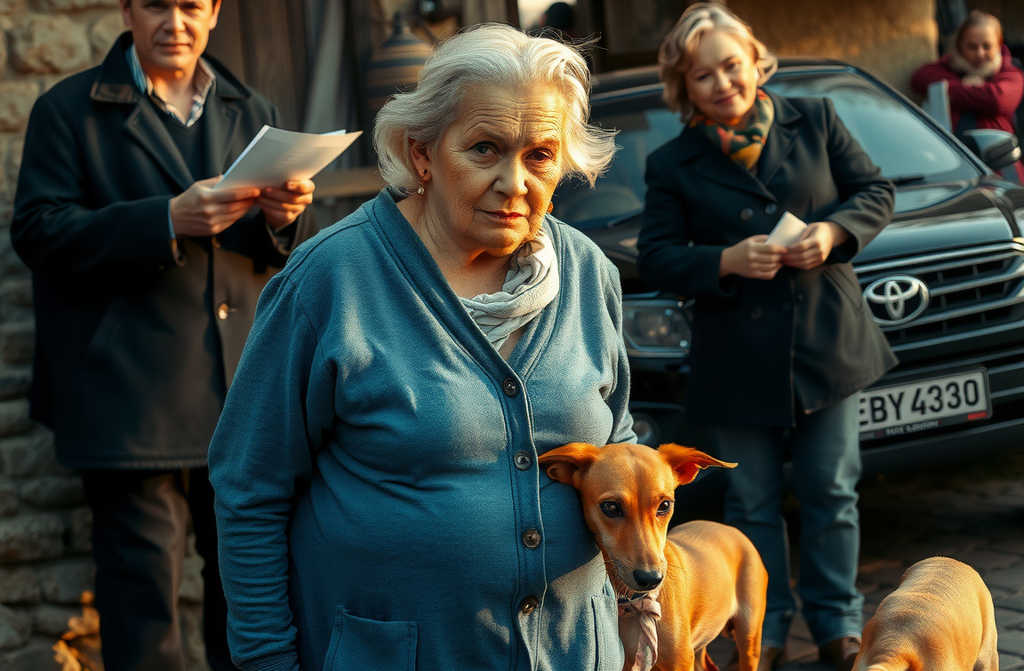
The car doors flung open and a dog was shoved out. Not let down gently, not set freejust thrust out, roughly, as if it were a sack of rubbish.
Eleanor Clarke was standing by the garden gate with a bucket of peeled potatoes for the chickens when a black Toyota idled in the middle of the lane, right in front of her eyes.
The doors swung wide and the dogthin, ruscoloured, eyes wide with terrorwas ejected. A tattered rug flew after it, landing with a thud in the dust beside the road.
The vehicle roared away in a cloud of dust and was gone.
Eleanor stood frozen. The bucket slipped from her hands, the potato skins scattering across the cobbles.
The dog sat in the middle of the road, staring after the car. It didnt bark, didnt whinejust sat, as if waiting, hoping the doors would open again and someone would call it back.
Did you see that? shouted Ethel Peterson from the next cottage, arms flailing. Did you see what they did? Are they even human?
I saw, Eleanor answered hoarsely.
Monsters! Ethel spat toward the receding car. Vile beasts! They tossed it like a rag!
A few more neighbours drifted over. Rumour spreads faster than the wind in a village.
Who were they? someone asked.
Probably city folk on holiday, another guessed.
Whyd they throw it away?
Whod want it? Probably an old dog.
Pity, someone murmured.
Everyone felt sorry, but no one moved. The dog stayed where it was, the rug beside it as if tied to it.
Eleanor, why are you standing there? Go feed the chickens! Ethel called.
Eleanor said nothing and walked toward the road.
Where are you off to? Ethel cried, frightened. She might be mad!
Not mad.
How do you know?
I know.
She walked slowly, careful not to startle the animal. The dog lifted its head, watched warily, but didnt run.
Now then, Eleanor whispered, sitting a few feet away. Youre not wanted by anyone either, are you?
The dog stayed silent.
I get you, she said softly. I really do.
She extended a hand slowly. The dog sniffed, then licked her fingers with a rough, warm tongue.
For the first time in weeks, something thawed inside Eleanor.
Come with me, she murmured. Itll be less frightening together.
She lifted the grimy, torn rug. To the dog it was a lifelinethe last piece of its former life.
The dog rose shakily, followed her. The neighbours watched from their gates, shaking their heads.
Has she gone mad? Why does she need that dog?
Eleanor didnt look back. She didnt care what they thought.
The dog kept a few metres behind, glancing over its shoulder as if expecting the owners to return, as if fearing a mistake.
Only the empty lane and occasional curious glances met them.
Come in, Eleanor opened her gate.
The dog hesitated on the doorstep, then stepped in cautiously.
Eleanor spread the rug on the porchstill filthy, but familiar.
Here, she said. Stay until you get used to it.
The dog curled into a ball, rested its head on its paws, but never took its eyes off the gate, waiting.
All day the dog barely moved, ate little, drank only water, and lay on the rug watching the doorway.
They wont come back, Eleanor told it. They tossed it and forgot.
Yet the dog didnt believe it. The neighbours popped in now and thenasking for salt, for matches, really just to look.
Eleanor, are you really going to leave her? Ethel asked, eyes fixed on the animal.
I will.
Why? Youll have a hard time feeding it, walking it, cleaning up after it.
It wont be hard for me.
Right, youre still on your feet after Mr. Peters funeral. You could use a rest, not a dog to look after!
Eleanor stayed silent. How could she explain that after burying her husband she was no longer the sole figure in the house?
By evening the dog began to thaw. It nudged forward shyly, rested its head on Eleanors knee, wagged its tail timidly.
Good girl, Eleanor soothed, patting its flank. Youre a brave one.
The dog closed its eyes in contentment. At night it whined softly, a long, plaintive howl as if calling someone.
Eleanor lay in bed listening. She understood the animal mourned its past, its lost owners.
Poor thing, she thought. They threw you away, yet you still wait.
She wondered if she herself was the one whod been tossed aside. Her late husband had grown bitter, shouting, his hands always outstretched. Shed endured, forgiven, waited for him to come to his senseshe never did, and after a night of drinking with friends he simply left.
Morning brought her daughter, Olivia, into the cottage. She surveyed the scene, eyebrows raised.
Mum, what on earth have you done? A dog?
A dog.
Why?
Just because.
What! Have you nothing else to do? Youre alone, your health isnt great, and youve taken in a stray!
Eleanor said nothing, peeling potatoes for dinner.
Seriously, Mum, give it away. Or take it to a shelter.
I wont give it away.
Why not?
Because I need it! Eleanor snapped, turning sharply.
Olivia fell silent, at a loss for words.
Mum?
You live your life, and Im left here alone, in an empty house full of memories. You think its easy? You think I dont know Ill soon be useless too? Like that dog?
Her voice trembled. Eleanor turned away, not wanting her daughter to see the tears.
Please, dont, Olivia said, giving her a rare hug. They rarely embraced. We need you. Were busywork, the kids.
I know how busy you are.
Olivia sighed, stroked the dog, which approached cautiously.
Whats her name?
I havent decided yet.
Shes red. How about Rusty?
Too obvious.
How about Vixen then?
Eleanor smiled. Vixen? Thatll do.
The dog wagged, as if agreeing. The next day a black Toyota rolled into the village again, the same one.
Eleanors heart thumped. The car stopped right at her gate.
Two young peopleman and womanin expensive jackets climbed out.
Hello, the man said. Were here for the dog.
Eleanor froze.
The dog you have?
The one we lostour red one. Did you find her?
Yes, I did.
Well, were taking her back.
How can you take her?
The woman rolled her eyes. Listen, we didnt just dump her. We wanted to teach her a lesson. She chewed my new leather bootsworth ten grand! So we left her out to learn not to do that. Now were here to collect her.
Eleanors breath caught.
Teach her? You dumped her to teach her?
Yes. She didnt disappear. You rescued her.
She was waiting for you!
And now well take her back, lesson learned. The man squeezed through the gate. Where is she? Show us.
Eleanor stepped forward, blocking the entrance.
I wont give her up.
What?
I said I wont! You tossed her like rubbish. Shes not yours any more!
The man smiled. Lady, I have paperwork, a pedigree. Shes ours.
Property! Eleanors anger surged. You talk about a living creature as if its a thing!
Its ours! Were taking her. You can have it nice and easy, or well make it hard.
Neighbours gathered at the gateEthel, Mrs. Clarke, the men from the neighbouring yards.
Whats happening here?
They came to take the dog they threw out two days ago!
A murmur rose.
Teaching a lesson! Ethel shouted. Did you hear? She chewed the boots! Thats why you kicked her out!
Beasts! someone yelled.
How can you be ashamed? Mrs. Clarke waved her arms. You tossed a life away!
The man turned to the crowd, cocky and confident.
This is our dog! By the papers its ours. Were taking it back. Not your business!
Not ours? stepped forward Mr. Harold, the village elder. We live here, we saw you throw her out.
It wasnt just a toss! It was for my boots, the woman snarled. She had to pay for them! She needed to learn!
Eleanor stared at the paintedon façade of their facesmanicured nails, gold earrings, a cold indifference.
Go away, she said, her voice a steel blade.
What? the man asked, not hearing.
I saidgo! Eleanor moved forward. And never come back!
Youre mad, old woman? the man roared. Its our dog! We have documents! Well call the police!
Go ahead! Eleanor snapped, small but unyielding. Tell them how you taught her! How you dumped her! With the rug! I saw it, everyone saw it!
The crowd cheered, voices rising.
We saw it! With our own eyes!
Witnesses, all of us!
Only locals, not owners!
The man flushed, fumbled for his phone. Im calling the police. Well sort this out.
Call them! shouted Mr. Harold. Well charge you under the Animal Welfare Act!
The woman rolled her eyes, turned to Eleanor. Listen, were not beasts. We understand youve grown attached. How about a settlement? £5,000? £10,000 for care?
Silence fell. Eleanor stared at the bills, then let out a low laugh.
You think this is about money?
What else could it be? the woman asked, genuinely puzzled.
From behind the gate, a small head poked outVixen herself, frozen on seeing her former owners.
Ah, there she is! the man cheered. She recognised us! Come, Vixen, lets go!
Vixen glanced at him, let out a small whine, and slipped behind Eleanor.
Vixen! the man barked, harsher. Come to me now!
The dog pressed closer to Eleanor.
It wont leave, Mr. Harold declared. Shes scared of you lot.
Dont be ridiculous. Shell just forget us once shes home.
Home? Eleanor smiled. Her new home is right here. With me.
She sat, hugging Vixen. The crowd erupted in applause.
Right, Eleanor!
Dont give her away!
Were with you!
The man and woman exchanged bewildered looks. They hadnt expected such resistance.
Youll regret this, the man warned. Well return with the police and our papers.
Come back, Eleanor replied calmly. Know thiseverybody here saw everything.
Well tell the press! Well write in the papers! Post it online! Let everyone know what youre like! Ethel added.
The woman tugged the mans sleeve. Lets go. Its pointless.
But
I said go! she turned and headed to the car. Well buy another dog, proper paperwork.
The man lingered a moment, gave Eleanor a final angry glance, then walked away.
They slammed the car doors, sped off, a cloud of dust rising behind them.
Eleanor held Vixen close, tears slipping down her cheeks.
Bless you, my dear, Mrs. Clarke said, hugging her. You did well, you stood your ground.
Good on you, Mr. Harold nodded. You werent scared.
That evening Eleanor sat on the porch, Vixens head resting on her knee. The sky turned pink as the sun set behind the thatched roofs. It was quiet, and it felt right.
So, friend, Eleanor stroked the russet fur. Its just you and me now.
Vixen sighed, closed her eyes. A week later Olivia called.
Mum, I saw it online. Woman saves stray from cruel owners. They even published a photo of you.
Really? Eleanor said, surprised. I didnt know.
Sorry for Vixen, Mum. I didnt understand before. I thought it would be hard for you. Turns out it was the opposite.
Its alright, love. Youre not to blame.
Can I bring the kids for the holidays? Let them meet Vixen and you?
Come over. Ill be glad.
Eleanor hung up, smiling. Children and grandchildren would soon fill the house with voices and laughter again. Life would go on.






