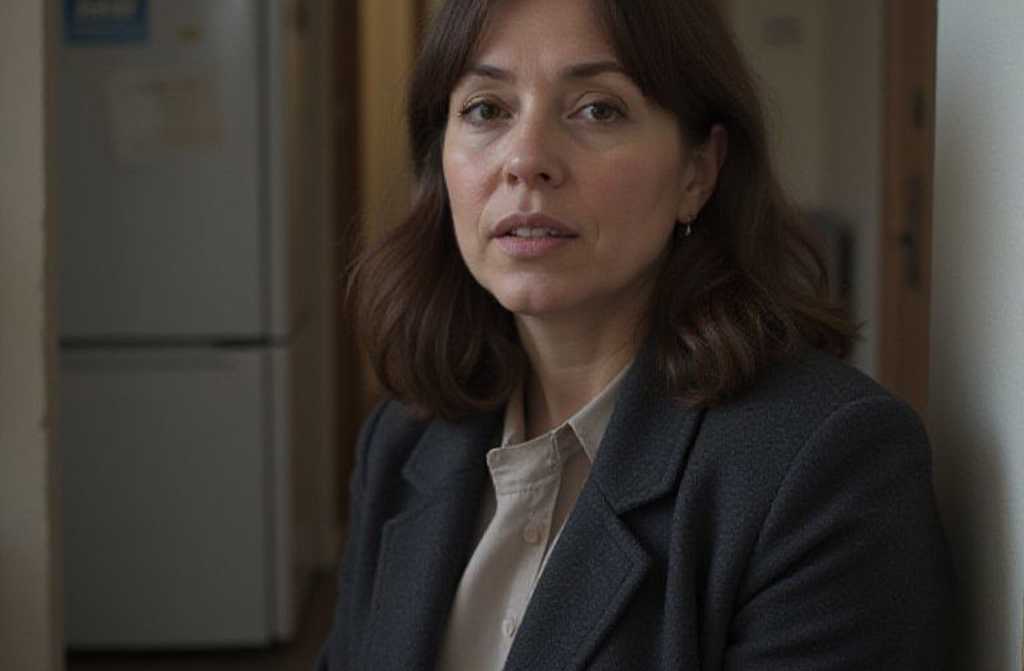
The phone starts ringing at half six in the morning, while Daisy Miller is standing in the hallway with one shoe in her hand. The screen says “Poppy.” She lets it ring until she has the other shoe on, then answers and holds it against her shoulder.
“Daisy, I need four hundred quid. Danny’s off to that French camp, and there’s the maths tutor besides, and you know what prices are like now.”
No hello, no how are you. Straight to four hundred quid and Danny.
“Good morning,” Daisy says.
“Yeah, morning. So can you send it today? The camp place won’t hold forever.”
—
Danny comes to her in the winter, when he is two years and three months old. Poppy stands on the doorstep with a bag over her shoulder and a buggy, and in the buggy her nephew is asleep. She talks quickly, as if she is afraid somebody will interrupt.
“Daisy, just for a couple of months. I honestly can’t do it now. Jake’s gone, I’ve got no money, I need to find work, and where am I supposed to take him? Mum said you’re not tied down, so it’s easier for you.”
Not tied down. That phrase sticks to Daisy like a price tag that won’t peel off. Thirty-one, a studio flat in Croydon, an accountant for a building firm, not married, no children. So she’s not tied down. So she’s easier.
“Poppy, I’ve got a job. I leave at six and get back at eight.”
“There’s nursery! I’ll send you money once I get sorted. Please, Daisy. Come on.”
Their mother rings that same evening.
“What, you’re going to put your own sister and her child out on the street? Her husband’s run off, she’s not herself. You’re on your own, so it’s not hard for you. God didn’t give you children of your own, so help your nephew.”
God didn’t give you any. That gets said too, as if it’s weather.
Daisy takes Danny for a couple of months.
The couple of months stretches until Daisy stops counting them. First Poppy is “looking for work.” Then she finds a job but “didn’t get on with the manager.” Then she goes off to Marbella to “clear her head, I nearly went mad.” From Marbella she sends photos: her on a boat, her with some tanned bloke, her in a restaurant. No money.
Danny goes to the nursery near Daisy’s flat. Daisy gets up at five to get him ready, take him to nursery, and get to work. He gets ill a lot, like all nursery kids, and Daisy takes unpaid leave or stays up all night on spreadsheets so she can be with him during the day. She buys him a cot, then a sofa bed when he outgrows it. Shoes, coats, hats — all bought without counting, because you can’t send a child out in torn clothes.
Poppy shows up every two or three months. She brings a toy, hugs Danny, cries “Mummy has missed you so much, my love,” and after two hours she leaves — she has “things to do,” she has “a meeting,” she has “a new man, you don’t even know.”
“You could at least leave some money for nappies,” Daisy says once.
“Daisy, I’m really struggling right now. As soon as I’m sorted, I’ll pay you back every penny.”
Danny calls Daisy “Mummy Daisy.” Nobody teaches him. She corrects him at first, says “I’m Auntie Daisy,” but he doesn’t understand, so she stops.
He falls asleep on her shoulder while she reads him The Tiger Who Came to Tea. He knows all his letters by the time he turns four because Daisy lines up fridge magnets for him. He cries when she leaves for work, and he waits by the door when she comes back.
Five years.
Poppy takes him back in the summer, before school starts. She arrives as a different person — heavier, in a good coat, with a new husband called Chris waiting in the car.
“Right, Daisy, I’m ready. Chris earns well, we’ve got somewhere to live, and I’m going to get Danny into a proper school. There’s a grammar school near us. Thanks, you’ve been a lifesaver.”
“Poppy, he’s seven. He’s lived here his whole life.”
“He’s my son. Don’t act like you’re not family. A child belongs with his mother.”
Danny doesn’t want to go. He clings to Daisy’s cardigan and cries so hard the neighbours look out. Poppy peels his fingers off. “Danny, stop showing us up. Come on, Mummy’s got a lovely room for you.”
Daisy sits on the hallway floor while they go down. She hears Danny crying on the stairs. Then the front door of the building slams, and it is quiet.
She collects his fridge magnets in a shoe box and puts them on the top shelf of the wardrobe.
For three years, Poppy barely calls. At Christmas there is a quick “happy Christmas,” and on Daisy’s birthday she sometimes remembers, sometimes doesn’t. She doesn’t bring Danny. “Daisy, it’s not convenient, dragging all the way across London, and he’s busy, he’s got clubs.”
Daisy goes herself. She brings presents, takes him to the park near their house at weekends when Poppy lets her. Danny is getting bigger, embarrassed to hug her in the street, but in the park, when nobody is looking, he still takes her hand.
Then even those visits fizzle out. Poppy has “gone to the cottage with Chris,” or Danny is “at his tutor,” or she just doesn’t answer.
And now — half six in the morning. Four hundred quid.
“Poppy, hang on. Four hundred quid for what?”
“I told you. Camp, tutor, plus he’s grown, he needs a school uniform. I’m really strapped at the moment. Chris is restructuring the business, everything’s tied up. But you love him. You brought him up. It’s no problem for you.”
That “you brought him up” is the first time Daisy has heard it in three years. Before, it was always “he’s my son” and “a child belongs with his mother.” Now she needs money — so Daisy brought him up.
“What about Chris? You said he earns well.”
“I’m explaining. His money is all in the business. And anyway, what’s Chris got to do with it? He’s not Danny’s dad. Jake is. Well, mine, technically.”
“What about Jake, then? He’s the father. Make him pay child maintenance.”
A sigh comes down the line, heavy and theatrical.
“Daisy, are you taking the mickey? I haven’t seen Jake in a hundred years. Where am I supposed to find him? I’m asking you, as one human being to another. Your own sister. You’ve got a salary, you’ve got your career, you live alone, you only spend on yourself. I’m a mother. I’ve got a child.”
“You’ve had a child for ten years. Danny wasn’t born yesterday.”
“So what? Children cost money all the time! You don’t know what it’s like, because you haven’t got one of your own.”
There it is. Daisy isn’t even surprised. She knew it was coming, waited for it, and it still feels like boiling water thrown in her face.
“No, I don’t have one of my own,” Daisy says. “That’s why I spent five years bringing up yours.”
“Here we go again! That’s ancient history! What do you keep going on about — brought up, brought up. Did I force you? You took him of your own free will!”
Daisy is late for work that morning. She sits in the hallway on a stool, in her shoes and coat, and counts.
She has never counted before. She didn’t want to. Now she takes a piece of paper with her GP’s prescription on it, turns it over, and writes on the back.
Nursery — she pays for it herself, no help, because another woman’s child isn’t hers on paper. One. Clothes and shoes, every season. Two. Toys, books, all the educational stuff. Three. Medicine — Danny goes into hospital with pneumonia when he’s six, and she takes unpaid leave. Four. Teeth — she takes him to a private dentist because the NHS waiting list is a month long. Five. Cot, sofa bed, bedding, children’s plates. Six.
It adds up to enough that she could have stopped working for a whole year. And Poppy has not given a single pound. Not once. Not for nappies, not for a coat, not for medicine.
And now she wants four hundred. Today. So the camp place doesn’t go.
Daisy folds the paper in four and puts it in her bag.
That evening Poppy calls again. She is calmer this time, easing in from a distance.
“Daisy, have you thought about it? I’m not insisting on four hundred. Even three hundred. Even two fifty, just for the camp.”
“I’m not giving it to you, Poppy.”
A pause.
“What do you mean, not giving it?”
“Exactly that. Not four hundred, not two fifty. You’re his mother. You took him back when it suited you. Now you support him.”
“Daisy! How can you say that! It’s Danny! You carried him in your arms!”
“I did. For five years. For nothing. While you were on a boat in Marbella. I asked you to leave money for nappies — remember what you said? ‘Once I’m sorted, I’ll pay you back.’ Where is my money, Poppy? Every penny, you promised.”
“You’re bringing up old scores now? My life was falling apart then!”
“And mine wasn’t? I got up at five. I did my spreadsheets at night so I could be with him during the day. I didn’t get married for three years, because what man wants a woman with somebody else’s child, and how could he even adopt him while his real mother is alive and well and sailing round the Med?”
Poppy starts crying on the phone. Whether it is real or not, Daisy stopped being able to tell long ago.
“I thought you loved him,” Poppy says in a thin voice.
“I do love him. That’s why I won’t give you the money. Because it won’t go on a camp. I know your camps. Find Jake and put in for child maintenance — that’s legal, that’s the right thing. Or ask Chris, since you’re married. But I’m not a cashpoint that switches on whenever your money’s ‘all tied up.’”
Their mother calls a day later. Daisy knows she will.
“Daisy, what do I hear? You’ve turned your own sister away?”
“Hello, Mum.”
“Don’t ‘hello Mum’ me! Poppy is in tears, her child is going to miss his camp, and you, his own aunt, begrudge the money! Shame on you!”
“Mum. I spent five years bringing Danny up. Where was Poppy?”
“She was going through a hard patch! Don’t stand there like a prosecutor adding everything up. Her own flesh and blood, and you act like a stranger!”
“Flesh and blood. And when it was too late for me to have children, and I was sitting at home with what was basically somebody else’s child instead of living my own life — what kind of blood was that?”
Their mother hesitates for a second.
“You agreed. Nobody forced you.”
“I agreed. Because you said, ‘God didn’t give you any, so help your nephew.’ Remember? Help. I helped. Five years. And now Poppy wants more, and I’m the one in the wrong.”
“She’s not demanding, she’s asking!”
“She’s demanding, Mum. With ‘you should’ and ‘you don’t have your own.’ That isn’t asking.”
“I’ll tell you this, Daisy. If you don’t give her the money, then don’t bother coming at Christmas. Since you’re not family anymore.”
“Fine,” Daisy says. “I won’t come.”
She hangs up first. Usually she always waits for Mum to finish.
Poppy plays her last card a week later. A long text, half a screen. The gist is simple: “If that’s how you are, I’ll tell everybody that Danny’s own aunt refused to help her child. That you abandoned him, threw him out of your life when he wasn’t convenient. We’ll see how people look at you then.”
Daisy reads it while standing at the stove. She reads it twice. Then she writes back slowly, choosing every word.
“Go ahead. And I’ll show the receipts. I kept them — the nursery invoices, the doctors, everything. Five years. And I’ll tell them how you couldn’t leave money for nappies while you were sailing round Marbella. And how you took Danny back when it suited you and then kept me away from him for three years. We’ll see who people blame, Poppy.”
She doesn’t have all the receipts, of course. Some bits survive — the private clinic bills, the nursery contract. But Poppy doesn’t know that. And Poppy goes quiet. For good.
Spring passes, and summer starts. Their mother turns sixty-five, and Daisy isn’t invited. She finds out when her cousin posts photos of the party. Everyone is there. Poppy. Danny in a new shirt. Their mother at the head of the table. No Daisy.
Daisy looks at Danny in the photo. He has shot up, all arms and legs, like any teenager, but his eyes are the same. She would know them anywhere. The eyes that used to look up at her while she read him The Tiger Who Came to Tea.
The call comes in June, late evening, from a number she doesn’t know.
“Mummy Daisy?” A breaking voice, sliding from low to high. “It’s me, Danny. I’m on a friend’s phone. Mum won’t let me call you. She says you left us.”
Daisy sits down on the stool.
“Danny. I never left you. Do you hear me? Never.”
“I know,” he says quietly. “I remember you putting the letters on the fridge. I remember everything. Mum just says something different.”
They talk for about ten minutes. School. Robots — he has got into robotics and does soldering. Daisy listens and holds her breath so she won’t scare him off. At the end he says:
“I’ll call again. Just don’t tell Mum, OK? She’ll take the phone off me.”
“I won’t tell. Call whenever you want, love.”
Dial tone.
He calls twice more. Then he stops — either the friend’s phone runs out, or Poppy finds out. Daisy doesn’t know. The number he called from doesn’t answer anymore.
She takes the shoe box down from the top shelf of the wardrobe. She opens it. The magnets: blue A, red B, yellow C, all the letters he learned to read while lying on her shoulder.
Daisy puts them back on the fridge one by one, the way she used to. D-A-N-N-Y. She stands back and looks at it. Then she gets her phone, finds the last number he called from, and saves it. She types “Danny.” And puts the phone on the table, screen up, so she can see if it lights up.