Lucy Proctor lay in a Manchester infirmary, the pallor of her cheeks a testament to the recent operation that had removed her appendix. The surgeons hands had been steady, but after the incision the wound festered, and a bout of infection set in, so the doctors kept her under observation and refused to sign her out.
She had no urgent business to attend to; a sick note kept her from the loom at the nearby textile mill, and the work would simply wait. In the cramped dormitory attached to the mill, her flatshare, Libby Harper, was delighted at the quiet. With Lucy bedridden, Libbys mischievous Peter could roam the ward until the early hours without anyone to stop him.
Lucy, at twentysix, possessed none of Libbys flaxen beauty. She was modest, almost painfully shy, and had never known the company of a lover. Life seemed to pass her by while Libby dreamed of marriage and the prospect of a new roommate after the next one moved in. The mill did not build new housing; it merely kept the existing blocks full, because workers were needed.
She spent long afternoons staring at the blue sky through the wards window, listening to the soft breathing of Mrs. Eleanor Thorne, the elderly woman who shared the next bed. Eleanor dozed more often than not, but when she awoke they chatted in gentle, leisurely tones, swapping fragments of their lives.
Lucy confessed how alone she felt. Her parents had long since died, and her only brother had squandered the familys modest inheritance, turning the old cottage into a ruin before landing in prison for theft.
Alone, dear, she sighed, just me, Aunt Eleanor.
Not even a husband? Eleanor asked, peering at Lucy with genuine curiosity. Never had one?
No, never, Lucy replied, my only friend will soon be wed, and I have no family of my own.
Eleanor chuckled proudly. And I have none either, but my boys are everpresent. They mend, they paint, they whitewash whatever needs fixing, theyll do.
The old woman then told Lucy a story that left her bewildered. Eleanor lived in a modest stone house on the outskirts of the city, a house inherited from her own parents. Her husband had died years before, and they never had children. Yet, moved by a tender compassion, she began to welcome the local lads who roamed the streets.
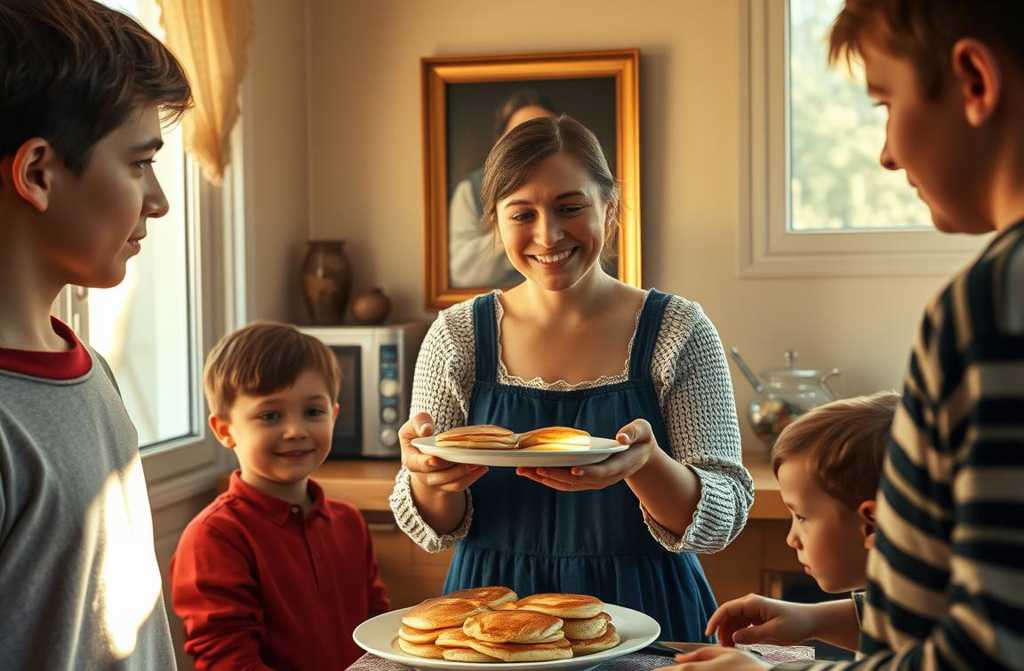
Id bake crumpets or potato pies and call them over, she recalled. Theyd dash in, headlong, and five or six of them would sit around my table, stuffing themselves. Their parents were at the mill all day, and the boys were left to their own devices.
Did your husband object to such hospitality? Lucy asked.
He grumbled, of course, Eleanor replied. But the boys would haul a full barrel of water to the yard and stack firewood for the house. He soon learned that the labour was done for him.
Where are those lads now? Have they grown? Lucy pressed.
They still help, Eleanor said, eyes shining. Some have children of their own, and the older ones run to my door when they can. I keep my crumpets ready, and they still visit the hospital to see me.
Lucy remembered a few visits from strangers, but she had never truly taken note of them.
My time is short, love, she murmured one evening. I have two stray boys, Mick and Billy. Neither has a proper home; one lives with his mother, the other with his father. Both labour two or three shifts at the mill, and theyre left to fend for themselves.
Do you feed them? Eleanor asked, surprised.
Not only feed them, the young woman replied. I help them with their schoolwork and give them odd jobs. Otherwise the streets would swallow them whole, and my heart aches for them.
Two days later a nurse announced that visitors were coming. Two ragclad boys, around ten years old, burst into the ward Mick and Billy followed by a stout, limping man and a weary woman whose face bore the marks of countless sleepless nights.
Lucy, still weak, slipped quietly out of the ward to give the children space. When she returned, Eleanor was asleep, a plate of sliced apples, a packet of biscuits, and a bottle of clotted cream on the bedside table.
Lucy stared at the sleeping matron, wondering how she could summon such strength to nurture strangers for so many years. She recalled a certain Danny, a streetwise lad who had been taken in by Eleanor when his parents could no longer care for him. His father would storm in, berating Eleanor for spoiling his son and threatening to bar him from the house.
What could I do? Eleanor had replied then. He would come home, eat, and help around the place. One day the shelf Id fixed fell; I couldnt even bend my back to sweep the floor, yet he stayed and fed himself, saying he was there to help, not for the food.
Eleanor fell silent, then said, Boys are often more sensitive than grownups. Theyre not greedy, not hardhearted. Theyre simply left to their own devices, day after day.
Lucys discharge loomed, while Eleanors condition worsened, and the thought of the boys without her weighed heavily on Lucys mind. Soon a young man entered the ward tall, goodlooking, his leather satchel slung over his shoulder. He introduced himself as Arthur Whitaker, a solicitors clerk, and offered a hand to Lucy as she prepared to leave.
Arthur, this is my Peter, Eleanor said, gesturing to the man. Hes practically grown up now. Do say hello.
Lucy offered a shy greeting, her voice barely carrying over the rustle of the thin hospital blanket that draped her. Arthur lingered, then rose to leave, turning back once to say, Its been a pleasure. Get well soon, and Ill drop by again.
The next day he returned, leaving a small bottle of orange juice on Lucys nightstand. He never managed to speak with Eleanor that afternoon; she had slipped into a deep sleep after a painful injection.
That evening Eleanor awoke, refused dinner, and clasped Lucys hand. Listen carefully, my dear, she whispered. Arthur works as a solicitor. Ive arranged for a deed to pass to you when Im gone. Your passport is on the bedside table; take it. Live in my house it may not be a palace, but its yours. One thing I ask: never abandon those boys.
Lucy felt the words freeze her blood. What about Mick, Billy, and Danny? Eleanor pressed. They need a roof, or the streets will swallow them like they did your errant brother.
Tears broke loose. I wont abandon them, Mrs. Thorne. Ill watch over them as best I can. Just let you linger a little longer.
Eleanors eyes fluttered shut, a faint smile softening her frail features.
When Lucy finally left the infirmary, Arthur escorted her to the gate. The two days after her departure, after she had said a final, tearfilled goodbye to the kind matron, she was signed out. The man waiting outside wore a sorrowful expression, his shoulders slumped. Though her discharge should have lifted her spirits, Lucy felt a heaviness settle in her chest.
Together with the other friends of Eleanor a small circle of loyal neighbours they arranged her funeral. Afterwards, the legalities of the house were sorted, with Arthur handling the paperwork. Within weeks Lucy moved into the old stone cottage, a gift that seemed almost miraculous.
At first the boys never came. Occasionally Arthur stopped by, and Lucy asked him to bring the children. One evening he obliged, ushering Mick, Billy, and Danny into the warm kitchen. From then on they visited often, especially on rainy autumn evenings when the wind howled outside. Lucy would bring crumpets from the factory canteen sometimes with cheese, sometimes with ham and they would eat heartily, watch the telly, play Monopoly, and then dash home, cheeks flushed with excitement. Their lives, though scattered, now revolved around the same modest roof.
Arthur continued to appear, helping Lucy arrange a modest mortgage to cover the houses modest stamp duty. Gratitude turned quietly into a tender affection, though he never voiced it. He remained a friend, a helper.
Dannys father, surprisingly, came to the cottage one afternoon. He did not shout at Lucy as he once had at Eleanor. Instead, he thanked her for looking after his son, warning gently, Dont spoil him too much, or hell grow arrogant.
Thus Lucys new life unfolded: a home inherited, a circle reshaped, and a promise kept. Libby, her former flatmate, married her own Peter and visited now and then, though Lucys heart belonged elsewhere to the memory of Eleanor and to the boys she now cared for.
Every corner of the cottage whispered Eleanors gentle spirit. Lucy tried, in her own modest way, to emulate the kindness that had once fed strangers and sheltered the lost. The house, the boys, and the lingering affection for the old matron taught her that generosity, once received, is meant to be passed on to those in need.