I still recall the day I sat at my modest desk in the tiny office of Oakley Primary, leafing through the latest entry in the schools complaint log. In the margins, a pencil had highlighted several notes: threatens legal action, yells at child in the corridor, child cries, refuses to go home. The comment had been left by Miss Thompson, the form tutor of Year8B.
Outside, the hallway bustled with pupils: locker doors slammed, laughter rang, arguments flared. Inside, the room was hushed. Two folders on the windowsill bore the title School Mediation Service. I brushed the top edge of the upper one. Earlier that year I had succeeded in having mediation written into the schools policy, so that in serious disputes parents could be formally invited to a structured conversation rather than merely being heard in the corridor.
I looked again at the pupils name: Arthur, thirteen. Yesterday he had stopped by after lessons, silent, his backpack strap clenched tight. He whispered that things were bad at home and that his father had promised to deal with this school once and for all. I offered him a glass of water and asked whether he would mind if I called his parents to propose a mediation meeting. He shrugged, and after I assured him that nothing would be arranged without his consent, he gave a hesitant nod.
The next step was to phone his father. The mothers number was crossed out and replaced in a different hand, so I decided to begin with the father, the party already locked in conflict with the school.
I dialed, the schools mediation policy sheet already printed on the desk. After a few rings, a weary voice answered.
Hello?
Good afternoon, this is Anne Sinclair, the school counsellor. Im calling about Arthur. Is now a convenient time?
What now? Hes already been hounded enough with your summons, the man snapped.
My shoulders tightened out of habit. I took a breath and continued evenly.
Im not calling about punishments. The school has a mediation service, and Id like to invite you and Arthur to a voluntary session. Its purpose is to help you reach an understanding and ease the tension.
Mediation? he replied distrustfully. Look, Im a solicitor. I know how you hide your mistakes behind polite language. If anythings been done to my son, Ill lodge a formal complaint.
You have every right to do so, I said calmly. My role here is different. In mediation we dont look for blame or issue rulings. We discuss whats happening and try to find a solution that works for everyone, especially Arthur. Either of you can walk away at any timeno consequences.
A brief silence followed, punctuated only by the sound of his breathing.
So its not an interrogation? he asked finally.
No. Its a conversation, conducted under clear rules and safety guidelines. Id like to include the class tutor and, with your agreement, the deputy headteacher, to keep everything transparent.
The deputy? He sighed. Fine. If its official, Ill come. But I warn you: if you start pressuring the child, I wont stand for it.
Your position is clear, and I will watch to ensure no one exerts pressure, I replied. Ill email you the procedure and suggest a time; you can choose what suits you.
We exchanged email addresses. In my log I noted: Father preliminarily agrees. Emphasise boundaries and confidentiality.
The conversation with the mother unfolded differently. She spoke gently, apologised for being disturbed at work, and readily agreed to attend, asking only that the meeting be scheduled for the afternoon. When asked about voluntariness she answered simply, If it helps him feel safe at home, Ill do anything. I marked that remark for myself.
Two days later we gathered in a separate meeting room beside the headteachers office. The table was arranged so no one sat at the head of the discussion. Printed mediation agreements, pens, a bottle of water and disposable cups lay ready.
Arthur arrived first, backpack still on his shoulders, and lingered by the door.
May I sit here? he asked, pointing to a chair.
Please, choose wherever you feel comfortable, I said. Remember, you can leave at any moment if you feel illatease.
He nodded, set his backpack down but kept the strap tight around him.
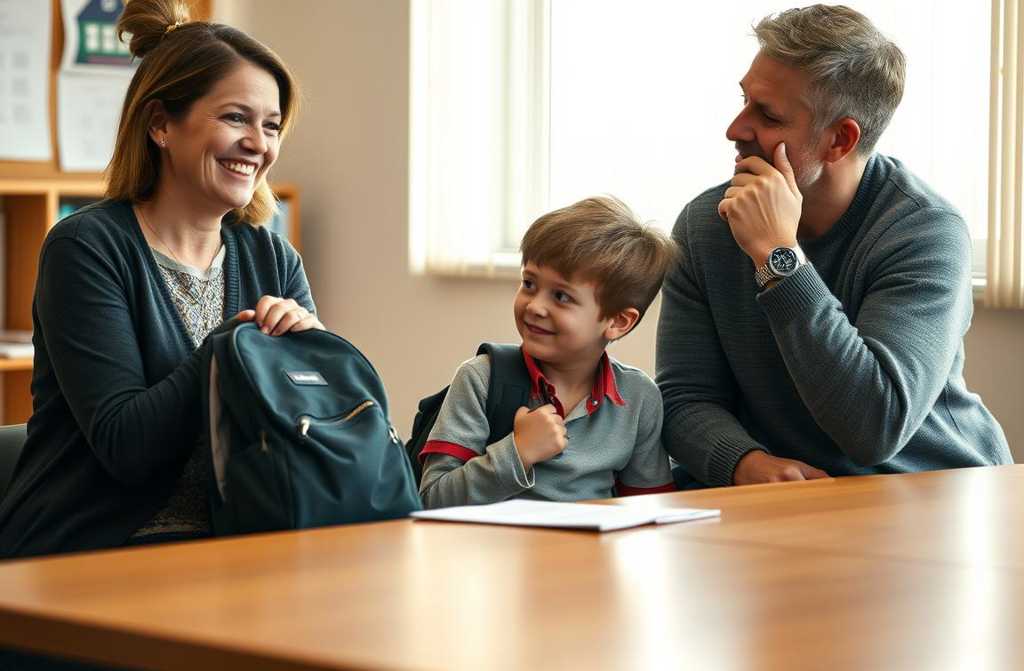
His mother entered next, a petite woman in a grey cardigan. She greeted us, sat beside her son, and lightly touched his shoulder. Arthur shifted a little, but did not withdraw.
The father was the last to appear, tall in a dark suit, briefcase in hand. He surveyed the room, his gaze lingering on me, on the empty chair earmarked for the deputy headteacher, and on the stack of papers.
Good afternoon, he said tersely.
Good afternoon, I replied. Thank you for coming. The deputy headteacher will join us shortly, and then we can begin.
Deputy headteacher Ms. Patel entered a minute later, offered a brief hello, and took a seat slightly to the side, leaving the centre of the table free for the participants. Her presence added the familiar, slight tension that arises when an administrator takes partparents must not feel she is a second judge.
Before we start, I said once everyone was settled, let me remind you that participation is voluntary. You may pause or end the meeting at any time. Our aim is not to assign blame but to understand whats happening and to agree on steps that help Arthur.
I handed each person a copy of the mediation agreement and summed up the rules: speak in turn, no interruptions, keep voices calm; everything discussed stays within these walls unless a childs safety is at risk; decisions are made by the participants, not imposed by me.
The father read the text, tracing the lines with his finger. The mother took a pen but did not sign, instead looking at me.
Will this be kept somewhere? she asked.
One copy stays with you, one with me in the mediation folder. Access is restricted, and the document is not admissible as evidence in any dispute, as the school policy states, I explained.
The father lifted his eyes. So if I later lodge a complaint, you cant quote what I said here?
Exactly. My notes are not for legal use. This is a space for dialogue, not evidence gathering.
He considered this, then signed. The mother followed, and I signed as the counsellor, while Ms. Patel signed as the attending administrator.
Shall we begin? I asked. Id like each of you to describe the situation from your perspective, using I statements where possible. Who would like to start?
The father raised his hand slightly. If I may, he said, because Im tired of the way people look at my son as a troublemaker.
I nodded, granting him the floor.
My son has always done well at school, he began. This year, however, strange incidents have emerged. Hes been called to the counsellor, I receive notes that he fights or talks back to teachers. When I try to find out whats really happening, Im met with vague answers. I will not allow my child to be subjected to your methods. If any staff has breached his rights, I will act within the law.
His tone carried a sharp legal edge. I noted the tension in Ms. Patels posture but kept quiet. Arthur lowered his head further.
Thank you, I said after a pause. I hear fatigue and mistrust, and I understand you want fair treatment for your son under the law.
He shrugged, offering no objection.
Would anyone else like to speak? I asked.
The mother looked at Arthur, then at me. Ill speak, she said softly. At home things have become hard too. Arthur has started to shut down and snap. My husband thinks we should pressurise him so he doesnt go soft. I Im afraid well lose contact with him. I dont want him to be scared of us.
The father turned sharply toward her. I never wanted him to fear me, he said. I want his respect.
I raised my hand gently. Lets let Mum finish, I reminded them.
She nodded, fingers interlaced. I dont know whats right. I see his grades slipping, I see him being called in, and I worry our arguments only make it worse for him. I just want to know how to help him.
I turned to Arthur. Arthur, would you share how you see things? You may say as much or as little as you wish.
He hesitated, tightened his backpack strap, then exhaled. I dont want to come here, he began, voice cracking. I mean, I want to go to school, but not to this room. Every time they call me, Dad gets angry. At home He stopped, glancing at his father. I dont pick fights. They start it. When the teacher walks in, they only see me.
His father leaned forward. Why didnt you tell me? he asked. I asked you to be open.
Because you shout, Arthur blurted. You immediately say youll sue everyone. Im scared youll be angry with me too.
A heavy silence settled. I felt a knot tighten in my chest. The father folded his hands on the chair back, ran a hand over his face. I dont want you to fear me, he said quietly.
I took a breath and replied, I hear that everyone here is feeling tension and fear. This isnt about judging whos right or wrong. Lets try to understand whats happening at school and at home, and find steps that reduce the anxiety for Arthur.
Ms. Patel asked, May I add a brief comment from the schools side?
Please do, using I statements, I encouraged.
I, as the deputy headteacher, see that we have recorded several incidents involving Arthur, she said. I worry we have responded more formally than substantively. Im grateful youre all here, because this offers a chance to create a clear pattern of interaction.
The father crossed his arms. Alright, Ill assume youre here for peace. What exactly are you proposing? I dont want my son singled out.
I replied, Before we move to proposals, Id like to hear more about what happens at school. Arthur, could you describe the latest conflict?
He nodded. It was in physics. Some kids were joking, throwing paper. I asked them to stop. They pushed me. I stood up, one grabbed my backpack, I shoved back. The teacher walked in and only saw me pushing.
What happened next? I asked.
They sent me to the deputy head. They said if it happened again Id be put on a schoolwide record.
The father turned sharply to Ms. Patel. So you didnt even find out who started it? his voice hardened. Thats a breach, isnt it?
I sensed the conversation slipping toward legal argument and steered it back. I understand your concern. Lets focus on what you would like for Arthur in school, setting aside questions of blame for a moment.
He looked irritated but answered. I want him not to be bullied, to be treated like any other child, not as the cause of every problem. And I want to be kept informed promptly.
I turned to the mother. And you?
I want him not to fear either home or school, she replied. I want him to have friends and to feel safe enough to tell us whats happening instead of closing up.
I faced Arthur. And you, Arthur?
He shrugged, then said, I just want them not to yank me every time. If something happens, Id like a proper talk first, not a shout.
The father sighed. Very well, I said. It seems we share three key goals: safety at school, clear communication between school and home, and calm discussions at home. Lets work out how to achieve each.
Ms. Patel spoke first. From the schools side, we can ensure that any incident involving Arthur is first discussed with him, then communicated to you, Mr.Hartley, through a single point of contact. I can be that contact, or we can appoint the class tutor, whichever you prefer.
The fathers shoulders relaxed a fraction. I need information that isnt distorted, he said. One consistent person would help.
Would you be willing to take that role, Ms.Patel? I asked.
Im happy to, she replied. Ill also speak with the deputy head about ensuring that when Arthur is called in, the specific reason is explained to him, not just a generic youre in trouble.
I noted this. Now, regarding your responses at home, I cant tell you how to parent, but I can suggest reflecting on which reactions help Arthur cope and which might heighten his fear. You can decide what to adjust.
The father fell silent, then admitted, I realize I sometimes act out of fear for his future, and that can intimidate him.
Arthur interjected, When you shout, I dont hear that youre scared for me. I only hear you angry.
His mother wiped a tear from her eye. Perhaps we could agree to discuss any disagreements about his upbringing away from him, when hes not present.
The father considered this. That sounds reasonable. We can try.
I wrote down: Parents agree to discuss parenting issues without Arthur present whenever possible. I then read back the points, inviting any objections. None came.
I explained that the agreement we would sign was not a legal contract but a written record of what we had decided together, to be honoured by all parties. I asked each person to sign.
The father lingered with the pen, then signed. The mother followed, and Arthur placed his hesitant signature at the bottom.
With the formalities concluded, I suggested a brief round of final thoughts.
The mother spoke first. I leave with hope that we can talk to our son without yelling.
The father said, I understand now that my fear for his future can frighten him, and Ill try to investigate before reacting.
Arthur added quietly, Ill remember to say stop if things get too loud.
I concluded, I take with me your willingness to seek solutions and my gratitude for the trust you placed in this process.
Ms. Patel added, We at the school will be more attentive in handling conflicts.
We all rose; chairs creaked on the linoleum. The father gathered his briefcase, turned to me, and said, Honestly, I came in expecting another routine coverup. Listening to him changed my view. Im grateful.
He left, the mother and Arthur lingered a moment longer. She asked, Will you keep meeting with him?
Only if he consents, I replied.
Arthur looked at his parents, then at me. Ill come, after computer class, if thats okay.
Agreed, I said, smiling.
When the door shut, the room fell silent. Ms. Patel gathered her papers and said, Thank you, Anne. I think this was an important conversation.
Indeed, I answered. Now we must ensure the agreements become actions, not just words on paper.
I carefully placed the signed agreement into the mediation folder, made a brief entry in my log: Mediation concluded; outcomes recorded; individual sessions for Arthur scheduled. I closed my eyes for a moment, recalling the instant when Arthur had spoken of the shout. It had hung in the air like a thread ready to snap. Yet the father had held his tongue, stepping forward instead. It was not perfect, nor final, but it was a step forward.
I walked to the window. In the playground beyond, children scrambled for the next break, some chasing a ball, others perched on benches scrolling on their phones. I spotted Arthur standing with his parents, gesturing toward the school building. His father bent to listen, his mother turned her head toward the boy. They were not standing apart as they had that morning, but slightly closer, as if the conversation had nudged them together.
Through the glass I observed them, wordlessly, and felt a quiet certainty that todays mediation had given them a common language to return to. Conflicts would still arise; life would not be free of trouble. Yet now there was a plan, a right for Arthur to say stop, and a promise from his parents to listen. That, I thought, was enough to call this fragile reconciliation a success.