Quiet Changeover
The bus pulled up with a jolt, its brakes screeching in the damp February air. People shuffled towards the doors, brushing their bags against the rails as they got off. Evelyn stood up last. As she descended the steps onto the packed grey slush, her knee gave a small twinge. The air was moist and cold, tinged with the smoky scent from the boiler house and a subtle whiff of pine drifting over from the shadowy line of woods.
Ahead, the long main building of the Birchwood Retreat stretched out with its repetitive rows of windows. A faded sign hung over the entrance, below which was the citys crest. The familiar landscape for such places greeted herneatly clipped yew trees lining the walkway, empty concrete planters, and a handful of solitary figures waiting with their suitcases.
Referral, voucher, passport, snapped the woman at the reception window, not bothering to look up.
Evelyn slid her plastic folder into the slot. A chemical trace of paper and cheap perfume wafted towards her. Behind, someone sighed noisily, suitcase wheels rattling across the tiled floor.
How long is your stay? the receptionist asked briskly, scanning the documents with practised speed.
Two weeks, Evelyn replied.
All right. Block Three, second floor, Room 206. The GP will see you tomorrow in Room Seven. Canteen operates on the schedule; meal tickets in your folder. Next!
Her folder returned, now holding a plastic keycard and a stack of meal chits. Evelyn stepped aside, letting the next in the queue edge forward. In her mind, a phrase drummed dully: Two weeks. Two weeks without cooking, marking homework, or opening the laptop in the middle of the night.
She dragged her suitcase up the walkway toward Block Three. One wheel kept sticking, threatening to steer her off into the snowdrifts. The lobby was thick with the odour of boiled cabbage and disinfectant. On the wall, a noticeboard displayed faded leaflets: therapy timetables, an accordionists concert, an advert for a Nordic walking group.
The lift operated, but the doors closed with such a metallic groan that Evelyn swerved away instinctively. She marched up the staircase, suitcase thumping against each step. The second-floor corridor stretched like a tunnel, overhead lights humming. Doors bore plastic numbers, some adorned with childrens drawings: suns, houses, pine trees.
Room 206 was midway down. Evelyn knocked out of habit, then pushed the door open.
There were two metal beds with grey counterpanes, a bedside table between them, and a chequered oilcloth-covered table by the window. On one bed, pyjamas had been neatly folded; a bag perched on a chair. From the bathroom came the noise of running water.
Come in, come in, called a womans voice. Ill be out in a moment.
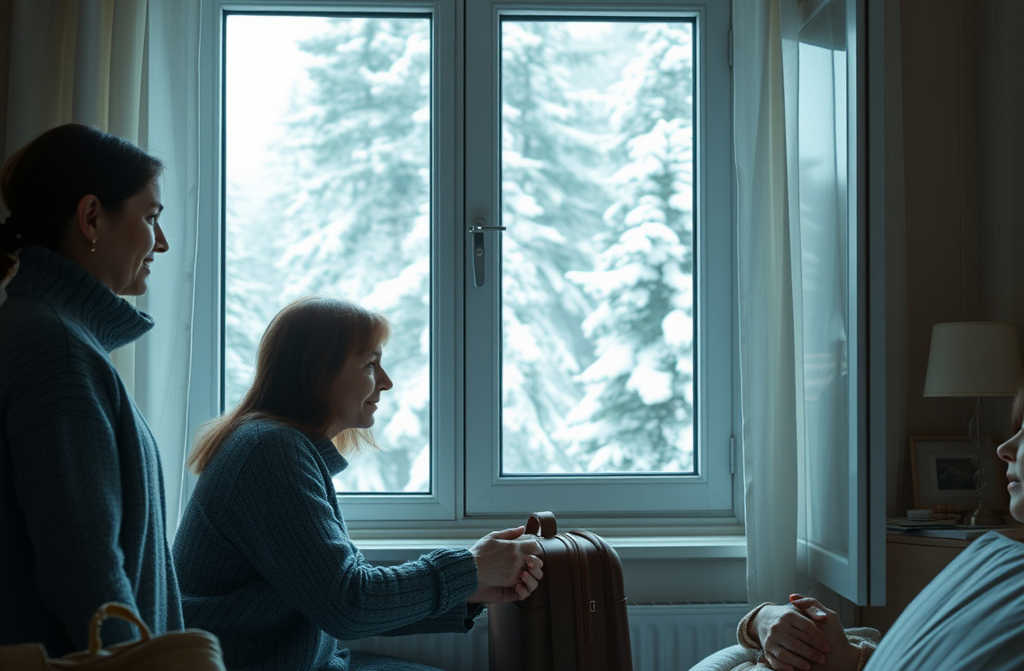
Evelyn set her case by the free bed and looked round. The window faced the woods; raindrops trickled down the glass. The radiator beneath hissed quietly.
From the bathroom emerged a petite woman in her fifties, a towel turbaned on her head, a round face, eyes lively and dark.
Roommate? she asked, smiling. Im Caroline.
Evelyn.
They shook hands awkwardly, as if meeting on a train. Caroline, unselfconscious, began lining up her medications on a shelf.
How long are you here for? she asked.
Two weeks.
Oh, perfect! Im here for three. My third time, you know, she added with a note of pride. You get used to it. At first you think: all old folks and boredomthen you realise, the routine, the fresh airit does you good. And no one wants anything from you.
Evelyn nodded, unsure what to say. She unpacked joggers, thick socks, a dressing gown. Everything felt strange, as if it belonged to another life; one with time for afternoon naps and walks.
What are you here for? Caroline pressed on.
Orthopaedic and neurologyback and knee, Evelyn answered with a vague wave.
Ah, lots of that here. Im heart and nervescant get by without the latter, can we? Caroline sighed. Husband, children, workalways juggling.
Evelyn nodded again. No use mentioning her husband. Hed been gone two years, leaving behind child support paid into her bank and occasional calls to their teenage son.
Shall we go together to supper? Caroline suggested. It gets crowded, easier to stick together.
Good idea.
A queue had already formed for dinner. The canteen was low-ceilinged, with tired-looking chandeliers and rows of tables seating four. Women in white aprons bustled through, trays clattering. The air hung heavy with the smell of stewed fish and blackcurrant squash.
Evelyn and Caroline took spots at a free table. Two more soon joined them: a tall, silver-haired man in a tracksuit and a cheerful woman with bright lipstick.
Mind if we? the man asked. Only dull in twos. Im Alan. This is Norma.
Evelyn, she introduced herself, and Caroline.
There we go, a little crowd now! Norma said brightly. I’ve been every year since my union days. Now I book myself. Cant ever rest at homegrandkids, garden, neighbours.
Where are you from? Alan inquired of Evelyn.
Reading.
Metropolitan! he quipped. Im from Derbyquite an outpost here, he nodded past them. You’ll meet the rest tomorrow if you fancywe have a crowd doing dominoes in the lounge most nights.
Evelyn smiled politely. Dominoes wasnt her thing, but the notion of simply sitting in a lounge and not hurrying anywhere felt oddly inviting.
The meal was plain, no fuss: pearl barley with fish, grated beetroot salad, dried fruit compote. Evelyn realised she was eating slowly, savouring each mouthful, rather than shoving food down between work calls at home and texts from her sons teachers.
After supper, Caroline suggested a stroll to the edge of the woods.
May as well get some airsince we’re here.
They headed out along the lit path. The woods loomed dark and close; the snow between the evergreens looked soft and deep. Yellow lamps lit circular patches along the lane. Far off, laughter echoed and doors banged.
So, do you work? Caroline asked.
Yes. Accountant. For a trade company.
Big responsibility, Caroline nodded. Im a schoolteacher. English. Twenty-five years. I think perhaps its time to she broke off and waved her hand. Anyway, this place feels like my life raft sometimes.
Evelyn thought to herself that she hadnt had a life raft for a very long time. For years, shed simply kept her head above water: spreadsheets, deadlines, parent meetings, endless to-do lists. The retreat felt like a pause. But it was an awkward pause, as if she were bunking off.
That night, Evelyn struggled to sleep. Carolines soft breathing mixed with the distant rhythmic snoring from next door; now and then a door banged. Evelyn lay awake staring at the ceiling, a familiar itch of anxiety at the back of her mind: call her son, check her emails, message her boss. Her phone sat silent on the bedside table, screen glowing black. She checked the time, opened her messenger, and closed it again. She forced herself to put the phone facedown.
Morning brought the first queue for the GP. People in dressing gowns and tracksuits waited in the chilly corridor of Block One, clutching health cards. A muted gardening show ran on a nearby telly. The air carried the scent of machine-made coffee and antiseptics.
Are you using your ticket number or waiting your turn? a woman in a chunky hat demanded, perched beside Evelyn.
My ticket, Evelyn replied, showing it.
After me, then. Dont let them push in!
The woman immediately turned to complain about her blood pressure to a neighbour. Evelyn half-listened, focusing on the closed consulting room doorstill surprised at sitting among people discussing tablets and blood test results. The echo of her work life lingered, but already felt distant.
The GPa dry man with glassesflicked through her papers.
Any complaints?
My back and knee. Always tired. Poor sleeper.
He nodded, jotting notes.
Ill refer you for physio, hydrotherapy, lumbar massage, and some electrotherapies. But most important: routine. Asleep by eleven, walks, less time on that phone.
Evelyn allowed herself a little smile. Thats the hardest, isnt it?
Here, easier than at home, he retorted. Make the most of it.
The days timetable took on a life of its own, like someone else’s schedule. Morningsphysio in a light-filled hall, the instructor demonstrating with canes and balls. Then the pool, chilly but clean, the scent of chlorine tingling her eyes. After luncha massage: a small nurse with strong hands kneading Evelyns back, Evelyn marvelling at just lying still, unencumbered.
Waiting in line for the machines became a place for casual chats. People exchanged stories like fellow rail travellers. Caroline soon worked her way into a regular groupNorma, another woman with sparkling earrings, and Alan.
Alan kept slightly apart, but was always around. At physio, he stood behind Evelyn; in the pool, swam in the next lane; in the canteen, often found his way to her table.
Youve got a good stroke, he noted one morning as they left the pool. You dont swallow half the water!
I trained as a kid, Evelyn said, squeezing out her hair with a towel. Life just… got too busy after that.
Busy isnt a diagnosis, he remarked. Had my heart scare, realised all that busyness was just an excuse. I made my time.
Evelyn didnt quite know how to respond. She caught a glimpse of his chest, where a thin scar traced under his gown.
Was it frightening? she asked quietly.
It was, he answered honestly. But you get used to knowing youre not immortal. And then you start choosing who and what you spend your days on.
For some reason, those words stuck with her. She remembered working through a fever last year, answering emails and crunching numbers. No one told her to rest. She hadnt thought to ask.
In the evenings, the lounge in Block Three filled with people. Some watched TV, others played cards. A hot water dispenser stood by, with a box of tea bags and a plate of homemade biscuits. The smell of instant coffee and sweets drifted about.
Evelyn often passed by, intending to read in her room. But one evening, Caroline pulled her in by the sleeve.
Come oncant have you stewing on your own. Meet the gang.
They took seats near the telly. Alan was there, shuffling a pack.
Fancy a game of Crazy Eights? he suggested.
Im hopeless, Evelyn admitted.
Well teach you, Norma insisted.
The cards flicked and slid; laughter and gentle bickering filled the gaps. At first Evelyn fumbled, but soon found herself enjoying it. She liked that mistakes were harmless hereat worst, shed have an armful of cards.
The lounge talk was always simple: the weather, how nice the fruit jelly tasted at tea, which nurse gave the best massage. But sometimes, deeper threads emerged.
I used to dream, when the kids were small, Norma mused, sorting her cards, that when they grew up Id finally have my own life. But now theyre older and still need me. Babysitting, handoutscant exactly tell them to leave off, can I?
Why not? Evelyn asked softly.
Norma looked at her, surprised. Theyre family. Im a mum.
Evelyn remembered her son asking, just before she left: Whos going to cook for me? Even tired after work, shed always made his tea, never opting for a takeaway.
Its all right to admit youre tiredand to say so, she said.
Who taught us that? Caroline chipped in. All we heard growing up was put up and shut up.
They all fell silent. At a nearby table, a peal of laughter rang out at a dirty joke. The TV blared a concert, a singer in a shimmering dress drawing out a wavering note.
Days spun roundrise and stretch, breakfast, therapies, walks, and the evening lounge. In that predictability, Evelyn began to find tiny islands she looked forward to.
The morning physio, waking her muscles. The tranquil moments underwater, where for a second the world went silent. The warmth in her back after a massage.
And the brief chats with Alan. He never pried, never pushed. They could stand together at the lounge window over tea, watching the shadows stretch across the fields. Or talk about nothing at allabout his hometown, the motorbike he once rode, how driving far now made him nervous.
What are you afraid of? he asked one day.
The question was so simple that it caught her off guard. Evelyn nearly said heights or spiders, but realised that sounded false.
Im scared things wont change, she answered, surprising herself. That my life will always be this: work, home, chores, listsright up to pension… and then itll be too late.
She stopped.
And after that you wont have the strength to change it, Alan finished gently. Yes, I know that feeling.
They were silent a moment.
What do you want to change? he asked.
I dont know, she said honestly. I cant even remember what I want, for me. Feels like everyone elses needs always come first.
He nodded. Thats the gift of a place like thisits the same day over and over. It gets you thinking: whats really yours, and whats just habit.
Evelyn realised this was true. Here, little depended on her. The timetable was fixed, meals arrived, beds were made for her. She let herself lie in bed after lunch, gaze out at the slow-falling snow on the yews, letting the steady world turn without her.
A week in, her son rang.
Mum, wheres the charger for my tablet? he asked, skipping a greeting.
In the right-hand desk drawer, she replied. How are you?
All right. Dads picking me up tomorrow. When are you home?
In a week.
Thats ages, he muttered, with a hint of complaint.
I need this treatment, she said simply. Even she was surprised by her own calm lack of apology.
Okay. Dont get bored, her son replied.
Afterwards, Evelyn sat for a long time on her bed, phone in hand. She felt uneasy, but also, oddly, relieved. She could be a mother, but also a person in need of care.
That evening, the retreat hosted a welcome tea for new arrivals: a kettle, biscuits, and someones Bluetooth speaker. The activities leader half-heartedly tried to organise games, but everyone seemed happier swapping stories.
Evelyn sat with her mug, listening to tales of allotments, divorces, grandchildren. She felt part of a strange, temporary familyfolks whose only common ground was that theyd stepped outside their usual lives for a spell.
At one point, Alan came over.
My times up tomorrow, he said gently.
Oh? She felt a small jolt of surprise, though everyone here had their own leaving date.
Ten days, gone in a flash, he smiled. Got to get back. My dogs waitingmy neighbours been feeding her.
Of course, she managed, not knowing what more to say.
He paused, then added, Dont go disappearing when you get homenot into the job, I mean. Save a little of yourself.
Ill try, she promised.
He nodded, looked at her as if to remember something, then turned to watch the old film flickering on the TV.
After lunch the next day, she caught sight of him leaving the building, suitcase in hand, tracksuit jacket zipped beneath his coat.
Well, goodbye, then, he said. Take care of yourself.
You too, she replied.
They shook hands. His palm was warm and dry. For a moment, Evelyn wanted to ask for his phone numberbut didnt. He didnt either. It felt right: their friendship belonged to this chapter, these walls.
When Alans bus drove away, she stood at the lounge window and watched until it disappeared past the main gate, two tracks left in the slush.
That last week passed differently. Shed still join the lounge crewbut started choosing time with her book more often. Shed sit by the window, reading a novel shed put off for months. Sometimes, shed reread pages, her mind wandering. But she didnt mind. She had time.
One afternoon Caroline returned from seeing the cardiologist, ruffled.
He tells me to stop stressing, she complained. As if theres an off switchflick, stress gone.
Couldnt you at least try? Evelyn suggested gently. Not doing everything yourself at school. Or at home.
And who will? Carolines reply was knee-jerk. Children
She paused, then smiled ruefully.
Listen to meI sound like my husband. Always If not me, then whom? Then he had his stroke, and you know what? The world kept turning anyway.
Maybe itll turn fine without you, too, Evelyn said softly.
Caroline studied her. Youve wised up in these two weeksor just rested.
Evelyn shrugged.
Im just tired of shouldering it all, she admitted. Id like to try something different.
Saying that aloud made it real.
On her last day, Evelyn wandered the familiar corridors as if through a museum of her temporary life. She peeped into the physio hall, now occupied by another group. She glanced through the glass at the blue-tiled pool. She knocked on the massage room door to thank the nurse.
Come again, the nurse told her. Your back responds well.
Ill think about it, Evelyn replied.
Back in her room, she packed: her dressing gown, joggers, swimsuit. Only her book and charger remained on the cabinet. Caroline sat on her bed, fidgeting with her voucher.
Ill be sorry to leave, she confessed. Its so much simpler here.
It is, Evelyn agreed. But thats only because its not forever. If we lived here a year, wed find things to fret over.
Maybe so, said Caroline. If you come back, ring me, she said, handing Evelyn a slip with her phone number. Im a regular.
Evelyn saved the number.
I will, she promised.
The coach for town left after lunch. The canteen served pancakes with cream for farewell. Evelyn sat at her usual table, eating unhurriedly. Norma chatted about visiting her grandkids; Caroline was deep in conversation about cholesterol results. Outside, the snow was melting and water dripped from the eaves.
At the bus stop, ten people gatheredsome posed for photos, some smoked anxiously. Evelyn stood quietly with her suitcase, looking at the low grey sky. Inside, she felt calmnot euphoric, not sad, just accepting.
On the bus, she found a window seat. Birchwood Retreat floated past: buildings, paths, woods. She thought perhaps shed return, but even if not, these two weeks would stay with hera small slice of life, in which she permitted herself to be more than mother and accountant.
The ride home to Reading took hours. The city welcomed her with sleet and its usual bustle. Cars lining the street, someone arguing on their phone, a burst of pop music from a flat downstairs.
Evelyn climbed up to her floor and opened her door. The flat smelled of dust and something sweetthe remains of microwaved jam doughnuts, she suspected. Trainers and a hoodie littered the hall.
Mum! Youre back! her son called from his room, headphones round his neck, mobile in hand. He hugged her awkwardly, like an only-just-grown boy.
How was it? he asked.
Good, she said. I relaxed.
Did you bring me a fridge magnet? he grinned.
In my bag, she smiled.
She went into the kitchen and set the kettle boiling. A couple of plates by the sink, breadcrumbs across the table. Once, shed have started cleaning and muttering straight away. Now, she just noted it and decided she could do it later.
Her phone buzzed. A message from her manager: Are you in tomorrow? We have a backlog
Evelyn looked at her phone, then laid it face down. Then, after a pause, she picked it up and typed: Hello. Ill be in tomorrow, as planned. I’d like to talk about my workloadI wont be working evenings or taking tasks home any more.
She read the message over. Once, shed have deleted half, softened her tone. This time, she hit send.
Her son poked his head into the kitchen. Mum, will you be home late tomorrow? Only, I wanted to go to Joes
Ill be home on time, she said. And well have dinner together. But youll be doing more chores. Im not made of steel.
He raised his eyebrows. Huh?
I mean it. Youre old enough to do your own washing up and sometimes cook. I cant do everything.
He looked put out, but said nothing, and retreated to his room. Evelyn braced for guilt, but found only quiet relief. She had drawn a line.
The kettle boiled. She made tea and sat at the table. Outside, the streetlamps shimmered; a dog darted across the courtyard. She thought of Alans words about how he chose to spend his days.
Evelyn sipped the hot tea and realisedthered been no magic fix. Her back still ached, her knee still twinged, the job remained. But something inside had shifted. She felt her tirednessand her right to restclearer than before.
She opened her cupboard, took out the retreat voucher, and laid it beside her notebook. Tomorrow, at lunchtime, shed visit HR and ask about summer leavenot to visit relatives or to help out, but for herself.
Her son peeked round the doorframe again.
Mum, can we have dumplings tomorrow?
We can, she replied. But youll cook themand Ill show you how.
He made a face, but couldnt hide the spark of curiosity.
Evelyn smiled. Life hadnt turned upside down, but a small space had opened that belonged to her. It began with simple thingsa no to extra work, a request for help at home, a walk after work just for herself.
She finished her tea, turned off the kitchen light, and headed to her bedroom. Tomorrow would be an ordinary day, but now it would have room for her in it. And the thought warmed her, steady and quieta gentle promise to herself.