The Hidden Asset
“You’re wearing that jumper again?” Margaret’s voice rang out, sharp and incredulous, as though Harriet were wearing something unearthed from beneath the sofa rather than just a simple item from her wardrobe. “Harriet, love, honestly. The Smithsons are coming this evening. Do you understand what that means?”
Harriet stood at the stove, stirring the soup in gentle circles. The spoon moved calmly, rhythmically, though inside her something tightened at that tone. It wasn’t the first time. It would not be the last, of that she was now certain.
“I understand, Margaret,” she replied without turning.
“No, you don’t. The Smithsons are our business partners, respectable people. Yet you look like” Margaret paused, just long enough for the implication to bite”like you’ve wandered in from a potato field.”
Harriet set the spoon on its rest and finally turned. Her mother-in-law stood in the doorway of the elegant kitchen, silk dressing gown and coffee cup in hand, regarding Harriet with that familiar look. Not crueltyno, not quite. Something more akin to disappointment. As though each time she looked at Harriet, she was reminded that her son had chosen unwisely.
“I’ll change before dinner,” Harriet said, her voice even.
“Good,” Margaret responded, then spun on her heel and left with nothing else to add.
Harriet picked up the spoon again. The soup simmered quietly, the aroma of bay leaf and carrots filling the room. Through the window, the manicured lawn stretched in tidy green bands, watered each morning by sprinklers. Watching the sunlight on that perfectly trimmed grass, she reminded herself she needed to finish the appeal for her client in Newcastle this evening. The deadline was pressing.
No one in this house knew about the appeal.
None of them knew about her client in Newcastle.
Truth be told, nobody here knew much about Harriet at all.
Her maiden name was Harriet Clarke, now Harriet Smythe, aged twenty-five, from a small town called Roseford on the River Ash, some four hours by train from London. Her fathera retired physics teacher; her mothera bookkeeper at the GP surgery. One-bedroom council flat, a plot at the allotment, a tabby cat named Oliver, and her parents steadfast belief that if their daughter was clever, she ought to pursue her education.
So study Harriet did. First, top of her class at school; then a first from the University of Central England in law; then two years of financial law courses and a stint at “Stanton & Partners” solicitors, before taking on her own clientsone by one, then by the dozen, until they were too many to count.
By twenty-four, she earned enough to support her parents and put money away. She worked remotelyno office, no brass plaque, just her laptop, a phone, her wits, and discreet silence.
She met Edward Smythe quite by chance at the birthday dinner of a mutual friend. He was four years older, strikingly handsomeso much so it was almost difficult to look directly at himbut at the same time, easy company, without urban arrogance or that knowing London squint. He spoke of hiking in the Lakes, cycling holidays, laughed often and easily. At the time, Harriet had no inkling whose son he was. That came later, when there was no pretending it didnt matter.
The Smythes meant “Smythe Technology Park”, a network of industrial estates spanning three counties, the logistics company “Smythline”, and a handful of businesses besides, all under Alfred Smythes commanda man with large, capable hands and a habit of weighing people silently. His wife, Margaret, played the social hostess and managed their charitable interests, but at her core, she was the gatekeeper of the family’s image. And that image demanded certain standards.
Harriet did not fit the mould.
Edward proposed after nine months, in late Marchas the river winds still carried a chill. She said yes, and nothing could have been truer; she loved his unguarded warmth, his ability to listen, the way he wasn’t afraid of silence in her company. She thought she would manage the familyshe always managed everything.
The wedding was in June. Small by Smythe standards: only a hundred and twenty guests. Harriets parents travelled down from Roseford in their Sunday best, looking slightly dazed. Her mother bore it well; her father, unusually sober, managed polite smiles. Margaret greeted them just once at the start, not again for the entire evening.
Afterwards, as Edward explained, Harriet moved into the Smythes house on The Crescentat least until they set up their own home. It made sense: plenty of space, staff to see to everything, no domestic fuss for Harriet. She agreed then, unaware that temporary might have a different meaning in this world.
Eight months passed. Their own home wasn’t mentioned, not once.
The house was enormousa white-pillared mansion with broad, sweeping stairs that always felt faintly theatrical to Harriet. Downstairs: reception rooms, dining hall, Alfreds study. Upstairs: the bedrooms. She and Edward had their own suite, but walls in houses like this were built so you always felt a guest, especially with Margarets pointed stares over her morning coffee.
The Smythes had two other children. The eldest, Johnthirty, employed at the family firmlived nearby with his wife and son, visiting Sundays. And the youngest, Emily, twenty-two, a student, still lived at home, eyeing Harriet much as her mother didthough less subtly, more brazen in her suspicion.
She dresses like that on purpose, Emily once remarked at dinner, thinking Harriet out of earshot. So she seems modest. Provincial calculation.
Harriet, carrying the tray through the hall, heard every word.
She entered the dining room, set the tray down, and took her place. Edward kept his eyes on his soup.
This was the daily rhythm. Remark after remark on her jumpers, her accent, the fact that she held her fork just soa subtle difference, but another sign she did not belong. Once, Margaret announced to a guest, almost fondly, Edwards always had such a kind heartlook how he took in a country girl. She meant no malice, delivered it almost sweetlyand yet, for Harriet, it stung more than open contempt.
Edward stayed silent.
Harriet told herself perhaps he hadnt heard. In time, she knew he had. He simply hadnt known what to sayor perhaps hadnt wanted to find something.
Edward was truly kindhe did not pretend, but his kindness was spread too thin, gentle and impartial; it never shielded anyone from harm. When Harriet tried to discuss his familys attitude, hed listen earnestly, nod, and conclude, Mums like that, she doesnt mean it. You dont know her. And that was the honest truthMargaret wasnt cruel, only a woman defending a world shed crafted, and Harriets intrusion in that world was like an unwelcome sliver beneath the skinslight, but persistent.
In her head, Harriet understood. It did not make the injury less sore.
Her work, she kept hidden. Not from fear, but from prudenceshould they know she worked as a solicitor, questions would lead to conversations, which would shift their view of her, and she wanted to see them as they were when they thought she was only a quiet country girl.
Every morning, while the family breakfasted downstairs, Harriet would slip into the little room she called her dressing roomher sanctuary. There, undisturbed, she opened her laptop and worked a few hours each day. Clients called in from all over the countryfrom Newcastle to Brighton. Financial disputes, tax cases, commercial wrangles. Harriet was good at what she did; she was recommended, and clients returned.
She paid her fees into an account shed had since before her marriage, in a small bank called Meridian. Edward knew of its existenceshe never disguised the factbut not the sums, nor their source.
In late autumn, after eight months at The Crescent, the Smythes’ world was turned upside down.
It was a Thursday, early. Harriet hadn’t opened her laptop yet when an unfamiliar commotion began downstairsnot the clatter of daily life, but strangers voices, firm and urgent. She stepped into the hallway. On the stairs, Margaret stood in her nightdress, arms clutched to her chest, eyes wide as dinner plates.
Whats happening? Harriet asked.
Margaret didnt reply. She seemed not to hear.
In the hall, several plainclothes officials spoke with Alfred. He stood tall, but beneath the surface his poise was gone. He was reading through a document in his hands, slowly, as if the words refused to form meaning.
Edward hurried out of their room, brushing past Harriet and rushing downstairs. He asked his father somethingrapid, tense. Alfred replied tersely. Then the officials said something more, and Alfred began to dress right there in the hall.
Harriet made her way down, took the document from the hands of one officiala simple, confident gestureand before he could protest, shed already read the first page.
Warrant for arrest. Charges: fraud in aggravated circumstances, tax evasion. Signed by the Deputy Prosecutor for Richmond Borough. Dated yesterday.
Give that back, one of the officers said, reclaiming the paper.
Harriet nodded and stepped aside.
They took Alfred away at twenty to eight. By ten, word had spread that the Smythline company accounts were frozen by court order. By noon, John rangthe call so loud Margaret, gripping the phone in the sitting room, had her sons shouts echo through the house: a set-up, he insisted, theyd need a solicitor.
We need a solicitor, Margaret echoed, searching the ceiling as though answers might be stenciled there.
Harriet sat in the wingchair by the window. Emily sobbed on the sofa. Edward paced the carpet, scrolling through his phone, at a loss.
“You don’t just need any solicitor,” Harriet said quietly.
All eyes, even Emilys reddened ones, turned to her.
“Pardon?” asked Margaret.
“You need someone with expertise in both criminal and financial matters. A general criminal lawyer can’t untangle the company books. A financial specialist won’t know how to behave with investigators. We need someone capable of both.”
“Of course,” said Edward. “Well find someone.”
“Or,” Harriet offered, “I can help.”
The silence that followed was long.
“You?” Emilys tears dried. “But youre a housewife.”
Harriet met her stare, calm. “Im a solicitor, trained in corporate and financial law. Ive worked remotely for three years. Ive had clients in very similar situations.”
The stillness changed qualityfrom surprise to calculation. Edward stared at Harriet, an unspoken question in his look, as if hed only just realised there was a puzzle.
Why did you never he started.
“Say so?” Harriet replied with a shrug. “No one asked.”
That wasnt strictly the truthreality was messier. Now wasnt the time for it.
Margaret set her coffee cup down. The sound rang with finality.
“Very well,” she said. “What do you need?”
Harriet rose. “Full access to the last three years financial records, all contracts, bank statements, tax returns. And I need to speak to the company accountant. In person, today.”
Theyre sensitive records, Margaret sounded as if half-expecting to be contradicted, out of habit.
Yes,” said Harriet, “thats why Im requesting access.
Edward intervened. Mum, give her what she asks.
Margarets eyes lingered on Harriet, searching, appraising anew, caught between acceptance and reluctance.
Fine, she said at last.
The Smythline accountant, Mrs. Jones, arrived by twoa weathered woman in her fifties, eyes ringed from sleepless nights. She and Harriet spread paperwork over Alfreds study table and worked for four hours. No one disturbed themHarriet asked for privacy, and, unusually, she was heeded. Only yesterday, shed not been listened to even regarding the menu.
At first, Mrs. Jones was guarded. But when Harriets questions proved precise, the accountant relaxed. Professionals recognise their own.
Here, said Mrs. Jones, pointing at a statement. These July-August transactionsI never did understand them. Alfred said they were routine transfers between subsidiaries, so I filed it away as usual.
And the signature? Harriet asked.
His. Or She hesitated. It looks like his. I never questioned it. One doesnt question the bosss signature.
True. But was it truly his?
Mrs. Jones stared at Harriet.
You think?
Im gathering facts. No assumptions.
By evening, Harriet had pieced together a patternfragmentary but troubling. Those summer transfers had all gone through a shell company, “TechVector Group”, set up in April that year. Its director: one Michael Fisher. He had no other business presence, but the very structure was familiar. Harriet had dealt with such things beforetheyre called one-day wonders: someone creates a company, channels money through it, then dissolves it, leaving the documents to make it look like an executive decision.
But whose?
At dinner that nightsilent, unappetisingHarriet laid out what she had found.
It looks as if Alfred may not have signed these orders, or at least not with full understanding of what they were. We need handwriting analysis and to find out who is behind TechVector Group.
And how do we prove that? John, back from work, took the head of the table. His nerves bristled; he kept his anxiety tightly leashed.
Follow the tax trail. Track Fishers banking activity. Also, check internal emailssee who had access to the directors digital signature.
Digital signature? John frowned.
Yes. If the orders were digital, therell be a log. We need the IT manager.
Thats Harris, Edward supplied.
Arrange a meeting first thing tomorrow.
He agreed, then glanced at Harrietsoftly, a new layer to his gaze. Not apology, not awe, but belated recognition.
At dinner, Margaret kept her counsel. The only remark, murmured as Harriet rose to refill her glass, was almost under her breathperhaps to herself, perhaps to Emily:
Shes clever.
It didnt sound like admiration. It sounded like reassessment.
For the next two weeks, Harriet worked as she had always donequietly, methodically, without fuss. Meetings, calls in the morning, paperwork by lunch, analysis in the evening. She contacted two colleagues: James Derby from Brighton, a specialist in tax disputes, and Alice Pratt, an old friend from her legal apprenticeship, renowned for her arbitration skills. Without embellishment, she explained the situation; both agreed to assist.
Youre being serious? Alice asked on the phone. This is the Smythes? The Smythline?
Yes.
And you live there?
I do.
Youll tell me the whole story one day?
One day, promised Harriet.
The IT manager, Harrisa ginger-haired chap with a perpetually worried frownbrought the digital logs for July and August. Harriet and James poured over them via video call. Their conclusion: on the day the suspicious orders were created, Alfreds calendar showed him in Birmingham for a meeting. The transactions were signed from his office at a time when he was demonstrably elsewhere.
So someone used his credentials behind his back, James observed.
Yes. Someone with physical access to his computer.
Who was that?
We need swipe card records.
Ill check, Harris offered.
The security logs revealed two names. One: the cleaner, at 8am. Two: Martin Black, Alfreds deputy for finance, entering at 11:40 and staying for twenty minutes. The order was signed at 11:48.
A pause.
Martin Black, Harriet said softly.
Harris nodded, as if the pieces now fell into place.
Hes been here for five years. Alfred trusted him implicitly.
I understand, said Harriet.
Now came the delicate partone cannot simply accuse someone; hard evidence was required. Harriet and James requested Fishers company info from the authorities, with relevant justifications. In parallel, Alice filed for a handwriting examination of Alfreds signatures.
After a week, the experts report arrived: two signatures were of dubious authenticityless than 40% likelihood of being genuine.
Thats something, Alice said. But theyll want more. A witness, perhaps, or proof the money came back to Black.
The money ended up in Fishers hands. But who is Fisher?
We cant confirm officiallylawyers need a judicial request.
Well do it.
While all this unfolded, life at The Crescent continuedchanged, subdued. Alfred, released under house arrest after John posted bail, spent his days in his study. Margaret paced the halls, lips pressed tight. Emily dropped her university course, claiming she couldnt concentrate anyway.
Harriet and Edward spoke little. Not in angersimply separated by the demands of work and something denser, weightier, between them now.
One evening, Edward slipped into the dressing room.
Youve been working all this time? he askednot accusing, only realising.
Yes, said Harriet.
For three years?
For three years.
He slumped in the armchair.
I didnt know.
I didnt say.
Why not?
She shut her laptop and met his eyes.
Remember what your mother said to the Smithsons in September?
He remembered. She could see it.
I couldnt he began.
You could have, Harriet said quietly. You simply chose not to. Theres a difference.
He didnt reply, only sat a moment longer before leaving.
On the fourteenth day, there was progress. James learnedvia Alices requestthat Michael Fisher, TechVector Groups sole director, was Martin Blacks cousin. Their phone logs showed frequent calls that summer.
Theres your link, Alice said.
Circumstantial, still. We need a direct money trail.
Fisher bought a flat three months after the funds movedpresumably with the money. But that isnt Blacks cash.
No. But Black opened a new account shortly after, with large personal transfers from Fisher. About a third of the siphoned amount.
Can we get confirmation?
Alice is requesting a court order.
Four days passed. Court approval arrived Friday. The sender of those transfers? Michael Fisher.
The picture was, finally, complete. Martin Black orchestrated the orders using Alfreds credentials. Money went through Fisher, who rerouted part of it to Black. Alfred had never knowingly signedindeed, he almost certainly never saw the orders.
Harriet wrote her analysis: twenty-three pages, with exhibits, summaries, conclusions. Alice handed it to Alfreds barrister, an elderly man named Barrington.
He called Harriet that Sunday morning.
This is substantial work, he told her after a pause. I did not expect such a level of diligence.
Thank you, Harriet replied.
Anyone assist you?
James Derby of Brighton and Alice Pratt.
Alice I know. Good. We file this tomorrow.
Barrington did just that on Monday. By Wednesday, Black was called in for questioning. By Friday, news came: Black was arrested.
Two weeks on, the charges against Alfred were reduced; the court announced a review of circumstances. Some business accounts were partially unfrozen. The matter was not closedit would linger, as all such affairs dobut the immediate crisis had passed.
That evening, the Smythes all sat together at dinner. Alfred presided at the headthe first time in three weeksthinner now, but composed. Margaret poured wine from a bottle saved for special occasions. John toasted quietly, To family. Emily drank in silence.
Alfred turned to Harriet.
Youve done the impossible.
Ive done the possible, she corrected. It just takes time and the right approach.
I never knew you were He paused, searching.
A solicitor, she offered.
Yes. A solicitor.
Margaret raised her glass, fixing her daughter-in-law with a gaze that had changednot warm, but measuring, now with a grudging respect that had nothing to do with affection. The look given to someone underestimated.
We owe you, Margaret declared.
Harriet nodded, sipped her wineit really was good.
But that night, lying next to Edward in the dark, Harriets thoughts were not on what had passed, but on what was unfolding in the present. Everything had changedbut not in the way it ought. They saw her nowsaw her value, not her person. She was an asset, one only appreciated under duress, not in the quiet eight months of her arrival.
She recalled her mothers words: Harriet, its good you can do things for yourself. But you have a right for others to do things for you, too.
Her mother meant something different, no doubt. But the words struck home, slightly altered for this moment.
The next day, with Alfred and John out visiting the solicitor, and Edward at work, Margaret entered Harriets dressing room for the first time in eight months.
Am I interrupting? she ventured.
No, Harriet replied.
Margaret took the chair Edward had used not long before, looking round the room in surprise: legal tomes, sheaves of notes, highlighters, pads.
You worked here all this time, Margaret saidnot questioning, but stating.
Yes.
And I called it a dressing room.
You didn’t know.
Pause.
Harriet, Margaret began, I want you to understandwhat youve done for our family
Margaret, Harriet interjected gently, may I say something?
Margaret nodded, tension lingering.
Im truly glad I helped. Not because you owe me, but because I cant bear injustice. But know this doesnt undo what came before.
What do you mean?
How you spoke about me to guests. Country girlEmilys comments. You heard her. These were not little things, Margaret. It was eight months of my life.
Margaret held Harriets gazeand for that, Harriet respected her a little more.
I see what you mean, Margaret said quietly.
Good.
I didnt think it hurt. I only thoughtwell, that you werent suited to Edward. To our family status. I worried about reputation.
I know what you worried about, Harriet said, which is precisely why I stayed silent about my work. I needed to see how youd treat someone you knew nothing about. Now I know.
Margaret rose, pause at the door.
Youre leaving.
Im thinking of it, Harriet admitted honestly.
Margaret left. Harriet stared at the green lawn, freshly watered. The sprinklers traced bright arcs across the morning air.
Shed been thinking of this for days, in truth. Thoughts came in the night, between phone calls, as she ironed Edwards shirts (a habit never asked of her, but one that stuck). Not whether shed manage on her ownshed always managedbut what it meant to keep loving a man who preferred silence to words, who would always choose family over wife. Good manyes. But not the one whod defend her, even now.
She recalled something her old law professor, Sir Richard Hanley, once said: The trickiest contract isnt an obscure one; its the one where a party never intends to honour the terms.” He meant commercial law. Harriet realised it applied just as well to marriage.
Friday evening, the conversation with Edward finally came. Not because she planned it, but because that was the moment.
Mum says youre thinking of leaving, he said, standing at the doorway.
Harriet set down her pencil. Yes, I am.
He shut the door and stayed by it.
Because of me? he asked.
Because of us. There is a difference.
Could you explain?
She was quiet, then replied, words crystallising only as she spoke: Edward, when your mum called me a country girl in front of guests, did you say anything?
No, he admitted.
When Emily called me provincial, did you intervene?
No.
And when I was shut out of family discussions though sitting in the same roomdid you notice?
He swallowed.
Yes.
Then what more is there to say?
He sat on the sill. The garden lights shone into the darkness outside. He stared into them.
I was afraid to upset them, he admitted.
I know.
Mums always been”
Edward, Harriet stopped him. Im not angry. Ive simply realised something important. If youll always have to choose between upsetting them and defending me, youll always pick them. Im not criticising, its just who you are.
I could change, he whispered.
Perhaps. But I wont wait for that change. Im not at the age or point for that.
He turned. Where will you go?
Ill rent a place. Work. Nothing new.
Alone?
Yes, alone.
His look held something complicateda trace of regret, maybe something real at last, but Harriet no longer needed to decode it.
A divorce?
Ill file in a month. Theres no rush.
He nodded, then, so softly Harriet barely heard, I love you.
She looked at him a while.
I know, Edward.
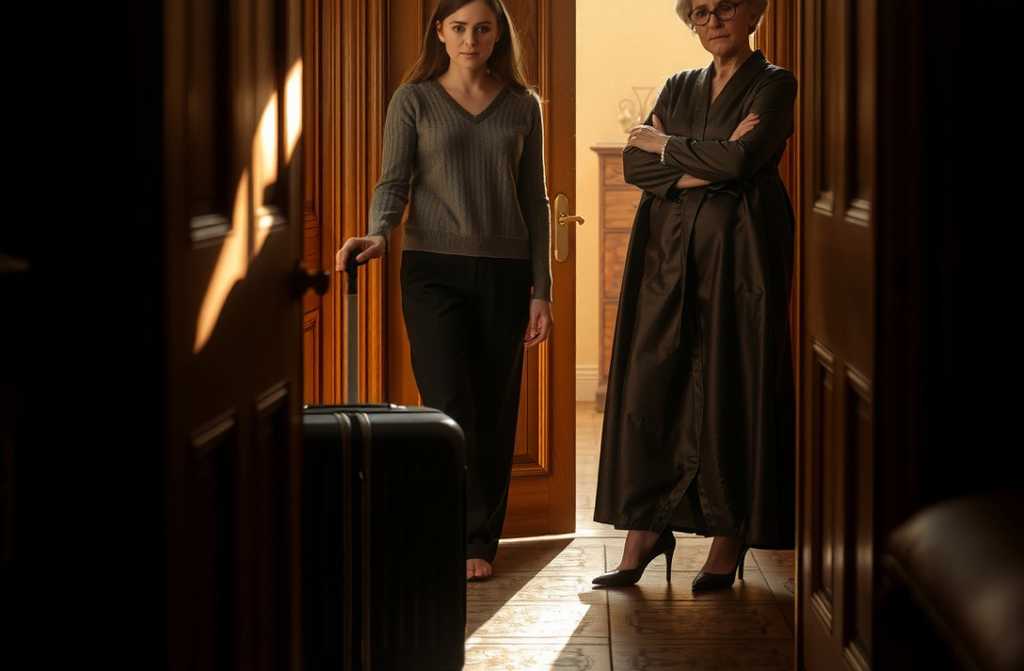
Saturday morning, Harriet packed two suitcases. She took what was hersclothes, books, her laptop, a favourite mug shed carried from Roseford. The rest, acquired here for this life, stayed behind.
In the hall, Margaret was waiting alone. The others were elsewhere, or had chosen not to come.
Margaret eyed the luggage, then Harriet.
Youre certain? she asked.
I am.
Margaret nodded slowly. I wont pretend we valued you as we should. Youre rightwe didnt. I always thought there was a certain order in things. A place for everyone.
I understand.
You didnt fit my expectations.
I know.
Youre more impressive than what I expected, though.
There was a long pausereal, thoughtful, not awkward.
Margaret, Harriet finally said, Im not leaving because Im angry. Im leaving because I realised I want to live somewhere I neednt be rescued to be seen. Thats no reflection on you. Its just who I am.
Margaret took her in, properly, for the first time.
All the best, Harriet, she said finally.
For you too, Harriet replied.
Outside, the taxi waited beyond the wrought-iron gate. The autumn air was sharp, damp with the smell of fallen leaves and eartha scent forever tied to Roseford, her fathers wellingtons on the plot.
She loaded her cases into the boot, slid into the back seat, and looked back once. The mansion glowed cream and golden in the morning sunimposing, handsome, the lawn immaculate, the gates closed. It was beautiful. It was never her home.
The driver glanced at her in the mirror. Where to?
7 Shipyard Road, please. It was the flat shed let two days beforesmall, fourth floor, windows looking onto the courtyard, a timbered staircase that creaked most obviously on the third step. Shed seen it and felt, strangely, at home.
The cab moved off.
Out the window, The Crescent slipped away, then the grand gates, then the handsome lanes, and out onto the main roadbroad, straight, stretching ahead.
Her phone buzzeda message from James: “Smythe caseBlacks been charged officially. Top work.” She put the phone away.
“Top work.” A plain, satisfying phrase.
Harriet gazed out at the rows of yellowing trees, the long ribbons of highway, and thought not with anxiety, nor any particular exultation, about that flat on Shipyard Road. Bare walls, not a curtain up, not a plate in the cupboard. Shed need to buy a mugshed taken her spotty one from the mansion, but thered been another green one she liked. No matter; she would get a new one.
It was odd how easily her mind turned to mugs, after eight months that had upended her life. Perhaps that was how one knew a choice was right: not emptiness, not triumph, simplythe next step. A mug. Curtains. A table beneath the window for working.
Her work had already resumed. Her client in Kent had written only yesterday about a tax dispute. James had sent a link to a new case. Alice suggested they pool resourcesunofficially, at first. Life, it seemed, did not stop.
The radio played softlyan older womans voice, low and private, singing of something just hers.
The phone buzzed again. This time, Edward.
She looked at the screen, considered, and answered.
Hello.
Are you far? he asked.
On the main road.
I just wanted to say you were right. About everything. I know it’s late.
Yes. Its late, she replied without malice.
Is there any way will you come back?
She looked out at the road, the straight verges, the golden trees.
No, Edward.
All right, he whispered. Take care.
You as well.
She ended the call and set the phone down. The cabbie drove in silence, radio crooning, trees slipping by in retreat.
She thought of Roseford, where, no doubt, autumn reigned too, with the scent of wet earth rising. She must ring Mum later. Tell her shed found a place, work was fine, all was well.
Mum would ask about Edwardshe always asked about Edward.
And what would she say?