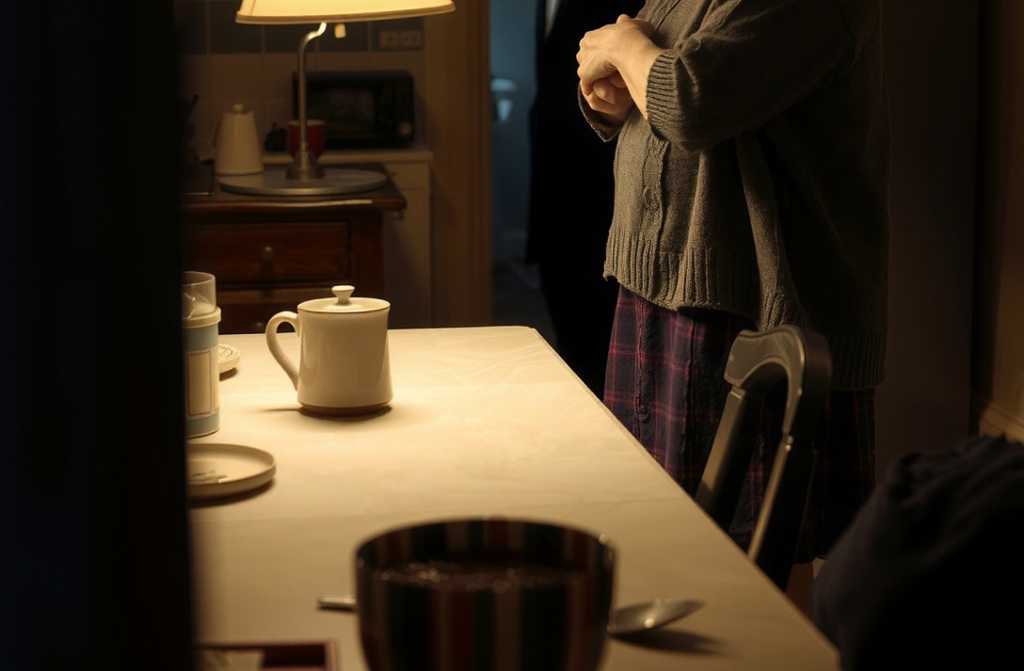
The Limits of a Mothers Love
Margaret Turner dialled the number for the third time that morning. The first two, shed cancelled herself before the ring even finished. Sitting in her kitchen, she stared out at the dull, brick estate, at the playground with its weather-beaten slide, and wondered: maybe I shouldnt? Maybe Ill muddle through?
But when Emma ran out of the childrens bedroom for the fourth time, shouting, Mum, Charlies been sick again! Margaret realised there was no getting around it.
David answered on the sixth ring.
Hi, Mum.
His voice was calm, a bit distant. Probably sat at his computer. Sundays were never really days off for him. People like him didnt really do days off.
David, love, hello, she began slowly, choosing her words carefully. Sorry to trouble you. Are you busy?
Im just working a bit, nothing major. Whats going on?
Its Emma. All three kids are ill. High temperaturestouching forty, vomiting. Shes on her own, Wills away on site til the months end. I came last night to help, but its bad Weve got to go to hospital, urgently. The youngest isnt drinking, Im scared hell get dehydrated.
Pause. She heard his long exhale.
Mum, just call an ambulance, yeah?
David, ambulances are taking five hours, if they come at all. You know what its like around here. I rang, they said theres a queue. We need help now. I was thinking maybe you could drive us to A&E? Id get a taxi myself, but with three sick kids, on my own
Mum Now his tone was sharper, more definite. Mum, listen. Ive got something important this evening. Jane and I are going out, table booked at The Ivy for seven. Our anniversaryone month married. I cant cancel, you know? It means a lot to Jane.
Margaret felt something twist inside her. Not the heart, no, somewhere higher upher throat, her chest.
David, please. The kids are very ill, high fever, its not just a cold. Emmas at her wits end, shes run off her feet. Im old. I cant manage three on my own…
Mum, dont be daft, youre only sixty-eight, still going strong. Call Town Carstheyve got those big people carriers. Ill send you the money right now, how much do you need?
David, its not about the money
Mum, I really cant. Tonights been planned for ages. Janes getting her hair done, new dress. If I duck out now, shell be upset. You get it, right?
Margaret said nothing. She could just hear his even, steady breathing down the line.
Mum, are you cross?
No, David. Im not cross.
Good. I appreciate you being sensible. Book the taxi, Ill send you £30, that should cover it?
Thats enough. Thanks, love.
Alright, Mum, I have to finish this presentation. Love you. Hope everyone feels better soon.
He hung up first.
Margaret sat there for a bit, phone still in her hand, staring at the wall. In the other room, Emma was talking to the childrenher voice shifting between shouting and gentle pleading. The youngest was still crying, the older two coughing.
Her mind wandered back: David at seven. Hed fallen off the climbing frame, broken his arm. Shed run from her job at the accountants in Greenfields Road, grabbed him up without even taking her coat off, carried him to A&E. Hed sobbed, she kissed his tear-stained cheeks, whispering, Its alright, sweetheart, Mums here, itll be alright. The break was a bad onetwo places. He had a cast to the elbow. For three weeks she slept next to him so he wouldnt jostle his arm in the night. She spoon-fed him, read to him.
That was her David. The boy with huge grey eyes and sticky-out ears, whom the other kids teased and called Dumbo. She even went in to speak to his teacher so theyd stop.
Now, the man on the other end of the line was a stranger. Forty-two, with a flat in that new build on Riverside, a car worth fifty grand, a stylist wife and a reservation at The Ivy.
She put the phone down and went into the kids room.
Emma was on the floor, the youngestJamieon her lap, beetroot red, slick with sweat. Seven-year-old Charlie sprawled on the sofa, eyes glazed, swaddled in a blanket. Five-year-old Lily, curled up on the rug, was fast asleep.
Well? Emma asked, voice strained, hope almost gone.
Well get a taxi, Margaret said quietly. Ill ring now.
Emma nodded, too tired even for tears.
David cant come?
He has an important evening. Wedding anniversary.
A month? Emma said, barely above a whisper. Nice to know a dinner out matters more than sick kids. Got it.
Dont say that, Margaret replied automatically, though it smarted inside. People have their priorities.
They do, Mum. They really do.
They fell silent. Jamie moaned, managed to roll oversick all over Emmas jeans. She didnt even flinch, just hugged him tighter.
Alright, poppet, were seeing the doctor soon, itll be better, she murmured.
Margaret went to ring for a taxi.
The car came half an hour later. In the meantime, they managed clean clothes for all three, Emma swapped her jeans for joggers, and Margaret packed water, wipes, t-shirts, a towel, documents, NHS cards.
The drivera tired-looking chap in his fiftieseyed them warily.
All these coming, yeah?
All of us, Margaret answered. Childrens A&E, St Leonards, please.
You think theyll be sick in the back? Mess up my car?
Well try not to, Emma snapped. Open the bootI need to stash these bags.
He shrugged, pressed the button.
Margaret sat in the back with Jamie cuddled on her lap, Emma beside her hugging Lily, Charlie up front, his forehead pressed to the cold glass.
The journey draggedthey hit all the Sunday traffic, families returning from the shopping centres. Jamie whimpered, Lily slept on, Charlie said nothing. Margarets arms ached from Jamies weight, her back throbbed, her lower spine a persistent, familiar pain. The GP had said it was age, recommended some rub-in cream, which shed used for a week then forgotten about. There just wasnt time.
She watched the shops go by, people at bus stops, and thought about David.
Hed grown up proper. No trouble, good grades, made it into uni, found a job right after graduation. Hed helped her, trulytenner here, twenty there after she retired, saying, Mum, you did so much for me, this is nothing. She took it gratefully, what with a tiny pension and the bills never ending.
Then hed married Janea lovely girl, always manicured, always immaculate. She started as a stylist in a salon, moved up to some agency, something to do with brands online. Margaret wasnt totally sure, but nodded along.
Their weddingeighty guests, restaurant by the river, live music. Margaret in a new dress from the sales, watching the couples first dance. David looked up at Jane like shed hung the moon. Margaret was elatedfinally, happiness, a family, children next.
But children didnt come. Jane wanted to focus on her career, make their flat perfect, travel. Margaret never commentedit wasnt her place.
Emma, in contrast, had children straight away. Her first marriage unravelled when Charlie was two; her ex moved up north for work, sent maintenance but rarely saw his son. Emma ended up alone with a toddler, working in a shop, renting a single room. Margaret helped as she couldstood in for nursery, made soups, read stories.
Then Emma met Will. Decent bloke, hard-working, also went off for months on end, but brought in good money. He married Emma, adopted Charlie as his own, and together they had Lily, then Jamie. They rented a two-bed on the edge of town, saving up for somewhere of their own. Emma had to give up work; looking after three little ones with Will away so much was unrelenting.
Margaret saw how tired Emma was. The dark shadows under her eyes, the way she sometimes snapped at the kids then cried with guilt. Margaret came to help when she couldcooked, did laundry, took the little ones out. Emma was grateful, always saying, Mum, Id be lost without you.
Meanwhile, David rang once a week, every Sunday. The calls were five minutes, tops. How are things? Were fine. Works manic. Jane just went to Greece for a week. Im in the middle of a major project. Right, Mum, got to dash. Love you.
Margaret never complained. Told herself: hes busy, hes got his own life. She was glad he was well, grown-up, didnt need her. That was a win.
But when he said no this time, something cracked.
The taxi pulled up at A&E. The driver turned: Alright, thats thirty-eight quid.
Margaret fumbled for her purse, hands shaking. Emma was already climbing out, helping Lily. Charlie slid off the front seat, unsteady on his feet.
Here, Margaret handed over forty. Keep the change.
He nodded, shoved it in his pocket, drove off quick as you like, as if afraid hed be asked to wait.
They huddled by the entrancethree sick children, a worn-out Emma, and an old woman with an aching back. It was getting late, the seaside wind chilly.
Come on then, loves, Margaret said. Lets get inside.
Reception met them with bright lights, the tang of disinfectant, and a queue of about twenty families lining the walls, faces ranging from worried to exhausted.
Emma explained their case at the desk. The receptionist, an older woman, barely looked up. Fill these in and wait to be called. Theres a lot of poorly kids tonight, youll have to be patient.
Our youngest is really badwont drink, cant stop being sick. Please, is there any chance?
Its bad for everyone, the woman replied, not unkindly, just stating the facts. Theres a bug going round. Wait to be called.
They waitedan hour passed, then another. The kids moaned, Jamie was sick again, Margaret mopped him up, her arms trembling. He burned with fever, barely responding.
Emma cried quietly into Lilys hair.
Mum, why? she whispered. Why didnt he come?
Margaret had no answer.
Theyre his nephews and niece. Id do anything for him, anything. But a bloody dinner
Shh, Emma. Not now.
When, Mum? When? Emmas voice broke. Im on my own with three kids. Wills home for a week every two months, I cant cope. And he hes got everything, he cant give up one evening?
He cant, Margaret said softly. It seems he cant.
Youre making excuses.
No. Just stating it as it is.
Emma sniffed, fell silent.
They were called through just before ten. The doctor, young, around thirty, checked Jamietemperature, listened to his chest.
Rotavirus, she said. Hell need a drip to rehydrate. Well admit him.
All three? Emma asked.
The youngest, definitely. As for the others, if theyre drinking and managing their fevers, they can go home.
Ill stay with Jamie, Emma replied. Mum, can you take the others home? Will you manage?
Margaret nodded. She didnt have the strength to speak.
Emma disappeared with Jamie; Margaret sat in the corridor with Charlie and sleeping Lily, the clock showing half past eleven.
She ordered another taxiwaited, got home nearly at midnight. The children fell straight into bed, Margaret covered them, gave Charlie more Calpol, watched over Lily.
She sat in the kitchen, made tea, though she didnt take a sip. Just gazed out at the black window.
The phone sat on the table. She wondered, should she call David? Tell him how the night went?
Then she realisedwhat would it change?
She remembered when he was little. Their trips to the park, feeding the ducks. Mum, look! That ducks eaten all the bread, shes fat! The way hed laugh, wholeheartedly and open.
Doing homework togetherhow shed sit beside him, explaining maths problems, watching his furrowed brow.
When he was a student, popping home with cakes, sprawling on the sofa: Mum, tell me something. How are you?
When did that stop? When did the conversations become so hollow?
After he married Jane, she supposed. Jane was the centre of his universe now, as it should be. Wife comes first, mother recedes.
But tonight, Margaret felt shed faded into nothingness.
A dinner out meant more than sick children. Janes new dress mattered more than a sister at breaking point. One month as husband and wife trumped a mothers only plea for help.
Margaret went to the window. The block was dark, the streetlamp flickeringa handyman wouldnt come out unless someone rang and made a fuss.
She thought: thats life. The lamp flickers, and no-ones coming. You ask your son for help; hes at a restaurant. Emmas alone, Wills stuck on site, the youngest in hospital on a drip.
David and Jane were probably somewhere right now, sipping wine, smiling at each other over dessert. Jane tossing her hair back, David gazing at her besotted.
They were happy. They were fine.
And somewhere, in a council flat on the edge of town, an old woman stood at her window and realised shed lost her son.
She didnt cry. There was no need. Only emptinessa cold, heavy lump in her chest.
She went to bed at one, on the sofa. She listened out for Charlie, heard him coughing, got up twice to check on him, gave him water, took his temperature. By morning, it finally broke, and Lily woke up brighter, drank her juice, asked for her teddy.
At eight, Emma rang.
Mum, were alright. Jamies had fluids, hes asleep. The doctor says we can come home this evening if he keeps improving. Hows Charlie and Lily?
Better. Fevers down. Theyre both sleeping.
Thank God. Mum, how are you?
Im fine, Emma, really. Rest while you can.
Thank you, Mum. Without you
Dont talk nonsense. Get some sleep.
She hung up, sat at the kitchen table, made herself coffee. The phone was there. David still hadnt called.
Would he? Would he ask how things went?
Probably not. He had his own life.
Then, the phone rangDavid.
Margaret let it ring out. Sent it to voicemail.
He called again a minute later. Voicemail again.
Finally he texted: Mum, are you okay? Youre not answering.
She ignored it.
An hour later, he tried a third time. She answered.
Hello.
Mum, are you cross? I was worried.
I was busy.
How did it go last night? Is everything okay?
All alright.
The kids any better?
Theyre getting there.
Pause.
Mum, are you angry at me?
No, David.
Are you sure?
Im sure.
Alright, well you sound a bit off. I just rang to check on you.
I told you. Were fine.
Okay. Right then. I have to get to work. Love you.
Bye.
She ended the call and thought: thats it. Its over.
She didnt shout, didnt demand answers. She just knew there was nothing more worth saying.
She was sixty-eight now. A whole life behind herthirty-seven years as an accountant, raising two children alone after her husband died when David was nine, Emma seven. A heart attack at forty-two, left her with a rented flat and £120 a month to live on.
Shed never complained. Worked herself to the bone. Took on sewing for neighbours, counted every penny. The children were never wanting, both made it to university on grants. David became an engineer, Emma went to train as a teacher. Emma left to marry on her third year, had a baby; David finished, went into work.
Margaret was proud. She told herself: my son, smart, independent, successful. Felt shed given him her all, and hed turned out good.
But now, sitting in her kitchen among faded wallpaper, she saw shed been wrong.
He wasnt bad. Just different. He lived in a world where dinner reservations trumped sick children, where his wifes comfort came before his mums, where my time and boundaries were sacred, and asking for help was an intrusion.
It wasnt her fault. It wasnt his. They were just strangers now.
The days ticked by. Emma returned with Jamie, and the children quickly recovered. Will rang from site, Emma soothed him. Margaret stayed another week, cooking, sorting laundry, helping with the school run.
Davids Sunday calls continued. The chats were short, empty. She replied in one-word sentences; he either didnt notice or pretended he didnt.
One day he tried: Mum, come over to ours. Jane will bake a cake, we can have a proper catch-up.
Thanks, David. Im busy.
Well, whenever youre free, do come.
Alright.
She didnt go. She didnt want to.
Spring rolled in, then summer. Margaret visited Emma, doted on her grandchildren. Jamie started talking, Lily went to nursery, Charlie prepared for school.
One afternoon, Emma asked quietly, Mum, did you ever talk to David about it all? That night?
Whats there to say?
Well about not coming. About everything.
I didnt.
Why not?
What for?
Mum, hes your son.
Yes, Emma. Hes my son.
Emma understood. She let it go.
May arrived, Margarets sixty-ninth birthday. David called: Happy birthday, Mum! All the best, many more years to come! Can I drop your present round later this week?
Thank you, David.
We wanted to take you out, but you dont really do restaurants, so weve just got a present.
I dont need a present, David.
You do, Mum. Janes picked out a beautiful cashmere blanket. Lovely, really soft.
Thank you. Very thoughtful.
Ill pop round Saturday, alright? Janes got work, but Ill come by after. Got to dash, meeting in five minutes. Love you, Mum, see you soon.
Bye, David.
He turned up Saturday at six, with a big carrier bag, all smiles. Looked good, trim, expensive suit, shiny watch.
Hi, Mum! Bet you werent expecting me?
She let him in; he took his shoes off, wandered to the kitchen, looked around.
Still the same in here. The wallpaper, that old table.
Nothing wrong with it. I like it.
Didnt mean anything by it. Here, this is for you.
She unwrapped the blanket. It was, admittedly, gorgeoussoft grey, warm.
Thank you. Its really nice.
Jane, of courseshes got good taste.
Yes. She does.
He sat, she put the kettle on.
Howve you been, Mum? Keeping well?
Im fine. Getting on.
Good to hear. Were doing greatlaunched a big new project, Jane just got promoted to Creative Director, pays doubled.
Brilliant.
Yeah, thinking about a new carJanes always wanted a BMW. Maybe the 7-series.
Thats nice.
He paused, looked at her.
Somethings different, Mum. Somethings off. Whats wrong?
Nothing, David.
Dont say that. Youve been distant for months. If Ive upset you, just say it. Im no good at hints.
She poured the tea, set his cup in front of him, sat opposite.
David, you havent upset me.
Then what is it?
There isnt anything.
Come on, Mum. For real. Are you bitter about that night? About Emma and the kids?
She looked him full in the face. He seemed genuinely confused.
No, David, Im not bitter.
But somethings wrong. I can feel it.
Its just how things are.
He sighed, took a sip.
Mum, I really couldnt do it that night. Wed planned it for weeks, Jane had organised everything. I couldnt just cancel last minute, thatd have been disrespectful to her.
I understand.
Right. So, you are cross with me.
Im not cross, David. I just understand, now.
Understand what?
She waited a moment, then said:
That youre an adult with your own life, your own priorities. Im not needed anymorenot the way I once was.
He stared at her.
Thats rubbish! Of course youre needed. Youre my mum.
I am. But thats just a word if theres nothing behind it. Theres more to being needed than a phone call or a cash transfer.
He flushed.
Mum, Im a busy manwork, projects, my wife, my life. Cant be chatting for ages every day.
Im not asking you to. Im just saying what I see.
Whats that, then?
That a dinner reservation meant more to you than three sick children. Janes comfort meant more than your sisters desperation. Your monthly milestone meant more than the first time Id asked for help in years.
He paled.
I knew you were cross. Mum, thats not fair. I explained why I couldnt come.
You could have, David. You just didnt want to.
Thats not true!
It is, though. You made your choice, and thats your right. My right is to accept who you are.
Who am I? He was almost pleading now. Im your son!
No, David. Youre a stranger. The boy I called my sonhes gone.
He shot to his feet, chair scraping back.
Seriously, Mum? I came for your birthday, brought you a present, and this is what I get? Im not a bad sonI dont drink, dont cheat, I ring you, I send you money, I visit. What more do you want?
Nothing, David. Nothing at all.
He stood, breathing hard. Finally grabbed his coat.
Im going. Well talk when you come to your senses.
No need, David.
Whats that mean?
No more calls. No more visits. No need to play the part.
He froze.
You mean that?
I do.
You want me to just let you go?
You already have, long ago. I just didnt see it.
He shook his head, bewildered. Then stormed out, slamming the door.
Margaret washed the mugs, packed away the blanket, then curled under her old quilt on the sofa.
There were no tears left. Just that same cold, hollow feeling that had moved in on the night she took Emma and the children to hospital while David sipped wine in a restaurant.
She thought: thats that. My sons gone. Theres only a man called David nowa successful consultant, Janes husband. But my Davidthe boy with sticky-out ears who counted on his mumhes gone.
He called a week later. She didnt answer. He messaged: Mum, can we talk? I didnt mean to upset you.
She left it unread.
The next week he showed up, rang the entry phone, knocked. She sat silent in the kitchen as he shouted up, pleaded: Mum, please! Its me! Open up!
But she left the door locked.
He gave up. He never came again.
A month, then another passed. Summer warmed the air. Margaret spent weekends with Emma at their plot outside town, played with the grandchildren, baked pies. Emma never asked about David. She understood.
One balmy evening, Emma asked on the porch, Mum, do you regret it? Cutting ties?
Margaret thought about it.
You can only regret losing something, she said. But whats to regret? The David I loved has been gone a long time.
Hes still your son.
Biologically, yes. In my heart? A sons the one who steps up when you need them. Who chooses you over convenience. Who comes, when called. I havent got a son like that.
Emma hugged her. Sorry, Mum. Sorry hes turned out this way.
Dont apologise, love. Its nothing to do with you.
They fell quiet, night birds calling, the air fragrant with lilac.
Margaret watched the setting sun bleed peach and amber across the sky, and thought: life goes on. She still had Emma, the grandchildren, weekends in the garden, summer berries. There were still people to love and care for.
David had chosen his own pathone where there was no room for a worn-out mum or wheezy children or awkward requests. There was only dinner reservations and Janes smile and new cars.
Let him carry on, she thought. She would too, on her own pathwhere Emma would thank her with a teary Mum, Id be lost without you, where Charlie ran to her, yelling, Granny, look! I learned to ride my bike! Where Lily brought her fistfuls of daisies: For you, cause youre the best. Where Jamie reached out and babbled, Gran, up!
That was enough. It would be enough for whatever years she had left.
She didnt need David. And it seemed he didnt need her, either.
That happens, sometimes. Children grow up and leave. Some dont just leavethey go so far theres no coming back.
Margaret accepted it. She didnt forgive, didnt forget. She just accepted, like wrinkles, grey hairs, an aching back.
Life keeps going. With David, or without him.
That sweet, floppy-eared boy shed loved with all her hearthe lived in the past now. In fading photographs, in stories from a life vanished. And thats alright, too.
Everything passes. Even a mothers love has its boundaries. Sometimes you stop loving, not because your heart is empty, but because the child you loved has disappeared, vanished, slipped into someone else.
Margaret finished her tea, stood up.
I think Ill turn in, Em. I’m knackered.
Sleep well, Mum. Tomorrow Charlie wants to show you the birds nest he found in the hedge.
He will. Ill make sure to look.
Margaret went inside, tucked herself up in her narrow bed. Closed her eyes.
She slept soundly, with no dreams of David.
He was gone now, where he belongedin the past.
And here, in the present, she had those who really loved her. Not in words, in deeds.
And that was enough.
More than enough.






