Unforgiven Silences
– The carers from that home of yours rang me. Apparently, shes hardly eating now.
– Tom, what do you want me to do? I cant get up there every couple of days. I have work, I have the children.
– Shes your mother.
– Shes yours, too. Have you even visited her once in the past year?
Tom didnt answer. Galina could hear his breath on the line, heavier than usual, and she knew hed soon reel off something she couldnt contest.
– I visited in March. And I send money every month.
– Money. Brilliant.
– Gail, please. Just pop in, alright? Have a word with the staff, work out whats going on. Youre closer.
Gail closed her eyes. Closer. She lived forty minutes from Stillwater House, that elegantly-named care home with its pale yellow curtains along the hallways. Tom lived in another city, that much was true. But distance wasnt just a matter of postcodes, she knew that for sure.
– Fine, – she said at last. Ill go up Saturday.
She ended the call and stayed in the kitchen, long after, staring at the fridge with the faded photograph of her son, Michael, stuck to it. Michael was twenty-three now, but the photograph was from years ago, and she never took it down. He was laughing in it, head thrown back, a sound she still remembered in her bones.
Her mother last laughed like that, with her head flung back, more than twenty years ago.
Margaret Andrews had been at Stillwater House for just over eighteen months; shed moved in the previous October, after the third call from neighbours. Gail found her mum sitting in her hallway, not fallen, just propped against the wall, staring at a spot beyond the world. It was alarming, but the doctor said it wasnt a stroke, nor a blackout just tired, just old, just seventy-eight and alone in a rambling three-bedroom semi.
Just. As if that explained everything.
For a few nights after, Gail didnt sleep. She drove over, brought food, spent hours on the phone with Tom they looked at every option. Tom wanted a live-in carer. Gail as well, at first, but her mum just quietly, almost cheerfully, said no. No carers, thank you. Better to go there. Shed already found out everything about Stillwater by herself.
That stung the worst. Her mother had quietly planned this, sitting in the dusk of her own living room, considering how the children might not always be able to manage, searching in advance for something easier for them.
Gail tried not to think about that.
Stillwater stood at the edge of the village, near the park. In the summer, it was lovely, they said; trees, walking paths, benches. But now it was a Saturday morning in bleak November, the trees bare, the sky so white it hurt to glimpse.
A youngish woman in a blue fleece embroidered with the Stillwater logo greeted her at the door, her face kind but exhausted.
– Visiting someone?
– Andrews. Margaret Andrews.
– Ah, yes. Come on through, Ill show you to her room. Im Ruth, I do weekends here as nurse.
They walked down the quiet corridor past those gentle, faded curtains. It was clean, the air neutralmore the scent of old school canteens than hospitals. A TV played behind a closed door.
– Hows she been? Gail asked.
– Oh, – Ruth hesitated, and the pause told more than words. Physically stable. Blood pressure fine, sticking to her prescriptions. But eating less and hardly leaves her room. She used to pop along to the lounge, watch telly with the others, natter. Not for weeks now.
– Any idea why?
– She doesnt say. Maybe have a talk yourself, you know her best.
Gail wanted to say she wasnt so sure of that. But she bit it back.
Her mothers room lay at the corridors end, third from the window. The door stood ajar. Ruth knocked, then opened it wide.
– Margaret, love, your daughters here.
She left them.
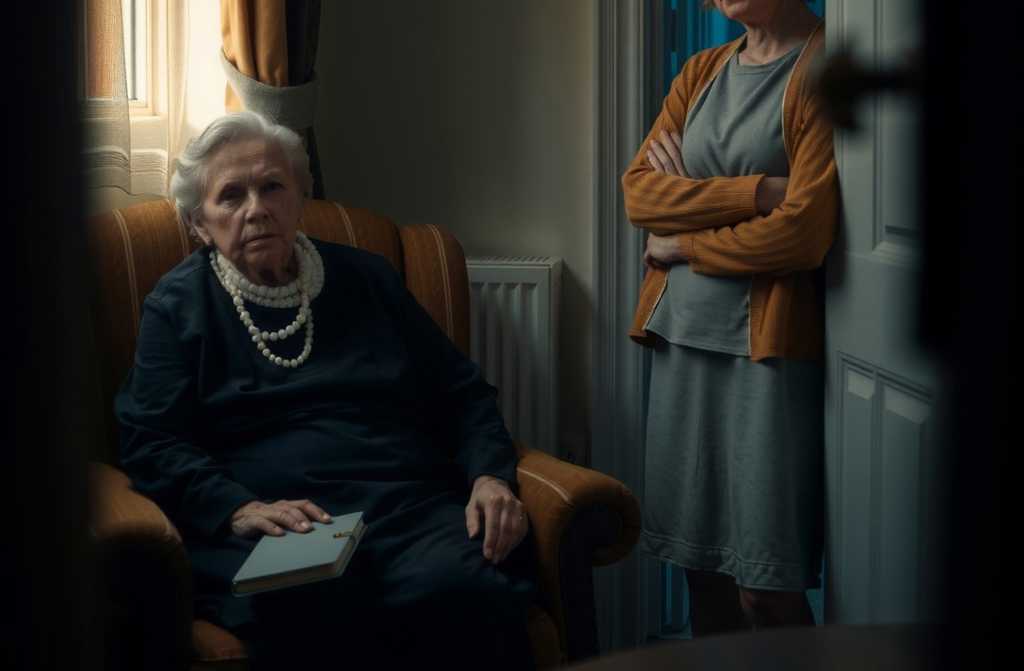
Gail went in. Her mother was sitting in a chair by the window, dressed and tidy, wearing the slippers Gail had brought in that first month. A book sat in her lap, unopened, no marker in itheld, not read.
– Mum.
– You came, – Margaret said. Not pleased, not critical. Simply fact.
Gail leant over, kissed her mothers cool, dry cheek.
– Are you cold? I can sort that radiator
– No. Sit down.
Gail perched on the edge of the bed, a metre or so between them. An entire life filled the space.
Margaret had been born in 1946 in a little town; raised by an engineer and a librarian, studied teaching, spent twenty years in a dusty secondary school drumming maths into stubborn heads. Shed married Stephen Andrews, a quiet, gentle man who could fix anything in the house. A daughter firstGail, then Tom. When Gail was thirty-two, Tom twenty-eight, Stephen slipped away in his sleep, heart quietly failing, a mercy and an injustice together.
Margaret lived twenty-three more years alone. At first entirely alone, then with a phone, then with a smartphone she never really liked. Shed come for holidays, sometimes helped with the grandchildren, never threw out unsolicited advice, never moaned about her health unless pressed. She did so many things that others rarely could: holding pain inside, taking genuine joy from others happiness, knowing when to leave before her presence turned heavy.
That skill cost her dearly. But she never made an invoice.
– Tom rang, – Gail said. Hes worried.
– He can come visit then, – her mother answered. No malice, only weary fact.
– Hes far away, Mum. You know that.
– I do.
Silence. Outside, a bare branch rocked in the wind.
– Do you want anything? I brought those biscuits you know, your favourite ones, with sesame seeds. And some clementines.
– Thank you.
– Ruth said youre not eating enough.
Her mother looked at her, eyes clearstill not old, scornful and wry, just as Gail remembered.
– Ruths young. To her, not eating means leaving half a shepherds pie.
– Mum.
– Gail, please. Im all right. Appetite drops at my age; Im not wasting away, just not up for clearing their mountainous plates.
– Alright, – Gail knotted her hands. Why stop going to the lounge?
Her mother turned back to the window.
– Mrs. Thompson never stops bragging about her children. What they bring her, how the grandchildren visit, what theyre up to. Shes perfectly pleasant. Im just not comfortable there.
Gail struggled to understand. Then clarity struck.
– Mum, I
– Dont, Gail. Honestly. Youre busy, you have a life, you have Michael, your work. I get it.
That I get it wounded more than any reproach. Margaret never shouted, never guiltednever said, youve abandoned me, or I gave you everything. Only, I understand, and her quiet, calm words pierced like a needle and never left.
– Ill come again next week, – said Gail.
– Dont go out of your way. Only if you have spare time.
– Ill come. Not if, but when.
Her mother nodded, picked up the book and flicked it open, but Gail could see she wasnt readingher gaze stuck to the page, unmoving, like water in a glass.
Gail drove home in silence. The radio stayed off.
Michael looked up only briefly from his laptop when she got in.
– Hows gran?
– Fine.
– Good.
He didnt press further. He was twenty-three, with a job, friends, a half-secret girlfriend he wouldnt talk about because its too soon. Gail didnt ask; shed learned from her mother not to press, not to force, to keep the distance chosen by another. Sometimes she thought that skill was a gift. Sometimes she thought it was just fear of rejection.
That night she dreamt of her mothers old house, the three-bed place where she and Tom grew up. In her dream, it was empty; the furniture remained, but everything felt as though it had left ages ago. On the kitchen table was her mothers little notebook, grey, battered. She knew she mustnt open it. But her hand reached out all the same.
She woke before the alarm and lay staring at the ceiling.
The notebook existed. Gail had seen it countless times, never asking what was inside. Out of respect, she told herself. Truthfully, perhaps out of fearwithdrawing from something that might shatter how she thought about her mother, herself, them. Some things are easier not to know.
She rang her mum on Wednesday. Margaret picked up after two rings.
– Hello.
– Mum, its me. How are you?
– Alright. Nicer weather. I went out in the garden today.
– Thats good! Gail brightened. Chat to anyone?
– Mrs. Thompson for a bit. She was showing baby picturesher granddaughter was christened recently.
– And?
– Lovely girl. Red hair.
They shared a pause. Their usual type, not awkward but restfula space to breathe between words.
– Mum, I wanted to ask. You had a little grey notebook? Is it with you?
A pause.
– I remember. Why?
– It just popped into my head. What did you keep in it?
– Phone numbers. Addresses. Odds and ends.
– All?
– Where are you going with this, Gail?
Gail wasnt sure.
– Nowhere. Just dreamt about it.
Her mum laughed, quietly, but for real.
– Dreamt of my notebook. That must be a sign for money.
– Mum.
– Alright, alright. Yes, Ive got it. Brought it with me. Always have, really.
– Will you show me?
A long pause.
– I will. Next time you visit.
Gail kept her promise and returned that Saturday. This time, her mum met her at the hallway window, not in her room. Standing tall, though thinner Gail thought, or maybe only seemed so now. Her straight backalways military, though shed never been near a uniform.
– Hello, Mum.
– Hello. Lets sit in the lounge, its quiet there. Teas being made.
The lounge was empty. Somebody had left a bowl of faded dried flowers on the table. A tartan blanket sprawled across the sofaorange and brown, like the ones her grandmother had. Was it just the style for places like this, or coincidence, or something unnameable but touching?
Her mum pulled the little grey notebook from her pocket and lay it on the table between them, unopened.
– Here you go.
Gail looked at the battered cover, the curled corners, the pencilled name on the insideher mums script, disciplined, slightly slanted.
– May I?
– Of course.
On the first page: M. Andrews. Begun 1987. Then lists of numbersso many unknown names, a slew of birthdays, addresses. Deeper in, the phone numbers vanished. There were notes now: small, spidery, mostly undated. Thoughts. Reminders. Gail read slowly.
Gail got her first fail in chemistry. Upset. Dont say it doesnt matter; it does, to her. Just be there.
Tom falling out with Sam from schoolsays hell never make up. Let him work it out. Dont interfere.
Steve came home late tonight. Tired. Dont ask.
Gail wrote from Manchester, says shes fine, not homesick. She is. But wants to seem grown-up. Tell her Im proud.
Gail paused. Shed gone to Manchester at twenty for teaching training, mailing swift, offhand postcards because everything was fresh and didnt want to look back. Mum replied briefly, never chiding. Gail assumed her mother was just naturally restrained.
But in her book, Margaret wrote: Gails not homesick. Good. Let her be.
She turned on.
Toms getting married. Lucy seems lovely. She looks at him right. Dont meddle in their life, even if they asklet them grow together.
Gail phoned again. Things are bad with Andrew. She wont say, but I hear it. Dont prod, just be.
Andrew was Gails first husband. Six years together, then apart. Her mum never disparaged him, never joined in when Gail complained, nor jumped to his defence either. She only listened. Gail had resented that silence sometimeslonged for a verdict, for advice, for some shape to the pain.
But in the notebook: Just be.
She closed it.
– Mum, – she began, her voice not quite her own.
– Dont cry, – said her mum, composed.
– Im not.
– You look ready to.
Gail laughed, though her eyes stung.
– Why did you write it all down?
– To stop myself saying too much, – her mum answered simply. Id notice I wanted to say or do something you or Tom didnt need. So I wrote, instead of speaking.
– Just about us?
– You and Tom. And about your dad, when he was here.
Gail watched the notebooks grey cover.
– Mum, dont you think that I mean, holding so much in isnt normal?
– It is, – her mum replied. Just unusual. Most people hold it in. At least I wrote. Better than saying things you cant take back.
– But if you wanted somebody to listen?
Margaret hesitated, fiddled with the little glass vase, then put it down.
– Then I phoned my friend. I had Marion, from college. She died three years ago.
– I know.
– Now there isnt anyone to ring in quite that way. Thats hardestnot you kids being far or living here. Just not being able to call someone and not have to explain a thing.
Gail felt a small ache. Not painjust presence.
– You could call me. Just to chat.
– Youre busy.
– Mum.
– Its not a complaint. Just true. Youve work, Michael, the house. Last Thursday, when I rang you, you asked me three times to repeat myselfsomething hissing on your stove.
– I couldve stepped away.
– No need to explain. Marion never needed that. She was just there. Thats rare.
They sat quietly. Outside the window, a man in a flat cap passed with a stick, walking slowly but sure.
– Mum, your notebook are there many pages left?
– Not many, – said Margaret. Ive slowed down; slower thinking, maybe thinking differently.
– About what?
Her mother looked at her for a long moment.
– Whether I did everything right. Not whether I was a good mothersomething deeper. Maybe I held back too much. Maybe youd have understood me better. Maybe I you.
– You understood us, – said Gail.
– I did, – Margaret agreed. But perhaps you never saw me. Because I never let you.
It was strange to heareven stranger for her mother to be saying it aloud. The keeper of silences, finally speaking.
– Youve changed, – Gail managed.
– You change in places like this, – Margaret nodded towards the hall. When youre among people who no longer care for secrets, you grow honest yourself. Mrs. Thompson said the other day, I thought Id be strong right to the end. Now I wonder, why bother? Who for?
Gail chuckled.
– And what did you say?
– I said, just so.
They laughed, and the laughter startled by its easeas if the years between had suddenly collapsed.
From December, Gail visited more often. If not every week, then every ten days at least. Sometimes they simply walked the park paths, Margaret holding her daughters armnot from frailty, but habit, since the days shed walked Gail through these same streets as a girl.
One brisk afternoon, her mother said:
– Remember when you refused the junior school Christmas party in Year 3? Said it would be boring.
– I dont, – admitted Gail.
– I remember. I made you go. You came home chuffed, clutching a mandarin and a little cotton rabbit. You said nothing, just put the rabbit on your shelf.
– So?
– Thats all. I remember.
– That rabbits still here somewhere, – said Gail suddenly. In my wardrobe, in a box. I never threw it out.
Her mother paused, then:
– Really?
– I dont know why. I just couldnt.
They stood quietly on the path, stripped branches overhead, something deep and silent passing between them, unvoiced.
Tom rang mid-December. He sounded optimistic, a dash sheepish.
– Gail, were off to Spain in January. Booked flights. I know its Christmas, but it was a bargain, and Lucys always wanted to go.
– Tom, mum
– Ill ring her. Ill send something for a present.
– Shell be spending Christmas at Stillwater.
– Well, it isnt so bad, is it? You said they put on a dotree, all that?
– Tom.
– Gail, what? Should I cancel my holiday for this? Youre seeing her anyway?
– I am.
– Well then. Brilliant.
Gail put down the phone, looked at her cold cup of tea and thought: Tom wasnt a bad son. He loved his mother, in his own wayhe rang, sent money, even visited in March. Theres a distance between people that cant be measured in miles.
She rang Stillwater. They had a Christmas Eve dinner planned, guests welcome.
Christmas Eve, Gail went with Michael. Hed at first resistedhad plans with mates, would visit Gran on Christmas Day, but not the 24th. Gail didnt guilt, only said once:
– Michael, shell be on her own. Toms in Spain.
He sighed, winced, and agreed. Wore his better shirtrare for himand brought a huge box of chocolates. Not sesame biscuits, not clementines, but proper chocolates in a festive boxan intentional gesture for the occasion.
Margaret met them at her door, dressed for once in a navy dress that Gail remembered from ancient family occasions. It hung a little loose, but she stood proud, pearl necklace shining, her hair set.
– Michael! she said, face lit brighter than Gail had seen in years.
– Hello, Gran, – and he hugged hercarefully, gently. His grans hands tightened, briefly, on his back.
They joined the others in the lounge; Mrs. Thompson loud and boisterous, plying Michael with homemade pie. An old gent told jokes. Music from some black-and-white film played softly in the background.
At midnight, they clinked glasses, Margaret sipping her fizz, and Michael asked:
– Gran, make a wish.
– I did, – she replied.
– What did you wish for?
– Wont tell you, or it wont come true.
– A hint, at least?
She smiled between him and Gail.
– I can hint. That you two stay well. Thats everything.
– Nothing for yourself?
– That is for myself.
Michael nodded, eyes prickling, and Gail saw that, for the first time, he understood.
They left after one in the morning. The night was hushed, snow drifting, heavy and soft. Margaret stood in the porch-light, tiny, upright, navy dress and shawl.
– Drive safely, – she called after them.
– Get inside, – called Gail.
Margaret waved and went in. Gail stood in the snow a moment longer until flakes began to melt on her lashes.
Michael was quiet in the car. After a while, he said:
– Mum, is Gran alright there?
– She is, – Gail answered.
– I think she gets lonely.
– She does.
– Should we visit more?
– We should.
Another pause.
– Ill try. Ill go next time on my own.
She didnt answer. Not because she didnt believe him but because she didnt want to scare away the good intentions now theyd surfaced.
January slipped by. Tom came back from Spain tanned and rang his mother to tell her about the sea. Margaret listened, replied, thats lovely, how nice, asked after Lucy. Tom said Lucy had loved it. Margaret said, good.
In February, Michael did visit alone. He rang Gail after:
– Mum, we talked two hours. She told me about Grandadfor the first time, really.
– What did she say?
– That he made toys out of wood. That he once made her a secret jewellery box for her birthday, invented the mechanism himself. That he never raised his voice, even when angry. She said she once thought he was too quiet, but now she thinks that was his way of loving.
Gail listened, realising shed never heard about the secret box either. Family memory is like thatsome things sour sharp, others wash away and you never know the moment of their vanishing.
– Im glad you went, – she said.
– Yeah. Mum, can we have her stay for my birthday in March? Could she spend a few days here?
– She could. Ill ask the care home.
– Lets do it.
She arranged it. Margaret came for three days, slept on the lounge sofathere was no guest roombut insisted it was comfortable, and that what she liked was hearing movement in the house at night. Life around her.
Three days went quickly. Margaret helped in the kitchen, peeled potatoes unasked, rearranged the herbs on the shelf to her liking and, for once, Gail left them as they were. Michael came in from work and went straight to his gran to talk. Gail heard their voices through the wall and let them be.
On the last night, her mother took out the grey notebook.
– I want to read you something, – she said.
Gail sat opposite.
Her mother read from the middle, steady voicesame tone when reading stories long ago:
– Gail said today I surely cant know what its like being young now. Shes right. But I know this: every time she leaves, it feels like shes going a little further than last time. Thats how it should be. Its life. Chicks fly off. But sometimes, at night, I hear the wind and think: what if it’s cold for them?
She closed the book, studied Gail.
Gail was wordless, looking at her mother: the stiff spine, the pearls, the battered notebookthinking of all the years her mother heard the wind and thought about her, never mentioned it, just inscribed it between the lines.
– Mum, – Gail finally said.
– What, love?
– I was never cold. I want you to know that. I always felt warm, even when I didnt notice it.
Her mum looked at her a long time.
– Good, – she said softly. Thats the best thing you could ever tell me.
– Why didnt you ask?
– Because I was afraid you might say the opposite.
Such honesty startled Gail. Not because of any past dishonesty: just that her mother had always seemed so sure, silent, sturdy. Yet she, too, was frightenedsimply to ask and be told the truth.
– You neednt have been, – said Gail.
– No, – her mother agreed. I did plenty of things wrong. But some things right, too.
Quiet again. It was turning dusk outside; March still cold, but the light had begun changing, winter thinning away.
– Mum, – said Gail. Do you want to go back to Stillwater, or do you want to stay here?
Margaret raised her brows.
– Seriously?
– Seriously.
– Gail, youve not the space. The sofas fine for now, but not forever
– We could work something out.
– Dont try. Margarets voice was firm, without chill. Im used to it there. Ruth is there, Mrs. Thompson is there, my routine is there. I wont be a burden.
– You wouldnt be.
– I would, love. Im a realist. Id get up in the night, Id be under your feet, Id worry if you were lateyoud all feel my presence. Thats not living for any of us. Im more settled there.
– Are you alright there?
– Im fine. Im better here, with you, for a bit. But then I need to go home.
Gail realised that home meant Stillwater now. It wasnt sad; it was truth. Her mothers gift had always been to accept reality plain, and Gail was gratefulshed have crumbled in her place.
Tom rang in April, announcing hed be coming, with Lucy and the kids, in July. Wanted to see their mum, too. Gail said fine, just let me know. Tom promised he would.
She didnt mention the notebook. That felt hers and her mothers; not because Tom didnt deserve to know, but because some things only exist between two people and shrink once explained to a third.
In May, another Saturday: Gail found her mother in the park, breaking crumbs for sparrows. The grey notebook lay beside her on the bench.
– Been writing? Gail asked, sitting.
– No, – her mum said. Reading.
– Old notes?
– Yes. Sometimes its like looking at the past through glass. It doesnt hurt; its just clear.
– And what do you see?
Margaret flicked another crumb.
– I see a woman terrified of doing too much. Who thought that keeping her distance would help her children grow tall. Like trees: the less you interfere, the stronger the roots.
– Theres truth in that.
– Some. But roots need watering too. Not just air.
Gail watched the sparrows.
– Anything you regret?
– Some things. Regret not asking more. Regret shrinking from being annoying. Sometimes you didnt know I thought the best of you, because I never said it aloud. Thought youd just know. But people dont always know what you dont say.
– I knew, – Gail said.
– Sort of. But hearing matters.
– Mum, – Gail took her mothers hand. Warm, sun-gilded, slightly rough. Youre a wonderful mother. I want you to know that.
Margaret didnt answer for a bit, watching the birds. Then:
– Youre a good daughter, Gail. I want you to know that.
The simplicity made it meaningful.
In June, her mum told her something new: that in 1997, when things were crumbling with Andrew and Gail ignored her calls for days, Margaret bought a train ticket and showed up unannounced. Knocked at the door. Gail had answeredsaid, Mum, Im fine. Margaret said, I can see. Mind if I stay a bit? Wanted to see your city.
Back then, Gail hadnt understood. Thought her mother was just curious. Now, she realised Margaretd come because she saw her daughter wouldnt ask for help but still needed itand so found a way to be present, without naming it.
– You spent two days walking the city, – said Gail. We went to a museum.
– And the park with the fountains.
– Yes. And I thought you were just interested in sightseeing.
– I was interested, – her mum said. But it was the other thing that mattered.
– I know, – said Gail. Now I know.
The notebook sat between them on the bench. The last page was nearly fullGail caught a glimpse, the handwriting shakier now, but clear.
– Whats on the last page? she asked.
Margaret delayed.
– Ill write that when I finish the notebook.
– Will you finish it?
– Dont know. Maybe Ill get another.
Gail smiled.
– And write more instead of talking?
– No, – Margaret said, something different in her voice. Ill speak now. Might be late, but I will.
They sat on the bench near Stillwater, the yellowed curtains, the canteen smell, the staff and residents weaving their own stories. May in full force, leaves thick, birds wheeling through air, sun nearly as bright as summer. The sparrows finished their crumbs and flitted off.
They talked of nothing, for twenty minutes or so. About Michael wanting a dog and whether that worked in a flat. About Mrs. Thompson teaching her mum a new knitting stitch. About how another bench would be nice for the park.
An ordinary conversation. Quiet, without weighty words. And in that, everything that never fit in the little notebook.
Later, Margaret was tired, wanted to lie down. She took Gails arm as always. At the door, she paused.
– Gail, – she said.
– Yes?
– Michael rang me yesterday. Not on your prompting?
Gail blinked.
– No, not me. I didnt know.
Margaret nodded, hand on the door.
– Hes a good lad.
– He is.
– Takes after his granddad. Quiet, but deep.
– He does.
Her mother stepped inside, turned back.
– You coming next Saturday?
– I am.
– Bring some sesame biscuits. And yourself.
– Both, I promise.
Margaret nodded, went in. The door shut softly.
Gail paused outside. Fished out her phone, glanced at the screen. Put it away. No need to call, explain, or justify. Just another Saturday. Just biscuits. Just herself.
She walked the park path back to her car, thinking of the notebook and its invisible line on the final page. She didnt know what was written thereher mother might never show her, or maybe would, someday. Perhaps just a reminder, a phone number, a date.
But perhaps, it was about her. About both of them. About things you grasp too late to fix, but just in time not to lose forever.
She didnt know. And not knowing was all right. It was, somehow, like the scuffed grey coverweathered and bent, but solid.
Her phone buzzed in her pocket. Michaels message.
Mum, where are you now?
She stopped and typed a reply.
Just leaving Grans. All fine. Why did you ring her yesterday?
His reply was quick.
Just wanted to hear her. Is that weird?
Gail looked at the words. Then sent back:
No. Not strange at all.
She tucked away the phone, reached her car, sat without turning on the engine, looking at the green-blushed park, the restless branches. Somewhere inside, her mother walked down the corridor alongside those polite yellow curtains, to her chair by the window, the notebook nearby or untouched, just sitting, watching the world, thinking on things too large for language, private as the heartbeat of a quiet room.
Gail started her car. Headed home.
She thought of next Saturdays biscuits, of resting on the park bench, sparrows flitting in, her mother telling a story shed never heardwhether about her, her late father, or something so old it had become nearly fable. And Gail would listenfully, not distracted, not hurrying, not with something bubbling on the stove. Really listen.
A small intention. Small as a grey notebook. But from such things is built what, when its too late, is called closeness.
And while it isnt yet too late, you can still try again.
Perhaps next Saturday.
Perhaps even now.
The grey notebook waited on Margarets bedside table, beside the clementines. The last page nearly complete, her script juddery but clear. Three lines, written in March, when she stayed over, slept lightly on the sofa, woke in the night and heard, for once, the company of life elsewhere.
Three lines Gail hadnt read.
Perhaps her mother would read them aloud one day; or perhaps not; or perhaps Gail would ask, or not.
That, too, was their story.
The phone buzzed again. Gail looked down.
Mum calling.
She answered, not even surprised.
– Mum, all okay?
– All fine. Just wanted to say
– Yes?
A small pause. Then her mothers tone, steady, plain, wrapping it all in one gesture.
– Im glad you came today. Thats all. Drive safe.






