A Second Family
I wake at three in the morning because the house is too quiet.
Not just an ordinary quiet, but the sort of hush that feels wrong. Like something that is always there has disappeared and youre not sure what, but the emptiness already sits heavy in its place.
Martin isnt beside me.
I lie there for a minute, listening. The rain rustles against the window; somewhere far off, I hear a car roll past. The alarm clock says 3:14. I reach across the bedhis side is cold.
Hes been up for a while.
This isnt strange by itself. Sometimes Martin cant sleep. He sits in the kitchen or stands out on the balcony. Says he cant switch off from work, that his thoughts keep going round. After twenty-two years together, you get used to a lot.
I get up, wrap myself in my dressing gown, and head to the kitchen for some water.
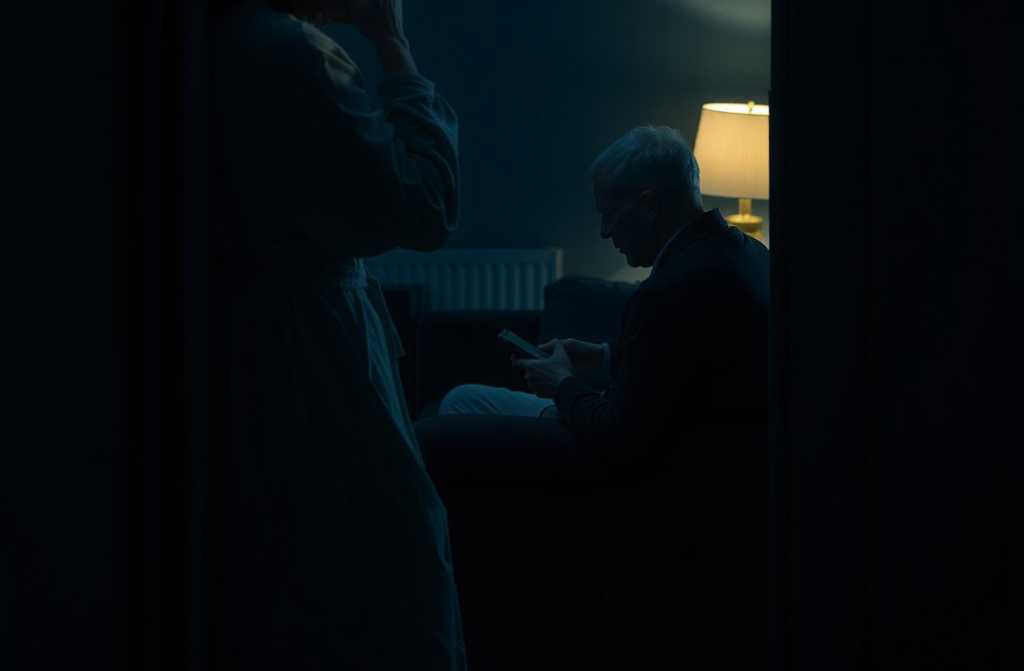
No light in the hallway, but a sliver of brightness seeps from the living room, the door half-open. I walk lightlyif Martins dozed off on the sofa, I dont want to wake him. Just as I reach the door, I hear his voice. Soft, barely more than a whisper, but clear.
I know. I cant talk now. Shes at home.
A pause.
No, dont be like that. Itll be fine. Ill sort it.
Another pause, slightly longer.
Is Alfie asleep? Good. Tell him Daddy will come soon.
I stand in the darkness and dont move. Each word drops into the silence, one by one, heavy as stones.
Alfie. Daddy.
Martin is fifty-four. Our son William, twenty-eight, lives in Manchester. There has never been an Alfie in our life. Never.
I dont go into the living room. I turn and walk back to the bedroom, lie down, close my eyes.
Sleep doesnt come.
I stare up at the ceiling, though in the dark I cant see itwhich is a small relief, because I cant imagine where else to look. My thoughts are not jumbled or frantic, as they often are at three a.m. Instead, they are cold, clear, lined up in a row.
Alfie is asleep.
Daddy will come soon.
Shes at home.
She. Thats me. Im she. Not Julia, not wife, not love. Just she. Something to be warned about.
I hear Martin return. He undresses quietly and slips into bed. I dont stir. Though hes only centimetres away, the warmth of his body is now strangers heat.
He falls asleep in a few minutes. I dont.
My name is Julia Anne Wainwright. I am fifty-six years old. I teach English literature at a college for teachers. We live in Oxford, in a three-bedroom flat on the top floor of a block on Magdalen Road. I married Martin John Wainwright, a structural engineer, twenty-two years ago. We have a son.
That was my life. Every bit of it, up until tonight.
In the morning, Martin gets up at seven, shaves, eats breakfast, asks if theres any of yesterdays soup left. I say there is, warm it up for him. He eats in silence, scrolling through his phone. I sip my coffee and watch him.
What do I really know? One conversation. A handful of words. Maybe its a nephew? A mates kid? But Ive taught literature for over thirty yearsI know how to read between the lines. And shes at home doesnt mean anything else.
What time will you be back? I ask.
Same as usual. Back around eight, maybe half eight.
All right.
He leaves. I stand at the window and watch him walk to the car. The way he holds himself, the confidence in his steps. That grey overcoatwe picked it out together in John Lewis, three years ago.
I dont cry. I feel Im supposed to, but there are no tears. Just that strange claritythe kind that comes when you finally see the error in a puzzle after hours of searching. Not joy, not relief. Just understanding.
I ring in sick at work, the first time Ive ever done it for no good reason.
Then I sit and think.
Martin works for an engineering firm. He travels a lotLeeds, Birmingham, London. Sometimes for a week, sometimes a fortnight. I never asked too many questions. I trusted him.
I go onto our shared email. We set it up years ago for bills and boring stuff. Martin rarely checks it, but I do. Nothing out of the ordinarystatements from the council, supermarket newsletters.
Then I remember he has a separate work email, and the password is written in a little blue notebook he keeps in his desk drawer. Ive never gone into that drawer, on principleeveryone needs some space. But today I do.
I find the notebook. The password, neat handwriting, is there on the third page.
His work inbox is mostly what youd expectplans, approvals, emails with clients. All perfectly professional. For a while, I wonder if I misunderstood everything.
Then I find an Archive folder, for some reason hidden away.
There are emails from someone named Emma. A lot of them, over years.
I sit and read, slowly and carefully, right from the start.
Her name is Emma Harding. Fourteen years younger than me. They met eight years ago at a conference in Leeds. Alfie, six, was born two years later.
Six years.
I sit at Martins desk, thinking: Six years, and I never knew. Six years of cooking, washing his shirts, holidays to Devon, wedding anniversaries, worrying when he was ill, planning next years break. Six years.
I dont drop the mug, dont get up suddenly. I just keep reading.
Emma writes wellclearly, with warmth. Its obvious that she loves him. And he writes back as if hes someone elsea lighter, more open Martin Ive never seen. He never sent me emails like these. Our messages are always Running late or Pick up milk.
Emmas last message was three weeks ago. She writes that Alfie has started school, that she misses Martin, and that its time for clarity. She has underlined the wordperhaps hoping hell finally pay attention.
No reply from him. Or maybe he used another channel.
I close the laptop, stand, make tea.
Through the window, theres a small brown dog scampering across the green, tugging an older man in a blue windcheater on a lead. The dog pulls insistently; the man strolls, unhurried.
I think, maybe I should talk to William first. Nothese are my decisions. I need to think for myself.
Coffee in hand, I sit. I change tack. What do I want? Not what am I supposed to want, or what Im meant to feel. What do I want?
The answer comes quickly and shocks me by its simplicity.
I want the truth. Not excuses, not explanations. Just truthspoken out loud, not played out in a drama with two scenes and two parts, with me applauding a story I never recognised.
But before I speak to Martin, I need to be sure of everything.
The next few days, I live in two parallel worlds.
In one I am ordinary Julia Wainwright. I go to work, mark essays, make tea, ask Martin about his day. I smile. Nothing gives me away.
Its unexpectedly easy. Perhaps he never looked closely enough to notice a change. Or maybe Im just used to being quiet.
In the other world, I collect factscarefully, methodically, as if preparing a lesson.
I find a second phone of his, an old, battered one, left in his gym bag for trips. Messages intact. I dont read them all, just photograph the ones I need. For myselfto have them.
I memorise Emmas address from one of the emails. Leeds, on Oakfield Road. I dont go theretoo much. I dont need to see their world. I have enough.
Then I call a solicitor. I book an appointmenther name is Rachel Foster, maybe thirty-five, very focused, cropped hair.
Tell me whats happened, she says, opening a notebook.
I tell her in plain terms, stripped of emotion.
She listens, notes a few points.
Is the flat in joint names?
Yes. Half each.
Any other assets? Car, cottage?
The cars his. No cottage. We have a small shared savings account.
I see. She sets aside her pen. Are you sure you want a divorce?
I look at her. Fair question.
I want to talk to my husband first. But I need to know where I stand. I want to have no illusions.
Thats sensible, she nods. Lets go through things carefully.
We talk for nearly two hours. I leave with several sheets of notes, written in her neat hand, and the comfort of options. Its a relief.
Having options comforts me.
I plan the conversation with Martin for Saturday.
Not because Saturdays convenient, just that four days gives me time to get used to knowing. Enough time for the hurt to dull into a plain facta fact to be dealt with.
On Friday evening, I call William.
Hes lived in Manchester for five years now, works in an architecture firm, just started seeing someone called Libby. I call him once a week, usually Sunday.
Im calling on a Friday now.
Mum? Is everything all right?
All right. I just wanted a chat.
A pause.
Mum, your voice sounds…
Will, I need to speak to your father tomorrow. A serious talk. I just wanted you to know.
About what?
I fall silent.
Ill tell you afterwards. But listenno matter what, this is between Dad and me. Youre our son, we both love you, and that wont change.
A long pause.
Mum, are you splitting up?
I dont know, honestly. Not yet.
Whats happened?
Ill tell you on Sunday. I promise. I just wanted you to know Im all right.
Another silence, then quietly:
All right. Im here if you need me.
I know. Good night.
Saturday arrives grey and coldNovember in Oxford. Martin sleeps in, as he does on weekends. I make breakfast. We eat in silencehe flicks through the paper, I watch the garden.
After a bit, he says, Ill go wash the carits filthy.
Martin, wait. We need to talk.
He looks up. Calmly, without worry.
About what?
I clear plates, set them in the sink, come and sit opposite him. I want to see his face.
About Alfie. About Emma Harding. About Leeds.
For a moment, nothing happens. He looks at me. Then, slowly, he puts down the paper.
How did you…
It doesnt matter how. I know. Ive known for days.
Silence.
Hes six, I say. Not a question, just a statement.
Julia…
No, Martin. You first. Go on.
He gets up, walks to the window, stands there, turns around.
It wasnt planned. At first… it just happened. I didnt mean to.
All right.
When I found out about Alfie, I wanted to tell you. Honestly. I did try.
But you didnt.
No.
Eight years, Martin. Thats not it just happened. Thats a choice.
Hes silent.
Do you want to be with her? I ask.
He hesitates, stares at the floor. At length: I dont know.
Thats probably the most honest answer hes ever given me. Also the worst. I dont knowmeaning eight years torn between two women, unable to choose. Eight years. Emma wants clarity. I lived with illusions.
You have a son, Martin. A little boy. Hes growing up without a father at home.
I visit him.
I know. I read your emails.
He lifts his head.
You read my email?
Yes. Sorry if it upsets you.
At another time, Id never have said that. It sounds wry. I dont mean it that way, but thats how the words come out.
He turns back to the window.
What do you want from me?
One thing. Decide. Honestly. Not because I demand it, but because you owe itto me, to Emma, to Alfie, to William.
Does William know?
No. Im phoning him today. After this.
He turns around.
Julia. I never wanted to
I know. But its done. Now we both have to deal with it.
I get up, put my cup in the sink, and with my back to him say:
Ive already seen a solicitor. So you know. I know my rights. Im not asking for anything extra. The flat, fifty-fifty, as on the deed. One stays, or the otherwell work that out. But I cant wait forever for you to decide. Youve got two weeks.
Two weeks for what?
To tell me your decision. Stay here and try to rebuild something, or go. Theres no third option.
What is there to rebuild, Julia? You know as well as I do…
I dont know. Thats your question, not mine. You decide.
I leave him standing there, close the bedroom door, and sit on the bed.
So thats that. The talk I was dreadingshorter and colder than expected. No shouting, no tears, no drama Id rehearsed in my sleepless nights.
I dont cry. I just want quiet.
I lie down. Close my eyes.
An hour later, I get up, wash my face, and call William.
For the next two weeks, Martin stays, but we barely speak. Not because were fightingjust nothing left to say. We eat at different times, sleep in separate rooms. He takes the sofa. I dont suggest staying with a mate or a hotel. Hes to feel, for the first time, what it means to live inside his own decisions.
On the third day he asks, Have you eaten? I made potatoes.
Thanks. Ill have some later.
Julia, we cant go on like this.
Like what?
Not talking.
Were not not talking. Youre thinking. Im waiting.
He nods. Im thinking.
All right.
William comes down the following weekend. He rings on Friday: Mum, Ill come tomorrow, all right?
Of course.
He arrives alone, without Libby, stands in the hallway, holds metightly, like you do when there are no words.
You okay?
Im okay. Honestly.
Is Dad home?
Yes. Kitchen.
He heads through. I hear their voiceslow, careful, then louder, then soft again.
Half an hour later, William comes to me. Sits.
Mum, he says he wants to stay.
I know. He told me, too.
So what now?
I study my sona grown man, the spit of Martin at his age. Those eyes, those shoulders.
Will, I say, its my decision. Not yours. I know you want things back the way they were, but they cant be. Not now. Your dad has a sonAlfie needs his father. Really needs him, not as a weekend visitor.
So you want him to go to them?
I think theres no good answer. No matter what he decides, someone gets hurt.
Wills silent, then says, Its hard to think about.
I know. For me too. But youll manage. Youre an adult.
And you?
I think a moment.
I already am.
Two weeks, exactly to the day, Martin sits across from me at the kitchen table. He says hes staying. Hes spoken to Emma, theyve agreed. Hell be in Alfies life, thats his obligation, but with Emmaits over.
I listen, watching him.
Are you staying because you want to, or because you dont know where else to go?
He looks startled.
What?
Im asking: do you want to stay, or are you just scared to leave?
Julia, thats not
Martin. I have one favour to ask. Just one. Dont lie to me, not now, not ever. If you stay, Ill accept it. If you go, Ill accept that too. But if youre just taking the easier road, thats not enough.
Hes silent for a long time, then says:
I want to stay. Thats the truth. But I know youve no reason to believe me.
No, I agree. Not yet.
We try.
I wont say it was easy. It wasnt. There are things you know with your head, but they sneak up unexpectedlywhen hes late, or steps out to take a call, or goes quiet at dinner and you wonder where hes gone, inside.
We see a marriage counsellor, once. Martin says its not for him. I let it go.
Three months later, he travels to Leedswork, he says. Maybe it is. I dont check. But that night, in his absence, I realise I cant do thisnot because I cant forgive, but because I cant not know. I cant live in a permanent questionevery trip, every late meeting, every dont wait up tonight. It isnt fair. Even to him.
When he returns, I say, Martin, we need to talk.
He looks at me, seems to know immediately.
You want a divorce.
Yes.
He sits, quiet for a long time.
I went to see him, he says eventually. Alfie. Youre right. He asked when Id live nearby.
I look at him.
How old is he now?
Nearly seven.
A big age.
I know.
Were silent.
Are you angry? he asks.
No. Not anymore. I just know we shouldnt drag this out.
The divorce takes four months. Rachel Foster handles it briskly, no drama. We agree to sell the flat and split the proceeds. I find another place, smaller, nearbya two-bedroom on the third floor overlooking a green. I decorate it how I like, for the first timewarm white walls, a light green sofa Ive wanted for years, a little armchair by the window, shelves for my books.
The first flat thats just mine.
William visits, looks around, says, Mum, its lovely here.
I know, I reply.
Martin moves to Leeds in March, rents a place near Emma. Calls to say hes settling in. The call is brief and politea conversation between long-acquainted people who wish each other well, but from a distance.
How are you? he asks.
Im well, I say. For once, its true.
A year passesquickly, or not, simply differently. Time feels strange when you live alone. My evenings are mine. Not the television Martin watched and I endured just so we could share something. Not waiting for him to get home. Just the evening and its silence, which I choose.
I return to readingreal reading, not for work or curriculum, but books I want. I reread Austen, then Eliot, even buy a few new novels recommended by colleagues.
I start going for long walks on Sundays. Oxford is good for wandering, especially in this part of town, near the Botanic Garden. Autumn is best.
At work they notice, not my appearance, just something less hesitant, less yielding than before. One afternoon after a staff meeting, my colleague Margaretwhos known me twenty yearssays:
Julia, youve changed.
How do you mean?
Not sure. You seem more… yourself.
I think shes right.
William checks in every week, sometimes more. Tells me about Libby and work. One day, gently, Mum, do you ever feel lonely?
Sometimes, I say truthfully, but its a different kind of loneliness. Not the suffocating sort. More like space.
Space?
For myself.
Hes silent a while.
Youre strong, Mum.
Im not, really. I just had time to think.
Martin calls in October, seven months after leaving.
Julia, its Alfies birthday. Seven. Thought youd like to know.
Im not sure why.
Wish him happy birthday from me, I say.
You really mean that, or just being polite?
A pause.
I mean it. Its not his fault. Are you with them now?
Yes. I live here.
Thats good, Martin.
A pause.
How are you?
Im well. I am.
Im glad, he says, and I think, for once, hes not lying.
We hang up, and I realise Im not angry anymore. Not that Im especially generousthe anger only needed energy, which Im using elsewhere now.
In November, a year to the day since that night I stood in a dark corridor listening to a strangers conversation, I wake at three a.m.
The flat is quieta right kind of quiet. My quiet, in my space.
I lie there, listening. Then get up, slip on slippers, go to the kitchen.
Outside, its snowing for the first time this yearheavy, slow flakes. The streetlamp gives the snow a golden glow.
I set the kettle boiling, take down a book I started last weekan old French novel about a woman who, at fifty, leaves to live by the sea. I havent finished it yet, dont know if she ever goes back.
I pour my coffee, open the book.
Outside, the snow falls.
On Sunday William calls.
Mum, hiya. How are you?
Reading. Snowing outside.
Here too. Libby says shed like to meet youto come up, if thats all right?
Id love that.
Next weekend?
Yes, next weekend.
A pause.
Mum, are you sure youre all right?
I look out. The snow thickens, covering the green until everythings blank and new.
Yes, Will. Im all right.
Really?
Really. Come visit. Ill bake a pie.
Apple?
With apples.
Deal. He laughs. Theres relief in his voice, or something like itthe sound you make when you finally see someone will be all right.
I love you, I say.
Love you too, Mum.
We say goodbye. I place the phone down, pick up my coffee. The snow thickens, and the street below becomes white, quietly cleanerlike someone is covering it with a fresh, blank page.
I open my book to the page I left off.
The heroine stands by the water, looking out at the sea. The author hasnt written what comes next. Maybe she returns, maybe she stays, maybe something altogether newand no one can say.
I turn the page.