August that year was unusually hot and close. Summer was past its peak, but the heat lingered stubbornly, almost oppressive. Dust carpeted the old lane so thickly that every footstep raised a pale cloud. The village dozed in a slow, sticky silence; only the flies droned lazily, and in some distant cottage the muffled sound of a radio filtered through.
Then, all at once clamour, commotion, and dust swirling! An unfamiliar car, small and city-smart, trundled up the lane and came to a halt at the edge of the village beside our old storage barn. Out stepped a lanky lad, bespectacled and pale, sporting a garish T-shirt scrawled over with bright colours. He looked startlingly out of place in our sleepy bit of Oxfordshire.
I was watching this from the window of my tiny hut and, heavens above, I recognised him at once. It was Tom young Tom, grandson of old Michael Jones, God rest his soul. Tom whod grown up in London and only ever visited his granddad out here during the summer holidays when he was just a kid. And here he was now, a grown man, just turning up all of a sudden.
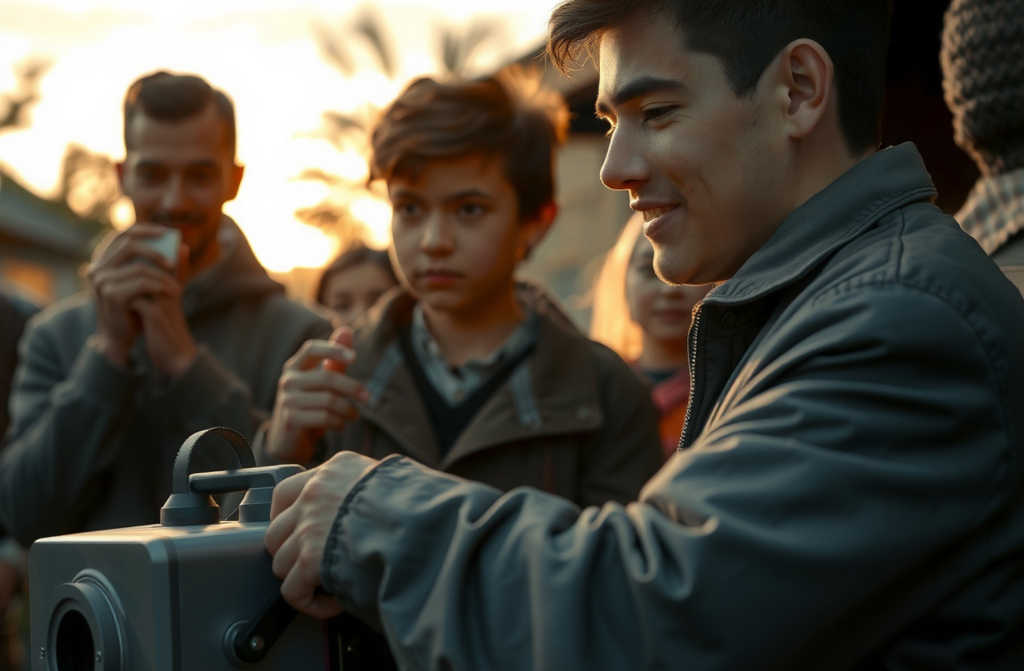
He didnt come empty-handed either. No, young Tom started unloading boxes from his car, heaving and puffing, his face growing rosy with the effort. And then, from the boot, he produced a large, billowing white sheet bright as fresh snow, like hed plucked a cloud out of the heavens. He began fastening it to the side of the barn, hammering in nails and tying off bits of string, working with a kind of quiet determination.
Naturally, the locals are a nosy lot. Faces soon peered over every fence, and a chorus of muttering and speculation began.
Here, do you reckon its another blasted disco? grumbled Mrs. Nora Clarke, my formidable neighbour. Shes made of stern stuff, Nora. Not one to mince words her tongue could slice marble, and she could flatten you with a look.
You mark my words, Nora, old Mr. George Atkinson said, leaning heavily on his stick, The youth these days no shame left. Music blaring all night, cant get a winks peace.
But on Tom went, unperturbed. He unfurled the sheet, smoothed it out so not a wrinkle was left, and as the breeze caught it, it swelled like a sail as if our old barn was about to set off on a great adventure. Then, he set a black box atop a stool and began threading wires here and there.
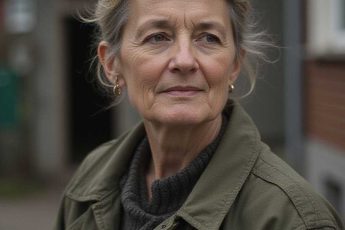
I stepped out onto the porch, drying my hands on my old apron. My heart fluttered oddly in my chest. There was something solemn about the boy, something sincere. It wasnt mischief on his face, but a serious, almost reverent look as if, instead of hanging up a common sheet, he was raising a regimental flag.
By evening, as the heat finally began to ebb, half the village had assembled outside the barn. Some turned up from curiosity, others on standby for a complaint in case of any noise or disturbance. Few youngsters lived here anymore; mostly it was us old-timers and the occasional summer folk.
Mrs. Clarke arrived first, hands on hips, eyebrows drawn together in suspicion. Well, Tom, she called, so loudly the jackdaws scattered from the oaks, Whats this, then? If its those thumping beats again, Ill have that cable out so quick! We need quiet, not raucous parties.
Tom turned and straightened his glasses, a nervous yet gentle look about him. Good evening, Mrs. Clarke, good evening, Miss Valerie, he said politely. Do sit down. Ive dragged out some benches, I hope thats all right. No loud music, promise.
So what are you planning then? Mr. Atkinson squinted at him, suspicion thick as ever. A film, is it? Well, we can watch telly at home. Theres that soap on hearts breaking and all that nonsense.
Better than that, Mr. Atkinson, Tom managed a trembling smile. Just wait until its fully dark, youll see.
So we settled down, some on benches, some on the logs that always seemed to end up by the barn. A light drone of midges had begun someone flicked a branch at them, another squashed one on their knee. That old village tension was thick as treacle in the dusk; folks have grown wary over the years, always looking out for schemes, presuming some trick or hard sell or a lecture about the proper way to live.
Staring at the glowing white sheet, turning a soft blue as night crept in, I suddenly felt an ache deep in my chest. I remembered the days when our old village hall would show films. The place would be packed laughter, chatter, not an inch to spare. Now the hall had been shuttered for ages, windows boarded up. All that survived was memory itself, fading and threadbare like an old strip of bunting washed out by the sun.
How much longer? Mrs. Clarke finally snapped, voice tart as ever. Bones are groaning sitting on these planks.
Just a moment more Tom whispered.
Then he flicked something on his little device. A hushed whirring like a befuddled bumblebee and suddenly, from the black box, a shaft of light cut through the darkness and struck the sheet. Dust motes waltzed in that beam as if they were alive.
At first, numbers and squiggly lines flickered on the makeshift screen. Then all at once the village gasped, an echoing intake of breath from every throat.
Projected on that fluttering sheet was our very own village, but not as it is now not with the sagging fences, long grass, and boarded-up windows. This was the old village, shining and sunlit.
It was high summer, haymaking time, and the camera jostled as though held from the back of a tractor or hay-cart. But oh, what it showed! The wide, wildflower-dusted meadows, and so many people young, strong, unmistakably familiar.
Look! Just look! suddenly Mrs. Vera Browning shrieked, pressing her hand to her chest. Thats us!
A close-up swept past a grinning lad with a rebellious lock falling from beneath his cap, waving full pelt at the camera, shirt unbuttoned, sweat glistening on his neck.
Jack! Mrs. Clarke breathed, with such longing it made my stomach twist.
Her Jack the man she lived with, heart to heart, for over fifty years gone for almost a decade now, yet here he was, laughing and alive, shirt open, eyes dancing as he heaped hay higher than himself with a pitchfork as though it weighed nothing.
Nora, always a pillar of granite, suddenly crumpled, her shoulders drooping. With a trembling hand, she straightened her headscarf as if he might see her through the years. And for a long moment, silence reigned except for the distant scrape of a cricket and the gentle whir of the projector, humming in the soft English twilight.
There look that’s me! whispered old Mr. Atkinson, jabbing a finger at the screen. Blimey, did I really look like that?
Up there was a skinny, wiry lad, cap askew, struggling to start a battered old motorbike. The bike popped and spluttered, refusing to oblige, and a knot of men gathered to mock, joke, slap him on the back. Their laughter, soundless on the film, was so infectious we all began smiling there and then.
I glanced at Mr. Atkinson now stooped, silver-haired, and frail. But for a moment, on the screen, he soared, all sharpness and verve. The fire in his eyes hadnt faded, only hid behind years of lines and hardship.
Then the scene changed, showing a long table knocked together from garden planks, standing tall in a field.
Hearts grabbed, gasped tight in my chest.
On it lay the most modest of feasts: wedges of tiger bread, chunky cucumber slices, jackets potatoes, and a big jug of fresh milk. Familiar, friendly faces gathered round some alive, others long gone. There was Mrs. Margaret Evans, our old schoolmistress, pouring tea from a monstrous enamel pot so young, so upright in her crisp white blouse. Now she barely left her bungalow, her legs no longer up to it.
Old Mr. Stevens the blacksmith broke bread into laughter, joking with his neighbours. And there a glimpse of myself, shoulder bag slung, hair in a plait, tanned face full of energy, waving the camera away, Not now! Too busy!
Valerie whispered Mrs. Browning, tugging my sleeve. Just look at you then
I bit my lip to keep from sobbing. Memory tugged me back to that very day: fierce sun, horseflies biting, all of us weary down to our bones. But on screen, it was pure happiness simple, unadorned, yet so full. Just all of us, together, living as one.
Odd thing the film was silent, not a voice or laughter or the rumble of the tractor. But I swear to you, I heard it all: the swish of scythes, rustling grass, the splash of cold water into a battered flask. Sometimes memory rings louder than any modern speakers.
Tom, old Michaels grandson, hovered by his contraption, wishing the floor would swallow him up. No doubt expecting a tongue-lashing. But we sat there, quiet and awestruck, as if shown a magic mirror reflecting back not our aches and ailments but our young, undimmed souls.
Then the weather on film darkened with a sweep of cloud. Folks started scurrying, gathering the hay, shirts billowing, headscarves snatched by the wind. What a hullabaloo! People falling over in the hay, others boosting each other onto haycarts. All of it a single, breathless, united scramble.
You remember that one? a voice called out from behind it was Mr. Simon Harris, our once-upon-a-time village agronomist. When the storm rolled in and we all hid under the carts?
I remember! answered Nora, dabbing watery eyes with her handkerchief. Jack threw his jacket over me and ended up soaked to the skin himself!
And I lost my sandal in the mud! cackled the young postwomans daughter barely five at the time, tagging along behind her mother. You all helped me look afterwards!
Suddenly, the dam burst. Folks talked all at once not complaining or griping like you hear in the post office queue, but interrupting each other with laughter and happy shouting, tears and smiles at the same time.
And the accordion! added Atkinson, Wheres that gone, then? Remember old Alf, squeezing out a tune?
Hold your horses, George, its coming! someone waved him down.
And sure enough, there at the end, after the shower had passed and sun returned, was Alf perched on a log, wringing music from his battered squeeze-box while the girls kicked puddles and danced in rings the rainbow over the meadow, even in faded black-and-white, was unmistakable.
The film ended abruptly frames stuttering, flicking to white static. The makeshift screen was once more just a bedsheet on an old barn wall. The projectors beam faded, leaving us wrapped in the rich velvet of a summer night.
Nobody wanted to move. It was so still, only the stifled sniffles and the odd heavy sigh gave us away.
Tom quietly started spooling his wires hands visibly shaking, glasses fogging up. He took them off and cleaned them on his bright shirt, voice small as a tin whistle: Well, did you like it?
Mrs. Clarke, our unshakeable thunderstorm, rose from her bench. She strode over, slow but sure, and placed her great hand on Toms skinny shoulder. I braced myself for a scolding.
Instead, she gazed at him with those deep, old eyes, and spoke: Thank you, lad. You honoured us old folks tonight. Thought Id forgotten his smile, but you brought him back to me. Just for half an hour, but you did.
She hugged his wild-haired head to her chest, and left Tom lost for words and rigid as a post. But then, blushing, he returned her embrace, tentative and sheepish.
Take care of those reels, son, rasped Mr. Atkinson. Dont lose them. Theyre history. Our history.
Ive saved them all, Mr. Atkinson, Tom said quickly. Put them on my computer as well, theyll never be lost now. Found loads weddings, farewells, you name it.
Weddings? the crowd brightened. Which? The Parkers? Or was it Janes?
As people clamoured around Tom, inviting him in for tea, promising pies and cakes, youd never have guessed how wary theyd been just hours before. Suspicion simply melted away hed become family. A Guardian of our Time, for want of a better phrase.
I watched them from a little way off Mrs. Clarke, suddenly twenty years younger; Mr. Atkinson, chest lifted, leaning less on his stick; neighbours who that morning hadnt exchanged a single word over some petty hedge dispute now standing together, remembering, laughing, alive.
Amazing, isnt it? We live side by side, yet as good as locked away in our own shells, small grievances keeping us apart. All it takes to break those walls is a glimmer of light in the darkness; a reminder of who we are, rooted together in this land, tight as twisted hawthorn branches.
Miss Valerie! Tom called across. Did you not enjoy it?
I smiled through tears pricking my cheeks. I did, Tom more than you can ever know. You gave us a treasure tonight. Like you took my hand and walked me right back into the heart of youth, let me greet those lost to time. The heart never ages, you see tonight you made it glad again.
We drifted home late, long after midnight, laughter and voices echoing down the lane long after wed all headed inside. People didnt wander back alone, but in little groups, talking it all through.
I made myself a fresh cuppa, settled by the open window, and let the full, brilliant moon pour in. I felt lighter unburdened as if an old, invisible weight had tumbled from my back.
Ever since, our village has made a tradition of those gatherings by the barn, films flickering on an old sheet. Tom shared every reel in his collection, and it feels as if, somehow, our small world is one big family again. The fences seem lower now, and garden gates swing open more often.
So, my lesson? Time tries its best to rub us smooth and make us forgetful but memory is stronger than any passing age. If theres something in your past that makes your heart shine bright, hold on to it. Share it. Sometimes, all we need is a bit of honest remembering to bring us closer to ourselves, and to each other.