You should take care of your guest, give him something to eat and drink, insisted my ex-husband, showing up at Emmas door without warning.
When the bell rang, Emma didnt get up at first. She thought someone had the wrong flat or maybe it was for her neighbour, Mrs Thompson. Eventually, she stood, pulled on her dressing gown, and went to answer it.
Tom was standing on her doorstep.
He was wearing a jacket, a heavy bag slung over his shoulder, looking every inch the man coming home after a long day at work. Beside him, a young, tall lad of about twenty-three in trainers and with a rucksack stood awkwardly, avoiding Emmas gaze as if he wasnt altogether sure why he was there.
Emma, Tom said. This is Ben.
Emma looked at Ben. She knew Tom had a son from his first marriage, but shed never actually met him before.
You should look after your guest properly, give him something hot, let him rest, Tom added, stepping right into the flat.
That was that. No hello, no may I come in, nothing youd expect when someone comes round to someone elses home. It was as if there had been no divorce, no five years apart, no new wife named Claire, no new flat in Brighton.
Ben stepped in after his father, much more cautious. He took off his trainers in the hallway, glancing at Emma with the look of someone who realised hed been brought somewhere he probably shouldnt be.
Sorry, he said quietly.
Emma lingered in the hallway. From the kitchen, she could already hear Tom opening the fridge, rummaging about with far more interest than he had ever paid at their home together.
You still dont cook much, do you? Tom called out.
In the past, shed have gone straight into the kitchen, fetched out a pan, started slicing potatoes or warming something for whatever last-minute meal he expected. Ben was still standing near her.
Honestly, Im sorry, he repeated. I didnt know he was coming here.
The fridge door was still open. Toms face appeared, looking every inch the man whod just been disappointed.
Do you at least have some potatoes? he called over his shoulder.
I do.
Well then, fry some up.
He didnt askhe just stated it as a matter of course.
Ben shuffled into the kitchen after Emma, putting his rucksack between his feet, almost invisible now he was inside.
Have a seat, Emma told him.
He relaxed a little, sitting at the edge of the chair, carefully avoiding looking around too much, as one does in a strangers home.
Its lovely in here, he said after a pause.
Thank you, Emma replied.
Tom gave a little grunt, shutting the fridge door and stretching out like a man who has been travelling all day.
There you are, Ben, he said in his usual brisk way. I told you Emma would feed you. Shes good like that.
Ben looked at Emma, something understanding in his eyes. Clearly hed seen this behaviour from his father before, and was long tired of it.
Im really not hungry, Ben said. We ate on the road.
What do you mean, not hungry? scoffed Tom. That was hardly a meal. Sandwiches, if you can call them that.
They were fine.
Sandwiches arent proper food.
Emma stood by the cooker, watching this little tableauher ex-husband and his son at her kitchen tableand wondered what exactly she was feeling.
Annoyance? A little.
Surprise? Definitely.
But mostly, a strange, simple curiosity.
How long have you been here from London? she asked Ben.
Left this morning. First thing, he replied.
What brings you down here?
Ben glanced uncertainly at his father. Tom was staring out the window as if the conversation was nothing to do with him.
Well, Ben started. Dads had a situation.
What sort of situation?
Claire threw him out, Ben answered, bluntly. No attempt to sugar-coat or dance around it. They had a big row. He called me, I met him, we talked, and then he said we needed somewhere to stay for a couple of days.
A couple of days? Emma repeated.
Thats what he said, yes.
Here?
He insisted you two had kept things civil. I still live in halls, cant really put him up.
Emma turned to Tom.
He looked at her as if bewildered by her reaction.
Well, where else? he said. A hotel? Waste of money. You live here alone, plenty of room.
Plenty of room, said Emma, echoing him.
Exactly.
Thats your argument? That theres room?
Emma, come on, Tom said, wincing. We were married for ten years. You cant treat me like a stranger.
Im your ex-wife.
So what?
So it matters.
Ben let out a long breath and shifted his rucksack.
Dad, he said.
What?
You realise this is awkward, dont you?
Ben, dont start.
Im not starting anything, Im just saying.
Then dont say anything.
Emma picked up the salt shakera little white pot with a blue cockerel on it that shed bought at the market twenty years agoand set it down again. Her hands needed something to do.
Shed spent ten years cooking for this man. Roasting potatoes, making stews, heating up pies at half-eleven when he staggered home late.
And then hed left, gone to Claire.
Now Claire had thrown him out.
And he ended up here.
Because there was always a meal here. Ex-wives, she thought, are like knackered old sofas: theyre not comfortable anymore, but where else do you go?
So, are you going to fry those potatoes or not? Tom asked.
Emma looked him dead in the eye.
No, she said.
Tom was genuinely surprised.
Why not?
Because I wont.
Emma.
Tom, she replied, quietly but firmly. We divorced five years ago. You left for another woman. That was your choice. But since then, I dont wait on you anymore.
Tom said nothing.
Ben stared at his father.
A door slammed somewhere outside.
Dad, Ben said, I told you, we should get a hotel.
That costs money.
Ive got some.
Spend it on yourself.
Then lets ask Richard. He offered.
Richards got a wife. It’s awkward at his house.
And this isnt?!
Bens voice was sharper than he meant; he looked surprised at himself. Coughed.
Tom shot his son a wounded lookthe kind one gives when they feel let down by their own kin.
Look, Emma, he said, using a different, softer tone now. Were grown-ups. Its just two days. Ill sort things out with Claire.
And if you dont?
Tom was silent.
Thats what its come to, has it? he muttered. A man comes to your door and you
Youre not some stranger, Tom, Emma interrupted. Youre my ex-husband. Thats different.
Tom stood, walked to the window, then back.
So Im nobody now?
Youre nobody to me, Emma said quietly.
He stopped.
Dad, said Ben, Do you genuinely not see whats wrong here?
What am I missing?
You dragged me to the home of the woman you left. And now youre demanding she feed you. Are you serious?
Tom was quiet.
I kept quiet in the car. I kept quiet the whole way here. But enoughs enough.
Ben, please, dont.
No, I need to, Ben set his fork down. Do you know what goes through my mind, watching all this?
Emma looked at the young man. A stranger, really. Yet his expression had that look people get when theyve understood something long ago and said nothing out of politeness.
Do you even realise, Ben continued, That she lives alone, has her own life, and you turned up without so much as a phone call?
I called, Tom grumbled.
You called from the lift. Thats not a call, thats a broadcast.
Tom sat silent. Emma barely recognised him anymore. Or maybe it was just that she hadnt seen this side in years.
For the first time all night, he didnt know what to say.
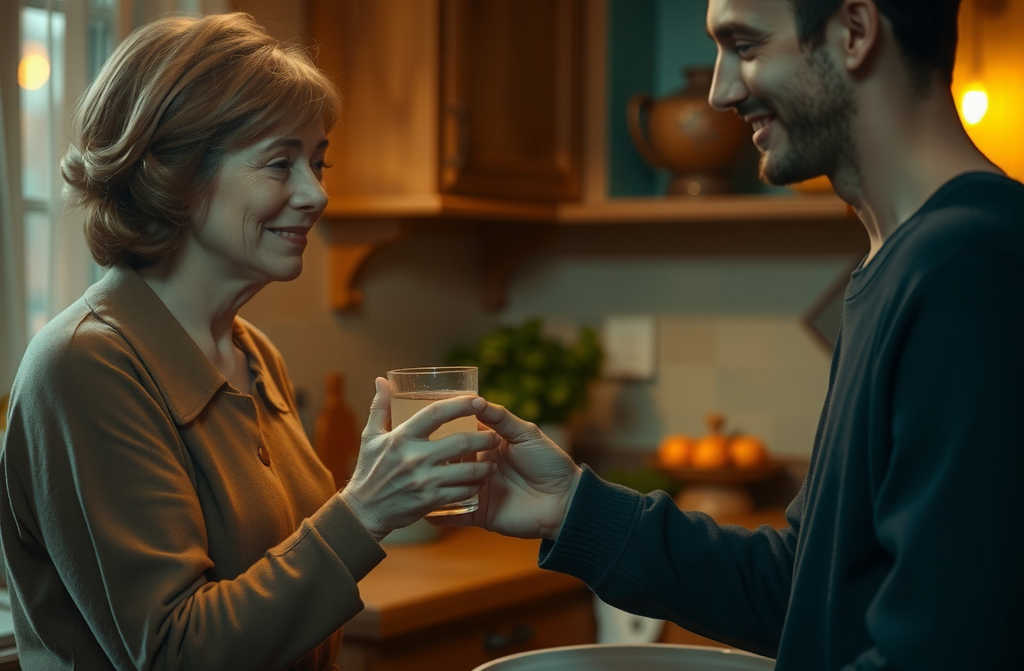
Emma set down two tumblers and poured cold water from the filter. She placed one before Ben. The other, off to the sidenot in front of Tom, just near him.
Emma, Tom said quietly.
Yes?
Im sorry. If Ive done something out of order.
She looked at himat his familiar face, the old crease between his brows.
Im not angry with you, Tom, she said. Honestly, its been a long time since I was.
He nodded slowly, like someone just beginning to understand.
Ben finished his water, put down the glass, and turned to his father.
Dad, lets just go to Richards.
Its late.
Thats fine. Well call.
Tom was silent a bit longer, then got up, took his jacket off the hanger, and put it on.
I, he started, looking back at Emma.
Yes?
Er Things alright here?
All fine, thank you for asking, Emma replied.
He nodded again, and went out to the hall.
Ben picked up his rucksack, stopped by the door.
Im sorry, he said, for all of this.
Not your fault, Emma replied.
Still.
She gave him a small smile.
Eat something decent on the road, she said. Not just sandwiches.
The door closed behind them.
Emma went back into the kitchen and stood for a while at the window.
Funny how you expect great realisations in moments like these, some kind of epiphany. But there was nothingjust her, standing by the window, gazing out at the courtyard.
Car headlights flashed as someone pulled out of the car park. Maybe Tom and Ben, maybe a neighbour. Didnt matter.
Her phone rang, displaying an unknown number.
Emma answered.
Good evening, said a young voice. Its Ben. I wanted to apologisefor Dad.
Emma hesitated.
I understand.
Good night.
Good night, Ben.
She set the phone down, lingered by the window for a bit longer, then switched off the light and went to bed. But she lay awake, thinking about how different Tom and Ben weremaybe because it was Bens mother who raised him, and not Tom.





