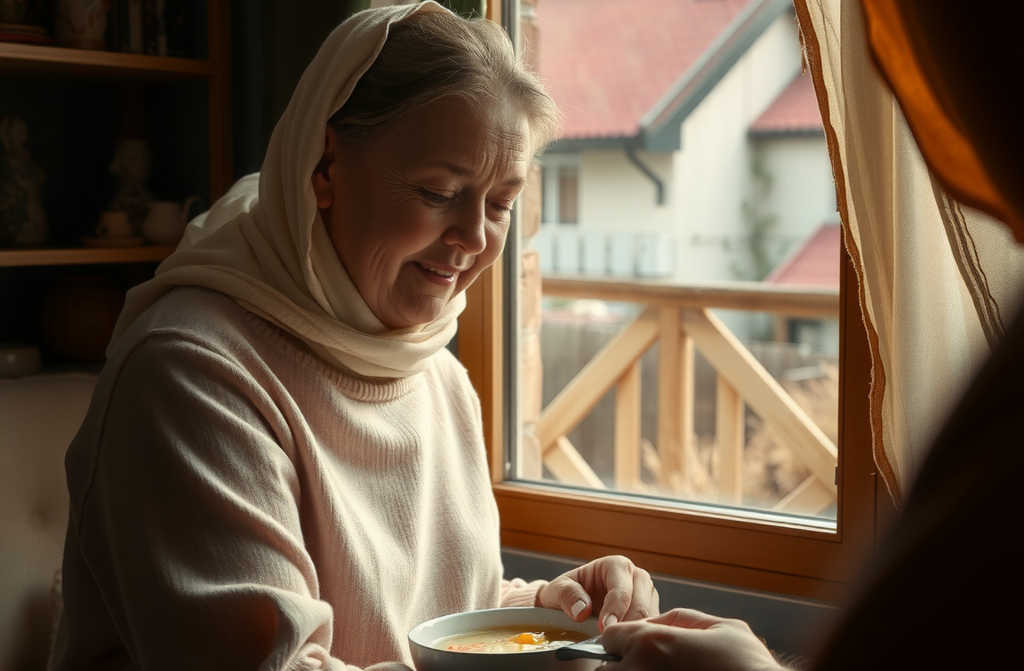
MOTHER
My diary, March 12th
My pregnancy brought every gossip of the village cackling to life.
No shame! Look at her, belly out to here, and shes still smiling at everyone! Id be too mortified to look folk in the eye, tutted old Mrs. Mary Webb to anyone whod listen over her garden gate.
Societys gone to the dogs, if you ask me. Not like our day! piped up Catherine Timms, wagging her finger for effect.
So, whos the father, then? asked Mrs. Nicholls, munching on a biscuit with more interest in the answer than the treat.
Oh, everyone knows. Remember when they had those city chaps rebuilding the church? There was a dark-haired architect, quite the charmer. Well, it was him. Already had a wife back in London, of course. Left, never to be seen again, sighed Mrs. Mary Webb, waving her hand dismissively.
One ought to ask for a marriage certificate in these cases! said Mrs. Nicholls, clucking her tongue.
You hens gossip too much! grumbled old Mr. Proctor, annoyed by the chorus.
Hens cluck! This here is proper village conversation, snapped Catherine Timms, correcting him.
You worry over the neighbours and your own hens out wrecking my vegetable patch! Proctor pointed accusingly towards Catherines garden.
That devil of a bird! Just wait till I catch her! Catherine huffed, storming off home.
Not everyone in the village judged me. Some pitied, others still hoped things would turn out for me.
Lizzie, youre thirty now. No husband about, and lets be honest, ones not likely to turn up. Have the babyat least youll have a child, my father said, squeezing my shoulder with gentle encouragement.
Well manage. Its not wartime, after all, my mother nodded, always practical.
So my son Oliver was born beneath a cloud of whispers. Illegitimate, fatherless. But I carried motherhood with my head held high.
He was given his grandfathers name as a middle name. The fathers section of his birth certificate left blankan invisible scar, like a limb never formed.
Oliver was eleven when my mother died, and my father followed her, unable to bear the lossgone almost to the day a year later.
Oliver, always a quiet, self-contained boy, grew even more withdrawn after that. Hed never been one for hugs or words, and now he locked himself away almost entirely.
Watching my only son mourn, I would have taken on all his pain in a heartbeat. Many nights I prayed, God, send the trials my way instead, spare my child from grief.
Dad had been everything to Olivernot only a grandfather, but like a father and best friend rolled into one.
I never saw much resemblance between Oliver and the man whod left us, but his talent was his fathers. He would fashion dollhouses for the neighbour girls out of old wooden crates, help Dad mend sheds and do up the old greenhouse.
Hell be a master craftsman one daya gift straight from above, Dad used to boast, pointing at the sky for emphasis.
Sometimes I felt the sting of guiltwas Oliver cold to me because hed grown up without a father? Did he blame me?
My darling boy, Id say, trying to pull him in for a cuddle.
Mum, please dont. Really, no need, hed pull away, awkward.
Schoolwork was a struggle for him; marks barely scraping a pass except in PE and art.
Mrs. Andrews, I just dont know what will come of that boy, complained his form teacher one day. Hes got no interest in his studies. How could any university take him with his grades? I set an essay, My Favourite Book, and he handed in a page of jokes. Look!
She pushed the exercise book across to me.
Hell do his national service, and well see from there. Plenty of work for good hands in the village, I defended my son.
For all his faults, I never raised my voice, simply told him again and again, Whatever happens, always remain a good person. I loved him, not because of anything he did, but simply because I couldnt help but love him.
When the letter came summoning Oliver for military service, the entire village came together to see him off. We feasted and danced for two days straight.
Serve bravely and come back a hero! roared a slightly tipsy Mr. Proctor, shaking his fist at Oliver in boisterous farewell.
Outside the recruitment centre, as the boys lined up to board the bus, I finally broke down in tears.
My darling boy, forgive me for everything.
Take care of yourself, Mum. Write to meanything! Even about Daisy the cow, or whatever the neighbours are prattling on about, just write, he said, hugging me so tenderly I thought my heart might burst.
I wrote, of course, as much as he asked. Letters every weekquirky little stories about the old cow, village gossip, how quiet the house was without him, every letter signed off with, Remember, my dear boy, whatever happens, always remain a good person.
Through his letters, I followed the journey of his military life, meeting new friendsin particular, a lad called Jack Slater: Mum, hes like a brother to me.
In one letter, Oliver recalled when he was five, how Id stroked his cheek, and hed wrinkled his nose, complaining, Mum, your hands are rough!
You forgave me then, I know, you just laughed and said, How could they be soft, darling? All the gardening, choresI do it all with these hands. Oh Mum, if only you knew how I long for those hands now. Id gladly let your calluses scratch me raw just to feel them again.
That was his final letter. News of his death came swiftly, bleak as a rook flying through my door.
Private Oliver Andrew Andrews, though injured, strapped himself with grenades and ran into the heart of enemy fighters, detonating them to save his company, wrote the local paper beneath a photo of my sweet boy outlined in a black frame. For courage and heroism, recommended for the title of Hero of England (posthumously).
Oh Lizzie, what heartbreak, the neighbours murmured kindly.
I received their sympathy the way Id accepted everything in lifemy shame as an unmarried mother, the loss of my parentswith humble gratitude. I never complained, not once. Even now, I grieved with soft dignity, quietly dabbing my eyes with a handkerchief, though Id aged a decade overnight.
They never opened his coffin. I never saw my boys face, never had a chance to hold him close, and sometimes a mad hope would rise upmaybe thered been a dreadful mistake, perhaps he’d walk through the gate any moment. After the war, such miracles had happened before. Even now, every time a young man turns down the street, I fancy its my Oliver coming home.
One evening, I looked up from my sewing and saw a figure cross the garden fence.
Oliver! Darling! I cried out, startling the blackbirds from the elder tree.
Are you Mrs. Andrews? Forgive me for the late hour. Im not Oliver, Im Jackhis friend from the army. He wrote about me, you see, the young man stammered, wringing his cap in his hands.
Oh, forgive me. Goodness, my heart near stopped. With you standing there in the dusk, so like my son Come in, come in, dont stand on ceremony. Ive only shepherds pie, but youll join me for supper, wont you?
Please, call me Jack. Im no different from your Oliver.
I could hardly express my gratitude for his visit. We talked late into the small hours, both crying and laughing as we remembered Oliver.
One time, Oliver dozed off in the sun, and our old sheepdog, Rusty, came up licking his face. He grinned in his sleep and whispered, Mum, Mummy, love you, and we nearly died laughing! He told me later you used to sneak in to kiss him after hed nodded off.
Oh, the prickly one! He never liked a cuddle, not even a peck on the cheek unless he was asleep. Id wait till his breathing went slow, then kiss his little hands I always believed hed never wake! I chuckled through my tears.
He loved you fiercely. He was proud of you, you know.
I brought out the old photo album. Heres his first bathlook like a spider, all arms and legs! And his first steps. Here he is with grandma at the school feteoh, she spoilt him rotten. And here with granddad, just before he died. He could never bear to lose him.
From Jacks stories I saw, more clearly than ever, the man my son had beenbrave, kind, and honest.
Our commanding officer used to give us hope: Hold on, lads! Help is coming soon! When there was almost no one left, we stopped believing it. I was wounded, my leg shatteredthought Id never get out. They finished off the wounded, sometimes couldnt even tell who was who. When the ammo ran out, the lads fought hand to hand, blowing themselves up with the enemy. Oliver he did that too Jack couldnt keep back the tears.
He told me it was all exercises, never let on in his letters, I murmured, finally understanding, and nodded.
Jack stayed a few days. Mend the fence, fixed the roof, even painted the shed. But he had to move on.
May I write to you?
Please do, Jack. Id be so glad, was all I could manage, for I feared letting him go.
You know, Ive no one left. Grew up in a childrens home, a proper orphan. It embarrassed me to say. People talk, think people like me are nothing but trouble. Im sorry, Mrs. Andrews, he said, voice shaking just a little.
Oh, dont be daft! Where on earth would you go? I clucked at him.
Well, I thought London perhaps
Come now, if you want, stay here. I have room, youve nowhere else. I wont hold you back if you want to leave, but my home is yours as long as you want it, youre as dear to me now as my own.
And of course, the stares and rumours started againhow quick Lizzie got over it; how she welcomed a stranger in, bound to be trouble.
But not everyone judged me. Some pitied. Others still hoped Id have happiness at last.
Jack soon found work in the village, apprenticed to the local blacksmith. Did a fine job of it too, became the masters pride.
In time, Jack brought home a wife, a cheerful and kind girl named Grace. She fit into our home like she was my own daughter. I loved them as a mother does. How could I not? I only ever made one requestif a boy was born, could they name him Oliver? But when the stork finally blessed our house, it was a baby girl, then another the next year.
Lizzie Andrews is truly blessed. Son-in-laws a hard worker, never sits idle. Theyve built a new house, bought a careven Grace is perfect for her! the villagers whispered in approval.
Only Jack ever heard my quiet sobs in the middle of the night.
I lived well into old age, looked after better than many mothers by their own daughters. Jack and Grace cared for me until the endnever too proud to wash my sheets or empty the basin, never flinching or shirking.
Just before the end, I lifted my frail hands as though to hug someone, and whispered, Oliverand slipped away. The girls and Grace sobbed at my bedside, and even Jack, with tears and a faint, relieved smile.
Why are you smiling, Jack? Shes gone! Grace asked, worried.
Shes with her son now. No more pain, no more longing. At last theyre togetherits all she wanted in the end. You can heal most wounds, but nothing mends the ache of losing your child. Only love endures to the very last breathand nowhere more so than in a mothers heart.Jack stood at the window, watching the dawn burn gold over the fields Lizzie had tended year after year. The familiar shapesthe wheeling rooks, the bent figure of Mrs. Mary Webb among her roses, even Catherine Timms wayward henmoved softly in the morning light. Inside, the house held the echo of Lizzies laughter, her lullabies, her scolding and forgiveness, the thousand tender threads of a life spent quietly loving and letting go.
He gathered the girls close, Graces arms around all of them as the sun crept through chintz curtains. He thought of that first suppershepherds pie, trembling candlelight, a place set for a boy whod never come home but whose spirit filled every room. He thought of how Lizzie, for all her losses, had never closed her door to hope or to him.
In the years to come, the children would tell stories about the old house and the lady who adopted a family and healed broken hearts with gentle words and warm pies. Neighbours would recall her bench in the garden, where she watched the children play and weeds sprout wild beside the marigolds. Thered be whispers of her kindness, how, even when misfortune battered at her door, she always found space for laughterand for love.
Grace pressed a letter into Jacks handone Lizzie had written long ago, folded and carefully kept, its creases now soft from being opened and held many times. Inside, in her familiar hand, were lines quietly brave: When I meet my boy again, Ill tell him everything. That life was harder than I wished, but I never turned away from love, not once. That all the goodness I gave out, and all the pain I carried, found its purpose in the family I gathered when all seemed lost. Thats the only legacy I ever needed.
Jack smiled through tears and led his little girls out into the dew-bright garden. He taught them to plant seeds, mend fences, and answer cruelty with patience. Years later, when his own hair greyed and his steps slowed, he still felt the warmth of a mothers embrace in every kindness he shared.
And so the village remembered: that loveunexpected, unplanned, and unashamedhad come quietly, stayed without fanfare, and grown roots deeper than any name on a birth certificate. That, in the end, the ache of longing was only healed by letting yourself love again.
Under the lilacs planted by Olivers hand, a robin sang into the morning. And in the hush that followed, Jack knewnot one moment of Lizzies love was ever wasted.





