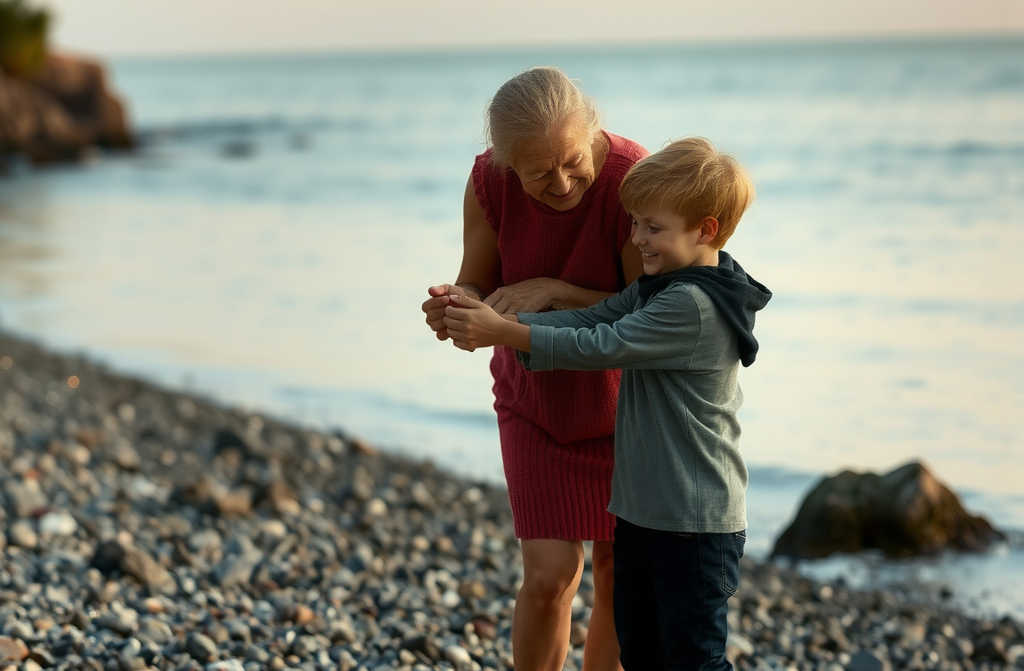
For the first time in seven years
Mum, are you even listening to me? Emily stood in the centre of the kitchen, arms tightly folded, her gaze fixed on her mother with the same suspicion one might reserve for someone announcing they were off to live on Saturn. In two weeks, George has a maths assessment. Whos going to help him revise?
Hell go to school, the teachers there, replied Susan Wainwright evenly, not pausing from her stirring at the hob.
The teacher! Emily nearly laughed, but the sound cut off sharp and bitter. Do you remember how they explain things there? It takes us two hours to undo the damage afterwards. Have you honestly forgotten?
I havent forgotten anything.
Then why did you buy this holiday? No warning, not a word. I find out over Sunday lunch by accident. Whats that about?
Susan took her stew off the heat. The kitchen bloomed with the scent of beef and rosemary, a fog thick enough to hide in. She wiped her hands on a tea towel, turned to her daughter.
Em, Im fifty-six. I never asked your leave when you were three and I needed to nip to the shops.
Thats not the same!
Hows it different?
Emily opened her mouth, then shut it. Then opened it again.
Because we need you now. George needs you. Do you know what need means?
I do, said Susan, soft and certain. Ive known it seven years.
In the hallway, the familiar creak of shoes. David was home early from work, his jacket landed on its usual hook, and he peered into the kitchen. The tension was so thick it could have been carved like a Sunday roast.
Whats going on?
Mums going to a spa, spat Emily, the word spa so sour David winced as if hed bitten a lemon.
Where exactly?
Bluewater Cove. On the coast. For ten days.
David looked from his mother-in-law, to his wife.
When?
Two weeks Saturday, Susan replied. The twenty-third of June. Back by the third of July.
Twenty-third, David repeated, slow and heavy. Susan, Ive got that handover on the twenty-fifth. I might not even be home all week. Em and I thought youd youd have George.
George is your child, Susan said simply. There wasnt any bite in it; just quiet fact.
Silence rolled in and cuddled up beside the stew on the hob.
I dont get you, Emilys voice crumbled unexpectedly. Were not awful to you, are we? Has someone upset you? Just say; well sort it.
Youre good people, Susan replied. And I love all three of you.
Then why?
She shrugged.
Im tired.
The word dropped on the kitchen table as quietly as a penny, but the weight of it near knocked the room flat.
Susan had spent her entire life in the quietly damp corners of Ipsley. Born there, schooled there, down the same halls as her own mother; then college, then thirty-two years as the town librarian. She knew every turn and cobble: the humped stone bridge over the sleepy river, the little square with four stately poplars, the bakery that always smelled of vanilla and bread just out of the oven.
When her husband, Alan, died eight years backheart attack, in his sleepSusan thought the world itself might split. It didnt. She poured gin at the wake, carved up the pork pies, murmured thanks for coming, and marvelled at her own calm. Only later, in the kitchen darkness, did she wrap her hands round a cup of cold tea and sit till sunrise. That was the moment she understood: from now on, she was truly alone.
Loneliness didnt last. Emily was pregnant with George, living with David just across town, and without anyone really meaning it, Susan started turning up daily. First to help paint the nursery, then to sit with George when he came, then to fetch him from nursery, then school. Seven years swept by in the hush between falling leaves. The pension arrived, and nothing else changed: same 7:30 bus, same battered schoolbag, same fish pie for tea.
Sometimes she wondered, wheres my life gone? But the thought would slip away, muffled by the vacuum cleaner or bubbling kettle. She knew how these things went, how families settled into their own shapes, and grandmothers became the soft edges of other peoples routines, until even they couldnt say where help ended and need began.
She bought the holiday on whim, on a Thursday in April, passing a travel agents on Milk Street. There was a picture in the window: deep blue sea, white chalk rocks, pines on a cliff. She stopped and stared. Stared some more. Then pushed the door.
The young woman behind the desk grinned like an old friend.
Where to?
That one, Susan replied, pointing at the window.
Bluewater Cove, Kent coast. Excellent spa, all meals included, treatments too. When would you like to travel?
June, she heard herself say, surprised at the sound of it.
The argument at home kindled slow, like wet wood: first came Emilys silent sulk, the sort of cold that makes you wish for a shouting match. Then David tried the practical conversation: spreadsheets, logic, the lot. Look, were stretched right now, Georges marks are down, Emilys stressed, everythings on a knife-edge and youre our pillar.
Susan, youre smart, you must see
I do, she said. And Im going anyway.
David looked at her then like a sideboard that had quietly wheeled itself into the wrong corner.
Then, late one Wednesday, Emily rang in tears, claiming her mother never truly loved her, that Alan had always been the only normal one. Susan sat by her window, watching the rain puff white from the rowan tree, and listened. Just listened. When Emily exhausted herself into sullen breathing, Susan said quietly,
I love you, Em. The tickets are paid for. Im going.
Youre selfish, her daughter snapped.
Maybe so.
You only think of yourself!
For the first time in seven years, Susan replied. Its not all that much.
The call went dead. Susan placed her phone on the table, hands trembling, not with anger or fear, just that curious shudder that comes from finally setting down a heavy load.
She made a cup of tea, fetched the blue biscuit tin shed meant to open all last week, and nibbled through two custard creams. Outside, the rowan hummed with wind. It was quiet, and a little strange.
To her surprise, she felt no guilt. Shed expected sticky shame, but it never came. Insteadsomething softer, like a distant, cautious happiness.
Thirteen days left. Susan kept her usual routines: fetched George from school, ironed shirts, walked slowly home. But inside, something was different. She saw new detailsHow Emily never said thank you for tea, just ate, then parked herself before the telly. Not nastily, not even deliberately. As though the potatoes simply grew on plates by magic. How David would walk past her in the hallway and not register her at all. Shed become, she thought, as invisible as wallpaper or the airing cupboard.
Only George clung to her with the old warmth, pelting through the door, bag skidding, yelling, Gran, are you here? Each are you here did something to her heart.
Gran, are you really leaving? he asked one evening, as she checked his spellings.
Really. Ten days.
Far?
To the seaside. Do you know about the English Channel?
We did it in Geography. Its salty.
Exactly.
George wrinkled his nose, considering.
Ive never been to the seaside, he confessed, in that tiny, injured voice seven-year-olds have.
Then youll go with Mum and Dad, next summer.
They say theyre too busy.
Susan smoothed his hair, breathing in that child-warm scent of pencils and apples. This, she thought. This is reason enough to returnnot stew, not piles of neat shirts. This.
When the twenty-third of June dawned, it was cool, cloudy, everything still scented with last nights rain on tarmac. Susan packed a small, navy case: two dresses, a new swimming costume (hadnt bought one in five years, midnight blue), sun cream, anda choice made only after standing before her bookcase for nearly an hour the night beforethree books: a novel shed failed to finish twice, a collection of short stories, and a battered little volume of poems Alan once gave her.
Emily didnt come to see her off. She sent a textHope you have a fabulous rest. No emojis, no Mum. Susan read it, stowed her phone.
David rang at eight. She was already by the door.
Susan, last warning. My handovers in two days. Em wont cope alone with George, you know.
Shell manage, Susan said. Shes his mother.
If anything goes wrong
You can call, Ill listen. But Im not coming back.
A pause.
You mean it?
I mean it.
She stepped into the street, hailed a taxi, watched the familiar slabs of Ipsley speed past. In seven years, shed gone to the train station only a handful of times: once to meet an old college friend, once for her sisters funeral, and once, oddly, just to stare at the departures and leave again, because nowhere had called.
Now, reason enough: she was simply tired, and that was all she needed.
The station greeted her with its gentle hum and that peculiar tang of iron and old coffee. Folk with suitcases, children with ice creams, the tinny speaker overhead. She bought a paper cup of coffee and a bun, found her carriage, mounted the steps.
Her compartment was already hosting a man, perhaps in his early sixties, neat hair cropped close and silver. He lowered his newspaper and nodded.
Afternoon.
Afternoon, she said, hoisting her bag into the rack.
She didnt know him yet, didnt know that, over the next ten days, this quiet man with a newspaper would become more significant than some people in twenty years.
The train pulled away mild as a memory. Platforms, street lamps, then chugged-out veg patches and slouching woods, all sliding by. Susan sat by the window, feeling something inside her slowly loosen, as if shed finally shrugged off last years coat for summer at last.
The gent across the table put his newspaper away.
Travelling far?
To Havenford. Then Bluewater Cove spa.
Fancy that, he said, not especially surprised. Im headed there, too. Veterans organisation, let me have a week. Bit unexpected.
What did you do for a living?
Railways, forty years of it. Geoff Bond.
Susan Wainwright. Librarian, retired.
They sat quietly, watching the rain-fresh fields slide past. Susan found herself nearly cryingnot from sorrow, but from the greenery beyond the glass.
Is this your first trip alone? Geoff asked, not nosy, just sensing something.
It is. In a very long time.
Strange, isnt it?
Strange, she agreed. Little frightening. A little wonderful, too.
Sounds about right, said Geoff. Thats how it should be.
Conversation was effortless, the way it sometimes is with strangers on a trainno need for backstory or defence. Geoff wasnt a man for overstatement; he spoke when there was something to say, and then left it there. He told her his wife had died three years ago, grown children scattered, and that he rattled around a big house learning to be alright alone.
Didnt know what to do with myself at first, he said. All the same furniture, but like I shouldnt be there.
I know the feeling, Susan replied, and she truly did.
At sunset, they drank tea in metal train cups. She took out the scones shed madethe kind with cheese and spring onion. Geoff accepted with a nod and, after one bite, fell silent for a minute.
These are really good.
Thank you, Susan smiled. I bake a lot. Family have always liked it.
Shed said, have liked. Did they? They ate, anyway. That was different.
The next morning, approaching Havenford, she put her phone on silent, then, after a moment, off altogether. It slid into her bag with the books.
The Bluewater Cove spa perched on a low hill above the Channel, wrapped in pine trees that brewed a scent so strong she felt dizzy. The main building was old and whitewashed, with creaking porches and cane chairs that begged for daydreams.
Susans room overlooked the watera flash of blue glimpsed through pines, almost implausible in its brightness. She put her bag down, stood at the window for a long time, listening to the far-off wash.
The first couple of days slipped by in a fog of gentle routines: pine-scented baths, head massages, salt-rooms. She ate with strangers, tasted each dish without rushing. At home, shed always eaten standing up, re-filling glasses. Here, there was nowhere to rush.
She took herself to the pebbly shore each evening. The stones sang as she walked, feet feeling every one, still warm from the lazy sun. She shed her sandals and wandered the waters edge. Waves lapped at her toes, cool, purposeful, always pulling back for another go.
Geoffs room was in the next building, but they saw each other over breakfast or for a meander. He never demanded her attention, but his company was comfortingly light, even in its silence.
Youre easy to be quiet with, he said once.
I suppose, after decades in the library, I got used to hush, she laughed.
No, its not that. Anyone can be silent alone. Not everyone can be silent with someone else.
That evening, lying in bed, she wondered if shed ever managed that with Alan. She had. With Emily? Never. With Emily, silence needed filling, or elseMum, whats wrong? Tell me!even if nothing was. The languages of quiet, she realised, are as varied as dialects.
On the third day, Emily rang. Susan had flicked her phone back on, not from fearshe told herselfbut some kind of distant loyalty.
Mum, George has a temperaturethirty-eight. I havent got a clue what hell eat. You always do.
Chicken broth. Simple, with toast on the side.
Mum, you get Ive got a meeting and clients
Are you leaving for work with your little boy sick?
Pause.
David cant, today.
One of you takes a sick day, then.
Its not that simple
Em, Im at the seaside. I cant come. Youll manage. Call the GP, give him fluids, cool flannel. You know what to do.
On the other end, slow, ragged breathing.
When did you get like this? Emily asked, somewhere beyond anger.
Like what, love?
Uncaring.
Susan looked at the waves, green and moody today.
Im not uncaring. Im just resting. Its different.
Emily hung up. Susan tucked away her phone and ambled down to the shore.
Geoff found her sitting on a big, flat pebble.
Everything alright? he asked, lowering himself beside her.
My grandsons unwell.
Serious?
Just a fever. Happens.
And you?
Im staying.
Speaking it out loud made the ground wobble impossibly beneath her.
Good for you, he said.
You think so?
If people cant look after their grown-up business, thats on themnot you.
They think Im being selfish. Emily said it straight out.
Folk reckon thinking of yourself is selfish, Geoff shrugged, but sometimes its the only way you dont become someones emotional burden.
Susan weighed his words for a moment.
Have you ever felt used?
He nodded. Not by family. At workthe last ten years, especially. Valued when I travelled, lifted, never ill. Too old? Suddenly in the way. They never said it, just stopped inviting me. I left of my own accord. Year early, wasnt sorry.
She picked up a little white pebble, ran her thumb over its cool stripes.
It startles me, she said. I gave them all of me these seven years. Only nowthey notice what I did. Till now, I was as invisible as air.
Thats whats called being invisibly essential, he said, and its a trapespecially for women.
Why women?
Were raised to believe a good mother, wife, grans the one no-one hears or sees. Who simply does, never asks. Its the same for blokes with provide and shut up.
Susan chuckledreally, freely.
Sounds like a eulogy, she said.
Exactly, he grinned.
Back home, in Emily and Davids flat, the absence worked magic and mayhem. Susan heard about it in fragmentsenough to imagine. For the first days, they managed: morning shifts swapped, like orderly civil servants. By day three, David was late from work, a call at nine. Emily had already wrangled George over dinner (quick oven nuggets, which hed refused), lost it over homework, run out of washing powder, and realised she had a meeting and nothing clean to wear.
You could have told me, she hissed.
Just found out myself.
Always the way.
Whats that supposed to mean?
I work, too, David.
Never said you didnt.
Didnt you?
Silence. George, overhearing, wandered from his room, tugging Emilys sleeve.
Mum, Ill wash your blouse myself. Gran showed me.
Emily stared at her son, then at her phone. To her surprise, tears came, steady, unremarkable. George, uncertain, hovered.
Later that week, they finally argued properlynot over blouses or nuggets, but pure exhaustion and the loss of their buffer. Before, you could always retreat to Susan in the kitchen, nurse tea quietly over the linoleum. She wouldnt offer advice unasked, just held the space. And that had been a lot.
You realise weve behaved like dependents? David ventured after another quarrel, both hunched over cold mugs, George asleep. We were content because there was someone holding us up the whole time.
You make Mum sound like a crutch, Emily muttered.
No, but we relied on her like one.
I never saw it that way, Emily said, eventually.
Me neither. Not till I didnt even know the GPs name. Seven years she took George there, and I had no clue.
Emily lifted her eyes.
Its Anna, Dr Anna Gregory. I know. Mum always called.
They stared at the table. David fetched water, drank. We should hire help. Just twice a week.
It isnt cheap.
Cheaper than us splitting up, he said, and for once it wasnt a joke.
They considered their options honestly, perhaps for the first time in years.
Meanwhile, Susan lived. Really livedslowly, deliberately, like someone re-learning to eat after a long illness.
She swam every morning, the sea surprisingly gentle, sun at her back. Floating, arms akimbo, sky a wiped-clean white-and-blue above, she wondered if this was the most honest kind of resting: not doing nothing, but letting go.
She started her book again, properly, for the first time. Dozens of pages in, she found it was quite differentshe was different.
She and Geoff ambled along the boardwalk most nights, lamps glinting, sea black or glassy with the moon. They talked: books, kids, what the old England was like, what it had become. He missed his job, missed the sense of purpose, but was putting something new in orderinside.
I never thought of myself as a separate person, Susan mused. Just always someones somethingdaughter, wife, mum, gran. Who am I, really, just me?
Well, maybe now you get to find out.
She laughed, nearly to tears.
Personal boundaries in a family, she reckonedthered been internet articles. Emily sent links about burnout and leaving room for yourself, words shed found faintly foreign. She read, amazed: was it not obvious? Turned out, it wasntnot to her. Shed never had boundaries, not because they were smashed, just because shed never built any.
The right to rest, to silence, her own plansit was like a second language: she recognised the words, but had no confidence to speak them.
On her sixth day, Emily rang, her voice differentdrained, not angry.
Mum, weve hired someonepart-time, through an agency. Shell help with housework, the school runs, all that. We cant keep depending on you.
Susan thought, then said, Thats wise.
We we know we leaned on you too much. Wasnt fair.
Em, Im not after apologies.
Im explaining.
I understand.
Pause.
How is it, there? Emily asked, awkwardly.
Lovely, Susan replied, truthfully. Really lovely.
Little bit tanned?
Some. Cloudy at first, now sunny.
George wants to know if youll bring him stones.
Susan smiled. I will. Tell him, three stones.
After the call, she watched the sea and thought: parents and children both have to let go; not just children learning lives of their own, but parents letting themselves be unnecessary for a while, letting themselves out of the indispensable box.
She wondered what would have happened if she hadnt gone. More years, maybe; same stew, same schoolbags. She would have burnt up, quietly, and called it love.
It wasnt love. Or not only love. It was fear, habit, an inability to refuse. Love got buried under all the rest, like a well-tended garden overgrown by weeds.
On the eighth day, she and Geoff climbed the cliff over the bay. The path was steep, winding under pine. Susan wasnt sure shed manage, but she did. They sat atop the rocks, gazing down: water clear, stones on the bottom, small boats bobbing, gulls tracing slow circles.
Good, isnt it? she sighed.
Very, said Geoff.
They lapsed into silence, watching the minute figures below.
Geoff, she said finally. Are you lonely?
I am, he answered simply. But not unhappy. Its not the same.
Dont you mind?
Sometimes. But boredom isnt disaster. It passes, too.
Do you ever wish she faltered, for company to fill the gap?
He looked at her for a long time.
Sometimes I do, he said, but Im not looking for someone to fill a space. Just someone for whom being alone isnt necessary any more.
Susan found no words. It was perfectly said.
Youll go home to Ipsley, he said. Ill go back to Derby. Thats alright.
It is, she agreed.
But Im glad we met on this train carriage, Susan.
So am I.
They walked down together. Her feet crunched pine needles, the air heady with sun and resin. She thought: this is living for menot against anyone, not instead of anyone. At fifty-six, shed taken her own path for the first time, and it happened to lead to a stone cliff in Kent. A small thing, but quietly huge.
The lady Emily and David hired was called Mrs. Nevillefifty-four, divorced, two grown kids, lived out by the ring road, came in by bus. Susan learned all this via phone, and felt for this woman a sudden solidarity.
She any good? Susan asked.
Not as good as you, Emily said, careful.
Close enough.
Mum, you arent upset?
At what, darling?
That we found someone else.
Susan let the wind and the sea speak for her.
Em, Im glad. Truly. I never wanted to be the irreplaceable one. Dreadful role to play.
Emily said nothing for a moment.
I want you round because I want to see you, not because no one else can cook shepherd’s pie.
There was a quiet then.
I want to see you too, Mum. I just kind of forgot how to say it.
Susan closed her eyes, letting the wind roar.
Well, now youve said it.
Her last evening, she went alone to the beach. Geoff had two days left, hed be gone soon too. They exchanged phone numbershe scrawled his neat and sharp on a scrap, which she tucked into her purse. She did not know if she would ring him or notand realised, in a dreamsort way, that it might not matter. The days had happened, the silences and talking had mattered.
Take care of yourself, he said, as they shook hands.
You too, she replied.
She listened to his steady footsteps retreat, thought, just a good chap, that one.
She walked to the sea, sunset bruising the water crimson. She took off her shoes, scuffed through cool pebbles, choosing threewhite, grey, one nearly rose-pink, for George. There were no good shells. But the pebbles were beautiful.
She stood by the lapping foam, thinking about coming home. She didnt know what home meant now, only that she was changed. Not better or worsejust changed. Ten days had shown her vital truths: to be tired is not shameful. To ask for help isnt weakness. Being needed and being used arent the same, and you must learn the difference yourselfno one else will do it for you.
All those psychology articles, she musedturns out they were just about living. Real, warm, difficulta life that sometimes means you must go, even for only ten days, even if its only the sea.
She slipped the pink pebble into her pocket. Faced the sunset. The red wound of it shrank, gone to night. Tomorrow, the train home. Then the old flat, the familiar smell, the knock at the door, and George shouting, Gran, youre back!
Shed returnbut not as she left.
She arrived at Ipsley station under grey July clouds. Damp tarmac, the sharp scent of rain. No one met her, nor had she expected it.
Catching a cab, she rode the green roads. The rowan outside Emilys flat had shed its fuzz weeks ago. The trees were full, deep summer.
First, she stopped at her own flat, aired it, brewed tea, lined up her seaside pebbles beside Georges photo.
Her mobile lit upEmily: Mum, home? Come for dinner. Mrs. Nevilles off today, Im cooking. Or trying.
Susan smiled. Replied: Ill be there at six.
Then after a pause, added: But just as a guest, alright?
The answer came quick: Alright.
She turned her phone face-down, poured her tea, and watched the bus rumble around the old bendthe one shed taken every morning for seven years.
At six, she knocked at Emilys. George opened the door and clung to her, chin tucked in, arms tightin that wordless hug only children make.
Gran! he announced.
She hugged him back, inhaled that pencil-and-toffee smell. Had he grown, or had she forgotten what it was to miss someone?
You brought me stones?
I did, three. Ones pink.
Pink stones are real?
They are. I was surprised, too.
Emily stood in the kitchen doorway, clutching a tea towel, flustered, a faintly singed smell floating out behind her.
Mum, my burgers are a bit
I can see. Take them off the heat now.
Theyre burnt on one side.
Turn them over, let them finish. Mitt on, the handles hot.
Emily fussed by the hob. David nodded to Susan from the hallway.
Welcome back.
Thanks. How was work?
Finishedby the skin of our teeth.
Thats good.
They ate in a slight awkwardnesslike finding your hands work differently after a fracture heals. The burgers were tough and oversalted. George ate quietly, then suddenly asked,
Gran, is the sea really salty?
It is.
Like the burgers?
Emily winced. David stifled a laugh. Susan bust out laughing first, and after that, things eased.
No, George, the sea tastes nicer.
Gran, can we go there?
Thats for your mum and dad to decide.
George looked to his parents, face full of fresh determination.
Mum, Dad, can we go to the seaside this summer?
Emily and David exchanged a glancea quick, careful signal. Susan caught it, something different in it, less defensiveness, more open.
Well see, David said. Got to choose where.
Bluewater Cove! George piped.
Well see, Emily said, and turned to Susan. Mum would you want to come?
Susan stirred her tea.
Maybe. Its a long way off.
Emily noddednot upset, or if so, she hid it well. Maybe that meant something.
Afterwards, Susan joined in doing the washing upnot from expectation, but because she fancied it. Then she got her coat, bag in hand.
Mum, arent you staying over? Emily asked, without pressing.
No, love. Ill head home.
Back tomorrow?
Call in the morning, well see.
Emily studied her for a long moment, properly looked.
Youve changed, she said quietly.
Maybe, Susan replied.
Thats good, Emily said. And Susan knew she meant it.
Susan stepped out. Night breeze smelt of grass and rain-damp pavements. A completely ordinary summer evening in Ipsley.
She walked home. Three stops past the bakery (always the promise of hot bread and vanilla), past the poplar-studded square, past the low stone bridge over the silent river.
In her pocket, the pink pebble waitedforgotten for George.
Shed give him it tomorrow.






