A Face with a Story
Mum, you understand, dont you? Its just an office. The people there are serious, professional. You cant just turn up wearing that.
What do you mean, that, Emma? Whats wrong with it exactly?
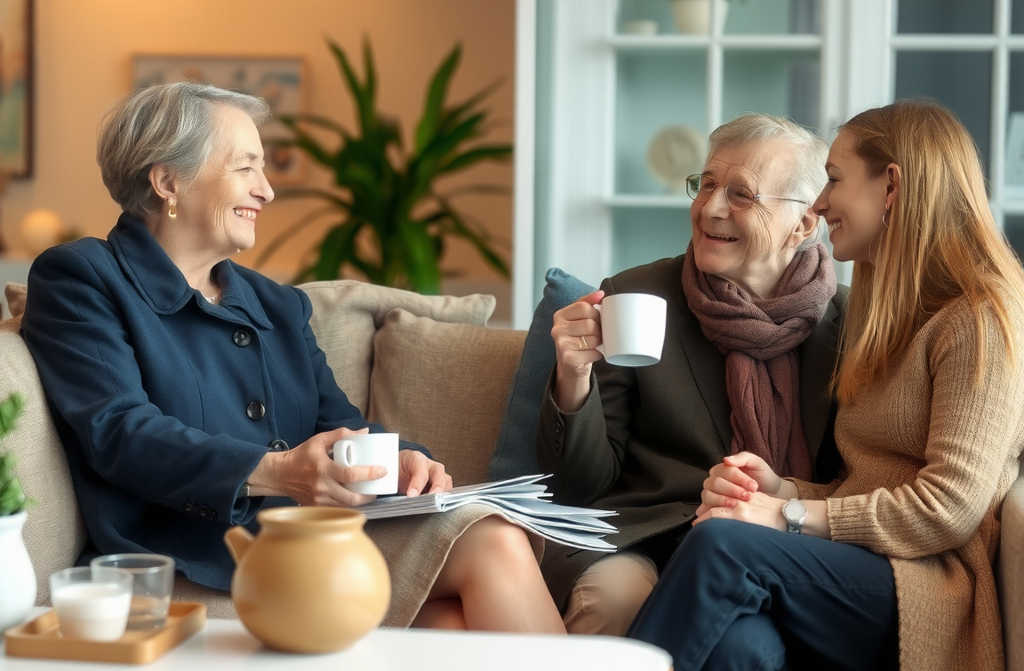
My mother, Margaret, was standing by the hall mirror fastening the buttons on her navy coat. Just an ordinary coat, but a good one. Shed bought it three years ago at John Lewis and it still fitted perfectly. I was watching her from the doorway, fiddling with the strap on my handbag. Nails immaculate, a sharp bob haircutone I knew cost her as much as I spent on groceries in a fortnight.
In that coat, with that face. Mum, for goodness sake, Simon Mitchell will be there. Hes the managing director of Lumina Beauty Group, you know? This isnt just any meeting.
I know. And whats wrong with my face?
She asked quietly, without a trace of hurtonly a mild interest, which somehow stung even more. Words escaped me for a moment. That was the part I couldnt stand. It wasnt that my mother didnt get itshe absolutely did, and still put the question to me anyway.
Mum, you look natural. I picked the gentlest word I could find. Its just everyone there is very well put together. Its a different standard, you know.
So, well put together means having your face pumped full of fillers?
Well, not exactly. Just
Just lines then. You mean the wrinkles.
She turned to face me, calm, with only the mildest curiosity. No hint of offence. I closed my mouth.
Mum, I didnt
Im just delivering documents. Im not entering a beauty pageant. You told me yourself that the courier fell through, and without these papers your meeting will collapse. I can hand them to security at the door and be off, if youd rather.
No, I sighed. Its fine. Just lets go.
We stepped outside. April was undecided this year. In the morning, the sun made you want to ditch your coat, but by lunchtime clouds muscled in and the wind from the Thames had a way of sneaking into your bones. Mum walked tall, her buttons done up to her chin, back unbowed. Shes never slouched. I can remember her standing me up against the wall as a child saying, Stand up straight. Youre not a little old lady. Now I watched my own posture, but she never gave it a thought. She just moved as she always had.
The tube was five minutes away. We walked in silence. Mum noticed the buildings, the pigeons, the puddle by the kerb that everyone sidestepped. My mind was on the meetingwhether Simon would be in a mood, that the documents were needed yesterday, that the logistics manager, Karen, was probably for the sack.
And yet, even as I tried to focus, the thought of Mums wrinkles crept in, bringing a squirm of guilt that I tried to push aside.
Luminas office took up two floors in a business centre off Great Portland Street. Glass façade, concierge in a waistcoat, passcode terminals. Mum had never been here before, not in the three years Id worked there. Not that I was keeping her awaythey just met at mine or sometimes at the café on Kentish Town Road. Spots that felt known and safe.
This way, I said, flashing my pass. Just stay with me.
She did, glancing about. The lobby was done in pale grey; a vase of white orchids stood at the desk. Behind it, a young woman looked up and gave me one of those perfect, professional smiles that all receptionists have in these places. Before I could see Mums reaction, I was already heading for the lift.
Sixth floor.
Inside was a mirror. Mum looked at her reflection, then mine. I was glued to my phone, face smoothwiped clean of any stories, not a crease in sight. A nice facea pretty one. Mums, on the other hand, she seemed quite content with. Lines at her eyes, folds at her mouth, a forehead not as smooth as at forty. Shed earned every mark.
The furrow between her brows came when Dad died. She hadnt cried then, just frowned a lot. They say it leaves a mark. It did. The one by her mouth from laughtershe always did that wholeheartedly. The crows feet a sign of years squinting at the sun, seeking something off in the distance.
The lift stopped. I put away my phone.
Mum, please, just hand over the folder and Ill see you out after, all right?
You do your work, dont worry about me.
The sixth floor was bright, all open plan. Sunlight, white desks, people at laptops. Giant posters from past ad campaigns hung on the walls. I recognised some of the facesnot people I knew, but the sort that sold me moisturisers from glossy billboards. Up close, they looked unrealflawless, identical, like one person echoed through fifty mirrors at different angles.
Emma! someone called. A woman in a sharp suit, striding through the office. Youve got the documents? Simons asking for them.
Yes, Mum brought them, I stumbled on the word Mum, but she noticed. Polly, this is my line manager.
Hello, Mum greeted, Margaret Wilson.
Lovely to meet you. Polly shook her hand and turned to me. Give me the folder, Ill take it directly. No time to waste.
Polly, its got the extra materials. I should explain whats there, and in what order.
She sighed, checked her watch, then waved us on.
Come on then. You, she said to Mum, please, take a seat on the sofa by the window. We wont keep you long.
Mum settled onto the low grey couch. I walked off with Polly. Mum was left surrounded by people looking at their screens.
She took off her coat, folded it on her lap, and unscrewed a small thermos from her handbag. She always brought her own coffee when out for a whilea habit from her government job. Decades in the council archive had taught her not to count on someone elses bleak office instant. She poured a cup, took a sip. Good coffee. She brewed it herself with cardamom, on the hob.
Nearby a phone slid off a desk. A young man in glasses stooped to pick it up.
All okay? Mum asked.
Fine, thank you. He smiled. Are you here on business?
My daughter works here. I just brought some files.
Ah, gotcha. Home-brewed coffee? he nodded at the thermos.
Of course. Want some?
He laughed, caught off guard. No, thanks. The machines already got me jittery. Thats my third cup today.
Thats not healthy.
I know. Its the deadlines.
Mum nodded. She knew that wordshed learnt it from me a few years back.
At the other end of the open space, conference rooms lay behind glass. Out came a small group, all busy with animated talk. Leading thema tall man in a pale jacket, hair streaked with grey, shoulders squared. He was speaking intently to the woman beside him, who was jotting down notes.
Mum didnt recognise him immediately. Three seconds passed before something clicked. His walk. She knew that strutshoulders a bit back, confident without show. Simon Sanders. From the class next door at school. The same Simon whod been sent out of chemistry for daydreaming out loud instead of copying the formulas.
She didnt hide behind her thermos or gaze into a phone. Just sat, watching. Hed look around, might see her or not. Either way seemed equally possible.
He did. Mid-sentence, he stopped. The woman by his side kept going, then turned, puzzled.
One moment, Angela, he said. Then he walked over.
Mum put the thermos down on the mag table.
Margaret? he said, not askedstated. As though sure, but confirming by saying it out loud.
Simon Sandersfrom Year 10B. She grinned.
He laughed, a true, wide laugh.
10B, yes. Thirty-six years.
Thirty-seven, said Mum. The reunion was last year.
I missed it.
Most did.
He looked at her with an expression that, oddly, was missing somethingno scanning assessment, no instant value judgement shed grown so used to. Instead just a smile, like hed encountered something deeply familiar and welcome.
So how do you come to be here? he asked.
My daughterEmma Wilson in Marketing.
Wilsonyes, does good work. You were delivering documents?
The courier let them down. Im closer than the depot.
Well done, he said, and it wasnt patronisingjust a fact. You know what, Margaret? You look not good, not just good, but like He paused. Do you remember Mrs Ingram, our English teacher, saying about some peoplea face with a story? Thats just how you look.
Mum remembered Mrs Ingram well.
She said that about Hardy. And you, after your essay on Tess. You wrote she was more beautiful as she grew oldersomething real appeared. Mrs Ingram read it aloud.
I dont remember.
I do.
I emerged just then, folder under my arm, pace quickening when I saw them. Mum sitting with Simon the MD, their conversation so natural not how one talks to a stranger, but to someone who really knows you.
Simon, heres the folder, I stammered. Everythings marked, all in order.
Perfect. He took it without looking away. Did you know your mum wrote brilliant essays at school?
I blinked. No I had no idea.
We were at the same school, different classes. He turned back to Mum. Margaret, are you in a rush? Angela, move my next meeting to an hour later. Ill have lunch downstairs.
Angela nodded with the weary tolerance of someone who has seen many meetings reshuffled.
Simon, youve things to do.
Half an hour wont hurt. Theres a decent café on the ground floor. He winked at the thermos. Though, from the looks of it, your coffees better.
None better than homemadewith cardamom, Mum replied.
Ive always loved that, he said, then added to me, Come along, Emma, take a break too. Twenty minutes wont end the world.
I stood there, unsure. Mums coat on her knees, thermos, her creased but quietly content smile, and this man looking at her with a warmth Id never seen in realityonly in old films, an honest curiosity free from judgement.
I can do twenty, I said at last. Ill let Polly know where I am.
The café was small and surprisingly cosy for a business centre. Three tables by the window, a bar, the smell of pastry. We got coffeesMum ordered an Americano, plain; Simon did the same. I chose something with oat milk and a double shot, as I always did.
We sat, mostly quiet, which was surprisingly comfortablelike people who dont need to fill every silence.
So you worked in the records office your whole life? Simon asked eventually.
Twenty-two years. Then took early retirementthought it over and decided why not.
Regret it?
She smiled. Not at all. I have time now. Read, theatre, a little vegetable patch out near Bromley.
Are you seriousa garden?
She shrugged. Why not?
I just cant imagine ever having that kind of time. But I suppose thats good?
Its very good, she said. When youre digging, you dont need to think about anything.
I listened as they talked. It was oddSimon was always Mr Results at work, tailored and brisk, and Id filed Mum away as just Mum with her cardamom coffee and little plot, her stubbornness about fillers and her habit of answering awkwardness with more awkward questions. Two different worlds that should not collide. And here they were, talking about gardens and work and it was unexpectedly normal.
Mum, you never told me you went to the same school as Simon, I said.
You never asked.
But you knew I worked here.
Yes, so?
Its his company, Mum. You could have come by any time.
I would have been glad to see you, said Simon.
Mum smiled at him. You always did have a way with words.
Its not a linehonestly. He looked at her seriously. After twenty years in beauty, Ive seen thousands of facesmodels, adverts, clients. The ones you remember are the ones with something inside, the ones that have lived and thought and laughed and worried, not the perfectly smooth, retouched ones.
I stirred my oat milk latte, feeling something twist uncomfortably inside. Not pain, more that slow realisation when you know youve been wrong about something and arent ready to admit it.
In beauty, they dont think that way, Mum said. There are different standards.
I helped set those standards, he said quietly. But it doesnt mean I believe them.
Why, then?
He shrugged. Business. People want to buy hope. I sell good productsthats honest.
Cant argue with that, she said.
I studied their facesSimon, whom I respected as a leader but never warmed to, and Mum, always a slight difficulty to me, never quite fitting in. They shared something I didnt. Not age, something else. A settledness in themselves, maybea quiet certainty of who they were, without having to prove it every morning.
Emma, said Simon, did you know your mother was the cleverest girl in our year?
Not the cleverest, Mum protested.
The cleverest, but you never showed off. Youd wait for everyone else to answer, then point outin a whisperexactly where they went wrong. And you were right. Id always be the first to put my hand up and youd quietly correct me. I remember because it stungthen it made me curious.
Mum laughed softly. I realised I hadnt seen that sort of easy laughter from her in years. Not that she was unhappyjust that this lightness had vanished. Maybe Id stopped giving her cause for it.
I should get back, I said, standing up. Mum, will you be okay?
Im fine.
Sit as long as you like. Ill call later.
Up in the lift, I started to tap out a text to my friend AliceYoull never guess what just happenedthen stopped. It was something personal, best left unwritten.
I returned to my desk, past the couch where Mum had sat, back to the spreadsheets Id half-finished the day before. Outside, plane trees were already hinting at green along the avenue.
I thought of what Id said to her that morningYou look naturaland how it sounded, not like a compliment, but a flaw. As though natural was something to be corrected.
Three years at Lumina and Id learned the language here: transformations, the best version of yourself, how the modern woman neednt accept what she didnt like in her reflection. It was persuasive, easy for me to sell. And yet, all too often, that better version meant younger, smoother, no traces. Yet here was Simon, the architect of these slogans, saying the memorable faces are the ones with a story behind them.
I pulled up an old photo of Mum on my phoneon the porch in summer, mug in hand, gaze off to the side, sun catching her from the left. Her wrinkles showed clearly. And her face was so alive. I felt a sudden lump in my throat, and closed the photo, turning back to my work.
Downstairs, Mum and Simon ordered another coffee.
How have you been? he asked. Married?
Divorced. Nearly twenty years now.
Was it hard?
In phases. First, yes. Then I grew used to it. Then it turned out all right. As it generally does.
I got divorced too, eight years ago. Son in Liverpool, daughter hereshes married, no grandkids yet, he added with a grin.
Looking forward to grandchildren?
Hard to answer. If you say yes, its pressure. Say no, its a lie.
Fair enough.
I try to be, he said. Can I ask a blunt question? You wont be offended?
Give it a try.
Why didnt you ever you know get out there after your divorce? Didnt you feel lonely?
Mum took her time answering, properly thinking about it.
I did, at first. A couple of years. Then I just got used to being alone. And eventually realised theres a difference between being alone and being lonely. You can be on your own and not feel lost. Im happy with my life.
And it shows.
She looked at him. How so?
You say it and you believe it. You arent trying to convince me, or yourself. You just say it.
Mum looked out the window. Outside, people hurried along the pavement, carrying bags, talking into phones, or simply walking forward.
Simon, are you happy?
He didnt answer straight away, which I suppose is a good sign.
In some ways, yes. Job is good, kids are well, healths holding. But somethings missing. Not sure what.
Thats honest.
You praise honesty like its rare.
It is, she said. Especially in certain offices.
He smiled, and they shared a companionable silence.
Margaret, can I have your number?
What for?
To ring you.
Why?
I enjoy talking with you. AndI could do with someone in my life wholl correct me, discreetly but truthfully.
She pulled out her phone, an old model.
You give me yours, Ill ring it, then youll have mine.
She dialled. His phone buzzed.
Therenow youve got it.
Ill call.
Fine.
They finished their coffee and he glanced at his watch.
Angelas probably pacing the corridor by now.
Off you go, dont let them down on my account.
Regret coming?
I didnt come. My daughter brought me.
Still.
Wouldnt change a thing, Mum said.
He stood, and at the lift, he turned back.
Margaret.
Yes?
Youre beautiful, he said quietly. But what I mean isbeautiful like old wood, antique china, a city thats matured. Theres something newness cant fake.
She eyed him. Im not china, Simon.
He laughed. Youre better.
The doors closed.
Mum paused a moment, then left past the concierge and those pale orchids, through the glass doors and into the same chilly April wind. She buttoned her coat. Her phone was silentno word from me, likely because I was busy. She walked on, not hurrying, watching the citytrees unfurling, green just emerging, almost transparent.
I rang that evening while she was heating soup.
Mum, did you make it alright?
Long ago.
How are you?
Fine, just heating soup.
There was a pause.
Mum, I wanted to say
No need.
There is. What I said about your face, it was
Emma.
What?
Have you ever made soup out of leftovers you almost threw out?
I dont follow.
Nothing, really. Justsometimes things have to look wrong before theyre right. Its okay.
Silence.
Did you like Simon?
Why do you say you? We were in the same class.
Fine. Did you like him?
She stirred the soup.
He hasnt changed. Still says what he thinks, out loud.
That good or bad?
Its rare, she repeated. Especially these days.
Did he say hell call you?
He did.
And you gave him your number?
I did.
Another pause. I could almost feel her letting me chew this over.
And how do you feel about all this?
Dont know yet. Ill see. If he calls, well figure it out. If not, nothing changes.
Youre always so calm.
Not always. But calm comes with age. Somewhere around fifty.
I mumbled something. Will you come round next week? I want to go out for a meal, just us. No rushing.
Ill come.
Ill pick somewhere.
Nothing too trendy. I get lost in trendy spots.
Just a nice place, I promise.
Mum poured her soup, set out bread. The late London dusk set in, that golden glow shed loved since childhood. She ate without hurry, thinking of nothing urgentflowers to water tomorrow, library open til six Saturday, almost out of butter.
Her phone lay silent. She wasnt waiting and wasnt not waiting. Just eating soup, watching the city.
The following week, I found things looked ever so slightly off-kilterto my colleagues astonishment, Simon actually paused at my desk and asked about the Natural Beauty campaign.
All on trackpresentation next week.
Good. By the way, I rang your mum. Were meeting Saturday in Regents Park. She hasnt been in ages. If you dont mind?
He asked it as if he wasnt my boss but something more personal. Of courseshed be delighted.
By now, Id realised my mother, with her navy coat and thermos and the lines Id tried to apologise for, had changed something in menot in Simon, not in the office, but in me. It was a discomfort that wouldnt go awaya kind of splinter, not acute, but felt all the same.
When I reviewed the Natural Beauty campaign, I was struck by how acceptance and authenticity were trending phrases. My own copywell-written, persuasivenow seemed like something that was true in theory but not in fact. Acceptance belonged to real people with stories in their faces, not to ad campaigns.
Friday night, I stopped by unannounced. Mum, in her old housecoat, opened the door, not surprised.
You never said you were coming.
Just fancied it.
Well, come in. Kettles just on.
The same flat as everdifferent curtains but familiar shapes. On the shelf by the window, geranium and aloe growing strong.
Had dinner?
No, straight from work.
Sit down, Ill pop something on.
I tried to refuse, but she overruled mewith that gentle insistence that never really brooked argument.
While she bustled in the kitchen, I looked at the old photo of her at thirty, laughing, holding me at a picnicbeautiful in a way that needed no explanation.
She put hotpot before me. Nothing exotic, but the smell was home and hunger hit hard.
Eat. And talk.
What about?
Whatever brought you here this late. You look like youre thinking something over.
I ate, then put the fork down.
Mum, I want to say sorrynot just on the phone, for what I said about your face, but for letting myself think you were wrong all this time.
She cradled her mug, waiting.
I always thought you werent keeping upyou didnt bother with fillers, makeup, the latest clothes. I thought youd just given up. But thats not right. You choose this for yourself. You know how to look different, but this is how you want to look.
She was silent for a heartbeat.
And whats brought this on?
Simon said something about stories in faces. And how you used to be the cleverest girl in school.
Hes always exaggerating.
I dont think he is.
She smiled a little. I never held it against you, Emma. I know what its likeyoure in a job where looks are part of the package. You see it at work, it colours everything.
But its not right.
Its just occupational hazard. We all have onearchivists, doctors, everyone. The trick is knowing when it gets in the way.
I looked at her, recognising suddenly the straightforwardness Id missed all these yearsshe wasnt lecturing, just explaining something obvious.
Were you angry with me?
A bit, when you faltered on Mum this morning. That stung.
I felt the hurt resurface, sharp in my chest.
Mum
Its gone. Eat, before its cold.
We ate as the rain started tapping on the window, all April gloom and comfort.
Are you glad Simon called?
She gave a slight crooked smile.
Im not sure yet. It was nice. No ones called just to chat for a while.
And the park on Saturday?
Well seeweather permitting.
Thats not an answer.
Its the only honest one. I dont plan further than tomorrow.
Afterwards, cups of tea. When I got up to leave, she passed me a tub of stew for later. As I pulled on my coat, she stood by the kitchen door and watched.
Pop by for no reason next time.
I will.
And you dont need to apologise every timeonce will do.
Alright.
Go on, cabs waiting.
She closed the door quietly behind me, then went back to her book. She looked out at the wet city, not anxious and not expectantjust calmly waiting to see what happened.
Saturday brought bright air in Regents Park, the sort that sifts old memories out of hedgerows and benches. Mum and Simon strolled paths dappled with the first green. She told stories about childhood, about her parents bringing her here in the old Routemasters from Finchley.
So you grew up nearby?
North London, five stops by bus.
I was in Hammersmith, Simon said. We could have passed each other here, twenty years before school.
Maybe we did.
Fate, then? he said, wryly.
Or a coincidence. I dont like it when people use fate to dodge taking responsibility.
For what?
For choosing to stay yourself, even when everything says change. Thats not fate. Thats your own decision.
You mean about appearance?
I mean about everythingfillers included.
You never considered it?
I did. Back at forty-eight, a friend coaxed me along to a clinic. I watched the women come and go, and realised they all had the same expression, as though hiding behind something smooth. I had to askdid I want to hide? And I decided I didnt.
They paused at a peeling old bench under a chestnut tree.
Shall we sit?
Lets.
A dog dashed by, children cycling close behind.
Margaret, Simon said, Im not calling just for old times sake.
I know.
And you dont mind?
Im nearly sixty. Youre sixty-two. We both know enough not to make promises we cant keep.
Exactly.
Then I dont mind.
They sat companionably a long time, watching the pond rippling in the wind. Somewhere beyond the trees was a city of glass offices, billboards, and faces without history; but herebetween an old bench and two lives well-livednone of that seemed to matter.
Mums phone vibrated. It was me.
Mum, are you busy?
A little.
You at Regents Park?
Yes.
Alright, I hesitated. I picked a restaurant for next week. Not trendy, promise. Real food. Can I bring Alice? I think youll get on.
She smiled. Of course.
Thats settled then. Give my best to Simon.
To Simon? Here, you talk to him.
He looked puzzled but took the phone.
Yes?
Simon, just make sure Mums coffee has cardamom, all right? She wont drink it otherwise.
He laughed, promising to remember.
Afterwards, Mum put the phone away. Simon smiled.
Youve a good daughter, he said.
Shes all right, Mum replied, and for the first time in years, I think she really meant it.
Looking back, I realised the lesson that day wasnt about fashion, or age, or how anyone looked. It was about living truthfully and letting your story show on your faceand having the courage to let it happen. Sometimes, what seems ordinary or even imperfect is exactly what makes you memorable, the thing people wish they could be.






