What I Saw Through the Kitchen Window
David, have you folded your shirts yet? I noticed two still sat in the clean pile after ironing.
Hannah, Ill sort them, dont worry.
Im not worrying. Just asking. When are you leaving, then?
After lunch. About three, I should think.
I kept stirring the porridge on the hob, though I hardly fancied it anymore. My hands made all the right moves out of habit when my head was miles away. From the open window, that raw April air crept in cold and damp and English. Somewhere in the street below, water tapped steadily from a roof; drip, drip, drip. Today the relentlessness of it felt more grating than usual.
How many days are you gone?
Same as always. Four or five, maybe longer if talks drag on.
Right.
I ladled the porridge into bowls. Set Davids mug in front of him the big one he likes and poured his coffee automatically, just as I had for seven years now: lots of milk, two sugars, so the drink sat pale as oxfords. He didnt look up, just kept scrolling on his phone. Breakfasts were filled with the blue glow of his screen these days. Once Id tried to make conversation, stubbornly, even felt slighted. Now I let it be his own polite ritual I could neither change nor join.
Listen, David I said, taking my seat. Since youre off again, I wanted to talk about something.
Yeah? he met my eyes, but didnt set the phone aside.
Ive booked another appointment. With Dr. Murphy, as I mentioned. I just wanted to talk things through again. About the baby.
He set his phone down, face to table. A bad omen, that classic when hed rather end things with silence than words.
Hannah. Weve discussed this so many times.
I know, but I want to talk once more.
What more is there, really? You know your age. Not being unkind, you look well, but…
Im fifty-two. Not an end, though, is it?
Han, He said my name softly, the way you do with a child, gentle and final both.
Fine, I said. Fine.
The porridge had cooled, lost its warmth and all appeal, but I ate anyway. Still that drizzle outside, still the drip-drip. Davids eyes quickly found his phone again.
He finished, thanked me, and left for the bedroom. I washed up slowly, thinking how Id brought up the baby for nearly twenty times these seven years always the same answer, only rephrased. Lets get settled first, or, Now isnt right, works tricky, or, Think of your health, at your time of life. Seven years now. I married at forty-five, telling myself there would be time. That patient, gentle, steady David would want what I did, if I just waited.
I dried my hands on a kitchen tea towel. The one embroidered with cockerels hung for three years now, faded and tired. Time for a new one.
David emerged with his travel bag.
Thats me, nearly done. Have you seen my grey jumper?
In the wardrobe, right side, second shelf.
Ah, brilliant. Clap of the wardrobe door. Got it!
Jacket on, he let me straighten his collar, our familiar parting gesture. He kissed my cheek.
Right, see you soon. Ill ring in the evenings.
Good. Safe journey.
Always.
The door clicked. I heard the lift whirr, the communal front door echo below. Then quiet.
Back in the kitchen, I poured myself another coffee and stood at the window. Not the back garden, just a side street, a row of parked cars. The neighbours battered Volvo, somebodys old banger, two more lined up. Aprils sky hung flat and white, no hint of shadow or relief.
Davids grey estate sat under the block opposite.
I blinked, stared. No, not a trick those were his plates. Why on earth would he be idling there, on a work trip?
Visiting someone? But whom? We werent close with neighbours. Just exchanged polite hellos in lifts.
I pressed my mug to the windowsill and kept watching.
Ten minutes crawled past. The car didnt budge.
Then she appeared: a woman, early thirties at best, in a navy parka, dark hair tied back. She carried a very little child, three or so, maybe just older, bundled in red with a hat bearing a bobble. She murmured something gently, hugging the toddler close. The child reached for her cheek with mittened hands.
I stared, not understanding yet. Just stared.
David opened his car door. Came out. He crossed to them, took the child, lifted them high the childs laughter silent through the glass, but clear on their face. David hugged the child in, nuzzled soft onto that bobbled hat. Then set them down, spoke to the woman. She replied. He took her hand and, astonishingly, kissed it.
I stood behind the glass, feeling something inside me descend, not break. It was as if a shelf within my chest, carefully packed with precious knick-knacks, quietly began to slide, its contents shifting down, gentle but irrevocable.
I didnt move. Watched him hug the child, watched her fix the little hat. Watched his goodbye, watched the car finally pull away.
Mother and toddler lingered at the kerb, watching Davids car vanish. Then the child tugged her hand and they wandered down the rainy street.
I turned away, sat at the table and looked at my hands: ordinary hands, delicate now, wedding band still shining gently on my finger.
My coffee was cold.
I tipped it away, rinsed the dregs.
I needed to think. But first, I needed to do something about that feeling the slow, cold slide of everything Id set carefully on lifes shelf. If I simply let myself cry, call him at once, or scream that would be wrong. Not because tears were forbidden, but because I couldnt afford to act until I truly knew everything. And yet, really, I already did.
I pulled on my blue raincoat, the one hanging by the door, grabbed my keys and bag, and left, simply to walk, to breathe.
Outside, everything glistened with wet. Puddles mirrored the chalk-white sky; the pavement damp beneath my boots. I walked without aim: past the cornershop, past the hairdresser, past the pharmacy. Outside the chemist, an elderly woman gently fed her tiny terrier, the dog accepting with the daintiest grace.
Seven years.
Thats what rang in my mind, step after step. Seven years spent beside a man I never really knew. Or perhaps pretended not to know the truth? I asked myself honestly: what signs had I missed? What did I look away from?
All those business trips every month, often as clockwork. Id always trusted him. That was the work, dealing with suppliers, meetings all over the country. Id never once doubted him. Not once.
His phone: always close, always locked, always on silent. I thought nothing of it.
His reluctance to talk about children, always gentle, always firm. I chalked it up to age, to caution, to plain weariness at shouldering more responsibility. I always told myself I understood, that patience meant love.
But he had another child. A small one, three years old which meant it had started four years before. Wed been married three years by then.
I stopped at a bench in a little green, where limes stood in tight rows, buds fattening along the branches. I sat, fished out my phone, held it for a moment, then tucked it away.
So what now? When David came back, tired, with his little I brought you something, tale from negotiations, when he sank onto the sofa, flicked on the telly, and asked, Howve you managed? what then?
How was I, really?
I watched the leafless branches. Ready to burst, any spell of sun now.
Not betrayal, or fury, or even that woman in the parka with her laughing child filled my thoughts. I thought of myself, of Hannah, who had waited seven years. Whod put things off, been patient, trusting that love called for strength and kindness, not ultimatums.
Well, Id waited.
The wind nipped. I fastened my coat, made my way home.
Home was quieter without David. Even though he was a soft man, not one for noise or drama, his absence left behind an extra silence: the hush of missing warmth.
I wandered through the lounge. His books mingled with mine, his slippers by the chair, that checked blue and green blanket Id bought him for his last birthday, still folded over the armrest. I picked it up, held it, pressed it to my chest. Then put it back, careful as ever.
In the boxroom I reached for the old step stool. On the top shelf: the boxes unopened since our move. Three years, never touched. I hauled one down, settled on the linoleum floor with knees drawn in. Inside: my things. Papers, old books, a shoebox of photographs.
Me, thin and laughing at thirty, looking off-camera at who-knows-who. Mum and Dad, young and golden beside the sea. Me with my oldest friend Molly, arms slung round each other in some leafy park. Molly was fifty-six now.
I needed to call Molly. Later.
I put the photos away, wiped my face, gazed at my reflection in the bathroom. Tired, but good skin, people always said. The first wrinkles at my eyes, round my mouth. Brown hair, flecked with grey, cut to my shoulders. Just an ordinary English woman, fifty-two.
A husbands betrayal leaves faint trails at first. You look at yourself and think: so this is what I am now. A wife wronged for seven years. A woman longing for a child, when her husband, it turned out, already had one somewhere else.
I shut off the tap, began to prep lunch, simply to keep moving.
The next four days lived out in a strange double-existence. Outwardly, life tracked along the same grooves: cooking, housework, a trip to Waitrose, a chat with mum. David rang each evening, calm as ever: Alls fine, talks running over, you? I churned out the expected: Fine. Bought a new tea towel at Marks, rains set in. He laughed, and so did I. That, somehow, was the most chilling part how easy it was to laugh.
But inside me, another world ticked over.
I thought. I recalled. Dredging memory, piecing bits and flashes together. How hed return from work a little softer, sometimes distant. Id always put it down to exhaustion. Now I knew hed just come from them.
I found myself picturing the woman with the ponytail. Young thirty-five at most. Attractive? Perhaps. I noticed the poised figure, the confident movements. A woman sure of her place with my husband.
The child. A boy or a girl? I couldnt say. Only that red suit, the joyful shriek, and Davids gentle hands.
Hed never held a child like that with me. Always said, Im not much good with little ones, really. And I believed him.
On the third day I rang Molly.
Moll, are you about this evening?
Of course. Are you all right? You sound… off.
Just pop by. Ill put the kettle on.
She appeared an hour later. Wed been friends over two decades, colleagues once, now neighbours across the park. Life had pushed us along different lanes, but friendship tethered us close.
In the hall, she shucked off her raincoat.
Hannah, whats wrong?
Give me a minute lets sit in the kitchen.
I told it all to her, plain and unfussy. Molly listened, silent, touching my hand only once. When I finished, she gazed down at the table.
Oh, love, she whispered, Oh, love.
Yes.
Youre certain? Absolutely sure it was him?
Molly, Ive known that car, that man, inside out for seven years. Im sure.
What will you do?
Im thinking.
Talk to him openly?
I will. When hes home.
Im so glad youre holding yourself together but promise me, dont try to bear this on your own, will you?
Molly, I squeezed her hand. Ill manage. Im not looking for pity. Just company now and then. And here you are.
She hugged me old friends hugs, solid and wordless.
Here whenever you need, you know that.
I know.
After she left, I washed mugs, switched off the kitchen light, and lay fully clothed atop the bed, staring at the ceiling.
Seven years building something Id thought was real. Not perfect I never pretended it was but real: a shared life, habits, porridge and coffee in the morning. I believed such foundations were everything. After all, passion fades, but this kind of togetherness could last decades.
And yet, while Id been building one together, David had been building another five minutes walk from our flat.
Five minutes.
I closed my eyes. Rain rattled softly outside a calm, spring-time rain, neither sad nor desperate.
He returned on the fifth afternoon, midweek. Knocked, though he still had his keys. I opened up.
Back again, he said, smiling in that worn, homely way, and reached for me.
Wait, I said.
Something in my voice made him pause.
Whats wrong?
Come through to the lounge, please. We need to talk.
We sat him on the sofa, me in the armchair. The low table stood between us, with that small vase of paper tulips Id once made out of boredom.
David, I began. The morning you left, I saw you through the window. You were outside the building opposite, talking to a woman with a child. I saw you hold the child, hug them.
He looked hard at me. Silence, but not the defensiveness of denial. A different kind of silence.
David.
Hannah, he barely breathed.
Im not here for theatrics, I cut in, keeping my voice as steady as possible, though inside I felt like a pylon humming with live current. I dont want to shout or cry. I just want one answer. Is that your child?
A pause.
Yes, he admitted.
There it was, confirmed.
How old?
Three.
How long with her?
Hannah, please…
Just answer.
He looked down.
Five years.
Five years two living together before the child. Right at the start.
I see, I said. I see.
I never meant for this to happen. I didnt want to hurt you. It just… happened.
Just happened, I echoed, not bitterly, just stating. Five years of just happening, then.
I know what you must…
Unlikely.
Hannah, I…
David, I stood, theres nothing else I need. I saw enough how you were with the child, with her. I dont need explanations.
The strangest thing: I wasnt crying. Not even the urge. Something heavy but crystalline-clear, as after a thunderstorm, filled me.
Im going to pack a few things, I said. The basics. Ill sort the rest in time.
Where are you going?
Mums. Ill work it out from there.
Hannah, dont we can talk, surely…
You already have.
I went to the bedroom, slid out my small suitcase, packed just what was needed: a handful of clothes, my documents and make-up, underwear, a warm pullover, a book from the nightstand, the photo of Mum and Dad in its wooden frame, the perfume I favoured, my phone charger.
He appeared in the doorway, watching.
Dont do this, Hannah. Not like this not just gather your things and slip away.
How else?
He had no answer.
I zipped the case. Sailed past him into the hall, tugged on my coat and sturdy boots, suitcase in tow.
Then back to the lounge momentarily. I picked up my wedding ring and set it beside the vase of paper tulips with the same care Id put into our life together: gentle, not vengeful.
Returning to the hall, I took my set of keys, removed the flat key, left it on the hall table.
Hannah, he said.
David, I replied, genuinely. I wish you well. Truly.
I stepped out.
In the lift, I met my own ghosted face in the brushed steel. The low whine of downward travel.
Ground floor. Doors open.
Outside, the April air bit sharply. I rolled my case to the bus stop, pausing just a second to gather myself. Mums place lay forty minutes away across the citys sprawl.
No scene, no storm. Later, months on, it would strike me as decisive, almost redemptive, that I left quietly. Not out of forgiveness, or surrender simply because it was my own action, shaped by my own will. Dignity, not for his sake, but for mine.
At the bus stop, the wind tugged at my collar.
A year passed.
The little English town barely changed at all in twelve months. Lime trees on the high street now thick with deep green. The same shops, the same old pharmacy on the crossroads. The same old lady sometimes tottered out with her dog. The rhythm of smaller towns is a gentle tide, and Ive learned to love it.
I rented a small flat at the citys far edge: two rooms and a view onto a shared garden, where the elderly landlady downstairs grew strawberries and carnations. I grew to love the scent of summer flowers mornings spent with the window open just to breathe in that cool, green air.
Slowly, I started my own venture: a small craft studio. Not instantly, not within that first fog of shock and legal admin. At first I wandered aimless, spent days talking with Mum, endless calls with Molly, visits with lawyers. By October, when the world finally quieted, I remembered the paper tulips.
Hands-on craft had always been my thing: sewing, knitting, a dab of woodwork or pottery. Hobby stuff, just a way to pass long English evenings. Until, that autumn, it crossed my mind: why not seriously?
I rang Molly.
Moll, Im thinking of opening a workshop.
What sort?
Crafts. Handmade décor, little home touches. I can start small, just me.
Han, you realise whats involved? Rent, supplies, all that?
I do. I have some savings. No grand plans, just one room me on my own.
Are you serious?
Deadly.
She paused.
Oddly, it doesnt surprise me one bit.
I found a space easily enough: street-level in the town centre, a friendly landlord happy to let cheaply. I painted the walls off-white, fitted shelves, set a broad worktable and good lights. I named it plainly: Hannahs Workshop.
At first, only friends and neighbours came by Mums friends bought dry flower wreaths, hand-poured candles, knitted pot-stands. Local chatter spread. I posted some photos online. Orders trickled steadily enough to cover costs.
But the main thing was this: every morning belonged to me. My time. My choice what to make, when to open, who to welcome, what new ideas to pursue. That simple freedom so huge, so new was something I never found the right words for. My own morning, my own cup of coffee, my own blank day to shape.
I seldom thought of David now. Sometimes a cut of wool trousers in a shop doorway, or the ghost of pipe tobacco, would jolt me. I let the feeling ride, then moved on. No real anger, the bitterness almost gone only a muted sadness for what never was. The child I did not have, the years spent waiting.
But such sorrow lived quietly, manageable as an old, low ache.
One April evening, a year later, I set off home from the workshop with an armful of supplies. The air was thick with the scent of rain and new leaves. My mind ticked over a new commission: a mobile for a nursery, wood and woollen pompoms. I could see it already, pastel colours and gentle movement above a cot.
Outside a small café, a man waiting caught my eye not young, a few years older than me, silver in his hair, warm eyes. He smiled.
Hannah? Surely not it is, its you!
I hesitated, peered closer.
Tom?
Blimey, its been what twenty years, at least?
Tom Sutton. A colleague from a previous life, before marriage, before this town. Once quick-witted, infectious with energy, and now softer, content, but still with that mischievous glint.
Twenty, or close, I agreed. How are you?
Im alright now. Moved back here three years ago, tired of London. You?
Never left, actually.
Thats right, youre local. Anywhere to rush? He nodded toward the café. I was just going in for a coffee. Fancy keeping an old mate company?
I hesitated, thinking about the order that needed finishing, the landlady downstairs. But then, why not?
Lets, I replied.
We took the window seat, ordered coffees cappuccino for me, black for him. Tom told me about his life: marriage, divorce, another marriage, another heartbreak. He recounted it light-heartedly, no bitterness.
And you? You were married too, werent you?
Yes. Not anymore.
Long ago?
A year.
Was it hard?
I cupped my coffee, the warmth comforting.
It was, I answered frankly. But some things are simply worth enduring. Not because the past was bad, but because you end up somewhere better.
Changed you?
I considered this.
Not really changed, I mused. More like… come back to myself, properly, for the first time.
He nodded with a gentle smile.
And the workshop?
A little business homemade décor. My own.
I remember you always had some little project on, back at the office.
Do you remember my glass vase? The one with the painted patterns?
Of course everyone asked where youd found it.
It was an old perfume bottle. Painted it one drizzly March.
He grinned, and we sat in companionable silence.
Are you happy, Hannah? he asked, straight to the point.
I looked out. Dusk had softened the town; streetlights glowed honey across the pavement, people hurried past with shopping bags or holding small hands.
Happy isnt quite it, I said softly. Its not big enough a word. Its like when you make really good soup or find the perfect walking shoes. I suppose Im… living. Every morning, I get up and go to my worktable, and however small the thing, its mine I shape it, finish it. Something is made from nothing. No one gave it to me, and no one can take it away.
He smiled.
Thats living, Id say.
I smiled back. The café filled with the gentle hum of an old song, my cup almost empty and cooling.
I stood. Id better go. Early start tomorrow.
He helped me with my bag.
Good to see you, Hannah.
You too.
The workshops a fitting name, then?
Just Hannahs Workshop, nothing fancy.
Understated, he chuckled.
So am I.
We parted outside, each heading in our own direction. I walked home, not looking back.
My flat was quiet, the flowers in the border below closed for the evening. I cracked open the window anyway Aprils cool, lilac-laden air rolled in.
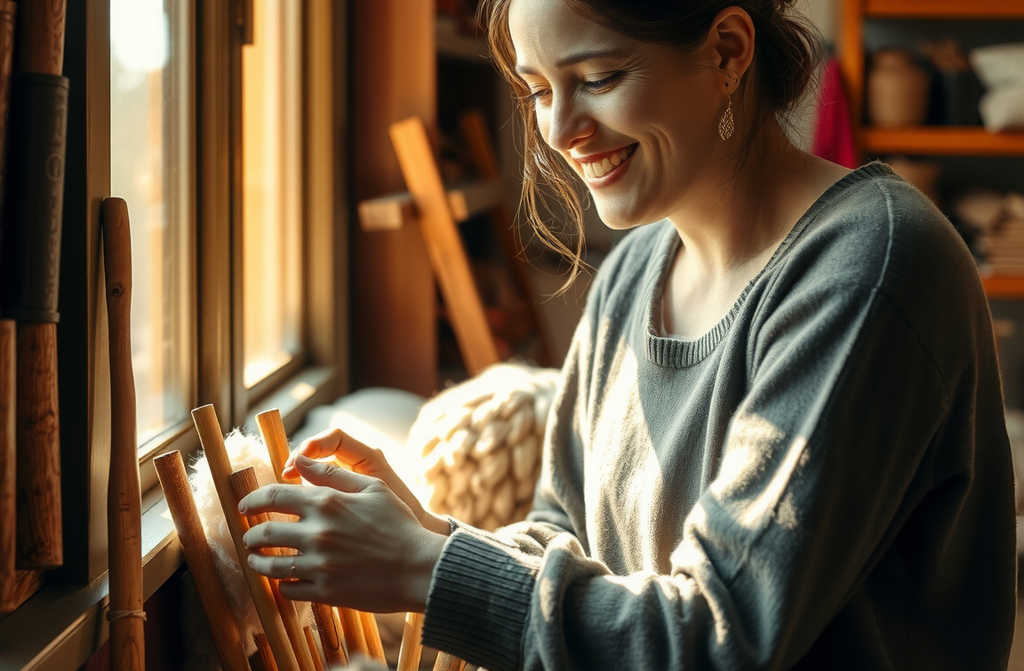
I set the kettle boiling, took out the wool: blush pink, beige, duck-egg blue. Wooden dowels, all sizes. I spread them out on the table, picturing the mobile already, the pompoms dancing in a spring draft above some babys crib.
The kettle pinged.
I made tea, settling at the window. Outside, the tiny garden glimmered in the lamps light; across the way, a single square of window shone golden.
And I breathed in, grateful. My life after Davids betrayal wasnt devastation, nor defeat. I didnt think of it triumphantly only as fact. Fifty-two years old, and a new life begun; a small business, a small flat, a small English town, so deeply known and warmly loved. Some might call this modest. Insufficient. Little.
But its all entirely my own.
Every morning cup of coffeemine. Every decision on how to spend my day, whom to see, what to make, what not to make. Each pompom spun from duck-egg blue wool.
The trees outside whispered, gentle in the breeze, as rain crept in again from the hills.
I cradled my mug in both hands, watched the test pattern darken outside, and thought only of the wool Id need to buy tomorrow. More beige, for certain running low, with steady orders in the book.
More beige wool, and a new tea towel, at last. The old one is well and truly faded.